Gulf Careers Hub

10 CV Mistakes That Get Your Application Rejected in the Gulf (And How to Fix Them)

CV Mistakes in Gulf Applications | Saudi Arabia & UAE CV Tips

The Gulf job market (UAE, Saudi Arabia, Qatar, Kuwait, Oman, Bahrain) is one of the most competitive in the world. Recruiters here spend an average of 10-15 seconds scanning a CV before deciding . In that time, specific mistakes can send your application straight to the rejection pile.

1. Sending the Same Generic CV to Every Job

The Mistake: Using one “master CV” for every application. Recruiters can spot this immediately—your CV doesn’t mention the specific skills or keywords from their job description.

Why It Gets Rejected: Gulf employers want to see that you’ve understood their specific requirements. A generic CV signals laziness or desperation .

The Fix: Create a tailored version for each application. Pull keywords directly from the job posting and weave them naturally into your professional summary and skills section.

2. Including Too Much Personal Information

The Mistake: Listing passport numbers, religion, marital status, age, or family details.

Why It Gets Rejected: This is considered unprofessional and irrelevant. It also creates potential bias issues .

The Fix: Stick to: Full name, phone number (with country code), professional email, city/country, and nationality. Visa status is acceptable and actually helpful.

3. Missing or Weak Career Summary

The Mistake: No summary at all, or vague lines like “Looking for a challenging opportunity to grow my skills.”

Why It Gets Rejected: Recruiters decide in seconds whether to keep reading. A weak opener gives them no reason to continue .

The Fix: Write 3-4 lines that state: your job title, years of experience, key industries, and what you bring. Example: “Bilingual marketing manager with 8+ years across retail and F&B in UAE and KSA. Specialized in digital campaigns and team leadership.”

4. Poor Formatting and Walls of Text

The Mistake: Long paragraphs, tiny fonts, inconsistent spacing, or overly creative designs with graphics and tables.

Why It Gets Rejected: Gulf recruiters scan, not read. Walls of text are exhausting. Fancy designs often break Applicant Tracking Systems (ATS) that many companies now use .

The Fix: Use clean, single-column layout. Professional fonts (Calibri, Arial, Roboto). Bullet points for achievements. Clear section headings. Save as PDF.

5. Listing Duties Instead of Achievements

The Mistake: “Responsible for managing a team” or “Handled customer queries.”

Why It Gets Rejected: This tells recruiters what you were supposed to do, not what you actually accomplished .

The Fix: Use numbers and results. “Managed a team of 12, increasing productivity by 25% in 6 months.” “Resolved 50+ customer queries daily with 95% satisfaction rate.”

6. Ignoring ATS Keywords

The Mistake: Using generic language that doesn’t match the job description.

Why It Gets Rejected: Many Gulf companies (especially in UAE and KSA) use Applicant Tracking Systems. If your CV lacks the keywords from the job ad, it’s filtered out before a human ever sees it .

The Fix: Study the job description. Identify 10-15 key terms (specific skills, software, certifications) and ensure they appear naturally in your CV.

7. Not Stating Visa Status or Availability

The Mistake: Leaving recruiters guessing about whether you’re locally available or need sponsorship.

Why It Gets Rejected: Gulf hiring is fast-paced. If a recruiter can’t immediately tell if you’re eligible to work, they move to the next candidate .

The Fix: Add a clear line: “Currently in Dubai on transferable visa” or “Based in UK, requires visa sponsorship” or “Available immediately.”

8. Spelling and Grammar Errors

The Mistake: Typos, inconsistent tenses, or mixing British and American English.

Why It Gets Rejected: It screams carelessness. For roles involving communication, it’s an automatic disqualifier .

The Fix: Use spell-check tools. Read your CV aloud. Ask a friend to proofread. Pay attention to “UAE” (not “uae”) and consistent spelling.

9. Outdated Phrases Like “References Available Upon Request”

The Mistake: Wasting valuable space on this line.

Why It Gets Rejected: It’s assumed references are available. Including this makes you look outdated and fills space that could showcase value .

The Fix: Remove it. Use that line for an additional achievement or certification.

10. Wrong Length (Too Long or Too Short)

The Mistake: 5+ page CVs for mid-level roles, or one page for senior executives with 15+ years.

Why It Gets Rejected: Recruiters don’t have time for novels. Too short suggests lack of substance .

The Fix: 1-2 pages is the sweet spot. Entry-level: 1 page. Experienced professionals: 2 pages. Senior executives: maximum 3 pages.

Bonus: The Correct Gulf CV Format Checklist

SectionWhat to Include
Contact InfoFull name, UAE/KSA phone, email, city, nationality, visa status
Professional Summary3-4 lines: who you are, key strengths, what you offer
Work ExperienceReverse chronological. Company, role, dates. Bullet points with achievements + numbers
SkillsTechnical + soft skills relevant to the role
EducationDegree, institution, year
LanguagesArabic/English proficiency levels
CertificationsRelevant to your field

The Bottom Line

Your CV is your first impression in the Gulf job market. In 2026, with competition fiercer than ever, these mistakes aren’t minor—they’re the difference between an interview and the rejection pile.

Take an hour today. Review your CV against this list. Be ruthless. Remove the fluff. Add the numbers. Make it recruiter-friendly.

Your next interview is one well-written CV away.

Frequently Asked Questions

1. Do I need to include a photo on my CV for Gulf jobs?

It depends. For customer-facing roles (hospitality, sales, aviation), a professional headshot can help. For most corporate and technical roles, photos are optional. If you include one, ensure it’s professional—business attire, neutral background .

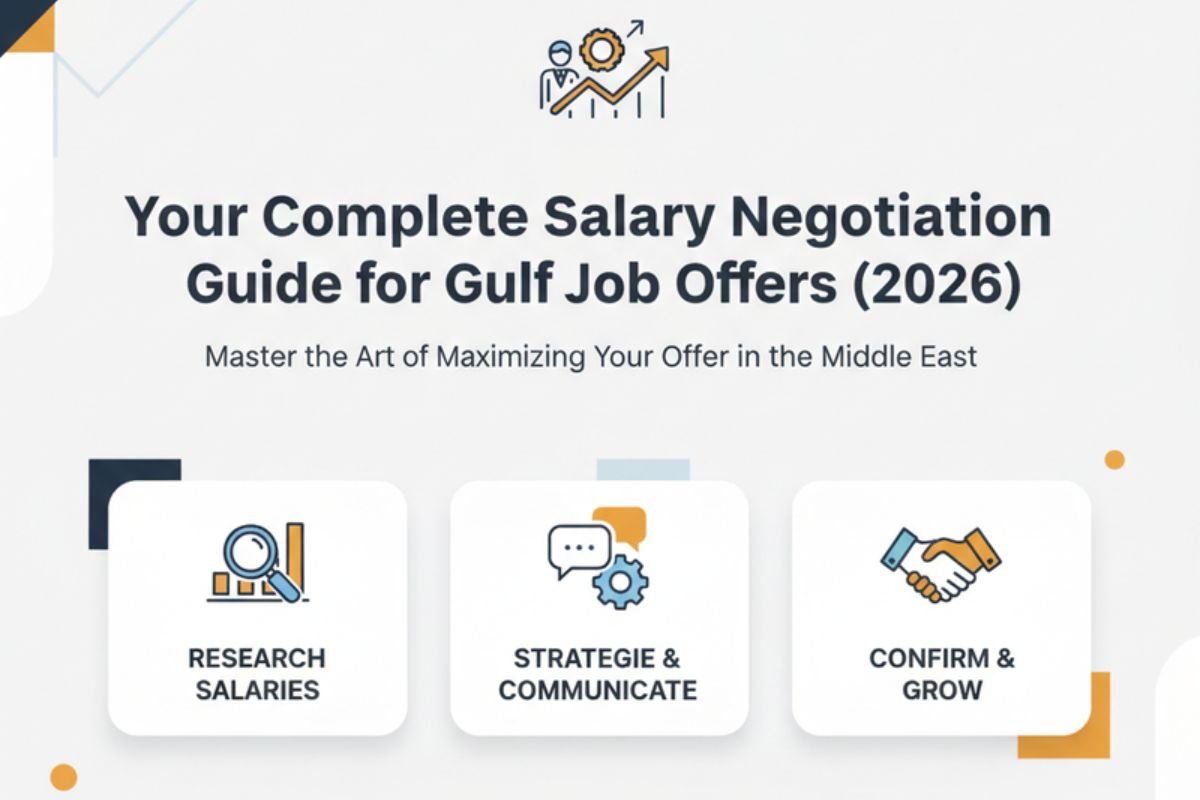
Your Complete Salary Negotiation Guide for Gulf Job Offers (2026)

Salary Negotiation Guide for Gulf Job Offers 2026

How you handle this question in a Gulf job interview can mean the difference between landing a package that sets you up for years, or leaving thousands on the table. The good news? Salary negotiation in the UAE, Saudi Arabia, and Qatar follows predictable rules. Learn them, and you’ll negotiate with confidence.

Step 1: Do Your Homework Before the Interview

Preparation is everything. Before any Gulf job interview, you need to know what you’re worth in today’s market.

Research market rates. The 2026 salary landscape shows modest increases across the region—around 4.1% in the UAE and 4.6% in Saudi Arabia . But averages hide big differences. Specialist roles in technology, finance, and project management are seeing 5-9% increases .

Know the sectors that are hiring. Financial services, industrial sectors, banking, real estate, and technology are leading salary growth in 2026 . If you’re in these fields, you have stronger negotiating power.

Understand total compensation. Gulf packages often include:

  • Base salary
  • Housing allowance (a major component)
  • Transport allowance
  • Annual flight tickets home
  • Education allowance for children
  • Health insurance
  • Bonus potential (typically 2-3 months’ salary) 

Step 2: Master the “Salary Expectations” Question

This is the moment most candidates dread. Here’s how to handle it professionally.

If they ask early in the process: deflect politely.

“I’d be happy to discuss salary once we’ve both confirmed there’s a good fit and I fully understand the scope of the role. Could you share the budgeted range for this position?”

This approach—asking about their budget first—puts you in a stronger position . If their range aligns with your expectations, you’re set. If it’s lower, you can decide whether to continue or politely withdraw.

If they insist on a number: provide a range.

“I’m looking for a package between AED 25,000 and AED 30,000 per month, with flexibility based on the total benefits and role scope.”

Notice the strategy: your ideal figure is at the lower end, showing flexibility while anchoring the conversation where you want it .

Step 3: Know What NOT to Say

Avoid these common mistakes that can cost you thousands.

Never say: “I’m flexible—whatever you think is fair.”

This signals you haven’t done research and gives away your power. Employers may offer well below market rate .

Never get personal: “I need this job because I have rent to pay.”

Shift the conversation from your needs to your value. Focus on what you’ll contribute .

Never respond emotionally: “That’s not enough.”

Instead, say: “Thank you for the offer. Based on my research and the responsibilities we discussed, I was hoping for something closer to X. Is there flexibility?” 

Step 4: Consider the 2026 Market Realities

The Gulf job market in 2026 has some unique dynamics that affect negotiation.

Skills shortages work in your favor. With 90% of employers reporting skills gaps, qualified professionals are in demand . Roles in project management, data science, AI, and engineering are especially hard to fill .

AI skills matter. Around 66% of professionals now use AI regularly at work . Showing genuine AI capability—without exaggerating—can strengthen your position .

Nationalization targets are real. In the UAE, Emiratisation targets for skilled roles are now 10%, with 42% of companies planning to increase Emirati hires . In Saudi Arabia, 93% of employers already hire Saudi nationals, and 75% plan further increases . If you’re an expat, emphasize how you’ll support and develop local talent.

Job switching is common. Nearly 98% of professionals are open to new roles in 2026 . Employers know this, so they’re often willing to negotiate to secure top talent.

Step 5: Negotiate the Whole Package

Salary is important, but don’t overlook other elements that can add significant value.

Housing and transport allowances can be negotiated separately. In Saudi Arabia, family-related benefits (visas, medical cover, flights) are highly valued by 70% of professionals .

Flexible working matters more than ever. Nearly half of professionals rank time-off and flexibility as top benefits . If the base salary is firm, ask about remote work options or additional leave.

Bonuses and reviews. Ask about performance bonus structures (typically 2-3 months’ salary) and when your first salary review will happen .

Step 6: Handle the Offer Professionally

When the offer arrives, here’s your script:

“Thank you for the offer. I’m very excited about this role and the team. I’d like to take 24-48 hours to review the full package carefully.”

Never accept on the spot. Even if you’re thrilled, taking time shows you’re thoughtful and gives you space to prepare counter-arguments.

When you counter, be specific:

“Based on my 8 years of experience and current market rates for this role in Dubai, I was hoping for a base salary of AED 28,000. Is that achievable within your budget?”

Common Questions, Answered

Is negotiation expected in the Gulf?
Yes. Employers often start with a conservative offer, expecting candidates to negotiate professionally .

What if they say the budget is fixed?
Ask about other elements: signing bonus, earlier review date, additional leave, or professional development budget.

How transparent should I be about my current salary?
Be honest about your current package, including all components. Transparency builds trust .

When is the best time to negotiate?
After you’ve received a formal offer, but before you’ve accepted. That’s when you have maximum leverage.

Final Thought: You’re Worth It

Negotiation isn’t rude—it’s expected. In the Gulf’s competitive 2026 job market, employers want candidates who know their worth and communicate it professionally.

Do your research, stay confident and polite, and remember: the best time to negotiate your lifetime earnings is right now, before you accept.

Your next opportunity is waiting. Go get what you deserve.


Frequently Asked Questions (FAQs)

1. What’s the average salary increase in the Gulf for 2026?

Average increases range from 4.1% in the UAE to 4.6% in Saudi Arabia, with Qatar and Oman at 4.3% . However, specialist roles in technology, finance, and project management can see 5-9% increases .

2. How do I research fair salaries before a Gulf job interview?

Use resources like the Hays GCC Salary Guide (covering 400+ roles), Korn Ferry forecasts, and platforms like Bayt.com‘s salary calculator . Talk to recruiters and professionals in your network who know the local market.

3. What should I do if the initial offer is below my expectations?

Thank them politely, then respond with: “Based on my research and the responsibilities we discussed, I was hoping for something closer to X. Is there flexibility in the budget?” This invites conversation rather than confrontation 

4. Are housing and transport allowances negotiable?

Yes. In fact, these are often separate line items in Gulf compensation packages. If base salary is firm, focus negotiations on allowances, bonuses, annual flights, or education benefits 

5. How important are AI skills for Gulf job seekers in 2026?

Very important. Around 66% of professionals now use AI regularly at work . Demonstrating genuine AI capability—through courses, pilot projects, or practical experience—can strengthen your negotiating position .

Work Down Under from the Gulf: Top Companies in UAE & Saudi Hiring Remote Workers in 2026

Remote Jobs UAE & Saudi 2026 | Work for Australian Companies

Picture this: you’re sipping your morning coffee in Sydney or Melbourne, logging into your computer, and working for a cutting-edge company based in Dubai or Riyadh—all without leaving Australia. In 2026, this isn’t a distant dream; it’s a rapidly growing reality. The Gulf region, particularly the UAE and Saudi Arabia, is experiencing a massive digital transformation, and they need global talent to fuel it.

Why Gulf Companies Are Hiring Australian Remote Workers

The Middle East is undergoing an economic revolution. With Saudi Arabia’s Vision 2030 and the UAE’s continued push as a global innovation hub, companies are scrambling for top talent. But there’s a skills gap, and they’re looking globally to fill it .

Why you? Australian professionals are highly regarded for their strong work ethic, English proficiency, and technical skills. Plus, the time zone difference is manageable, allowing for overlapping work hours with Gulf teams.

Top Companies Hiring Remote Workers from the Gulf (2026)

Here are verified opportunities from companies in the UAE and Saudi Arabia actively seeking remote talent this year.

1. CrowdStrike (UAE) – Customer Value Architect

The Company: CrowdStrike is a global leader in cybersecurity, protecting some of the world’s largest organizations with its AI-native platform. They’re known for a culture of flexibility and autonomy .

The Role: They are hiring a Customer Value Architect based in the UAE (remote role with up to 40% travel). You would be the key partner to sales and customers, driving onboarding and ensuring clients maximize their security investment. It’s a high-level role requiring 8+ years of experience and deep industry knowledge .

Why it’s great: You get to work for a certified “Great Place to Work” with market-leading compensation and global impact.

2. Division50 (UAE) – Cold Caller (Project Based)

The Company: Division50 is seeking confident, target-driven professionals for a short-term outreach project targeting the UAE market .

The Role: This is a 100% remote Cold Caller position. Your mission is to connect with UAE-based clients, introduce products, and generate qualified leads. It’s a temporary contract paying a base of $400 + $200 commission .

The Australian Connection: This role specifically requires you to work during Australian business hours, making it perfect for Aussies looking for a flexible, project-based role from home. You just need reliable internet and a confident phone manner .

3. Moove (UAE) – Senior DevSecOps Engineer

The Company: Moove is a fast-growing scale-up building the world’s largest fleet and powering mobility platforms like Uber. They operate across 19 cities on 6 continents .

The Role: They are looking for a Senior DevSecOps Engineer to join their Technology Operations team. This is a senior, hands-on role designing and scaling security and operational foundations. You’ll work with AWS, Terraform, and Datadog, and help shape the company’s future .

Why it’s great: You’ll have high ownership and the chance to work in a globally operating, enterprise-grade organization.

4. Pepperstone (UAE) – Client Onboarding Officer

The Company: Pepperstone is a global fintech company .

The Role: They are seeking a Client Onboarding Officer fluent in Arabic and English. While based in Dubai, the role offers hybrid working options, ensuring a balance between collaboration and flexibility. You’ll review and approve account applications while enhancing customer experience .

The Opportunity: This is a competitive salary role with a great culture in a fast-paced financial environment.

5. Respond.io (Saudi Arabia) – Customer Success Manager (EMEA)

The Company: Respond.io is a technology company providing customer communication and messaging solutions .

The Role: They are hiring a Customer Success Manager for the EMEA region. This is a remote position based in Saudi Arabia, but open to international applicants who can manage the region. You’ll be responsible for ensuring client success and driving growth .

The Appeal: You get to work for a global tech company while contributing to the Saudi market’s growth.

6. Fortinet (Saudi Arabia) – Cloud Solutions Architect (EMEA)

The Company: Fortinet is a worldwide leader in cybersecurity .

The Role: They are seeking a Cloud Solutions Architect for the EMEA region, with the role based in Saudi Arabia. This is a senior technical position requiring deep expertise in cloud security and architecture .

7. Fieldcore (Saudi Arabia) – Multiple Remote Roles

The Company: Fieldcore is an active recruiter in Saudi Arabia, hiring for various technical positions .

The Roles: They have multiple openings including:

  • Tooling Lead (Remote, Saudi Arabia) 
  • Experienced GT Controls Installation (Remote, Saudi Arabia) 
  • Rigger (Remote, Saudi Arabia) 
  • I&C Technician (Remote, Saudi Arabia) 

These are excellent opportunities for engineers and technicians looking for remote project-based work in the Kingdom.

8. Whitecollars (Saudi Arabia) – Road Construction Consultant

The Company: Whitecollars is seeking a specialist for a Road Construction Consultant role with a focus on Saudi Arabia .

The Role: This is a remote position focused on road construction projects. You’ll provide expert consultation and guidance to ensure project success in the Saudi market .

9. Müller’s Solutions (Saudi Arabia) – Multiple SAP Remote Roles

The Company: Müller’s Solutions is actively recruiting for SAP consultants in Saudi Arabia .

The Roles: They are hiring:

  • SAP GRC Consultant (Implementation) – Remote 
  • SAP Business Data Cloud Consultant – Remote 
  • SAP SF ECP Payroll Consultant – Remote 

These are specialized roles for SAP experts looking to contribute to Saudi Arabia’s digital transformation.

10. Dubai Future Foundation (UAE) – Verified Contributors Program

The Company: The Dubai Future Foundation (DFF) has launched a global initiative called the Verified Contributors Program, connecting experts worldwide with short-term projects to guide Dubai’s future development .

The Roles: They seek contributors from diverse fields, including:

  • Researchers and policy experts
  • Industry leaders and independent researchers
  • Designers, editors, and translators
  • Professionals with expertise in emerging trends and transformative technologies 

Why it’s unique: You can contribute from anywhere in the world, are formally contracted and remunerated, and have the flexibility to accept or decline assignments. Projects range from concise briefings to in-depth research, offered in both Arabic and English .

How to Land a Remote Gulf Job from Australia

  1. Tailor Your CV and Cover Letter: Highlight your relevant experience and specifically mention your ability to work during Gulf business hours or Australian hours as required .
  2. Network Actively: Connect with professionals at these companies on LinkedIn. The Gulf market values relationships and personal connections .
  3. Showcase Your Skills: For technical roles (DevSecOps, SAP, engineering), have a portfolio or detailed case studies ready .
  4. Follow Up: After applying, send a polite follow-up email 1-2 weeks later. Persistence is noticed .
  5. Prepare for Interviews: Be ready to discuss how you’ll manage remote collaboration, time zones, and deliver results independently.

Conclusion: Your Gulf Opportunity Awaits

The Gulf region is open for business and hungry for global talent. In 2026, the barriers to working for a top UAE or Saudi company from Australia have never been lower. Whether you’re a cybersecurity expert, an SAP consultant, a customer success pro, or a cold-calling champion, there’s a remote role waiting for you.

Start your search today. Update your LinkedIn profile, polish that CV, and apply to one of these incredible companies. Your next career adventure might just begin in your own home office, working for a company transforming the Middle East.


Frequently Asked Questions (FAQs)

1. Do I need to speak Arabic to get a remote job in the Gulf?

For many technical roles (IT, engineering, development), English is the primary business language, and Arabic is not always required. However, for customer-facing roles like Client Onboarding or Customer Success, fluency in Arabic is often a significant advantage or requirement 

2. How do taxes work if I work remotely for a Gulf company while living in Australia?

This depends on your residency status and the company’s structure. Generally, if you are an Australian resident for tax purposes, you will need to declare your worldwide income to the Australian Taxation Office (ATO). Some companies may hire you as a contractor, making you responsible for your own tax payments. Always consult with a qualified tax professional to understand your obligations.

3. What are the typical working hours for these roles?

It varies. Some roles, like the Cold Caller position at Division50, explicitly require working during Australian business hours . Others may require you to align with Gulf工作时间 (UAE/Saudi time), which is typically 6-7 hours behind AEDT. Many companies offer flexibility as long as there is some overlap for collaboration.

4. Are these remote jobs legitimate?

Yes, the companies listed here (CrowdStrike, Moove, Fortinet, Pepperstone, etc.) are well-established, reputable global organizations. Always verify job postings through official company career pages and be cautious of any opportunity that asks for upfront payment. The listings in this article are sourced from legitimate job boards like Accel Jobs, Bayt.com, and company career portals .

5. How competitive are these roles?

Highly competitive. The Gulf attracts top talent from around the world. To stand out, ensure your application is tailored, your skills are up-to-date, and you clearly communicate the unique value you bring as an Australian professional. Highlighting relevant experience and a strong track record of remote work will give you an edge .

Saudi Government Scholarships 2026: Complete Application Guide

Saudi Government Scholarships 2026 | Full Guide for International Students

The Kingdom of Saudi Arabia is investing heavily in education as part of its Vision 2030 transformation. For 2026, Saudi universities and government programs are offering thousands of fully-funded scholarship opportunities for both domestic and international students. Whether you’re a Saudi citizen looking to study abroad or an international student hoping to study in the Kingdom, this guide covers everything you need to know.

Why Consider a Saudi Government Scholarship in 2026?

Saudi Arabia has made education a national priority. The Ministry of Education manages scholarship programs that send Saudi students to top global universities while also welcoming outstanding international students to study within the Kingdom . These initiatives aim to develop human capital, foster research and innovation, and position Saudi Arabia as a global hub for knowledge and learning.

The benefits are substantial. Most government scholarships in Saudi Arabia are fully funded, covering tuition, monthly stipends, accommodation, healthcare, and annual airfare . Students receive equal privileges as Saudi nationals within university facilities and benefit from world-class education aligned with future job markets .

Major Saudi Government Scholarship Programs for 2026

1. Saudi Government Scholarships for International Students

The Kingdom offers fully funded scholarships to international students wishing to study in 27 public Saudi universities . These scholarships align with Vision 2030 and aim to strengthen global cooperation in education and research.

Benefits include:

  • Full tuition coverage
  • Monthly stipend (varies by degree level)
  • University housing
  • Comprehensive healthcare
  • Annual round-trip airfare
  • Arrival allowance

Eligibility criteria:

  • Age: 17–25 for undergraduate programs, under 30 for Master’s, under 35 for PhD
  • Valid passport with at least one year validity
  • Certified academic certificates and transcripts
  • Clean criminal record
  • Pass medical examination
  • No previous Saudi scholarship
  • Female students must have a mahram (guardian) residing in the Kingdom

Application routes:

  1. Apply directly through the chosen university’s admission portal
  2. Apply through the Saudi Cultural Attaché in your country
  3. Apply via the Saudi Embassy if no cultural office exists 

2. King Abdullah University of Science and Technology (KAUST) Gifted Student Program

The KAUST Gifted Student Program (KGSP) identifies exceptional STEM-focused high school students and supports them through undergraduate studies at leading global universities, followed by graduate studies at KAUST .

Key details for 2026:

  • Open to Saudi students for study at top international universities
  • SAT scores are critically important for evaluation
  • Minimum requirements: TOEFL iBT or IELTS Academic scores
  • Application deadline: February 11, 2026
  • Interviews: February to early April 2026 

3. King Fahd University of Petroleum and Minerals (KFUPM) Scholarships

KFUPM offers fully funded Master’s and PhD programs for international and domestic applicants, with new programs in AI, Cybersecurity, Robotics, and Business Analytics aligned with Vision 2030 .

Financial benefits:

  • Tuition-free study
  • Furnished accommodation
  • Stipend
  • Air tickets for international students
  • Medical and dental care
  • Subsidized meals
  • Conference participation funding
  • Access to recreational facilities including private beach

Application deadline: January 10, 2026 (passed for this cycle; monitor for future intakes)

4. Ministry of Media Scholarship Track (Wa’ed)

The Ministry of Media recently announced 94 scholarship seats across academic and training programs in the United States, the United Kingdom, Canada, and Spain .

Distribution:

  • 21 Master’s seats (UK, US, Spain)
  • 56 Bachelor’s seats (US, UK)
  • 11 Diploma seats (Canada, Spain)
  • 6 Training seats (US, Spain)

This unique program operates through public-private partnerships with major media companies including MBC Group, ensuring graduates have direct employment pathways. Applications are submitted via the Ministry of Education’s “Safeer” platform .

5. Wuhan University Saudi Government Scholarship Program

As part of Saudi Arabia’s initiative to send students to 200 top global universities, Wuhan University in China participates in the Saudi Government Scholarship program .

Available pathways:

  • Undergraduate Foundation Pathway (0.5+4 years): March 2026 intake
  • Undergraduate Chinese-Language Pathway (1+4 years): September 2026
  • Direct Undergraduate Programs (4 years): September 2026
  • Master’s Programs (2-3 years): September 2026

Application deadlines:

  • March 2026 intake: December 31, 2025
  • September 2026 intake: May 5, 2026

How to Apply for Saudi Government Scholarships (Step-by-Step)

Step 1: Determine Your Eligibility

Before beginning any application, carefully review the general conditions for your chosen program. Saudi scholarship programs have specific requirements regarding nationality, age, academic qualifications, and language proficiency .

For Saudi citizens applying to study abroad:

  • Must be a Saudi national with valid national ID (with chip) and passport valid for at least one year
  • Must have a registered national address
  • Responsible for all information submitted; false information leads to revocation

For international students applying to study in Saudi Arabia:

  • Verify nationality eligibility through the Saudi Embassy in your country
  • Prepare certified and attested academic documents
  • Arrange translation of documents not in Arabic or English by accredited authorities

Step 2: Prepare Required Documents

Common documents needed for most Saudi scholarship applications:

Essential documents:

  • Valid passport (minimum one year validity)
  • National ID (for Saudi applicants)
  • Academic certificates and transcripts (attested)
  • Language proficiency scores (TOEFL, IELTS, or Arabic proficiency as required)
  • Recommendation letters (usually 2 from academic referees)
  • Statement of purpose or personal essay
  • Curriculum vitae (CV)
  • Medical examination report (within 6 months)
  • Clean criminal record certificate
  • Passport-sized photographs

Special requirements:

  • For applicants under 18: Guardian guarantee letter
  • For female international students: Mahram residing in Saudi Arabia
  • For certificates from outside Saudi Arabia: Equivalency certification 

Step 3: Choose Your Application Route

Option A: University Direct Application
Visit the admission portal of your chosen Saudi university. Most universities have online application systems for scholarship applicants. Submit your application during the official admission window .

Option B: Saudi Cultural Attaché
If your country hosts a Saudi cultural office, you can apply through them. They provide guidance and processing for scholarship applicants.

Option C: Saudi Embassy
In countries without cultural attachés, apply directly through the Saudi Embassy.

Option D: Study in Saudi Platform
The Ministry of Education has launched the “Study in Saudi Arabia” platform allowing applicants from all countries to apply directly to Saudi universities .

Step 4: Submit Your Application

When submitting electronically:

  • Complete the online application form accurately
  • Upload all required documents in the specified format
  • Review all information before final submission
  • Submit before the deadline (late submissions are not accepted)

Important notes:

  • The application process is electronic only while registration is open
  • You must complete the process personally; delegation is not permitted
  • Respond promptly to any requests from audit officials
  • Limited seats are available; applications may be subject to comparison 

Step 5: Interview and Selection

Many programs conduct interviews as part of the selection process:

  • Document review is followed by interview invitations
  • Interviews may be conducted online or in-person
  • Exceptional candidates may be exempted from interviews
  • Selection considers academic merit, test scores, and alignment with program objectives 

Step 6: Receive Offer and Secure Your Place

If selected:

  • The university issues an official scholarship letter
  • This letter is required for visa processing
  • Some programs require deposit payments (note: KGSP does not refund deposits) 
  • Complete any pre-enrollment requirements

Step 7: Obtain Visa and Residence Permit

Study Visa Process:

  1. Present scholarship letter at Saudi Embassy in your country
  2. Apply for study visa with required documentation
  3. Receive visa and make travel arrangements

Residence Permit (Iqama):
Upon arrival in Saudi Arabia, students receive a free residence permit valid throughout their studies .

Application Timeline for 2026

January–April 2026:

  • Primary application window for many programs
  • KGSP deadline: February 11, 2026
  • KFUPM deadline: January 10, 2026 (passed; prepare for next cycle)

February–April 2026:

  • Interview periods for various programs
  • KGSP interviews: mid-February to early April

May 2026:

  • Wuhan University deadline: May 5, 2026
  • Final application submissions for September intake

September 2026:

  • Primary intake for most universities
  • Start of academic year

Tips for a Successful Application

  1. Start early: Document preparation takes time, especially for attestation and translation.
  2. Verify requirements carefully: Each university sets its own deadlines and requirements. Check official websites regularly .
  3. Focus on test scores: SAT, TOEFL, and IELTS scores are critically important, especially for competitive programs like KGSP .
  4. Be honest and accurate: False information leads to immediate revocation and consequences .
  5. Prepare strong recommendations: Choose academic referees who know you well and can speak to your potential.
  6. Write a compelling statement of purpose: Clearly articulate your goals and how the scholarship aligns with your aspirations.
  7. Monitor communication channels: Check email regularly and respond promptly to requests.
  8. Apply to multiple programs: Increase your chances by applying to several eligible programs.

Official Resources

Frequently Asked Questions

1. Who is eligible for Saudi Government Scholarships in 2026?

Eligibility varies by program. For Saudi citizens, you must have valid national ID and passport. For international students, you must meet age requirements (17-35 depending on level), have attested academic certificates, clean criminal record, and pass medical examination. Some programs have additional requirements like language proficiency scores .

2. What expenses do Saudi Government Scholarships cover?

Most fully-funded scholarships cover tuition, monthly stipend, university housing, comprehensive healthcare, and annual round-trip airfare. Some also provide arrival allowances, subsidized meals, and conference funding .

3. How do I apply for a Saudi Government Scholarship from my country?

You have three main options: apply directly through the university’s admission portal, apply through the Saudi Cultural Attaché in your country, or apply via the Saudi Embassy if no cultural office exists. The “Study in Saudi” platform also facilitates direct applications .

4. What are the language requirements for studying in Saudi Arabia?

Requirements depend on the program’s language of instruction. For English-taught programs, TOEFL (70-80+), IELTS (6.0+), or Duolingo (105+) are typically required. For Arabic-taught programs, proficiency in Arabic is necessary. Some universities offer foundation years for language preparation .

5. When is the deadline to apply for 2026 scholarships?

Deadlines vary by university and program. Some key dates: KGSP closed February 11, 2026; KFUMP passed January 10, 2026; Wuhan University’s September intake closes May 5, 2026. Most universities have application windows between January–April and September–November. Check specific university websites regularly .

Teaching Jobs in Gulf 2026: Your Complete Guide to Requirements, Salaries & Top Schools

Teaching Jobs in Gulf 2026 | Requirements, Salaries & Schools

Thinking about teaching in the Gulf? You’re not alone. Thousands of educators from around the world are drawn to the Middle East every year by the promise of tax-free salaries, warm climates, and the chance to experience a rich cultural landscape. But here’s the reality: the Gulf job market for teachers in 2026 is more competitive and structured than ever before.

Why the Gulf Remains a Top Teaching Destination in 2026

The Gulf Cooperation Council (GCC) countries—UAE, Saudi Arabia, Qatar, Kuwait, Oman, and Bahrain—continue to invest billions in education. With ambitious national visions (like Saudi Vision 2030 and UAE Centennial 2071), governments are prioritising world-class schooling. This means a constant demand for qualified Western-trained teachers .

The Hays GCC Salary Guide 2026 confirms that hiring momentum remains strong across the Gulf, with 66% of employers increasing headcount in 2025 and demand remaining high for qualified educational professionals . This trend shows no sign of slowing in 2026.

Key benefits attracting teachers to the Gulf include:

  • Tax-free salaries that allow for significant savings
  • Free accommodation or generous housing allowances
  • Annual flights home for you and your family
  • Comprehensive health insurance
  • End-of-service gratuity (typically 21 days’ salary per year of service)

General Requirements for Teaching Jobs in the Gulf

Before you start applying, make sure you meet these baseline requirements that most Gulf countries demand:

1. Qualifications

  • Bachelor’s degree in Education or your specialist subject (minimum)
  • teaching qualification (PGCE, PGDE, B.Ed., or state teaching license)
  • For leadership roles, a Master’s degree is often preferred 

2. Experience

  • Most international schools require a minimum of 2 years’ full-time teaching experience post-qualification 
  • Some entry-level positions exist, but competition is fierce
  • Experience with British, American, or IB curricula is highly valued 

3. Police Clearance

  • clean criminal record check from your home country and any country you’ve lived in recently is mandatory
  • Schools follow strict safeguarding protocols 

4. Language Proficiency

  • For English-medium schools, native-level English is required
  • Some positions may require IELTS scores (minimum 6.0-7.0) 
  • For non-English schools (e.g., German or French curriculum), fluency in the relevant language is essential 

Country-by-Country Guide to Teaching in the Gulf

🇦🇪 United Arab Emirates (UAE)

The UAE—particularly Dubai and Abu Dhabi—remains the most popular destination for teachers.

Requirements:

  • Bachelor’s degree + teaching qualification
  • Minimum 2 years’ experience
  • ADEK approval for Abu Dhabi schools, KHDA approval for Dubai

Average Monthly Salaries (Tax-Free) :

  • Entry-level teachers: AED 10,000 – 12,000 ($2,700 – $3,250)
  • Experienced teachers: AED 12,000 – 17,000 ($3,250 – $4,600)
  • Leadership roles: AED 20,000 – 30,000+ ($5,400 – $8,200)

Average Annual Salary (High School Teacher, Dubai): AED 193,756 ($52,750) according to Salary Expert data 

Top Schools Hiring Now:

  • GEMS schools (multiple locations) are actively recruiting for August 2026 
  • Amity International School, Abu Dhabi (seeking Science teachers) 
  • GEMS Metropole School, Al Waha (seeking Music & Drama teachers) 

Sample Job: Secondary English Teacher in Sharjah offers AED 11,500–17,000 per month, plus housing, flights, and tuition for dependents .

🇸🇦 Saudi Arabia

Saudi Arabia is undergoing a massive education transformation under Vision 2030.

Requirements:

  • Bachelor’s degree + teaching qualification
  • 2-3 years’ experience minimum
  • Strict gender segregation in schools (male teachers for boys’ schools, female for girls’)
  • TEFL/CELTA may be accepted for some English teaching roles

Average Monthly Salaries (Tax-Free):

  • SAR 10,000 – 15,000 ($2,650 – $4,000)
  • Often includes free housing or allowance
  • Many international schools offer compound living

Note: With 93% of employers already employing Saudi nationals and 75% planning further increases in 2026, expat teachers are still in demand but competition with nationalised talent is growing .

🇶🇦 Qatar

Qatar continues to build on its education legacy following the 2022 World Cup.

Requirements:

  • Bachelor’s degree + teaching qualification
  • 2+ years’ experience
  • SEC (Supreme Education Council) approval required

Average Monthly Salaries (Tax-Free):

  • QAR 10,000 – 18,000 ($2,750 – $4,950)
  • Excellent benefits packages common

🇰🇼 Kuwait

Kuwait offers high savings potential but a quieter lifestyle.

Requirements:

  • Bachelor’s degree minimum (Master’s preferred for university roles)
  • 2+ years’ experience
  • For adjunct/university roles: Master’s degree and local residency required 

Average Monthly Salaries (Tax-Free):

  • KWD 800 – 1,500 ($2,600 – $4,900)

Note: The American University of Kuwait is currently seeking adjunct faculty across multiple disciplines, though positions are limited to local residents only .

🇴🇲 Oman

Oman offers a more relaxed pace of life with beautiful natural scenery.

Requirements:

  • Bachelor’s degree + teaching qualification
  • 2-3 years’ experience
  • IELTS 6.0+ for non-native speakers

Average Monthly Salaries (Tax-Free):

  • OMR 1,000 – 1,800 ($2,600 – $4,700)

🇧🇭 Bahrain

The smallest Gulf state, but with a growing education sector.

Requirements:

  • Bachelor’s degree + teaching qualification
  • 2+ years’ experience

Average Monthly Salaries (Tax-Free):

  • BHD 800 – 1,400 ($2,100 – $3,700)

Subject Demand in 2026: What Schools Are Looking For

According to recent job postings and recruitment trends :

Highest Demand:

  • STEM subjects: Science, Mathematics, Computer Science
  • English (especially for ESL learners)
  • Early Years/Foundation Stage teachers
  • Special Education Needs (SEN) specialists

Growing Demand:

  • Arabic (as first language and for non-native speakers) 
  • Music & Drama 
  • ICT & Computing

Niche Roles:

  • Curriculum coordinators (British, American, IB curricula)
  • School counsellors
  • University-level adjunct faculty in specific disciplines 

Salary Expectations: What You Can Really Earn in 2026

The Hays GCC Salary Guide 2026 indicates that 58% of professionals received a pay increase in 2025, up from 51% in 2024 . However, salary growth remains modest—typically 0-5% annually for most roles .

Typical Teacher Salary Packages Include:

ComponentDetails
Base SalaryTax-free, paid monthly
HousingFree accommodation OR allowance (AED 60,000-100,000/year in UAE)
FlightsAnnual economy ticket to home country for teacher + family
Medical InsuranceComprehensive cover for teacher + dependents
SchoolingFree tuition for up to 2-3 children at the school
GratuityEnd-of-service benefit (typically 21-30 days’ salary per year)
RelocationSettling-in allowance and shipping allowance 

Real Salary Examples from 2026 Job Postings:

  • Secondary English Teacher, Sharjah: AED 11,500–17,000 per month + housing + flights + tuition 
  • Arabic Teacher, Dubai: Competitive tax-free package + CPD opportunities 
  • Teacher of Science, Abu Dhabi: £2,000-3,000 per month (approx. AED 9,000-13,500) 

The Recruitment Process: Step-by-Step

1. Application Season

Most Gulf schools recruit on a August-June academic calendar. Hiring begins January-March for August starts .

2. Documentation Required

  • Updated CV (2 pages maximum recommended) 
  • Scanned degree certificates and teaching qualifications
  • Passport copy
  • Professional references (2-3, including current Head Teacher)
  • Police clearance certificate

3. Interview Process

  • Usually conducted via Teams/Zoom initially 
  • May include a demo lesson (recorded or live)
  • Second round with senior leadership
  • Final offer and contract

4. Visa Processing

  • Employer sponsors your work visa
  • Medical fitness test required upon arrival
  • Degree attestation needed (from home country Foreign Office + UAE embassy)

Top International School Groups in the Gulf

School GroupLocationsCurriculum
GEMS EducationUAE, Qatar, KSABritish, IB, American
TaaleemUAEBritish, IB, American
Aldar EducationUAEBritish, American
International Schools Partnership (ISP)UAE, KSAMultiple
ESOL EducationUAE, QatarAmerican, British
Maple Leaf International SchoolsQatarCanadian

5 Tips for Landing Your Dream Teaching Job in the Gulf

  1. Start early: Recruitment peaks between January and March for August starts. Don’t wait until summer.
  2. Get your documents attested: This process can take weeks or months. Start early.
  3. Target schools directly: While recruitment agencies help, applying directly to school career pages (like GEMS  or Amity ) can be more effective.
  4. Highlight extracurricular skills: Schools value teachers who can coach sports, lead clubs, or direct plays .
  5. Be patient with the market: With talent shortages across the region, 90% of organisations report skills gaps . If you’re qualified, opportunities exist—but you may need to wait for the right fit.

Common Pitfalls to Avoid

  • Pitfall: Applying without a recognised teaching qualification
  • Pitfall: Expecting to bring family on an entry-level salary (check dependent schooling benefits)
  • Pitfall: Ignoring cultural norms and dress codes
  • Pitfall: Assuming all Gulf countries offer the same lifestyle (they don’t!)

Conclusion: Your Gulf Teaching Adventure Awaits

The Gulf job market in 2026 offers incredible opportunities for qualified, passionate teachers. With tax-free salaries, excellent benefits, and the chance to live in one of the world’s most dynamic regions, it’s easy to see why so many educators make the move.

But success requires preparation. Get your qualifications in order, research your target country carefully, and start your applications early. Whether you dream of Dubai’s skyline, Riyadh’s rich heritage, or Doha’s world-class museums, a teaching job in the Gulf could be your next great adventure.

Ready to apply? Check current vacancies at GEMS Education , Amity International Schools , and the American University of Kuwait . Your Gulf classroom awaits.


Frequently Asked Questions (FAQs)

1. Do I need to speak Arabic to teach in the Gulf?

For most international schools teaching British, American, or IB curricula, no—English is the language of instruction. However, learning basic Arabic phrases helps with daily life and cultural integration. Some roles teaching Arabic as a subject do require native-level Arabic .

2. Can I bring my family with me to teach in the Gulf?

Yes, most international school packages include benefits for dependents—free tuition for up to 2-3 children, family medical insurance, and annual flights . However, check individual contracts carefully, as entry-level positions may offer single-status contracts only.

3. What’s the average savings potential for teachers in the Gulf?

This varies by lifestyle, but many teachers save 50-70% of their salary. With tax-free income, free housing, and schooling provided, your entire salary can be disposable income or savings.

4. Is there an age limit for teaching in the Gulf?

Most countries issue work visas up to age 60-65, depending on the role and country. Some schools prefer younger teachers for energy and adaptability, but experienced educators are highly valued for leadership roles .

5. How does the 2026 job market compare to previous years?

The market remains strong, with 66% of employers increasing headcount . However, competition is fiercer for top-tier schools. Nationalisation policies in Saudi Arabia and the UAE mean more local talent is entering the workforce, but expat teachers with specialised skills and Western qualifications remain in demand .

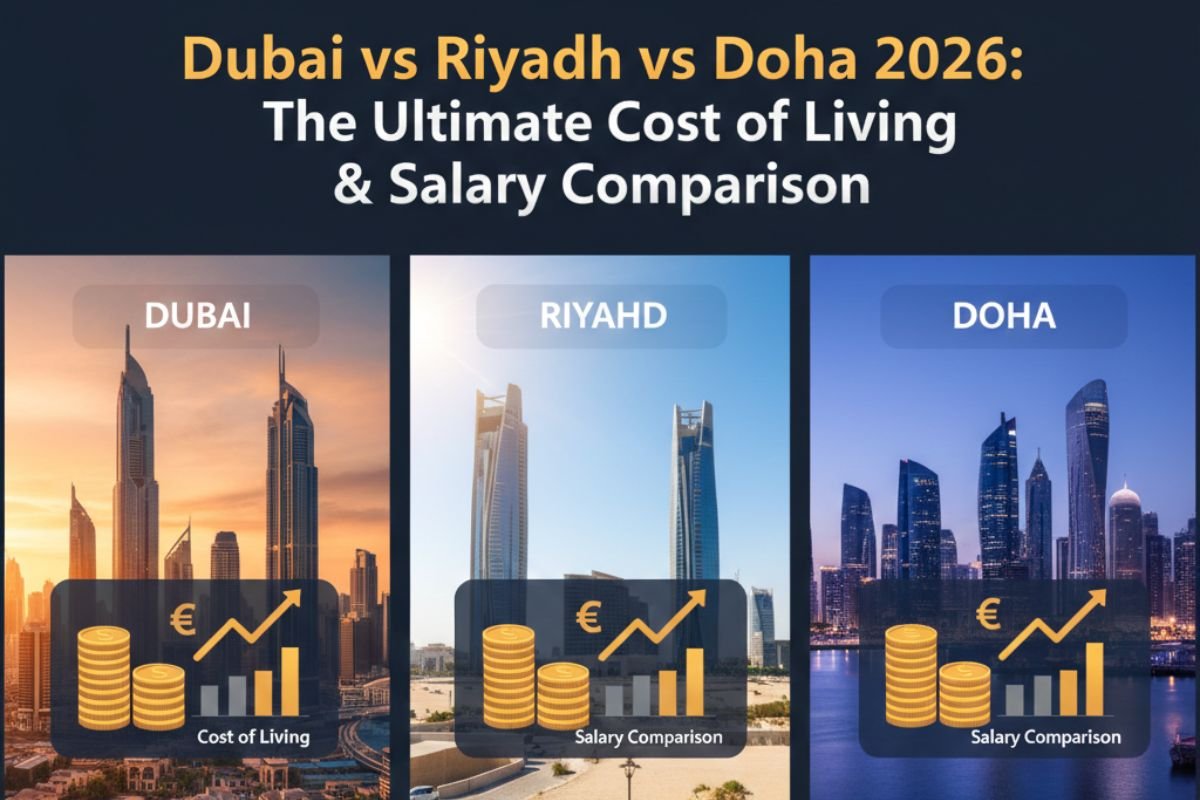
Dubai vs Riyadh vs Doha 2026: The Ultimate Cost of Living & Salary Comparison

Dubai vs Riyadh vs Doha 2026: Salary & Cost of Living Comparison

If you’re considering a move to the Gulf in 2026, you’re probably weighing three heavyweights: Dubai, Riyadh, and Doha. All offer tax-free salaries, modern infrastructure, and exciting lifestyles. But here’s the catch—your money buys very different things in each city.

Quick Verdict: The Gulf Trio Compared

Let’s start with the headline. Dubai is the most expensive overall, but offers the highest salaries in many sectors. Riyadh is catching up fast, with massive infrastructure spending driving demand for talent. Doha remains the most affordable, though salaries are generally lower .

CityMonthly Cost (Single)Monthly Cost (Family)2026 Salary Increase Forecast
Dubai$4,000–6,800$10,800–16,3004.1%
Riyadh$3,500–5,500$9,000–14,0004.6%
Doha$3,000–5,000$8,000–12,0004.3%

Sources: APRIL International, Gulf Business, Michael Page 

Housing: Where Your Biggest Expense Goes

Rent eats the largest slice of your paycheck in all three cities. Here’s how they stack up.

Dubai: Premium Living, Premium Prices

Dubai ranks as the most expensive city in the Middle East and 15th globally . A one-bedroom in Dubai Marina will set you back $24,500–60,000 annually. Even budget areas like International City start around $6,800 per year .

Riyadh: Rising Fast

Riyadh’s property market is heating up alongside Vision 2030 projects. A decent one-bedroom apartment in a central area like Al Olaya costs roughly $15,000–25,000 annually. You’ll find better value in suburbs like Al Narjis .

Doha: The Value Option

Doha is approximately 23% less expensive than Dubai . A one-bedroom in the city centre averages $19,500 per year (around 5,938 QAR/month). Head outside the centre, and that drops to $13,700 .

Winner for affordability: Doha

Salaries: What You’ll Actually Earn

Tax-free income is the big draw. But salaries vary significantly by city and sector.

Dubai: The Pay Leader

Dubai offers the highest salaries, particularly in banking, tech, and senior leadership. A CEO in Dubai can earn $27,000–43,000 monthly (Dhs100,000–160,000). Marketing directors average $15,000–27,000 monthly . Entry-level roles start around $3,000–5,000 monthly .

Riyadh: Closing the Gap

Saudi Arabia is projected to offer the highest average salary increase in 2026 at 4.6% . Top roles pay exceptionally well. Development managers can earn up to $80,000 monthly (300,000 SAR), reflecting the scale of giga-projects . Tech leads in AI and cybersecurity command $6,600–16,000 monthly .

Doha: Lower but Stable

Doha’s salaries are generally lower, but so are expenses. A sales director averages $95,000 annually ($7,900 monthly). Software engineers earn around $68,000 annually ($5,600 monthly) .

Winner for top-end salaries: Riyadh (for senior roles in specific sectors)

Everyday Expenses: Food, Transport, and Utilities

Dining Out

  • Dubai: Casual meal $15–20; fine dining $55–136+ 
  • Riyadh: Three-course dinner $26; lunch $8 
  • Doha: Inexpensive meal $8; mid-range three-course for two $55 

Groceries

  • Dubai: Generally most expensive 
  • Riyadh: Supermarket food 40% cheaper than US; milk $1.6/litre, bread $1.3 
  • Doha: Milk $2.1/litre, eggs $2.5/dozen 

Transport

  • Dubai: Petrol ~$0.78/litre; metro affordable but taxis add up
  • Riyadh: Petrol $0.6/litre; taxi $1.9/km 
  • Doha: Monthly metro pass $33; taxi base $2.2 

Winner for low everyday costs: Riyadh

So, Which City Should You Choose?

There’s no single “best” answer—it depends on your priorities.

Choose Dubai if: You want the highest potential salary, a vibrant expat lifestyle, and don’t mind paying premium prices for housing and entertainment. It’s the established hub for finance, tech, and marketing .

Choose Riyadh if: You’re in construction, infrastructure, or energy, and want to be where the action (and biggest paydays) are. The city is transforming rapidly, and opportunities are massive for those with in-demand skills .

Choose Doha if: You value affordability and a quieter pace. Your salary won’t stretch as far in absolute terms, but your monthly outgoings will be significantly lower, leaving room to save .

Wherever you choose, 2026 is shaping up to be a strong year for skilled professionals across the Gulf. Do your homework, negotiate your package, and enjoy the journey.

Frequently Asked Questions (FAQs)

1. Is Dubai really more expensive than Riyadh and Doha?

Yes. According to recent data, Dubai ranks as the most expensive city in the Middle East. Doha is approximately 23% less expensive than Dubai for comparable lifestyles .

2. Which city offers the highest salaries in 2026?

For senior leadership and specialised roles, Riyadh is offering exceptional packages, particularly in project management and development (up to $80,000 monthly). For broad professional roles, Dubai typically offers higher average salaries than Doha .

3. Are salaries really tax-free in all three cities?

Yes. The UAE, Saudi Arabia, and Qatar all offer tax-free personal income. This significantly increases your net take-home pay compared to most Western countries .

4. Can a family live comfortably in these cities?

Absolutely, but budgets vary. A family needs approximately $10,800–16,300 monthly in Dubai$9,000–14,000 in Riyadh, and $8,000–12,000 in Doha. Education costs are the biggest variable .

5. Which city has the best job market right now?

Riyadh has the momentum, with massive giga-projects driving demand. Dubai remains strong in finance, tech, and logistics. Doha offers stability, particularly in energy and education .

Supply Chain Manager on the Isle of Wight (UK)

Supply Chain Manager Job in Isle of Wight

A rare and exceptional opportunity has arisen to join a growing and dynamic electro-mechanical business based on the beautiful Isle of Wight. This company is entering a significant period of growth and is seeking a strategic leader to build, shape, and enable a world-class supply chain function. For the right candidate, this is more than a job—it’s a chance to leave a lasting impact on a thriving organization.

Apply now

Position Overview: Supply Chain Manager

This is a pivotal, senior-level role for an experienced Supply Chain professional. As the Supply Chain Manager, you will take full ownership and strategic leadership of the entire supply chain operation on the Isle of Wight site. This encompasses Procurement, Stores & Logistics, and Planning, with a specific mandate to establish a dedicated planning department to support future growth. You will be the key driver of efficiency, compliance, and performance, reporting directly on critical metrics like On-Time Delivery (OTD) and shaping the strategy for years to come.

Key Responsibilities

As the Supply Chain leader, you will be entrusted with the following comprehensive duties:

  • Strategic Leadership & Development: Create and implement short-, medium-, and long-term supply chain strategies, including risk mitigation plans and capital investment proposals to support business growth.
  • Operational Management: Lead and manage the Procurement, Stores & Logistics, and Planning departments. Oversee all aspects of shipping, sub-contract control, and export/import compliance.
  • Systems & Performance: Take ownership of ERP supply chain health (MRP essential, SAP preferred). Develop, monitor, and report on KPIs, including trend analysis and performance improvement plans.
  • Compliance & Safety: Ensure full legal and regulatory compliance across all supply chain operations. Develop and implement safety guidelines supporting all HSE initiatives.
  • Problem Solving & Escalation: Act as the primary escalation point for critical supply chain issues, including delivery delays, supplier challenges, and material shortages.
  • Ownership of OTD: Be directly accountable for the site’s On-Time Delivery (OTD) performance.

Candidate Requirements (Mandatory)

Requirement CategorySpecific Qualification
ExperienceMinimum 5 years of experience as a Supply Chain Manager (or in a very senior equivalent role) within a rapidly growing electro-mechanical or similar complex manufacturing environment.
Systems KnowledgeStrong working knowledge of supply chain processes and MRP systems is essential. Experience with SAP is highly preferred.
Regulatory KnowledgeExperience with import/export controls is required. Experience within a defence environment is highly desirable due to the nature of the controls.
Strategic & Analytical SkillsStrong analytical capability and strategic thinking ability. Proven track record of driving process and performance improvements.
EducationA degree in Supply Chain Management, Logistics, Business, or a related field is preferred. CIPS or equivalent professional qualification is highly desirable.
Soft SkillsExcellent communication, leadership, and project management skills. Ability to influence at all levels of the organization.

Ideal Candidate Profile

The ideal Supply Chain Manager for this role will be:

  • strategic architect and hands-on leader, equally comfortable with high-level planning and rolling up their sleeves to solve operational issues.
  • Analytically driven and systems-savvy, using data from MRP/ERP systems to drive decisions and performance improvements.
  • Compliance-focused and meticulous, understanding the critical importance of export/import controls, especially in a defence-related context.
  • A change-maker, excited by the challenge of building a new planning function and shaping the supply chain to support significant business growth.

What’s on Offer

  • Competitive Salary: A generous salary package of £55,000 – £65,000 per annum, commensurate with experience.
  • Strategic Impact: The opportunity to build and shape a critical function from a position of influence during a phase of strong business growth.
  • Role Autonomy: Genuine ownership and accountability for the entire supply chain on the Isle of Wight site.
  • Lifestyle: The chance to live and work on the beautiful Isle of Wight, offering an exceptional quality of life, with stunning coastline, outdoor activities, and a strong community feel.

Frequently Asked Questions (FAQs)

1. What does “electro-mechanical environment” mean?

It refers to a manufacturing or engineering business that produces products combining electrical and mechanical components. Examples include industrial machinery, control systems, aerospace/defence equipment, or medical devices.

2. Why is SAP experience preferred?

SAP is a leading, complex Enterprise Resource Planning (ERP) system widely used in manufacturing. Experience with it indicates the candidate can handle sophisticated data environments, manage system health, and leverage its full capabilities for supply chain planning and control.

3. What does “establishing a dedicated planning department” involve?

This is a key project. You will be responsible for designing the structure, defining roles, hiring or training the team, and implementing the processes and systems for a new function focused on demand forecasting, production planning, and material requirements planning (MRP).

4. Is this a remote or on-site role?

Given the hands-on nature of managing procurement, stores, and logistics on a specific site, this is almost certainly an on-site role based in Newport, Isle of Wight. Candidates must be willing to relocate or commute to the island.

How to Apply

If you are an experienced Supply Chain Manager with a background in electro-mechanical manufacturing and the strategic vision to build a function for growth, this confidential client encourages you to apply.

Submit your application via the original listing:
👉 Apply for Supply Chain Manager Position

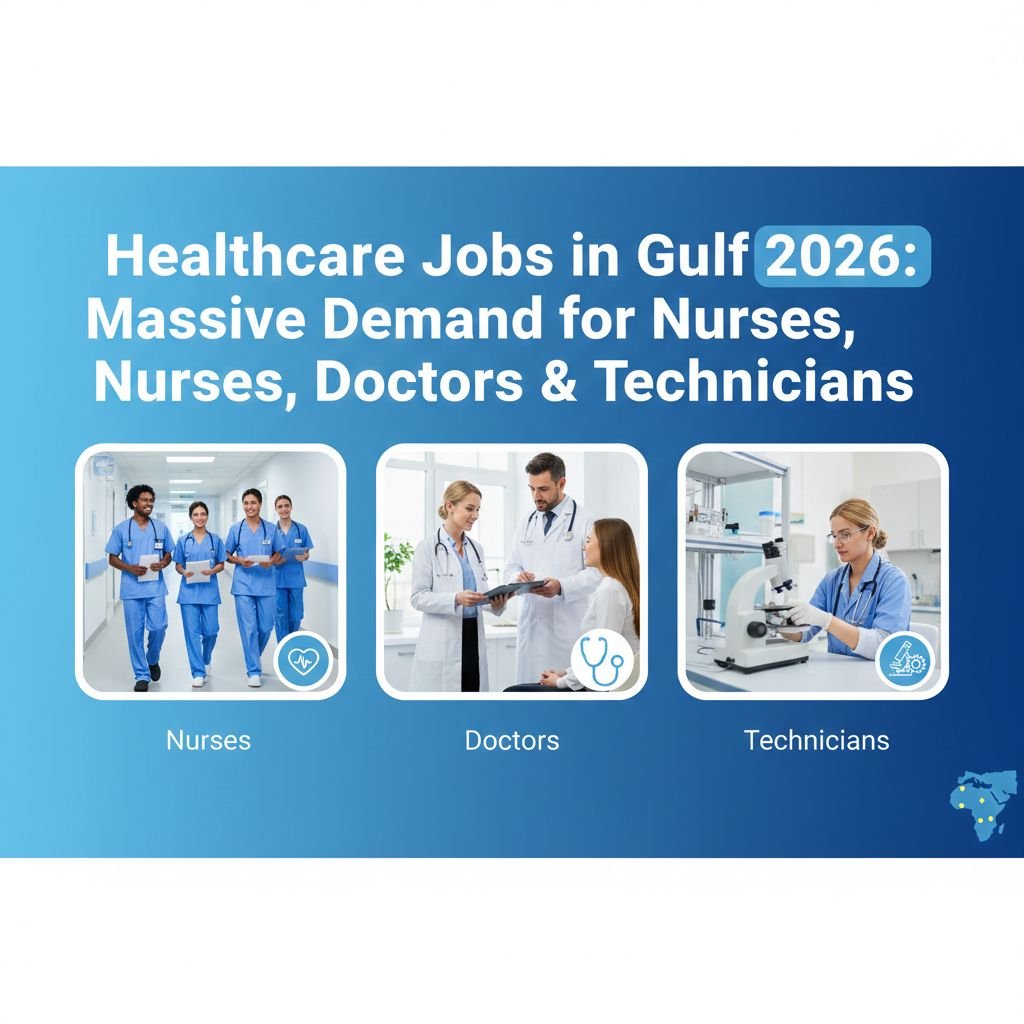
Healthcare Jobs in Gulf 2026: Massive Demand for Nurses, Doctors & Technicians

Gulf Healthcare Jobs 2026 | Nurses, Doctors & Technicians in Demand

The Gulf region is witnessing an unprecedented boom in healthcare hiring. If you’re a nurse, doctor, or medical technician looking for international opportunities, 2026 is your year. With massive government investments, hospital expansions, and ambitious healthcare transformation projects across Saudi Arabia, the UAE, and Qatar, the demand for qualified medical professionals has never been higher.

The Big Picture: Why Healthcare Hiring Is Exploding in the Gulf

The numbers tell a compelling story. The Gulf Cooperation Council (GCC) healthcare ecosystem is projected to require over 50,000 additional nurses by 2027 alone . And that’s just one category. Demand for specialist doctors, technicians, and allied health professionals is growing at an annual rate of 10-15%, with some markets like Saudi Arabia seeing increases of 20-25% .

What’s driving this massive demand?

  • Population growth across the region
  • Hospital expansion projects tied to national development plans
  • Medical tourism initiatives requiring world-class staffing
  • Aging healthcare infrastructure being replaced and upgraded
  • Vision 2030 in Saudi Arabia and similar programs in the UAE prioritizing healthcare excellence 

The Gulf is investing heavily in becoming a global healthcare destination. And that means they need you.

Nursing: The Greatest Demand

If you’re a nurse, your skills are needed now more than ever. India alone sends approximately 25,000 to 30,000 nurses to the GCC annually, representing 45-50% of the nurse workforce joining from other countries . And the demand continues to outpace supply.

Why Nurses Are in Such High Demand

  • Critical shortages across ICU, operating rooms, and emergency departments
  • Expansion of long-term care facilities requiring specialized nursing staff
  • Locum contracts creating flexible, fast-track opportunities
  • Competitive packages making Gulf roles attractive globally

What Nurses Can Expect

Salaries for nurses in the Gulf are highly competitive. Typical monthly packages range from approximately ₹1.3 to ₹1.5 lakh (around AED 5,700 to AED 6,600), with the added benefit of no income tax . Most positions also include:

  • Free accommodation or housing allowance
  • Transportation to and from work
  • Comprehensive medical coverage
  • Annual return airfare to home country
  • End-of-service benefits

For ICU, critical care, and operating room nurses, demand is particularly intense, and packages reflect that priority .

Doctors: Specialists Wanted

The Gulf is not just looking for general practitioners. The real demand—and the real money—is in specializations. Population growth, evolving regulations, and hospital expansion are driving strong demand for Western-trained doctors across the UAE, Saudi Arabia, and Qatar .

Specialties in Highest Demand for 2026

Based on current hospital needs and recruitment data, these specialties are at the top of every employer’s wish list :

  • Interventional Radiology
  • ENT (Otolaryngology)
  • Female Breast Surgery and Radiology
  • Neurology
  • Urology
  • Female Obstetrics & Gynaecology
  • Fetal Medicine
  • IVF & Reproductive Medicine
  • All Pediatric Subspecialties (Cardiovascular, Endocrinology, Hematology Oncology, Orthopedics)

Pediatric subspecialties are particularly hot right now. Hospitals are shifting toward senior and niche consultant roles as they expand subspecialty services. Positions like Pediatric Cardiovascular Consultant and Pediatric Cardiothoracic Transplant Consultant don’t open often—but when they do, hospitals move quickly .

Doctor Salary Ranges

In the UAE, doctors earn between AED 120,000 and AED 360,000 per year, depending on specialty, experience, and qualifications . Senior consultants and those in high-demand subspecialties command the top end of this range, plus generous benefits packages.

Medical Technicians and Allied Health Professionals

Doctors and nurses get most of the attention, but the Gulf also desperately needs skilled technicians and allied health professionals.

Roles in High Demand

  • Anesthesia Technicians: Strong demand for both permanent and locum contracts 
  • Cardiovascular Technologists
  • Radiology and Imaging Technicians
  • Laboratory Technologists
  • Respiratory Therapists
  • Perfusionists
  • Surgical Technologists

The expansion of specialized cardiac centers, oncology units, and advanced surgical suites means technicians with specific expertise are being recruited aggressively.

Locum Opportunities: The Fast Track to the Gulf

One of the biggest trends in the 2026 Gulf healthcare market is the explosion of locum (temporary) contracts. These aren’t just stop-gap measures anymore—they’ve become a permanent feature of Gulf hiring .

Why Locum Contracts Are Growing

  • Faster hiring: Hospitals need coverage now, and locum roles typically bypass longer approval chains
  • Lower commitment: You can test life and work in the region without a long initial contract
  • Pathway to permanent: Many locum assignments convert to permanent roles after a successful term
  • Broad demand: Anesthesia, ICU, emergency medicine, and nursing dominate locum requests 

If you want speed and flexibility while working in the Middle East, locum contracts remain the fastest entry point.

Leadership and Executive Roles

For experienced healthcare professionals, 2026 offers unprecedented leadership opportunities. IHR Canada reports a clear increase in executive-level and senior leadership recruitment .

Executive Roles Currently in Demand

  • Executive Director, Medical Tourism and Medical Services
  • Associate Executive Director, Nursing Services
  • Head of Clinical Data
  • Health Services Manager, Oncology
  • Executive Health Medicine Chairperson
  • Program Manager, Healthcare Improvement
  • Executive Director, Business Development

This signals growing investment in medical tourism, patient experience, nursing leadership, and data-driven service improvement. For many professionals, career options now extend well beyond bedside practice .

How to Prepare: Your Action Plan

Hospitals in the Gulf strongly favor candidates who are already licensed or fully prepared for rapid licensing. In many cases, licensing delays slow hiring more than interviews or credentialing .

Getting “Deployment Ready”

To be among the first candidates considered when new roles open, you need:

  1. Professional licenses up to date and verified
  2. Employment and education certificates organized and attested
  3. References identified and contactable
  4. Clean, clear credentialing records
  5. Prometric exam preparation (required for most Gulf licensing)

The Licensing Process

Most Gulf countries require healthcare professionals to pass licensing exams:

  • Saudi Arabia: Saudi Commission for Health Specialties (SCFHS) exam
  • UAE: Dubai Health Authority (DHA) or Department of Health (DOH) exam
  • Qatar: Qatar Council for Healthcare Practitioners (QCHP) exam

Many recruitment platforms now offer end-to-end support, including training for these exams, documentation assistance, and visa processing .

What You Can Expect: Compensation and Benefits

The financial package for healthcare professionals in the Gulf remains one of the most attractive globally.

Typical Package Components

ComponentWhat to Expect
Base SalaryTax-free, competitive with Western markets
HousingFree accommodation or generous allowance
TransportProvided or allowance included
Medical InsuranceComprehensive coverage for you and family
EducationSchool fee allowances for children (senior roles)
Annual Leave30-45 days plus public holidays
Flight AllowanceAnnual return tickets to home country
End of ServiceGratuity payment upon contract completion

The combination of tax-free income and comprehensive benefits means Gulf opportunities offer exceptional savings potential compared to Western markets.

The Future: Beyond 2026

The healthcare transformation in the Gulf is just beginning. Saudi Vision 2030, UAE Centennial 2071, and Qatar National Vision 2030 all prioritize healthcare excellence as a cornerstone of their post-oil economies .

This means sustained demand for international talent for years to come. For healthcare professionals willing to invest in the right credentials and adapt to Gulf work culture, the opportunities are truly limitless.

Ready to Make Your Move?

The Gulf healthcare market in 2026 is a seller’s market—and you’re the seller. Whether you’re an experienced consultant looking for a leadership role, a specialist nurse seeking adventure and savings, or a technician ready to advance your career, the opportunities are here.

Your next step: Get your documents in order, start your licensing preparation, and connect with reputable recruitment partners who specialize in Gulf placements. The hospitals are ready. The packages are waiting. The only question is: are you?


Frequently Asked Questions (FAQs)

1. What are the most in-demand healthcare jobs in the Gulf for 2026?

Nurses (especially ICU, OR, and critical care), specialist doctors in radiology, pediatrics, neurology, and reproductive medicine, and medical technicians across anesthesia, cardiology, and imaging are in highest demand. Leadership roles in medical tourism and nursing administration are also growing rapidly 

2. How much can I earn as a healthcare professional in the Gulf?

Nurses typically earn tax-free packages equivalent to AED 5,700-6,600+ monthly plus benefits. Doctors earn AED 120,000-360,000 annually depending on specialty. All roles include accommodation, transport, medical coverage, and annual flights 

3. What qualifications do I need to work in Gulf healthcare?

You need recognized professional degrees (MBBS, BSN, etc.), valid licenses from your home country, and usually 2-5 years experience. You’ll also need to pass country-specific licensing exams (DHA, DOH, SCFHS) and have your credentials attested 

4. Are locum contracts a good option for first-timers in the Gulf?

Yes! Locum contracts offer faster hiring, lower commitment, and let you test the region before committing long-term. Many locum positions convert to permanent roles after successful assignments 

5. Is the demand real, or just hype?

The demand is absolutely real. The GCC needs over 50,000 additional nurses by 2027. Major hospital expansions, medical tourism growth, and national healthcare transformation plans are driving sustained, documented demand across all specialties 

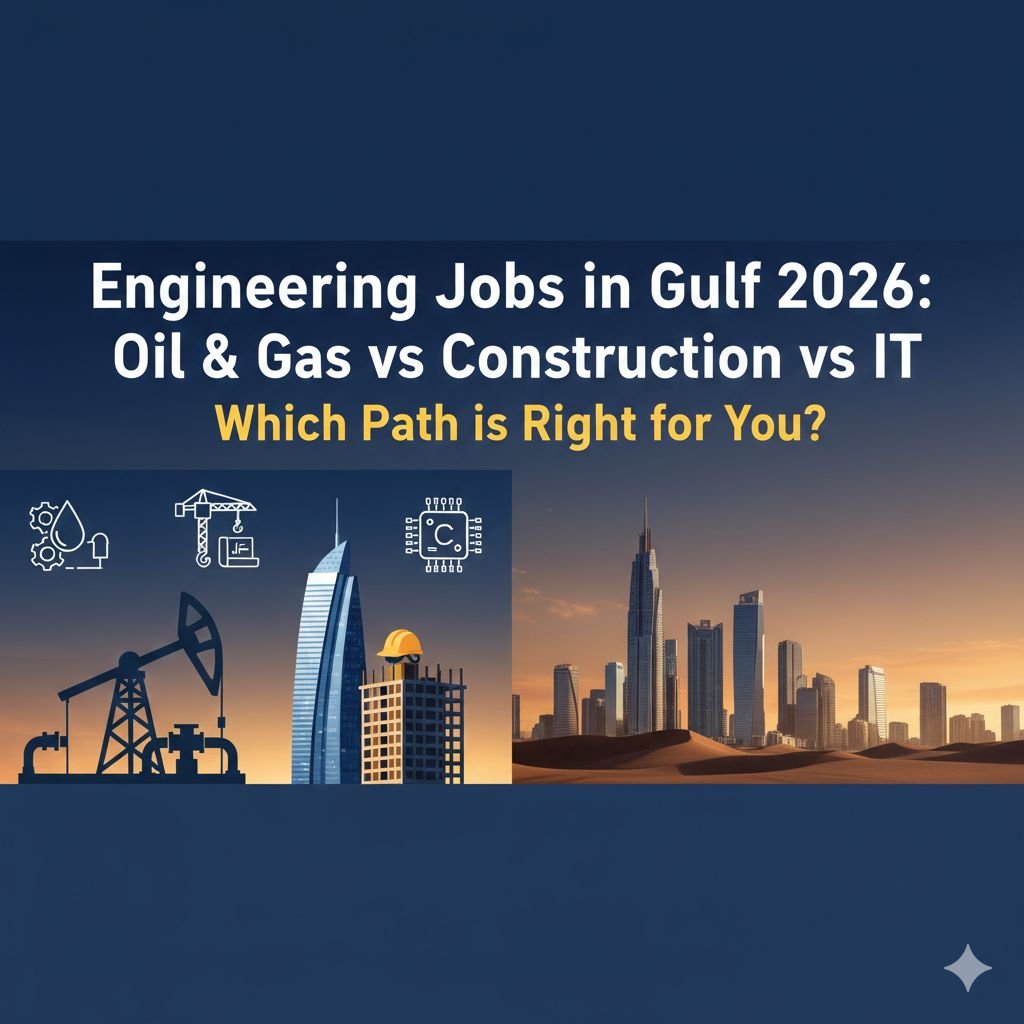
Engineering Jobs in Gulf 2026: Oil & Gas vs Construction vs IT – Which Path is Right for You?

Engineering Jobs in Gulf 2026 | Oil & Gas vs Construction vs IT

If you’re an engineer eyeing the Gulf region in 2026, you’ve picked the right time and the right place. The UAE—particularly Dubai and Abu Dhabi—is experiencing a jobs boom across multiple sectors. But here’s the challenge: with so many opportunities, how do you choose the right path?

The Big Picture: UAE’s 2026 Job Market

Before diving into specific sectors, let’s look at the landscape. According to industry experts, construction, technology, and energy are leading hiring demand in 2026 . Major infrastructure projects, continued investment in renewable energy, and rapid digital transformation are driving the need for skilled professionals across these industries .

The UAE’s open immigration policies continue to attract global talent, making competition healthy but opportunities abundant. Companies are prioritizing candidates who combine technical depth with leadership skills and digital fluency .

Sector 1: Oil & Gas Engineering – The Established Powerhouse

Oil & Gas has been the backbone of Gulf economies for decades, and 2026 is no different. Global firms like Wood continue to recruit heavily for process engineers, project managers, and safety specialists across the UAE .

What’s Hot in Oil & Gas:

  • Process Engineers: Wood is actively hiring Lead Process Engineers for major onshore brownfield projects in Dubai and Sharjah . These roles require expertise in simulation software like HYSYS and experience with gas processing .
  • Project Managers: Large-scale FEED (Front End Engineering Design) and detail design scopes need experienced leaders .
  • Specialized Roles: Positions focusing on materials, corrosion, and NGL (Natural Gas Liquids) projects are in demand .

Who’s Hiring:

  • Wood Plc: With over five decades in the region, Wood offers competitive packages, global project exposure, and strong commitment to professional development .
  • Other Major Players: Companies like Jacobs also maintain strong UAE presence with offices in Abu Dhabi, Dubai, and Sharjah .

Salary & Benefits:

Oil & Gas roles typically offer competitive compensation including medical insurance, life cover, end-of-service gratuity, and employee share plans . Senior roles with 10+ years experience command premium packages.

The Verdict:

Best for: Engineers seeking stability, global project exposure, and traditional career progression. Ideal if you have specialized process or petrochemical experience.

Sector 2: Construction & Infrastructure – Building Tomorrow’s Cities

Dubai and Abu Dhabi are construction hotspots in 2026. With visionary projects continuing to reshape the skyline, civil and structural engineers are in high demand.

What’s Hot in Construction:

  • Civil Engineers: Companies are seeking both fresh graduates and experienced engineers for building and infrastructure projects across the UAE . Key skills include structural mechanics, concrete and steel design, and geotechnical fundamentals .
  • Infrastructure Specialists: Roads, bridges, and utilities projects need engineers familiar with UAE codes and international standards .
  • Geologists & Geotechnical Engineers: Fugro, a global leader in geo-data, is recruiting graduate geologists for field mapping surveys and geotechnical data analysis .

Software Skills That Matter:

Employers value proficiency in:

  • AutoCAD and Revit
  • Civil 3D
  • Structural analysis tools like Etabs, SAFE, and STAAD 

Who’s Hiring:

  • Jacobs: Offers roles across engineering, architecture, and construction management for projects shaping the UAE’s future .
  • Fugro: Looking for UAE nationals with geology or earth sciences degrees for exciting work in the subsea industry .
  • Various Consultancies: Engineering design firms need talent with understanding of UAE building codes and international standards .

The Verdict:

Best for: Engineers who want to see tangible results from their work—buildings, bridges, and infrastructure that shape communities. Great for fresh graduates and early-career professionals.

Sector 3: IT Engineering – The Digital Future

Technology is transforming every industry, and IT engineers are the architects of this transformation. In 2026, the lines between traditional engineering and digital skills are blurring.

What’s Hot in IT Engineering:

  • DevSecOps Engineers: Moove is seeking a Senior DevSecOps Engineer in Dubai to design scalable cloud security and infrastructure . This role requires 10+ years experience with AWS, Terraform, CI/CD pipelines, and observability platforms .
  • Cybersecurity Engineers: Siemens is hiring IT/OT Cybersecurity Engineers for Industrial Control Systems in Dubai and Abu Dhabi . These specialists protect critical infrastructure in oil & gas, water, and petrochemical sectors .
  • IT Infrastructure Roles: Jacobs and other firms need IT professionals to develop and support innovative technologies .

In-Demand Skills:

  • Cloud platforms (AWS)
  • Infrastructure as Code (Terraform)
  • Cybersecurity frameworks (IEC 62443, NIST)
  • Industrial protocols (Modbus, OPC, PROFINET)
  • Scripting (Python, PowerShell, Bash) 

Who’s Hiring:

  • Moove: A fast-growing scale-up backed by Uber and Mubadala, transforming mobility with revenue-based financing .
  • Siemens: Global leader in automation and digitalization, offering roles that blend IT and operational technology .
  • Jacobs: Seeking IT talent to support digital innovation .

Certifications That Help:

For cybersecurity roles, certifications like CCNA, CISA, CompTIA Security+, or CISSP are often mandatory .

The Verdict:

Best for: Engineers who love problem-solving, want to work with cutting-edge technology, and enjoy roles that evolve constantly. Ideal for those comfortable with ambiguity and proactive shaping of solutions .

Head-to-Head Comparison: Which Sector Wins?

FactorOil & GasConstructionIT Engineering
StabilityHigh (established industry)High (government-backed projects)High (digital transformation essential)
Entry BarriersOften requires experienceFresh graduate opportunities existCan require specialized skills
Salary PotentialVery high for senior rolesCompetitiveHigh, especially specialized roles
Growth TrajectoryTraditional career ladderProject-based advancementFast-evolving, skill-based
Future-ProofTransitioning to cleaner energySustainable construction growingAI and cybersecurity booming
Work EnvironmentOffice + site visitsOffice + siteOften hybrid/remote possible

Making Your Choice: Questions to Ask Yourself

Choose Oil & Gas if:

  • You have process or chemical engineering background
  • You value established career paths with global companies
  • You’re interested in energy transition and sustainability

Choose Construction if:

  • You love seeing physical results from your work
  • You’re a civil or structural engineer
  • You want to contribute to iconic projects

Choose IT Engineering if:

  • You’re passionate about technology and automation
  • You enjoy continuous learning and adaptation
  • You want roles with flexibility and modern work practices

Tips for Standing Out in 2026

  1. Blend skills: “A marketing professional who understands data analytics or an HR professional who can leverage AI for talent mapping” will stand out . The same applies to engineers—combine technical depth with digital fluency.
  2. Understand local context: GCC experience is increasingly valued. Understanding cultural dynamics and business regulations gives you an edge .
  3. Network authentically: Recruiters can spot generic, AI-generated applications instantly. Personalize your approach .
  4. Stay honest: Never exaggerate salary or experience. Integrity matters .
  5. Keep learning: The market demands specialized, value-added skill sets. Generalist roles are declining .

Final Thoughts

The Gulf engineering market in 2026 offers something for everyone. Oil & Gas provides stability and deep expertise. Construction lets you build the future literally from the ground up. IT engineering positions you at the forefront of digital transformation.

Your choice depends on your background, interests, and career goals. But here’s the good news: with major investments across all three sectors, skilled engineers are needed and valued. The opportunities are real, the packages are competitive, and the Gulf remains one of the world’s most exciting places to build an engineering career.

Whichever path you choose, 2026 could be your year in the Gulf.


Frequently Asked Questions (FAQs)

1. Which engineering sector pays the most in the UAE in 2026?

Senior roles in Oil & Gas and specialized IT engineering (like DevSecOps and Cybersecurity) typically command the highest salaries. However, compensation depends on experience, qualifications, and the specific employer. All three sectors offer competitive packages including benefits like health insurance, housing allowances, and end-of-service benefits .

2. Do I need UAE experience to get an engineering job?

While global experience is valued, understanding the GCC market is increasingly seen as a major advantage . However, many international companies like Wood, Jacobs, and Siemens hire globally and value diverse perspectives. If you lack local experience, emphasize your adaptability and willingness to learn regional standards .

3. Are there opportunities for fresh engineering graduates?

Yes. Companies like Fugro actively recruit graduate geologists and engineers . Civil engineering roles also welcome fresh graduates with up to 4 years of experience . The key is demonstrating strong foundational knowledge, internship experience, and willingness to learn .

4. What software skills should I learn to boost my employability?

It depends on your sector:
Oil & Gas: HYSYS, Flare System Analyzer, PipeNet, Pipesim 
Construction: AutoCAD, Revit, Civil 3D, Etabs, SAFE, STAAD 
IT Engineering: AWS, Terraform, CI/CD tools, Python, cybersecurity platforms 

5. Is AI replacing engineering jobs in the Gulf?

AI is reshaping roles rather than replacing them. Routine and generalist functions are declining, but demand is growing for specialists who combine technical expertise with AI literacy . The future belongs to engineers who blend human skills with technology .

Mid-Career Switch to the Gulf: Your Complete 2026 Transition Guide for UK Professionals

Gulf Career Advice 2026 | UK to UAE/Saudi Transition Guide

Are you a UK professional feeling stuck? Rising taxes, stagnant wages, and limited career progression have many British workers asking the same question: “Is it time to leave the UK and work abroad?”

Why UK Professionals Are Looking to the Gulf

The numbers tell a compelling story. In the UK, professionals face high income tax and national insurance, rising living costs, and limited salary growth. The Gulf offers a fundamentally different equation:

  • Tax-free income – What you earn is what you take home, resulting in 30-45% higher net income for many UK professionals
  • Career acceleration – Companies expand faster, promotions come sooner, and international exposure is common
  • Quality of life – Year-round sunshine, modern infrastructure, world-class healthcare, and vibrant expat communities
  • High demand for Western-educated talent – UK qualifications are highly regarded across the UAE and Saudi Arabia

For context, a manager earning £80,000 in London takes home approximately £5,300 monthly. The same role in Dubai at AED 34,000 monthly delivers £7,400-8,000 take-home pay—roughly 50% more, tax-free.

The Challenge: Why Career Switching in the GCC Is Hard

Before you book that flight, understand the obstacles. Changing careers in the Gulf is steeper than in the UK for several reasons:

1. Employers Prioritize Direct Industry Experience

Unlike some global markets where transferable skills are highly valued, GCC employers tend to favor candidates who can hit the ground running. A sales professional in construction may struggle to move into healthcare sales. A project manager from banking may be passed over for government roles.

2. Visa and Sponsorship Constraints

Your legal status is tied to your employer. Changing careers means ending contracts, losing sponsorship, and navigating complex labor regulations—financial and logistical risks, especially if the transition involves a probation period.

3. Fierce Competition

With talent flowing in from around the world, employers have access to highly specialized candidates. Standing out without direct experience is genuinely difficult.

4. Cultural Perceptions

In the region, long-term stability is prized. Jumping industries can be seen as lack of focus—unless the move is strategically explained.

When Does a Career Change Make Sense?

Despite these hurdles, a career switch can be the right move when:

  • Your current industry is shrinking or being disrupted
  • You’re burned out or disengaged
  • Your interests or values have changed
  • You’ve developed transferable skills that align with another industry

How to Successfully Pivot to the Gulf: Step-by-Step

Step 1: Self-Assessment and Market Research

Before anything else, get clear on your direction:

  • What are your core transferable skills?
  • Which Gulf industries value these skills?
  • What kind of work energizes you?

Research GCC job market trends on platforms like Bayt.comGulftalent.com, and LinkedIn to see where your skills align.

Step 2: Focus on Transferable Skills

Employers won’t care what you want to do unless you show what you can do for them. Reframe your experience by highlighting:

  • Problem-solving across industries
  • Leadership and communication
  • Data analysis or digital skills
  • Sales, strategy, or operational expertise

Your CV must draw clear links between your past roles and your target Gulf industry.

Step 3: Invest in Credentials

Credibility matters enormously in career switching. Enrolling in reputable certifications helps you:

  • Build confidence
  • Gain structured knowledge
  • Show commitment to the change

Gulf employers value certifications in project management (PMP), data analysis, HR, digital marketing, BIM, and more.

Step 4: Leverage Internal Mobility

Already working in a large UK organization with Gulf operations? Explore internal transfers. This allows you to:

  • Switch functions while potentially retaining visa sponsorship
  • Learn from within a familiar environment
  • Build bridges with stakeholders in your target region

Internal transfers are often more flexible than external moves.

Step 5: Network with Purpose

Changing careers requires strategic networking. Focus on:

  • Attending industry-specific events or webinars
  • Connecting with professionals in your target field on LinkedIn
  • Asking for informational interviews, not job offers

Use these conversations to understand Gulf hiring practices, expectations, and how others made the switch.

Step 6: Tailor Your CV and Online Presence

Generic applications fail. Recruiters ignore them. Instead:

  • Add job-specific keywords for Gulf employers
  • Optimize your LinkedIn profile—no profile = no visibility
  • Tailor your CV for each country and position

Your cover letter should tell a compelling story: why the shift, what you’ve done to prepare, and how you’ll add value.

Step 7: Be Realistic About Entry Points

Sometimes, a step sideways is necessary before moving up. You may need to accept:

  • A slightly lower role
  • A smaller company
  • A probationary period

The key is gaining relevant regional experience that opens long-term doors.

Sectors Hiring in 2026

Leadership demand in the GCC is closely tied to national development strategies. High-growth sectors include:

  • Government transformation and public administration
  • Infrastructure, construction, and smart city development
  • Energy, renewables, and climate transition projects
  • Financial services, fintech, and regulatory leadership
  • Healthcare systems and hospital management
  • Technology and digital transformation

Saudi Arabia, in particular, is expanding management roles linked to Vision 2030 projects.

The Cultural Intelligence Factor

Perhaps the most significant adjustment for UK professionals is cultural. Leadership styles in the Gulf blend formal authority with relationship-based management. Key characteristics include:

  • High respect for seniority, experience, and reputation
  • Decision-making influenced by consensus and informal consultation
  • Strong emphasis on loyalty, discretion, and long-term relationships
  • Increasing demand for transparent, data-driven management

Western leadership models focused purely on individual authority often underperform without adaptation. Successful leaders balance decisiveness with cultural sensitivity.

For senior clinical or executive roles, this shift is even more pronounced. You’re not just hired to do a job—you’re expected to build systems and mentor local talent.

Common Mistakes to Avoid

1. Sending Generic Resumes

Recruiters ignore them. Always tailor for each position and country.

2. Relying Only on Agents

Many “agents” promise easy jobs but disappear after collecting fees. Apply directly on verified portals:

3. Ignoring Skill Upgrades

The Gulf market needs professionals with recognized certifications. Invest in one short-term course—it can triple your interview calls.

4. Falling for Fake Offers

If someone promises a visa before an interview—red flag. Verify all offers.

5. Underestimating Cultural Adaptation

Cultural understanding isn’t optional. It directly affects trust, team performance, and long-term credibility.

A Realistic Timeline

Changing careers won’t happen overnight. Expect:

  • A longer job search
  • More rejections than usual
  • A steeper learning curve once hired

Sample action plan:

  • Month 1: Fix resume + optimize LinkedIn
  • Month 2: Apply to verified jobs daily + practice interviews
  • Month 3: Earn a relevant certification + follow up with recruiters

The Verdict: Is the Gulf Right for You?

A mid-career switch to the Gulf isn’t for everyone. It requires shedding old institutional comforts and embracing dynamic, high-stakes environments. But for the right professional, it’s the ultimate career accelerant.

You’re not just changing jobs—you’re contributing to institutional growth, national priorities, and regional transformation. The region offers a professional canvas that doesn’t exist elsewhere.

With persistence, strategy, and skill development, the Gulf job market offers real opportunities for UK professionals looking to reinvent themselves.

Frequently Asked Questions (FAQs)Are you a UK professional feeling stuck? Rising taxes, stagnant wages, and limited career progression have many British workers asking the same question: “Is it time to leave the UK and work abroad?”

For thousands of mid-career professionals, the answer in 2026 is the Gulf Cooperation Council (GCC) region—specifically the UAE and Saudi Arabia. With tax-free salaries, ambitious national development projects, and strong demand for Western-educated talent, the Gulf offers a fundamentally different career equation.

But here’s the reality: switching careers and countries simultaneously is one of the boldest—and riskiest—moves you can make. This guide walks you through everything you need to know to make a successful mid-career pivot to the Gulf.

Why UK Professionals Are Looking to the Gulf

The numbers tell a compelling story. In the UK, professionals face high income tax and national insurance, rising living costs, and limited salary growth. The Gulf offers a fundamentally different equation:

  • Tax-free income – What you earn is what you take home, resulting in 30-45% higher net income for many UK professionals
  • Career acceleration – Companies expand faster, promotions come sooner, and international exposure is common
  • Quality of life – Year-round sunshine, modern infrastructure, world-class healthcare, and vibrant expat communities
  • High demand for Western-educated talent – UK qualifications are highly regarded across the UAE and Saudi Arabia

For context, a manager earning £80,000 in London takes home approximately £5,300 monthly. The same role in Dubai at AED 34,000 monthly delivers £7,400-8,000 take-home pay—roughly 50% more, tax-free.

The Challenge: Why Career Switching in the GCC Is Hard

Before you book that flight, understand the obstacles. Changing careers in the Gulf is steeper than in the UK for several reasons:

1. Employers Prioritize Direct Industry Experience

Unlike some global markets where transferable skills are highly valued, GCC employers tend to favor candidates who can hit the ground running. A sales professional in construction may struggle to move into healthcare sales. A project manager from banking may be passed over for government roles.

2. Visa and Sponsorship Constraints

Your legal status is tied to your employer. Changing careers means ending contracts, losing sponsorship, and navigating complex labor regulations—financial and logistical risks, especially if the transition involves a probation period.

3. Fierce Competition

With talent flowing in from around the world, employers have access to highly specialized candidates. Standing out without direct experience is genuinely difficult.

4. Cultural Perceptions

In the region, long-term stability is prized. Jumping industries can be seen as lack of focus—unless the move is strategically explained.

When Does a Career Change Make Sense?

Despite these hurdles, a career switch can be the right move when:

  • Your current industry is shrinking or being disrupted
  • You’re burned out or disengaged
  • Your interests or values have changed
  • You’ve developed transferable skills that align with another industry

How to Successfully Pivot to the Gulf: Step-by-Step

Step 1: Self-Assessment and Market Research

Before anything else, get clear on your direction:

  • What are your core transferable skills?
  • Which Gulf industries value these skills?
  • What kind of work energizes you?

Research GCC job market trends on platforms like Bayt.comGulftalent.com, and LinkedIn to see where your skills align.

Step 2: Focus on Transferable Skills

Employers won’t care what you want to do unless you show what you can do for them. Reframe your experience by highlighting:

  • Problem-solving across industries
  • Leadership and communication
  • Data analysis or digital skills
  • Sales, strategy, or operational expertise

Your CV must draw clear links between your past roles and your target Gulf industry.

Step 3: Invest in Credentials

Credibility matters enormously in career switching. Enrolling in reputable certifications helps you:

  • Build confidence
  • Gain structured knowledge
  • Show commitment to the change

Gulf employers value certifications in project management (PMP), data analysis, HR, digital marketing, BIM, and more.

Step 4: Leverage Internal Mobility

Already working in a large UK organization with Gulf operations? Explore internal transfers. This allows you to:

  • Switch functions while potentially retaining visa sponsorship
  • Learn from within a familiar environment
  • Build bridges with stakeholders in your target region

Internal transfers are often more flexible than external moves.

Step 5: Network with Purpose

Changing careers requires strategic networking. Focus on:

  • Attending industry-specific events or webinars
  • Connecting with professionals in your target field on LinkedIn
  • Asking for informational interviews, not job offers

Use these conversations to understand Gulf hiring practices, expectations, and how others made the switch.

Step 6: Tailor Your CV and Online Presence

Generic applications fail. Recruiters ignore them. Instead:

  • Add job-specific keywords for Gulf employers
  • Optimize your LinkedIn profile—no profile = no visibility
  • Tailor your CV for each country and position

Your cover letter should tell a compelling story: why the shift, what you’ve done to prepare, and how you’ll add value.

Step 7: Be Realistic About Entry Points

Sometimes, a step sideways is necessary before moving up. You may need to accept:

  • A slightly lower role
  • A smaller company
  • A probationary period

The key is gaining relevant regional experience that opens long-term doors.

Sectors Hiring in 2026

Leadership demand in the GCC is closely tied to national development strategies. High-growth sectors include:

  • Government transformation and public administration
  • Infrastructure, construction, and smart city development
  • Energy, renewables, and climate transition projects
  • Financial services, fintech, and regulatory leadership
  • Healthcare systems and hospital management
  • Technology and digital transformation

Saudi Arabia, in particular, is expanding management roles linked to Vision 2030 projects.

The Cultural Intelligence Factor

Perhaps the most significant adjustment for UK professionals is cultural. Leadership styles in the Gulf blend formal authority with relationship-based management. Key characteristics include:

  • High respect for seniority, experience, and reputation
  • Decision-making influenced by consensus and informal consultation
  • Strong emphasis on loyalty, discretion, and long-term relationships
  • Increasing demand for transparent, data-driven management

Western leadership models focused purely on individual authority often underperform without adaptation. Successful leaders balance decisiveness with cultural sensitivity.

For senior clinical or executive roles, this shift is even more pronounced. You’re not just hired to do a job—you’re expected to build systems and mentor local talent.

Common Mistakes to Avoid

1. Sending Generic Resumes

Recruiters ignore them. Always tailor for each position and country.

2. Relying Only on Agents

Many “agents” promise easy jobs but disappear after collecting fees. Apply directly on verified portals:

3. Ignoring Skill Upgrades

The Gulf market needs professionals with recognized certifications. Invest in one short-term course—it can triple your interview calls.

4. Falling for Fake Offers

If someone promises a visa before an interview—red flag. Verify all offers.

5. Underestimating Cultural Adaptation

Cultural understanding isn’t optional. It directly affects trust, team performance, and long-term credibility.

A Realistic Timeline

Changing careers won’t happen overnight. Expect:

  • A longer job search
  • More rejections than usual
  • A steeper learning curve once hired

Sample action plan:

  • Month 1: Fix resume + optimize LinkedIn
  • Month 2: Apply to verified jobs daily + practice interviews
  • Month 3: Earn a relevant certification + follow up with recruiters

The Verdict: Is the Gulf Right for You?

A mid-career switch to the Gulf isn’t for everyone. It requires shedding old institutional comforts and embracing dynamic, high-stakes environments. But for the right professional, it’s the ultimate career accelerant.

You’re not just changing jobs—you’re contributing to institutional growth, national priorities, and regional transformation. The region offers a professional canvas that doesn’t exist elsewhere.

With persistence, strategy, and skill development, the Gulf job market offers real opportunities for UK professionals looking to reinvent themselves.


Frequently Asked Questions (FAQs)

1. Do I need to find a job before moving to the Gulf?

Yes, absolutely. In almost all cases, you must secure employment before relocating. Your employer will sponsor your work visa and residency. Moving on a tourist visa and searching locally is risky and often illegal

2. How much more money will I actually take home?

Substantially more. Example: A £80,000 UK manager salary nets ~£5,300/month after tax. A comparable Dubai role at AED 34,000/month nets ~£7,400-8,000/month tax-free—roughly 40-50% higher take-home pay

3. Is it easier to transfer internally with my current company?

Yes—this is often the smoothest path. Internal transfers allow you to switch functions while retaining sponsorship and company support. Many UK professionals successfully pivot this way

4. What qualifications do Gulf employers value most?

Gulf employers value:
UK/Western university degrees
British professional certifications (RICS, CCT, PMP, etc.)
Sector-specific expertise aligned with regional priorities
Strong English communication skills (Arabic is a major advantage)

5. How long does the job search typically take?

Realistically, 3-6 months for a targeted search. Changing industries extends this timeline. Be patient, systematic, and prepared for more rejections than a domestic UK search

Post a Job Opening

Fill in the details below. Your job posting will be reviewed by our team.

Basic Information

Specify years of experience required

Location & Salary

Qualifications & Skills

Specify educational requirements
Separate skills with commas

Company Details

Job Details

Contact Information