
Gulf Careers Hub

Why Ramadan is the Perfect Time to Re-evaluate Your Career Path

Why Ramadan is the Perfect Time to Re-evaluate Your Career Path

As the crescent moon ushers in the holy month of Ramadan, millions across the Gulf and the Muslim world enter a period of profound spiritual reflection, self-discipline, and renewed purpose. While many focus on the physical and spiritual aspects of fasting, Ramadan offers something equally valuable for professionals: a unique opportunity for deep career introspection.

The Spiritual Foundation of Career Reflection

Ramadan is fundamentally about intention (niyyah). Muslims fast, pray, and give charity with the intention of drawing closer to God and becoming better versions of themselves. This emphasis on intentionality naturally extends to how we view our work and professional lives.

The Quran reminds us: “And say, ‘Work [righteousness]; soon will Allah see your work and His Messenger and the believers'” (Quran 9:105). This verse establishes that our work is witnessed and matters—not just as a means of earning, but as a form of worship when done with the right intention.

During Ramadan, the heightened spiritual awareness makes us more conscious of how we spend our time and energy. This awareness creates fertile ground for asking fundamental questions:

  • Is my work aligned with my values?
  • Am I using my God-given talents in the most meaningful way?
  • Does my career contribute positively to my community and family?
  • Am I earning in a halal (permissible) and ethical manner?

Why Ramadan Provides Unique Conditions for Career Reflection

Reduced Distractions and Slower Pace

Across the Gulf, working hours are typically reduced during Ramadan. Many organizations operate on shortened schedules, allowing for more rest and reflection. This slower pace creates mental space that’s often absent during the rest of the year.

The reduced social obligations—fewer dinners out, less socializing—means more time at home. The quiet evenings after taraweeh prayers offer uninterrupted moments perfect for journaling, planning, and honest self-assessment.

Heightened Emotional and Spiritual Intelligence

Fasting teaches patience, empathy, and self-control—qualities essential for career success. The physical experience of hunger creates solidarity with the less fortunate, often prompting reflection on whether our work serves others meaningfully.

The spiritual exercises of Ramadan—reading Quran, increased prayer, charity—elevate our emotional intelligence. We become more attuned to our inner voices and more honest about what truly fulfills us.

The Power of Communal Introspection

Ramadan is both deeply personal and profoundly communal. As millions engage in simultaneous reflection, there’s a collective energy that supports personal growth. Conversations with family and friends naturally turn toward purpose, values, and life direction.

This communal introspection normalizes the act of asking big questions. In the workplace, colleagues may share their own reflections, creating an environment where career conversations feel more natural and less transactional.

Practical Steps for Career Reflection During Ramadan

1. Create a Dedicated Reflection Space and Time

Identify the times when you’re most alert and reflective. For many, this is after Fajr prayer in the early morning or after Isha and taraweeh at night. Keep a notebook specifically for career reflections.

Ask yourself structured questions:

  • Gratitude: What aspects of my current role am I grateful for?
  • Alignment: Does my work energize me or drain me? Why?
  • Impact: How does my work serve others? Could it serve more?
  • Growth: Am I learning and growing, or stagnating?
  • Balance: Does my career support or undermine my family and spiritual life?

2. Review the Past Year with Honesty

Ramadan falls at different times each year, offering a unique vantage point. Use this month to honestly assess the past 12 months of your career:

  • What were my biggest professional achievements?
  • What challenges did I face, and how did I respond?
  • Did I meet the goals I set last Ramadan?
  • What patterns do I notice—recurring frustrations or moments of flow?
  • What would I do differently if I could?

3. Seek Counsel Through Thoughtful Conversation

Ramadan gatherings often involve deeper conversations than usual. Use iftar invitations and family gatherings as opportunities to discuss career matters with trusted mentors, family members, or friends.

Ask those who know you well:

  • What strengths do they see in you that you might undervalue?
  • Do they notice misalignments between your values and your work?
  • What career paths have they observed that might suit you?

4. Evaluate Your Work’s Ethical Dimension

Ramadan heightens awareness of halal and haram. Use this sensitivity to examine your work’s ethical dimensions:

  • Is your income source completely clean?
  • Does your work involve any elements that conflict with your values?
  • Are you honest and transparent in your professional dealings?
  • How does your workplace treat its employees and customers?

5. Plan Forward with Intention

The Prophet Muhammad (peace be upon him) said: “The strong believer is better and more beloved to Allah than the weak believer, while there is good in both.” This hadith encourages strength and capability—including professional capability.

Use the clarity gained during Ramadan to set intentional career goals for the coming year:

  • Short-term goals (next 3-6 months): What specific steps can you take immediately?
  • Medium-term goals (1-2 years): What skills or roles should you target?
  • Long-term vision (3-5 years): Where do you ideally want to be?

Frame these goals with the intention of serving others, supporting your family, and using your talents responsibly.

Common Career Realizations During Ramadan

Many professionals report similar insights during this reflective month:

“I’m in the wrong field entirely.” Some realize their current industry doesn’t align with their deeper values. This recognition, while uncomfortable, is the first step toward meaningful change.

“I need more balance.” The physical demands of fasting make work-life balance impossible to ignore. Many resolve to set better boundaries and prioritize family and spiritual life.

“I’ve been undervaluing myself.” The confidence that comes from spiritual strength often translates into professional assertiveness—seeking promotions, negotiating salaries, or pursuing opportunities previously deemed out of reach.

“My skills could serve others more directly.” The charitable spirit of Ramadan inspires some to explore careers in education, healthcare, or social enterprise where impact is more tangible.

Turning Reflection into Action After Ramadan

The challenge of any spiritual practice is sustaining its lessons beyond the month. Here’s how to ensure your career reflections translate into lasting change:

Document Your Insights

Write down everything you realize during Ramadan. Don’t trust memory alone. Create a “Ramadan Career Reflection” document that captures your thoughts, goals, and commitments.

Share Your Intentions

Tell trusted friends or family members about your career reflections. Accountability increases follow-through. Consider finding a “reflection partner” who will check in on your progress throughout the year.

Create an Action Plan with Milestones

Break your career goals into concrete steps with specific timelines. If you’ve decided to pursue additional training, research programs by a specific date. If you’re planning to change industries, identify networking targets for each month.

Schedule Regular Check-Ins

Mark your calendar for quarterly career reviews. Use these check-ins to assess progress against the goals you set during Ramadan and make adjustments as needed.

Maintain the Spirit of Reflection

Carry forward one or two practices from Ramadan into the rest of the year—perhaps weekly journaling, regular volunteer work, or monthly career check-ins. These anchors will help you stay connected to the clarity Ramadan provided.

The Wisdom of Seasons in Career Planning

Islamic tradition recognizes the rhythm of seasons and their spiritual significance. Just as farmers plant in spring and harvest in autumn, careers have seasons of growth, rest, and renewal. Ramadan serves as an annual reset—a time to pause, reflect, and realign.

The Prophet Muhammad (peace be upon him) would increase his worship during Ramadan, but he also maintained consistency in good deeds throughout the year. Similarly, the career clarity gained during Ramadan should inform consistent, intentional action across all months.

A Prayer for Career Guidance During Ramadan

As you navigate your career reflections this Ramadan, consider this supplication:

“Rabbi inni lima anzalta ilayya min khayrin faqir” (My Lord, indeed I am, for whatever good You would send down to me, in need). This du’a of Prophet Musa (Moses) acknowledges our complete dependence on Allah’s guidance and provision.

Also recite the du’a for seeking the best: “Allahumma khir li wa khtar li” (O Allah, choose what is good for me and decree it for me).

Trust that the clarity you seek will come, in Allah’s perfect timing.

Conclusion: Ramadan as Your Annual Career Compass

In the fast-paced professional world of the Gulf, where ambition often drives relentless forward motion, Ramadan offers something precious: permission to pause. This sacred month creates space for the kind of deep reflection that’s impossible in the noise of ordinary life.

By intentionally using Ramadan for career introspection, you transform it from simply a month of fasting into an annual compass reset. The clarity gained during these blessed days can illuminate your professional path for the entire year ahead.

Whether you realize you’re exactly where you belong or discover a need for significant change, the self-knowledge gained through Ramadan reflection is invaluable. Trust the process, be honest with yourself, and have the courage to act on what you discover.

May this Ramadan bring you closer to your Creator, to yourself, and to the career that allows you to serve both excellently. Ramadan Mubarak.

Frequently Asked Questions (FAQs)

1. How can I find time for career reflection during busy Ramadan schedules?

Use the quiet hours after Fajr prayer or after Isha and taraweeh when distractions are minimal. Even 15-20 minutes daily of focused reflection can yield significant insights. Consider keeping a small notebook with you to jot down thoughts that arise during the day.

2. Is it appropriate to actively job search during Ramadan?

Yes, with consideration for the spiritual nature of the month. Many companies in the Gulf continue hiring during Ramadan, though interview processes may move more slowly. Focus applications early in the day and be mindful of prayer and iftar times when scheduling interviews.

3. What if my career reflections reveal I need to make a major change?

First, acknowledge that this realization is a gift of clarity. Use the remaining days of Ramadan to pray for guidance (istikhara) and plan your first steps. Major changes shouldn’t be rushed, but the clarity gained during Ramadan provides a solid foundation for intentional action after Eid.

4. How do I discuss career aspirations with my employer during Ramadan?

The reflective atmosphere can actually make these conversations easier. Request a brief meeting during reduced-stress hours (mid-morning often works well). Frame the conversation around your desire to contribute more meaningfully and grow with the organization—values that resonate during this holy month.

5. Can career reflection during Ramadan benefit non-Muslim professionals in the Gulf?

Absolutely. The quieter pace and reflective atmosphere of Ramadan in the Gulf creates space for introspection regardless of faith. Many non-Muslim professionals find the month offers unique opportunities for thoughtful career assessment that’s harder to achieve during busier periods.
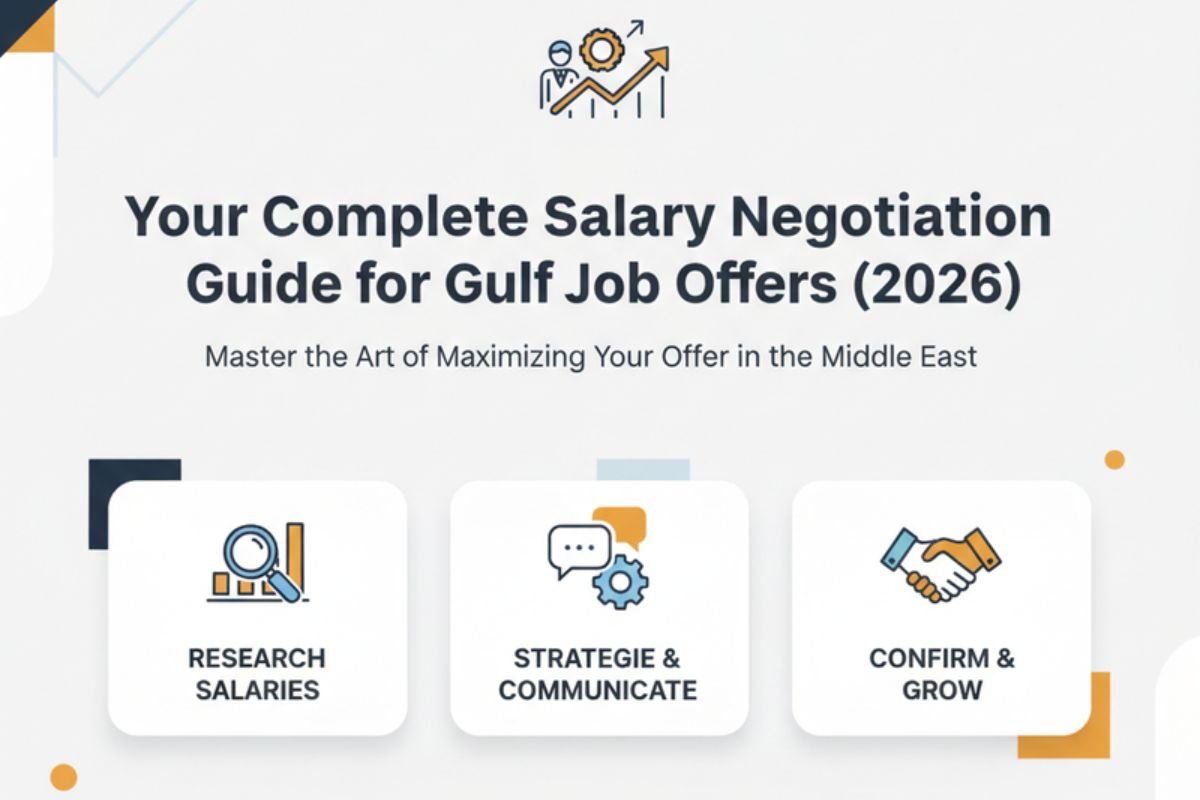
Your Complete Salary Negotiation Guide for Gulf Job Offers (2026)

Salary Negotiation Guide for Gulf Job Offers 2026

How you handle this question in a Gulf job interview can mean the difference between landing a package that sets you up for years, or leaving thousands on the table. The good news? Salary negotiation in the UAE, Saudi Arabia, and Qatar follows predictable rules. Learn them, and you’ll negotiate with confidence.

Step 1: Do Your Homework Before the Interview

Preparation is everything. Before any Gulf job interview, you need to know what you’re worth in today’s market.

Research market rates. The 2026 salary landscape shows modest increases across the region—around 4.1% in the UAE and 4.6% in Saudi Arabia . But averages hide big differences. Specialist roles in technology, finance, and project management are seeing 5-9% increases .

Know the sectors that are hiring. Financial services, industrial sectors, banking, real estate, and technology are leading salary growth in 2026 . If you’re in these fields, you have stronger negotiating power.

Understand total compensation. Gulf packages often include:

  • Base salary
  • Housing allowance (a major component)
  • Transport allowance
  • Annual flight tickets home
  • Education allowance for children
  • Health insurance
  • Bonus potential (typically 2-3 months’ salary) 

Step 2: Master the “Salary Expectations” Question

This is the moment most candidates dread. Here’s how to handle it professionally.

If they ask early in the process: deflect politely.

“I’d be happy to discuss salary once we’ve both confirmed there’s a good fit and I fully understand the scope of the role. Could you share the budgeted range for this position?”

This approach—asking about their budget first—puts you in a stronger position . If their range aligns with your expectations, you’re set. If it’s lower, you can decide whether to continue or politely withdraw.

If they insist on a number: provide a range.

“I’m looking for a package between AED 25,000 and AED 30,000 per month, with flexibility based on the total benefits and role scope.”

Notice the strategy: your ideal figure is at the lower end, showing flexibility while anchoring the conversation where you want it .

Step 3: Know What NOT to Say

Avoid these common mistakes that can cost you thousands.

Never say: “I’m flexible—whatever you think is fair.”

This signals you haven’t done research and gives away your power. Employers may offer well below market rate .

Never get personal: “I need this job because I have rent to pay.”

Shift the conversation from your needs to your value. Focus on what you’ll contribute .

Never respond emotionally: “That’s not enough.”

Instead, say: “Thank you for the offer. Based on my research and the responsibilities we discussed, I was hoping for something closer to X. Is there flexibility?” 

Step 4: Consider the 2026 Market Realities

The Gulf job market in 2026 has some unique dynamics that affect negotiation.

Skills shortages work in your favor. With 90% of employers reporting skills gaps, qualified professionals are in demand . Roles in project management, data science, AI, and engineering are especially hard to fill .

AI skills matter. Around 66% of professionals now use AI regularly at work . Showing genuine AI capability—without exaggerating—can strengthen your position .

Nationalization targets are real. In the UAE, Emiratisation targets for skilled roles are now 10%, with 42% of companies planning to increase Emirati hires . In Saudi Arabia, 93% of employers already hire Saudi nationals, and 75% plan further increases . If you’re an expat, emphasize how you’ll support and develop local talent.

Job switching is common. Nearly 98% of professionals are open to new roles in 2026 . Employers know this, so they’re often willing to negotiate to secure top talent.

Step 5: Negotiate the Whole Package

Salary is important, but don’t overlook other elements that can add significant value.

Housing and transport allowances can be negotiated separately. In Saudi Arabia, family-related benefits (visas, medical cover, flights) are highly valued by 70% of professionals .

Flexible working matters more than ever. Nearly half of professionals rank time-off and flexibility as top benefits . If the base salary is firm, ask about remote work options or additional leave.

Bonuses and reviews. Ask about performance bonus structures (typically 2-3 months’ salary) and when your first salary review will happen .

Step 6: Handle the Offer Professionally

When the offer arrives, here’s your script:

“Thank you for the offer. I’m very excited about this role and the team. I’d like to take 24-48 hours to review the full package carefully.”

Never accept on the spot. Even if you’re thrilled, taking time shows you’re thoughtful and gives you space to prepare counter-arguments.

When you counter, be specific:

“Based on my 8 years of experience and current market rates for this role in Dubai, I was hoping for a base salary of AED 28,000. Is that achievable within your budget?”

Common Questions, Answered

Is negotiation expected in the Gulf?
Yes. Employers often start with a conservative offer, expecting candidates to negotiate professionally .

What if they say the budget is fixed?
Ask about other elements: signing bonus, earlier review date, additional leave, or professional development budget.

How transparent should I be about my current salary?
Be honest about your current package, including all components. Transparency builds trust .

When is the best time to negotiate?
After you’ve received a formal offer, but before you’ve accepted. That’s when you have maximum leverage.

Final Thought: You’re Worth It

Negotiation isn’t rude—it’s expected. In the Gulf’s competitive 2026 job market, employers want candidates who know their worth and communicate it professionally.

Do your research, stay confident and polite, and remember: the best time to negotiate your lifetime earnings is right now, before you accept.

Your next opportunity is waiting. Go get what you deserve.


Frequently Asked Questions (FAQs)

1. What’s the average salary increase in the Gulf for 2026?

Average increases range from 4.1% in the UAE to 4.6% in Saudi Arabia, with Qatar and Oman at 4.3% . However, specialist roles in technology, finance, and project management can see 5-9% increases .

2. How do I research fair salaries before a Gulf job interview?

Use resources like the Hays GCC Salary Guide (covering 400+ roles), Korn Ferry forecasts, and platforms like Bayt.com‘s salary calculator . Talk to recruiters and professionals in your network who know the local market.

3. What should I do if the initial offer is below my expectations?

Thank them politely, then respond with: “Based on my research and the responsibilities we discussed, I was hoping for something closer to X. Is there flexibility in the budget?” This invites conversation rather than confrontation 

4. Are housing and transport allowances negotiable?

Yes. In fact, these are often separate line items in Gulf compensation packages. If base salary is firm, focus negotiations on allowances, bonuses, annual flights, or education benefits 

5. How important are AI skills for Gulf job seekers in 2026?

Very important. Around 66% of professionals now use AI regularly at work . Demonstrating genuine AI capability—through courses, pilot projects, or practical experience—can strengthen your negotiating position .

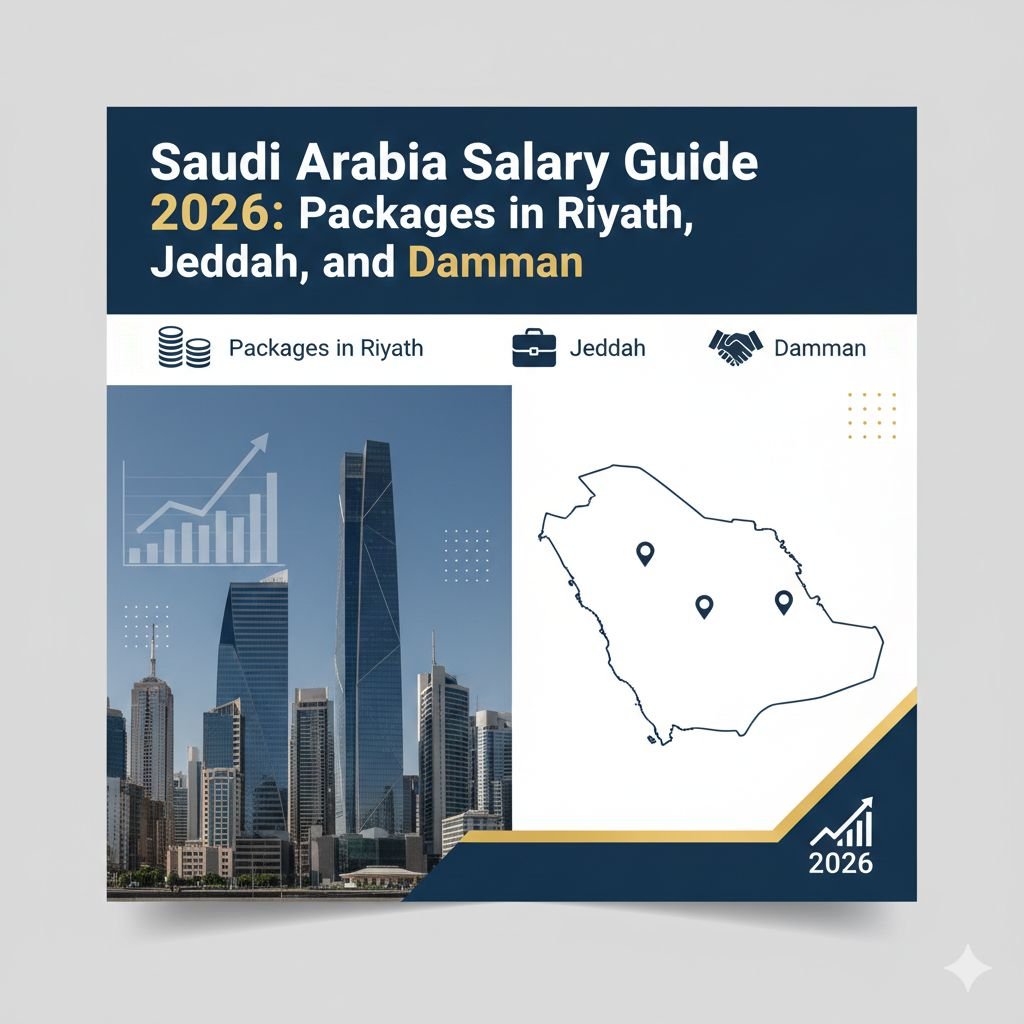
Saudi Arabia Salary Guide 2026: Packages in Riyadh, Jeddah, and Dammam

Saudi Arabia Salary Guide 2026 | Riyadh, Jeddah, Dammam Packages

Are you planning to work in Saudi Arabia in 2026? Maybe you’re a company looking to hire talent in the Kingdom. Either way, understanding salary packages in Riyadh, Jeddah, and Dammam is crucial for making smart decisions.

The Big Picture: Saudi Arabia’s 2026 Job Market

The Kingdom’s economy is on fire. Saudi Arabia recorded employment growth of roughly 4.5% in 2025, and demand remains strong heading into 2026 . Mega-projects like NEOM, the Red Sea Project, and Qiddiya are creating hundreds of thousands of jobs.

Here’s what you need to know about the 2026 landscape:

  • Tax-free income: No personal income tax means you keep every riyal you earn .
  • Salary increases: Average raises around 5% were recorded in 2025, with bonuses ranging from one to six months’ salary .
  • High-demand fields: Technology, engineering, healthcare, finance, and sales lead the pack .
  • New Saudization rules: Engineering roles now require 30% Saudi nationals with minimum SAR 8,000 monthly salary. Procurement roles require 70% Saudization .

Salary Benchmarks by Role: Riyadh, Jeddah, and Dammam

Let’s get to the numbers. These figures represent typical monthly packages across the three major cities.

Technology & Digital Roles

RoleRiyadh (SAR)Jeddah (SAR)Dammam/Khobar (SAR)
Software Engineer18,000 – 25,00015,000 – 22,00014,000 – 20,000
Front-End Developer15,000 – 22,00013,000 – 19,00012,000 – 18,000
Data Analyst17,000 – 24,00015,000 – 21,00014,000 – 19,000
Network Engineer12,000 – 18,00011,000 – 16,00010,000 – 15,000
AI/ML Engineer25,000 – 45,00022,000 – 38,00020,000 – 35,000

Sources: Playroll, Dealls, Knit People 

AI talent commands a premium. Demand for data scientists rose 43% and AI engineer hiring increased 31% between 2024 and 2025 . Saudi Arabia saw 26% year-on-year growth in AI hiring.

Engineering Roles

RoleRiyadh (SAR)Jeddah (SAR)Dammam/Khobar (SAR)
Civil Engineer15,000 – 25,00013,000 – 22,00012,000 – 20,000
Mechanical Engineer16,000 – 28,00014,000 – 24,00013,000 – 22,000
Electrical Engineer17,000 – 30,00015,000 – 26,00014,000 – 24,000
Project Manager25,000 – 45,00022,000 – 40,00020,000 – 35,000
Quality Manager15,000 – 25,00013,000 – 22,00012,000 – 20,000

Source: Knit People 

With new Saudization rules requiring 30% of engineering roles for Saudi nationals, companies are actively hiring. Minimum salary for Saudi engineers is now SAR 8,000 .

Sales, Marketing & Business

RoleRiyadh (SAR)Jeddah (SAR)Dammam/Khobar (SAR)
Sales Account Manager12,000 – 25,00011,000 – 22,00010,000 – 20,000
Marketing Manager15,000 – 28,00013,000 – 24,00012,000 – 22,000
Business Development Manager18,000 – 32,00016,000 – 28,00015,000 – 25,000
Sales Director30,000 – 55,00027,000 – 48,00025,000 – 45,000
Digital Marketing Specialist10,000 – 18,0009,000 – 16,0008,000 – 15,000

Sources: The BIG Jobsite, Knit People 

Sales roles often include commission structures that can double base pay for top performers .

Finance & Accounting

RoleRiyadh (SAR)Jeddah (SAR)Dammam/Khobar (SAR)
Accountant8,000 – 15,0007,000 – 13,0006,500 – 12,000
Financial Analyst15,000 – 25,00013,000 – 22,00012,000 – 20,000
Finance Manager22,000 – 40,00020,000 – 35,00018,000 – 32,000
Auditor11,000 – 18,00010,000 – 16,0009,000 – 15,000

Source: Dealls 

Healthcare

RoleRiyadh (SAR)Jeddah (SAR)Dammam/Khobar (SAR)
General Doctor25,000 – 40,00022,000 – 38,00020,000 – 35,000
Specialist Doctor35,000 – 60,00032,000 – 55,00030,000 – 50,000
Dentist30,000 – 50,00028,000 – 45,00025,000 – 42,000
Nurse5,000 – 10,0005,000 – 9,5004,500 – 9,000
Pharmacist12,000 – 22,00011,000 – 20,00010,000 – 18,000

Source: Dealls 

Entry-Level & Junior Roles

RoleRiyadh (SAR)Jeddah (SAR)Dammam/Khobar (SAR)
Junior Accountant5,000 – 8,0004,800 – 7,5004,500 – 7,000
Junior Engineer6,000 – 10,0005,500 – 9,0005,000 – 8,500
Customer Service4,500 – 7,0004,200 – 6,5004,000 – 6,000
Administrative Assistant5,000 – 8,5004,800 – 8,0004,500 – 7,500

Source: Jooble, Dealls 

Average junior salary in Saudi Arabia is around SAR 6,824 per month .

Cost of Living: What You Really Need by City

A good salary isn’t just about the number—it’s about what that number buys you. Here’s how living costs break down across the three cities.

Monthly Expenses Comparison

Expense CategoryRiyadh (SAR)Jeddah (SAR)Dammam/Khobar (SAR)
Housing (1-bedroom)3,000 – 6,0002,500 – 5,0001,500 – 3,500
Utilities + Internet500 – 900450 – 800400 – 700
Food (groceries)500 – 1,500500 – 1,400450 – 1,300
Transportation300 – 800300 – 700250 – 600
Healthcare (if not covered)300 – 500250 – 450200 – 400
Education (per child)1,600 – 6,5001,600 – 6,5001,600 – 6,500

Sources: Soul of Saudi, Jarnias Cyril 

City-by-City Breakdown

Riyadh

The capital offers the highest salaries but also the highest costs . The city is 62.6% cheaper than New York but significantly more expensive than other Saudi cities .

Rent snapshot :

  • Studio: SAR 1,600 – 6,000
  • 1-bedroom: SAR 3,100 – 4,100 (central)
  • 3-bedroom villa: SAR 10,000 – 30,000

Good news: Riyadh implemented a rent freeze for ongoing contracts in September 2025, valid for five years. Landlords cannot increase rent for existing tenants until 2030 .

Jeddah

Jeddah is about a quarter cheaper than Riyadh while still offering strong salaries . The Red Sea city combines business with lifestyle.

Rent snapshot :

  • Apartments: SAR 1,200 – 6,250
  • Houses/villas: SAR 5,000 – 14,583

Dammam/Khobar (Eastern Province)

The most affordable of the three major cities . Your salary stretches further here, especially for housing.

Rent snapshot :

  • Apartments: SAR 1,375 – 3,750
  • Houses/villas: SAR 3,333 – 10,000

What Salary Do You Really Need to Live Comfortably?

Here’s the bottom line: what monthly package actually gives you a comfortable life in each city?

Single Professional

ScenarioRiyadhJeddahDammam
With company housingSAR 5,500 – 6,500SAR 5,000 – 6,000SAR 4,500 – 5,500
With housing allowanceSAR 7,000 – 8,000SAR 6,500 – 7,500SAR 6,000 – 7,000

Source: Soul of Saudi 

Family of Four

ScenarioRiyadhJeddahDammam
With company housingSAR 12,000 – 16,000SAR 11,000 – 15,000SAR 10,000 – 14,000
Without housingSAR 18,000 – 22,000SAR 16,000 – 20,000SAR 15,000 – 18,000

Sources: Soul of Saudi, Jarnias Cyril 

Senior Professionals & Specialists

ProfileRiyadhJeddahDammam
Senior manager/directorSAR 25,000 – 50,000SAR 22,000 – 45,000SAR 20,000 – 40,000

Source: Soul of Saudi 

The Benefits That Change Everything

Two people with the same salary can have completely different lifestyles based on benefits. Here’s what to negotiate for :

Standard Benefits Package

  • Medical insurance for you and family (saves SAR 300-800/month)
  • Housing allowance or company accommodation (saves SAR 3,000-8,000/month)
  • Transportation allowance or company car (saves SAR 500-1,200/month)
  • Annual flight tickets home (saves SAR 3,000-7,000/year)
  • Paid leave: Minimum 21 days, rising to 30 days after 5 years 

Premium Benefits

  • Education allowance for children (covers SAR 20,000-79,000/year per child)
  • End-of-service benefit (mandatory lump sum when leaving)
  • Performance bonuses (1-6 months’ salary)
  • GOSI contributions for retirement (for Saudi nationals)

Regional Variations: Why Location Matters

Riyadh

The business powerhouse. Highest salaries, highest costs, most competition. Ideal for career climbers and those targeting corporate leadership roles .

Jeddah

Commercial hub with lower living costs. Great for lifestyle balance. Strong in tourism, trade, and consumer sectors .

Dammam/Khobar

Eastern Province offers lower housing costs and a more relaxed pace. Strong in energy, petrochemicals, and logistics. Your salary goes furthest here .

Mega-Projects

Locations like NEOM and the Red Sea projects offer salary premiums (often 20-40% above market) due to remote locations and specialized requirements .

2026 Market Trends to Watch

  1. AI talent commands top dollar: AI skills are reshaping the market. Companies compete fiercely for data scientists and AI engineers .
  2. Saudization reshaping hiring: New quotas for engineering (30%) and procurement (70%) mean companies actively recruit qualified Saudi nationals .
  3. Staff turnover rising: Expected to exceed traditional 7-10% range, putting pressure on employers to retain talent through better packages .
  4. Contract-based work: The replacement of the Kafala system gives expatriate workers greater freedom to change jobs .

Quick Tips for Job Seekers

  1. Always negotiate benefits. A lower base salary with full housing, transport, and education benefits often beats a higher base with nothing.
  2. Research city costs. A SAR 20,000 package in Riyadh equals SAR 16,000 in Dammam in real terms.
  3. Check Saudization status. Some roles may be restricted or have different requirements.
  4. Factor in bonuses. Many roles offer 2-3 months’ bonus annually, which can significantly boost total compensation.
  5. Use benchmarks. The tables above give you real data for negotiations.

Conclusion: Your Saudi Salary Roadmap for 2026

Saudi Arabia offers exceptional earning potential in 2026. With tax-free income, strong demand for skilled professionals, and generous benefits packages, the Kingdom remains one of the world’s most attractive job markets.

Remember these key numbers:

  • Entry-level: SAR 4,000 – 8,000/month
  • Mid-career: SAR 12,000 – 25,000/month
  • Senior roles: SAR 25,000 – 60,000+/month

The right package depends on your city, industry, experience, and—crucially—your benefits. Use this guide to benchmark offers, negotiate confidently, and find the Saudi salary that lets you live the life you want.

Whether you’re heading to Riyadh’s bustling business district, Jeddah’s vibrant waterfront, or Dammam’s growing industrial zone, 2026 offers unprecedented opportunity in the Kingdom. Make sure your salary matches the moment.


Frequently Asked Questions (FAQs)

1. What is considered a good salary in Saudi Arabia for 2026?

For a single professional with company housing, SAR 5,500-6,500 is comfortable. For families with housing included, SAR 12,000-16,000 works well. Senior professionals should target SAR 25,000+ 

2. Are salaries higher in Riyadh than Jeddah or Dammam?

Yes. Riyadh offers the highest salaries but also the highest living costs. Dammam has lower salaries but significantly lower expenses, so your money stretches further 

3. Do I pay tax on my salary in Saudi Arabia?

No. Saudi Arabia offers tax-free income on salaries. You keep every riyal you earn 

4. What benefits should I negotiate for?

Prioritize housing allowance or accommodation, medical insurance for family, education support for children, annual flights home, and transportation allowance 

5. How much do international schools cost?

Mid-range schools: SAR 20,000-35,000 per year. Premium international schools: SAR 40,000-79,000 per year 

Post a Job Opening

Fill in the details below. Your job posting will be reviewed by our team.

Basic Information

Specify years of experience required

Location & Salary

Qualifications & Skills

Specify educational requirements
Separate skills with commas

Company Details

Job Details

Contact Information