Gulf Careers Hub

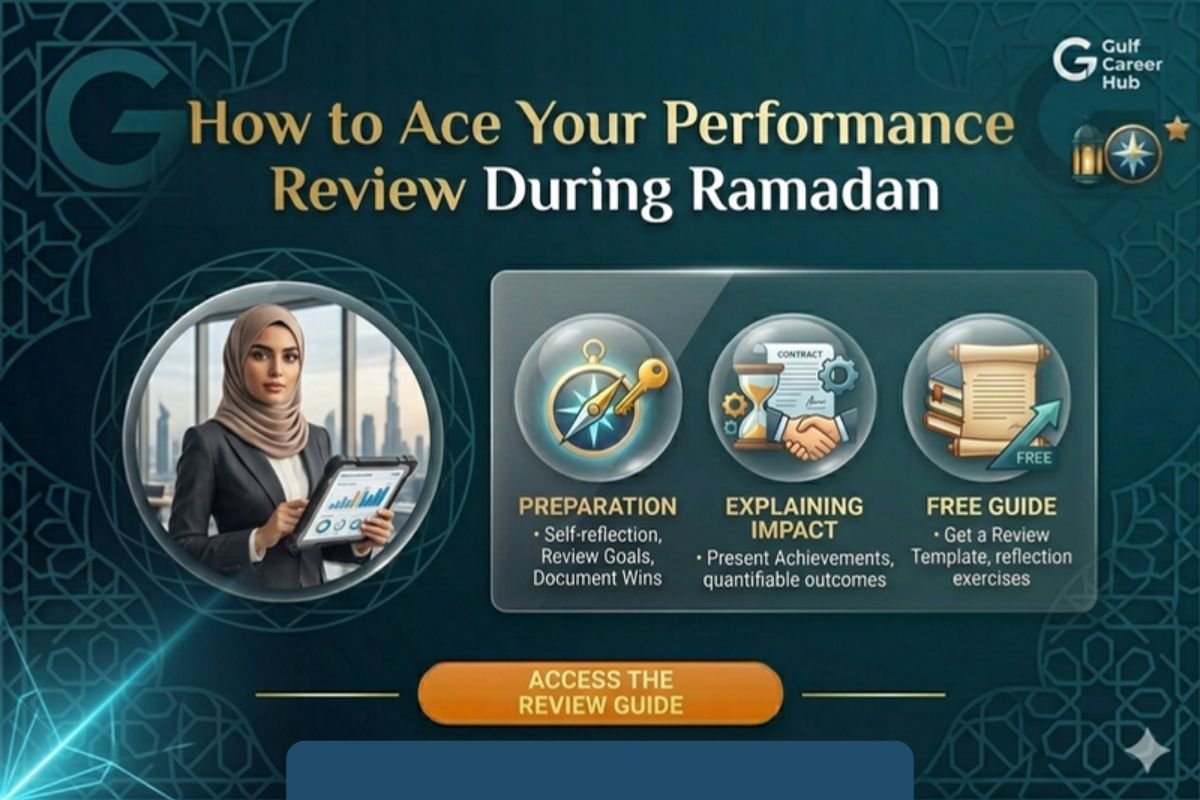
How to Ace Your Performance Review During Ramadan

Performance Review During Ramadan | Ace Your Review While Fasting

Ramadan is a time of spiritual reflection, discipline, and community. But if your annual or quarterly performance review falls during this holy month, you might feel a unique pressure. How do you showcase your best self when you’re fasting, running on fewer hours of sleep, and navigating shifted priorities?

Understanding the Challenge: Why Ramadan Reviews Require Strategy

Before diving into tactics, let’s acknowledge the realities of a performance review during Ramadan:

Energy Fluctuations Are Normal. Fasting affects energy levels, especially in the afternoon. Your body is adapting to a new rhythm of hydration and nutrition. This is natural and manageable with planning.

Sleep Patterns Shift. Late-night prayers (Taraweeh) and early pre-dawn meals (Suhoor) mean your sleep architecture changes. This can impact focus and cognitive performance if not managed intentionally .

Work Hours May Be Reduced. Many companies in the Gulf region implement shorter working hours during Ramadan, which can compress the time available for deep work and preparation .

Spiritual Priorities Are Heightened. Ramadan is first and foremost a month of worship. Your review preparation must honor your spiritual commitments, not compete with them.

The key is working with your body’s rhythms, not against them. Let’s explore how.

Step 1: Timing Is Everything—Schedule Strategically

When your review is scheduled during Ramadan, timing can significantly impact your performance.

Request a Morning Slot

Energy levels are typically highest in the morning, shortly after Suhoor. Your blood glucose is stable, and you haven’t yet gone many hours without hydration. Aim to schedule your review within the first 2-3 hours of your workday .

Avoid Late Afternoon

By late afternoon, energy naturally dips. If possible, request a time before 2 PM. If your company offers flexible scheduling, take advantage of it.

Consider Post-Iftar Options

Some organizations accommodate evening reviews after Iftar, when hydration and energy are restored. This can be an excellent option if your manager is open to non-traditional hours .

Pro Tip: When requesting a specific time, frame it professionally: “I want to ensure I’m at my best for our discussion. Would it be possible to schedule our review in the morning?”

Step 2: Prepare Thoroughly—But Smartly

Preparation is the foundation of any successful review. During Ramadan, you need to prepare in a way that conserves energy while maximizing impact.

Use the “Start, Stop, Continue” Framework

This simple but powerful framework helps you structure your self-assessment clearly. It’s also a method used for spiritual reflection during Ramadan, making it a natural fit .

Start: What should I begin doing that will bring me closer to my goals?

  • New skills to develop
  • Projects to initiate
  • Behaviors to adopt (e.g., speaking up in meetings)

Stop: What am I doing that’s not yielding results?

  • Inefficient habits
  • Time-wasters
  • Micromanaging tendencies

Continue: What am I doing right that I should maintain?

  • Strengths to leverage
  • Positive behaviors to reinforce
  • Successful project elements

This framework keeps your preparation focused and actionable.

Gather Evidence in Advance

Collecting accomplishments while fasting can be draining if you leave it to the last minute. Instead:

  • Keep a running “win list” throughout the year
  • Dedicate 20-30 minutes after Suhoor (when you’re fresh) to compile examples
  • Use bullet points with specific metrics: “Increased X by Y% through Z initiative”

Practice Your Talking Points

Run through your key messages aloud. This builds confidence and helps you communicate clearly even if energy dips during the actual review.

Step 3: Manage Your Energy on Review Day

The day of your review requires intentional energy management.

Optimize Suhoor

Your pre-dawn meal is critical. Focus on:

  • Complex carbohydrates (oats, whole grains) for sustained energy
  • Protein to maintain satiety
  • Hydration—drink plenty of water
  • Avoid excessive salt and caffeine, which can dehydrate you 

Protect Your Morning

In the hours before your review:

  • Avoid non-essential meetings
  • Limit email and Slack checking
  • Conserve mental energy for the main event

Arrive Early and Centered

Arrive at the meeting room (or log into the video call) a few minutes early. Take slow, deep breaths. Remind yourself that you are prepared and capable.

During the Review

  • Speak slowly and deliberately. This projects confidence and gives you thinking time.
  • Pause before answering. It’s okay to take a moment to gather your thoughts.
  • Ask for clarification if needed. This shows engagement, not weakness.

Step 4: Showcase Your Ramadan Strengths

Here’s a perspective shift: Ramadan isn’t a handicap to overcome. The qualities you’re actively cultivating are professional superpowers.

Highlight Your Discipline

Fasting requires immense self-control. This same discipline translates to meeting deadlines, managing projects, and maintaining focus.

Demonstrate Patience

Ramadan teaches patience in the face of physical challenge. In the workplace, this means handling difficult situations with grace and maintaining composure under pressure.

Show Empathy and Teamwork

Ramadan emphasizes community and caring for others. Use examples in your review that highlight how you’ve supported colleagues, collaborated effectively, or contributed to team morale.

Reference Your Adaptability

Navigating work while fasting proves you can adapt to changing circumstances—a quality every employer values.

Step 5: Communicate Openly with Your Manager

Your manager may not fully understand what Ramadan entails. A brief, professional conversation can make a significant difference.

What to Share

  • “I’m observing Ramadan, which involves fasting from dawn to sunset. I’m fully committed to my work, but my energy may be best in the mornings.”
  • “If you notice me working different hours or taking brief breaks, this is related to my religious observance.”

What to Ask

  • “Would it be possible to schedule our review in the morning when I’m at my best?”
  • “If deadlines shift, I appreciate advance notice so I can plan my energy accordingly.”

Most managers appreciate this transparency and will work with you.

Step 6: Use Feedback for Post-Ramadan Growth

Performance reviews aren’t just about the past—they’re about the future. Use the feedback you receive to plan your post-Ramadan professional development.

Identify Skill Gaps

If your review highlights areas for growth, consider using the remaining days of Ramadan to:

  • Research online courses
  • Identify mentors
  • Set learning goals for Shawwal (the month after Ramadan)

Plan for the Hiring Surge

Many companies ramp up recruitment after Eid to fill pending vacancies . If your review touches on career progression or internal opportunities, be ready to act quickly once Ramadan ends.

Set Faith-Aligned Career Goals

Use the spiritual clarity of Ramadan to reflect on whether your career aligns with your values. Are you in a role that allows you to contribute positively? Does your work environment respect your beliefs? These questions can guide your long-term planning .

The Manager’s Role: Supporting Team Members During Ramadan

If you’re a manager reading this, you have a unique opportunity to support your team members observing Ramadan.

Best Practices for Managers

  • Check in proactively. Ask team members what support looks like for them .
  • Adjust meeting schedules. Avoid late afternoon meetings when possible.
  • Respect prayer breaks. Ensure team members have time and space for prayers.
  • Model sustainable pacing. When managers adjust behavior, teams follow .
  • Celebrate Eid. A simple “Eid Mubarak” goes a long way in building inclusion .

What to Avoid

  • Don’t ask individuals if they’re fasting—this can be personal .
  • Don’t schedule mandatory iftar-time events.
  • Don’t assume reduced output; focus on outcomes, not hours.

A Sample Preparation Timeline

Use this timeline to stay on track without last-minute stress.

1-2 Weeks Before Ramadan

  • Confirm review date and request optimal timing
  • Begin tracking accomplishments and metrics
  • Set spiritual and professional goals for the month

First Week of Ramadan

  • Establish your new daily rhythm
  • Complete your “Start, Stop, Continue” self-assessment
  • Draft key talking points

Week Before Review

  • Finalize your achievement list
  • Practice aloud once or twice
  • Prepare questions for your manager

Day Before Review

  • Review your materials briefly
  • Plan Suhoor for sustained energy
  • Get as much rest as possible

Review Day

  • Optimize Suhoor
  • Arrive early and centered
  • Speak confidently and listen actively

After the Review: Celebrate and Plan Forward

Once your review is complete, take time to:

  • Reflect on what went well and what you’d do differently
  • Document any action items or goals discussed
  • Rest—you’ve earned it
  • Prepare for Eid and the post-Ramadan professional season

Final Thoughts: You’ve Got This

Your performance review during Ramadan is an opportunity to demonstrate that you can excel under unique circumstances. The discipline, patience, and focus you’re cultivating this month are the same qualities that drive long-term career success.

Remember: Ramadan is not a barrier to your professional growth. It’s a framework for becoming a more centered, intentional, and resilient professional. When you walk into that review room, you’re bringing the best of both your spiritual and professional selves.

Wishing you a productive review, continued growth, and a blessed Ramadan.

Ramadan Mubarak.

Frequently Asked Questions (FAQs)

1. Should I tell my manager I’m fasting before my performance review?

Yes, a brief, professional conversation can be helpful. You don’t need to go into detail, but letting your manager know that you’re observing Ramadan and may prefer a morning review time shows proactive communication. Most managers appreciate this transparency and will accommodate reasonable requests .

2. How do I handle low energy during the review itself?

Preparation is your best defense. When you know your material thoroughly, you can deliver it even when energy dips. During the review, speak slowly, pause when needed, and don’t be afraid to take a sip of water (if you’re not fasting that day) or ask for a moment to collect your thoughts. Morning reviews also help avoid afternoon fatigue .

3. What if my review is scheduled late in the day?

If you can’t reschedule, adjust your day to conserve energy. Consider resting briefly after work, having a light Iftar before the review if timing allows, and arriving prepared to engage. You can also ask if a virtual review is possible, saving commuting energy .

4. Can I use Ramadan as an excuse for underperformance in my review?

No. While Ramadan presents challenges, professional standards remain. The key is to plan ahead, manage your energy, and deliver on your commitments. If you’re concerned about specific deadlines, discuss them with your manager early rather than waiting for the review. Focus on outcomes, not obstacles .

5. How do I follow up on review action items after Ramadan?

Use the post-Ramadan period (Shawwal) to act on feedback. Update your professional development plan, pursue any training discussed, and schedule follow-up conversations. Companies often ramp up activity after Eid, making this an ideal time to implement changes .

Why Ramadan is the Perfect Time to Re-evaluate Your Career Path

Why Ramadan is the Perfect Time to Re-evaluate Your Career Path

As the crescent moon ushers in the holy month of Ramadan, millions across the Gulf and the Muslim world enter a period of profound spiritual reflection, self-discipline, and renewed purpose. While many focus on the physical and spiritual aspects of fasting, Ramadan offers something equally valuable for professionals: a unique opportunity for deep career introspection.

The Spiritual Foundation of Career Reflection

Ramadan is fundamentally about intention (niyyah). Muslims fast, pray, and give charity with the intention of drawing closer to God and becoming better versions of themselves. This emphasis on intentionality naturally extends to how we view our work and professional lives.

The Quran reminds us: “And say, ‘Work [righteousness]; soon will Allah see your work and His Messenger and the believers'” (Quran 9:105). This verse establishes that our work is witnessed and matters—not just as a means of earning, but as a form of worship when done with the right intention.

During Ramadan, the heightened spiritual awareness makes us more conscious of how we spend our time and energy. This awareness creates fertile ground for asking fundamental questions:

  • Is my work aligned with my values?
  • Am I using my God-given talents in the most meaningful way?
  • Does my career contribute positively to my community and family?
  • Am I earning in a halal (permissible) and ethical manner?

Why Ramadan Provides Unique Conditions for Career Reflection

Reduced Distractions and Slower Pace

Across the Gulf, working hours are typically reduced during Ramadan. Many organizations operate on shortened schedules, allowing for more rest and reflection. This slower pace creates mental space that’s often absent during the rest of the year.

The reduced social obligations—fewer dinners out, less socializing—means more time at home. The quiet evenings after taraweeh prayers offer uninterrupted moments perfect for journaling, planning, and honest self-assessment.

Heightened Emotional and Spiritual Intelligence

Fasting teaches patience, empathy, and self-control—qualities essential for career success. The physical experience of hunger creates solidarity with the less fortunate, often prompting reflection on whether our work serves others meaningfully.

The spiritual exercises of Ramadan—reading Quran, increased prayer, charity—elevate our emotional intelligence. We become more attuned to our inner voices and more honest about what truly fulfills us.

The Power of Communal Introspection

Ramadan is both deeply personal and profoundly communal. As millions engage in simultaneous reflection, there’s a collective energy that supports personal growth. Conversations with family and friends naturally turn toward purpose, values, and life direction.

This communal introspection normalizes the act of asking big questions. In the workplace, colleagues may share their own reflections, creating an environment where career conversations feel more natural and less transactional.

Practical Steps for Career Reflection During Ramadan

1. Create a Dedicated Reflection Space and Time

Identify the times when you’re most alert and reflective. For many, this is after Fajr prayer in the early morning or after Isha and taraweeh at night. Keep a notebook specifically for career reflections.

Ask yourself structured questions:

  • Gratitude: What aspects of my current role am I grateful for?
  • Alignment: Does my work energize me or drain me? Why?
  • Impact: How does my work serve others? Could it serve more?
  • Growth: Am I learning and growing, or stagnating?
  • Balance: Does my career support or undermine my family and spiritual life?

2. Review the Past Year with Honesty

Ramadan falls at different times each year, offering a unique vantage point. Use this month to honestly assess the past 12 months of your career:

  • What were my biggest professional achievements?
  • What challenges did I face, and how did I respond?
  • Did I meet the goals I set last Ramadan?
  • What patterns do I notice—recurring frustrations or moments of flow?
  • What would I do differently if I could?

3. Seek Counsel Through Thoughtful Conversation

Ramadan gatherings often involve deeper conversations than usual. Use iftar invitations and family gatherings as opportunities to discuss career matters with trusted mentors, family members, or friends.

Ask those who know you well:

  • What strengths do they see in you that you might undervalue?
  • Do they notice misalignments between your values and your work?
  • What career paths have they observed that might suit you?

4. Evaluate Your Work’s Ethical Dimension

Ramadan heightens awareness of halal and haram. Use this sensitivity to examine your work’s ethical dimensions:

  • Is your income source completely clean?
  • Does your work involve any elements that conflict with your values?
  • Are you honest and transparent in your professional dealings?
  • How does your workplace treat its employees and customers?

5. Plan Forward with Intention

The Prophet Muhammad (peace be upon him) said: “The strong believer is better and more beloved to Allah than the weak believer, while there is good in both.” This hadith encourages strength and capability—including professional capability.

Use the clarity gained during Ramadan to set intentional career goals for the coming year:

  • Short-term goals (next 3-6 months): What specific steps can you take immediately?
  • Medium-term goals (1-2 years): What skills or roles should you target?
  • Long-term vision (3-5 years): Where do you ideally want to be?

Frame these goals with the intention of serving others, supporting your family, and using your talents responsibly.

Common Career Realizations During Ramadan

Many professionals report similar insights during this reflective month:

“I’m in the wrong field entirely.” Some realize their current industry doesn’t align with their deeper values. This recognition, while uncomfortable, is the first step toward meaningful change.

“I need more balance.” The physical demands of fasting make work-life balance impossible to ignore. Many resolve to set better boundaries and prioritize family and spiritual life.

“I’ve been undervaluing myself.” The confidence that comes from spiritual strength often translates into professional assertiveness—seeking promotions, negotiating salaries, or pursuing opportunities previously deemed out of reach.

“My skills could serve others more directly.” The charitable spirit of Ramadan inspires some to explore careers in education, healthcare, or social enterprise where impact is more tangible.

Turning Reflection into Action After Ramadan

The challenge of any spiritual practice is sustaining its lessons beyond the month. Here’s how to ensure your career reflections translate into lasting change:

Document Your Insights

Write down everything you realize during Ramadan. Don’t trust memory alone. Create a “Ramadan Career Reflection” document that captures your thoughts, goals, and commitments.

Share Your Intentions

Tell trusted friends or family members about your career reflections. Accountability increases follow-through. Consider finding a “reflection partner” who will check in on your progress throughout the year.

Create an Action Plan with Milestones

Break your career goals into concrete steps with specific timelines. If you’ve decided to pursue additional training, research programs by a specific date. If you’re planning to change industries, identify networking targets for each month.

Schedule Regular Check-Ins

Mark your calendar for quarterly career reviews. Use these check-ins to assess progress against the goals you set during Ramadan and make adjustments as needed.

Maintain the Spirit of Reflection

Carry forward one or two practices from Ramadan into the rest of the year—perhaps weekly journaling, regular volunteer work, or monthly career check-ins. These anchors will help you stay connected to the clarity Ramadan provided.

The Wisdom of Seasons in Career Planning

Islamic tradition recognizes the rhythm of seasons and their spiritual significance. Just as farmers plant in spring and harvest in autumn, careers have seasons of growth, rest, and renewal. Ramadan serves as an annual reset—a time to pause, reflect, and realign.

The Prophet Muhammad (peace be upon him) would increase his worship during Ramadan, but he also maintained consistency in good deeds throughout the year. Similarly, the career clarity gained during Ramadan should inform consistent, intentional action across all months.

A Prayer for Career Guidance During Ramadan

As you navigate your career reflections this Ramadan, consider this supplication:

“Rabbi inni lima anzalta ilayya min khayrin faqir” (My Lord, indeed I am, for whatever good You would send down to me, in need). This du’a of Prophet Musa (Moses) acknowledges our complete dependence on Allah’s guidance and provision.

Also recite the du’a for seeking the best: “Allahumma khir li wa khtar li” (O Allah, choose what is good for me and decree it for me).

Trust that the clarity you seek will come, in Allah’s perfect timing.

Conclusion: Ramadan as Your Annual Career Compass

In the fast-paced professional world of the Gulf, where ambition often drives relentless forward motion, Ramadan offers something precious: permission to pause. This sacred month creates space for the kind of deep reflection that’s impossible in the noise of ordinary life.

By intentionally using Ramadan for career introspection, you transform it from simply a month of fasting into an annual compass reset. The clarity gained during these blessed days can illuminate your professional path for the entire year ahead.

Whether you realize you’re exactly where you belong or discover a need for significant change, the self-knowledge gained through Ramadan reflection is invaluable. Trust the process, be honest with yourself, and have the courage to act on what you discover.

May this Ramadan bring you closer to your Creator, to yourself, and to the career that allows you to serve both excellently. Ramadan Mubarak.

Frequently Asked Questions (FAQs)

1. How can I find time for career reflection during busy Ramadan schedules?

Use the quiet hours after Fajr prayer or after Isha and taraweeh when distractions are minimal. Even 15-20 minutes daily of focused reflection can yield significant insights. Consider keeping a small notebook with you to jot down thoughts that arise during the day.

2. Is it appropriate to actively job search during Ramadan?

Yes, with consideration for the spiritual nature of the month. Many companies in the Gulf continue hiring during Ramadan, though interview processes may move more slowly. Focus applications early in the day and be mindful of prayer and iftar times when scheduling interviews.

3. What if my career reflections reveal I need to make a major change?

First, acknowledge that this realization is a gift of clarity. Use the remaining days of Ramadan to pray for guidance (istikhara) and plan your first steps. Major changes shouldn’t be rushed, but the clarity gained during Ramadan provides a solid foundation for intentional action after Eid.

4. How do I discuss career aspirations with my employer during Ramadan?

The reflective atmosphere can actually make these conversations easier. Request a brief meeting during reduced-stress hours (mid-morning often works well). Frame the conversation around your desire to contribute more meaningfully and grow with the organization—values that resonate during this holy month.

5. Can career reflection during Ramadan benefit non-Muslim professionals in the Gulf?

Absolutely. The quieter pace and reflective atmosphere of Ramadan in the Gulf creates space for introspection regardless of faith. Many non-Muslim professionals find the month offers unique opportunities for thoughtful career assessment that’s harder to achieve during busier periods.

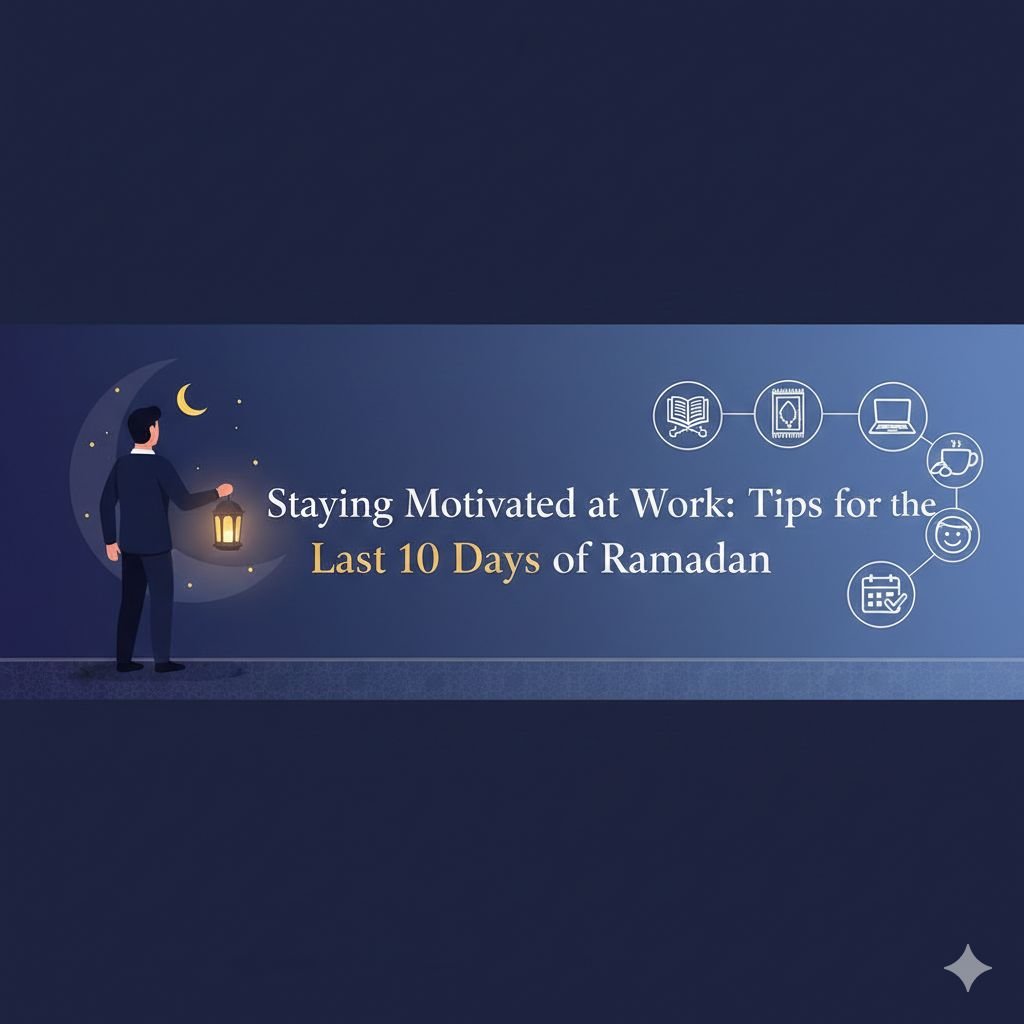
Staying Motivated at Work: Tips for the Last 10 Days of Ramadan

Staying Motivated at Work: Last 10 Days of Ramadan Tips

If you’re feeling the weight of these final days, you’re not alone. Many professionals in the Gulf and beyond find this stretch both rewarding and exhausting. The key is not to just “push through,” but to work with your rhythm, not against it. Here are practical, human ways to stay motivated and productive at work during the last 10 days of Ramadan, while still honouring the spiritual depth of this sacred time.

1. Rethink Your Work Rhythm: Work WITH Your Energy, Not Against It

During Ramadan, your energy isn’t a straight line—it ebbs and flows. Fighting this only leads to burnout . Instead, structure your workday around your natural peaks.

  • Mornings (after Suhoor): This is often when focus is highest. Tackle deep work, complex problem-solving, writing, or strategic planning now .
  • Late Afternoons: Energy typically dips. Switch to lighter tasks: responding to emails, updating records, or administrative work that doesn’t require heavy concentration .
  • Evenings (after Iftar): If you work remotely or have evening commitments, this can be a second wind for catching up on less urgent work or creative brainstorming .

Action Step: Look at your to-do list right now. Move your three most important tasks to your peak energy window tomorrow. Protect that time fiercely.

2. The Power of “Enough”: Set Realistic Daily Goals

Ramadan teaches us discipline, not perfection. The last 10 days are not the time for grand, sweeping work projects that require immense mental bandwidth. It’s about focus and intention .

  • Prioritise ruthlessly: Ask yourself: “What is the one thing I must accomplish today?” Focus on the 20% of tasks that deliver 80% of the results .
  • Break it down: Instead of “finish the report,” aim for “write the introduction and first section.”
  • Celebrate small wins: Checking off smaller tasks gives a dopamine hit that fuels motivation to keep going.

Action Step: Write down just three achievable work goals for today. When you complete them, allow yourself to feel good about it.

3. Fuel Smart: What You Eat Matters for Your 9-to-5

This isn’t just about spirituality; it’s biology. What you consume at Suhoor (pre-dawn meal) directly impacts your focus and energy levels during working hours.

  • Suhoor is your fuel station: Aim for slow-release energy—complex carbohydrates (oats, whole grains), protein (eggs, yoghurt), and healthy fats . This keeps you fuller longer and stabilises blood sugar.
  • Hydrate deliberately: Drink water between Iftar and Suhoor in measured amounts. If you wait until you’re thirsty, you’re already behind .
  • Manage the sugar crash: Dates are sunnah and provide quick energy, but balance them. Avoid loading up on sugary pastries and fried foods at Iftar if you have evening work—they lead to sluggishness .

Action Step: Plan your Suhoor tonight with staying power in mind. Add an extra glass of water before dawn.

4. Communicate with Your Team and Manager

You don’t have to be a silent hero. A quick, professional conversation about your capacity during these final days can make a world of difference.

  • Set expectations early: If you know your afternoons will be slower, let your manager know you’ll be focusing on deep work in the mornings .
  • Negotiate flexibility if possible: Many companies in the Gulf are understanding. Could you start earlier and leave earlier? Work from home on certain days to save commute energy? .
  • Be mindful of colleagues: If you’re not fasting, a small gesture—avoiding eating lunch at your desk in front of a fasting colleague, or scheduling meetings away from prayer times—builds immense goodwill and a supportive team culture .

Action Step: Send a brief, positive message to your manager or team letting them know your focus hours and how you plan to manage your workload this week.

5. Use Breaks to Reset, Not Just Scroll

When you’re tired, the instinct is to zone out on your phone. But a quick mental reset can be more effective than mindless scrolling.

  • Use prayer as a reset: Even a short break for prayer (or quiet reflection) can recentre your mind and reduce stress .
  • Step outside: Five minutes of fresh air and sunlight can do wonders for alertness.
  • Power nap (if possible): A 15-20 minute nap after work or during a long lunch break can recharge your brain for the evening’s worship .

Action Step: Schedule two five-minute “reset” breaks into your workday tomorrow—one mid-morning, one mid-afternoon.

6. Remember the “Why”: Career Motivation Meets Spiritual Purpose

Feeling drained? Connect your daily work to a higher purpose. This isn’t just corporate fluff—it’s a powerful motivator.

  • Your work is a form of worship: When you work with honesty, integrity, and excellence, intending to provide for yourself and your family, it becomes an act of ibadah (worship).
  • Use Laylatul Qadr for career clarity: The last 10 nights hold Laylatul Qadr, a night of decree and immense blessings. Use this time not just for spiritual duas, but to pray for clarity in your career path, for opportunities that are good for you, and for the strength to pursue them with purpose .
  • Reflect on your “why”: What motivated you to pursue your career in the first place? Reconnecting with that core purpose can reignite passion when you’re running on empty .

Action Step: Take five minutes tonight, before sleeping, to write down one career intention you want to pray for in these last 10 nights.

7. Don’t Abandon Your Job Search (Yes, Really!)

Many professionals assume hiring freezes during Ramadan. This is a myth. While some processes slow down, many companies are still actively recruiting, especially in sectors like retail, e-commerce, and logistics that gear up for Eid .

  • Less competition: Many job seekers pause their applications, meaning fewer resumes for recruiters to sift through. Your application has a higher chance of standing out .
  • HR is shortlisting: HR teams often use this time to screen candidates and schedule interviews for immediately after Eid .
  • Network strategically: A brief, respectful LinkedIn message wishing someone Ramadan Kareem and expressing interest in their company can open doors .

Action Step: If you’re job hunting, spend 30 minutes today updating your LinkedIn profile or sending out one well-crafted application. You’ll be ahead of the post-Eid crowd.

8. Prepare for Eid (A Little Bit) to Ease End-of-Month Stress

Nothing kills focus like last-minute panic. The last 10 days are for worship, but a tiny bit of planning can prevent anxiety from creeping in.

  • Outsource or defer: Can groceries be ordered online? Can non-urgent purchases wait? .
  • Finalise the big things: Decide on Eid plans, prayer location, and major menu items now, so you’re not mentally juggling logistics while trying to work and pray .

Action Step: Spend just 15 minutes this evening listing three things you can do now to make Eid week less stressful. Delegate or schedule them.

Conclusion: Finish Strong, Not Just Finished

The last 10 days of Ramadan are a gift—a chance for spiritual breakthrough and, yes, for professional focus and intention. By working with your body’s natural rhythm, communicating clearly, and connecting your daily tasks to a deeper purpose, you can navigate this period with grace and effectiveness.

You don’t have to be perfect. You just have to keep going, one intentional day at a time. May these final days bring you clarity, barakah in your work, and the fulfilment of your sincere prayers.


Frequently Asked Questions (FAQs)

1. Is it okay to take time off work during the last 10 days of Ramadan?

Yes, if possible. Many Muslims aim to take leave during the last 10 days to focus on worship, particularly for Laylatul Qadr. If your company allows, consider booking annual leave or requesting adjusted hours to balance work and spirituality .

2. How can I avoid feeling guilty about low work productivity right now?

Shift your mindset from “low productivity” to “focused productivity.” You may be doing less, but you can do it with more intention. Prioritise essential tasks, communicate with your team, and remember that rest and worship are also valid uses of your energy during this sacred time.

3. Should I continue applying for jobs during the last 10 days?

Absolutely. While response times may slow, many companies continue to accept applications and shortlist candidates for post-Eid interviews. Applying now means you’ll be ahead of the rush after Eid .

4. What are the best foods for Suhoor to sustain energy at work?

Focus on complex carbohydrates (oats, wholemeal bread), protein (eggs, yoghurt, cheese), and healthy fats (nuts, avocado). Drink plenty of water and avoid salty or sugary foods that can cause thirst and energy crashes later .

5. How can I support my Muslim colleagues during this time if I’m not fasting?

Small gestures matter. Avoid eating in front of them if possible, be flexible with meeting times around prayer breaks, and offer a genuine “Ramadan Kareem.” Your understanding creates an inclusive and respectful workplace for everyone .

Post a Job Opening

Fill in the details below. Your job posting will be reviewed by our team.

Basic Information

Specify years of experience required

Location & Salary

Qualifications & Skills

Specify educational requirements
Separate skills with commas

Company Details

Job Details

Contact Information