Dubai continues to be one of the most sought-after destinations for professionals worldwide. With competitive salaries, tax-free income, and a thriving business environment, opportunities in the city attract thousands of applicants every year. One such opportunity is with Confidential Company, offering a full-time role in Dubai with a salary range of $4,000–$5,000.
Table of Contents
Job Overview
Company: Confidential Company
Location: Dubai, UAE
Salary: $4,000–$5,000 per month
Employment Type: Full-time
Role: Public Relations / Administrative Support (based on responsibilities outlined)
Job Responsibilities
While the company has kept the role description concise, the responsibilities are expected to include:
Supporting administrative and client-facing tasks.
Coordinating with internal teams and external stakeholders.
Managing documentation and ensuring compliance with UAE regulations.
Providing professional support in line with company standards.
How to Apply (Step-by-Step)
Unlike most companies that use LinkedIn or job portals, Confidential Company requires applicants to follow a specific Google search process. Here’s how:
Visit Google.com on your phone.
Open your browser and go to Google.
Search for “Chiropractor Dubai.”
Type this exact phrase into the search bar.
Find the Chiropractors.ae website (page 3 or 4).
Scroll through the search results until you reach page 3 or 4.
Locate the website “Chiropractors.ae.”
Enter the page and find the “Submit CV” section.
Once inside the website, look for the CV submission option.
Upload your CV directly through that portal.
Wait for a call.
The company will contact you if your CV matches their requirements.
⚠️ Important Note: If you apply through any other channel (LinkedIn, email, or job boards), your CV will not be reviewed.
Why This Process Is Different
Confidential Company uses this method to:
Filter applicants who can follow instructions carefully.
Ensure only serious candidates apply.
Manage CV submissions through a controlled portal.
This approach may seem unusual, but it reflects the company’s emphasis on precision and attention to detail.
Benefits of the Role
Competitive salary ($4,000–$5,000).
Tax-free income in Dubai.
Exposure to a multicultural work environment.
Opportunity to grow within a confidential but established organization.
FAQs
Why do I need to search “Chiropractor Dubai” to apply?
This is the company’s unique way of filtering candidates. It ensures applicants can follow instructions and reach the correct CV submission portal.
Can I apply through LinkedIn or other job sites?
No. The company has clearly stated that CVs submitted through other channels will not be reviewed.
What happens after I submit my CV?
If your profile matches the company’s requirements, you will receive a call for the next stage of the hiring process.
Is the salary negotiable?
The advertised range is $4,000–$5,000. Negotiation may be possible depending on experience and qualifications.
How long does it take to hear back after applying?
Response times vary, but most Gulf employers take 2–4 weeks to review applications and contact shortlisted candidates.
The Gulf region — covering the United Arab Emirates, Saudi Arabia, Qatar, Kuwait, Bahrain, and Oman — has become one of the most attractive destinations for professionals worldwide. With tax-free salaries, modern infrastructure, and diverse work environments, it’s no surprise that many job seekers find themselves with more than one offer on the table.
But having multiple job offers, while exciting, can also be overwhelming. Each opportunity may look appealing, yet the right choice depends on more than just salary. You need to weigh factors like career growth, company culture, benefits, location, and long-term stability.
Why Choosing the Right Offer Matters
Accepting a job in the Gulf often means relocating, adapting to a new culture, and committing to a contract that could last two or more years. Making the wrong choice can lead to dissatisfaction, financial strain, or even early resignation — which can hurt your career reputation in the region.
Employers value loyalty and stability. Choosing wisely ensures you not only thrive professionally but also enjoy your personal life in the Gulf.
Step 1: Compare Salary Packages Beyond the Numbers
Salary is often the first thing candidates look at, but Gulf compensation packages are more complex.
Base Salary: Tax-free income is a major advantage, but check if it’s competitive for your role.
Allowances: Many companies provide housing, transportation, or education allowances.
Bonuses: Annual performance bonuses or profit-sharing can significantly boost income.
Currency Stability: Consider whether your salary is paid in local currency (AED, SAR, QAR) or USD.
Tip: Don’t just compare numbers. Calculate the total value of each package, including allowances and benefits.
Step 2: Evaluate Benefits and Perks
Benefits in the Gulf can vary widely between employers.
Medical Insurance: Check if coverage extends to dependents.
Annual Flights: Many companies pay for return flights to your home country.
Education Allowance: Crucial if you have children.
Leave Policy: Compare annual leave days and public holiday entitlements.
End-of-Service Gratuity: Mandatory in most Gulf countries, but amounts differ.
Tip: A slightly lower salary with strong benefits may be better than a higher salary with minimal perks.
Step 3: Assess Career Growth Opportunities
Think long-term. Ask yourself: Will this job help me grow?
Training & Development: Does the company invest in employee learning?
Promotion Pathways: Are there clear opportunities for advancement?
Industry Stability: Is the sector growing (e.g., healthcare, fintech) or shrinking?
Company Reputation: A well-known employer can boost your CV for future roles.
Tip: Research the company’s track record of internal promotions and employee retention.
Step 4: Consider Location and Lifestyle
The Gulf is diverse, and lifestyle varies by country and city.
UAE (Dubai, Abu Dhabi): Cosmopolitan, multicultural, with high living costs.
Saudi Arabia (Riyadh, Jeddah): Rapidly modernizing, more conservative but growing opportunities.
Kuwait & Bahrain: Smaller markets, but close-knit communities.
Oman (Muscat): Relaxed lifestyle, scenic environment, slower pace.
Tip: Factor in cost of living, cultural fit, and family needs when choosing location.
Step 5: Analyze Company Culture and Work Environment
Company culture can make or break your experience.
Work-Life Balance: Some Gulf companies expect long hours; others promote flexibility.
Management Style: Hierarchical vs. collaborative approaches vary.
Diversity: Multicultural teams are common, but inclusivity differs.
Employee Reviews: Check platforms like Glassdoor or LinkedIn for insights.
Tip: During interviews, ask about team dynamics, leadership style, and turnover rates.
Step 6: Check Contract Terms Carefully
Contracts in the Gulf are legally binding and often include clauses that affect mobility.
Duration: Most contracts are 2–3 years.
Probation Period: Usually 3–6 months, during which termination is easier.
Notice Period: Varies from 30 to 90 days.
Non-Compete Clauses: May restrict you from joining competitors.
Termination Conditions: Understand your rights if the employer ends the contract early.
Tip: Never sign without reading the fine print. Seek clarification on unclear clauses.
Step 7: Think About Long-Term Stability
Consider the employer’s financial health and industry outlook.
Government vs. Private Sector: Government jobs often offer stability but slower growth.
Industry Trends: Oil & gas, healthcare, and tech are strong; retail and hospitality fluctuate.
Company Size: Larger firms may offer more resources, while smaller firms may provide flexibility.
Tip: Choose an employer aligned with your career goals and industry trends.
Comparison Framework
Factor
Offer A
Offer B
Offer C
Base Salary
AED 18,000
AED 20,000
AED 17,000
Housing Allowance
Included
Not included
Included
Medical Insurance
Family coverage
Self only
Family coverage
Annual Flights
Yes
No
Yes
Career Growth
Strong training
Limited
Moderate
Location
Dubai
Riyadh
Doha
Contract Terms
2 years, 90-day notice
3 years, 60-day notice
2 years, 30-day notice
Cultural Considerations
Respect Islamic traditions and local laws.
Understand workplace hierarchy and formal communication styles.
Be mindful of Ramadan etiquette and prayer times.
Adapt to multicultural teams with diverse communication styles.
FAQs
Should I always choose the highest-paying offer?
Not necessarily. Consider benefits, career growth, and stability. A balanced package often outweighs raw salary.
How do I know if a company is stable?
Research financial reports, industry news, and employee reviews. Larger firms or government-backed companies tend to be more stable.
What if I accept one offer and then get a better one?
Be cautious. Reneging on an accepted offer can damage your reputation. Decide carefully before signing.
Is it okay to negotiate in the Gulf?
Yes, but do so respectfully. Employers expect some negotiation, especially around allowances.
How do I factor in family needs?
Prioritize housing, medical insurance, education allowances, and location safety when evaluating offers.
Final Thoughts
Having multiple job offers in the Gulf is a privilege, but it requires careful decision-making. The right choice balances salary, benefits, career growth, lifestyle, and stability. Remember, a job in the Gulf isn’t just a career move — it’s a life-changing experience.
By using this framework, you can evaluate offers systematically and choose the one that aligns best with your professional goals and personal needs.
The Gulf region — encompassing countries like the United Arab Emirates, Saudi Arabia, Qatar, Kuwait, Bahrain, and Oman — has long been a magnet for professionals seeking career growth, financial stability, and international exposure. With tax-free salaries, world-class infrastructure, and diverse work environments, the Gulf job market attracts millions of applicants every year.
But landing a job here isn’t just about submitting your CV. The hiring process in the Gulf is structured, competitive, and often involves multiple stages. Understanding this process can help you prepare strategically and increase your chances of success.
Step 1: Submitting the Application
The journey begins with the application. Gulf employers typically advertise vacancies through:
Company websites and career portals
Recruitment agencies specializing in Gulf placements
Job boards like Bayt, Naukrigulf, and GulfTalent
LinkedIn and other professional networks
Tips for success:
Tailor your CV to highlight relevant skills and Gulf-specific experience.
Use keywords from the job description to pass Applicant Tracking Systems (ATS).
Include a professional photo if applying in the UAE or Saudi Arabia, where it’s often expected.
Keep your CV concise (2–3 pages maximum).
Step 2: Initial Screening
Recruiters or HR teams conduct an initial screening to shortlist candidates. This may involve:
Reviewing CVs for qualifications and experience
Checking language proficiency (English is essential; Arabic is a plus)
Assessing relocation readiness and visa eligibility
Tip: Ensure your CV clearly states your willingness to relocate and your current visa status.
Step 3: Phone or Video Interview
Shortlisted candidates are often invited for a preliminary interview. This stage assesses:
Communication skills
Motivation for working in the Gulf
Basic knowledge of the company and industry
Common questions:
“Why do you want to work in the Gulf?”
“What do you know about our company?”
“Are you willing to relocate within short notice?”
Tip: Treat video interviews as seriously as in-person ones. Dress professionally, ensure good lighting, and maintain eye contact.
Step 4: Technical or Skills Assessment
Depending on the role, employers may require candidates to complete:
Written tests (e.g., aptitude, language, or technical knowledge)
Case studies or presentations
Practical demonstrations (common in engineering, IT, or healthcare roles)
Tip: Practice industry-specific assessments beforehand. For example, accountants may face IFRS-related questions, while engineers may be tested on project management scenarios.
Step 5: Formal Interview(s)
This is the most critical stage. Gulf employers often conduct multiple rounds:
HR Interview: Focuses on cultural fit, relocation, and long-term commitment.
Tip: Be prepared for questions about multicultural teamwork, adaptability, and conflict resolution. Employers want to know you can thrive in diverse environments.
Step 6: Background and Reference Checks
Employers in the Gulf take background verification seriously. This may include:
Contacting previous employers for references
Verifying educational qualifications
Checking criminal records or financial history (especially in banking roles)
Tip: Ensure your references are informed and available. Provide accurate contact details to avoid delays.
Step 7: Offer Letter and Negotiation
Once selected, you’ll receive a formal offer letter outlining:
Job title and responsibilities
Salary package (often tax-free)
Benefits (housing allowance, medical insurance, annual flights)
Contract duration (usually 2–3 years)
Tip: Research average salaries in the Gulf for your role before negotiating. Be respectful and realistic — employers value professionalism during this stage.
Step 8: Visa and Onboarding Process
After accepting the offer, the employer initiates visa processing. This involves:
Medical tests (mandatory for residence visas)
Submission of documents (passport, educational certificates, etc.)
Issuance of work permit and residence visa
Tip: Keep scanned copies of all documents ready. Delays often occur due to incomplete paperwork.
Summary Table of the Gulf Hiring Process
Step
Stage
Key Actions
1
Application
Submit tailored CV via portals or agencies
2
Screening
HR reviews qualifications, visa status
3
Initial Interview
Phone/video to assess motivation & communication
4
Skills Assessment
Written tests, case studies, technical tasks
5
Formal Interviews
HR, technical, and panel rounds
6
Background Checks
Verify employment, education, references
7
Offer Letter
Salary, benefits, contract negotiation
8
Visa & Onboarding
Medical tests, permits, relocation
Cultural Considerations in Gulf Hiring
Respect for hierarchy: Address interviewers formally and avoid casual language.
Awareness of Islamic values: Be mindful of prayer times, Ramadan etiquette, and modest dress codes.
Multicultural teamwork: Highlight experiences working with diverse colleagues.
FAQs
How long does the Gulf hiring process usually take?
It varies by company and role. On average, 4–8 weeks from application to offer, depending on visa processing.
Do Gulf employers prefer candidates with prior regional experience?
Yes, but it’s not mandatory. Employers value adaptability and willingness to learn.
What benefits are typically included in Gulf job offers?
Housing allowance, medical insurance, annual flights home, and sometimes education allowance for children.
Is Arabic required for Gulf jobs?
Not always. English is widely used, but basic Arabic phrases can demonstrate respect and adaptability.
How should I prepare for relocation after receiving an offer?
Research local culture, housing options, and cost of living. Ensure all documents (passport, certificates) are valid and ready.
Final Thoughts
The Gulf hiring process is structured, thorough, and designed to ensure employers find candidates who are not only skilled but also culturally adaptable and committed. By understanding each stage — from application to offer — you can prepare strategically, avoid common pitfalls, and present yourself as the ideal candidate.
Remember: success in the Gulf job market isn’t just about technical expertise. It’s about professionalism, cultural awareness, and long-term vision. Approach the process with confidence, respect, and preparation, and you’ll be well on your way to securing your dream role in the region.
Securing a job in the Gulf region — whether in the UAE, Saudi Arabia, Qatar, Kuwait, or Oman — is a dream for many professionals. The Gulf offers competitive salaries, tax-free income, and opportunities to work in multicultural environments. But before you can land that role, you must navigate one of the most critical steps: the interview.
Interviews in the Gulf are unique. They blend global corporate standards with region-specific expectations, often focusing on adaptability, cultural awareness, and long-term commitment. Employers want to ensure that candidates not only have the right skills but also the right mindset to thrive in the region.
Why Gulf Interviews Are Different
Unlike interviews in Western markets, Gulf employers emphasize:
Cultural fit: Respect for traditions, values, and workplace etiquette.
Adaptability: Ability to work in diverse, multicultural teams.
Commitment: Willingness to stay long-term, as turnover is a major concern.
Professionalism: Punctuality, appearance, and communication style.
Understanding these priorities will help you tailor your answers and stand out.
Common Interview Questions Asked by Gulf Employers
1. Why do you want to work in the Gulf?
This is often the first question. Employers want to know if you’re motivated by more than just salary. How to answer: Highlight professional growth, exposure to international markets, and interest in contributing to the region’s development. Avoid focusing solely on financial benefits.
2. What do you know about our company and industry?
Employers expect candidates to have done their homework. How to answer: Mention specific projects, achievements, or industry trends. For example, if interviewing with a construction firm in Dubai, reference Expo 2020 projects or regional infrastructure growth.
3. How do you adapt to multicultural environments?
The Gulf workforce is highly diverse, with employees from Asia, Africa, Europe, and the Middle East. How to answer: Share examples of working with colleagues from different backgrounds, emphasizing communication and collaboration skills.
4. Can you commit to a long-term contract?
High turnover is costly. Employers want assurance that you’ll stay. How to answer: Express willingness to relocate and grow with the company. Align your career goals with the organization’s vision.
5. How do you handle pressure and deadlines?
Many Gulf industries, such as construction, healthcare, and hospitality, operate under tight timelines. How to answer: Use the STAR method (Situation, Task, Action, Result) to describe a time you managed stress effectively.
6. What is your understanding of Gulf labor laws and work culture?
Employers want to ensure you’re aware of local regulations and norms. How to answer: Demonstrate basic knowledge of visa processes, probation periods, and respect for Islamic values (e.g., prayer times, Ramadan etiquette).
7. Tell us about a time you resolved a conflict at work.
Conflict resolution is key in multicultural teams. How to answer: Share a real example where you listened, mediated, and achieved a positive outcome.
8. What salary expectations do you have?
Salary discussions are common but tricky. How to answer: Research average salaries for your role in the Gulf. Be flexible but informed. Avoid discussing salary too early unless asked.
9. How do you stay updated with industry trends?
Employers value continuous learning. How to answer: Mention professional courses, certifications, or industry publications you follow.
10. Do you have experience working in the Gulf or similar regions?
If you don’t, employers want to know how you’ll adapt. How to answer: Highlight transferable skills, multicultural teamwork, and willingness to learn.
Summary Table of Common Questions
#
Interview Question
Why Employers Ask
How to Answer
1
Why do you want to work in the Gulf?
Assess motivation beyond salary
Highlight growth, exposure, contribution
2
What do you know about our company?
Test preparation and interest
Mention projects, achievements, industry trends
3
How do you adapt to multicultural environments?
Evaluate teamwork skills
Share examples of cross-cultural collaboration
4
Can you commit to a long-term contract?
Reduce turnover risk
Express willingness to relocate and grow
5
How do you handle pressure?
Test resilience
Use STAR method with real example
6
Understanding of Gulf labor laws
Ensure compliance
Show awareness of visa, probation, Islamic values
7
Conflict resolution example
Assess interpersonal skills
Share mediation and positive outcome
8
Salary expectations
Align compensation
Research averages, be flexible but informed
9
Staying updated with trends
Value continuous learning
Mention courses, certifications, publications
10
Gulf experience
Test adaptability
Highlight transferable skills and openness
Cultural Awareness Tips
Respect Islamic traditions: avoid scheduling meetings during prayer times.
Be mindful of Ramadan etiquette: no eating or drinking in public during fasting hours.
Understand hierarchy: Gulf workplaces often value seniority and formal titles.
FAQs
Do Gulf employers prefer candidates with prior regional experience?
Yes, but it’s not mandatory. Employers value adaptability and willingness to learn.
How should I prepare for virtual interviews with Gulf companies?
Dress professionally, ensure good lighting, and maintain eye contact through the camera.
Is Arabic required for Gulf jobs?
Not always. English is widely used, but basic Arabic phrases can demonstrate respect.
How do I address relocation concerns?
Show enthusiasm for living in the Gulf, mention adaptability, and highlight past relocations if applicable.
What is the biggest mistake candidates make in Gulf interviews?
Focusing only on salary or failing to research the company. Employers want commitment and preparation.
Landing a job in the Gulf region — whether in the UAE, Saudi Arabia, Qatar, or Kuwait — can be a life-changing opportunity. The Gulf job market is highly competitive, with employers seeking not only technical skills but also adaptability, cultural awareness, and professionalism. To stand out, candidates must prepare strategically for interviews that often blend global standards with region-specific expectations
Understanding the Gulf Job Market
Before diving into strategies, it’s important to understand the Gulf hiring landscape:
Employers value reliability, adaptability, and cultural awareness as much as technical expertise.
Interviews often include questions about relocation, cultural fit, and long-term commitment.
Many companies emphasize professional appearance, punctuality, and respect for hierarchy.
With this context, let’s explore the strategies.
Strategy 1: Research the Company and Industry
One of the most common mistakes candidates make is failing to research the employer. Gulf-based companies expect candidates to demonstrate knowledge of their business, industry, and regional context.
Study the company’s website, annual reports, and press releases.
Understand their regional footprint — e.g., operations in Dubai, Riyadh, or Doha.
Learn about industry trends, such as oil & gas diversification, fintech growth, or healthcare expansion.
Tip: Be ready to answer, “Why do you want to work with us in the Gulf?” with specific references to the company’s projects or values.
Strategy 2: Prepare for Common Gulf Interview Questions
According to AnyGulfJobs, candidates often face questions like:
“Why do you want to relocate to the Gulf?”
“How do you adapt to multicultural environments?”
“What do you know about labor laws and work culture here?”
“Can you commit to a long-term contract?”
Action: Practice concise, confident answers that highlight adaptability, respect for diversity, and long-term commitment.
Strategy 3: Showcase Cultural Awareness
Employers in the Gulf value candidates who respect local traditions and workplace norms. Demonstrating cultural sensitivity can set you apart.
Learn basic etiquette: greetings, dress codes, and workplace hierarchy.
Show respect for Islamic values, holidays, and prayer times.
Highlight past experiences working in multicultural teams.
Example: If asked about teamwork, mention how you collaborated with colleagues from different backgrounds and adapted communication styles.
What makes Gulf interviews different from Western interviews?
Gulf interviews emphasize cultural fit, adaptability, and long-term commitment, alongside technical skills.
Do I need to know Arabic to work in the Gulf?
Not always. English is widely used in business, but basic Arabic phrases can demonstrate respect and adaptability.
How should I address salary expectations?
Research average salaries in the Gulf for your role. Be flexible but informed, and avoid discussing salary too early.
What if I have limited Gulf experience?
Highlight transferable skills, multicultural teamwork, and willingness to adapt. Employers value attitude as much as experience.
How do I prepare for virtual interviews with Gulf companies?
Treat them like in-person interviews: dress professionally, ensure good lighting, and maintain eye contact through the camera.
Final Thoughts
Acing an interview with a Gulf-based company requires more than technical expertise. It’s about cultural awareness, adaptability, and professionalism. By applying these seven strategies — from thorough research to professional follow-ups — you’ll position yourself as a candidate who not only fits the role but also thrives in the Gulf’s dynamic work environment.
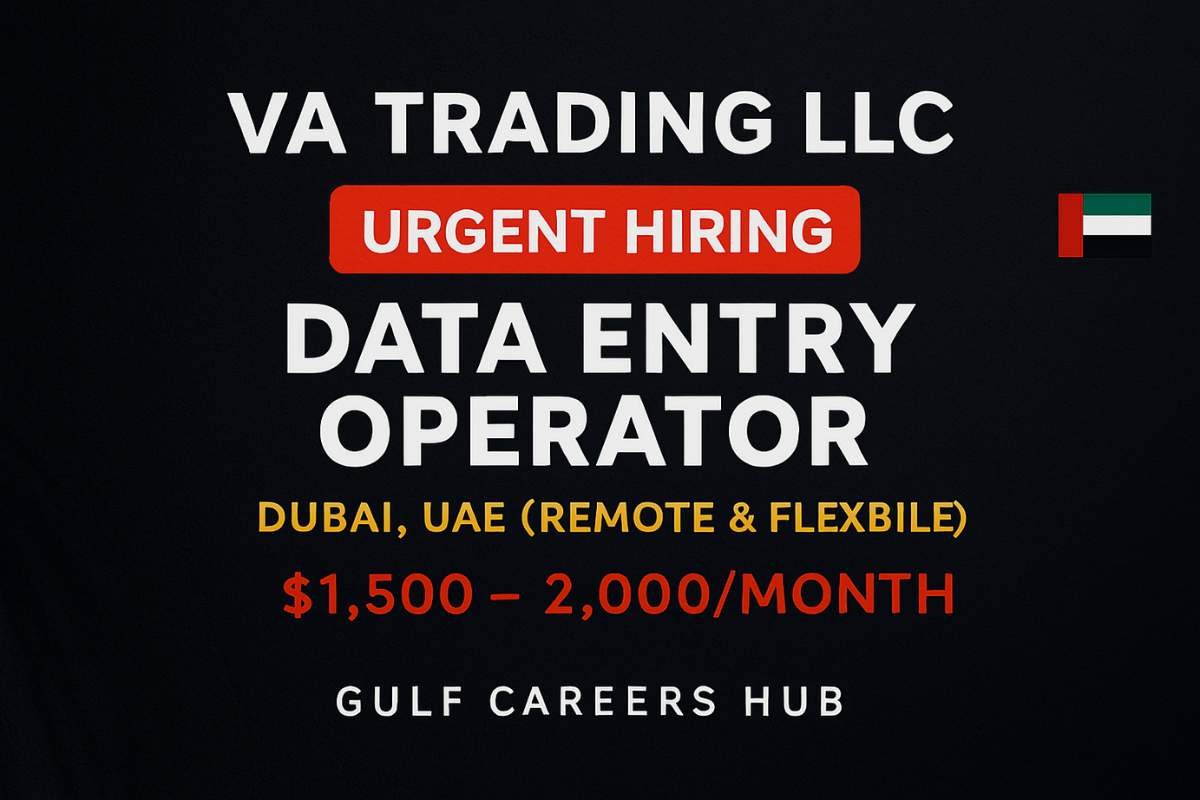
📋 VA Trading LLC is hiring a Remote Data Entry Operator in Dubai, UAE. This flexible, part-time role is perfect for students, interns, or anyone seeking remote work. No prior experience is required—just basic English skills, attention to detail, and the ability to manage simple data tasks independently. Apply now to join a tech-driven team supporting digital content and backend operations.
Table of Contents
Job Title: Data Entry Operator
Location: Dubai, United Arab Emirates Company: VA Trading LLC Type: Remote – Part-Time
VA Trading LLC is a Dubai-based tech company specializing in mobile app development, including religious and lifestyle apps like Qibla Compass: Quran & Duas. With a lean team and a focus on digital innovation, the company is expanding its remote workforce to support backend operations and content management.
Role Overview
The Data Entry Operator will be responsible for entering, translating, and retyping data across various platforms. This role is ideal for students, interns, or part-time professionals seeking flexible hours and remote work. Accuracy, reliability, and basic English proficiency are key.
Key Responsibilities
Enter and manage data across internal systems and content platforms
Translate and retype documents as needed
Ensure accuracy and consistency in all entries
Work independently with minimal supervision
Meet deadlines and maintain confidentiality
Required Skills & Qualifications
Basic English reading and writing skills
Strong attention to detail and reliability
Ability to work remotely and manage flexible hours
No prior experience required, but familiarity with digital tools is a plus
Student/Internship level candidates welcome
Why Join VA Trading LLC?
Remote work flexibility
Part-time hours ideal for students or side-income seekers
Work with a tech-driven team in Dubai
Gain experience in digital operations and content handling
No complex software requirements or advanced qualifications needed
FAQs
Is this job still open?
Yes. The listing is active on Bayt.com and accepting applications
Is this a remote position?
Yes. The role is fully remote with flexible working hours
What’s the salary range?
According to Bayt.com, the estimated range is $1,500–$2,000/month, depending on hours and performance
Is prior experience required?
No. This role is open to students and interns, and does not require prior experience
What kind of tasks will I be doing?
Main tasks include data entry, retyping, and basic translation of documents
Can non-UAE residents apply?
Yes, as long as you meet the remote work eligibility and language requirements.
Landing in Dubai for work is exciting, but the first three months can be overwhelming. From visa formalities and housing to cultural etiquette and weekend escapes, this guide breaks down everything you need to know to survive — and thrive — in your first 90 days.
Whether you’re a nurse, engineer, teacher, or retail associate, this guide is tailored to help you settle in quickly and confidently.
Table of Contents
Week 1–2: Arrival, Visa, and Setup
Airport Arrival & Immigration
Dubai International Airport (DXB) is one of the busiest in the world.
Immigration is fast, but make sure you have:
A printed copy of your job offer or employment contract
Your visa approval (entry permit)
Passport with at least 6 months validity
Address of your accommodation or hotel
💡 Tip: If you’re arriving on a visit visa and plan to convert it to a work visa, notify your employer in advance.
Emirates ID & Medical Test
Your employer will typically guide you through:
Medical Fitness Test – blood test and chest X-ray at a government-approved center
Biometric Scanning – fingerprints and photo for Emirates ID
Emirates ID Application – mandatory for banking, housing, and SIM cards
Timeline: 7–10 working days 📍 Locations: Al Muhaisnah, Al Quoz, Karama, JLT
SIM Card & Banking
To open a bank account, you’ll need:
Emirates ID (or application receipt)
Passport copy
Salary certificate or job contract
Popular banks for expats:
Emirates NBD
ADCB
Mashreq
FAB
For SIM cards:
Etisalat and Du offer prepaid and postpaid plans
You’ll need your Emirates ID to activate
💡 Tip: Get a prepaid SIM first — easier and faster.
Week 3–4: Housing, Transport & Groceries
Finding Accommodation
Type
Monthly Rent (AED)
Areas
Shared Room
1,200–2,000
Bur Dubai, Karama, Al Nahda
Studio Apartment
2,500–4,000
International City, Discovery Gardens
1-Bed Apartment
4,000–6,500
JLT, Business Bay, Al Barsha
💬 Tip: Use platforms like Dubizzle and Bayut to find listings.
Public Transport
Dubai’s transport system is clean, safe, and affordable:
Metro – Red and Green lines, AED 3–7 per trip
Bus – Extensive network, AED 3–5 per trip
Taxi – Starting fare AED 12, higher at night
Careem/Uber – App-based, slightly pricier but convenient
Get a NOL Card for metro, bus, and water taxi access.
Grocery & Essentials
Popular supermarkets:
Carrefour
Lulu Hypermarket
Union Coop
Spinneys (premium)
💡 Tip: Indian and Pakistani stores like Baqer Mohebi and Al Adil offer spices, lentils, and regional snacks.
Week 5–8: Work Culture, Etiquette & Salary
Work Culture in Dubai
Workweek: Monday to Friday (9am–6pm typical)
Dress Code: Formal or business casual depending on industry
Punctuality: Highly valued — always arrive 5–10 minutes early
Hierarchy: Respect for seniority is important
Language: English is the business language, but Arabic greetings are appreciated
Cultural Etiquette
Greet with “As-salamu alaykum” or “Hello”
Avoid public displays of affection
Dress modestly in public areas
Alcohol is allowed in licensed venues but not in public
Friday is a holy day — avoid loud gatherings near mosques
Salary & Banking Tips
Salaries are paid monthly, often between the 25th–30th
Use WPS (Wage Protection System) accounts for salary deposits
Transfer money via:
Al Ansari Exchange
Lulu Exchange
Wise or Western Union
💡 Tip: Compare exchange rates before sending money home.
Week 9–12: Social Life, Weekends & Legal Tips
Weekend Escapes
Dubai offers incredible weekend options:
Activity
Location
Cost (AED)
Beach Day
JBR, Kite Beach
Free–50
Desert Safari
Lahbab Desert
100–250
Theme Parks
IMG, Motiongate
150–300
Malls & Cinema
Dubai Mall, MOE
50–100
Cultural Tour
Al Fahidi District
Free–30
Making Friends & Networking
Join Facebook groups like “Dubai Expats” or “Indians in Dubai”
Use Meetup.com for events and interest groups
Attend free workshops at Dubai Knowledge Park or DIFC
Visit cafes like Tom&Serg, The Sum of Us, or Arabian Tea House
💬 Tip: Respect cultural boundaries when socializing.
Legal & Safety Tips
Always carry your Emirates ID
Avoid posting sensitive content online
Do not work for another employer without a permit
Drugs and banned substances = zero tolerance
Rent contracts must be registered via Ejari
📞 Emergency Numbers:
Police: 999
Ambulance: 998
Fire: 997
Mental Health & Wellbeing
Dubai can be fast-paced. Here’s how to stay balanced:
Exercise: Join gyms like Fitness First, GymNation, or community parks
Mental Health: Free helplines include Lighthouse Arabia and Al Jalila Foundation
Faith & Worship: Mosques, churches, temples available across the city
Volunteering: Join Dubai Cares or Emirates Red Crescent for community work
💡 Tip: Don’t isolate — reach out and stay connected.
Final Checklist: Your First 90 Days
Task
Status
Emirates ID & Medical
✅ Completed
Bank Account & SIM
✅ Completed
Housing Setup
✅ Completed
Work Orientation
✅ Completed
Weekend Exploration
✅ In Progress
Social Connections
✅ In Progress
Legal Awareness
✅ Reviewed
Mental Wellbeing
✅ Ongoing
Frequently Asked Questions (FAQs)
How long does it take to get my Emirates ID?
Typically 7–10 working days after completing your medical fitness test and biometrics. You’ll receive an SMS when it’s ready for pickup or delivery.
Can I work while on a visit visa?
No. Working on a visit or tourist visa is illegal in the UAE. You must wait for your employment visa and labor card to be issued before starting work.
What documents do I need to open a bank account?
Emirates ID (or application receipt) Passport copy Job contract or salary certificate Some banks may also ask for a tenancy contract or utility bill.
Is public transport safe and reliable?
Yes. Dubai’s metro, buses, and taxis are clean, safe, and punctual. Get a NOL card to access all modes of transport.
Can I rent a room without an Emirates ID?
Some landlords accept passport and visa copies for short-term rentals, but long-term leases require Emirates ID and Ejari registration.
How much should I budget for monthly living expenses?
On average: Shared room: AED 1,500–2,000 Food & groceries: AED 800–1,200 Transport: AED 300–500 Mobile & internet: AED 200–300 Total: AED 3,000–4,500/month for modest living
Dubai is one of the most multicultural cities in the world, with over 85% of its population made up of expatriates. English is the dominant language in business, hospitality, retail, and tech — making it possible to thrive professionally without knowing Arabic.
Whether you’re a fresh graduate, a skilled technician, or a seasoned executive, Dubai offers a wide range of roles where English fluency is more than enough.
Table of Contents
Eligibility Overview
Most of the jobs listed below require:
English fluency (spoken and written)
Relevant qualifications or certifications
1–5 years of experience (some entry-level roles available)
Valid passport and visa status
Willingness to relocate or work flexible hours
💬 Note: Arabic is a plus in customer-facing roles but not mandatory.
🔟 In-Demand Jobs That Don’t Require Arabic (with Verified Apply Links)
Dubai’s e-commerce sector is expanding rapidly in 2025, driven by digital-first consumer behavior, AI-powered personalization, and aggressive regional scaling. From fashion and electronics to groceries and luxury goods, online platforms are competing for market share — and they need strategic digital leaders to drive growth.
If you’re a seasoned marketer with a track record in performance campaigns, omnichannel strategy, and team leadership, this is your moment. Multiple e-commerce giants in Dubai are hiring Senior Digital Marketing Managers to lead paid media, SEO, influencer partnerships, and conversion optimization.
Table of Contents
Role Overview
Position: Senior Digital Marketing Manager Location: Dubai, UAE Industry: E-commerce (Fashion, Home, Electronics, Lifestyle) Type: Full-time, onsite or hybrid Salary Range: AED 25,000–35,000/month + bonuses + benefits Visa Sponsorship: Yes Language: English (Arabic is a plus)
Key Responsibilities
Develop and execute multi-channel digital marketing strategies (Google Ads, Meta, TikTok, Snapchat)
Lead SEO/SEM initiatives to drive organic traffic and improve rankings
Manage influencer campaigns and affiliate partnerships
Oversee email marketing, CRM, and automation workflows
Analyze performance metrics and optimize campaigns for ROI
Collaborate with creative, product, and tech teams to align messaging
Manage a team of 4–10 marketers and external agencies
Own the digital marketing budget and reporting dashboards
Networking: Access to events like STEP Conference, Marketing Mania, and Gitex
Mobility: Easy to switch jobs after probation; Golden Visa options for high earners
FAQs
Do I need Arabic to work in Dubai?
No. English is the primary business language. Arabic is helpful but not required.
Is visa sponsorship included?
Yes. All listed roles offer full visa sponsorship and onboarding support.
Can I bring my family?
Yes, once you receive your residence permit and meet the salary threshold (typically AED 10,000/month).
What’s the dress code?
Business casual or smart professional, depending on company culture.
Can I work remotely?
Some roles offer hybrid flexibility. Confirm during the interview.
Disclaimer
Gulf Careers Hub shares verified job listings and employer expectations from public sources. We do not hire, sponsor, or guarantee employment. Always apply through official employer portals and confirm offer terms directly with the hiring company.
Post a Job Opening
Fill in the details below. Your job posting will be reviewed by our team.