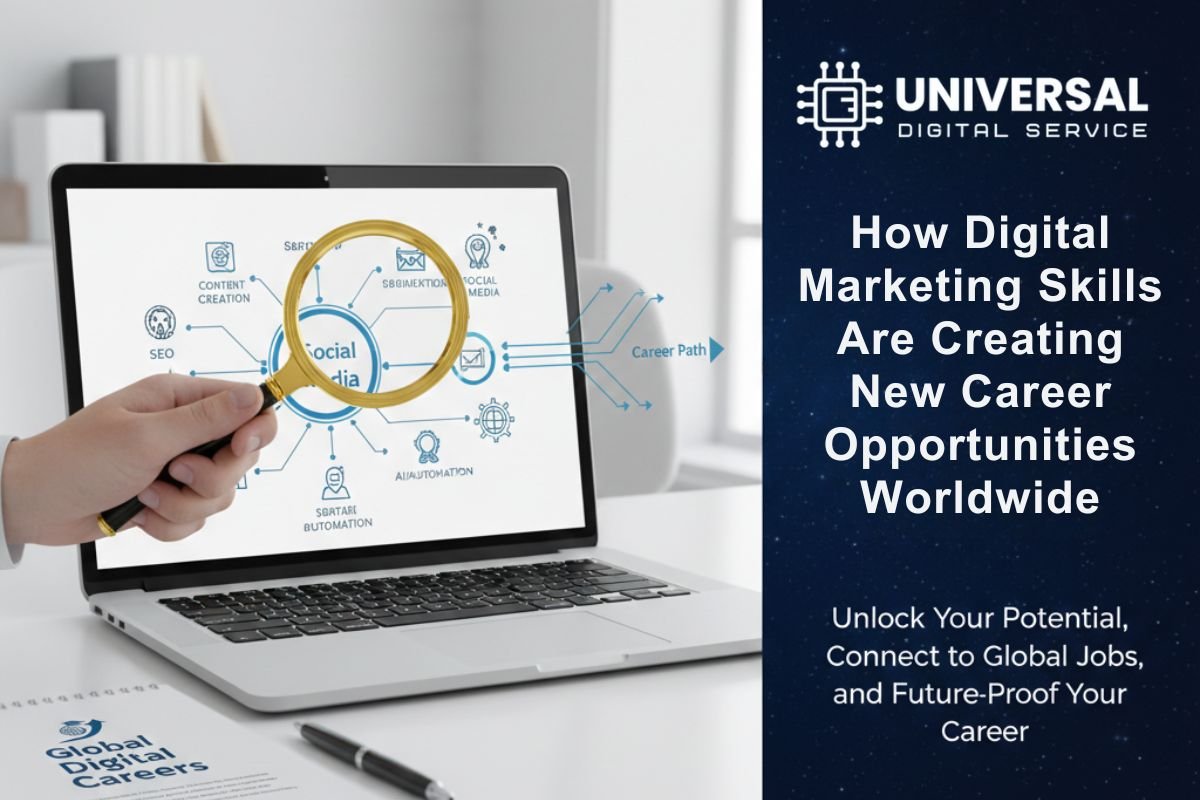
The global job market is rapidly evolving, and digital marketing has emerged as one of the most in-demand skill sets across industries. From startups to multinational corporations, businesses are actively seeking professionals who understand how to grow brands online.
This shift has not only changed how companies operate but has also created countless career opportunities for job seekers worldwide.
Why Digital Marketing Skills Matter Today
Traditional marketing methods are no longer enough to compete in a digital-first economy. Companies now rely on online channels to reach customers, promote services, and generate revenue.
Key reasons digital marketing skills are in demand:
Businesses want measurable results and clear ROI
Online platforms allow precise audience targeting
Digital campaigns are cost-effective and scalable
Data-driven decisions improve performance
As a result, professionals with digital marketing expertise are becoming valuable assets in nearly every industry.
Popular Digital Marketing Career Paths
Digital marketing is a broad field that offers multiple career options, including:
These roles are suitable for fresh graduates, freelancers, and experienced professionals alike.
The Role of Agencies in Digital Skill Development
Digital marketing agencies play an important role in shaping industry standards. They work on real-world projects, manage campaigns, and apply advanced tools to deliver results for clients.
Agencies like Universal Digital Services focus on data-driven strategies, SEO best practices, and performance marketing, helping businesses grow while also contributing to industry knowledge and skill development.
Final Thoughts
Digital marketing is no longer just a business tool — it is a career pathway with long-term growth potential. As businesses continue to invest in online marketing, the demand for skilled professionals will only increase.
Learning digital marketing today can open doors to global opportunities tomorrow.
Remote work is rising across the Gulf, but staying visible and advancing your career requires deliberate strategy. This guide shows professionals in the UAE, Saudi Arabia, Qatar, and beyond how to build influence, earn recognition, and grow — even from home.
Introduction
Remote work in the Gulf is no longer a fringe concept. From Dubai’s tech startups to Riyadh’s Vision 2030 initiatives, hybrid and fully remote roles are becoming mainstream. But with this flexibility comes a challenge: how do you stay visible, relevant, and promotable when you’re not physically present?
This guide offers a step-by-step strategy for Gulf-based professionals to thrive remotely — with insights tailored to regional workplace culture, digital infrastructure, and career expectations.
The Rise of Remote Work in the Gulf
According to GulfTalent’s 2025 report, over 40% of professionals in the GCC now work remotely or in hybrid setups, with the UAE and Saudi Arabia leading adoption. Industries embracing remote work include:
Tech and digital services
Finance and consulting
Education and training
Marketing and media
Healthcare administration
Government initiatives like Saudi’s Digital Transformation Program and Dubai’s Virtual Working Program have accelerated this shift.
Visibility Challenges in Remote Work
Remote professionals often face:
Reduced face time with managers
Fewer spontaneous conversations
Limited access to informal networks
Delayed recognition for contributions
Misalignment with team goals or culture
In Gulf workplaces, where hierarchy and relationship-building are key, these gaps can stall career growth.
Strategies to Stay Visible and Advance
1. Over-Communicate with Purpose
Send weekly updates to your manager
Use bullet points to highlight achievements
Share blockers and solutions proactively
Use voice notes or video messages for clarity
Example:
“Hi Ahmed, here’s a quick update on the client onboarding dashboard. We’ve completed 80%, and I’ve added a new filter for UAE-based users. Let me know if you’d like a walkthrough.”
2. Show Up on Camera
Turn on video during meetings
Dress professionally, even from home
Use neutral backgrounds or branded visuals
Maintain eye contact and body language
Visibility isn’t just about presence — it’s about presence with impact.
3. Document Your Wins
Keep a personal achievement log
Quantify results: “Reduced churn by 18%”
Share dashboards, reports, or testimonials
Use LinkedIn’s Featured section to showcase work
4. Engage in Company Culture Remotely
Attend virtual town halls and team events
Celebrate Gulf holidays and milestones (e.g., Eid, National Day)
Share shout-outs for colleagues
Join internal groups or Slack channels
5. Build Relationships Intentionally
Schedule virtual coffees with peers and leaders
Send thoughtful follow-ups after meetings
Congratulate colleagues on promotions or achievements
Offer help or insights across departments
In Gulf workplaces, relationships often drive promotions — even more than performance.
6. Ask for Feedback Regularly
Request monthly check-ins
Ask: “What could I improve to better support the team?”
Use feedback to shape your development plan
Share progress updates to show growth
7. Align with Regional Goals
Mention how your work supports Vision 2030 or UAE’s digital economy
Use region-specific metrics or case studies
Stay updated on Gulf business trends and policies
Example:
“This new automation workflow supports our Saudi clients’ compliance with the Tawteen program.”
8. Upskill with Gulf-Relevant Certifications
PMP, Agile, Scrum
Arabic language or translation
ESG, LEED, GHG Protocol
Gulf-specific HR or finance tools (e.g., Bayzat, Zoho, SAP GCC modules)
Certifications show initiative and readiness for leadership.
9. Be Visible on LinkedIn
Share Gulf-specific insights or articles
Comment on regional trends (e.g., NEOM, Expo City Dubai)
Use hashtags: #RemoteWorkGulf #UAEJobs #SaudiCareers
Tag colleagues and companies in posts
LinkedIn is a visibility engine — especially in remote setups.
Remote Visibility Checklist
Strategy
Action Example
Weekly Updates
Email manager with bullet-point progress
Video Presence
Turn on camera, dress professionally
Achievement Log
Track KPIs, share dashboards
Culture Engagement
Attend virtual Eid celebration
Relationship Building
Schedule virtual coffee with team lead
Feedback Loop
Monthly check-in with manager
Regional Alignment
Reference Vision 2030 in project summary
Upskilling
Complete PMP and Arabic language course
LinkedIn Activity
Share post on Gulf remote work trends
Common Mistakes to Avoid
Staying silent or invisible
Assuming your work speaks for itself
Ignoring cultural norms or holidays
Failing to document achievements
Not asking for feedback or growth opportunities
Avoiding camera or team interactions
FAQs
Can I get promoted while working remotely in the Gulf?
Yes — but you must be proactive. Visibility, impact, and relationships matter more than ever.
Is remote work accepted in Saudi Arabia and UAE?
Increasingly yes. Hybrid models are common in tech, finance, and education. Government support is growing.
How do I build relationships remotely in Gulf culture?
Be respectful, consistent, and warm. Use video calls, voice notes, and thoughtful follow-ups.
Should I mention remote work on my CV or LinkedIn?
Yes — highlight achievements and remote tools used (e.g., Zoom, Asana, Slack). Show adaptability.
What tools help with remote visibility?
Use Notion, Trello, Loom, and LinkedIn. Track progress and share updates visually.
In 2025, the workplace is no longer defined by rigid schedules, formal meetings, or static job descriptions. Instead, a new trend is sweeping across industries — one that’s fluid, intuitive, and deeply collaborative. It’s called vibe working, and it’s powered by artificial intelligence.
Vibe working is more than a buzzword. It’s a cultural shift where AI tools become co-creators, not just assistants. It’s about working in sync with intelligent systems that understand your rhythm, anticipate your needs, and help you stay in flow. For Gen Z and forward-thinking professionals, vibe working isn’t just a preference — it’s the new standard.
What Is Vibe Working?
Vibe working refers to a style of work that blends human creativity with AI-powered collaboration, allowing ideas, tasks, and decisions to emerge organically. It’s less about structure and more about momentum, intuition, and co-creation.
Unlike traditional workflows that rely on linear processes and top-down management, vibe working is iterative and spontaneous. You might start with a rough idea, feed it into a generative AI tool, refine it through back-and-forth interaction, and arrive at a polished output — all within minutes.
As Trupti Patil writes in her LinkedIn article, vibe working is “a style where generative AI becomes your co-creator, collaborator, and even your silent partner”.
How AI Powers Vibe Working
AI is the engine behind vibe working. Here’s how:
1. Generative Co-Creation
Tools like Copilot, ChatGPT, and Midjourney help users brainstorm, draft, design, and iterate in real time. AI doesn’t just execute commands — it suggests, adapts, and evolves with the user.
2. Ambient Automation
AI handles repetitive tasks like scheduling, formatting, and data entry in the background, freeing up cognitive space for creative work.
3. Contextual Awareness
Modern AI systems can understand tone, intent, and context. They adjust responses based on your mood, goals, and previous interactions — creating a more personalized experience.
4. Flow Optimization
AI helps maintain momentum by offering timely nudges, reminders, and enhancements. It’s like having a productivity coach that knows when to push and when to pause.
Why Vibe Working Appeals to Gen Z
Gen Z grew up with smart devices, intuitive interfaces, and instant feedback. They value flexibility, authenticity, and creativity — all of which vibe working supports.
According to the Financial Express, vibe working is attracting Gen Z to corporates by offering “flexibility, spontaneity, and a Gen Z-driven shift in productivity norms”.
Key reasons include:
Freedom to experiment without fear of failure
Collaborative ideation with AI tools
Fluid schedules that adapt to energy levels
Minimal bureaucracy, maximum impact
Benefits of Vibe Working
Enhanced Creativity
AI helps users explore more ideas, faster. It’s like brainstorming with a tireless partner who never runs out of suggestions.
Reduced Burnout
By automating mundane tasks and supporting flow, vibe working reduces cognitive overload and emotional fatigue.
Inclusive Collaboration
AI tools level the playing field, allowing introverts, neurodiverse individuals, and remote workers to contribute meaningfully.
Faster Prototyping
From pitch decks to code snippets, vibe working accelerates the path from idea to execution.
How Companies Are Adapting
Forward-thinking organizations are embracing vibe working by:
Integrating AI into daily workflows
Redesigning roles to focus on creativity and strategy
Offering flexible work environments that support flow
Training teams to collaborate with AI tools effectively
Microsoft, for example, has shifted toward “vibe coding” — where developers use AI to write, test, and refine code in real time.
Real-World Examples
A marketing team uses AI to generate campaign ideas, test headlines, and design visuals — all in one afternoon.
A product manager collaborates with AI to draft user stories, prioritize features, and simulate user flows.
A freelance writer co-creates blog drafts with AI, refining tone and structure through iterative prompts.
These aren’t futuristic scenarios — they’re happening now.
FAQs
Is vibe working just another word for remote work?
No. Vibe working is about how you work, not where. It’s a mindset and a method, powered by AI.
Do I need to be tech-savvy to vibe work?
Not necessarily. Many AI tools are designed to be intuitive. The key is openness to collaboration and experimentation.
Can vibe working apply to non-creative roles?
Absolutely. From finance to HR, AI can support decision-making, analysis, and communication in vibe-driven ways.
Will vibe working replace traditional jobs?
It will reshape them. Roles will evolve to focus more on strategy, empathy, and creativity — with AI handling the rest.
How do I start vibe working?
Begin by integrating AI tools into your workflow. Use them to brainstorm, automate, and iterate. Let go of rigid structures and embrace flow.
Final Thoughts
Vibe working isn’t just a trend — it’s a cultural transformation. It reflects a deeper shift in how we relate to work, technology, and each other. In 2025, the most successful professionals won’t be the busiest — they’ll be the most aligned, creative, and collaborative.
AI is no longer just a tool. It’s a teammate. And vibe working is how we learn to dance with it.
In 2025, the concept of retirement is no longer a distant finish line. For a growing number of professionals — especially Millennials and Gen Z — it’s a flexible, recurring strategy woven into their career journey. This emerging trend is called micro-retirement, and it’s transforming how people think about work, rest, and purpose.
Unlike sabbaticals or garden leave, micro-retirement is a self-elected, extended break from full-time work, typically lasting anywhere from six months to two years. It’s not about burnout or crisis — it’s about intentional pause. Whether it’s traveling, learning a new skill, spending time with family, or simply decompressing, micro-retirement offers a way to live more fully now, not just later.
What Is Micro-Retirement?
Micro-retirement refers to planned, extended breaks from full-time employment, taken periodically throughout a person’s working life. These breaks typically last anywhere from a few months to two years and are used for personal growth, travel, caregiving, education, or simply rest.
Unlike sabbaticals (which are often employer-sponsored) or gap years (typically taken before entering the workforce), micro-retirement is self-directed and can occur at any stage of a career. It’s not tied to age, income level, or industry — it’s a mindset shift toward intentional living.
Why Is Micro-Retirement Trending in 2025?
Several factors are driving the popularity of micro-retirement:
1. Burnout and Mental Health Awareness
The pandemic era exposed the fragility of traditional work models. In 2025, mental health is a top priority, and professionals are seeking sustainable ways to manage stress. Micro-retirement offers a proactive alternative to burnout, allowing people to step back before reaching a breaking point.
2. Remote and Hybrid Work Models
With flexible work arrangements now mainstream, professionals have more control over their schedules and career trajectories. This autonomy makes it easier to plan extended breaks without derailing long-term goals.
3. Changing Career Expectations
Millennials and Gen Z prioritize purpose, flexibility, and experiences over titles and tenure. They’re less interested in climbing a corporate ladder and more focused on building a meaningful life. Micro-retirement aligns perfectly with these values.
4. Financial Planning Innovations
The rise of the FIRE movement (Financial Independence, Retire Early), fractional investing, and digital budgeting tools has empowered people to save strategically and take breaks without jeopardizing financial stability.
5. Longevity and Lifelong Careers
As life expectancy increases, so does the length of our working years. Instead of working nonstop for 40 years, many professionals now prefer to intermittently pause and recalibrate, knowing they’ll likely work into their 70s or beyond.
Benefits of Micro-Retirement
Micro-retirement isn’t just a luxury — it’s a strategic investment in long-term well-being and career sustainability.
1. Mental and Emotional Renewal
Extended breaks allow individuals to decompress, reflect, and reconnect with themselves. This leads to improved mental health, reduced anxiety, and greater emotional resilience.
2. Enhanced Creativity and Innovation
Stepping away from routine work environments can spark new ideas and perspectives. Many professionals return from micro-retirement with fresh insights and renewed motivation.
3. Strengthened Relationships
Time off enables deeper connections with family, friends, and communities. Whether it’s caregiving, parenting, or simply being present, micro-retirement fosters stronger social bonds.
4. Skill Development
Many use micro-retirement to pursue education, certifications, or hobbies that enhance their professional toolkit. It’s a chance to learn without the pressure of deadlines or performance reviews.
5. Career Clarity
Breaks provide space to reassess goals, values, and priorities. This often leads to more intentional career choices and better alignment between work and life.
How Employers Can Support Micro-Retirement
Forward-thinking organizations are beginning to recognize the value of micro-retirement and are adapting their policies accordingly.
Flexible Leave Policies
Offering unpaid sabbaticals, career breaks, or extended leave options allows employees to take time off without severing ties.
Re-entry Programs
Structured return-to-work programs help employees reintegrate smoothly after a break, reducing friction and boosting retention.
Culture of Trust
Encouraging open conversations about career pauses fosters psychological safety and reduces stigma around taking time off.
Performance Metrics
Shifting from time-based metrics to outcome-based evaluations allows for more flexible career paths and supports intermittent breaks.
Global Talent Strategy
Remote-first companies can tap into a global workforce that embraces micro-retirement, creating a more diverse and resilient team.
Planning a Micro-Retirement: A Step-by-Step Guide
If you’re considering a micro-retirement, here’s how to do it strategically:
1. Define Your Purpose
Ask yourself: Why do I want this break? Is it for rest, travel, caregiving, education, or something else? Clarity will guide your decisions.
2. Set a Timeline
Decide how long you want to be away. Typical micro-retirements range from 6 months to 2 years. Be realistic about your goals and commitments.
3. Create a Financial Plan
Estimate your expenses and savings needs. Consider passive income, freelance work, or part-time gigs to support your lifestyle.
4. Communicate with Stakeholders
If employed, discuss your plans with your manager or HR. If freelancing, inform clients and set expectations. Transparency builds trust.
5. Plan Your Re-entry
Think about how you’ll return to work. Will you resume your old role, pivot to a new industry, or start something fresh? Prepare accordingly.
Industry Examples of Micro-Retirement Adoption
Industry
Micro-Retirement Trends
Employer Response
Tech
Engineers taking 6–12 month breaks to travel or build side projects
Sabbatical programs, freelance re-entry
Healthcare
Nurses and caregivers pausing for mental health or family care
Flexible scheduling, mental health leave
Education
Teachers taking gap years to study or volunteer abroad
Job-sharing, re-entry training
Finance
Analysts taking breaks for certifications or entrepreneurship
Leave banks, alumni networks
Creative Arts
Designers and writers pausing for inspiration or residencies
Project-based contracts, flexible gigs
Real-Life Examples
A UX designer in Dubai took a 9-month micro-retirement to travel Southeast Asia, returning with a new portfolio and a freelance career.
A nurse in Karachi paused her job for 14 months to care for her aging parents, later rejoining her hospital through a re-entry program.
A teacher in Riyadh took a year off to pursue a master’s degree in education technology, returning to lead digital transformation in her school.
These stories reflect a growing movement toward intentional career design.
FAQs
Is micro-retirement only for wealthy people?
No. With proper planning, micro-retirement is accessible to many. It’s about budgeting, prioritizing, and aligning your lifestyle with your values.
How is micro-retirement different from a sabbatical?
Sabbaticals are often employer-sponsored and tied to tenure. Micro-retirement is self-directed and can happen at any time.
Will taking a break hurt my career?
Not if it’s planned well. Many employers value the self-awareness and growth that come from intentional breaks.
How do I explain micro-retirement on my resume?
Be honest and strategic. Highlight what you learned, how you grew, and how it benefits your next role.
Can I freelance during micro-retirement?
Absolutely. Many people use this time to explore side projects, consulting, or creative work.
What if my employer doesn’t support it?
You can still plan a transition. Consider saving, resigning respectfully, and maintaining professional relationships for future opportunities.
Final Thoughts
Micro-retirement is more than a trend — it’s a paradigm shift. It challenges the notion that rest must wait until old age and empowers people to live with intention, balance, and purpose throughout their careers.
As the workforce evolves, so too must our definitions of success. Micro-retirement offers a flexible, human-centered approach to career planning — one that honors both ambition and well-being.
Whether you’re a job seeker, a manager, or a policymaker, the message is clear: work-life balance isn’t a perk — it’s a strategy.
The global job market in 2025 is undergoing a profound transformation. It’s not just technology or automation driving change — it’s people. From aging populations and Gen Z’s rise to increased migration and gender parity, workforce demographics are shifting faster than ever, and the ripple effects are being felt across every industry.
What Do We Mean by Workforce Demographics?
Workforce demographics refer to the statistical characteristics of the labor force, including:
Age distribution
Gender representation
Ethnic and cultural diversity
Educational attainment
Geographic mobility
Employment status (full-time, part-time, freelance)
These factors influence everything from job availability and wage levels to workplace policies and talent strategies.
Key Demographic Shifts in 2025
According to the World Economic Forum’s Future of Jobs Report 2025, demographic change is one of the top five drivers of labor market transformation, alongside technological development and the green transition. Here are the most impactful trends:
1. Aging Workforce
In many developed countries, the median age of workers is rising.
Retirement ages are being pushed back due to longer life expectancy and financial necessity.
Older workers are re-entering the workforce in part-time or advisory roles.
Impact: Employers must offer flexible schedules, ergonomic workspaces, and lifelong learning programs to retain experienced talent.
2. Gen Z and Millennials Dominate
By 2025, Gen Z and Millennials will make up over 60% of the global workforce.
These generations value purpose, flexibility, and digital fluency.
They expect inclusive cultures, mental health support, and career mobility.
Impact: Companies must rethink leadership styles, feedback systems, and benefits to attract younger talent.
3. Rise of Women in Leadership
Gender parity is improving, especially in education and mid-level management.
However, gaps remain in executive roles and STEM fields.
Hybrid work has enabled more women to balance career and caregiving.
Impact: Organizations must invest in mentorship, parental leave, and bias-free hiring to close the leadership gap.
4. Global Migration and Talent Mobility
Remote work has unlocked access to global talent pools.
Migrant workers are filling critical gaps in healthcare, construction, and logistics.
Language skills and cultural intelligence are increasingly valuable.
Impact: Employers must navigate visa policies, cross-border compliance, and multicultural team dynamics.
5. Educational Polarization
There’s a growing divide between highly educated workers and those with limited formal training.
Micro-credentials and online learning are bridging the gap.
Employers are shifting from degree-based hiring to skill-based hiring.
Impact: Job descriptions now emphasize competencies over qualifications, and upskilling is a core strategy.
How These Shifts Are Reshaping the Job Market
Redefining Job Roles
As demographics shift, so do job expectations. For example:
A 60-year-old project manager may transition into a mentorship role.
A Gen Z marketer may lead TikTok strategy while learning traditional branding.
A migrant nurse may bring multilingual skills to patient care.
Hybrid roles that blend experience, tech fluency, and cultural insight are becoming the norm.
Changing Recruitment Strategies
Employers are adapting by:
Using AI to reduce bias in hiring
Offering remote-first roles to attract global talent
Prioritizing soft skills and adaptability over rigid qualifications
Creating inclusive job ads that appeal across age and gender
Evolving Workplace Culture
Multigenerational teams require:
Flexible communication styles (email vs. Slack vs. video calls)
Respect for different work-life balance expectations
Companies that foster intergenerational collaboration and cultural inclusion outperform those that don’t.
New Metrics of Success
Traditional metrics like tenure and hours worked are being replaced by:
Project outcomes
Skill growth
Team engagement
Innovation contributions
This shift benefits younger workers and freelancers who thrive in agile environments.
Industry-Specific Impacts
Industry
Demographic Impact
Strategic Response
Healthcare
Aging patients and aging workforce
Recruit younger nurses, offer retraining
Tech
Gen Z dominance, global talent
Remote hiring, mentorship programs
Education
Diverse student populations
Culturally responsive teaching
Retail
Multilingual staff, flexible schedules
Localized hiring, shift-based models
Finance
Gender parity in mid-level roles
Promote women to leadership
Construction
Migrant labor, aging tradespeople
Safety training, language support
What Employers Should Do
1. Audit Your Workforce
Understand your current demographic makeup. Use surveys, HR data, and external benchmarks.
2. Update Job Descriptions
Focus on skills, outcomes, and flexibility. Avoid ageist or exclusionary language.
3. Invest in Upskilling
Offer training in digital tools, leadership, and cross-cultural communication.
4. Create Inclusive Policies
Support caregivers, older workers, and neurodiverse employees. Review benefits and accessibility.
5. Measure and Iterate
Track diversity metrics, engagement scores, and retention by demographic group.
FAQs
Why are demographics so important to the job market?
Demographics shape who is available to work, what skills they bring, and what they expect from employers. Ignoring these shifts leads to talent shortages and disengagement.
How can small businesses adapt?
Start with flexible roles, inclusive hiring, and digital training. You don’t need a big budget — just intentionality.
Is age discrimination still a problem?
Yes. Many older workers face bias despite having valuable experience. Inclusive hiring and mentorship programs help combat this.
What does Gen Z want from work?
Purpose, flexibility, mental health support, and growth opportunities. They value authenticity and transparency.
How does remote work affect demographics?
It enables global hiring, supports caregivers, and empowers people with disabilities. But it also requires new management styles.
Are degrees still important?
They matter, but skills are gaining ground. Many employers now prioritize certifications, portfolios, and real-world experience.
Final Thoughts
Workforce demographics aren’t just numbers — they’re people. They represent lived experiences, evolving expectations, and untapped potential. In 2025, the job market is being reshaped not just by technology, but by who we are, where we come from, and how we work.
Employers who embrace these shifts will unlock innovation, loyalty, and resilience. Job seekers who understand these trends will find more meaningful, flexible, and inclusive opportunities.
The future of work is diverse, distributed, and dynamic — and it’s already here.
The global workplace has transformed dramatically over the last few years, driven by technology, shifting employee expectations, and evolving business needs. What started as an emergency shift to remote work has now matured into a strategic advantage for companies across industries. As we enter 2025, hybrid and remote work arrangements are no longer optional—they have become the backbone of modern organizations.
From AI-powered productivity tools to flexible work cultures, companies are adopting innovative approaches to attract talent, reduce costs, and improve performance. At the same time, employees are demanding more autonomy, better work-life balance, and workplaces that adapt to their personal needs.
This blog explores the most influential hybrid and remote work trends that will dominate 2025, based on real industry signals, workforce patterns, and global business transformations.
1. The Rise of “Flexible Hybrid Work” — Employees Choose Their Own Schedule
Earlier hybrid models required employees to come into the office on fixed days—usually two or three days a week. But in 2025, companies are shifting away from rigid schedules toward “flexible hybrid work”, where employees have the autonomy to decide:
When they come in
Which days they work from home
How often they visit the office
Which environment best supports their tasks
This trend is growing because:
Productivity increases when employees plan their own schedules.
Organizations want to reduce office real estate costs.
Employees prefer autonomy and balance.
Global teams require flexibility due to time-zone differences.
Flexible hybrid work highlights trust, results, and outcomes—not physical presence.
2. AI-Powered Workflows Are Becoming Standard
AI has moved far beyond chatbots. In 2025, AI assistants and automation tools play a major role in hybrid and remote workflows:
AI is used for:
Scheduling and time management
Content creation
Data analysis
Project reporting
Meeting notes and summaries
Task automation
Personalized learning and training
AI tools like Notion AI, Google Workspace AI, Microsoft Copilot, and ClickUp AI are now essential productivity partners.
This allows workers to focus more on creativity, strategy, and decision-making—while AI handles repetitive tasks. For remote workforces, AI bridges the gap by enabling faster communication and reducing time spent on administrative work.
3. Global Hiring Has Become a Competitive Advantage
The biggest advantage of remote and hybrid work? Companies can hire talent from anywhere.
In 2025, organizations increasingly adopt a global talent strategy, allowing them to:
Access a larger talent pool
Hire specialized professionals from different countries
Reduce recruitment costs
Maintain productivity in multiple time zones
Avoid talent shortages in local markets
Remote-first companies especially are using platforms like Deel, Remote.com, OysterHR, and Rippling to manage international payroll and compliance.
Employees benefit too—they can work for top global companies without relocating.
4. Office Spaces Are Turning Into Collaboration Hubs
Traditional office spaces are rapidly fading. In 2025, companies are redesigning offices to support collaboration, creativity, and social connection rather than everyday work.
Offices now include:
Meeting lounges
Brainstorming rooms
Hybrid video meeting technology
Soundproof pods
Co-working zones
Social interaction areas
Employees only come in for:
Team meetings
Brainstorming sessions
Training workshops
Important presentations
Relationship-building events
The goal is to create purpose-driven workdays, not mandatory office attendance.
5. The Four-Day Workweek Is Becoming a Growing Trend
Although not widespread yet, the 4-day workweek is gaining momentum in 2025.
Countries like the UK, Germany, Iceland, Spain, and Japan have conducted large-scale trials showing:
Higher employee satisfaction
Lower burnout
Equal or improved productivity
Better retention
Lower absenteeism
Companies using hybrid or remote work are more likely to experiment with shorter workweeks because flexible environments already support efficiency.
The 4-day model works especially well for:
Tech companies
Marketing & creative agencies
Startups
Professional services
Remote-first businesses
Employees work fewer hours but perform better due to increased focus and motivation.
6. Digital Well-being & Burnout Prevention Are Business Priorities
Remote work has many benefits, but it has also created challenges such as:
Overworking
Lack of boundaries
Digital fatigue
Social isolation
To combat these issues, companies in 2025 are investing in employee well-being programs tailored for hybrid and remote environments.
New well-being initiatives include:
Mandatory “offline hours”
Wellness stipends
Virtual counseling and therapy
Mental health days
Workshops on stress management
Ergonomic home-office allowances
Digital detox policies
Organizations realize that burnout directly affects performance, turnover, and company culture. Happy employees = higher productivity.
7. Virtual Reality (VR) and Mixed Reality (MR) Meetings Are Emerging
Virtual reality is quietly transforming remote work. By 2025, VR and MR tools are becoming more mainstream for:
Virtual office spaces
Training and onboarding
Team-building sessions
Complex design and engineering tasks
Sales presentations
Virtual conferences
Companies like Meta, Apple, and Microsoft are developing lightweight VR/AR devices that enable realistic, immersive collaboration.
While not fully mainstream yet, VR meetings will become a major part of remote work by 2026–2028.
8. Cybersecurity in Hybrid Work Is Getting Smarter
With employees working from multiple locations, cybersecurity threats have increased. As a result, companies are implementing:
Zero-trust security frameworks
Multi-factor authentication
Secure VPN alternatives
Employee cybersecurity training
Encrypted devices
AI-based threat detection
Remote workers are required to maintain secure work environments, even from home.
Cybersecurity is now a shared responsibility between employer and employee.
9. “Outcome-Based Work Culture” Is Replacing Time-Based Work
In 2025, companies care more about results than about hours spent working.
Managers are shifting to:
Clear KPIs
Performance metrics
Goal-based evaluations
Task ownership
Quality of output
This is a natural evolution of hybrid and remote work: trust + accountability + flexibility = high performance.
Employees feel empowered and perform better when evaluated fairly.
10. Freelancing & Contract Work Are Becoming Common
More professionals are choosing contract-based roles instead of full-time jobs.
Reasons include:
Freedom to choose projects
Higher earning potential
Better work-life balance
Variety of opportunities
Global clients
Remote-first industries
Companies also benefit because:
Hiring freelancers is cheaper
They get specialized talent
They can scale teams quickly
The freelance workforce is expected to cross over 1 billion remote workers globally by the end of 2025.
Conclusion: The Future of Work Is Flexible, Digital, and Human-Centric
The trends shaping 2025 make one thing clear:
Hybrid and remote work are the future—not temporary work styles.
Organizations that embrace flexibility, invest in technology, and build people-centered cultures will lead the future job market. Employees now prioritize autonomy, mental well-being, learning, and meaningful work—and companies that provide this will attract the best global talent.
2025 is not just another year of remote work evolution—it’s a year of transformation that sets the foundation for the next decade of how the world works.
FAQs (Frequently Asked Questions)
Is hybrid work better than fully remote work?
Both have advantages. Hybrid work is ideal for collaboration and in-person connection, while remote work supports deep focus and flexibility. The best model depends on company culture and job requirements.
Which industries are fastest in adopting hybrid and remote work?
IT & Software Digital Marketing E-commerce Consulting Finance Customer Support Creative agencies Education and EdTech These fields use digital tools heavily and benefit from flexible work structures.
Will companies completely eliminate office spaces in the future?
Not entirely. Offices will still exist but will function more as collaboration hubs rather than daily workspaces.
How can remote workers avoid burnout?
Set clear boundaries Take digital breaks Maintain a routine Use ergonomic setups Communicate availability Prioritize health and rest Employers also play a role by promoting healthy work policies.
Is hybrid work more productive?
Yes. Studies show employees are more productive in hybrid environments due to: Reduced commute Better work-life balance Increased autonomy Customizable work environments
How will AI impact remote work in 2025?
AI will automate routine tasks, enhance collaboration, assist with scheduling, generate reports, and support decision-making—allowing workers to focus on high-value creative and strategic tasks.
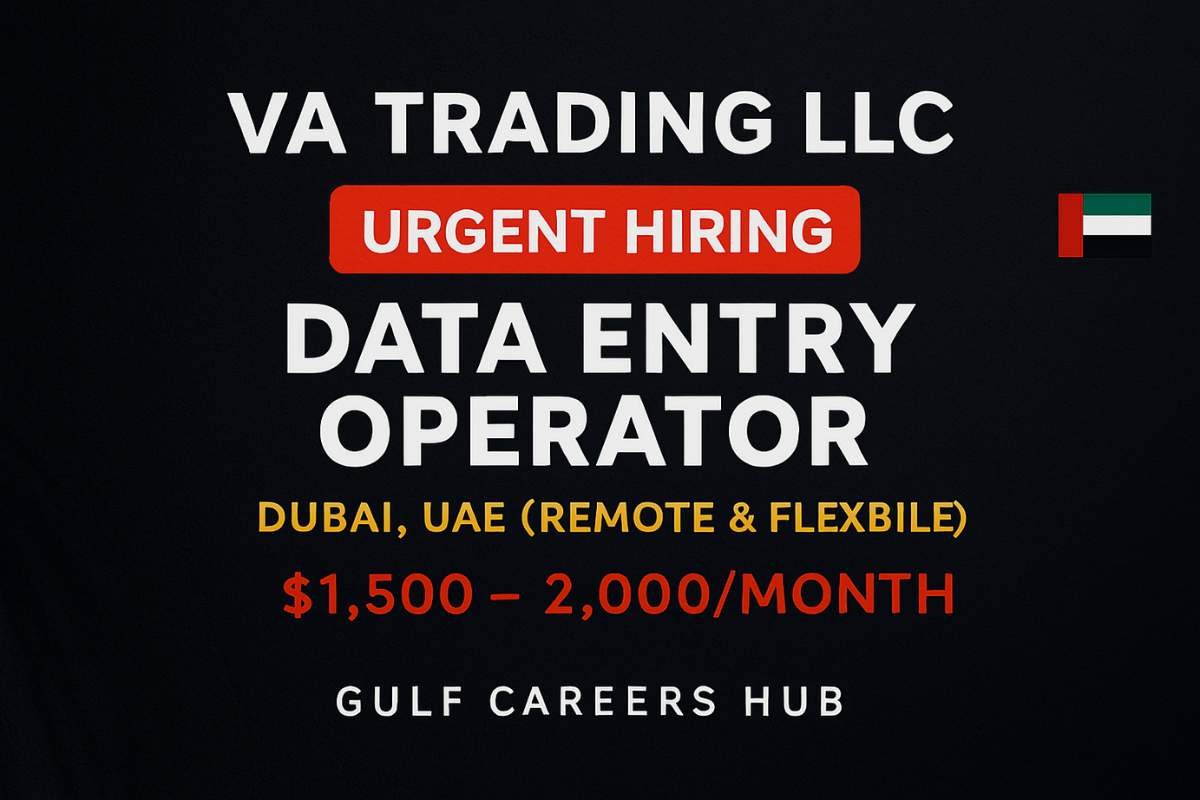
📋 VA Trading LLC is hiring a Remote Data Entry Operator in Dubai, UAE. This flexible, part-time role is perfect for students, interns, or anyone seeking remote work. No prior experience is required—just basic English skills, attention to detail, and the ability to manage simple data tasks independently. Apply now to join a tech-driven team supporting digital content and backend operations.
Table of Contents
Job Title: Data Entry Operator
Location: Dubai, United Arab Emirates Company: VA Trading LLC Type: Remote – Part-Time
VA Trading LLC is a Dubai-based tech company specializing in mobile app development, including religious and lifestyle apps like Qibla Compass: Quran & Duas. With a lean team and a focus on digital innovation, the company is expanding its remote workforce to support backend operations and content management.
Role Overview
The Data Entry Operator will be responsible for entering, translating, and retyping data across various platforms. This role is ideal for students, interns, or part-time professionals seeking flexible hours and remote work. Accuracy, reliability, and basic English proficiency are key.
Key Responsibilities
Enter and manage data across internal systems and content platforms
Translate and retype documents as needed
Ensure accuracy and consistency in all entries
Work independently with minimal supervision
Meet deadlines and maintain confidentiality
Required Skills & Qualifications
Basic English reading and writing skills
Strong attention to detail and reliability
Ability to work remotely and manage flexible hours
No prior experience required, but familiarity with digital tools is a plus
Student/Internship level candidates welcome
Why Join VA Trading LLC?
Remote work flexibility
Part-time hours ideal for students or side-income seekers
Work with a tech-driven team in Dubai
Gain experience in digital operations and content handling
No complex software requirements or advanced qualifications needed
FAQs
Is this job still open?
Yes. The listing is active on Bayt.com and accepting applications
Is this a remote position?
Yes. The role is fully remote with flexible working hours
What’s the salary range?
According to Bayt.com, the estimated range is $1,500–$2,000/month, depending on hours and performance
Is prior experience required?
No. This role is open to students and interns, and does not require prior experience
What kind of tasks will I be doing?
Main tasks include data entry, retyping, and basic translation of documents
Can non-UAE residents apply?
Yes, as long as you meet the remote work eligibility and language requirements.
Post a Job Opening
Fill in the details below. Your job posting will be reviewed by our team.