Gulf Careers Hub

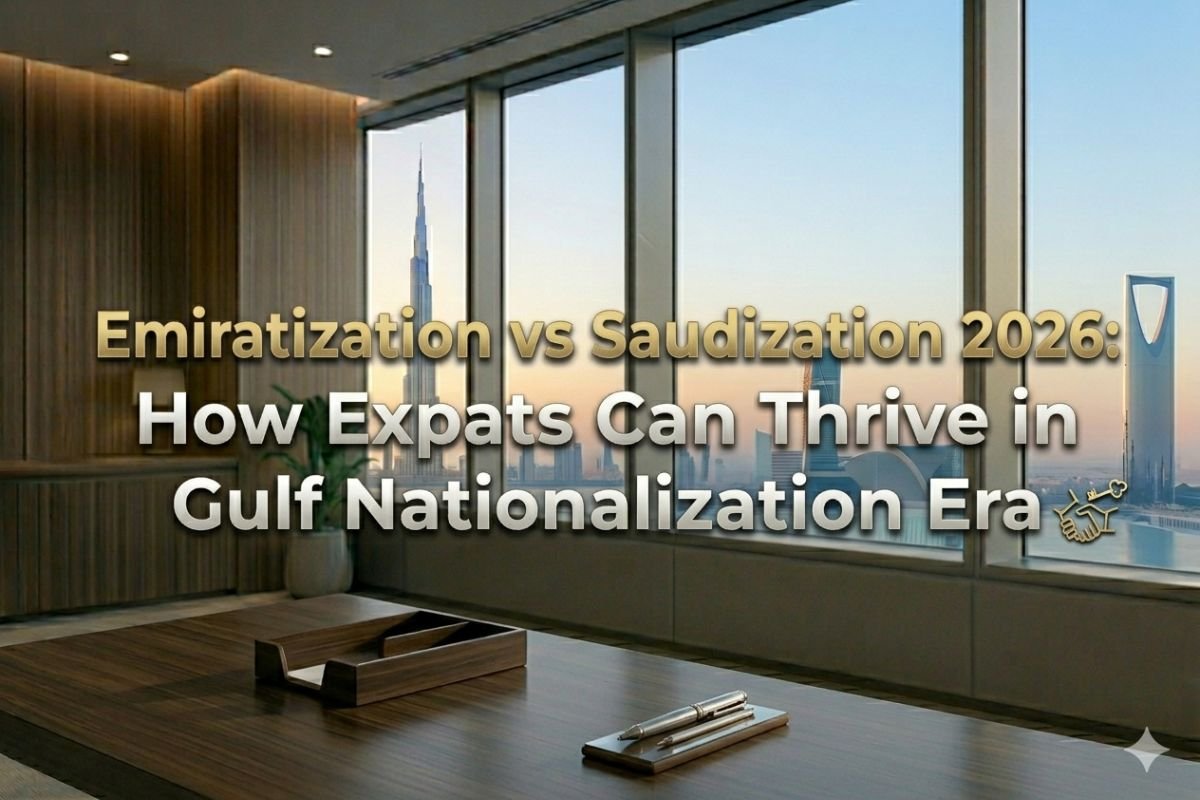
Emiratization vs Saudization 2026: How Expats Can Thrive in Gulf Nationalization Era

Emiratization vs Saudization 2026: Expats Guide to Gulf Nationalization

The Gulf Cooperation Council (GCC) region has long been a magnet for expatriates seeking lucrative career opportunities, tax-free salaries, and world-class infrastructure. However, the landscape is shifting dramatically. By 2026, nationalization programs—Emiratization in the UAE and Saudization in Saudi Arabia—have evolved from policy buzzwords into formidable frameworks reshaping the job market. If you’re an expat wondering whether there’s still room for you in this new era, the answer is yes—but only if you adapt strategically.

Understanding the 2026 Landscape

Emiratization: The UAE’s Accelerated Push

The UAE’s Emiratization strategy has entered its most aggressive phase yet. The government isn’t just encouraging private sector companies to hire Emiratis; it’s mandating it with teeth. As of 2026, companies with 50 or more employees must ensure that Emiratis comprise at least 10% of their skilled workforce, with this target set to increase incrementally through 2027.

Key 2026 updates include:

  • Sector-specific targets: Banking, insurance, and real estate now face higher quotas than other industries
  • Financial penalties: Non-compliant companies face monthly fines of AED 7,000 per missing Emirati hire
  • Nafis program expansion: Enhanced benefits for Emirati job seekers, including salary top-ups and training subsidies, making them more competitive candidates

The message is clear: Emiratization isn’t a suggestion—it’s a business imperative.

Saudization: Saudi Arabia’s Vision 2030 in Action

Saudi Arabia’s Saudization program has similarly intensified. The Kingdom’s Vision 2030 has supercharged efforts to reduce unemployment among Saudi nationals, currently hovering around 8% but targeted for significant reduction.

2026 Saudization highlights:

  • Nitaqat system refinement: The color-coded classification system (Platinum, High Green, Medium Green, Low Green, Red, and Yellow) now features stricter requirements across all tiers
  • Key sector mandates: Retail, hospitality, engineering, and healthcare face some of the highest Saudization rates, often requiring 30-70% Saudi national representation
  • Localization of knowledge: Beyond headcount, there’s increasing emphasis on knowledge transfer and Saudi leadership development

The Expat Reality Check: Challenges and Opportunities

Let’s be honest—these policies present real challenges for expatriates. Visa restrictions have tightened, certain job categories are now reserved exclusively for nationals, and competition for remaining positions has intensified. Some industries, particularly administrative and mid-level management roles, have seen significant expat displacement.

However, the narrative isn’t one of wholesale expat exclusion. Instead, it’s about evolution and specialization.

Strategic Adaptation: How Expats Can Thrive

1. Develop Niche Expertise in High-Demand Sectors

Nationalization policies primarily target roles that can be reasonably filled by qualified nationals. This creates opportunities in specialized areas where local talent pools remain shallow.

2026 high-opportunity sectors for expats:

  • Advanced technology and AI: Saudi Arabia and the UAE are investing billions in AI, fintech, and smart city infrastructure
  • Healthcare specialties: Complex surgical specialties, rare disease treatment, and healthcare technology integration
  • Renewable energy: Both nations are pivoting aggressively from oil dependency to solar and hydrogen economies
  • Executive leadership and transformation consulting: Guiding organizations through digital and cultural transformation

The key is becoming genuinely irreplaceable—not just experienced, but possessing specialized knowledge that takes years to develop.

2. Embrace Knowledge Transfer as Your Value Proposition

Forward-thinking expats are repositioning themselves not as permanent fixtures, but as knowledge transfer specialists. Companies still need experienced professionals to upskill national workforces, but they need them with clear exit strategies and mentorship mindsets.

Consider positioning yourself as:

  • A mentor and coach for emerging Emirati and Saudi leaders
  • A process documentation specialist who creates sustainable systems
  • A transition consultant who helps organizations navigate nationalization while maintaining operational excellence

This approach aligns perfectly with government objectives while securing your immediate value.

3. Invest in Cultural Fluency and Language Skills

Technical skills get you hired; cultural intelligence keeps you employed. In 2026, Arabic language proficiency has become a significant differentiator, even in international companies. Beyond language, deep understanding of local business customs, decision-making hierarchies, and relationship-building protocols separates thriving expats from struggling ones.

Consider:

  • Formal Arabic language certification (ACTFL or similar)
  • Cultural intelligence training specific to Gulf business contexts
  • Building genuine relationships with national colleagues beyond transactional interactions

4. Explore Emerging Free Zones and Specialized Economic Areas

Both countries have created economic zones with distinct regulatory frameworks that offer alternative pathways for expat professionals.

In the UAE:

  • Dubai International Financial Centre (DIFC) and Abu Dhabi Global Market (ADGM) operate under common law frameworks with specific employment regulations
  • Dubai Silicon Oasis and Masdar City focus on technology and sustainability with specialized talent needs

In Saudi Arabia:

  • King Abdullah Economic City (KAEC) and NEOM are essentially building economies from scratch, requiring diverse international expertise
  • Special Economic Zones (SEZs) offer 50-year tax holidays and streamlined visa processes for strategic sectors

These zones often operate with more flexible employment policies while still contributing to national economic goals.

5. Consider Entrepreneurship and Investment Pathways

If traditional employment feels increasingly constrained, the Gulf is actively welcoming expat entrepreneurs and investors. The UAE’s Golden Visa program and Saudi Arabia’s Premium Residency (Saudi Green Card) offer long-term stability for those willing to invest in local economies.

2026 opportunities include:

  • Tech startups: Both governments offer substantial funding and incubator support
  • Consulting boutiques: Specialized advisory services for nationalization compliance and transformation
  • Import/export businesses: Leveraging international networks for local market entry

The Mindset Shift: From Expat to Global Citizen

Perhaps the most important adaptation is psychological. The era of the “permanent expat” who spends decades in the Gulf without deeper integration is ending. The new model is the global citizen who contributes significantly, builds local capacity, and maintains flexibility.

This means:

  • Viewing Gulf experience as one chapter in a global career, not necessarily a lifetime commitment
  • Building transferable skills and international networks that work anywhere
  • Contributing to local communities beyond the workplace
  • Maintaining awareness that policies will continue evolving—agility is essential

Looking Ahead: The 2027-2030 Horizon

Nationalization will intensify, not retreat. The UAE aims for 20% Emiratization in skilled private sector roles by 2028. Saudi Arabia targets 12 million private sector jobs for nationals by 2030. These aren’t aspirational goals—they’re backed by policy mechanisms and political will.

However, this doesn’t mean expat exodus. It means expat evolution. The Gulf will continue needing international talent, but the nature of that talent will shift toward higher specialization, entrepreneurship, and strategic advisory roles.

Conclusion: Thriving Through Adaptation

The Gulf nationalization era isn’t the end of expat opportunity—it’s the end of expat complacency. Professionals who treat these markets as easy money destinations will struggle. Those who bring genuine expertise, embrace knowledge transfer, develop cultural fluency, and remain strategically agile will not just survive but thrive.

The question isn’t whether there’s a place for expats in the Gulf’s future. There absolutely is. The question is whether you’re prepared to earn that place through continuous value creation rather than historical entitlement.

The Gulf is transforming. Smart expats are transforming with it.
7 Proven Strategies to Ace Your Interview with a Gulf-Based Company

7 Proven Strategies to Ace Your Gulf Job Interview | Career Success in UAE & Middle East

Landing a job in the Gulf region — whether in the UAE, Saudi Arabia, Qatar, or Kuwait — can be a life-changing opportunity. The Gulf job market is highly competitive, with employers seeking not only technical skills but also adaptability, cultural awareness, and professionalism. To stand out, candidates must prepare strategically for interviews that often blend global standards with region-specific expectations

Understanding the Gulf Job Market

Before diving into strategies, it’s important to understand the Gulf hiring landscape:

  • Employers value reliability, adaptability, and cultural awareness as much as technical expertise.
  • Interviews often include questions about relocation, cultural fit, and long-term commitment.
  • Many companies emphasize professional appearance, punctuality, and respect for hierarchy.

With this context, let’s explore the strategies.

Strategy 1: Research the Company and Industry

One of the most common mistakes candidates make is failing to research the employer. Gulf-based companies expect candidates to demonstrate knowledge of their business, industry, and regional context.

  • Study the company’s website, annual reports, and press releases.
  • Understand their regional footprint — e.g., operations in Dubai, Riyadh, or Doha.
  • Learn about industry trends, such as oil & gas diversification, fintech growth, or healthcare expansion.

Tip: Be ready to answer, “Why do you want to work with us in the Gulf?” with specific references to the company’s projects or values.

Strategy 2: Prepare for Common Gulf Interview Questions

According to AnyGulfJobs, candidates often face questions like:

  • “Why do you want to relocate to the Gulf?”
  • “How do you adapt to multicultural environments?”
  • “What do you know about labor laws and work culture here?”
  • “Can you commit to a long-term contract?”

Action: Practice concise, confident answers that highlight adaptability, respect for diversity, and long-term commitment.

Strategy 3: Showcase Cultural Awareness

Employers in the Gulf value candidates who respect local traditions and workplace norms. Demonstrating cultural sensitivity can set you apart.

  • Learn basic etiquette: greetings, dress codes, and workplace hierarchy.
  • Show respect for Islamic values, holidays, and prayer times.
  • Highlight past experiences working in multicultural teams.

Example: If asked about teamwork, mention how you collaborated with colleagues from different backgrounds and adapted communication styles.

Strategy 4: Highlight Soft Skills Alongside Technical Expertise

While technical skills are crucial, Gulf employers emphasize soft skills such as communication, problem-solving, and adaptability.

  • Stress your ability to work under pressure and meet deadlines.
  • Demonstrate leadership qualities, even if applying for entry-level roles.
  • Share examples of conflict resolution or cross-cultural collaboration.

Tip: Use the STAR method (Situation, Task, Action, Result) to structure your answers.

Strategy 5: Dress Professionally and Mind First Impressions

Appearance matters significantly in Gulf interviews. Employers expect candidates to present themselves with professionalism.

  • Men: Wear a suit or formal attire.
  • Women: Opt for modest, professional clothing.
  • Ensure punctuality — arriving late is considered disrespectful.

Note: In virtual interviews, maintain the same standards: professional attire, clean background, and good lighting.

Strategy 6: Demonstrate Long-Term Commitment

High turnover is a concern in the Gulf job market. Employers want assurance that candidates will stay and grow with the company.

  • Express willingness to relocate and adapt to Gulf life.
  • Emphasize career goals aligned with the company’s growth.
  • Avoid sounding like you’re seeking a short-term opportunity.

Example: “I see this role as a long-term opportunity to contribute to your regional expansion and grow my career in the Gulf.”

Strategy 7: Follow Up Professionally

Post-interview etiquette is critical. A thoughtful follow-up can reinforce your interest.

  • Send a thank-you email within 24 hours.
  • Reiterate enthusiasm for the role and highlight one key strength.
  • Keep communication professional and concise.

Summary Table of Strategies

#StrategyKey Action
1Research the company and industryStudy operations, projects, and values
2Prepare for common Gulf interview questionsPractice answers on relocation, culture, and commitment
3Showcase cultural awarenessRespect traditions, highlight multicultural teamwork
4Highlight soft skillsUse STAR method to demonstrate adaptability
5Dress professionallyFormal attire, punctuality, modest presentation
6Demonstrate long-term commitmentAlign career goals with company growth
7Follow up professionallySend thank-you email, reinforce interest

FAQs

What makes Gulf interviews different from Western interviews?

Gulf interviews emphasize cultural fit, adaptability, and long-term commitment, alongside technical skills.

Do I need to know Arabic to work in the Gulf?

Not always. English is widely used in business, but basic Arabic phrases can demonstrate respect and adaptability.

How should I address salary expectations?

Research average salaries in the Gulf for your role. Be flexible but informed, and avoid discussing salary too early.

What if I have limited Gulf experience?

Highlight transferable skills, multicultural teamwork, and willingness to adapt. Employers value attitude as much as experience.

How do I prepare for virtual interviews with Gulf companies?

Treat them like in-person interviews: dress professionally, ensure good lighting, and maintain eye contact through the camera.

Final Thoughts

Acing an interview with a Gulf-based company requires more than technical expertise. It’s about cultural awareness, adaptability, and professionalism. By applying these seven strategies — from thorough research to professional follow-ups — you’ll position yourself as a candidate who not only fits the role but also thrives in the Gulf’s dynamic work environment.

Micro-Retirement: A New Career Strategy for Work-Life Balance

Micro-Retirement in 2025 – A Smarter Strategy for Work-Life Balance and Career Longevity

In 2025, the concept of retirement is no longer a distant finish line. For a growing number of professionals — especially Millennials and Gen Z — it’s a flexible, recurring strategy woven into their career journey. This emerging trend is called micro-retirement, and it’s transforming how people think about work, rest, and purpose.

Unlike sabbaticals or garden leave, micro-retirement is a self-elected, extended break from full-time work, typically lasting anywhere from six months to two years. It’s not about burnout or crisis — it’s about intentional pause. Whether it’s traveling, learning a new skill, spending time with family, or simply decompressing, micro-retirement offers a way to live more fully now, not just later.

What Is Micro-Retirement?

Micro-retirement refers to planned, extended breaks from full-time employment, taken periodically throughout a person’s working life. These breaks typically last anywhere from a few months to two years and are used for personal growth, travel, caregiving, education, or simply rest.

Unlike sabbaticals (which are often employer-sponsored) or gap years (typically taken before entering the workforce), micro-retirement is self-directed and can occur at any stage of a career. It’s not tied to age, income level, or industry — it’s a mindset shift toward intentional living.

Why Is Micro-Retirement Trending in 2025?

Several factors are driving the popularity of micro-retirement:

1. Burnout and Mental Health Awareness

The pandemic era exposed the fragility of traditional work models. In 2025, mental health is a top priority, and professionals are seeking sustainable ways to manage stress. Micro-retirement offers a proactive alternative to burnout, allowing people to step back before reaching a breaking point.

2. Remote and Hybrid Work Models

With flexible work arrangements now mainstream, professionals have more control over their schedules and career trajectories. This autonomy makes it easier to plan extended breaks without derailing long-term goals.

3. Changing Career Expectations

Millennials and Gen Z prioritize purpose, flexibility, and experiences over titles and tenure. They’re less interested in climbing a corporate ladder and more focused on building a meaningful life. Micro-retirement aligns perfectly with these values.

4. Financial Planning Innovations

The rise of the FIRE movement (Financial Independence, Retire Early), fractional investing, and digital budgeting tools has empowered people to save strategically and take breaks without jeopardizing financial stability.

5. Longevity and Lifelong Careers

As life expectancy increases, so does the length of our working years. Instead of working nonstop for 40 years, many professionals now prefer to intermittently pause and recalibrate, knowing they’ll likely work into their 70s or beyond.

Benefits of Micro-Retirement

Micro-retirement isn’t just a luxury — it’s a strategic investment in long-term well-being and career sustainability.

1. Mental and Emotional Renewal

Extended breaks allow individuals to decompress, reflect, and reconnect with themselves. This leads to improved mental health, reduced anxiety, and greater emotional resilience.

2. Enhanced Creativity and Innovation

Stepping away from routine work environments can spark new ideas and perspectives. Many professionals return from micro-retirement with fresh insights and renewed motivation.

3. Strengthened Relationships

Time off enables deeper connections with family, friends, and communities. Whether it’s caregiving, parenting, or simply being present, micro-retirement fosters stronger social bonds.

4. Skill Development

Many use micro-retirement to pursue education, certifications, or hobbies that enhance their professional toolkit. It’s a chance to learn without the pressure of deadlines or performance reviews.

5. Career Clarity

Breaks provide space to reassess goals, values, and priorities. This often leads to more intentional career choices and better alignment between work and life.

How Employers Can Support Micro-Retirement

Forward-thinking organizations are beginning to recognize the value of micro-retirement and are adapting their policies accordingly.

Flexible Leave Policies

Offering unpaid sabbaticals, career breaks, or extended leave options allows employees to take time off without severing ties.

Re-entry Programs

Structured return-to-work programs help employees reintegrate smoothly after a break, reducing friction and boosting retention.

Culture of Trust

Encouraging open conversations about career pauses fosters psychological safety and reduces stigma around taking time off.

Performance Metrics

Shifting from time-based metrics to outcome-based evaluations allows for more flexible career paths and supports intermittent breaks.

Global Talent Strategy

Remote-first companies can tap into a global workforce that embraces micro-retirement, creating a more diverse and resilient team.

Planning a Micro-Retirement: A Step-by-Step Guide

If you’re considering a micro-retirement, here’s how to do it strategically:

1. Define Your Purpose

Ask yourself: Why do I want this break? Is it for rest, travel, caregiving, education, or something else? Clarity will guide your decisions.

2. Set a Timeline

Decide how long you want to be away. Typical micro-retirements range from 6 months to 2 years. Be realistic about your goals and commitments.

3. Create a Financial Plan

Estimate your expenses and savings needs. Consider passive income, freelance work, or part-time gigs to support your lifestyle.

4. Communicate with Stakeholders

If employed, discuss your plans with your manager or HR. If freelancing, inform clients and set expectations. Transparency builds trust.

5. Plan Your Re-entry

Think about how you’ll return to work. Will you resume your old role, pivot to a new industry, or start something fresh? Prepare accordingly.

Industry Examples of Micro-Retirement Adoption

IndustryMicro-Retirement TrendsEmployer Response
TechEngineers taking 6–12 month breaks to travel or build side projectsSabbatical programs, freelance re-entry
HealthcareNurses and caregivers pausing for mental health or family careFlexible scheduling, mental health leave
EducationTeachers taking gap years to study or volunteer abroadJob-sharing, re-entry training
FinanceAnalysts taking breaks for certifications or entrepreneurshipLeave banks, alumni networks
Creative ArtsDesigners and writers pausing for inspiration or residenciesProject-based contracts, flexible gigs

Real-Life Examples

  • A UX designer in Dubai took a 9-month micro-retirement to travel Southeast Asia, returning with a new portfolio and a freelance career.
  • A nurse in Karachi paused her job for 14 months to care for her aging parents, later rejoining her hospital through a re-entry program.
  • A teacher in Riyadh took a year off to pursue a master’s degree in education technology, returning to lead digital transformation in her school.

These stories reflect a growing movement toward intentional career design.

FAQs

Is micro-retirement only for wealthy people?

No. With proper planning, micro-retirement is accessible to many. It’s about budgeting, prioritizing, and aligning your lifestyle with your values.

How is micro-retirement different from a sabbatical?

Sabbaticals are often employer-sponsored and tied to tenure. Micro-retirement is self-directed and can happen at any time.

Will taking a break hurt my career?

Not if it’s planned well. Many employers value the self-awareness and growth that come from intentional breaks.

How do I explain micro-retirement on my resume?

Be honest and strategic. Highlight what you learned, how you grew, and how it benefits your next role.

Can I freelance during micro-retirement?

Absolutely. Many people use this time to explore side projects, consulting, or creative work.

What if my employer doesn’t support it?

You can still plan a transition. Consider saving, resigning respectfully, and maintaining professional relationships for future opportunities.

Final Thoughts

Micro-retirement is more than a trend — it’s a paradigm shift. It challenges the notion that rest must wait until old age and empowers people to live with intention, balance, and purpose throughout their careers.

As the workforce evolves, so too must our definitions of success. Micro-retirement offers a flexible, human-centered approach to career planning — one that honors both ambition and well-being.

Whether you’re a job seeker, a manager, or a policymaker, the message is clear: work-life balance isn’t a perk — it’s a strategy.

Post a Job Opening

Fill in the details below. Your job posting will be reviewed by our team.

Basic Information

Specify years of experience required

Location & Salary

Qualifications & Skills

Specify educational requirements
Separate skills with commas

Company Details

Job Details

Contact Information