Gulf Careers Hub

Pre-Sales Engineer (Opportunity Development) at Mashaarea Co. (Saudi Arabia)

Pre-Sales Engineer Jobs in Riyadh - Construction Tech (3 Openings)

Mashaarea Company is a specialized construction technology firm operating at the forefront of Saudi Arabia’s giga and mega infrastructure developments. Headquartered with active operations in Riyadh, Mashaarea provides advanced drone-based services, high-precision aerial surveying, mapping, progress monitoring, and digital construction solutions. By enabling data-driven decision-making and enhanced site visibility, Mashaarea supports leading developers, contractors, and top-tier organizations across the Kingdom, contributing to the realization of Vision 2030’s most ambitious projects.

Apply now

Position Overview: Pre-Sales Engineer – Opportunity Development

Mashaarea KSA is seeking three proactive, field-oriented Pre-Sales Engineers to focus specifically on Opportunity Development within the dynamic construction and infrastructure landscape of Saudi Arabia. This is a unique hybrid role for an engineer who enjoys technical engagement, building relationships, and being out on-site. You will be the company’s frontline technical representative, identifying potential projects, conducting site visits, demonstrating Mashaarea’s cutting-edge construction technology solutions (including drone and surveying services), and gathering critical requirements. Crucially, this role is focused on opportunity development and technical qualification; all commercial decisions, pricing, and deal closure are handled by company management.

Key Responsibilities

The successful candidates will be entrusted with the following core responsibilities across five key areas:

Opportunity Identification & Site Engagement:

  • Conduct regular site visits across KSA to identify potential projects and meet with contractors, consultants, and developers.
  • Track upcoming tenders and build strong relationships with key decision-makers and influencers on-site.

Technical Presentations & Demonstrations:

  • Present Mashaarea’s capabilities in construction technology, including land-based surveying, drone-based inspection, digital construction monitoring, and site documentation.
  • Conduct on-site demonstrations to showcase solutions and explain technical workflows and deliverables.

Requirement Gathering & Qualification:

  • Understand project scopes, timelines, and technical needs by engaging directly with project stakeholders.
  • Collect necessary project data, assess feasibility, and prepare opportunity reports for management.

Proposal Support (Non-Commercial):

  • Support the preparation of technical proposals by providing inputs on solution design and Bills of Quantities (BoQs).
  • Coordinate with internal engineering teams and assist in responding to RFP/RFQ technical sections.

Relationship Management & Internal Coordination:

  • Maintain ongoing contact with potential clients to strengthen long-term partnerships.
  • Ensure smooth handover of qualified opportunities and technical information to management for pricing and closure.

Scope Limitation (Important)

The Pre-Sales Engineer is NOT responsible for:

  • Pricing decisions, commercial negotiations, or contract discussions.
  • Financial commitments or deal closure.

All commercial activities are handled exclusively by company leadership.

Candidate Requirements (Mandatory)

Requirement CategorySpecific Qualification
EducationDegree in Engineering (Civil, Construction, Geomatics, Mechanical, Electrical, or related technical field) OR a BBA/MBA with strong technical aptitude.
ExperienceMinimum 2-3 years of experience in construction/infrastructure projects, engineering services, surveying/mapping, technical pre-sales, or field engineering roles. Experience working on construction sites is highly preferred.
NationalityCandidates from Arabic-speaking countries (Saudi Arabia, UAE, Egypt, Kuwait, other Arab nations).
LanguageFluent Arabic and professional proficiency in English (mandatory).
Key SkillsStrong understanding of construction workflows. Excellent communication, presentation, and networking skills. Self-motivated and results-oriented.
TravelWillingness to travel extensively within Saudi Arabia. Valid driving license preferred. Ability to work outdoors in construction site conditions.

Ideal Candidate Profile

The ideal pre-sales engineer for this role will be:

  • field-oriented technical professional who is as comfortable on a construction site as in an office, with a passion for cutting-edge technology like drones and digital monitoring.
  • relationship-builder and effective communicator, able to explain complex technical solutions clearly to diverse stakeholders and build trust with potential clients.
  • proactive opportunity hunter with a keen eye for identifying potential projects and gathering the right information to qualify leads.
  • Technically curious and commercially aware, understanding the project lifecycle and how Mashaarea’s solutions add value, while respecting the boundary between technical development and commercial closure.

Preferred (Advantageous) Experience

  • Experience with surveying technologies, drone/aerial mapping services, digital construction solutions (BIM, monitoring tools), or infrastructure/mega-project environments.

What Mashaarea Offers

  • Impactful Work: The opportunity to contribute to major giga and infrastructure projects shaping Saudi Arabia’s future.
  • Technology Leadership: A dynamic, technology-driven work environment at the forefront of construction innovation.
  • Competitive Salary: A salary package of $1,500 – $2,000 (or commensurate SAR equivalent), based on experience.
  • Career Growth: Significant growth potential within a rapidly expanding company at the heart of the Kingdom’s development.

Frequently Asked Questions (FAQs)

1. Is this a sales role or a technical role?

It is a technical pre-sales role focused on opportunity development. You are the technical expert who engages clients, presents solutions, and qualifies opportunities. You do not handle pricing or negotiations; that is for management.

2. What does “field-oriented” mean?

This role requires spending significant time on construction sites across Saudi Arabia. You must be comfortable working outdoors, visiting project locations, and meeting with contractors and engineers directly.

3. What technologies will I be promoting?

You will promote Mashaarea’s suite of construction technology solutions, including:
Land-based surveying
Drone-based survey and inspection
Digital construction monitoring
Site documentation and mapping
Engineering support technologies

4. How much travel is involved?

Extensive travel across the Kingdom is required. A valid driving license is strongly preferred, and candidates must be willing to be on the road frequently to visit project sites and clients.

5. What is the application process?

Candidates should send their CV to drones@mashaarea.com with the subject line: “Pre-Sales Engineer Application”. Please ensure your CV highlights your construction site experience and technical pre-sales capabilities.

How to Apply

If you are a bilingual engineer with construction site experience, a passion for technology, and a drive to identify and develop opportunities on Saudi Arabia’s most ambitious projects, Mashaarea Co. encourages you to apply.

Submit your application via the official email:
📧 Send CV to: drones@mashaarea.com with subject: Pre-Sales Engineer Application

Or apply via the official listing:
👉 Apply for Pre-Sales Engineer Position
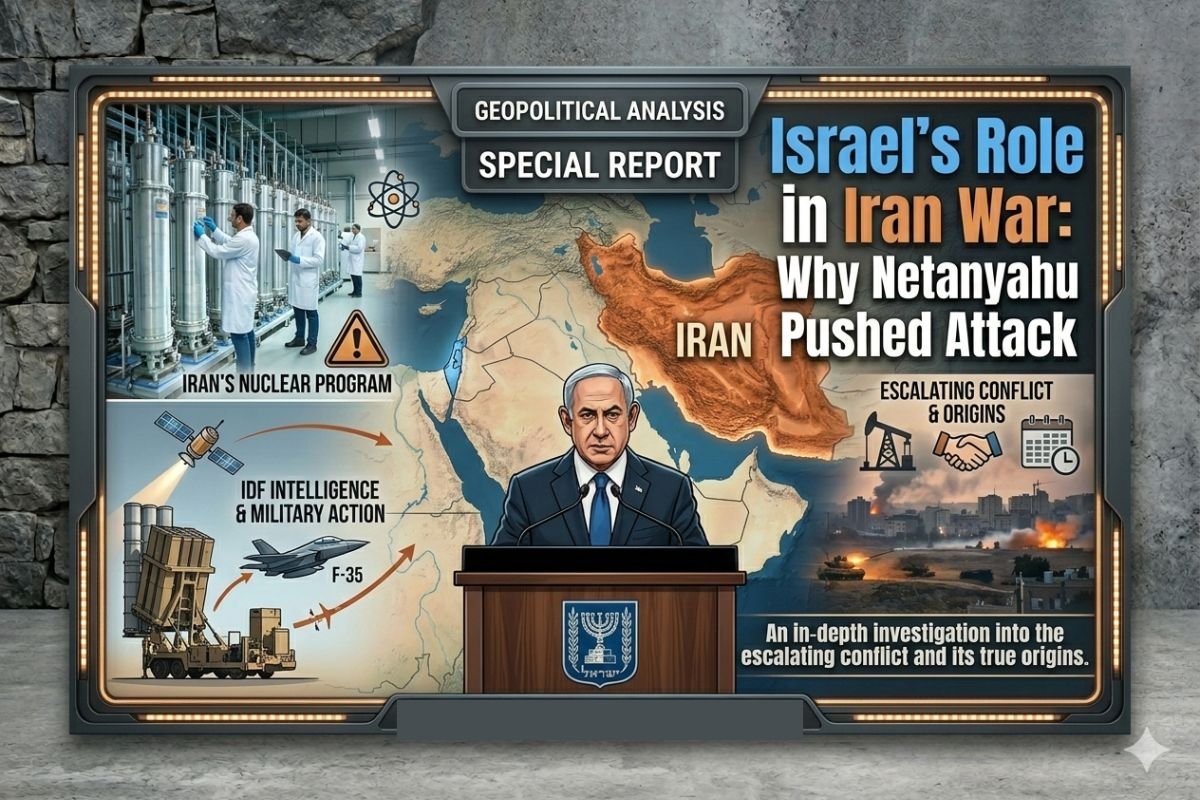
Israel’s Role in Iran War: Why Netanyahu Pushed for Attack

Why Netanyahu Pushed for Iran Attack | Israel's Role Explained

On February 28, 2026, the world woke up to a dramatic escalation in the Middle East. Israel and the United States launched coordinated airstrikes against multiple targets across Iran—an operation described by the Israel Defense Forces as the largest in the Israeli Air Force’s history . Explosions rocked Tehran, and within hours, Iran retaliated with missile strikes toward Israel and US bases across the Gulf .

The Man Who Made Iran His Life’s Mission

To understand why Israel attacked, you have to understand Benjamin Netanyahu. He hasn’t just been a prime minister dealing with Iran as one issue among many—he has made confronting Iran the defining mission of his political career .

For more than three decades, Netanyahu has portrayed Iran’s Islamic regime as an existential threat to Israel—not just a strategic rival, but a modern-day incarnation of the enemies that sought to destroy the Jewish people throughout history. He has repeatedly likened Iran’s leaders to Hitler’s Germany, arguing that their genocidal rhetoric (“wiping Israel off the map”) must be taken literally and seriously .

In Netanyahu’s worldview, a nuclear-armed Iran is not a problem to be managed or contained. It’s a red line that must never be crossed. He has argued this at the United Nations, in speeches to the US Congress, and in countless interviews over three decades.

So when Israel and the US launched Operation Lion’s Roar (the Israeli name) and Operation Epic Fury (the US name), Netanyahu was finally taking the shot he had been positioning himself for his entire career .

The October 7 Earthquake: Why Deterrence Died

But 2026 is different from previous years—and that difference has a name: October 7.

When Hamas launched its devastating attack on October 7, 2023, it didn’t just start a war in Gaza. It shattered a foundational assumption that had guided Israeli strategic thinking for years: that enemies could be managed, contained, and deterred .

For a decade, Israel had tolerated dangerous capabilities from its enemies, believing that so long as intentions appeared constrained, the threat could be managed. Hamas had rockets, but they were mostly intercepted. Hezbollah had missiles, but they stayed north of the border. Iran had proxies, but they operated at a distance.

October 7 demolished that premise .

“The lesson drawn across Israel’s political and security establishment was clear: you do not allow a sworn enemy to accumulate the capacity to destroy you and trust that deterrence will indefinitely hold,” wrote analysts at The Jerusalem Post .

Hamas was a proxy. Hezbollah is a proxy. At the center of that network sits Iran—the architect, financier, trainer, and supplier . If the massacre exposed the cost of underestimating a proxy’s intent, it sharpened attention on the patron’s capabilities.

There’s a deep irony here that analysts have noted: Yahya Sinwar, the Hamas leader, sought to derail Israel’s normalization in the region and restore the “axis of resistance” to center stage. He wanted to light a fire. He did—but the flames didn’t consume Israel as he had hoped. They consumed Gaza, then spread to Lebanon, and now they have drawn Israel and the United States into direct confrontation with the regime that empowered him .

A Window of Opportunity: Iran’s Vulnerability

Timing matters in war. Israel and the US didn’t attack now by accident. They saw a strategic window .

Iran in early 2026 is genuinely vulnerable:

  • Economic crisis: Severe sanctions and mismanagement have crippled the economy .
  • Domestic dissent: The regime has faced waves of protests, most recently in January 2026, and has demonstrated its willingness to shoot and kill thousands of fellow citizens to stay in power .
  • Military degradation: Iran’s defenses are still badly damaged from the 12-day war with Israel in June 2025 .
  • Proxy network weakened: Israel’s campaigns since October 7 have severely degraded Hamas, Hezbollah, and Iranian assets across the region .

BBC’s international editor Jeremy Bowen put it bluntly: “Israel and the United States have calculated that the Islamic regime in Iran is vulnerable… Their conclusion seems to have been that this was an opportunity that should not be squandered” .

In other words, this is a war of choice, not a response to an imminent threat. The word “pre-emptive” was used in official statements, but the evidence suggests this is about seizing a moment of Iranian weakness .

The Nuclear Factor: Red Lines and Broken Talks

Iran’s nuclear program has always been the core of the conflict. Iran insists it has no intention of building a bomb—a position repeated for years . But it has enriched uranium to levels that have no civilian use, and at minimum, it seems to want the option of building a weapon .

Talks between Washington and Tehran had been ongoing, mediated by Oman. A new round in Geneva had just ended on Thursday—two days before the strikes .

What happened in those talks? Analysts point to a fundamental disconnect. “Iran believes it made great concessions, but that clashed sharply with US and Israeli views,” one analyst told CGTN. “Continuing talks would be a waste of time” .

US President Donald Trump had set a 10-15 day deadline for meaningful diplomatic progress. When that deadline passed without a breakthrough, military pressure became the chosen path . Some analysts go further, arguing that “the negotiations were completely a smokescreen”—that the military buildup was already in place and the decision to strike was made regardless of diplomatic outcomes .

Either way, the nuclear program remains the stated justification. Netanyahu said plainly: the “murderous terror regime” in Tehran must not be armed with nuclear weapons capable of threatening “all of humanity” .

Regime Change: The New, Ambitious Goal

Here’s where this conflict differs from previous rounds. The goal now appears to be not just nuclear containment, but regime change .

In a video message, Netanyahu called on Iran’s diverse ethnic groups—Persians, Kurds, Azeris, Baloch, Ahwazi—to throw off “the yoke of tyranny” and establish a “free and peace-loving Iran” . Trump went further: “When we are finished, take over your government. It will be yours to take. This will be, probably, your only chance for generations” .

Nothing would burnish Netanyahu’s legacy more than toppling the Islamic Republic . It would be the ultimate validation of his decades-long crusade.

But analysts warn this is enormously ambitious—and enormously risky . Iran is a nation of 93 million people, with around 15 million considered devoted supporters of the Supreme Leader, backed by well-armed security forces . Decapitating leadership doesn’t automatically trigger a popular uprising. And if the regime fights for its life, it has nothing left to lose .

As one former Israeli intelligence official put it: “Let’s assume the people won’t go into the streets, and the supreme leader is still alive, and Iran will continue launching missiles. Then what? You can continue the war for how long?” 

Domestic Politics: Netanyahu’s Election Calculus

We can’t ignore the political dimension. Israel faces a general election later in 2026 . Netanyahu’s political position has been weakened by the costly two-year war with Hamas and the trauma of October 7 .

History shows that Israeli leaders often benefit politically when the nation is at war. The 2023-2025 Gaza war demonstrated that Netanyahu “believes his political position strengthens when Israel is at war” .

Analysts note that Netanyahu has “strong incentives to sustain a posture of external confrontation, which can consolidate political support and prolong his governing viability” . A major military win—especially one that neutralizes Iran’s nuclear threat or even topples the regime—would dramatically reshape the electoral landscape in his favor.

This doesn’t mean the war is only about domestic politics. The strategic threats are real. But political timing is rarely coincidental in the Middle East.

The US-Israel Alignment: Hand in Glove

Previous Israeli strikes faced US opposition. In 1956, Eisenhower forced a withdrawal. In 1967, Johnson warned Israel would stand alone . In June 2025, the US participated but played a supporting role, mainly “under Israel’s persuasion” .

This time is different. Washington and Jerusalem acted together, “hand in glove,” with extensive coordination and two US carrier strike groups deployed to the region . The US is playing the main role, and the scale and targets have expanded significantly .

Trump framed Iran not as Israel’s problem alone, but as a wider threat to global security . This alignment gives Israel strategic depth it has rarely enjoyed in past confrontations.

The Risks: A War That Could Spiral

For all the confidence, the dangers are enormous. Iran has already struck US bases in Qatar, Kuwait, UAE, Bahrain, and Jordan . The Strait of Hormuz—a chokepoint for global energy supplies—is now a potential flashpoint .

Analysts warn that a “single misinterpreted strike, an overzealous militia commander, or a cyber operation that crosses an unseen red line could ignite a chain reaction” . Unlike last June’s limited exchange, this conflict carries “significantly greater escalation” risks .

If the regime genuinely fears for its survival, Iranian allies in Lebanon, Yemen, and Iraq could join the fight in earnest . What began as an air campaign could expand into a broader regional war with unpredictable consequences.

The Bottom Line

So why did Netanyahu push for this attack?

  • Ideological conviction: He has spent his career arguing Iran is an existential threat.
  • October 7 trauma: The assumption that enemies can be deterred is dead.
  • A window of opportunity: Iran is economically weak, domestically divided, and militarily degraded.
  • Nuclear red lines: Diplomacy failed, and Israel won’t accept a nuclear-armed Iran.
  • Regime change ambition: For the first time, this is an explicit goal.
  • Domestic politics: A major win could reshape elections in his favor.

In Netanyahu’s calculation, the stars have aligned. Whether that calculation proves correct—or whether it unleashes consequences nobody can control—is the question that will define the Middle East for years to come.

As one analyst put it: “The current situation is a reaction to years of the Iranian regime’s proxy strategy… Effectively, a strategy meant to keep war at bay has invariably returned home” .

The war is here. And its end is nowhere in sight.

Frequently Asked Questions (FAQs)

1. Did Iran actually attack Israel first, or was this a “pre-emptive” strike?

Israel and the US described their action as “pre-emptive,” but evidence suggests this was a war of choice based on a perceived window of opportunity . Iran had not launched an imminent attack before the US-Israeli strikes, though it did retaliate afterward. Analysts point to the collapse of nuclear talks and Iran’s vulnerabilities—not an imminent threat—as the real triggers .

2. What does Israel hope to achieve militarily?

Israel aims to eliminate Iran’s nuclear threat, degrade its ballistic missile and drone capabilities, and potentially trigger regime change by encouraging internal uprisings . Unlike previous limited strikes, this operation explicitly targets leadership and seeks to create conditions for a new government in Tehran .

3. How is this different from the June 2025 Israel-Iran war?

The scale and goals are dramatically different. Last June’s 12-day war was more limited and Israel-led. This time, the US is playing the main role with two carrier strike groups, targets are expanded to include leadership and infrastructure, and regime change is an explicit—not just implicit—objective .

4. Could this lead to a broader regional war?

Yes, and risks are significantly higher than last year. Iran has already struck US bases across the Gulf . The Strait of Hormuz, global energy supplies, and multiple regional actors could be drawn in. Analysts warn that miscalculation by any party could spiral beyond anyone’s control .

5. What happens if Iran’s Supreme Leader is killed?

Khamenei’s death would trigger a succession battle within Iran’s complex political system. He would likely be replaced by another cleric supported by the IRGC, not a liberal democracy . While succession could create internal turmoil, it doesn’t automatically mean regime collapse. The IRGC remains the ultimate arbiter of power .

Iran’s Nuclear Program: The Real Reason Behind the 2026 War

Iran's Nuclear Program Explained: The Real Reason Behind 2026 War

In June 2025, the Middle East erupted into its most devastating conflict in decades. Israel launched strikes on Iran’s nuclear facilities, triggering a 12-day war that drew the United States into direct military action against Iranian targets . By early 2026, tensions remained sky-high, with a massive US naval buildup in the region and urgent diplomatic efforts to prevent further escalation .

A Quick History: How Did We Get Here?

Iran’s nuclear story didn’t start with conflict. In fact, it began with American support.

The 1950s-1970s: Friends with Benefits
The United States actually launched Iran’s nuclear program in 1957 under the Western-friendly Shah . Iran began developing nuclear power in the 1970s with US backing. But everything changed with the 1979 Islamic Revolution, which transformed Iran into an Islamic Republic and turned former allies into adversaries .

The 2000s: Suspicion Grows
In 2002, international inspectors discovered secret nuclear facilities in Iran—a violation of the Nuclear Non-Proliferation Treaty (NPT), which Iran had signed . The NPT allows countries to develop nuclear technology for peaceful purposes (medicine, agriculture, energy) but explicitly bans developing nuclear weapons . This discovery triggered years of international sanctions.

2015: The Nuclear Deal (JCPOA)
After years of negotiations, Iran and six world powers (US, China, France, Russia, Germany, UK) agreed to the Joint Comprehensive Plan of Action—the JCPOA . Under this deal:

  • Iran could only enrich uranium to 3.67% (enough for civilian power, not bombs)
  • Iran’s uranium stockpile was capped at 300kg
  • International inspectors gained access to all nuclear facilities
  • In return, economic sanctions were lifted 

2018: The Deal Collapses
President Donald Trump withdrew the US from the JCPOA, calling it a “bad deal” that wasn’t permanent and didn’t address Iran’s missile program . He reimposed crippling sanctions as part of a “maximum pressure” campaign.

Iran’s Response: Escalation
In retaliation, Iran began breaching the deal’s limits—installing advanced centrifuges, increasing enrichment levels, and growing its uranium stockpile . By 2023, the IAEA found uranium particles enriched to 83.7% purity—just below weapons-grade .

What Is Uranium Enrichment? (And Why Does It Matter?)

To understand the crisis, you need to understand enrichment. Let’s keep it simple.

Natural uranium is mostly uranium-238 (about 99.3%), which isn’t useful for nuclear reactions. Only about 0.7% is uranium-235—the special type that can release energy .

Enrichment is the process of increasing the concentration of uranium-235. It’s done by spinning uranium gas at high speeds in machines called centrifuges, which separate the lighter uranium-235 from the heavier uranium-238 .

The Key Levels:

  • 3.67% enrichment: Enough for nuclear power plants (the JCPOA limit)
  • 20% enrichment: Considered the threshold for weapons capability
  • 60% enrichment: Not bomb-grade, but dangerously close—and no country has uranium at this level without a weapons program, according to the IAEA 
  • 90% enrichment: Weapons-grade—what you need for an actual nuclear bomb 

Think of it like boiling water. 60% isn’t boiling yet, but you’re certainly getting the kettle hot. And the journey from 60% to 90% is much faster than from 0% to 60%.

How Close Is Iran to a Nuclear Bomb?

This is the million-dollar question. Here’s the 2026 reality.

Current Stockpile:
As of early 2026, Iran has approximately 275kg of uranium enriched to 60% purity . According to IAEA yardsticks, that’s theoretically enough—if enriched further—for about half a dozen nuclear weapons .

Breakout Time:
“Breakout time” is how long Iran would need to produce enough weapons-grade material for one bomb. US officials estimate Iran could turn its 60% stockpile into weapons-grade material in as little as one week . However, building an actual deliverable weapon would take longer—estimates range from six months to 18 months .

But Does Iran Want a Bomb?
Iran insists it does not. Supreme Leader Ali Khamenei has issued a religious decree (fatwa) against nuclear weapons, and Iran maintains its program is for peaceful energy purposes . A senior advisor recently stated that if not making nuclear weapons is the main issue, “an immediate agreement is within reach” .

However, Western countries remain deeply skeptical. The IAEA has declared Iran in breach of its non-proliferation obligations, and the combination of high enrichment levels, restricted inspector access, and past secret facilities fuels suspicion .

The 2025 War: What Actually Happened?

In June 2025, after years of shadow war and rising tensions, Israel launched a major military operation against Iran’s nuclear infrastructure .

The Strikes:

  • Israeli forces targeted Natanz—Iran’s largest uranium enrichment facility—setting it ablaze 
  • Six Iranian nuclear scientists were killed 
  • The United States joined the conflict, dropping massive bunker-buster bombs on two underground nuclear facilities and striking a third with submarine-launched missiles 

The Aftermath:

  • Iran launched waves of missiles at Israel in retaliation 
  • At least 610 civilians were killed in Iran, with thousands wounded 
  • Iran suspended some cooperation with the IAEA and restricted inspectors from accessing bombed sites 
  • A ceasefire was declared after 12 days of fighting 

The Damage Debate:
How much damage was actually done? Opinions differ dramatically:

  • President Trump claimed the strikes set Iran’s program back by “decades” 
  • Israel’s military said it had delayed the program “by several years” 
  • Leaked US intelligence suggested the damage was much less—just a few months’ setback, with centrifuges and enriched uranium stockpiles not fully eliminated 

The 2026 Crisis: Why War Threatens Again

Despite the ceasefire, 2026 has brought renewed tensions. Here’s what’s happening now.

The Military Build-Up:
President Trump has deployed a massive naval force to the region—what he calls an “armada”—including two aircraft carrier strike groups (USS Abraham Lincoln and USS Gerald Ford) . Iran has responded with its own military drills in the Gulf and around the strategic Strait of Hormuz .

The Diplomatic Dance:
Multiple rounds of indirect talks, mediated by Oman, have been held in Geneva . Both sides have presented “practical proposals” covering nuclear issues and sanctions relief .

The Key Disagreement:

  • The US position: Trump demands “zero enrichment”—the full dismantlement of Iran’s nuclear program, including enrichment, weaponization, and ballistic missiles 
  • Iran’s position: Foreign Minister Abbas Araghchi says the US has not actually asked for zero enrichment in negotiations, and Iran is willing to guarantee its program remains peaceful—but not to abandon enrichment entirely 

A Potential Breakthrough?
On February 27, 2026, Oman’s Foreign Minister announced that Iran has agreed “never again to possess nuclear materials that could be used to make a nuclear bomb” . Under this framework:

  • Existing enriched uranium would be diluted in purity and converted into fuel in an irreversible process
  • Iran would allow IAEA inspectors “full access” to its nuclear facilities
  • The agreement could take up to three months to implement 

If confirmed, this would represent a major diplomatic victory—but skepticism remains about whether it will hold.

The Regional Reaction: Who Stands Where?

The conflict has exposed deep global divisions.

US Allies (UK, Germany, France): They did not participate in the strikes and didn’t explicitly condemn them, but their statements placed blame on Iran, urging it to end its nuclear program .

Russia: Strongly condemned the US and Israel, calling it “premeditated armed aggression,” but offered only words, not concrete support .

China: Expressed “high concern” and warned of unpredictable consequences, but stopped short of strong action .

Saudi Arabia: Perhaps most significantly, Riyadh—which had been pursuing rapprochement with Tehran—threw its weight behind Gulf allies, condemning Iranian attacks on their territories and offering its capabilities for their defense . This represents a major strategic setback for Iran.

So, What’s the Real Reason Behind the 2026 War?

After all this, here’s the honest answer: Iran’s nuclear program is the trigger, but not the root cause.

The real reasons run deeper:

1. Red Lines Crossed
For Israel, a nuclear-armed Iran is an existential threat. Iranian leaders have repeatedly called for Israel’s destruction. From Jerusalem’s perspective, allowing Tehran to reach weapons capability is simply unacceptable .

2. The Deal Died
The JCPOA created a framework for containment. When the US withdrew in 2018, that framework collapsed—and no viable alternative emerged. Both sides blame each other, but the result is the same: escalation .

3. Trust Is Dead
Decades of shadow war, secret facilities, and broken promises mean neither side trusts the other. Iran doesn’t believe US guarantees. The US and Israel don’t believe Iran’s peaceful intentions. Without trust, diplomacy struggles .

4. Regional Rivalry
The Iran-Saudi Arabia cold war, the Israel-Iran proxy conflicts across the region, and the struggle for dominance in the Gulf all feed into the nuclear crisis. It’s never just about the bomb .

What Happens Next?

As of March 2026, the world watches three scenarios unfold:

Scenario A: Diplomatic Breakthrough
The Oman-mediated framework holds. Iran dilutes its uranium, opens its facilities, and sanctions are gradually lifted. Peace holds—for now .

Scenario B: Managed Tension
Talks drag on. Both sides continue posturing, but avoid all-out war. The US armada remains in the region. Iran enriches but stops short of weaponization. A tense, cold peace continues.

Scenario C: Renewed Conflict
Diplomacy fails. Trump’s 15-day ultimatum expires. The US and Israel strike again—this time harder. Iran retaliates. The region spirals into wider war .

The next few weeks will determine which path we take.

Conclusion

Iran’s nuclear program is one of the most complex, high-stakes issues in global politics. It’s a story of shifting alliances, broken deals, genuine security concerns, and profound mistrust.

Understanding the enrichment levels, the breakout timelines, and the historical context doesn’t make the situation simpler—but it does make it clearer. And in a world where misinformation spreads faster than facts, clarity matters.

Whether you’re following from the Gulf, tracking for work, or simply trying to make sense of the headlines, knowing what’s really happening with Iran’s nuclear program is the first step toward understanding what comes next.


Frequently Asked Questions (FAQs)

1. Does Iran currently have a nuclear bomb?

No. International assessments, including by the US intelligence community, confirm that Iran’s nuclear program is not currently weaponized . However, Iran has enough 60%-enriched uranium that, if further enriched to 90%, could theoretically produce multiple weapons .

2. How close is Iran to being able to build a bomb?

The “breakout time”—producing enough weapons-grade material for one bomb—is estimated at one to two weeks starting from Iran’s current 60% stockpile . Building an actual deliverable weapon would take longer: estimates range from six months to 18 months .

3. Why did the US withdraw from the nuclear deal in 2018?

President Trump called the JCPOA a “bad deal” because it wasn’t permanent, didn’t address Iran’s ballistic missile program, and didn’t restrict Iran’s regional activities. He sought to negotiate a new, expanded agreement through “maximum pressure” sanctions .

4. Can Iran enrich uranium for peaceful purposes without building a bomb?

Technically, yes. Many countries enrich uranium for nuclear power. But Iran’s enrichment to 60%—far beyond the 3.67% needed for power plants—is what raises alarm. The IAEA states that no country has uranium at this level without also having a weapons program .

5. What would it take to reach a new agreement?

The key sticking point is enrichment. The US demands “zero enrichment”—full dismantlement. Iran insists on maintaining some enrichment capability but has offered guarantees it will never seek weapons. The Oman-mediated framework announced in late February 2026 suggests Iran may have agreed to eliminate weapons-grade material in exchange for verified peaceful use .

Why Did US & Israel Attack Iran in 2026? Complete Reasons Explained

Title: Why US & Israel Attacked Iran 2026: Complete Reasons

On February 28, 2026, the world woke to a different Middle East. Explosions lit up the night sky over Tehran. Air raid sirens wailed across Iranian cities. Communications went dark. Within hours, news emerged that Supreme Leader Ayatollah Ali Khamenei had been killed in the strikes, and the United States and Israel had launched their most ambitious military operation against Iran in decades .

Reason 1: The Nuclear Impasse—When Diplomacy Hit a Wall

At the heart of the conflict lies Iran’s nuclear program—a source of tension for over two decades. By early 2026, US and Israeli intelligence assessed that Tehran was dangerously close to having enough material for a nuclear bomb .

The Geneva Talks That Went Nowhere

Just days before the strikes, Omani mediators announced what looked like a breakthrough in Geneva. Iran had reportedly agreed to “zero uranium stockpiling” and full IAEA verification . But neither Washington nor Jerusalem trusted the deal.

The United States had taken a hardline position: demanding that Iran surrender all enriched uranium, dismantle key nuclear facilities, and accept unrestricted inspections . For Iran, which views its nuclear program as a matter of national sovereignty and pride, this was a non-starter.

“The negotiations were completely a smokescreen,” said Tang Zhichao, a Middle East analyst at the Chinese Academy of Social Sciences . The massive US military buildup in the region—including a second aircraft carrier—was already in place. “This was a carefully planned result. It shows that the United States and Israel have completely lost hope in negotiations.”

Why the US Shifted from Dialogue to Force

The United States had historically preferred engagement with Iran, applying sustained diplomatic pressure to extract concessions . But by February 2026, that approach had run its course. US negotiators—including Middle East envoy Steve Witkoff and Jared Kushner—returned from Geneva deeply disappointed. Iran’s position largely adhered to its established framework: refusing to abandon nuclear development, making no substantive concessions on transferring highly enriched uranium, and continuing to reject discussions of its missile technology and regional policies .

President Donald Trump set a 10-15 day deadline for meaningful diplomatic progress. When that deadline passed with no breakthrough, the military option was activated .

Reason 2: The US-Israel Dynamic—Convergence After Years of Divergence

For years, the United States and Israel had disagreed on how to handle Iran. Washington preferred communication and engagement. Israel, viewing Iran as an existential threat, advocated for decisive military pressure .

Israel’s Long Campaign

Israel had spent the previous two years systematically dismantling Iran’s proxy network—crushing Hamas in Gaza, severely degrading Hezbollah in Lebanon, and watching the Assad regime fall in Syria . With Iran’s “Axis of Resistance” shattered, Prime Minister Benjamin Netanyahu saw a strategic window to strike at the source directly.

Netanyahu had long argued that diplomacy alone couldn’t stop Iran. The strikes, code-named “Roaring Lion” by Israel, were framed as pre-emptive self-defence against an existential threat .

Trump’s Shift Toward Israel’s Position

When Trump returned to office in 2025, he restored his “maximum pressure” campaign against Tehran while paradoxically opening direct negotiations—the first such talks since he pulled the US out of the JCPOA in 2018 . But by February 2026, Trump had moved decisively toward Israel’s harder line.

The joint operation, with US forces playing the main role (in contrast to June 2025, when Israel led the strikes), marked a significant shift. Analysts note that while the two allies’ objectives are more aligned now than ever, they still differ in emphasis: Israel wants to completely eliminate Iran’s strategic threat across nuclear, missile, and proxy dimensions, while Trump primarily wants to eliminate the nuclear threat—though he doesn’t rule out regime change if conditions are favorable .

Reason 3: Domestic Politics—Elections, Legitimacy, and Distraction

Wars aren’t always about foreign policy. Sometimes, they’re about votes.

Trump’s Calculation

The 2026 midterm elections were approaching, and Iran-related issues occupy a critical place in US foreign policy and national security discourse . By taking a strong stance on Iran—either by weakening its strategic capabilities through military means or by pressuring it into greater concessions—the administration could bolster its diplomatic and governance credibility.

Trump framed the operation in sweeping, historic terms. In a video message, he listed grievances stretching back to the 1979 Islamic Revolution, which turned Iran from one of America’s closest allies into one of its most persistent enemies . His stated goals were extraordinary: destroy Iran’s nuclear program, obliterate its missile industry, sink its navy, and trigger regime change from within .

He addressed the Iranian public directly: “The hour of your freedom is at hand. When we are finished, take over your government. It will be yours to take.” 

This was not just a military strike. It was a political bet from a president who campaigned on ending foreign wars but chose to launch arguably the most consequential US military operation since Iraq in 2003 .

Netanyahu’s Unfinished Business

For Netanyahu, the political timing was equally significant. With Israeli elections approaching in October 2026, demonstrating resolve in safeguarding national security helps consolidate support from the right-wing political base . It also diverts attention from domestic pressures such as corruption allegations .

Sun Taiyi, a political scientist at Christopher Newport University, noted that “domestic political considerations cannot be ignored, with Netanyahu having strong incentives to sustain a posture of external confrontation, which can consolidate political support and prolong his governing viability” .

Reason 4: Iran’s Weakened Position—A Window of Opportunity

For Washington and Tel Aviv, the strategic calculus included a hard-headed assessment: Iran had never been weaker.

The Collapse of the “Axis of Resistance”

Over the previous two years, Israel had systematically dismantled Iran’s proxy network. Hamas was crushed in Gaza. Hezbollah was severely degraded in Lebanon. The Assad regime in Syria had fallen . For years, Iran had funded and armed these groups as its first line of defence and offensive reach. By early 2026, most of those tools were gone.

Economic Collapse and Domestic Unrest

Inside Iran, the situation was dire. The economy was in freefall, the rial had collapsed, basic goods were scarce, and nationwide protests in January had been met with a brutal crackdown that left thousands dead . US-based group HRANA reported over 7,000 verified deaths, with thousands more under review .

Trump seized on this in his messaging, citing Iran’s killing of “tens of thousands of its own citizens on the street as they protested” as a justification for intervention . Donald Heflin, a veteran diplomat and professor at Tufts University’s Fletcher School, noted that this provides “a bit of a fig leaf”—an excuse to sell the intervention to the Iranian people and the world .

The “Rally ‘Round the Flag” Risk

However, Heflin also warned of a familiar dynamic: when bombs start falling, populations often rally around their government, even one they were protesting days earlier . Whether the strikes would weaken the regime or strengthen it remained an open question.

Reason 5: Regime Change—The Unspoken but Clear Goal

While US officials publicly framed the strikes as defensive, aimed at neutralizing “imminent threats,” analysts argue that leadership change is now the primary objective .

Trump’s direct call for Iranians to “take over your government” and reports that Supreme Leader Khamenei’s residence was specifically targeted make this clear . The operation marks a break from last year’s strikes, which primarily focused on Iran’s nuclear facilities. This time, the scale and targets have clearly expanded to include political leadership .

Can It Work?

Experts are sceptical. Heflin points to US history in the region: during the 1990-1991 Gulf War, the US encouraged Iraqis to rise up against Saddam Hussein, then stopped short of attacking Baghdad. “That has not been forgotten in Iraq or surrounding countries,” he says. “I would be surprised if we saw a popular uprising in Iran that really had a chance of bringing the regime down” .

The regime, despite its weaknesses, remains tightly controlled and heavily armed. Even if top leaders are eliminated, the most likely successor is the Revolutionary Guard—hardcore true believers who may be no easier for the US to work with .

The Fallout: A Region on the Brink

Iran retaliated quickly, launching missiles at dozens of US military bases across the Middle East and targeting Israeli facilities . Explosions were reported in Qatar, the UAE, Bahrain, and Kuwait . Dubai International Airport shut down .

The conflict carries much higher risks than last year’s 12-day war, with two US carrier strike groups in the region signalling heightened readiness . Gulf states, some hit by Iranian retaliation on their own soil, now face difficult choices about where they stand .

Conclusion: The End of Diplomacy, The Beginning of Uncertainty

The strikes of February 28, 2026, represent the culmination of years of accumulated mistrust, failed diplomacy, and strategic impatience. The nuclear impasse proved unbreakable. The US-Israel policy gap finally converged. Domestic politics pushed leaders toward bold action. And a perceived window of opportunity—with Iran weakened and isolated—proved too tempting to resist.

What comes next is uncertain. Retaliation is already underway. The conflict could stabilise or expand. But one thing is clear: the world of February 27th no longer exists. And for the millions of people across the Middle East who woke to sirens and explosions, the consequences of this decision will unfold for years to come.

Frequently Asked Questions (FAQs)

1. Why did the US and Israel attack Iran specifically in late February 2026?

The immediate trigger was the collapse of nuclear talks in Geneva. US negotiators set a 10-15 day deadline for meaningful progress, and when Iran refused to make what Washington considered sufficient concessions on uranium enrichment and nuclear inspections, the military option was activated . The US had also completed a massive military buildup in the region, including a second aircraft carrier, making the strike operationally feasible .

2. Was the attack really about nuclear weapons, or was regime change the real goal?

Both. While preventing Iran from acquiring nuclear weapons was the stated primary objective, the scale and targets of the attack—including the confirmed killing of Supreme Leader Ayatollah Ali Khamenei—make clear that regime change is now a central goal . President Trump explicitly called on the Iranian people to “take over your government” .

3. How did Iran’s domestic situation contribute to the timing of the attack?

Iran entered 2026 in its weakest position in decades. The economy was in freefall, the rial had collapsed, and nationwide protests in January had been met with a brutal crackdown. Its proxy network (the “Axis of Resistance”) had been largely dismantled. US and Israeli strategists likely assessed this as a window of opportunity when Iran was too weak to mount an effective response .

4. What role did Israeli domestic politics play in the decision?

Significant. With Israeli elections approaching in October 2026, Prime Minister Netanyahu had strong incentives to demonstrate resolve against Iran’s perceived existential threat. Military action helps consolidate his right-wing political base and diverts attention from domestic pressures like corruption allegations .

5. How have Gulf countries responded to the crisis?

Gulf states are in a deeply uncomfortable position. While some like Saudi Arabia expressed solidarity with “targeted nations,” they also face Iranian retaliation on their own soil—with missiles striking near US bases in Bahrain, Qatar, and Kuwait. They must balance deterrence with de-escalation, maintaining security ties with the US while avoiding direct confrontation with Iran .

Networking in Ramadan: How to Build Stronger Professional Relationships

Networking in Ramadan | Build Stronger Professional Relationships

Ramadan is a time of spirituality, reflection, and community. But for professionals in the Gulf, it’s also a uniquely powerful season for building deeper, more meaningful business relationships. The holy month transforms the rhythm of daily life—shorter working hours, evening gatherings, and a collective spirit of generosity create an environment where connections are made differently.

Understanding the Ramadan Business Landscape

Before diving into networking strategies, it’s essential to understand how the month changes the business environment.

Shorter Working Hours, Different Rhythms

During Ramadan, working hours across the Gulf are significantly reduced. In the UAE, typical working hours are no longer than six hours per day . Government offices in Oman operate from 9 AM to 2 PM, while private sector employees work six-hour days . This condensed schedule means business happens differently—mornings are often more focused, and afternoons are quieter as energy levels dip.

The Rise of Iftar Gatherings

As the sun sets and the fast is broken, the social scene comes alive. Banks, companies, and professional organizations frequently host Iftar dinners, inviting clients and stakeholders to share the meal . These gatherings are prime networking opportunities, blending business with the spirit of community and generosity that defines the month.

Essential Ramadan Networking Etiquette

1. Start with the Right Greeting

The simplest yet most powerful way to show respect is to begin conversations with an appropriate Ramadan greeting. A warm “Ramadan Kareem” (Generous Ramadan) or “Ramadan Mubarak” (Blessed Ramadan) immediately signals cultural awareness and respect . This small gesture can quickly bridge cultural gaps and create a positive first impression.

2. Timing Is Everything

When invited to an Iftar, punctuality matters. If the invitation says 6:30 PM, aim to arrive 20 minutes earlier . Arriving late might unintentionally suggest you’re only attending for the meal. Being on time demonstrates respect for your host and the significance of the gathering.

3. Dress Conservatively and Respectfully

Ramadan calls for heightened attention to dress codes. For men, avoid shorts or open shirts—smart casual is the appropriate choice. Women should opt for clothing that doesn’t reveal cleavage, shoulders, or legs . When attending gatherings in private homes, be prepared to remove your shoes at the door, and consider bringing your own slippers .

4. Gift-Giving with Thoughtfulness

While elaborate gifts aren’t expected, a thoughtful gesture is always appreciated. A box of halal-certified dates or高品质 chocolates is a courteous and appropriate choice . These small tokens reflect the spirit of generosity without creating obligation.

5. Mind Your Manners During the Day

For those not fasting, discretion is key during daylight hours. Avoid eating, drinking, or smoking in public places, including in your car . In the office, consume food and drinks discreetly at your desk or in designated areas out of sight of fasting colleagues . This simple consideration builds immense goodwill.

6. Speak Softly, Listen Attentively

Ramadan emphasizes reflection and calm. This extends to communication—speak quietly both in the office and on the phone . More importantly, practice active listening. In Middle Eastern business culture, listening is often valued more than speaking . Ask open-ended questions, avoid interrupting, and show genuine interest in your conversation partner.

Where to Network During Ramadan

Iftar Events and Gatherings

Professional Iftar events are the cornerstone of Ramadan networking. Companies across industries invite clients and partners to break the fast together . These events range from intimate dinners to large gatherings in Ramadan tents. Accept invitations whenever possible—they’re opportunities to connect in a relaxed, communal setting.

Attendees can include bankers, fund managers, insurance executives, and entrepreneurs . The shared experience of breaking fast creates a sense of camaraderie that’s harder to achieve in formal business meetings.

Community Initiatives and Festivals

Look for community-focused events. For example, Sharjah’s “Dhay Al Layyah” initiative brings together entrepreneurs and the public in a vibrant Ramadan atmosphere, featuring retail projects, food vendors, and traditional seating areas . These events run from 9 PM to 1 AM, offering late-night networking in a festive environment.

Such initiatives demonstrate how Ramadan fosters connections between business owners and local communities . Participating in or attending these events can introduce you to entrepreneurs and potential partners in an informal, welcoming setting.

Virtual Networking Opportunities

For those unable to attend in person, virtual networking has become increasingly accessible. During Ramadan, many organizations host webinars, panel discussions, and virtual networking sessions . These online gatherings allow professionals from around the world to connect, share insights, and expand their networks across geographical boundaries.

Strategies for Effective Ramadan Networking

1. Focus on Relationship, Not Transaction

Ramadan is fundamentally about community and spiritual reflection. Approach networking during this month with a focus on building genuine relationships rather than pushing immediate business agendas . The connections you nurture now may bear fruit long after Ramadan ends.

2. Leverage Social Media Thoughtfully

Platforms like LinkedIn, Instagram, and Twitter are powerful tools for maintaining connections . After meeting someone at an Iftar event, follow up by connecting on social media. When sending a connection request, include a personalized message referencing your meeting—this helps the other person remember your interaction .

During Ramadan, share respectful content that acknowledges the spirit of the month. This demonstrates cultural awareness and keeps you on people’s radar in a positive way.

3. Offer Support and Assistance

Ramadan emphasizes giving and generosity. As a professional, you can embody these values by offering support to others in your network . This might mean mentoring younger professionals, volunteering for community initiatives, or simply offering helpful advice to fellow job seekers or entrepreneurs. Acts of kindness strengthen relationships and leave lasting positive impressions.

4. Follow Up Thoughtfully

After networking events, timely follow-up is crucial. Send personalized messages within 24 hours, expressing gratitude for the conversation . Reference specific discussion points to show you were genuinely engaged. If you promised to share information or make an introduction, follow through promptly .

5. Be Patient and Build Long-Term Trust

In Middle Eastern business culture, trust is built over time through repeated positive interactions . Use Ramadan as an opportunity to deepen existing relationships and plant seeds for new ones. Don’t expect immediate business outcomes—focus instead on laying foundations for long-term partnerships.

What Job Seekers Should Know

For those actively seeking employment, Ramadan offers unique advantages.

Attend Community Events

Mosques, Islamic centers, and community organizations often host Iftar dinners and social gatherings during Ramadan . Job seekers can attend these events to meet professionals from various industries, share career goals, and seek advice. The informal setting makes it easier to build genuine connections.

Engage in Online Communities

Join LinkedIn groups and online forums focused on Muslim professionals or Gulf career development . Participate in discussions, share insights, and connect with individuals in your target industries. Virtual engagement during Ramadan can be particularly effective as professionals may have more flexible schedules.

Stay Organized and Energized

Job searching while fasting requires careful energy management. Schedule your most important tasks during your peak energy hours . Focus on quality over quantity—targeted, thoughtful applications are more effective than mass submissions. And crucially, take care of yourself by staying hydrated after Iftar and getting adequate rest .

Prepare for Interviews Strategically

If you secure an interview during Ramadan, prepare thoroughly. Practice answering questions clearly and concisely. If it’s a video interview, ensure you’re in a quiet, well-lit space. Don’t hesitate to suggest a time when you’re most alert .

What to Avoid During Ramadan Networking

Don’t Schedule Business Lunches

Avoid inviting Muslim colleagues or clients to business lunches during daylight hours . If you’re hosting meetings, be mindful that offering food or drink would be inappropriate. Similarly, avoid requiring Muslim employees to attend training sessions or extended meetings that could conflict with fasting schedules .

Don’t Pressure for Decisions

Energy levels and focus naturally fluctuate during Ramadan. Avoid pushing for major business decisions or contract signings during the month unless the other party initiates. Allow conversations to progress at a comfortable pace.

Don’t Forget to Confirm Plus-Ones

If you’re invited to an Iftar and wish to bring a guest, check in advance whether the invitation includes a “plus one.” Space in Ramadan tents and Iftar venues is often limited . Confirming ahead prevents awkward situations.

Don’t Photograph Without Permission

While photos may be taken at gatherings, always ask other guests for permission before photographing them . Respect people’s privacy and preferences, especially in more intimate settings.

Lessons from Ramadan That Enhance Professional Life

Beyond networking strategies, Ramadan offers timeless lessons that can transform your approach to work and relationships.

Patience and Emotional Control

Fasting teaches patience—a crucial quality when dealing with tight deadlines, demanding clients, and diverse colleagues . The self-restraint practiced during Ramadan can help professionals navigate workplace challenges with greater composure.

Discipline and Time Management

The structured rhythm of Ramadan—waking for Suhoor, working shorter hours, breaking fast at sunset—reinforces discipline and effective time management . These habits, carried forward, enhance productivity year-round.

Honesty and Integrity

Ramadan emphasizes truthfulness in all dealings. In a well-known hadith, Prophet Muhammad (PBUH) stated, “The truthful and trustworthy merchant will be with the Prophets, the truthful, and the martyrs” . Upholding honesty in professional relationships builds trust that becomes the foundation of lasting partnerships.

Self-Restraint and Fairness

Learning to pause, reflect, and respond thoughtfully rather than react impulsively is a gift of Ramadan. This measured approach serves professionals well in negotiations, conflict resolution, and decision-making .

Conclusion: Embrace the Spirit of the Season

Networking during Ramadan is fundamentally different from networking at other times. It’s slower, more intentional, and focused on genuine human connection rather than transactional outcomes. The month’s emphasis on community, generosity, and reflection creates space for relationships to deepen in meaningful ways.

By approaching Ramadan with cultural sensitivity—using appropriate greetings, respecting fasting practices, dressing conservatively, and embracing the spirit of giving—you position yourself as a trusted, respectful professional. The connections you build during these weeks can become the foundation for partnerships that last far beyond the month.

Whether you’re an entrepreneur seeking new clients, a professional expanding your network, or a job seeker exploring opportunities, Ramadan offers a unique window for authentic relationship-building. Embrace it with an open heart, and watch your professional community grow.

Ramadan Kareem.

Frequently Asked Questions (FAQs)

1. Is it appropriate to schedule business meetings during Ramadan?

Yes, but with adjustments. Working hours are shorter, and energy levels fluctuate. Schedule meetings in the morning when possible, as people are fresher. Avoid business lunches during daylight hours, and be mindful that meetings may need to be shorter or more focused than usual .

2. What should I bring if invited to an Iftar dinner?

A small, thoughtful gift is appreciated. A box of halal-certified dates or quality chocolates is an excellent choice . Avoid alcohol or non-halal items. The gesture matters more than the value—it’s the thoughtfulness that counts.

3. Can non-Muslims attend Iftar events?

Absolutely. In fact, many companies actively invite non-Muslim clients and partners to Iftar dinners as a gesture of goodwill and relationship-building . It’s a wonderful opportunity to experience the spirit of Ramadan and connect with colleagues in a meaningful setting.

4. How should I greet Muslim colleagues and clients during Ramadan?

The most common and appropriate greetings are “Ramadan Kareem” (Generous Ramadan) and “Ramadan Mubarak” (Blessed Ramadan) . These simple phrases demonstrate respect and cultural awareness, helping to build rapport instantly.

5. Is it okay to eat or drink in front of fasting colleagues?

In professional settings, it’s best to be discreet. While non-Muslims in the UAE can eat in restaurants during the day, in the office it’s considerate to consume food and drinks out of sight of fasting colleagues—at your desk, in a break room, or designated area . This small courtesy is greatly appreciated.

MEP Quantity Surveyor at EFS Facilities Services (Saudi Arabia)

EFS Facilities Services is a regional leader in integrated facilities management, delivering comprehensive services across the Middle East, Africa, South Asia, and Turkey for over 20 years. With a contracts backlog exceeding AED 4.2 Billion and managing over 45 million square meters, EFS serves a prestigious clientele including Fortune 500 companies and large government entities. The company’s portfolio spans Oil & Gas, Banking, Industrial, Public Sector, Education, Retail, and Mixed-Use Developments, setting benchmarks through quality service delivery and near 100% client retention.

Apply now

Position Overview: MEP Quantity Surveyor

EFS is seeking ten experienced MEP Quantity Surveyors to join their growing operations in Jouf, Saudi Arabia. This mid-career role is crucial for ensuring financial control and commercial success across facilities management and construction projects. You will be responsible for preparing and reviewing Bills of Quantities (BOQs), monitoring project costs, evaluating variations, and supporting contract administration. Immediate joiners are preferred for this high-demand role within a leading facilities management organization.

Key Responsibilities

The successful candidates will be entrusted with the following core commercial and technical duties:

  • Quantity Surveying & BOQ Preparation: Prepare, review, and validate Bills of Quantities (BOQs), measurements, and quantity take-offs for MEP works.
  • Cost Control & Monitoring: Track project expenditures against approved budgets, identify variances, and support cost control initiatives to ensure financial targets are met.
  • Variations & Change Order Management: Evaluate variations, change orders, and their financial impact. Review contractor and subcontractor invoices and payment applications for accuracy and compliance.
  • Contract Administration & Reporting: Support contract administration activities and prepare commercial reports for management review.
  • Coordination & Documentation: Coordinate with operations and engineering teams on scope changes and maintain proper, organized documentation of all commercial records.

Candidate Requirements (Mandatory)

Requirement CategorySpecific Qualification
EducationBachelor’s degree in Quantity Surveying, Engineering, or a closely related field.
ExperienceMinimum 5-10 years of relevant Quantity Surveying experience.
Technical KnowledgeStrong knowledge of BOQ preparation, measurement, and cost control principles.
Sector ExperienceExperience in Facilities Management (FM) or construction projects is preferred.
Software SkillsProficiency in MS Excel and commercial documentation.
AvailabilityImmediate joiners are strongly preferred.

Ideal Candidate Profile

The ideal Quantity Surveyor for this role will be:

  • detail-oriented and numerically precise professional with a sharp eye for measurement and cost analysis.
  • Commercially astute and contract-savvy, able to navigate variations, claims, and payment certifications with confidence.
  • proactive coordinator who can communicate effectively with operational teams to track scope changes and their financial implications.
  • Organized and systematic, maintaining impeccable records to support audits and commercial reporting.

Sector Context: Facilities Management (FM)

  • Industry: This role operates within the Facilities Management sector, which involves the ongoing operation, maintenance, and upkeep of buildings and infrastructure—different from one-off construction projects.
  • Focus: MEP Quantity Surveying in FM focuses on costs related to maintenance contracts, service level agreements, reactive works, and lifecycle replacements.
  • Client Base: Work will support EFS’s diverse portfolio of prestigious clients, from government entities to Fortune 500 companies.

Frequently Asked Questions (FAQs)

1. Why are there 10 openings for this role?

This indicates a significant mobilization for a major project or contract win in the Jouf region. EFS likely requires a large team to handle the commercial and quantity surveying workload for a substantial facilities management or construction project.

2. Is this role focused on FM or construction?

The preference for “FM or construction projects” is stated. Given EFS’s core business, FM experience is highly valuable, but strong construction QS skills are transferable. The successful candidate will need to adapt to the ongoing cost management nature of FM work.

3. What does “immediate joiners preferred” mean for my application?

It means candidates who can start within 1-2 weeks will be prioritized. If you have a notice period, you should state it clearly in your application and highlight any ability to negotiate an early release.

4. What is the salary range?

The listing indicates a monthly salary range of $4,000 – $5,000, which is a competitive package for this level of experience in Saudi Arabia.

How to Apply

If you are an experienced MEP Quantity Surveyor with strong commercial skills and are available to join immediately, EFS Facilities Services encourages you to apply.

Submit your application via the official listing:
👉 Apply for MEP Quantity Surveyor Position

How to Ace Your Performance Review During Ramadan

Performance Review During Ramadan | Ace Your Review While Fasting

Ramadan is a time of spiritual reflection, discipline, and community. But if your annual or quarterly performance review falls during this holy month, you might feel a unique pressure. How do you showcase your best self when you’re fasting, running on fewer hours of sleep, and navigating shifted priorities?

Understanding the Challenge: Why Ramadan Reviews Require Strategy

Before diving into tactics, let’s acknowledge the realities of a performance review during Ramadan:

Energy Fluctuations Are Normal. Fasting affects energy levels, especially in the afternoon. Your body is adapting to a new rhythm of hydration and nutrition. This is natural and manageable with planning.

Sleep Patterns Shift. Late-night prayers (Taraweeh) and early pre-dawn meals (Suhoor) mean your sleep architecture changes. This can impact focus and cognitive performance if not managed intentionally .

Work Hours May Be Reduced. Many companies in the Gulf region implement shorter working hours during Ramadan, which can compress the time available for deep work and preparation .

Spiritual Priorities Are Heightened. Ramadan is first and foremost a month of worship. Your review preparation must honor your spiritual commitments, not compete with them.

The key is working with your body’s rhythms, not against them. Let’s explore how.

Step 1: Timing Is Everything—Schedule Strategically

When your review is scheduled during Ramadan, timing can significantly impact your performance.

Request a Morning Slot

Energy levels are typically highest in the morning, shortly after Suhoor. Your blood glucose is stable, and you haven’t yet gone many hours without hydration. Aim to schedule your review within the first 2-3 hours of your workday .

Avoid Late Afternoon

By late afternoon, energy naturally dips. If possible, request a time before 2 PM. If your company offers flexible scheduling, take advantage of it.

Consider Post-Iftar Options

Some organizations accommodate evening reviews after Iftar, when hydration and energy are restored. This can be an excellent option if your manager is open to non-traditional hours .

Pro Tip: When requesting a specific time, frame it professionally: “I want to ensure I’m at my best for our discussion. Would it be possible to schedule our review in the morning?”

Step 2: Prepare Thoroughly—But Smartly

Preparation is the foundation of any successful review. During Ramadan, you need to prepare in a way that conserves energy while maximizing impact.

Use the “Start, Stop, Continue” Framework

This simple but powerful framework helps you structure your self-assessment clearly. It’s also a method used for spiritual reflection during Ramadan, making it a natural fit .

Start: What should I begin doing that will bring me closer to my goals?

  • New skills to develop
  • Projects to initiate
  • Behaviors to adopt (e.g., speaking up in meetings)

Stop: What am I doing that’s not yielding results?

  • Inefficient habits
  • Time-wasters
  • Micromanaging tendencies

Continue: What am I doing right that I should maintain?

  • Strengths to leverage
  • Positive behaviors to reinforce
  • Successful project elements

This framework keeps your preparation focused and actionable.

Gather Evidence in Advance

Collecting accomplishments while fasting can be draining if you leave it to the last minute. Instead:

  • Keep a running “win list” throughout the year
  • Dedicate 20-30 minutes after Suhoor (when you’re fresh) to compile examples
  • Use bullet points with specific metrics: “Increased X by Y% through Z initiative”

Practice Your Talking Points

Run through your key messages aloud. This builds confidence and helps you communicate clearly even if energy dips during the actual review.

Step 3: Manage Your Energy on Review Day

The day of your review requires intentional energy management.

Optimize Suhoor

Your pre-dawn meal is critical. Focus on:

  • Complex carbohydrates (oats, whole grains) for sustained energy
  • Protein to maintain satiety
  • Hydration—drink plenty of water
  • Avoid excessive salt and caffeine, which can dehydrate you 

Protect Your Morning

In the hours before your review:

  • Avoid non-essential meetings
  • Limit email and Slack checking
  • Conserve mental energy for the main event

Arrive Early and Centered

Arrive at the meeting room (or log into the video call) a few minutes early. Take slow, deep breaths. Remind yourself that you are prepared and capable.

During the Review

  • Speak slowly and deliberately. This projects confidence and gives you thinking time.
  • Pause before answering. It’s okay to take a moment to gather your thoughts.
  • Ask for clarification if needed. This shows engagement, not weakness.

Step 4: Showcase Your Ramadan Strengths

Here’s a perspective shift: Ramadan isn’t a handicap to overcome. The qualities you’re actively cultivating are professional superpowers.

Highlight Your Discipline

Fasting requires immense self-control. This same discipline translates to meeting deadlines, managing projects, and maintaining focus.

Demonstrate Patience

Ramadan teaches patience in the face of physical challenge. In the workplace, this means handling difficult situations with grace and maintaining composure under pressure.

Show Empathy and Teamwork

Ramadan emphasizes community and caring for others. Use examples in your review that highlight how you’ve supported colleagues, collaborated effectively, or contributed to team morale.

Reference Your Adaptability

Navigating work while fasting proves you can adapt to changing circumstances—a quality every employer values.

Step 5: Communicate Openly with Your Manager

Your manager may not fully understand what Ramadan entails. A brief, professional conversation can make a significant difference.

What to Share

  • “I’m observing Ramadan, which involves fasting from dawn to sunset. I’m fully committed to my work, but my energy may be best in the mornings.”
  • “If you notice me working different hours or taking brief breaks, this is related to my religious observance.”

What to Ask

  • “Would it be possible to schedule our review in the morning when I’m at my best?”
  • “If deadlines shift, I appreciate advance notice so I can plan my energy accordingly.”

Most managers appreciate this transparency and will work with you.

Step 6: Use Feedback for Post-Ramadan Growth

Performance reviews aren’t just about the past—they’re about the future. Use the feedback you receive to plan your post-Ramadan professional development.

Identify Skill Gaps

If your review highlights areas for growth, consider using the remaining days of Ramadan to:

  • Research online courses
  • Identify mentors
  • Set learning goals for Shawwal (the month after Ramadan)

Plan for the Hiring Surge

Many companies ramp up recruitment after Eid to fill pending vacancies . If your review touches on career progression or internal opportunities, be ready to act quickly once Ramadan ends.

Set Faith-Aligned Career Goals

Use the spiritual clarity of Ramadan to reflect on whether your career aligns with your values. Are you in a role that allows you to contribute positively? Does your work environment respect your beliefs? These questions can guide your long-term planning .

The Manager’s Role: Supporting Team Members During Ramadan

If you’re a manager reading this, you have a unique opportunity to support your team members observing Ramadan.

Best Practices for Managers

  • Check in proactively. Ask team members what support looks like for them .
  • Adjust meeting schedules. Avoid late afternoon meetings when possible.
  • Respect prayer breaks. Ensure team members have time and space for prayers.
  • Model sustainable pacing. When managers adjust behavior, teams follow .
  • Celebrate Eid. A simple “Eid Mubarak” goes a long way in building inclusion .

What to Avoid

  • Don’t ask individuals if they’re fasting—this can be personal .
  • Don’t schedule mandatory iftar-time events.
  • Don’t assume reduced output; focus on outcomes, not hours.

A Sample Preparation Timeline

Use this timeline to stay on track without last-minute stress.

1-2 Weeks Before Ramadan

  • Confirm review date and request optimal timing
  • Begin tracking accomplishments and metrics
  • Set spiritual and professional goals for the month

First Week of Ramadan

  • Establish your new daily rhythm
  • Complete your “Start, Stop, Continue” self-assessment
  • Draft key talking points

Week Before Review

  • Finalize your achievement list
  • Practice aloud once or twice
  • Prepare questions for your manager

Day Before Review

  • Review your materials briefly
  • Plan Suhoor for sustained energy
  • Get as much rest as possible

Review Day

  • Optimize Suhoor
  • Arrive early and centered
  • Speak confidently and listen actively

After the Review: Celebrate and Plan Forward

Once your review is complete, take time to:

  • Reflect on what went well and what you’d do differently
  • Document any action items or goals discussed
  • Rest—you’ve earned it
  • Prepare for Eid and the post-Ramadan professional season

Final Thoughts: You’ve Got This

Your performance review during Ramadan is an opportunity to demonstrate that you can excel under unique circumstances. The discipline, patience, and focus you’re cultivating this month are the same qualities that drive long-term career success.

Remember: Ramadan is not a barrier to your professional growth. It’s a framework for becoming a more centered, intentional, and resilient professional. When you walk into that review room, you’re bringing the best of both your spiritual and professional selves.

Wishing you a productive review, continued growth, and a blessed Ramadan.

Ramadan Mubarak.

Frequently Asked Questions (FAQs)

1. Should I tell my manager I’m fasting before my performance review?

Yes, a brief, professional conversation can be helpful. You don’t need to go into detail, but letting your manager know that you’re observing Ramadan and may prefer a morning review time shows proactive communication. Most managers appreciate this transparency and will accommodate reasonable requests .

2. How do I handle low energy during the review itself?

Preparation is your best defense. When you know your material thoroughly, you can deliver it even when energy dips. During the review, speak slowly, pause when needed, and don’t be afraid to take a sip of water (if you’re not fasting that day) or ask for a moment to collect your thoughts. Morning reviews also help avoid afternoon fatigue .

3. What if my review is scheduled late in the day?

If you can’t reschedule, adjust your day to conserve energy. Consider resting briefly after work, having a light Iftar before the review if timing allows, and arriving prepared to engage. You can also ask if a virtual review is possible, saving commuting energy .

4. Can I use Ramadan as an excuse for underperformance in my review?

No. While Ramadan presents challenges, professional standards remain. The key is to plan ahead, manage your energy, and deliver on your commitments. If you’re concerned about specific deadlines, discuss them with your manager early rather than waiting for the review. Focus on outcomes, not obstacles .

5. How do I follow up on review action items after Ramadan?

Use the post-Ramadan period (Shawwal) to act on feedback. Update your professional development plan, pursue any training discussed, and schedule follow-up conversations. Companies often ramp up activity after Eid, making this an ideal time to implement changes .

Managing Your Energy: A Productivity Guide for Professionals in Ramadan

Ramadan Productivity Guide: Managing Energy at Work

Ramadan trains patience, focus, and intention. These same qualities carry over into work. When approached with care, this month becomes a time where spiritual commitment and professional responsibility support each other .

Why Work Feels Harder During Ramadan

Fasting changes how your body uses energy and time. During Ramadan, meals shift to night hours, and sleep often becomes shorter.

These changes can affect how sharp you feel, especially in the first days. Slower thinking, forgetfulness, and low motivation are common.

The cause is not fasting alone. Mild dehydration, lower blood sugar, caffeine withdrawal, and reduced sleep all play a role. Together, they can create what people describe as brain fog .

Your body responds by conserving energy. It prioritizes essential functions and reduces output where it can. So tasks that usually feel simple may require more effort.

For most people, this phase is temporary. As the body adapts, focus and mental clarity often improve within one to two weeks .

The key is not to fight these signals. Adjust expectations, plan demanding tasks earlier in the day, and protect sleep where possible. Working with your body allows you to move through Ramadan with more patience, balance, and awareness.

Know Your Legal Rights: Reduced Working Hours in the Gulf

One of the most important factors in managing your Ramadan workload is understanding your legal entitlements. Across the Gulf Cooperation Council (GCC) countries, working hours are officially reduced during the holy month.

United Arab Emirates

In the UAE, private-sector working hours are reduced by two hours per day for all employees, regardless of whether they are fasting. This applies across both public and private sectors .

Federal government entities typically operate:

  • Monday to Thursday: 9:00 AM to 2:30 PM
  • Friday: 9:00 AM to 12:00 PM 

In the Dubai International Financial Centre (DIFC), Muslim employees are not required to work more than six hours each day without a reduction in pay .

Saudi Arabia

In Saudi Arabia, Muslim employees work a maximum of six hours per day or 36 hours per week during Ramadan under labour law provisions .

Qatar

In Qatar, employees may work up to 36 hours per week during Ramadan, and this rule applies to all staff regardless of religion. The government has confirmed that public sector employees will work five hours daily throughout the holy month .

Bahrain, Oman, and Kuwait

  • Bahrain and Oman: Muslim employees are limited to six hours per day or 36 hours per week .
  • Kuwait: The weekly cap is 36 hours for all employees, regardless of religion .

Knowing these entitlements allows you to plan your schedule effectively and discuss any necessary adjustments with your employer.

Practical Strategies to Maintain Productivity

You must be strategic with your energy to survive the workday. Here are proven strategies you can implement.

1. Plan Your Deep Work Hours

Your mental clarity is highest in the first few hours of the morning, right after Fajr prayer and Suhoor. Schedule your most difficult tasks right after you clock in .

Your energy will naturally dip around 2–3 PM. Use this window for low-effort administrative work, responding to emails, or routine tasks. When your day is structured around your energy, your focus lasts longer and burnout becomes less likely .

“Working smarter, not harder, is key during this time. Focusing on priority tasks first helps avoid last-minute stress, and breaking big projects into smaller, manageable steps can make them feel less daunting” .

2. Take Strategic Breaks

A short nap can help reset your focus and energy. Try to sleep for 20 minutes after Dhuhr prayer if your schedule allows. This kind of break supports alertness without making you feel groggy .

If napping is not possible at work, take a few minutes to sit quietly. Close your eyes in a calm space or your parked car and slow your breathing. Even brief rest helps clear mental fatigue .

The Pomodoro technique—working for 25 minutes and then taking a 5-minute break—can help maintain productivity while preventing burnout .

3. Leverage Technology

Using a planner or a to-do list can help you stay on track without overwhelming yourself. Productivity tools like Notion, Asana, or Google Calendar can help keep your tasks organised .

Automation apps like Zapier or Microsoft Power Automate can handle repetitive work for you. AI-powered assistants like ChatGPT can be useful for quick research, drafting emails, or summarising information efficiently .

Additionally, opting for video calls instead of in-person meetings can help conserve energy .

Optimize Your Nutrition for Sustained Energy

Your pre-dawn meal determines your energy for the rest of the day. Do not skip Suhoor.

What to Eat at Suhoor

Focus on slow-digesting foods that provide sustained energy:

  • Complex carbohydrates: Oats, whole grains, barley
  • Lean proteins: Eggs, yogurt, chicken
  • Healthy fats: Nuts, avocados, olive oil
  • Fibre-rich foods: Vegetables, legumes, beans 

Dr Salman Waqar, Academic GP, advises: “For pre-dawn meals, aim for slow release carbohydrates, fibre, and adequate fluids; after sunset, hydrate deliberately rather than reactively” .

What to Avoid

Avoid sugary cereals, refined carbs, and fried foods that cause an energy crash later. These can lead to sluggishness and reduced focus .

Dr Jihad Malasi, GP, adds: “Manage your sugar intake. Dates and traditional pastries are firm favourites at this time of year, for cultural and religious reasons, and although delicious they are high in sugar so avoid consuming too many” .

Hydration Strategy

Hydration is critical. Drink water slowly throughout the night rather than chugging it all at once. Aim for 8–10 glasses of water between Iftar and Suhoor .

Limit caffeine gradually in the weeks before Ramadan to avoid withdrawal headaches during the first days of fasting .

Integrating Spirituality into Your Workday

Small acts of worship can turn your desk into a place of reward. Make Dhikr while you organize files. Listen to a podcast about the Seerah during your commute. Make a short Dua before a big presentation .

Technology can help you stay connected to your faith. Use Muslim Pro to track prayer times on your phone. You can also read a few verses of the Quran on the app during your lunch break. These micro-moments of worship keep your heart focused this Ramadan .

The Difference Between Busy and Productive

Activity does not always equal achievement. True productivity is about doing the right things rather than just doing many things. In Ramadan, wasted efforts are exposed quickly. When your energy is limited, you cannot afford unnecessary tasks .

Busy Work During Ramadan vs. Productive Work During Ramadan:

Busy WorkProductive Work
Attending meetings without a clear purposeAsking for agendas or summaries
Constantly checking emailSetting two specific email blocks
Multitasking while tiredCompleting one task fully
Working late to “catch up”Protecting sleep to work better
Saying yes out of guiltSetting clear, respectful limits

Ramadan productivity is not about doing more. It is about doing what matters with intention and restraint .

Mental Wellbeing and Self-Awareness

Ramadan is not only a physical challenge but a time of introspection and mindfulness. Employers and individuals alike can support mental wellbeing by:

  • Encouraging moments of reflection or gratitude during the workday
  • Offering flexible work arrangements to ease the demands of fasting
  • Fostering an empathetic and understanding workplace culture 

Be attentive to your own signals. If you feel unwell or unable to practise safely, breaking the fast is supported by religious authorities. Approached with planning, self-awareness, and balance, Ramadan can be one of the most rewarding and sustaining periods of the working year .

What Employers Should Know

For managers and team leaders, supporting fasting colleagues during Ramadan is about awareness, flexibility, and respect. These adjustments require little effort but yield significant benefits in fostering an inclusive workplace .

Practical Tips for Employers

  • Be considerate: Not all employees will be fasting. Avoid scheduling meetings that involve drinking or eating (e.g., client lunches), and provide a separate space where non-fasting employees can eat .
  • Consider a shift system: Where a large number of employees observe reduced working hours, put in place a shift system to ensure adequate staffing .
  • Be mindful of decreased productivity: Productivity levels may decline during Ramadan. Manage client expectations and schedule important meetings for earlier in the day .
  • Allow short breaks: With lunch off the menu, provide opportunities for employees to rest or pray as needed .

Conclusion: Work Is Worship When Intention Is Pure

Your work is a form of worship when your intention is pure. You are providing for yourself and your family. That is a noble act .

The values learned during Ramadan—patience, honesty, discipline and self-restraint—enhance professional conduct and contribute positively to the workplace. By embracing these qualities, professionals can create a more productive and harmonious work environment, proving that Ramadan is not just a month of spiritual devotion but a season of personal and professional growth .

Do not separate your career from your spirituality. Let them fuel each other. Stay disciplined. Stay patient. You will find that you are stronger than you think .

Ramadan Mubarak.


Frequently Asked Questions (FAQs)

1. How can I maintain energy levels throughout the working day while fasting?

Focus on a nutrient-rich Suhoor with complex carbs, protein, and healthy fats. Schedule demanding tasks in the morning when energy is highest, and take short breaks or a power nap after Dhuhr if possible. Stay hydrated between Iftar and Suhoor, and avoid sugary and fried foods that cause energy crashes .

2. What are my legal rights regarding working hours during Ramadan in the Gulf?

In the UAE, working hours are reduced by two hours daily for all employees. In Saudi Arabia, Muslim employees work a maximum of six hours daily or 36 hours weekly. In Qatar, the weekly cap is 36 hours for all employees. Rules vary by country, so check local labour laws .

3. Can I request flexible working hours or remote work during Ramadan?

Yes. Many employers in the Gulf offer flexible or remote working arrangements during Ramadan, particularly in office-based roles. Have an open discussion with your manager about your needs while ensuring business continuity .

4. How do I handle team lunches or meetings scheduled during fasting hours?

You can attend without eating—it shows team spirit. If seeing food bothers you, politely decline by saying you have other commitments. For meetings, suggest rescheduling to the morning when energy and focus are higher .

5. What should I eat at Suhoor to avoid feeling sluggish at work?

Choose slow-digesting foods like oats, eggs, yogurt, whole grains, and healthy fats. Include fibre-rich vegetables and drink plenty of water. Avoid sugary cereals, fried foods, and excessive caffeine, as these can lead to dehydration and energy crashes later in the day .

Why Ramadan is the Perfect Time to Re-evaluate Your Career Path

Why Ramadan is the Perfect Time to Re-evaluate Your Career Path

As the crescent moon ushers in the holy month of Ramadan, millions across the Gulf and the Muslim world enter a period of profound spiritual reflection, self-discipline, and renewed purpose. While many focus on the physical and spiritual aspects of fasting, Ramadan offers something equally valuable for professionals: a unique opportunity for deep career introspection.

The Spiritual Foundation of Career Reflection

Ramadan is fundamentally about intention (niyyah). Muslims fast, pray, and give charity with the intention of drawing closer to God and becoming better versions of themselves. This emphasis on intentionality naturally extends to how we view our work and professional lives.

The Quran reminds us: “And say, ‘Work [righteousness]; soon will Allah see your work and His Messenger and the believers'” (Quran 9:105). This verse establishes that our work is witnessed and matters—not just as a means of earning, but as a form of worship when done with the right intention.

During Ramadan, the heightened spiritual awareness makes us more conscious of how we spend our time and energy. This awareness creates fertile ground for asking fundamental questions:

  • Is my work aligned with my values?
  • Am I using my God-given talents in the most meaningful way?
  • Does my career contribute positively to my community and family?
  • Am I earning in a halal (permissible) and ethical manner?

Why Ramadan Provides Unique Conditions for Career Reflection

Reduced Distractions and Slower Pace

Across the Gulf, working hours are typically reduced during Ramadan. Many organizations operate on shortened schedules, allowing for more rest and reflection. This slower pace creates mental space that’s often absent during the rest of the year.

The reduced social obligations—fewer dinners out, less socializing—means more time at home. The quiet evenings after taraweeh prayers offer uninterrupted moments perfect for journaling, planning, and honest self-assessment.

Heightened Emotional and Spiritual Intelligence

Fasting teaches patience, empathy, and self-control—qualities essential for career success. The physical experience of hunger creates solidarity with the less fortunate, often prompting reflection on whether our work serves others meaningfully.

The spiritual exercises of Ramadan—reading Quran, increased prayer, charity—elevate our emotional intelligence. We become more attuned to our inner voices and more honest about what truly fulfills us.

The Power of Communal Introspection

Ramadan is both deeply personal and profoundly communal. As millions engage in simultaneous reflection, there’s a collective energy that supports personal growth. Conversations with family and friends naturally turn toward purpose, values, and life direction.

This communal introspection normalizes the act of asking big questions. In the workplace, colleagues may share their own reflections, creating an environment where career conversations feel more natural and less transactional.

Practical Steps for Career Reflection During Ramadan

1. Create a Dedicated Reflection Space and Time

Identify the times when you’re most alert and reflective. For many, this is after Fajr prayer in the early morning or after Isha and taraweeh at night. Keep a notebook specifically for career reflections.

Ask yourself structured questions:

  • Gratitude: What aspects of my current role am I grateful for?
  • Alignment: Does my work energize me or drain me? Why?
  • Impact: How does my work serve others? Could it serve more?
  • Growth: Am I learning and growing, or stagnating?
  • Balance: Does my career support or undermine my family and spiritual life?

2. Review the Past Year with Honesty

Ramadan falls at different times each year, offering a unique vantage point. Use this month to honestly assess the past 12 months of your career:

  • What were my biggest professional achievements?
  • What challenges did I face, and how did I respond?
  • Did I meet the goals I set last Ramadan?
  • What patterns do I notice—recurring frustrations or moments of flow?
  • What would I do differently if I could?

3. Seek Counsel Through Thoughtful Conversation

Ramadan gatherings often involve deeper conversations than usual. Use iftar invitations and family gatherings as opportunities to discuss career matters with trusted mentors, family members, or friends.

Ask those who know you well:

  • What strengths do they see in you that you might undervalue?
  • Do they notice misalignments between your values and your work?
  • What career paths have they observed that might suit you?

4. Evaluate Your Work’s Ethical Dimension

Ramadan heightens awareness of halal and haram. Use this sensitivity to examine your work’s ethical dimensions:

  • Is your income source completely clean?
  • Does your work involve any elements that conflict with your values?
  • Are you honest and transparent in your professional dealings?
  • How does your workplace treat its employees and customers?

5. Plan Forward with Intention

The Prophet Muhammad (peace be upon him) said: “The strong believer is better and more beloved to Allah than the weak believer, while there is good in both.” This hadith encourages strength and capability—including professional capability.

Use the clarity gained during Ramadan to set intentional career goals for the coming year:

  • Short-term goals (next 3-6 months): What specific steps can you take immediately?
  • Medium-term goals (1-2 years): What skills or roles should you target?
  • Long-term vision (3-5 years): Where do you ideally want to be?

Frame these goals with the intention of serving others, supporting your family, and using your talents responsibly.

Common Career Realizations During Ramadan

Many professionals report similar insights during this reflective month:

“I’m in the wrong field entirely.” Some realize their current industry doesn’t align with their deeper values. This recognition, while uncomfortable, is the first step toward meaningful change.

“I need more balance.” The physical demands of fasting make work-life balance impossible to ignore. Many resolve to set better boundaries and prioritize family and spiritual life.

“I’ve been undervaluing myself.” The confidence that comes from spiritual strength often translates into professional assertiveness—seeking promotions, negotiating salaries, or pursuing opportunities previously deemed out of reach.

“My skills could serve others more directly.” The charitable spirit of Ramadan inspires some to explore careers in education, healthcare, or social enterprise where impact is more tangible.

Turning Reflection into Action After Ramadan

The challenge of any spiritual practice is sustaining its lessons beyond the month. Here’s how to ensure your career reflections translate into lasting change:

Document Your Insights

Write down everything you realize during Ramadan. Don’t trust memory alone. Create a “Ramadan Career Reflection” document that captures your thoughts, goals, and commitments.

Share Your Intentions

Tell trusted friends or family members about your career reflections. Accountability increases follow-through. Consider finding a “reflection partner” who will check in on your progress throughout the year.

Create an Action Plan with Milestones

Break your career goals into concrete steps with specific timelines. If you’ve decided to pursue additional training, research programs by a specific date. If you’re planning to change industries, identify networking targets for each month.

Schedule Regular Check-Ins

Mark your calendar for quarterly career reviews. Use these check-ins to assess progress against the goals you set during Ramadan and make adjustments as needed.

Maintain the Spirit of Reflection

Carry forward one or two practices from Ramadan into the rest of the year—perhaps weekly journaling, regular volunteer work, or monthly career check-ins. These anchors will help you stay connected to the clarity Ramadan provided.

The Wisdom of Seasons in Career Planning

Islamic tradition recognizes the rhythm of seasons and their spiritual significance. Just as farmers plant in spring and harvest in autumn, careers have seasons of growth, rest, and renewal. Ramadan serves as an annual reset—a time to pause, reflect, and realign.

The Prophet Muhammad (peace be upon him) would increase his worship during Ramadan, but he also maintained consistency in good deeds throughout the year. Similarly, the career clarity gained during Ramadan should inform consistent, intentional action across all months.

A Prayer for Career Guidance During Ramadan

As you navigate your career reflections this Ramadan, consider this supplication:

“Rabbi inni lima anzalta ilayya min khayrin faqir” (My Lord, indeed I am, for whatever good You would send down to me, in need). This du’a of Prophet Musa (Moses) acknowledges our complete dependence on Allah’s guidance and provision.

Also recite the du’a for seeking the best: “Allahumma khir li wa khtar li” (O Allah, choose what is good for me and decree it for me).

Trust that the clarity you seek will come, in Allah’s perfect timing.

Conclusion: Ramadan as Your Annual Career Compass

In the fast-paced professional world of the Gulf, where ambition often drives relentless forward motion, Ramadan offers something precious: permission to pause. This sacred month creates space for the kind of deep reflection that’s impossible in the noise of ordinary life.

By intentionally using Ramadan for career introspection, you transform it from simply a month of fasting into an annual compass reset. The clarity gained during these blessed days can illuminate your professional path for the entire year ahead.

Whether you realize you’re exactly where you belong or discover a need for significant change, the self-knowledge gained through Ramadan reflection is invaluable. Trust the process, be honest with yourself, and have the courage to act on what you discover.

May this Ramadan bring you closer to your Creator, to yourself, and to the career that allows you to serve both excellently. Ramadan Mubarak.

Frequently Asked Questions (FAQs)

1. How can I find time for career reflection during busy Ramadan schedules?

Use the quiet hours after Fajr prayer or after Isha and taraweeh when distractions are minimal. Even 15-20 minutes daily of focused reflection can yield significant insights. Consider keeping a small notebook with you to jot down thoughts that arise during the day.

2. Is it appropriate to actively job search during Ramadan?

Yes, with consideration for the spiritual nature of the month. Many companies in the Gulf continue hiring during Ramadan, though interview processes may move more slowly. Focus applications early in the day and be mindful of prayer and iftar times when scheduling interviews.

3. What if my career reflections reveal I need to make a major change?

First, acknowledge that this realization is a gift of clarity. Use the remaining days of Ramadan to pray for guidance (istikhara) and plan your first steps. Major changes shouldn’t be rushed, but the clarity gained during Ramadan provides a solid foundation for intentional action after Eid.

4. How do I discuss career aspirations with my employer during Ramadan?

The reflective atmosphere can actually make these conversations easier. Request a brief meeting during reduced-stress hours (mid-morning often works well). Frame the conversation around your desire to contribute more meaningfully and grow with the organization—values that resonate during this holy month.

5. Can career reflection during Ramadan benefit non-Muslim professionals in the Gulf?

Absolutely. The quieter pace and reflective atmosphere of Ramadan in the Gulf creates space for introspection regardless of faith. Many non-Muslim professionals find the month offers unique opportunities for thoughtful career assessment that’s harder to achieve during busier periods.

The Spirit of Ramadan: Balancing Faith, Family, and Your Professional Life

Ramadan at Work: Balance Faith, Family & Career Successfully

As the crescent moon appears and the holy month of Ramadan approaches, millions of Muslims around the world prepare for a period of deep spiritual reflection, increased worship, and community connection. For professionals in the Gulf and beyond, Ramadan presents a unique challenge: how do you maintain your career momentum while fully embracing the spiritual essence of the month?

Understanding the True Spirit of Ramadan

Before diving into strategies, let’s reconnect with what Ramadan truly means. It’s more than abstaining from food and drink from dawn to sunset. Ramadan is the month when the Quran was revealed—a time for:

  • Spiritual Renewal: Deepening your relationship with Allah through prayer, Quran recitation, and reflection
  • Self-Discipline: Training the soul to resist desires and focus on higher purposes
  • Empathy and Charity: Feeling the pangs of hunger to understand the less fortunate and giving generously (Zakat and Sadaqah)
  • Community and Family: Strengthening bonds through shared iftars, Taraweeh prayers, and family gatherings

When you internalize these deeper purposes, the temporary adjustments to your work routine become meaningful acts of worship rather than burdensome obligations.

The Professional Reality: Navigating Ramadan at Work

For many professionals, the workplace doesn’t pause for Ramadan. Deadlines continue, meetings are scheduled, and responsibilities remain. The key is approaching this reality with intention and planning.

1. Communicate Early and Professionally

Transparency builds understanding. Before Ramadan begins:

  • Inform your manager and team about your adjusted schedule, especially if you’ll be arriving later or leaving earlier
  • Discuss workload expectations—most employers in the Gulf are accustomed to Ramadan rhythms, but clear communication prevents misunderstandings
  • Suggest alternatives like coming in earlier to compensate for shorter hours or focusing on deep-work tasks during peak energy periods

2. Master Your Energy, Not Just Your Time

Fasting changes your body’s rhythms. Work with your biology, not against it.

Peak Energy Hours (Post-Suhoor to Midday): This is your golden window. Schedule your most demanding cognitive tasks—strategy, writing, complex problem-solving—during these hours when your energy is highest.

Midday Dip (Early Afternoon): Use this time for routine tasks, emails, or meetings that don’t require deep concentration. If possible, take a short rest.

Post-Iftar Surge: After breaking your fast, many people experience renewed energy. This can be an excellent time for creative work, planning, or catching up on lighter tasks.

3. Rethink Meetings and Collaboration

Traditional meeting schedules may not serve anyone well during Ramadan.

  • Schedule meetings mid-morning when energy levels are reasonable for everyone
  • Keep meetings focused and concise—respect everyone’s limited energy
  • Consider asynchronous communication where possible, allowing colleagues to respond when they’re most alert
  • Avoid late-afternoon meetings when energy and focus are naturally lowest

4. Create a Focused Work Environment

Distractions feel magnified when you’re fasting. Set yourself up for success:

  • Identify your most important tasks (MITs) each day and tackle them first
  • Use noise-cancelling headphones if your office environment is active
  • Batch similar tasks to maintain flow and reduce context-switching
  • Take short breaks—even a few minutes of quiet reflection can recharge your focus

Nurturing Family Bonds During Ramadan

Ramadan is profoundly family-centered. Iftar gatherings, late-night prayers, and shared moments of worship create memories that last a lifetime. Yet professional demands can pull us away.

1. Protect Iftar Time (Within Reason)

For many, iftar is non-negotiable family time. When possible:

  • Block your calendar for iftar, just as you would for an important client meeting
  • Communicate your availability—colleagues will respect boundaries they understand
  • Return to work if needed after iftar, refreshed and ready for evening tasks

2. Create Family Rituals

Small, consistent traditions matter more than grand gestures:

  • Suhoor together when schedules align—even 15 minutes of quiet connection sets a beautiful tone
  • Short Quran time with children, reading and reflecting on one verse together
  • Charity as a family—involving children in giving creates lifelong values
  • Taraweeh attendance when possible, or praying together at home

3. Quality Over Quantity

Working professionals may have less time during Ramadan, but the time you have can be deeply meaningful. Be fully present—put away phones, listen actively, and cherish these moments.

Deepening Your Spiritual Practice

Work and family are important, but Ramadan’s primary purpose is spiritual growth. Intentionality transforms scattered moments into meaningful worship.

1. Set Realistic Spiritual Goals

Instead of ambitious plans that collapse by week two, set achievable intentions:

  • Read Quran with translation—even one page with understanding beats 10 pages without reflection
  • Choose one extra prayer to pray on time consistently
  • Give daily charity—even a small amount with sincere intention
  • Learn one new dua each week and reflect on its meaning

2. Integrate Worship into Your Day

Your workday contains spiritual opportunities:

  • Take wudu (ablution) as a physical and spiritual reset during breaks
  • Listen to Quran during your commute or while completing routine tasks
  • Make dhikr (remembrance of Allah) during quiet moments—while waiting for meetings or walking between offices
  • Pray on time—most Gulf workplaces accommodate prayer, and this discipline anchors your day

3. The Night Power Hours

The last third of the night and the hours before suhoor are spiritually charged. Even if you can’t pray for hours:

  • Wake up 15 minutes earlier for sincere supplication (dua)
  • Pray even two rakats with presence of heart
  • Make dua for your family, your career, and the Ummah—this time is precious

Common Challenges and Practical Solutions

Challenge: Extreme Fatigue

Solution: Prioritize sleep. Skip late-night TV or social media scrolling. A short qaylulah (afternoon nap) is a sunnah and practical energy booster.

Challenge: Irritability and Short Temper

Solution: Fasting exposes our weaknesses. When you feel irritation rising, pause, make wudu, and remember that “fasting is a shield.” Respond with silence or a kind word—this is part of the fast’s training.

Challenge: Social Obligations Overload

Solution: It’s okay to politely decline some invitations. Choose gatherings that genuinely nurture your relationships and spirit. Quality over quantity applies here too.

Challenge: Declining Work Performance

Solution: Communicate proactively. Most employers understand Ramadan adjustments. Focus on delivering excellence in fewer, high-impact tasks rather than spreading yourself thin.

The Gift of Ramadan: Lasting Transformation

The ultimate goal isn’t just to survive Ramadan—it’s to emerge transformed. The discipline, empathy, and spiritual connection cultivated this month can enrich your entire year.

After Ramadan, ask yourself:

  • How can I maintain some of this Quran connection?
  • Can I keep one daily act of charity going?
  • What did I learn about my priorities that should carry forward?

A Message for Non-Muslim Colleagues and Managers

If you’re reading this as someone supporting Muslim colleagues during Ramadan, thank you. Your understanding makes an enormous difference. Simple gestures—asking how someone is doing, respecting their fast during lunch meetings, acknowledging the month—build inclusive, respectful workplaces.

Conclusion: Embracing Ramadan’s Fullness

The spirit of Ramadan is not found in perfection—it’s found in presence. Presence with Allah in prayer, presence with family at iftar, presence with colleagues in collaboration, and presence with yourself in reflection.

This Ramadan, release the pressure to do everything perfectly. Instead, focus on doing a few things with sincere intention and full presence. The professional who prays, the parent who listens, the colleague who serves—these are the people who embody Ramadan’s true spirit.

May this Ramadan bring you closer to your Creator, deepen your family bonds, and infuse your work with barakah (blessing). Ramadan Kareem.

Frequently Asked Questions (FAQs)

1. How can I stay productive at work while fasting?

Focus on your peak energy hours (morning to midday) for demanding tasks. Schedule routine work for the afternoon dip. Stay hydrated during non-fasting hours, prioritize sleep, and communicate your schedule with colleagues. Remember that productivity isn’t about doing more—it’s about doing what matters with excellence.

2. What if my employer doesn’t understand Ramadan adjustments?

Communicate professionally and early. Explain your needs clearly and propose solutions (adjusted hours, focused work periods). Most employers appreciate employees who take ownership of their performance. If challenges persist, consult your HR department—many Gulf companies have formal Ramadan policies.

3. How do I balance attending Taraweeh prayers with work responsibilities?

Taraweeh length varies by mosque. Consider praying part of Taraweeh at the mosque and completing at home. On work nights, choose shorter prayers or attend on weekends. The key is consistency and quality over quantity—even shortened night prayers with presence are valuable.

4. How can I involve young children in Ramadan without overwhelming them?

Start small. Let them “fast” for a few hours. Involve them in simple acts of charity. Read children’s books about Ramadan. Let them help prepare iftar. The goal is positive association, not perfection. Your joy and peace during Ramadan will influence them more than any lesson.

5. What’s the best way to handle iftar invitations while managing work and family?

Accept invitations that nurture important relationships without overcommitting. It’s perfectly acceptable to politely decline or suggest meeting on weekends. When attending, arrive on time, contribute meaningfully, and excuse yourself graciously when needed. Balance is key—community is important, but so is your family’s rhythm.

Post a Job Opening

Fill in the details below. Your job posting will be reviewed by our team.

Basic Information

Specify years of experience required

Location & Salary

Qualifications & Skills

Specify educational requirements
Separate skills with commas

Company Details

Job Details

Contact Information