Gulf Careers Hub

Failed Diplomacy: How the Geneva Talks Collapsed Into War in Just 48 Hours

Failed Diplomacy: How Geneva Talks Collapsed Into US-Iran War 2026

On Thursday, February 26, mediators in Geneva were speaking of “significant progress” and “unprecedented openness.” Iranian and American negotiators, sitting in separate rooms while Omani diplomats shuttled between them, appeared to be inching toward a breakthrough . By Saturday morning, February 28, US and Israeli warplanes were striking Tehran, and the Middle East was plunged into its most devastating conflict in decades .

The Geneva Talks: A Glimmer of Hope

The third round of US-Iran indirect talks, mediated by Oman, convened in Geneva on February 26 against a backdrop of extraordinary military tension. Two US aircraft carrier strike groups and over 150 combat aircraft, including F-35 stealth fighters, were positioned in the region—one of the largest American military buildups in decades . Yet inside the negotiating rooms, the atmosphere was surprisingly constructive.

Iranian Foreign Minister Abbas Araghchi, leading Tehran’s delegation, described the talks as “the most serious and longest so far” . Both sides had progressed from general principles to discussing the actual elements of a potential agreement on nuclear issues and sanctions relief .

Omani Foreign Minister Badr al-Busaidi, the mediator, struck an unexpectedly optimistic tone. He spoke of “significant progress” and noted that both delegations had demonstrated “unprecedented openness to new and creative ideas and solutions” . After the talks, al-Busaidi confirmed that technical-level negotiations would begin the following week in Vienna, with political talks expected to resume soon after .

Perhaps most significantly, al-Busaidi revealed that Iran had offered assurances that it would not seek to acquire nuclear material for the production of an atomic bomb—a commitment he called a “very important breakthrough” that had “never been achieved any time before” . The Omani diplomat went public with this achievement, telling CBS News and posting on X about the progress .

Araghchi himself highlighted “progress” and “mutual understanding” in his own post on X . By all accounts, Thursday was a day of genuine diplomatic movement.

The Fault Lines: Why Agreement Remained Elusive

Yet beneath the positive rhetoric lay irreconcilable differences that would ultimately shatter any hope of peace.

The Nuclear Core: The Trump administration demanded nothing less than the total dismantlement of Iran’s key nuclear facilities at Fordow and Natanz, along with the permanent removal of all enriched uranium from the country . According to The Wall Street Journal, US negotiators Steve Witkoff and Jared Kushner required Tehran to deliver its remaining enriched uranium to the United States and enforce “zero enrichment” permanently .

For Iran, these demands crossed every red line. “Iran will under no circumstances ever develop a nuclear weapon; neither will we Iranians ever forgo our right to harness the dividends of peaceful nuclear technology for our people,” Araghchi stated firmly . Tehran viewed the US proposal not as a diplomatic compromise but as a demand for unconditional surrender .

The Scope Creep: Washington insisted that any agreement must also address Iran’s ballistic missile program and its regional influence—support for groups like Hamas and Hezbollah . Iran rejected this expansion categorically, calling missiles a defensive matter that is “never negotiable” .

A senior Iranian official told Reuters that the two sides could reach a framework if Washington would separate “nuclear and non-nuclear issues” . But the Trump administration refused to narrow the scope.

Sanctions Relief: Iran demanded the lifting of all US sanctions and UN Security Council resolutions . Washington, however, signaled a far more limited approach, offering only minimal sanctions relief upfront, with the possibility of more if Iran complied over time .

These fundamental gaps meant that even as negotiators exchanged “creative ideas,” they were speaking past each other. Analysts warned that the mismatch in negotiating scope remained a major obstacle, and past diplomatic experience suggested that talks often falter when parties enter with fundamentally different objectives .

The 48-Hour Collapse

The atmosphere in Geneva turned toxic within two days. According to WION’s detailed timeline, both sides dug into their red lines :

February 26: Talks conclude with both sides claiming progress, but no agreement reached. US negotiators express deep disappointment when Iran rejects “sunset-free” clauses and a permanent ban on enrichment .

February 27: The diplomatic window rapidly closes. Trump administration rhetoric shifts toward military readiness, with officials citing intelligence—never publicly detailed—that Iran was secretly reviving its weapons program . By the time parties prepared to leave Geneva, the “window” had been replaced by a “war footing” . The massive naval armada remained positioned in the Persian Gulf.

February 28, Early Morning: The United States and Israel launch “Operation Epic Fury,” a daylight offensive designed to maximize tactical surprise . The joint campaign targets not only nuclear infrastructure but also high-level command centers in Tehran. Strikes hit the district housing the Supreme Leader’s office and the National Security Council—signaling that the objective had evolved beyond non-proliferation into a concerted effort toward regional regime change .

President Trump justified the airstrikes by citing “threats” from Tehran. “Our objective is to defend the American people by eliminating imminent threats from the Iranian regime,” he said in a video message . Shortly after the strikes began, Trump urged the Iranian people to “take over” their government, promising immunity to any military personnel who laid down their arms .

Israeli Prime Minister Benjamin Netanyahu made a parallel argument: “This murderous terrorist regime must not be allowed to arm itself with nuclear weapons that would enable it to threaten all of humanity” .

Was It a Misunderstanding? Expert Analysis

The dramatic collapse—from “significant progress” to war in under 48 hours—raises an urgent question: Could this have been a tragic misunderstanding?

Marcus Schneider, head of the Friedrich Ebert Foundation’s Regional Peace and Security Project in the Middle East, considers this unlikely. “I don’t think it was a misunderstanding,” he told DW. Instead, it was “a last-ditch attempt by the Omanis to prevent this war, which is now beginning, from happening” . Schneider noted that the Americans had expressed “significantly less enthusiasm” about the negotiations all along .

Diba Mirzaei, an Iran expert at the German Institute for Global and Area Studies in Hamburg, shares this view. “I don’t think these negotiations have been interpreted differently,” she said . The Omani foreign minister’s strong public statements about potential breakthroughs showed “what is actually at stake here”—a final effort to avert catastrophe .

The fundamental problem, Schneider argues, was not misunderstanding but incompatible positions. “Fundamentally, the negotiations could never have been successful because the positions were so extremely different,” he said. What Washington demanded was “tantamount to complete surrender”—something an ideologically driven regime like Iran’s was never prepared to accept .

Mirzaei noted that the US had been deploying massive military assets to the region for weeks, making it “implausible” that this was merely a show of force . The attack, while shocking in its timing, was not surprising.

Schneider also suggested the US may have misjudged Iran’s resolve. Washington apparently expected Tehran to give in under military pressure. “But such an ideologically driven regime is not prepared to do such a thing,” he said .

The Strategy of Escalation

Mirzaei offered a sobering analysis of Trump’s approach. “These were serious talks with the aim of negotiating a new agreement—or, in Trump’s words, a ‘better deal,'” she said . But experience has shown that the US president relies on a strategy of escalation, increasing pressure to encourage concessions .

The military buildup, the tight deadlines, the maximalist demands—all were designed to force Tehran to bend. Instead, they pushed both sides toward the abyss.

Schneider noted that the near-simultaneous attacks by Israel and the US appeared coordinated. “Basically, one can assume that both sides attacked at almost the same time,” with the Israelis striking just about “two seconds earlier” .

Iran’s Response and the Regional Fallout

Iran retaliated swiftly, launching “Operation Roaring Lion”—missile barrages targeting US bases in Bahrain, Qatar, and Kuwait . The strikes caused civilian casualties in Abu Dhabi and triggered the closure of several national airspaces . Saudi Arabia and other Gulf states condemned the escalation, fearing a “weeks-long” campaign that could permanently destabilize the global energy market .

The human toll continues to mount. Reports indicate that Supreme Leader Ali Khamenei was killed in the initial strikes, with Iran’s government now assuming interim leadership . Universities have shifted to online classes amid ongoing protests and chaos .

Mirzaei warned of the road ahead: “The problem is that Iran is not Venezuela. Iran is also not the Iraq of 2003” . Trump has maneuvered the US and the region “into a situation where an agreement can only be reached with the greatest difficulty” .

Could It Have Been Different?

The Geneva talks are now viewed by historians as a mere prelude to conflict—a final, failed attempt to prevent a war that many now believe was inevitable . But was it truly inevitable?

Analysts point to several moments where a different outcome was possible:

  • If Washington had separated nuclear and non-nuclear issues, as Iran requested 
  • If Tehran had shown more flexibility on enrichment verification
  • If the massive military buildup had not created such intense pressure
  • If both sides had taken more time, rather than racing toward artificial deadlines

Yet given the profound trust deficit and maximalist positions on both sides, the path to peace was always narrow. The Institute for Peace and Diplomacy noted in a recent report that “any pathway toward de-escalation would require a credible off-ramp—a mechanism that allows both sides to claim strategic success domestically.” But “designing such a framework, amid mutual suspicion and maximalist rhetoric, will be extraordinarily difficult” .

Conclusion: Lessons from a Diplomatic Tragedy

The collapse of the Geneva talks into war offers sobering lessons for international diplomacy. It demonstrates that “significant progress” means little when fundamental positions remain irreconcilable. It shows how military buildups, intended as leverage, can become self-fulfilling prophecies. And it reveals the tragic gap between what mediators can achieve and what political leaders will accept.

As the Middle East enters its most volatile chapter since the turn of the century, one question haunts the region: What if those 48 hours had gone differently? What if the Omani mediator’s last-ditch plea had been heard?

The Geneva talks will be studied for years as a case study in failed diplomacy. But for the millions now caught in the crossfire, the lessons are not academic—they are written in fire and ash across a shattered landscape.


Frequently Asked Questions (FAQs)

1. What actually happened in the Geneva talks before the attack?

The talks, mediated by Oman on February 26, 2026, showed “significant progress” according to mediators. Iran offered assurances it would not seek nuclear weapons—called a “very important breakthrough” by Oman’s foreign minister. Both sides exchanged creative ideas and agreed to technical talks in Vienna. However, fundamental disagreements remained over uranium enrichment, dismantling nuclear facilities, and the scope of negotiations .

2. What were the key demands that couldn’t be resolved?

The US demanded total dismantlement of Iran’s Fordow and Natanz facilities, permanent zero enrichment, and removal of all enriched uranium from Iran—effectively demanding unconditional surrender. Iran insisted on its “nuclear rights” to peaceful enrichment. The US also wanted to include Iran’s missile program and regional influence in talks, which Tehran rejected categorically .

3. Was the attack a surprise, or was it expected?

While the timing shocked many, experts were not surprised. The US had deployed two aircraft carrier strike groups and over 150 combat aircraft to the region for weeks—a buildup too massive to be merely a show of force. Military options had been briefed to President Trump shortly before the attack .

4. Could the Omani mediator’s “progress” claims have been misunderstood?

Experts doubt fundamental misunderstanding. Marcus Schneider called the Omani statements “a last-ditch attempt to prevent war,” noting the Americans showed “significantly less enthusiasm” throughout. Diba Mirzaei added that Oman’s diplomat wouldn’t go public without solid evidence—he was highlighting what the US stood to lose .

5. What happens now? Can diplomacy still work?

Iran has retaliated with “Operation Roaring Lion,” striking US bases in Bahrain, Qatar, and Kuwait. Both sides vow “crushing response.” Experts warn this is more dangerous than the 12-day war in June 2025—Iran is not Venezuela or Iraq 2003. With maximalist goals including possible regime change, a diplomatic off-ramp will be extraordinarily difficult, though some analysts still hope for technical understandings to reduce immediate confrontation .
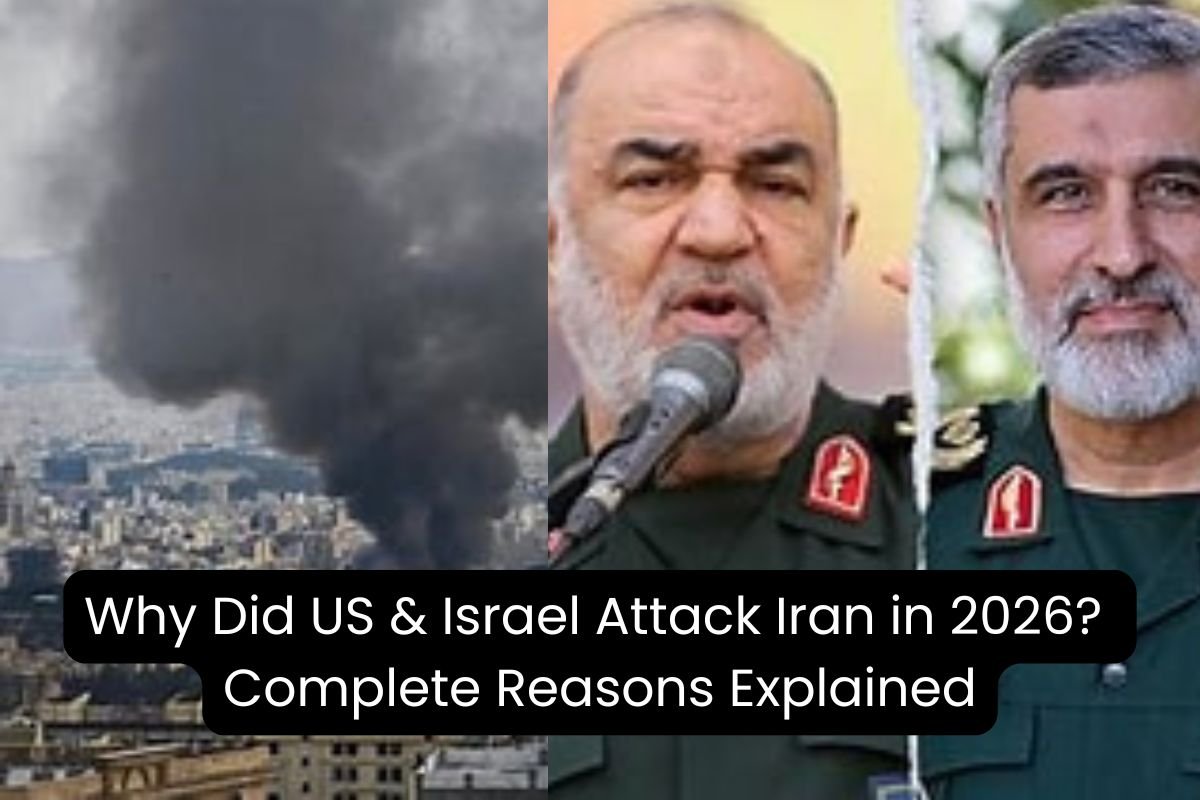
Why Did US & Israel Attack Iran in 2026? Complete Reasons Explained

Title: Why US & Israel Attacked Iran 2026: Complete Reasons

On February 28, 2026, the world woke to a different Middle East. Explosions lit up the night sky over Tehran. Air raid sirens wailed across Iranian cities. Communications went dark. Within hours, news emerged that Supreme Leader Ayatollah Ali Khamenei had been killed in the strikes, and the United States and Israel had launched their most ambitious military operation against Iran in decades .

Reason 1: The Nuclear Impasse—When Diplomacy Hit a Wall

At the heart of the conflict lies Iran’s nuclear program—a source of tension for over two decades. By early 2026, US and Israeli intelligence assessed that Tehran was dangerously close to having enough material for a nuclear bomb .

The Geneva Talks That Went Nowhere

Just days before the strikes, Omani mediators announced what looked like a breakthrough in Geneva. Iran had reportedly agreed to “zero uranium stockpiling” and full IAEA verification . But neither Washington nor Jerusalem trusted the deal.

The United States had taken a hardline position: demanding that Iran surrender all enriched uranium, dismantle key nuclear facilities, and accept unrestricted inspections . For Iran, which views its nuclear program as a matter of national sovereignty and pride, this was a non-starter.

“The negotiations were completely a smokescreen,” said Tang Zhichao, a Middle East analyst at the Chinese Academy of Social Sciences . The massive US military buildup in the region—including a second aircraft carrier—was already in place. “This was a carefully planned result. It shows that the United States and Israel have completely lost hope in negotiations.”

Why the US Shifted from Dialogue to Force

The United States had historically preferred engagement with Iran, applying sustained diplomatic pressure to extract concessions . But by February 2026, that approach had run its course. US negotiators—including Middle East envoy Steve Witkoff and Jared Kushner—returned from Geneva deeply disappointed. Iran’s position largely adhered to its established framework: refusing to abandon nuclear development, making no substantive concessions on transferring highly enriched uranium, and continuing to reject discussions of its missile technology and regional policies .

President Donald Trump set a 10-15 day deadline for meaningful diplomatic progress. When that deadline passed with no breakthrough, the military option was activated .

Reason 2: The US-Israel Dynamic—Convergence After Years of Divergence

For years, the United States and Israel had disagreed on how to handle Iran. Washington preferred communication and engagement. Israel, viewing Iran as an existential threat, advocated for decisive military pressure .

Israel’s Long Campaign

Israel had spent the previous two years systematically dismantling Iran’s proxy network—crushing Hamas in Gaza, severely degrading Hezbollah in Lebanon, and watching the Assad regime fall in Syria . With Iran’s “Axis of Resistance” shattered, Prime Minister Benjamin Netanyahu saw a strategic window to strike at the source directly.

Netanyahu had long argued that diplomacy alone couldn’t stop Iran. The strikes, code-named “Roaring Lion” by Israel, were framed as pre-emptive self-defence against an existential threat .

Trump’s Shift Toward Israel’s Position

When Trump returned to office in 2025, he restored his “maximum pressure” campaign against Tehran while paradoxically opening direct negotiations—the first such talks since he pulled the US out of the JCPOA in 2018 . But by February 2026, Trump had moved decisively toward Israel’s harder line.

The joint operation, with US forces playing the main role (in contrast to June 2025, when Israel led the strikes), marked a significant shift. Analysts note that while the two allies’ objectives are more aligned now than ever, they still differ in emphasis: Israel wants to completely eliminate Iran’s strategic threat across nuclear, missile, and proxy dimensions, while Trump primarily wants to eliminate the nuclear threat—though he doesn’t rule out regime change if conditions are favorable .

Reason 3: Domestic Politics—Elections, Legitimacy, and Distraction

Wars aren’t always about foreign policy. Sometimes, they’re about votes.

Trump’s Calculation

The 2026 midterm elections were approaching, and Iran-related issues occupy a critical place in US foreign policy and national security discourse . By taking a strong stance on Iran—either by weakening its strategic capabilities through military means or by pressuring it into greater concessions—the administration could bolster its diplomatic and governance credibility.

Trump framed the operation in sweeping, historic terms. In a video message, he listed grievances stretching back to the 1979 Islamic Revolution, which turned Iran from one of America’s closest allies into one of its most persistent enemies . His stated goals were extraordinary: destroy Iran’s nuclear program, obliterate its missile industry, sink its navy, and trigger regime change from within .

He addressed the Iranian public directly: “The hour of your freedom is at hand. When we are finished, take over your government. It will be yours to take.” 

This was not just a military strike. It was a political bet from a president who campaigned on ending foreign wars but chose to launch arguably the most consequential US military operation since Iraq in 2003 .

Netanyahu’s Unfinished Business

For Netanyahu, the political timing was equally significant. With Israeli elections approaching in October 2026, demonstrating resolve in safeguarding national security helps consolidate support from the right-wing political base . It also diverts attention from domestic pressures such as corruption allegations .

Sun Taiyi, a political scientist at Christopher Newport University, noted that “domestic political considerations cannot be ignored, with Netanyahu having strong incentives to sustain a posture of external confrontation, which can consolidate political support and prolong his governing viability” .

Reason 4: Iran’s Weakened Position—A Window of Opportunity

For Washington and Tel Aviv, the strategic calculus included a hard-headed assessment: Iran had never been weaker.

The Collapse of the “Axis of Resistance”

Over the previous two years, Israel had systematically dismantled Iran’s proxy network. Hamas was crushed in Gaza. Hezbollah was severely degraded in Lebanon. The Assad regime in Syria had fallen . For years, Iran had funded and armed these groups as its first line of defence and offensive reach. By early 2026, most of those tools were gone.

Economic Collapse and Domestic Unrest

Inside Iran, the situation was dire. The economy was in freefall, the rial had collapsed, basic goods were scarce, and nationwide protests in January had been met with a brutal crackdown that left thousands dead . US-based group HRANA reported over 7,000 verified deaths, with thousands more under review .

Trump seized on this in his messaging, citing Iran’s killing of “tens of thousands of its own citizens on the street as they protested” as a justification for intervention . Donald Heflin, a veteran diplomat and professor at Tufts University’s Fletcher School, noted that this provides “a bit of a fig leaf”—an excuse to sell the intervention to the Iranian people and the world .

The “Rally ‘Round the Flag” Risk

However, Heflin also warned of a familiar dynamic: when bombs start falling, populations often rally around their government, even one they were protesting days earlier . Whether the strikes would weaken the regime or strengthen it remained an open question.

Reason 5: Regime Change—The Unspoken but Clear Goal

While US officials publicly framed the strikes as defensive, aimed at neutralizing “imminent threats,” analysts argue that leadership change is now the primary objective .

Trump’s direct call for Iranians to “take over your government” and reports that Supreme Leader Khamenei’s residence was specifically targeted make this clear . The operation marks a break from last year’s strikes, which primarily focused on Iran’s nuclear facilities. This time, the scale and targets have clearly expanded to include political leadership .

Can It Work?

Experts are sceptical. Heflin points to US history in the region: during the 1990-1991 Gulf War, the US encouraged Iraqis to rise up against Saddam Hussein, then stopped short of attacking Baghdad. “That has not been forgotten in Iraq or surrounding countries,” he says. “I would be surprised if we saw a popular uprising in Iran that really had a chance of bringing the regime down” .

The regime, despite its weaknesses, remains tightly controlled and heavily armed. Even if top leaders are eliminated, the most likely successor is the Revolutionary Guard—hardcore true believers who may be no easier for the US to work with .

The Fallout: A Region on the Brink

Iran retaliated quickly, launching missiles at dozens of US military bases across the Middle East and targeting Israeli facilities . Explosions were reported in Qatar, the UAE, Bahrain, and Kuwait . Dubai International Airport shut down .

The conflict carries much higher risks than last year’s 12-day war, with two US carrier strike groups in the region signalling heightened readiness . Gulf states, some hit by Iranian retaliation on their own soil, now face difficult choices about where they stand .

Conclusion: The End of Diplomacy, The Beginning of Uncertainty

The strikes of February 28, 2026, represent the culmination of years of accumulated mistrust, failed diplomacy, and strategic impatience. The nuclear impasse proved unbreakable. The US-Israel policy gap finally converged. Domestic politics pushed leaders toward bold action. And a perceived window of opportunity—with Iran weakened and isolated—proved too tempting to resist.

What comes next is uncertain. Retaliation is already underway. The conflict could stabilise or expand. But one thing is clear: the world of February 27th no longer exists. And for the millions of people across the Middle East who woke to sirens and explosions, the consequences of this decision will unfold for years to come.

Frequently Asked Questions (FAQs)

1. Why did the US and Israel attack Iran specifically in late February 2026?

The immediate trigger was the collapse of nuclear talks in Geneva. US negotiators set a 10-15 day deadline for meaningful progress, and when Iran refused to make what Washington considered sufficient concessions on uranium enrichment and nuclear inspections, the military option was activated . The US had also completed a massive military buildup in the region, including a second aircraft carrier, making the strike operationally feasible .

2. Was the attack really about nuclear weapons, or was regime change the real goal?

Both. While preventing Iran from acquiring nuclear weapons was the stated primary objective, the scale and targets of the attack—including the confirmed killing of Supreme Leader Ayatollah Ali Khamenei—make clear that regime change is now a central goal . President Trump explicitly called on the Iranian people to “take over your government” .

3. How did Iran’s domestic situation contribute to the timing of the attack?

Iran entered 2026 in its weakest position in decades. The economy was in freefall, the rial had collapsed, and nationwide protests in January had been met with a brutal crackdown. Its proxy network (the “Axis of Resistance”) had been largely dismantled. US and Israeli strategists likely assessed this as a window of opportunity when Iran was too weak to mount an effective response .

4. What role did Israeli domestic politics play in the decision?

Significant. With Israeli elections approaching in October 2026, Prime Minister Netanyahu had strong incentives to demonstrate resolve against Iran’s perceived existential threat. Military action helps consolidate his right-wing political base and diverts attention from domestic pressures like corruption allegations .

5. How have Gulf countries responded to the crisis?

Gulf states are in a deeply uncomfortable position. While some like Saudi Arabia expressed solidarity with “targeted nations,” they also face Iranian retaliation on their own soil—with missiles striking near US bases in Bahrain, Qatar, and Kuwait. They must balance deterrence with de-escalation, maintaining security ties with the US while avoiding direct confrontation with Iran .

Post a Job Opening

Fill in the details below. Your job posting will be reviewed by our team.

Basic Information

Specify years of experience required

Location & Salary

Qualifications & Skills

Specify educational requirements
Separate skills with commas

Company Details

Job Details

Contact Information