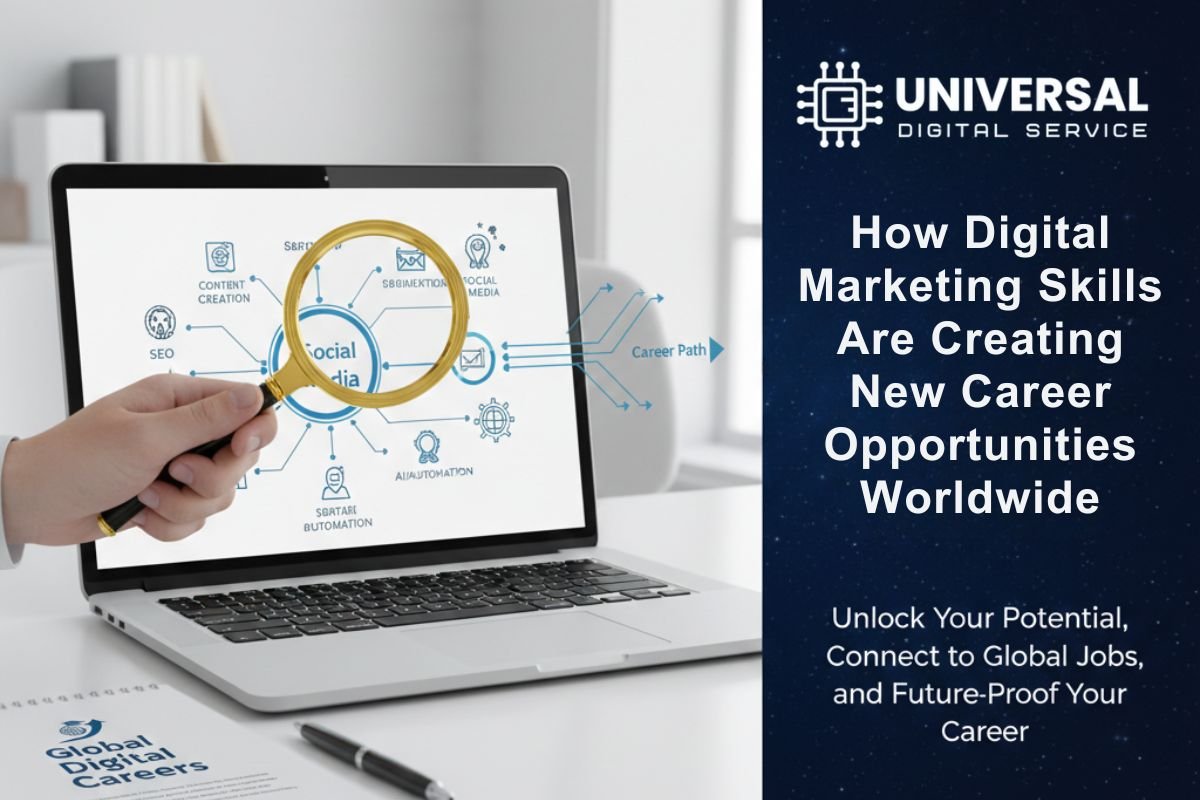
The global job market is rapidly evolving, and digital marketing has emerged as one of the most in-demand skill sets across industries. From startups to multinational corporations, businesses are actively seeking professionals who understand how to grow brands online.
This shift has not only changed how companies operate but has also created countless career opportunities for job seekers worldwide.
Why Digital Marketing Skills Matter Today
Traditional marketing methods are no longer enough to compete in a digital-first economy. Companies now rely on online channels to reach customers, promote services, and generate revenue.
Key reasons digital marketing skills are in demand:
Businesses want measurable results and clear ROI
Online platforms allow precise audience targeting
Digital campaigns are cost-effective and scalable
Data-driven decisions improve performance
As a result, professionals with digital marketing expertise are becoming valuable assets in nearly every industry.
Popular Digital Marketing Career Paths
Digital marketing is a broad field that offers multiple career options, including:
These roles are suitable for fresh graduates, freelancers, and experienced professionals alike.
The Role of Agencies in Digital Skill Development
Digital marketing agencies play an important role in shaping industry standards. They work on real-world projects, manage campaigns, and apply advanced tools to deliver results for clients.
Agencies like Universal Digital Services focus on data-driven strategies, SEO best practices, and performance marketing, helping businesses grow while also contributing to industry knowledge and skill development.
Final Thoughts
Digital marketing is no longer just a business tool — it is a career pathway with long-term growth potential. As businesses continue to invest in online marketing, the demand for skilled professionals will only increase.
Learning digital marketing today can open doors to global opportunities tomorrow.
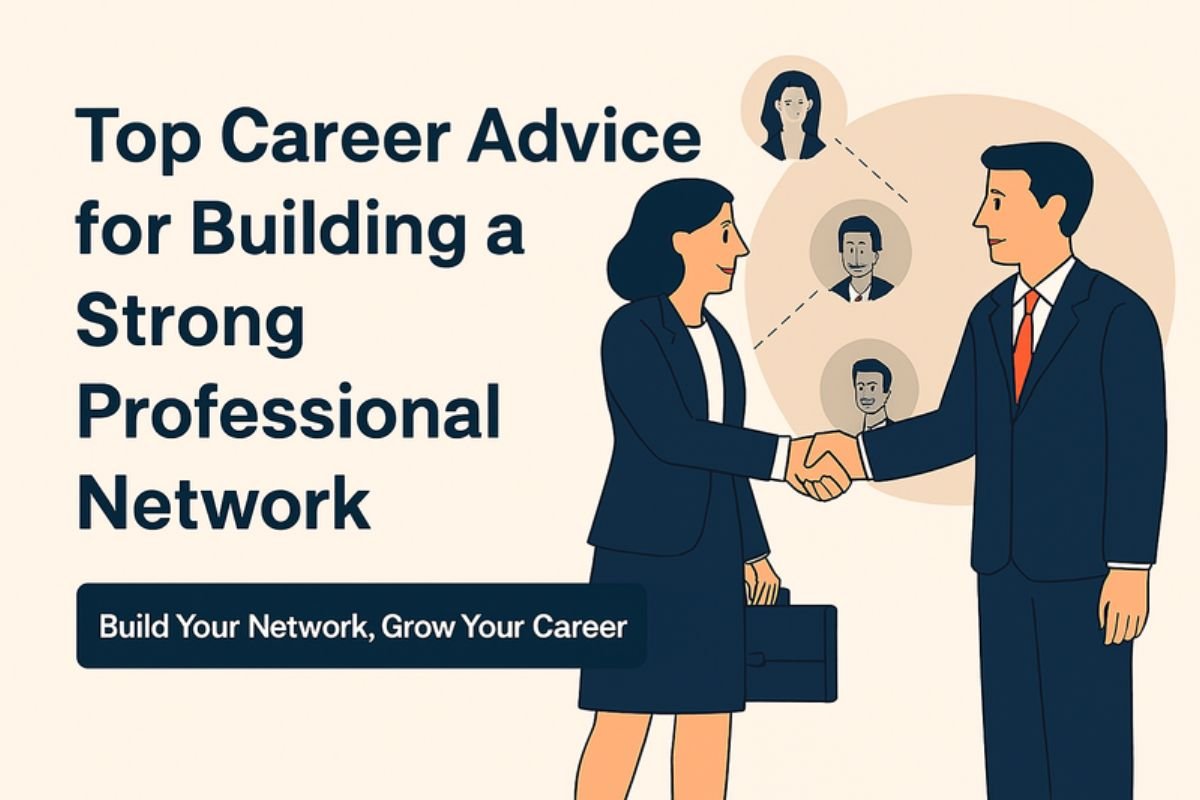
In today’s fast-paced career landscape, success is not only about what you know but also about who you know. A strong professional network can help you discover hidden opportunities, gain mentorship, and stay ahead in your industry. Networking is not about collecting business cards—it’s about building genuine, long-term relationships that add value to both sides.
This detailed guide explores top career advice for building a strong professional network, with actionable strategies and insights you can apply right away.
Why Networking Matters
Matters
Opportunities: Many jobs and projects are filled through referrals rather than public postings.
Career Growth: Networking connects you with mentors and industry leaders who can guide your journey.
Knowledge Sharing: A diverse network keeps you updated with industry trends and best practices.
Support System: Strong connections provide encouragement during career challenges.
Building a Strong Professional Network
. Be Authentic and Genuine
Networking thrives on trust. Be yourself, show genuine interest in others, and avoid being overly transactional. People remember sincerity more than rehearsed pitches.
2. Leverage LinkedIn and Digital Platforms
Your LinkedIn profile is your digital resume. Keep it updated, join industry groups, and engage with posts. Online networking expands your reach globally.
3. Attend Industry Events and Conferences
Face-to-face interactions at seminars, workshops, and career fairs help you build deeper connections. Always prepare a short introduction about yourself before attending.
4. Offer Value Before Asking
Networking is a two-way street. Share resources, insights, or introductions before seeking help. This builds credibility and goodwill.
5. Follow Up and Stay Consistent
After meeting someone, send a thank-you note or connect on LinkedIn. Regular follow-ups every few months keep relationships alive.
6. Seek Mentorship
Identify experienced professionals who can guide you. Mentorship accelerates learning and helps you avoid common career mistakes.
7. Diversify Your Network
Don’t limit yourself to your industry. A diverse network brings fresh perspectives and unexpected opportunities from different fields.
8. Develop Strong Communication Skills
Good communication—listening, empathy, and clarity—makes you memorable. Practice active listening and ask meaningful questions.
9. Engage in Alumni and Professional Groups
Your alumni network is a hidden treasure. Stay active in associations, online communities, and professional forums.
10. Be Patient and Persistent
Networking is a long-term investment. Relationships take time to grow, so stay consistent and patient.
Practical Tips for Effective Networking
Always carry a professional business card or digital contact option.
Prepare a short “elevator pitch” about yourself.
Use social media wisely—share industry insights, not just personal updates.
Respect people’s time; keep conversations concise and valuable.
Track your connections using a simple spreadsheet or CRM tool.
FAQs
Why is professional networking important for career growth?
Networking helps you discover job opportunities, gain mentorship, and stay updated with industry trends.
How can fresh graduates start building a network?
Begin with classmates, professors, alumni groups, and LinkedIn connections. Attend career fairs and webinars.
What mistakes should I avoid while networking?
Avoid being pushy, self-centered, or only reaching out when you need help. Build genuine relationships.
How often should I follow up with contacts?
Follow up after initial meetings and stay in touch every few months with meaningful updates.
Can online networking replace face-to-face interactions?
Online networking is powerful, but face-to-face interactions build deeper trust. A mix of both works best.
Conclusion
Building a strong professional network is one of the most valuable investments in your career. By being authentic, offering value, and staying consistent, you can create meaningful relationships that last a lifetime. Remember, networking is not about quantity—it’s about quality.
The biggest mistake Gulf professionals make on LinkedIn is having a vague or generic headline. This single oversight can cost visibility, credibility, and job opportunities. In this blog, we’ll break down why it matters, how to fix it fast, and what recruiters in the UAE, Saudi Arabia, and Qatar actually look for.
The #1 Mistake: A Generic LinkedIn Headline
If your LinkedIn headline says “Engineer at XYZ Company” or “Marketing Professional,” you’re missing out. Gulf recruiters scan hundreds of profiles daily, and your headline is the first thing they see. It’s your elevator pitch, your brand, and your hook.
Yet thousands of professionals across Dubai, Riyadh, Doha, and Muscat still use default job titles or vague descriptors. Why? Because LinkedIn auto-fills your headline with your current job title—and most people never change it.
Here’s why that’s a problem:
It’s not searchable. Recruiters use keywords like “Digital Marketing Manager – FMCG – UAE” or “Civil Engineer – Infrastructure – Saudi Arabia.” If your headline doesn’t match, you won’t show up.
It’s not memorable. “Sales Executive” is forgettable. “Retail Sales Strategist | Driving 7-Figure Growth in UAE” is not.
It doesn’t sell your value. Your headline should show what you do, who you help, and what results you deliver.
Why This Mistake Is So Common in the Gulf
In the Gulf region, LinkedIn adoption is high—but optimization is low. According to CV Gulf and Bayt analytics:
90% of recruiters check LinkedIn before contacting a candidate
Only 30% of professionals have customized their headline
Most job seekers focus on CVs and ignore LinkedIn until they’re actively applying
This leads to missed opportunities, especially in industries like oil & gas, healthcare, hospitality, and tech—where headhunting is common.
What Recruiters Actually Look For
Recruiters in the Gulf don’t just search by job title. They use filters like:
Location: UAE, Saudi Arabia, Qatar
Industry keywords: FMCG, Fintech, Civil Engineering, Hospitality
Seniority level: Mid-level, Senior, Executive
Certifications: PMP, CPA, CFA, Google Ads, AWS
Languages: Arabic, English, Tagalog, Hindi
If your headline doesn’t include these keywords, you’re invisible.
How to Fix It in 30 Minutes
Here’s a simple 3-step method to rewrite your headline and boost your visibility instantly.
Step 1: Identify Your Core Value
Ask yourself:
What do I actually do?
What problems do I solve?
What results have I delivered?
Example: Instead of “HR Executive,” say “HR Executive | Driving Talent Acquisition & Compliance in UAE Retail Sector”
Step 2: Add Keywords
Use terms that recruiters search for. These vary by industry:
Notice how each “after” version is keyword-rich, location-specific, and value-driven.
What Happens After You Fix It
Professionals who optimize their headline report:
More profile views within 48 hours
Higher acceptance rates on connection requests
Better engagement on posts and comments
More recruiter messages (especially for passive candidates)
It’s not magic—it’s visibility. And in the Gulf, visibility leads to opportunity.
Bonus Tips for Gulf Professionals
1. Use Arabic and English keywords
If you’re bilingual, include both. Example: “مدير مبيعات | Sales Manager | FMCG | UAE”
2. Mention your visa status if relevant
Especially in UAE: “Open to relocation | Visit Visa | Immediate Joiner”
3. Highlight certifications
PMP, CFA, DHA, MOH, AWS, Google Ads—these are filters recruiters use.
4. Avoid buzzwords
“Hardworking,” “team player,” “motivated” are filler. Use real skills and metrics.
5. Update your headline every 6 months
As your role evolves, so should your headline.
FAQs
Should I include my current company name?
Only if it’s well-known or adds credibility. Otherwise, focus on your role and impact.
Can I write “Looking for opportunities”?
Yes, but don’t make it the whole headline. Combine it with your skills: “Digital Marketer | SEO & Meta Ads | Open to Opportunities | UAE”
What if I’m unemployed?
Use your target role and skills: “Project Manager | PMP | Construction & Fit-Out | UAE | Available Immediately”
Should I include emojis?
Use them sparingly. A UAE flag 🇦🇪 or checkmark ✅ can add flair, but don’t overdo it.
How often should I update my headline?
Every 6 months or whenever your role, skills, or goals change.
Final Thoughts
Your LinkedIn headline is your digital handshake. In the Gulf, where competition is fierce and recruiters rely heavily on LinkedIn, a generic headline is a silent career killer.
Fixing it takes 30 minutes. The impact lasts for years.
So take a moment today. Rewrite your headline. Add your value. Own your brand.
And if you need help, Gulf Careers Hub offers LinkedIn optimization services, CV rewriting, and job campaign support across UAE, Saudi Arabia, and Qatar.
Asking for a promotion in the Gulf region requires strategic preparation, cultural awareness, and confident communication. This guide breaks down every step — from timing and evidence to presentation and follow-up — tailored for professionals in the UAE, Saudi Arabia, Qatar, and Bahrain.
Introduction
In the dynamic workplaces of the Gulf — from multinational firms in Dubai to government-backed initiatives in Riyadh — promotions are not just handed out. They’re earned, requested, and negotiated. Yet many professionals hesitate to ask, fearing rejection or misjudging the timing.
This guide is designed to help you prepare, present, and follow through on a promotion request with confidence and professionalism. Whether you’re in finance, healthcare, tech, or hospitality, the principles apply across industries and borders.
Step-by-Step Promotion Strategy
Step 1: Assess Your Readiness
Before initiating the conversation, ask yourself:
Have I consistently exceeded expectations in my current role?
Do I have measurable achievements that align with the company’s goals?
Have I taken on responsibilities beyond my job description?
Is there a clear business case for my promotion?
If the answer is yes to most, you’re ready to proceed.
Step 2: Understand Gulf Workplace Culture
In the Gulf, promotions are often tied to:
Seniority and loyalty
Visible contributions to team or company success
Professional certifications and bilingual skills
Respectful communication and hierarchy awareness
In Saudi Arabia, for example, formal titles and structured chains of command matter. In the UAE, performance and initiative are often rewarded in fast-paced sectors like tech and real estate.
Step 3: Gather Evidence
Build a portfolio of accomplishments:
KPIs met or exceeded
Projects led or improved
Revenue or cost impact
Client testimonials or internal feedback
Certifications or training completed
Cross-functional collaboration examples
Use numbers wherever possible: “Reduced onboarding time by 30%,” “Generated AED 1.2M in new business,” etc.
Step 4: Research Promotion Pathways
Know what you’re asking for:
Is there a formal promotion cycle?
Are roles internally posted or manager-nominated?
What does the next level entail — title, salary, responsibilities?
Speak to HR or review internal job boards to understand the structure.
Step 5: Choose the Right Time
Ideal moments to ask:
After a successful project or performance review
During annual planning or budget cycles
When your manager is not overwhelmed or distracted
Before contract renewal or visa sponsorship discussions
Avoid asking during company-wide stress periods or right after a team setback.
Step 6: Craft Your Message
Use a respectful, confident tone. Structure your request like this:
Gratitude: Thank your manager for their support.
Value Statement: Highlight your contributions.
Promotion Request: Clearly state the role or level you’re seeking.
Business Case: Explain how your promotion benefits the team or company.
Openness: Invite feedback and discussion.
Example:
“I appreciate the opportunities I’ve had to grow in this role. Over the past year, I’ve led three successful client launches, improved our reporting systems, and mentored two junior staff. I’d like to discuss the possibility of moving into a Senior Account Manager role, where I can contribute even more strategically. I’d welcome your thoughts on how best to align with the team’s goals.”
Step 7: Prepare for the Conversation
Practice with a mentor or trusted colleague
Anticipate objections (budget, timing, readiness)
Prepare responses with data and diplomacy
Dress professionally and choose a private setting
Bring a printed summary of your achievements if appropriate
Step 8: Follow Up Professionally
If your manager needs time:
Send a polite follow-up email after 3–5 days
Reiterate your interest and openness to feedback
Ask for a timeline or next steps
If the answer is no:
Ask what you can improve
Request a development plan or timeline
Stay positive and continue performing at a high level
Promotion Readiness Table
Criteria
Example Evidence
Performance
Exceeded KPIs for 3 consecutive quarters
Leadership
Led cross-departmental project
Initiative
Proposed and implemented new CRM workflow
Skills Development
Completed PMP and Arabic language training
Team Impact
Mentored junior staff, improved team morale
Business Value
Increased client retention by 25%
Common Mistakes to Avoid
Asking without preparation or evidence
Using emotional arguments instead of business value
Comparing yourself to colleagues
Being vague about what you want
Pressuring your manager with unrealistic timelines
In 2025, the global workforce is facing a paradox: while millions of jobs remain unfilled, millions of workers struggle to find employment. The disconnect isn’t due to a lack of ambition or opportunity — it’s a skills mismatch. Employers are seeking capabilities that many candidates don’t yet possess, and traditional education systems are struggling to keep pace with the speed of change.
This widening gap between job requirements and worker competencies is known as the skill gap, and it’s one of the most urgent challenges facing economies today. The solution? Upskilling — the process of learning new skills or enhancing existing ones to meet evolving job demands.
What Is the Skill Gap?
The skill gap refers to the difference between the skills employers need and the skills workers currently have. It can be technical (e.g., coding, data analysis), soft (e.g., communication, adaptability), or strategic (e.g., leadership, digital transformation).
According to the World Economic Forum’s Future of Jobs Report, nearly 44% of workers’ core skills will change by 2030. In other words, almost half of what people rely on today to do their jobs will be outdated or irrelevant within five years.
This isn’t just a tech issue. It affects healthcare, logistics, finance, education, and even creative industries. The skill gap is a systemic challenge — and upskilling is the most direct way to address it.
What’s Driving the Skill Gap?
1. Technological Acceleration
AI, automation, and cloud computing are transforming how work gets done. Roles that once relied on manual processes now require digital fluency. For example, a logistics coordinator must now understand predictive analytics and supply chain software — not just spreadsheets.
2. Changing Business Models
Companies are shifting toward agile, customer-centric models. This requires cross-functional collaboration, data-driven decision-making, and continuous innovation — skills that aren’t always taught in traditional education.
3. Remote and Hybrid Work
The rise of distributed teams demands new competencies: asynchronous communication, self-management, and digital collaboration. Workers who lack these skills struggle to adapt, even if they’re technically qualified.
4. Education Lag
Many academic institutions still teach outdated curricula. By the time a student graduates, the tools and frameworks they learned may already be obsolete. Employers are increasingly turning to bootcamps, micro-credentials, and internal academies to fill the gap.
5. Demographic Shifts
An aging workforce, rising gig economy, and global talent mobility are reshaping job markets. Employers need adaptable, multi-skilled professionals who can pivot across roles and industries.
Why Upskilling Matters More Than Ever
Upskilling isn’t just about learning new tools — it’s about staying employable, competitive, and confident in a rapidly changing world.
1. Future-Proofing Careers
Workers who upskill are better equipped to transition into emerging roles. Instead of being replaced by automation, they evolve into higher-value positions.
2. Enhancing Job Mobility
Upskilled professionals can move across industries, geographies, and functions. This flexibility is crucial in a volatile job market.
3. Driving Innovation
Teams with diverse, updated skill sets are more likely to experiment, iterate, and solve complex problems. Upskilling fuels creativity and resilience.
4. Improving Retention
Employees who receive training feel valued. They’re more engaged, loyal, and productive — reducing turnover and recruitment costs.
5. Closing Equity Gaps
Upskilling programs can empower underrepresented groups, reduce bias, and create more inclusive workplaces. When access to learning is democratized, opportunity follows.
Industries Most Affected by the Skill Gap
Industry
Key Skill Gaps
Upskilling Focus Areas
Technology
AI, cybersecurity, cloud platforms
Machine learning, DevOps, data science
Healthcare
Digital records, telemedicine
Health informatics, patient tech tools
Finance
Data modeling, compliance
Fintech, blockchain, risk analytics
Manufacturing
Automation, robotics
IoT, predictive maintenance, safety
Retail
E-commerce, customer analytics
CRM platforms, UX, digital marketing
Education
Remote learning, digital tools
EdTech platforms, instructional design
These sectors are undergoing rapid transformation, and upskilling is the only way to keep pace.
Skills in Demand for 2025 and Beyond
Digital literacy: Navigating cloud tools, dashboards, and virtual platforms
Data analysis: Interpreting trends, building models, making data-driven decisions
AI fluency: Understanding how AI tools work and how to collaborate with them
Communication: Clear writing, active listening, and cross-cultural collaboration
Adaptability: Learning new tools quickly, managing change, and staying resilient
Leadership: Guiding teams through uncertainty, fostering innovation, and mentoring others
Cybersecurity awareness: Protecting data, managing risk, and ensuring compliance
Project management: Coordinating tasks, timelines, and resources across distributed teams
These skills aren’t just “nice to have” — they’re essential for survival and success.
How to Upskill Effectively
1. Start with a Skills Audit
Identify your current strengths and gaps. Use tools like LinkedIn Skills Assessment or Coursera’s SkillSets to benchmark.
2. Choose the Right Format
Options include:
Online courses (Coursera, Udemy, edX)
Bootcamps (General Assembly, Springboard)
Micro-credentials (Google, IBM, Microsoft)
Peer learning communities (Growclass, Reforge)
Pick formats that match your learning style, schedule, and career goals.
3. Apply What You Learn
Build a portfolio, volunteer for stretch projects, or freelance. Employers value proof of application — not just certificates.
4. Track Progress
Use platforms like Notion or Trello to track goals, milestones, and reflections. Share updates on LinkedIn to build visibility.
5. Stay Curious
Upskilling isn’t a one-time event — it’s a mindset. Follow industry blogs, attend webinars, and join professional communities.
What Employers Can Do
Redesign Job Descriptions
Focus on outcomes and skills — not degrees or years of experience.
Invest in Learning Platforms
Offer access to Coursera, LinkedIn Learning, or internal academies.
Encourage Peer Learning
Create mentorship programs, lunch-and-learns, and cross-functional workshops.
Measure Skill Growth
Use dashboards to track training completion, skill acquisition, and performance impact.
Promote Inclusive Access
Ensure training is accessible across roles, locations, and backgrounds.
FAQs
Is upskilling only for tech jobs?
No. Every industry is evolving. Healthcare, finance, education, and logistics all require new skills.
Can I upskill without quitting my job?
Absolutely. Many platforms offer flexible, part-time learning. You can apply new skills in your current role.
Do I need a degree to upskill?
No. Many upskilling programs are open to all — including bootcamps, micro-credentials, and online courses.
How long does upskilling take?
It depends. Some skills take weeks (e.g., Excel), others months (e.g., coding). The key is consistency.
Will upskilling guarantee a promotion?
Not always — but it increases your chances. It shows initiative, growth, and readiness for new challenges.
What’s the difference between upskilling and reskilling?
Upskilling enhances your current role. Reskilling prepares you for a new one.
Final Thoughts
The skill gap isn’t just a statistic — it’s a lived reality. But it’s also an opportunity. Upskilling empowers individuals to take control of their careers, helps organizations stay competitive, and builds a more inclusive, resilient workforce.
Whether you’re a job seeker, a manager, or a policymaker, the message is clear: invest in skills, invest in people, and invest in the future.
Whether you’re switching careers, re-entering the workforce, or aiming for a promotion, digital fluency is now a baseline expectation. Employers across industries—from healthcare and finance to education and logistics—expect candidates to be comfortable with digital tools, platforms, and workflows.
For job seekers over 30, the challenge isn’t just learning new tech—it’s integrating it with your existing experience and mindset.
Table of Contents
Why Digital Skills Matter More Than Ever
Remote work is mainstream: You’ll need to navigate virtual meetings, cloud-based tools, and digital collaboration.
Recruiters use AI tools: Applicant tracking systems (ATS) scan resumes for keywords and formatting.
Digital transformation is everywhere: From hospitals to retail, every sector is digitizing operations.
Age bias is real: Demonstrating tech fluency helps counter stereotypes and boosts confidence.
Core Digital Skills You Must Master
1. Basic Computer Literacy
Navigating operating systems (Windows/macOS)
File management, keyboard shortcuts, and system settings
Using printers, scanners, and basic troubleshooting
2. Cloud Collaboration Tools
Google Workspace (Docs, Sheets, Drive)
Microsoft 365 (Word, Excel, Teams, OneDrive)
Dropbox, Slack, Zoom, Trello, Notion
These tools are essential for remote work, team projects, and document sharing.
3. Email Etiquette & Management
Professional email writing (Gmail, Outlook)
Organizing inboxes, filters, and folders
Avoiding spam triggers and formatting errors
4. Digital Communication
Video conferencing (Zoom, Google Meet, Teams)
Chat platforms (Slack, WhatsApp Business)
Screen sharing, virtual backgrounds, and mute discipline
5. Social Media Awareness
LinkedIn profile optimization
Understanding Facebook, Instagram, TikTok for business
Personal branding and digital footprint management
6. Cybersecurity Basics
Recognizing phishing emails
Using strong passwords and two-factor authentication
The Middle East — especially the UAE, Saudi Arabia, Qatar, and Kuwait — is no longer just a destination for short-term contracts. It’s a region where ambitious professionals can build long-term careers, climb the corporate ladder, and transition from entry-level roles to management in record time.
With booming sectors like tech, healthcare, logistics, hospitality, and construction, companies are actively investing in talent development, leadership pipelines, and fast-track programs. If you’re strategic, proactive, and willing to learn, the Middle East offers a unique opportunity to grow faster than in many Western markets.
Table of Contents
Step-by-Step Career Roadmap
🔹 Step 1: Choose the Right Entry Point
Not all entry-level jobs are created equal. Choose roles that offer:
Exposure to decision-makers
Cross-functional collaboration
Clear KPIs and performance reviews
Training and mentorship programs
💬 Example: A junior procurement officer in Dubai may interact with vendors, finance, and logistics — giving them visibility across departments.
🔹 Step 2: Build a Personal Brand Early
Your reputation matters. From day one:
Be punctual, reliable, and solution-oriented
Volunteer for cross-departmental projects
Share insights on LinkedIn or internal platforms
Ask for feedback and act on it
💬 Tip: In the UAE and Saudi Arabia, visibility and initiative are often rewarded with fast promotions.
🔹 Step 3: Upskill Strategically
Don’t wait for your company to train you. Invest in:
Certifications (PMP, CMA, Google Analytics, HRBP, etc.)
Language skills (Arabic, French, or business English)