Gulf Careers Hub

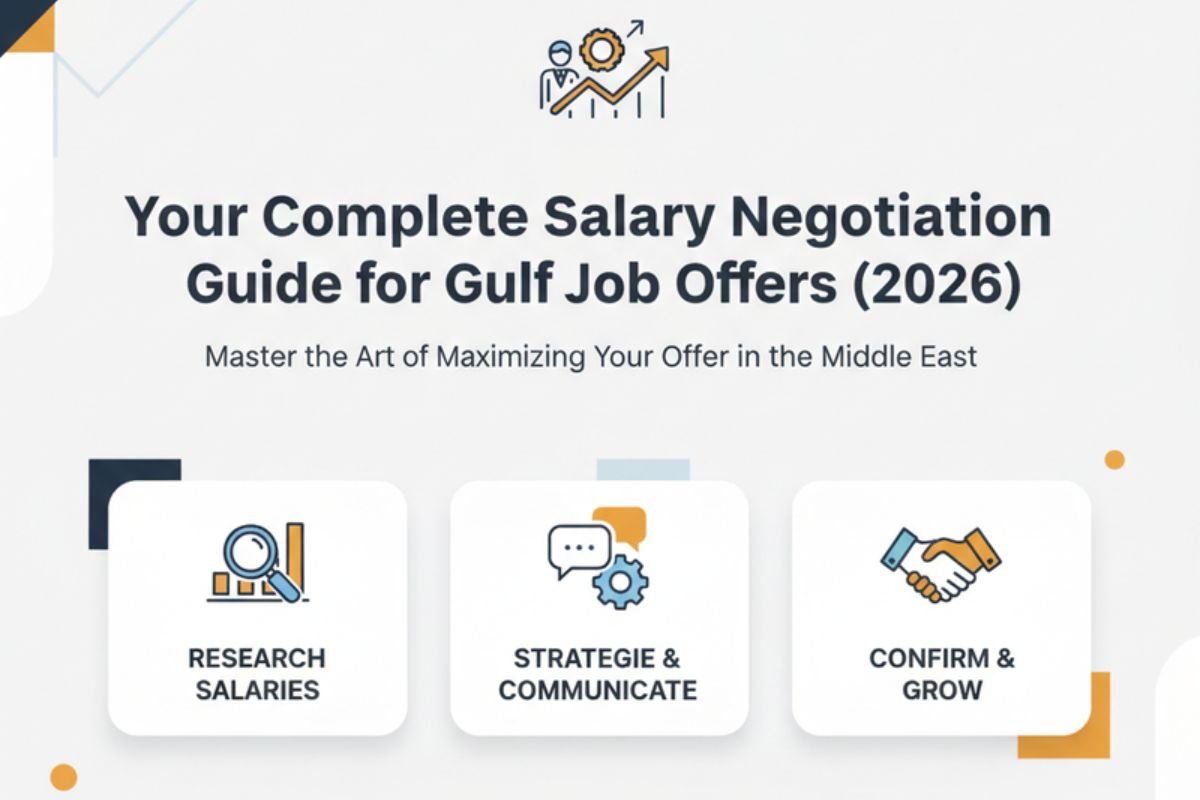
Your Complete Salary Negotiation Guide for Gulf Job Offers (2026)

Salary Negotiation Guide for Gulf Job Offers 2026

How you handle this question in a Gulf job interview can mean the difference between landing a package that sets you up for years, or leaving thousands on the table. The good news? Salary negotiation in the UAE, Saudi Arabia, and Qatar follows predictable rules. Learn them, and you’ll negotiate with confidence.

Step 1: Do Your Homework Before the Interview

Preparation is everything. Before any Gulf job interview, you need to know what you’re worth in today’s market.

Research market rates. The 2026 salary landscape shows modest increases across the region—around 4.1% in the UAE and 4.6% in Saudi Arabia . But averages hide big differences. Specialist roles in technology, finance, and project management are seeing 5-9% increases .

Know the sectors that are hiring. Financial services, industrial sectors, banking, real estate, and technology are leading salary growth in 2026 . If you’re in these fields, you have stronger negotiating power.

Understand total compensation. Gulf packages often include:

  • Base salary
  • Housing allowance (a major component)
  • Transport allowance
  • Annual flight tickets home
  • Education allowance for children
  • Health insurance
  • Bonus potential (typically 2-3 months’ salary) 

Step 2: Master the “Salary Expectations” Question

This is the moment most candidates dread. Here’s how to handle it professionally.

If they ask early in the process: deflect politely.

“I’d be happy to discuss salary once we’ve both confirmed there’s a good fit and I fully understand the scope of the role. Could you share the budgeted range for this position?”

This approach—asking about their budget first—puts you in a stronger position . If their range aligns with your expectations, you’re set. If it’s lower, you can decide whether to continue or politely withdraw.

If they insist on a number: provide a range.

“I’m looking for a package between AED 25,000 and AED 30,000 per month, with flexibility based on the total benefits and role scope.”

Notice the strategy: your ideal figure is at the lower end, showing flexibility while anchoring the conversation where you want it .

Step 3: Know What NOT to Say

Avoid these common mistakes that can cost you thousands.

Never say: “I’m flexible—whatever you think is fair.”

This signals you haven’t done research and gives away your power. Employers may offer well below market rate .

Never get personal: “I need this job because I have rent to pay.”

Shift the conversation from your needs to your value. Focus on what you’ll contribute .

Never respond emotionally: “That’s not enough.”

Instead, say: “Thank you for the offer. Based on my research and the responsibilities we discussed, I was hoping for something closer to X. Is there flexibility?” 

Step 4: Consider the 2026 Market Realities

The Gulf job market in 2026 has some unique dynamics that affect negotiation.

Skills shortages work in your favor. With 90% of employers reporting skills gaps, qualified professionals are in demand . Roles in project management, data science, AI, and engineering are especially hard to fill .

AI skills matter. Around 66% of professionals now use AI regularly at work . Showing genuine AI capability—without exaggerating—can strengthen your position .

Nationalization targets are real. In the UAE, Emiratisation targets for skilled roles are now 10%, with 42% of companies planning to increase Emirati hires . In Saudi Arabia, 93% of employers already hire Saudi nationals, and 75% plan further increases . If you’re an expat, emphasize how you’ll support and develop local talent.

Job switching is common. Nearly 98% of professionals are open to new roles in 2026 . Employers know this, so they’re often willing to negotiate to secure top talent.

Step 5: Negotiate the Whole Package

Salary is important, but don’t overlook other elements that can add significant value.

Housing and transport allowances can be negotiated separately. In Saudi Arabia, family-related benefits (visas, medical cover, flights) are highly valued by 70% of professionals .

Flexible working matters more than ever. Nearly half of professionals rank time-off and flexibility as top benefits . If the base salary is firm, ask about remote work options or additional leave.

Bonuses and reviews. Ask about performance bonus structures (typically 2-3 months’ salary) and when your first salary review will happen .

Step 6: Handle the Offer Professionally

When the offer arrives, here’s your script:

“Thank you for the offer. I’m very excited about this role and the team. I’d like to take 24-48 hours to review the full package carefully.”

Never accept on the spot. Even if you’re thrilled, taking time shows you’re thoughtful and gives you space to prepare counter-arguments.

When you counter, be specific:

“Based on my 8 years of experience and current market rates for this role in Dubai, I was hoping for a base salary of AED 28,000. Is that achievable within your budget?”

Common Questions, Answered

Is negotiation expected in the Gulf?
Yes. Employers often start with a conservative offer, expecting candidates to negotiate professionally .

What if they say the budget is fixed?
Ask about other elements: signing bonus, earlier review date, additional leave, or professional development budget.

How transparent should I be about my current salary?
Be honest about your current package, including all components. Transparency builds trust .

When is the best time to negotiate?
After you’ve received a formal offer, but before you’ve accepted. That’s when you have maximum leverage.

Final Thought: You’re Worth It

Negotiation isn’t rude—it’s expected. In the Gulf’s competitive 2026 job market, employers want candidates who know their worth and communicate it professionally.

Do your research, stay confident and polite, and remember: the best time to negotiate your lifetime earnings is right now, before you accept.

Your next opportunity is waiting. Go get what you deserve.


Frequently Asked Questions (FAQs)

1. What’s the average salary increase in the Gulf for 2026?

Average increases range from 4.1% in the UAE to 4.6% in Saudi Arabia, with Qatar and Oman at 4.3% . However, specialist roles in technology, finance, and project management can see 5-9% increases .

2. How do I research fair salaries before a Gulf job interview?

Use resources like the Hays GCC Salary Guide (covering 400+ roles), Korn Ferry forecasts, and platforms like Bayt.com‘s salary calculator . Talk to recruiters and professionals in your network who know the local market.

3. What should I do if the initial offer is below my expectations?

Thank them politely, then respond with: “Based on my research and the responsibilities we discussed, I was hoping for something closer to X. Is there flexibility in the budget?” This invites conversation rather than confrontation 

4. Are housing and transport allowances negotiable?

Yes. In fact, these are often separate line items in Gulf compensation packages. If base salary is firm, focus negotiations on allowances, bonuses, annual flights, or education benefits 
5. How important are AI skills for Gulf job seekers in 2026?

Very important. Around 66% of professionals now use AI regularly at work . Demonstrating genuine AI capability—through courses, pilot projects, or practical experience—can strengthen your negotiating position .

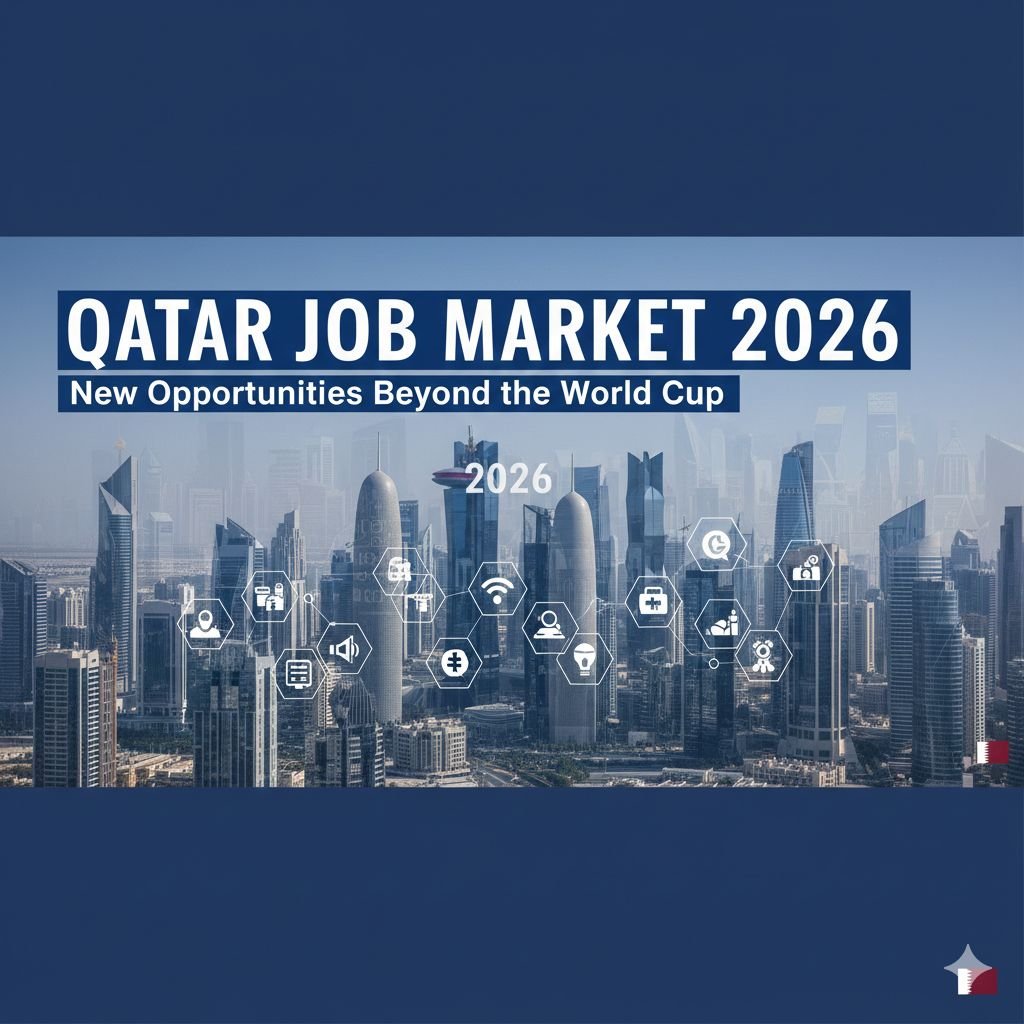
New Opportunities Beyond the World Cup

Qatar Job Market 2026 | New Post-World Cup Opportunities

Remember all those headlines about Qatar’s post-World Cup slowdown? They got it wrong. As we move through 2026, Qatar’s job market isn’t shrinking—it’s transforming. The country has quietly built one of the most forward-thinking employment ecosystems in the Middle East, and for job seekers, the opportunities are more exciting than ever.

The New Reality: From Construction to Knowledge Economy

Yes, the construction frenzy that built stadiums and metro lines has cooled. That was always the plan . But what’s replaced it is far more sustainable for long-term careers. Qatar is now focused on building something different: a knowledge-based economy powered by talent, not towers.

The numbers tell the story. The IMF confirms that Qatar’s post-World Cup strategy centers on private sector growth, with reforms designed to attract skilled professionals and entrepreneurs . This isn’t about filling temporary roles anymore. It’s about building careers.

Two Game-Changing Visa Programs You Need to Know About

If you’re a senior professional or entrepreneur, February 2026 brought news that changes everything. Qatar launched two new 10-year residency visas that effectively remove the old barriers to building a life here .

The Executive Residency

This one’s for senior professionals already working in Qatar or considering the move. Chairmen, CEOs, and directors who meet salary criteria can now secure long-term residency through employer nomination . Here’s the kicker: you keep your residency status even if you change jobs. That’s huge for career flexibility.

The Entrepreneur Residency

Founders, take note. This pathway lets you establish or scale your business in Qatar with a five-year renewable residency . You’ll need endorsement from incubators like Qatar Development Bank or Qatar FinTech Hub, but once approved, you get access to mentorship, funding networks, and serious business support .

How Qatar is Fixing the Job Search Process

Remember the frustration of applying for jobs through platforms that never seemed to understand your real skills? Qatar’s upgraded Kawader platform tackles this head-on .

The new system uses AI for skills-based matching rather than just scanning job titles. If you’ve ever been overlooked because your unique combination of skills didn’t fit a rigid box, this matters. The platform also lets government entities nominate candidates without seeing names in early stages—a genuine move toward merit-based hiring .

Students aren’t forgotten either. The platform now connects university students with part-time government work aligned with national workforce needs . That’s practical experience before graduation.

What Employers Actually Want in 2026

If you’re updating your CV, here’s what Qatar’s manufacturers and employers are prioritizing right now :

  • Safety mindset and integrity top the list (nearly 99% of employers rate these as very important)
  • Problem-solving abilities (90.9% say this is critical)
  • Teamwork and communication (around 90% want people who can collaborate and share ideas clearly)
  • Risk and time management (over 90% need professionals who can handle these)

Notice what’s less important? Basic technical skills alone won’t cut it anymore. Employers want higher-order thinking and interpersonal competencies . The message is clear: adaptability matters more than ever.

The Workforce Reality Check

Let’s be realistic about what working in Qatar means today. A recent GCC salary survey reveals some tension beneath the surface :

  • Over 30% of professionals received no pay rise last year
  • Salary growth is expected at just 0-5% for most roles
  • Nearly 98% of professionals are open to new opportunities in 2026

But here’s the interesting part: employers are still hiring. Over 75% plan to increase headcount this year . The challenge isn’t lack of jobs—it’s matching talent with roles in a market where compensation isn’t keeping pace with workload intensity.

For professionals, this means looking beyond base salary. Nearly half of workers now rank flexibility and time-off as their most valued benefits . Smart employers are responding with hybrid arrangements and better development pathways.

Where the Jobs Are

Construction isn’t dead—it’s just more focused. The work now centers on gas expansion, industrial free zones, and transport infrastructure rather than stadiums . But the real growth areas are elsewhere:

  • Technology and innovation roles are expanding rapidly, supported by initiatives like the new residency programs 
  • Manufacturing needs professionals with problem-solving skills and safety expertise 
  • Green jobs are emerging as Qatar aligns labor policies with environmental goals 
  • Private sector leadership positions are opening as the economy diversifies beyond public sector dominance 

A Final Word

The Qatar job market in 2026 rewards those who pay attention. The old assumptions—that you need connections, that your visa ties you to one employer, that only construction matters—no longer hold true.

If you’re a senior executive looking for stability with flexibility, check the Executive Residency. If you’re an entrepreneur with a scalable idea, the Entrepreneur Residency deserves serious consideration. And if you’re a professional at any level, update your skills toward problem-solving, teamwork, and adaptability—because that’s what Qatar’s employers are actually hiring for.

The World Cup was never the finish line. It was the launchpad. And the real race for talent in Qatar is just beginning.


Frequently Asked Questions (FAQs)

1. Is the Qatar job market still strong after the 2022 World Cup?

Yes, but it has changed focus. While temporary construction roles declined as planned, Qatar is now building a knowledge-based economy with strong demand in technology, manufacturing, green industries, and private sector leadership. The IMF confirms the country is successfully transitioning to private sector-driven growth 

2. What are the new 10-year residency visas for Qatar?

Launched in February 2026, these visas target entrepreneurs and senior executives. The Entrepreneur Residency requires endorsement from approved incubators. The Executive Residency is for chairmen, CEOs, and directors meeting salary criteria, nominated by employers. Both offer long-term stability, family sponsorship, and asset ownership 

3. How does the Kawader platform help job seekers?

Kawader is Qatar’s upgraded national employment platform using AI for skills-based matching rather than just job titles. It connects jobseekers with opportunities in government entities, allows students to find part-time work, and promotes merit-based recruitment by hiding candidate names during initial screening .

4. What skills are employers looking for in Qatar right now?

Employers prioritize safety mindset, integrity, problem-solving, teamwork, and communication skills over basic technical abilities. Risk management, time management, and digital fluency are also highly valued. The focus is on higher-order cognitive skills and interpersonal competencies 

5. Can I change jobs easily in Qatar now?

Yes. Qatar was the first GCC country to abolish the kafala sponsorship system, improving worker mobility . The new Executive Residency even allows professionals to retain residency status if they change or lose employment, offering unprecedented career flexibility .

TECH STARTUP: Full-Stack Developers for Qatar’s Fintech Revolution

Full-Stack Developer Jobs in Qatar – Fintech Startups Hiring

Why Qatar’s Fintech Sector Is Exploding

Qatar is investing heavily in digital transformation through:

  • Qatar FinTech Hub (QFTH) — incubating 50+ startups
  • Qatar Central Bank’s digital payment initiatives
  • VC-backed startups in blockchain, lending, and e-wallets
  • International partnerships with UK, Singapore, and GCC tech firms

This means more demand for developers who can build scalable platforms, secure APIs, and mobile-first fintech apps.

Who Can Apply?

Most roles are open to:

  • Developers based in Qatar or open to relocation
  • Remote candidates with GCC experience
  • Full-stack engineers with React, Node.js, Python, or .NET
  • Fresh grads with bootcamp or GitHub portfolios (some internships available)

5 Verified Full-Stack Developer Jobs in Qatar (October 2025)

RoleCompanyLocationTech StackApply Link
Full Stack DeveloperArita Solutions WLLDohaAngular, Java/Node.jsApply
.NET Full-Stack Web DeveloperPremium SolutionsDohaC#, ASP.NET, SQLApply
Full Stack DeveloperAriane Real EstateDohaPHP, MySQL, JSApply
Full Stack DeveloperOryx Universal CollegeDohaReact, Node.js, MongoDBApply
Full Stack DeveloperShafrah FintechDoha (Remote)Python, Django, Vue.jsApply

Salary Overview

Role TypeSalary Range (QAR/month)
Junior Developer8,000–12,000
Mid-Level Developer12,000–18,000
Senior Developer18,000–25,000
Remote Freelance5,000–10,000 per project

Skills in Demand

  • Frontend: React, Angular, Vue.js
  • Backend: Node.js, Python, .NET, PHP
  • Databases: MongoDB, MySQL, PostgreSQL
  • DevOps: Docker, CI/CD, GitHub Actions
  • Security: OAuth2, JWT, API encryption
  • Mobile: Flutter, React Native (bonus)

💡 Tip: Showcase GitHub repos, live demos, or fintech case studies in your CV.

Visa & Hiring Preferences

  • Qatar-based candidates preferred
  • Remote work allowed for select roles
  • Sponsorship available for full-time hires
  • Freelancers must invoice via Payoneer or Wise

FAQs

Can I apply if I’m outside Qatar?

Yes. Remote roles are available, and some companies offer relocation packages or visa sponsorship.

Do I need fintech experience?

Not mandatory. Experience in secure APIs, payment gateways, or banking apps is a plus.

Are these roles full-time or freelance?

Both. Some startups offer flexible contracts, while others hire full-time with benefits.

What’s the interview process like?

Typically includes a coding test, technical interview, and final HR round. Remote interviews via Zoom or Google Meet.

How do I stand out?

Highlight fintech projects, GitHub activity, and your ability to work in agile teams. Mention timezone compatibility if remote.

Job Opening: HVAC Engineers with 5+ Years Experience for a Project in Doha, Qatar (2025)

Job Opening: HVAC Engineers with 5+ Years Experience for a Project in Doha, Qatar (2025)

Qatar’s infrastructure expansion continues in 2025 with major commercial, residential, and hospitality projects underway in Doha, Lusail, and Al Wakrah. HVAC systems are critical to these developments, and companies are urgently hiring experienced HVAC engineers to lead design, installation, and maintenance operations.

Whether you specialize in chilled water systems, ducting, VRF, or BMS integration — this is a prime opportunity to join a high-growth sector with competitive pay and full visa support.

🔹 Al-Futtaim Engineering – Doha

  • Role: HVAC Project Engineer
  • Experience: 5–10 years
  • Requirements: Degree in Mechanical Engineering, GCC experience preferred
  • Benefits: Visa, housing allowance, medical insurance, annual leave
  • Apply

🔹 Qatar Project Management (QPM)

  • Role: HVAC Engineer – Site Supervision
  • Location: Lusail, Doha
  • Requirements: 5+ years in HVAC supervision, knowledge of ASHRAE standards
  • Apply

🔹 Al Jaber Engineering – Doha

  • Role: HVAC Design Engineer
  • Requirements: AutoCAD, Revit, Duct sizing, Load calculations
  • Benefits: Full-time, visa sponsorship, project-based bonuses
  • Apply

Key Responsibilities

  • HVAC system design and layout
  • Load calculations and duct sizing
  • Chiller, AHU, FCU, VRF system integration
  • Site supervision and contractor coordination
  • BMS interface and commissioning
  • Compliance with ASHRAE, SMACNA, and QCS standards
  • Documentation and reporting

💬 Tip: Employers prefer candidates with hands-on experience in GCC climate conditions and large-scale commercial projects.

Eligibility & Qualifications

To apply, candidates must have:

  • Bachelor’s degree in Mechanical Engineering
  • Minimum 5 years of HVAC experience (GCC preferred)
  • Proficiency in AutoCAD, Revit, HAP, and Ductulator
  • Strong understanding of ASHRAE and QCS codes
  • Valid passport and police clearance
  • Ability to relocate within 30–45 days

💡 Note: PMP or LEED certification is a plus for project-based roles.

Salary & Benefits Overview

Role TypeMonthly Salary (QAR)Benefits Included
HVAC Project Engineer10,000–14,000Visa, housing, transport, insurance
HVAC Design Engineer12,000–16,000Same + project bonuses
HVAC Site Supervisor9,000–12,000Same + overtime pay

💬 Tip: Salaries are tax-free. Most roles include accommodation and transport.

Living in Doha as an Engineer

Expense CategoryMonthly Cost (QAR)
Shared AccommodationIncluded or 1,500–2,500
Groceries & Dining800–1,200
Mobile & Internet200–300
Transport (if not provided)300–500
Entertainment500–800

💬 Tip: Most engineering firms offer staff housing or allowances near project sites.

Required Documents

To apply, prepare:

  • Updated CV with project list
  • Degree certificate and transcripts
  • Passport copy
  • Police clearance
  • Experience certificates
  • Reference letters
  • Portfolio (if applicable)

Visa & Onboarding Process

  • Visa Type: Employment visa sponsored by company
  • Medical Test: Required upon arrival
  • QID (Qatar ID): Issued after visa stamping
  • Timeline: 2–4 weeks from offer to onboarding

💬 Tip: Ensure all documents are attested before travel.

FAQs

Can I apply from outside the GCC?

Yes. Most roles offer full visa sponsorship for overseas candidates.

Is accommodation provided?

Yes, either furnished housing or a monthly allowance.

Do I need to speak Arabic?

No. English is the working language for engineering teams.

Can I switch companies later?

Yes, after completing your contract or with a No Objection Certificate (NOC).

What’s the dress code on site?

Safety gear (PPE) is mandatory. Office attire is business casual.

Red Flags to Avoid

🚩 No written offer letter
🚩 Salary paid in cash
🚩 No visa sponsorship
🚩 Unlicensed agency or recruiter
🚩 No housing or insurance details

💬 Tip: Always apply through verified portals and confirm offer terms directly.

🇶🇦Your First Job in Qatar: What to Expect — From Salaries to Social Life (2025)

Your First Job in Qatar – Salaries, Lifestyle & Legal Rights (2025)

Landing your first job in Qatar is a milestone — whether you’re a fresh graduate, a skilled technician, or a seasoned professional making a Gulf debut. With its booming economy, tax-free salaries, and world-class infrastructure, Qatar offers a unique blend of career opportunity and cultural experience.

In 2025, the country is riding the momentum of its post-World Cup expansion and Vision 2030 reforms. Sectors like healthcare, construction, IT, hospitality, and education are hiring aggressively, and expatriates still make up over 88% of the workforce.

But what should you expect once you’ve signed your first contract? Let’s break it down.

Job Market Overview

Qatar’s job market is shaped by:

  • High GDP per capita: $112,100 in 2024 — among the highest globally
  • Low unemployment: Just 2.1%, with strong demand for foreign talent
  • Key employers: Qatar Petroleum, Qatar Airways, Hamad Medical Corporation, Ooredoo, Qatar Foundation
  • Hiring sectors: Energy, construction, healthcare, education, hospitality, IT, and government projects

Salary Expectations

Salaries in Qatar vary by sector, nationality, and experience. Here’s a snapshot:

SectorEntry-Level Salary (QAR/month)Mid-LevelSenior-Level
Healthcare8,000–12,00014,00018,000+
Construction6,000–9,00010,00014,000+
Education7,000–10,00012,00016,000+
Hospitality4,500–7,0008,00010,000+
IT & Tech9,000–13,00015,00020,000+

💡 Note: Salaries are tax-free, but housing and transport may or may not be included. Always ask for a full breakdown.

What’s in Your Offer Letter?

Before signing, make sure your contract includes:

  • Base salary
  • Housing allowance or accommodation
  • Transportation allowance
  • Annual flight tickets
  • Medical insurance
  • End-of-service benefits
  • Working hours and leave entitlements
  • Probation period and renewal terms

Qatar has made significant reforms to protect expatriate workers:

  • Labour Law No. 14 of 2004 guarantees fair wages, contract transparency, and dispute resolution
  • Kafala system reforms allow job mobility without employer consent — a major win for workers
  • Minimum wage law: QAR 1,000/month + QAR 500 housing + QAR 300 food allowance
  • Human Rights Department under the Ministry of Labour monitors violations

💬 Tip: Always request your contract in both English and Arabic. Keep a signed copy for reference.

First Week on the Job: What to Expect

  • Orientation: Most companies offer onboarding sessions, ID registration, and HR briefings
  • Work hours: Typically Sunday to Thursday, 8–9 hours/day. Friday is the weekly holiday
  • Dress code: Modest and professional. Suits for corporate roles, uniforms for service roles
  • Language: English is widely spoken in the workplace. Arabic is useful but not required
  • Hierarchy: Respect for seniority and titles is important. Address managers formally

Housing & Living Costs

If housing isn’t provided, here’s what to expect:

ExpenseMonthly Cost (QAR)
Studio Apartment2,500–3,500
1-Bedroom Apartment3,500–5,000
Utilities300–500
Mobile & Internet250–400
Groceries1,000–1,500
Transport (Uber/Taxi)500–800

💡 Tip: Many employers offer shared accommodation or housing allowance. Confirm before signing.

Food & Daily Life

Qatar offers a mix of local and international cuisine:

  • Affordable eats: Indian, Filipino, and Arabic cafeterias (QAR 10–20 per meal)
  • Mid-range restaurants: QAR 40–80 per person
  • Supermarkets: Carrefour, Lulu, Monoprix — all carry international brands
  • Halal food: Mandatory across all outlets

Social Life & Expat Community

Qatar’s expat scene is vibrant and diverse:

  • Popular hangouts: Souq Waqif, Katara Cultural Village, The Pearl, West Bay
  • Events: Doha Film Festival, Qatar National Day, sports tournaments
  • Clubs & groups: Toastmasters, photography clubs, fitness bootcamps, language exchanges
  • Faith & worship: Mosques are widespread; churches and temples are available in designated zones

💬 Tip: Join Facebook groups like “Expats in Doha” or “Qatar Job Seekers” for networking and support.

Career Growth & Mobility

Qatar rewards performance and loyalty:

  • Annual reviews: Common in corporate and healthcare sectors
  • Promotions: Based on merit, certifications, and tenure
  • Job mobility: Easier now with Kafala reforms — you can switch jobs after probation
  • Certifications: PMP, TEFL, DHA, and IT credentials boost your profile

Required Documents

To start working, you’ll need:

  • Valid passport
  • Signed employment contract
  • Degree and certifications
  • Medical clearance
  • Police clearance (in some cases)
  • Work visa (processed by employer)

FAQs

Do I need Arabic to work in Qatar?

No. English is the primary language in most workplaces.

Can I bring my family?

Yes, but only after you’ve received your residence permit and meet the minimum salary threshold (usually QAR 10,000/month).

Is Qatar safe for expats?

Yes. Qatar is considered one of the safest countries in the region, with low crime rates and strong legal protections.

What’s the dress code?

Modest attire is expected. Western business wear is acceptable in offices; avoid shorts and sleeveless tops in public.

Can I change jobs later?

Yes. You can switch employers after your probation period without needing a No Objection Certificate (NOC).

Disclaimer

Gulf Careers Hub shares verified job insights and employer expectations from public sources. We do not hire, sponsor, or guarantee employment. Always apply through official employer portals and consult legal professionals for contract review.

Post a Job Opening

Fill in the details below. Your job posting will be reviewed by our team.

Basic Information

Specify years of experience required

Location & Salary

Qualifications & Skills

Specify educational requirements
Separate skills with commas

Company Details

Job Details

Contact Information