Gulf Careers Hub

Micro-Retirement: A New Career Strategy for Work-Life Balance

Micro-Retirement in 2025 – A Smarter Strategy for Work-Life Balance and Career Longevity

In 2025, the concept of retirement is no longer a distant finish line. For a growing number of professionals — especially Millennials and Gen Z — it’s a flexible, recurring strategy woven into their career journey. This emerging trend is called micro-retirement, and it’s transforming how people think about work, rest, and purpose.

Unlike sabbaticals or garden leave, micro-retirement is a self-elected, extended break from full-time work, typically lasting anywhere from six months to two years. It’s not about burnout or crisis — it’s about intentional pause. Whether it’s traveling, learning a new skill, spending time with family, or simply decompressing, micro-retirement offers a way to live more fully now, not just later.

What Is Micro-Retirement?

Micro-retirement refers to planned, extended breaks from full-time employment, taken periodically throughout a person’s working life. These breaks typically last anywhere from a few months to two years and are used for personal growth, travel, caregiving, education, or simply rest.

Unlike sabbaticals (which are often employer-sponsored) or gap years (typically taken before entering the workforce), micro-retirement is self-directed and can occur at any stage of a career. It’s not tied to age, income level, or industry — it’s a mindset shift toward intentional living.

Why Is Micro-Retirement Trending in 2025?

Several factors are driving the popularity of micro-retirement:

1. Burnout and Mental Health Awareness

The pandemic era exposed the fragility of traditional work models. In 2025, mental health is a top priority, and professionals are seeking sustainable ways to manage stress. Micro-retirement offers a proactive alternative to burnout, allowing people to step back before reaching a breaking point.

2. Remote and Hybrid Work Models

With flexible work arrangements now mainstream, professionals have more control over their schedules and career trajectories. This autonomy makes it easier to plan extended breaks without derailing long-term goals.

3. Changing Career Expectations

Millennials and Gen Z prioritize purpose, flexibility, and experiences over titles and tenure. They’re less interested in climbing a corporate ladder and more focused on building a meaningful life. Micro-retirement aligns perfectly with these values.

4. Financial Planning Innovations

The rise of the FIRE movement (Financial Independence, Retire Early), fractional investing, and digital budgeting tools has empowered people to save strategically and take breaks without jeopardizing financial stability.

5. Longevity and Lifelong Careers

As life expectancy increases, so does the length of our working years. Instead of working nonstop for 40 years, many professionals now prefer to intermittently pause and recalibrate, knowing they’ll likely work into their 70s or beyond.

Benefits of Micro-Retirement

Micro-retirement isn’t just a luxury — it’s a strategic investment in long-term well-being and career sustainability.

1. Mental and Emotional Renewal

Extended breaks allow individuals to decompress, reflect, and reconnect with themselves. This leads to improved mental health, reduced anxiety, and greater emotional resilience.

2. Enhanced Creativity and Innovation

Stepping away from routine work environments can spark new ideas and perspectives. Many professionals return from micro-retirement with fresh insights and renewed motivation.

3. Strengthened Relationships

Time off enables deeper connections with family, friends, and communities. Whether it’s caregiving, parenting, or simply being present, micro-retirement fosters stronger social bonds.

4. Skill Development

Many use micro-retirement to pursue education, certifications, or hobbies that enhance their professional toolkit. It’s a chance to learn without the pressure of deadlines or performance reviews.

5. Career Clarity

Breaks provide space to reassess goals, values, and priorities. This often leads to more intentional career choices and better alignment between work and life.

How Employers Can Support Micro-Retirement

Forward-thinking organizations are beginning to recognize the value of micro-retirement and are adapting their policies accordingly.

Flexible Leave Policies

Offering unpaid sabbaticals, career breaks, or extended leave options allows employees to take time off without severing ties.

Re-entry Programs

Structured return-to-work programs help employees reintegrate smoothly after a break, reducing friction and boosting retention.

Culture of Trust

Encouraging open conversations about career pauses fosters psychological safety and reduces stigma around taking time off.

Performance Metrics

Shifting from time-based metrics to outcome-based evaluations allows for more flexible career paths and supports intermittent breaks.

Global Talent Strategy

Remote-first companies can tap into a global workforce that embraces micro-retirement, creating a more diverse and resilient team.

Planning a Micro-Retirement: A Step-by-Step Guide

If you’re considering a micro-retirement, here’s how to do it strategically:

1. Define Your Purpose

Ask yourself: Why do I want this break? Is it for rest, travel, caregiving, education, or something else? Clarity will guide your decisions.

2. Set a Timeline

Decide how long you want to be away. Typical micro-retirements range from 6 months to 2 years. Be realistic about your goals and commitments.

3. Create a Financial Plan

Estimate your expenses and savings needs. Consider passive income, freelance work, or part-time gigs to support your lifestyle.

4. Communicate with Stakeholders

If employed, discuss your plans with your manager or HR. If freelancing, inform clients and set expectations. Transparency builds trust.

5. Plan Your Re-entry

Think about how you’ll return to work. Will you resume your old role, pivot to a new industry, or start something fresh? Prepare accordingly.

Industry Examples of Micro-Retirement Adoption

IndustryMicro-Retirement TrendsEmployer Response
TechEngineers taking 6–12 month breaks to travel or build side projectsSabbatical programs, freelance re-entry
HealthcareNurses and caregivers pausing for mental health or family careFlexible scheduling, mental health leave
EducationTeachers taking gap years to study or volunteer abroadJob-sharing, re-entry training
FinanceAnalysts taking breaks for certifications or entrepreneurshipLeave banks, alumni networks
Creative ArtsDesigners and writers pausing for inspiration or residenciesProject-based contracts, flexible gigs

Real-Life Examples

  • A UX designer in Dubai took a 9-month micro-retirement to travel Southeast Asia, returning with a new portfolio and a freelance career.
  • A nurse in Karachi paused her job for 14 months to care for her aging parents, later rejoining her hospital through a re-entry program.
  • A teacher in Riyadh took a year off to pursue a master’s degree in education technology, returning to lead digital transformation in her school.

These stories reflect a growing movement toward intentional career design.

FAQs

Is micro-retirement only for wealthy people?

No. With proper planning, micro-retirement is accessible to many. It’s about budgeting, prioritizing, and aligning your lifestyle with your values.

How is micro-retirement different from a sabbatical?

Sabbaticals are often employer-sponsored and tied to tenure. Micro-retirement is self-directed and can happen at any time.

Will taking a break hurt my career?

Not if it’s planned well. Many employers value the self-awareness and growth that come from intentional breaks.

How do I explain micro-retirement on my resume?

Be honest and strategic. Highlight what you learned, how you grew, and how it benefits your next role.

Can I freelance during micro-retirement?

Absolutely. Many people use this time to explore side projects, consulting, or creative work.

What if my employer doesn’t support it?

You can still plan a transition. Consider saving, resigning respectfully, and maintaining professional relationships for future opportunities.

Final Thoughts

Micro-retirement is more than a trend — it’s a paradigm shift. It challenges the notion that rest must wait until old age and empowers people to live with intention, balance, and purpose throughout their careers.

As the workforce evolves, so too must our definitions of success. Micro-retirement offers a flexible, human-centered approach to career planning — one that honors both ambition and well-being.

Whether you’re a job seeker, a manager, or a policymaker, the message is clear: work-life balance isn’t a perk — it’s a strategy.

How Shifting Workforce Demographics Are Reshaping the Job Market

The global job market in 2025 is undergoing a profound transformation. It’s not just technology or automation driving change — it’s people. From aging populations and Gen Z’s rise to increased migration and gender parity, workforce demographics are shifting faster than ever, and the ripple effects are being felt across every industry.

What Do We Mean by Workforce Demographics?

Workforce demographics refer to the statistical characteristics of the labor force, including:

  • Age distribution
  • Gender representation
  • Ethnic and cultural diversity
  • Educational attainment
  • Geographic mobility
  • Employment status (full-time, part-time, freelance)

These factors influence everything from job availability and wage levels to workplace policies and talent strategies.

Key Demographic Shifts in 2025

According to the World Economic Forum’s Future of Jobs Report 2025, demographic change is one of the top five drivers of labor market transformation, alongside technological development and the green transition. Here are the most impactful trends:

1. Aging Workforce

  • In many developed countries, the median age of workers is rising.
  • Retirement ages are being pushed back due to longer life expectancy and financial necessity.
  • Older workers are re-entering the workforce in part-time or advisory roles.

Impact: Employers must offer flexible schedules, ergonomic workspaces, and lifelong learning programs to retain experienced talent.

2. Gen Z and Millennials Dominate

  • By 2025, Gen Z and Millennials will make up over 60% of the global workforce.
  • These generations value purpose, flexibility, and digital fluency.
  • They expect inclusive cultures, mental health support, and career mobility.

Impact: Companies must rethink leadership styles, feedback systems, and benefits to attract younger talent.

3. Rise of Women in Leadership

  • Gender parity is improving, especially in education and mid-level management.
  • However, gaps remain in executive roles and STEM fields.
  • Hybrid work has enabled more women to balance career and caregiving.

Impact: Organizations must invest in mentorship, parental leave, and bias-free hiring to close the leadership gap.

4. Global Migration and Talent Mobility

  • Remote work has unlocked access to global talent pools.
  • Migrant workers are filling critical gaps in healthcare, construction, and logistics.
  • Language skills and cultural intelligence are increasingly valuable.

Impact: Employers must navigate visa policies, cross-border compliance, and multicultural team dynamics.

5. Educational Polarization

  • There’s a growing divide between highly educated workers and those with limited formal training.
  • Micro-credentials and online learning are bridging the gap.
  • Employers are shifting from degree-based hiring to skill-based hiring.

Impact: Job descriptions now emphasize competencies over qualifications, and upskilling is a core strategy.

How These Shifts Are Reshaping the Job Market

Redefining Job Roles

As demographics shift, so do job expectations. For example:

  • A 60-year-old project manager may transition into a mentorship role.
  • A Gen Z marketer may lead TikTok strategy while learning traditional branding.
  • A migrant nurse may bring multilingual skills to patient care.

Hybrid roles that blend experience, tech fluency, and cultural insight are becoming the norm.

Changing Recruitment Strategies

Employers are adapting by:

  • Using AI to reduce bias in hiring
  • Offering remote-first roles to attract global talent
  • Prioritizing soft skills and adaptability over rigid qualifications
  • Creating inclusive job ads that appeal across age and gender

Evolving Workplace Culture

Multigenerational teams require:

  • Flexible communication styles (email vs. Slack vs. video calls)
  • Varied learning formats (workshops, e-learning, peer coaching)
  • Respect for different work-life balance expectations

Companies that foster intergenerational collaboration and cultural inclusion outperform those that don’t.

New Metrics of Success

Traditional metrics like tenure and hours worked are being replaced by:

  • Project outcomes
  • Skill growth
  • Team engagement
  • Innovation contributions

This shift benefits younger workers and freelancers who thrive in agile environments.

Industry-Specific Impacts

IndustryDemographic ImpactStrategic Response
HealthcareAging patients and aging workforceRecruit younger nurses, offer retraining
TechGen Z dominance, global talentRemote hiring, mentorship programs
EducationDiverse student populationsCulturally responsive teaching
RetailMultilingual staff, flexible schedulesLocalized hiring, shift-based models
FinanceGender parity in mid-level rolesPromote women to leadership
ConstructionMigrant labor, aging tradespeopleSafety training, language support

What Employers Should Do

1. Audit Your Workforce

Understand your current demographic makeup. Use surveys, HR data, and external benchmarks.

2. Update Job Descriptions

Focus on skills, outcomes, and flexibility. Avoid ageist or exclusionary language.

3. Invest in Upskilling

Offer training in digital tools, leadership, and cross-cultural communication.

4. Create Inclusive Policies

Support caregivers, older workers, and neurodiverse employees. Review benefits and accessibility.

5. Measure and Iterate

Track diversity metrics, engagement scores, and retention by demographic group.

FAQs

Why are demographics so important to the job market?

Demographics shape who is available to work, what skills they bring, and what they expect from employers. Ignoring these shifts leads to talent shortages and disengagement.

How can small businesses adapt?

Start with flexible roles, inclusive hiring, and digital training. You don’t need a big budget — just intentionality.

Is age discrimination still a problem?

Yes. Many older workers face bias despite having valuable experience. Inclusive hiring and mentorship programs help combat this.

What does Gen Z want from work?

Purpose, flexibility, mental health support, and growth opportunities. They value authenticity and transparency.

How does remote work affect demographics?

It enables global hiring, supports caregivers, and empowers people with disabilities. But it also requires new management styles.

Are degrees still important?

They matter, but skills are gaining ground. Many employers now prioritize certifications, portfolios, and real-world experience.

Final Thoughts

Workforce demographics aren’t just numbers — they’re people. They represent lived experiences, evolving expectations, and untapped potential. In 2025, the job market is being reshaped not just by technology, but by who we are, where we come from, and how we work.

Employers who embrace these shifts will unlock innovation, loyalty, and resilience. Job seekers who understand these trends will find more meaningful, flexible, and inclusive opportunities.

The future of work is diverse, distributed, and dynamic — and it’s already here.

Closing the Skill Gap: Why Upskilling Is Critical for Today’s Workforce

Closing the Skill Gap in 2025 – Why Upskilling Is Essential for Career Growth

In 2025, the global workforce is facing a paradox: while millions of jobs remain unfilled, millions of workers struggle to find employment. The disconnect isn’t due to a lack of ambition or opportunity — it’s a skills mismatch. Employers are seeking capabilities that many candidates don’t yet possess, and traditional education systems are struggling to keep pace with the speed of change.

This widening gap between job requirements and worker competencies is known as the skill gap, and it’s one of the most urgent challenges facing economies today. The solution? Upskilling — the process of learning new skills or enhancing existing ones to meet evolving job demands.

What Is the Skill Gap?

The skill gap refers to the difference between the skills employers need and the skills workers currently have. It can be technical (e.g., coding, data analysis), soft (e.g., communication, adaptability), or strategic (e.g., leadership, digital transformation).

According to the World Economic Forum’s Future of Jobs Report, nearly 44% of workers’ core skills will change by 2030. In other words, almost half of what people rely on today to do their jobs will be outdated or irrelevant within five years.

This isn’t just a tech issue. It affects healthcare, logistics, finance, education, and even creative industries. The skill gap is a systemic challenge — and upskilling is the most direct way to address it.

What’s Driving the Skill Gap?

1. Technological Acceleration

AI, automation, and cloud computing are transforming how work gets done. Roles that once relied on manual processes now require digital fluency. For example, a logistics coordinator must now understand predictive analytics and supply chain software — not just spreadsheets.

2. Changing Business Models

Companies are shifting toward agile, customer-centric models. This requires cross-functional collaboration, data-driven decision-making, and continuous innovation — skills that aren’t always taught in traditional education.

3. Remote and Hybrid Work

The rise of distributed teams demands new competencies: asynchronous communication, self-management, and digital collaboration. Workers who lack these skills struggle to adapt, even if they’re technically qualified.

4. Education Lag

Many academic institutions still teach outdated curricula. By the time a student graduates, the tools and frameworks they learned may already be obsolete. Employers are increasingly turning to bootcamps, micro-credentials, and internal academies to fill the gap.

5. Demographic Shifts

An aging workforce, rising gig economy, and global talent mobility are reshaping job markets. Employers need adaptable, multi-skilled professionals who can pivot across roles and industries.

Why Upskilling Matters More Than Ever

Upskilling isn’t just about learning new tools — it’s about staying employable, competitive, and confident in a rapidly changing world.

1. Future-Proofing Careers

Workers who upskill are better equipped to transition into emerging roles. Instead of being replaced by automation, they evolve into higher-value positions.

2. Enhancing Job Mobility

Upskilled professionals can move across industries, geographies, and functions. This flexibility is crucial in a volatile job market.

3. Driving Innovation

Teams with diverse, updated skill sets are more likely to experiment, iterate, and solve complex problems. Upskilling fuels creativity and resilience.

4. Improving Retention

Employees who receive training feel valued. They’re more engaged, loyal, and productive — reducing turnover and recruitment costs.

5. Closing Equity Gaps

Upskilling programs can empower underrepresented groups, reduce bias, and create more inclusive workplaces. When access to learning is democratized, opportunity follows.

Industries Most Affected by the Skill Gap

IndustryKey Skill GapsUpskilling Focus Areas
TechnologyAI, cybersecurity, cloud platformsMachine learning, DevOps, data science
HealthcareDigital records, telemedicineHealth informatics, patient tech tools
FinanceData modeling, complianceFintech, blockchain, risk analytics
ManufacturingAutomation, roboticsIoT, predictive maintenance, safety
RetailE-commerce, customer analyticsCRM platforms, UX, digital marketing
EducationRemote learning, digital toolsEdTech platforms, instructional design

These sectors are undergoing rapid transformation, and upskilling is the only way to keep pace.

Skills in Demand for 2025 and Beyond

  • Digital literacy: Navigating cloud tools, dashboards, and virtual platforms
  • Data analysis: Interpreting trends, building models, making data-driven decisions
  • AI fluency: Understanding how AI tools work and how to collaborate with them
  • Communication: Clear writing, active listening, and cross-cultural collaboration
  • Adaptability: Learning new tools quickly, managing change, and staying resilient
  • Leadership: Guiding teams through uncertainty, fostering innovation, and mentoring others
  • Cybersecurity awareness: Protecting data, managing risk, and ensuring compliance
  • Project management: Coordinating tasks, timelines, and resources across distributed teams

These skills aren’t just “nice to have” — they’re essential for survival and success.

How to Upskill Effectively

1. Start with a Skills Audit

Identify your current strengths and gaps. Use tools like LinkedIn Skills Assessment or Coursera’s SkillSets to benchmark.

2. Choose the Right Format

Options include:

  • Online courses (Coursera, Udemy, edX)
  • Bootcamps (General Assembly, Springboard)
  • Micro-credentials (Google, IBM, Microsoft)
  • Peer learning communities (Growclass, Reforge)

Pick formats that match your learning style, schedule, and career goals.

3. Apply What You Learn

Build a portfolio, volunteer for stretch projects, or freelance. Employers value proof of application — not just certificates.

4. Track Progress

Use platforms like Notion or Trello to track goals, milestones, and reflections. Share updates on LinkedIn to build visibility.

5. Stay Curious

Upskilling isn’t a one-time event — it’s a mindset. Follow industry blogs, attend webinars, and join professional communities.

What Employers Can Do

Redesign Job Descriptions

Focus on outcomes and skills — not degrees or years of experience.

Invest in Learning Platforms

Offer access to Coursera, LinkedIn Learning, or internal academies.

Encourage Peer Learning

Create mentorship programs, lunch-and-learns, and cross-functional workshops.

Measure Skill Growth

Use dashboards to track training completion, skill acquisition, and performance impact.

Promote Inclusive Access

Ensure training is accessible across roles, locations, and backgrounds.

FAQs

Is upskilling only for tech jobs?

No. Every industry is evolving. Healthcare, finance, education, and logistics all require new skills.

Can I upskill without quitting my job?

Absolutely. Many platforms offer flexible, part-time learning. You can apply new skills in your current role.

Do I need a degree to upskill?

No. Many upskilling programs are open to all — including bootcamps, micro-credentials, and online courses.

How long does upskilling take?

It depends. Some skills take weeks (e.g., Excel), others months (e.g., coding). The key is consistency.

Will upskilling guarantee a promotion?

Not always — but it increases your chances. It shows initiative, growth, and readiness for new challenges.

What’s the difference between upskilling and reskilling?

Upskilling enhances your current role. Reskilling prepares you for a new one.

Final Thoughts

The skill gap isn’t just a statistic — it’s a lived reality. But it’s also an opportunity. Upskilling empowers individuals to take control of their careers, helps organizations stay competitive, and builds a more inclusive, resilient workforce.

Whether you’re a job seeker, a manager, or a policymaker, the message is clear: invest in skills, invest in people, and invest in the future.

AI & Automation: How They Are Redesigning the Future of Work

AI & Automation in 2025 – How They’re Reshaping the Future of Work

The workplace of 2025 looks radically different from just five years ago. Artificial Intelligence (AI) and automation have moved from buzzwords to core business functions. From predictive analytics and robotic process automation (RPA) to generative AI and autonomous systems, these technologies are redesigning the future of work across industries, geographies, and skill levels.

What Do We Mean by AI & Automation?

  • Artificial Intelligence (AI) refers to machines that simulate human intelligence — learning, reasoning, and problem-solving. This includes machine learning, natural language processing (NLP), computer vision, and generative models.
  • Automation involves using technology to perform tasks with minimal human intervention. It ranges from simple rule-based scripts to complex autonomous systems.

Together, they enable businesses to streamline operations, reduce costs, and enhance decision-making — while freeing up humans for higher-value work.

Key Trends in 2025

1. Generative AI in Knowledge Work

Tools like ChatGPT, Claude, and Gemini are now embedded in workflows — drafting emails, summarizing reports, generating code, and even designing marketing campaigns.

2. Robotic Process Automation (RPA) in Admin Tasks

RPA bots handle repetitive tasks like data entry, invoice processing, and compliance checks — reducing errors and saving time.

3. AI-Powered Decision Support

AI systems analyze vast datasets to help managers forecast demand, optimize pricing, and personalize customer experiences.

4. Autonomous Systems in Manufacturing & Logistics

Robots and drones are used for assembly, inspection, delivery, and inventory management — improving speed and safety.

5. AI in Recruitment & HR

AI tools screen résumés, assess candidate fit, and even conduct initial interviews — making hiring faster and more data-driven.

How Jobs Are Changing

Job Redesign

Roles are being restructured to combine human creativity with machine efficiency. For example:

  • A marketing analyst now uses AI to generate campaign ideas and A/B test them in real time.
  • A customer service agent works alongside chatbots, handling complex queries while bots manage FAQs.

New Job Titles

Emerging roles include:

  • AI Trainer
  • Prompt Engineer
  • Automation Strategist
  • Human-AI Collaboration Specialist
  • Ethics & Bias Auditor

Declining Roles

Some routine jobs are being phased out or redefined:

  • Data entry clerks
  • Telemarketers
  • Basic customer support agents
  • Manual schedulers

However, these shifts are creating new opportunities in training, oversight, and creative problem-solving.

Skills That Matter in 2025

Skill CategoryExamples
Digital FluencyAI tools, data dashboards, RPA bots
Critical ThinkingEvaluating AI outputs, ethical use
CollaborationWorking with AI systems and teams
AdaptabilityLearning new tools, shifting roles
CreativityDesigning prompts, innovating with AI

Soft skills are more valuable than ever — especially in roles where humans guide, interpret, or challenge AI systems.

How Organizations Are Adapting

Upskilling & Reskilling

Companies are investing in training programs to help employees learn AI tools, automation platforms, and digital workflows.

Hybrid Workflows

Many teams now operate in human-machine partnerships, where AI handles routine tasks and humans focus on strategy, empathy, and innovation.

Ethical Governance

Firms are building AI ethics boards to monitor bias, transparency, and accountability — especially in hiring, finance, and healthcare.

Performance Metrics

Success is now measured by outcomes, not just hours worked. AI enables real-time tracking of productivity, engagement, and impact.

Global Impact & Equity

While AI offers immense potential, it also raises concerns:

  • Job displacement in low-skill sectors
  • Digital divide between countries and communities
  • Bias in algorithms affecting hiring and lending
  • Surveillance risks in workplace monitoring

Governments and NGOs are working to ensure inclusive access, ethical deployment, and worker protections — especially in emerging markets.

FAQs

Will AI take my job?

AI will change your job — not necessarily take it. Roles will evolve to include more strategic, creative, and collaborative tasks.

What industries are most affected?

Tech, finance, healthcare, logistics, education, and media are seeing the fastest transformation.

Do I need to learn coding?

Not always. Many AI tools are no-code or low-code. Focus on digital fluency and problem-solving.

How can I prepare for AI-driven work?

Take online courses, build digital portfolios, and practice using AI tools like ChatGPT, Canva AI, or Notion AI.

Is automation only for big companies?

No. Small businesses use automation for marketing, scheduling, inventory, and customer service.

What are the risks of AI at work?

Bias, surveillance, job loss, and ethical misuse. That’s why governance and transparency are critical.

Final Thoughts

AI and automation aren’t just tools — they’re co-workers, collaborators, and catalysts. In 2025, success depends on your ability to work with machines, adapt to change, and lead with human insight.

Whether you’re a job seeker, manager, or entrepreneur, the future of work is already here. Embrace it, shape it, and stay ahead.

Skill-Based Hiring vs Degrees in 2025 – Why Employers Prefer Skills

Skill-Based Hiring vs Degrees in 2025 – Why Employers Prefer Skills

For decades, a college degree was the golden ticket to career success. It signaled discipline, intelligence, and job readiness. But in 2025, that dominance is fading fast. Employers across industries — from tech and healthcare to logistics and media — are embracing a new paradigm: skill-based hiring.

This shift isn’t just a trend. It’s a structural transformation in how talent is sourced, evaluated, and retained. In this blog, we’ll explore why skill-based hiring is overtaking traditional degrees, how it’s impacting job seekers and recruiters, and what you can do to stay competitive in a skills-first economy.

What Is Skill-Based Hiring?

Skill-based hiring is a recruitment strategy that prioritizes practical abilities, certifications, and performance over formal education. Instead of asking “Where did you study?”, employers now ask “What can you do?”

This model focuses on:

  • Hands-on experience
  • Technical proficiency
  • Soft skills like communication and adaptability
  • Portfolio work, certifications, and project outcomes

It’s especially popular in industries where technology evolves faster than curricula, and where real-world results matter more than theoretical knowledge.

Why Employers Are Making the Shift

1. Faster Hiring Cycles

Traditional hiring — with degree filters and long interview rounds — slows down recruitment. Skill-based hiring allows companies to quickly identify candidates who can perform from day one.

2. Access to Larger Talent Pools

By removing degree requirements, employers tap into non-traditional candidates: bootcamp grads, freelancers, career switchers, and self-taught professionals.

3. Better Job Performance

Studies show that candidates hired for skills — not degrees — often outperform their peers in adaptability, problem-solving, and innovation.

4. Reduced Bias

Skill-based hiring reduces bias linked to university prestige, socioeconomic background, or geographic location. It’s a step toward inclusive hiring.

5. Alignment with Modern Work

Today’s jobs require continuous learning, not static credentials. Skill-based hiring supports agile teams that evolve with market demands.

Industries Leading the Way

Tech & Software

Companies like Google, IBM, and Microsoft now hire developers based on GitHub portfolios, coding challenges, and certifications — not degrees.

Healthcare

Roles like medical coders, technicians, and care coordinators are increasingly filled via certification programs and skill assessments.

Manufacturing & Logistics

Employers prioritize hands-on training, safety compliance, and equipment handling over academic backgrounds.

Creative & Media

Designers, writers, and marketers are hired based on portfolios, campaign results, and client feedback — not diplomas.

Finance & Data

Data analysts and financial planners are evaluated on Excel fluency, dashboard creation, and scenario modeling, often proven via online courses.

How Recruiters Assess Skills in 2025

Recruiters now use:

  • Skills assessments (e.g., coding tests, writing samples, simulations)
  • Portfolio reviews (GitHub, Behance, LinkedIn projects)
  • Behavioral interviews focused on problem-solving
  • Micro-credentials and badges from platforms like Coursera, Udemy, and LinkedIn Learning
  • Real-world challenges (e.g., “Build a landing page in 2 hours”)

This approach helps recruiters see what candidates can actually do, not just what they claim on paper.

What This Means for Job Seekers

You Don’t Need a Degree to Compete

If you have the skills, you can land the job — even without a formal education.

Continuous Learning Is Key

Online courses, bootcamps, and certifications are now career accelerators. Invest in learning platforms that offer practical, project-based training.

Build a Portfolio

Whether you’re a developer, designer, or marketer, showcase your work. Portfolios are the new résumés.

Highlight Soft Skills

Communication, teamwork, and adaptability are critical differentiators. Use examples from freelance work, volunteering, or side projects.

Be Ready for Assessments

Practice coding tests, writing samples, and simulations. These are now standard in skill-based hiring.

Degree vs. Skill-Based Hiring: A Comparison

CriteriaTraditional Degree HiringSkill-Based Hiring
FocusAcademic credentialsPractical skills
Candidate poolUniversity graduatesAll skill holders
Assessment methodRésumé + interviewTests + portfolios
Bias riskHigh (school prestige)Lower (performance)
Speed of hiringSlowerFaster
AdaptabilityLimitedHigh
Cost to candidateExpensive (tuition)Affordable (courses)

Sources: WhatJobs, LinkedIn Pulse

How to Transition to Skill-Based Hiring (For Employers)

1. Redesign Job Descriptions

Focus on outcomes and tasks, not degrees. Example: “Build and maintain dashboards” vs. “Bachelor’s in Data Science.”

2. Use Skill Assessments

Integrate coding tests, writing samples, or simulations into your hiring funnel.

3. Train Hiring Managers

Educate teams on evaluating portfolios, soft skills, and non-traditional backgrounds.

4. Partner with Learning Platforms

Collaborate with Coursera, Udemy, or bootcamps to source certified talent.

5. Track Performance

Monitor how skill-based hires perform vs. degree-based hires. Adjust strategies accordingly.

FAQs

Is skill-based hiring only for tech jobs?

No. It’s expanding into healthcare, logistics, finance, media, and more.

Do degrees still matter?

Yes — especially in regulated fields like law or medicine. But for many roles, skills matter more.

What if I have a degree and skills?

Great! Highlight both. But make sure your skills are visible through portfolios and assessments.

Are online certifications enough?

Yes, if they’re from reputable platforms and backed by real-world projects.

How do I prepare for skill-based interviews?

Practice tasks, build a portfolio, and be ready to demonstrate your abilities live.

Can I switch careers without a degree?

Absolutely. Many career switchers succeed by learning new skills and showcasing them through freelance work or bootcamp projects.

Final Thoughts

In 2025, skills are the new currency. Whether you’re hiring or applying, the ability to demonstrate real-world capabilities is more valuable than ever. Degrees aren’t obsolete — but they’re no longer the gatekeepers they once were.

If you want to thrive in today’s job market, focus on what you can do — not just what you studied.

Want a Job in Saudi Arabia’s Giga-Projects? NEOM, Red Sea, Qiddiya Hiring Guide 2025

Want a Job in Saudi Arabia’s Giga-Projects? NEOM, Red Sea, Qiddiya Hiring Guide 2025

Saudi Arabia’s giga-projects are rewriting the future of urban development, sustainability, and tourism. These multi-billion-dollar initiatives — part of the Kingdom’s Vision 2030 — are attracting global talent, cutting-edge technology, and massive investment. But landing a job in one of these high-profile projects isn’t as simple as clicking “Apply.”

Whether you’re targeting NEOM, The Line, Red Sea Global, Qiddiya, or Diriyah Gate, this guide will help you understand the landscape, prepare strategically, and avoid common pitfalls.

What Are Saudi Giga-Projects?

Giga-projects are large-scale, government-backed developments designed to diversify Saudi Arabia’s economy beyond oil. They focus on futuristic cities, tourism, entertainment, infrastructure, and sustainability.

🔹 Examples of Giga-Projects:

  • NEOM: A $500 billion smart city in Tabuk, powered by renewable energy
  • The Line: A linear city with no cars, streets, or carbon emissions
  • Red Sea Global: Luxury tourism destination with coral reef preservation
  • Qiddiya: Entertainment and sports hub near Riyadh
  • Diriyah Gate: Cultural heritage site and lifestyle destination

These projects are not just ambitious — they’re transformational, aiming to position Saudi Arabia as a global leader in innovation and sustainability.

Why These Projects Matter for Job Seekers

Saudi giga-projects are creating tens of thousands of jobs across sectors:

  • Engineering & Construction
  • Architecture & Urban Planning
  • Environmental Science
  • Hospitality & Tourism
  • IT & Smart Infrastructure
  • Marketing, HR, and Operations
  • Legal, Finance, and Procurement

Global talent is welcome, but competition is fierce. Employers are looking for professionals who bring technical expertise, cultural adaptability, and a commitment to long-term development.

Who’s Hiring?

Recruitment is handled through:

  • Official project websites (e.g., careers.neom.com)
  • Global job boards like Bayt, LinkedIn, and Naukrigulf
  • Specialized manpower agencies (e.g., Khawaja Manpower, NES Fircroft, Hill International)
  • Direct partnerships with universities and global firms

Many roles are posted under “Confidential Company” or “Government Project”, so it’s important to research the recruiter and verify the listing.

Eligibility & Requirements

Common Qualifications:

  • Bachelor’s or Master’s degree in relevant field
  • 5–15 years of experience (depending on role seniority)
  • English fluency (Arabic is a plus)
  • GCC experience preferred but not mandatory
  • Willingness to relocate to remote areas (e.g., Tabuk for NEOM)

Visa & Relocation:

  • Most roles offer relocation support, including housing, transport, and visa processing
  • Some positions are open to expats only, while others prioritize Saudi nationals under Saudization policies

How to Stand Out

1. Tailor Your CV for Giga-Projects

Highlight:

  • Large-scale project experience
  • Sustainability or smart tech involvement
  • Multicultural team collaboration
  • Remote site adaptability

2. Use Keywords Strategically

Include terms like:

  • “Vision 2030”
  • “Smart city infrastructure”
  • “LEED-certified projects”
  • “Remote site logistics”
  • “Cross-border stakeholder management”

3. Prepare for Technical Interviews

Expect:

  • Scenario-based questions
  • Problem-solving under constraints
  • Cultural fit assessments
  • Safety and compliance knowledge

4. Show Long-Term Commitment

Giga-projects prefer candidates who are ready to stay for 2–5 years, not short-term contractors.

Common Mistakes to Avoid

  • Generic applications without project-specific experience
  • Ignoring location challenges (e.g., NEOM is remote and under development)
  • Overlooking cultural expectations — respect, hierarchy, and discretion matter
  • Falling for fake job posts — always verify the recruiter and platform

Salary Expectations

Salaries vary widely depending on role, seniority, and nationality. Here’s a rough breakdown:

Role TypeMonthly Salary (USD)
Site Engineer$3,500 – $6,000
Project Manager$7,000 – $12,000
Sustainability Consultant$5,000 – $9,000
Hospitality Director$6,000 – $10,000
IT Infrastructure Lead$8,000 – $14,000

Note: Packages often include housing, transport, annual flights, and medical insurance.

Insider Tips from Recruiters

  • “NEOM interviews are rigorous — expect multiple rounds and technical assessments.”
  • “Red Sea Global prefers candidates with luxury hospitality experience.”
  • “Qiddiya values entertainment industry backgrounds, especially from theme parks and sports.”
  • “Diriyah Gate looks for cultural sensitivity and heritage experience.”

FAQs

Do I need to speak Arabic?

Not mandatory, but helpful. English is the working language in most giga-projects.

Can I apply from outside the GCC?

Yes. Many roles are open to international applicants, especially in engineering, IT, and hospitality.

Are these jobs permanent or contract-based?

Both exist. Some are 2–3 year contracts; others are long-term roles with renewal options.

Is NEOM really hiring thousands of people?

Yes. NEOM is expected to employ over 100,000 people by 2030 across various sectors

What’s the work-life balance like?

It depends on the role and location. Remote sites may have longer hours but offer premium compensation.

How do I avoid fake job listings?

Apply only through verified platforms and official project websites. Never pay fees upfront.

Final Thoughts

Saudi Arabia’s giga-projects are more than jobs — they’re a chance to be part of history. If you’re ready to work on futuristic cities, sustainable tourism, and world-class infrastructure, now is the time to prepare.

Research deeply, apply strategically, and bring your best to the table. These projects are changing the region — and they need people who can help build the future.

How to Spot a Fake Job Posting in 2025 — Complete Guide for Gulf Job Seekers

How to Spot Fake Job Postings in 2025 – Gulf Careers Hub Guide

In today’s digital job market, finding the right opportunity can feel like navigating a maze. With thousands of listings across platforms like Bayt, LinkedIn, and Indeed, it’s easy to get excited — and just as easy to get scammed. Fake job postings are designed to look legitimate, but they often lead to wasted time, stolen data, or worse.

Whether you’re applying in the UAE, Saudi Arabia, or Pakistan, this guide will help you identify red flags, verify legitimacy, and protect yourself from employment scams.

Why Fake Job Postings Exist

Scammers create fake listings for several reasons:

  • Phishing personal data: They collect your name, ID, CV, and contact info to sell or misuse.
  • Financial fraud: They ask for “training fees,” “visa processing,” or “equipment deposits.”
  • Identity theft: They impersonate real companies to gain trust and access sensitive documents.
  • Malware links: Clicking on fake application portals can infect your device.

15 Red Flags That a Job Posting Might Be Fake

1. Too Good to Be True Offers

If the salary is unusually high for the role or location, be cautious. Scammers use inflated pay to lure applicants.

2. Vague Job Descriptions

Legitimate companies provide clear responsibilities, qualifications, and reporting structures. Scams use generic language.

3. No Company Name or Website

If the listing says “Confidential” or lacks a verifiable website, research before applying.

4. Unprofessional Email Addresses

Emails from Gmail, Yahoo, or Hotmail (e.g., hrjobs2025@gmail.com) are red flags. Real companies use domain-based emails.

5. Requests for Money

No legitimate employer will ask for payment during the hiring process — not for training, equipment, or visa fees.

6. Immediate Hiring Without Interview

Scammers often say “You’re hired!” after a short chat or email exchange. Real jobs require interviews.

7. Poor Grammar and Formatting

Typos, inconsistent fonts, and broken English suggest the post wasn’t created by a professional HR team.

8. No Physical Address or Contact Info

Legitimate companies list their office location, phone number, and contact person.

9. Suspicious URLs

Fake job portals may look real but have odd URLs (e.g., www.careers-uae-jobz.net). Always verify.

10. Pressure to Act Fast

Scammers use urgency (“Apply now or lose your chance!”) to prevent you from thinking critically.

11. No LinkedIn Presence

If the company or recruiter isn’t on LinkedIn, it’s worth investigating further.

12. Repetitive Reposts

If the same job keeps appearing every few days with no updates, it might be bait.

13. Unusual Interview Platforms

Be wary of interviews via WhatsApp, Telegram, or unknown apps. Most companies use Zoom, Teams, or in-person meetings.

14. No Mention of Reporting Structure

Legitimate postings mention who you’ll report to (e.g., “Reports to Marketing Director”).

15. Too Many Personal Questions

If you’re asked for passport scans, bank details, or family info early on — stop immediately.

Sources:

How to Verify a Job Posting

1. Research the Company

  • Visit their official website
  • Check their LinkedIn page
  • Look for reviews on Glassdoor or Google

2. Call or Email Directly

Use the company’s official contact info to confirm the job listing.

3. Check the Domain

Legitimate companies use domain-based emails (e.g., careers@almarai.com). Avoid generic addresses.

4. Use Trusted Platforms

Stick to verified job boards like:

  • Bayt
  • LinkedIn
  • Naukrigulf
  • GulfTalent
  • Rozee.pk (for Pakistan)

5. Never Pay to Apply

If payment is requested, it’s a scam. Period.

What to Do If You Encounter a Fake Job Posting

1. Don’t Engage Further

Stop communication immediately.

2. Report the Listing

Use the job board’s “Report” feature or email their support team.

3. Protect Your Data

Change passwords, monitor your accounts, and alert your bank if you shared financial info.

4. Warn Others

Post on LinkedIn or community forums to help others avoid the same trap.

FAQs

Can fake jobs appear on trusted platforms like Bayt or LinkedIn?

Yes. Scammers sometimes infiltrate legitimate platforms. Always verify before applying.

Is it safe to apply to jobs labeled “Confidential Company”?

Sometimes. But always research the recruiter and ask for company details before sharing personal info.

What if I already sent my CV to a fake job?

Monitor your email and bank accounts. If you shared sensitive data, consider filing a report with local authorities.

How can I verify a recruiter’s identity?

Check their LinkedIn profile, company email, and job board history. Real recruiters have digital footprints.

Are WhatsApp interviews always fake?

Not always, but they’re uncommon. Most professional interviews happen via Zoom, Teams, or in person.

What if the job post looks real but asks for money later?

It’s a scam. No legitimate employer will ask for payment during recruitment.

Final Thoughts

In 2025, job scams are more polished than ever — but so are your tools to fight them. By staying alert, verifying details, and trusting your instincts, you can protect your career and your data.

Always research before you apply. If something feels off, it probably is.

Sales Manager Job in PVC Pipes Manufacturing – Riyadh, Saudi Arabia

Sales Manager Job in PVC Pipes Manufacturing – Riyadh, Saudi Arabia

Are you a seasoned sales leader with deep expertise in building materials and PVC manufacturing? A Confidential Company in Riyadh is hiring a Sales Manager to lead regional sales operations, drive market expansion, and manage high-value client relationships in the PVC pipes and fittings sector.

Job title: Sales Manager

📍 Location: Riyadh, Saudi Arabia
🏢 Industry: PVC Pipes Manufacturing
🎯 Reports To: General Manager / Director – Sales & Marketing

Apply now

Role Overview

This is a strategic, senior-level position designed for professionals with 5–10 years of experience in the building materials industry. The Sales Manager will be responsible for developing sales strategies, managing key accounts, leading a sales team, and ensuring revenue growth across Saudi Arabia.

The ideal candidate will have a strong technical understanding of PVC products, excellent leadership skills, and a proven ability to close deals in construction, infrastructure, and water supply sectors.

Key Responsibilities

Sales Strategy & Business Development

  • Develop and execute sales strategies aligned with company goals
  • Identify new business opportunities in construction, infrastructure, and water supply
  • Expand market reach by targeting contractors, distributors, consultants, and government bodies
  • Conduct competitor benchmarking and market analysis to refine positioning

Client Relationship Management

  • Build and nurture long-term relationships with key clients and strategic partners
  • Conduct product presentations, technical discussions, and solution-based selling
  • Provide post-sale support and ensure high levels of customer satisfaction

Team Leadership & Development

  • Lead and motivate the sales team to meet KPIs and revenue targets
  • Provide training on product specs, market trends, and sales techniques
  • Set performance goals and conduct regular evaluations

Sales Operations & Execution

  • Oversee the full sales cycle from lead generation to deal closure
  • Coordinate with production, supply chain, and logistics for timely delivery
  • Approve quotations, pricing strategies, and commercial proposals
  • Ensure compliance with pricing policies and credit control guidelines

Reporting & Analysis

  • Prepare weekly, monthly, and quarterly sales reports
  • Forecast demand and recommend strategic adjustments
  • Monitor collections and maintain healthy receivables

Required Skills

  • Strategic Sales Planning
  • Market Expansion & Penetration
  • Key Account Management
  • Team Leadership & Coaching
  • Negotiation & Deal Closing
  • Customer Relationship Management
  • Analytical & Reporting Skills
  • PVC Product Knowledge
  • ERP/SAP Experience (preferred)

Qualifications & Experience

  • Bachelor’s degree in Business, Marketing, Engineering, or related field
  • 5–10 years of sales experience in PVC pipes, building materials, or related sectors
  • Strong understanding of PVC manufacturing and product specifications
  • Proven leadership experience managing sales teams
  • Excellent communication, negotiation, and presentation skills
  • Valid driving license and willingness to travel across KSA

Why This Role Matters

Saudi Arabia’s infrastructure and construction sectors are expanding rapidly under Vision 2030. PVC pipes are essential for water supply, drainage, and industrial applications. This role places you at the center of that growth — driving sales, building partnerships, and shaping the future of sustainable infrastructure.

FAQs

Is this a client-facing role?

Yes. You’ll be expected to manage key accounts, conduct presentations, and maintain strong client relationships.

What industries will I be selling to?

Primarily construction, infrastructure, water supply, and government projects.

Is travel required?

Yes. The role involves frequent travel across Saudi Arabia to meet clients and oversee regional sales.

Is ERP or SAP experience mandatory?

Preferred but not mandatory. Familiarity with ERP systems will help streamline reporting and operations.

Will I manage a team?

Yes. You’ll lead a team of sales professionals and be responsible for their performance and development.

What kind of support will I receive?

You’ll work closely with production, supply chain, and logistics teams to ensure smooth order fulfillment and client satisfaction.

Final Thoughts

This is a high-impact opportunity for a strategic sales leader ready to shape the future of PVC infrastructure in Saudi Arabia. If you have the technical knowledge, leadership skills, and drive to succeed in a fast-paced industrial environment — this role is for you.

📍 Location: Riyadh, Saudi Arabia
🏢 Company: Confidential
🎯 Industry: PVC Pipes Manufacturing
📩 Apply via your preferred recruitment platform or contact Gulf Careers Hub for guidance

🇸🇦 Join Al Gosaibi Company as an Events/Advertising Sales Manager in Khobar, Saudi Arabia

Events/Advertising Sales Manager Job in Khobar – Al Gosaibi Company Hiring Now

Are you a seasoned Arabic-speaking sales leader with a passion for advertising, branding, and event management? Al Gosaibi Company — one of Saudi Arabia’s most respected business groups — is hiring an Events/Advertising Sales Manager to lead high-impact campaigns and drive client acquisition across the Kingdom.

Job Overview

Al Gosaibi Company is seeking a dynamic, results-driven Sales Manager with deep expertise in:

  • Advertising solutions
  • Event concept selling
  • Brand activations
  • Sponsorship acquisition
  • Exhibition and trade show sales

This is a senior-level role ideal for professionals with 10+ years of experience in media planning, client management, and cross-functional coordination. You’ll be responsible for leading sales strategies, managing high-value accounts, and collaborating with creative and production teams to deliver exceptional campaigns.

Job title: Events/Advertising Sales Manager

📍 Location: Khobar, Saudi Arabia
🏢 Company: Al Gosaibi Company

Apply now

Key Responsibilities

As the Events/Advertising Sales Manager, you’ll be expected to:

Drive Advertising Sales

  • Sell integrated advertising solutions across print, digital, and outdoor (OOH) platforms
  • Develop customized media plans based on client goals and budgets
  • Pitch creative campaigns to corporate clients, government entities, and event sponsors

Lead Event Sales & Sponsorships

  • Conceptualize and sell event packages, including exhibitions, trade shows, and brand activations
  • Secure sponsorships and partnerships for high-profile events
  • Coordinate with internal teams to ensure seamless execution

Manage Client Relationships

  • Build and maintain long-term relationships with key clients
  • Understand client needs and translate them into actionable sales strategies
  • Provide post-sale support and performance reporting

Team Leadership & Collaboration

  • Lead and mentor junior sales executives
  • Work closely with creative, production, and finance teams
  • Oversee event budgeting and resource allocation

Required Skills & Expertise

To succeed in this role, you’ll need:

  • Media Planning & Advertising Solutions Selling
  • Event Concept Selling & Sponsorship Acquisition
  • Brand Activation & Promotional Campaigns
  • Exhibition & Trade Show Sales
  • Creative Campaign Coordination
  • Understanding of Print, Digital, Outdoor (OOH) Ads
  • Cross-Functional Collaboration with Creative/Production Teams
  • Event Budgeting & Resource Management

Preferred Candidate Profile

  • Language: Fluent in Arabic (spoken and written)
  • Experience: Minimum 10 years in advertising, events, or media sales
  • Career Level: Management
  • Location: Based in or willing to relocate to Khobar, Saudi Arabia
  • Industry Background: Advertising, Events, Media, Branding, or Corporate Communications

Why Join Al Gosaibi Company?

Al Gosaibi Company is a legacy brand in Saudi Arabia, known for its diversified business interests and commitment to excellence. As part of their advertising and events division, you’ll gain access to:

  • High-profile clients and premium campaigns
  • A collaborative, multicultural work environment
  • Opportunities to lead regional activations and exhibitions
  • Competitive compensation and career growth

FAQs

Is Arabic fluency mandatory for this role?

Yes. The role requires strong Arabic communication skills to manage local clients and coordinate with regional partners.

What industries will I be selling to?

You’ll work across sectors including retail, hospitality, government, healthcare, and FMCG, depending on campaign scope.

Is this a client-facing role?

Absolutely. You’ll be expected to pitch, negotiate, and manage relationships with high-value clients and sponsors.

Will I manage a team?

Yes. You’ll lead a small team of sales executives and collaborate with creative and production departments.

What types of events will I be involved in?

Expect to work on corporate exhibitions, trade shows, product launches, brand activations, and promotional campaigns.

Is relocation support provided?

This depends on the final offer and candidate profile. It’s best to discuss this during the interview process.


Final Thoughts

This is a rare opportunity to join a prestigious Saudi company and lead advertising and event sales at a strategic level. If you’re ready to take your career to the next stage — with high-impact campaigns, premium clients, and regional visibility — apply today.

Making a Strong First Impression: How to Win Your Manager’s Trust in Your First Month in the UAE

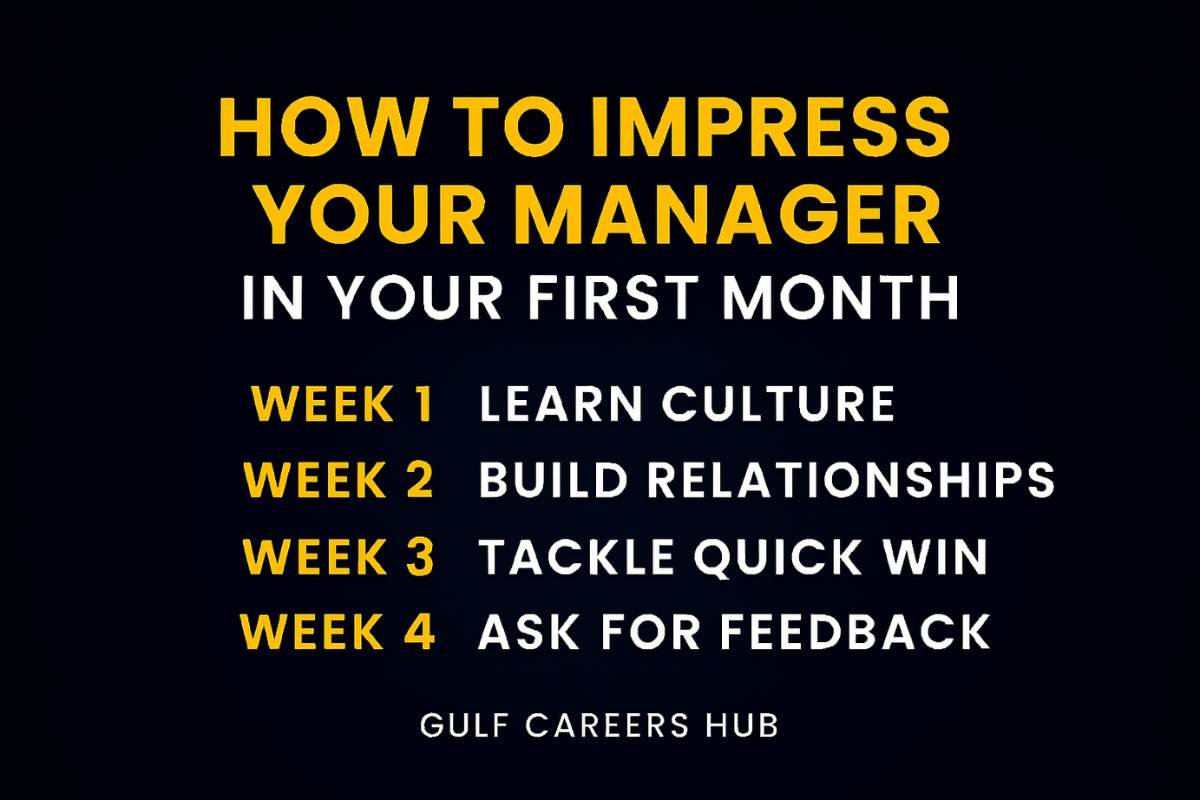
How to Impress Your Manager in Your First Month in the UAE – 2025 Guide

Starting a new job in the UAE is more than just learning the ropes — it’s about proving your value, adapting to a multicultural workplace, and earning your manager’s trust early. Whether you’ve joined a hospital in Abu Dhabi, a tech firm in Dubai, or a construction site in Sharjah, your first 30 days set the tone for your long-term success.

This guide offers practical, culturally aware strategies to help you stand out, build credibility, and become indispensable — all within your first month.

Week 1: Understand the Landscape Before You Act

1. Learn the Company Culture — Fast

The UAE workplace blends global standards with local customs. You’ll find Western-style reporting structures alongside Emirati values like respect, discretion, and hierarchy. Observe how people communicate, dress, and interact. Is the tone formal or relaxed? Are decisions centralized or collaborative?

Tip: Ask your manager or HR for a copy of the employee handbook or onboarding guide. It shows initiative and helps you avoid missteps.

2. Clarify Expectations Early

Don’t wait for your first performance review. Schedule a brief one-on-one with your manager to ask:

  • What are your top priorities for me this month?
  • How will success be measured?
  • Are there any quick wins I can focus on?

Why it works: It shows you’re proactive, goal-oriented, and serious about delivering value.

Week 2: Build Relationships and Visibility

3. Introduce Yourself Strategically

In multicultural UAE offices, relationship-building is key. Don’t just say “Hi” — share a bit about your background, role, and how you can support others. Ask about their work and listen actively.

Tip: Learn a few Arabic greetings like “Marhaba” (Hello) or “Shukran” (Thank you). It’s a small gesture that earns big respect.

4. Communicate Clearly and Often

Managers in the UAE appreciate regular updates, especially in fast-paced sectors like healthcare, logistics, or finance. Send weekly summaries of what you’ve accomplished, what’s in progress, and any blockers.

Why it works: It builds trust and shows you’re organized, accountable, and transparent.

5. Join Cross-Functional Conversations

If invited to meetings outside your department, attend. Ask thoughtful questions and offer insights when appropriate. It shows you’re invested in the company’s broader goals.

Tip: Don’t dominate — contribute strategically. UAE workplaces value humility and respect for hierarchy.

Week 3: Deliver Value and Solve Problems

6. Identify a Quick Win

Look for a small but meaningful problem you can solve — a broken process, a confusing report, or a missed opportunity. Fix it, document it, and share the result.

Example: You notice the HR onboarding checklist is outdated. You update it, align it with current policies, and present it to your manager.

Why it works: It proves you’re observant, resourceful, and action-oriented.

7. Show You Understand the Business

Don’t just do tasks — connect them to business outcomes. If you’re in finance, talk about cost savings. If you’re in marketing, mention engagement metrics. If you’re in operations, highlight efficiency.

Tip: Use phrases like “This will help reduce turnaround time by 20%” or “This aligns with our Q1 revenue goals.”

Week 4: Reflect, Refine, and Reinforce

8. Ask for Feedback Before It’s Offered

Schedule a short feedback session with your manager. Ask:

  • What am I doing well so far?
  • What should I improve or adjust?
  • How can I better support the team?

Why it works: It shows maturity, openness, and a commitment to growth.

9. Document Your Contributions

Keep a simple log of your achievements, challenges, and lessons learned. This will help you prepare for future reviews, promotions, or even internal transfers.

Tip: Use bullet points and metrics. Example: “Streamlined vendor onboarding process — reduced average approval time from 5 days to 2.”

10. Share Learnings with Others

If you’ve discovered a better way to do something, share it. Create a short guide, host a mini training, or offer to mentor a new hire.

Why it works: It positions you as a team player and a future leader.

🇦🇪 UAE-Specific Tips to Impress Your Manager

Respect Cultural Norms

  • Be punctual — time is respected in UAE business culture
  • Dress modestly and professionally
  • Avoid sensitive topics (religion, politics) unless invited
  • Observe Ramadan etiquette if working during the holy month

Embrace Diversity

UAE workplaces are incredibly multicultural. You may work with colleagues from India, Pakistan, Egypt, the Philippines, Europe, and more. Be inclusive, curious, and respectful of different work styles.

Use Tech Smartly

Many UAE companies use tools like Microsoft Teams, Zoho, SAP, or JISR. Learn the platforms quickly and use them to streamline communication and task tracking.

What Managers in the UAE Say They Value Most

Based on feedback from hiring managers across Dubai, Abu Dhabi, and Riyadh, here’s what they look for in new hires:

  • Reliability: Show up, follow through, and meet deadlines
  • Adaptability: Handle change and ambiguity with grace
  • Initiative: Don’t wait to be told — take action
  • Communication: Keep your manager informed, not surprised
  • Respect: Honor hierarchy, culture, and team dynamics

Final Thoughts: Your First Month Is Your Launchpad

The first 30 days aren’t about proving you’re perfect — they’re about proving you’re committed, coachable, and capable. If you listen well, act thoughtfully, and communicate clearly, you’ll earn your manager’s trust and set yourself up for long-term success in the UAE.

Whether you’re in a corporate tower in Dubai or a field office in Al Ain, the principles are the same: show up with purpose, deliver with precision, and grow with humility.

Post a Job Opening

Fill in the details below. Your job posting will be reviewed by our team.

Basic Information

Specify years of experience required

Location & Salary

Qualifications & Skills

Specify educational requirements
Separate skills with commas

Company Details

Job Details

Contact Information