Gulf Careers Hub

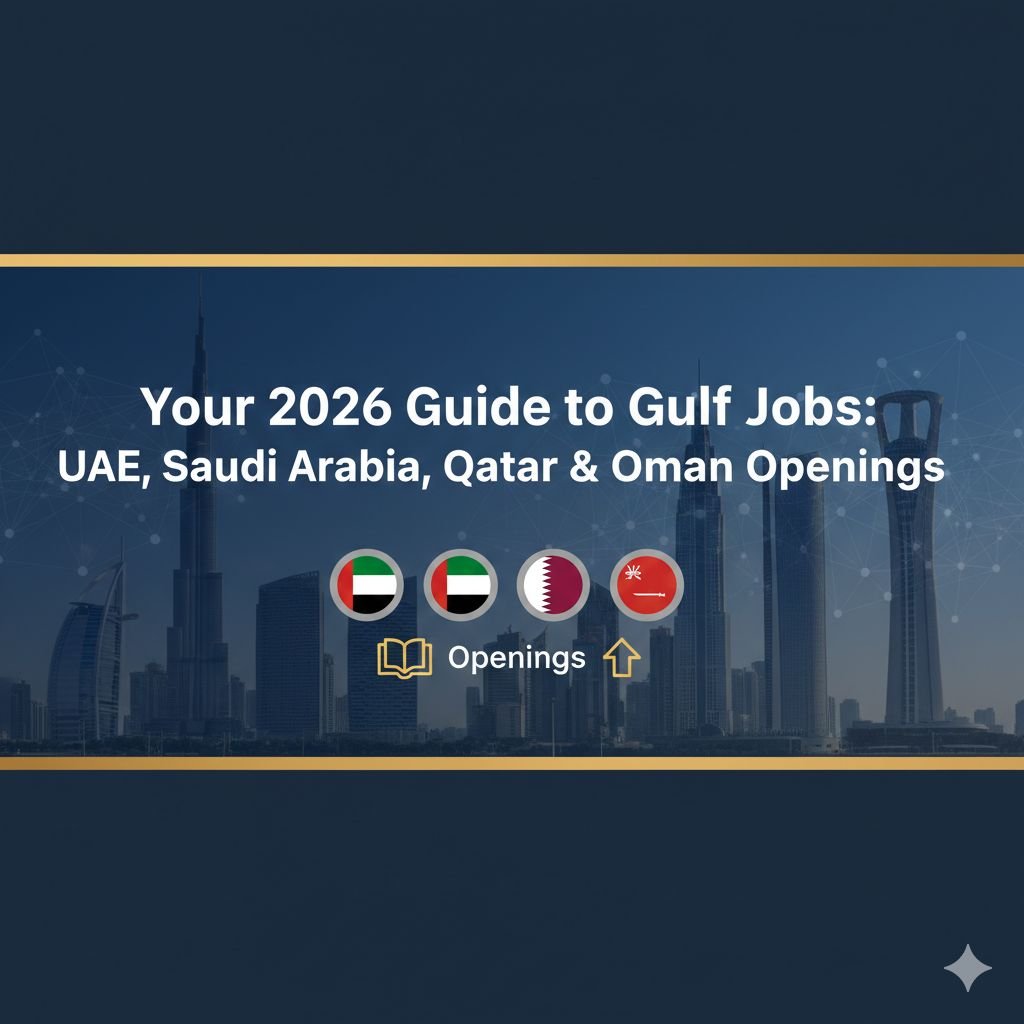
Your 2026 Guide to Gulf Jobs: UAE, Saudi Arabia, Qatar & Oman Openings

Gulf Jobs 2026 | Latest UAE, Saudi, Qatar & Oman Openings

If you’re eyeing a career move to the UAE, Saudi Arabia, Qatar, or Oman this year, you need current, reliable information. This guide consolidates the latest salary forecasts, in-demand sectors, hiring trends, and practical job-seeking strategies—all sourced from 2026 reports—to help you navigate the Gulf job market with confidence.

The Big Picture: Why the Gulf Job Market Is Booming in 2026

Let’s start with the fundamentals. The GCC economy is projected to grow at approximately 4.5% in 2026, driven by two powerful forces: the continued expansion of non-oil sectors and the rollback of OPEC+ production cuts . This isn’t just oil money recycling; it’s genuine economic diversification.

Saudi Arabia is leading the charge with projected average salary increases of 4.6% , the highest in the region . The Kingdom’s Vision 2030 agenda continues to drive massive infrastructure, technology, and tourism investments, creating hundreds of thousands of new roles.

Qatar and Oman follow closely, both forecasting 4.3% average salary growth . Qatar’s LNG sector expansion is gathering momentum, while Oman’s economic reform program is opening new opportunities across logistics, tourism, and renewable energy.

The UAE, with a forecasted 4.1% salary increase, remains the region’s most mature and diverse job market . Dubai and Abu Dhabi continue to attract global talent through world-class infrastructure, competitive tax-free salaries, and exceptional quality of life.

The 2026 Reality: What Job Seekers Need to Know

Here’s the honest truth: the Gulf job market in 2026 rewards strategy, specialization, and patience. According to the Hays GCC Salary Guide 2026, 66% of employers increased headcount in 2025, and hiring momentum remains strong . However, 90% of organizations report skills shortages, creating intense competition for qualified professionals .

Key Market Dynamics:

1. The Salary Paradox: While 58% of professionals received pay increases in 2025 (up from 51% in 2024), 60% feel their compensation doesn’t match their responsibilities . This disconnect is driving unprecedented workforce mobility.

2. The AI Revolution Is Here: 66% of professionals now use AI regularly at work . This isn’t future speculation—it’s current reality. Employers are actively seeking candidates who demonstrate AI literacy and practical application skills.

3. Talent Shortages Are Acute: Roles in data science, artificial intelligence, project management, engineering, software development, and specialized finance remain extremely difficult to fill . If you have expertise in these areas, you’re in the driver’s seat.

4. Nationalization Goals Are Real: Saudi Arabia’s Saudization and the UAE’s Emiratisation targets are not cosmetic. In the UAE, Emiratisation targets for skilled roles have increased to 10% , with 42% of companies planning to grow Emirati headcount in 2026 . In Saudi Arabia, 93% of employers already employ Saudi nationals, and 75% plan further increases this year .

Country-by-Country Breakdown: Where the Jobs Are

🇦🇪 United Arab Emirates: The Region’s Talent Hub

The UAE economy grew by roughly 4% in 2025 and is expected to accelerate to 4.5% in 2026 , driven primarily by non-oil sectors . Workforce growth has risen by 9% , and new business formations are up 14% .

Top Industries in Demand:

  • Technology, AI, and Automation: The UAE leads globally in AI hiring growth, with a 48% increase in 2024–25 
  • Cybersecurity and Data Analytics: Critical skills gap across banking, government, and enterprise
  • Finance and FinTech: DIFC now hosts over 1,500 AI, fintech, and innovation firms 
  • Healthcare: Ongoing expansion of world-class medical infrastructure
  • Engineering and Project Management: Driven by real estate and infrastructure pipelines
  • Sales, Retail, and E-commerce: Consumer spending remains strong
  • Logistics and Supply Chain: Dubai’s position as a global trade hub continues to strengthen

Salary Snapshot (Monthly, AED):

RoleSalary Range
Head of Wholesale Banking (EVP)110,000 – 240,000
CMO80,000 – 130,000
Regional Sales Director55,000 – 85,000
Compliance Head70,000 – 120,000
Senior Relationship Manager50,000 – 70,000
Marketing Manager30,000 – 65,000
Investment Banking Analyst32,000 – 45,000

Source: Korn Ferry UAE Salary Forecast 2026 

🇸🇦 Saudi Arabia: The Mega-Project Powerhouse

Saudi Arabia recorded estimated employment growth of 4.5% in 2025 , with long-term demand projecting hundreds of thousands of additional workers by 2030 . The replacement of the Kafala system with a contract-based framework has given 13 million foreign workers greater freedom and mobility .

Hot Sectors:

  • Giga-Projects: NEOM, Red Sea Project, Qiddiya, and Diriyah Gate continue massive hiring
  • Construction and Engineering: Project managers, commercial managers, design specialists
  • Technology and Digital Transformation: Government and private sector digitization
  • Tourism and Hospitality: Opening to international visitors creates thousands of roles
  • Renewable Energy: Saudi Green Initiative driving solar and wind projects
  • Healthcare: Expansion of medical cities and specialized facilities

Salary Outlook: Saudi leads the region with 4.6% projected average salary increases .

🇶🇦 Qatar: LNG Expansion Drives Growth

Qatar’s hiring grew at 0.5% in 2025, but significant workforce expansion from LNG projects is anticipated through 2026 . The North Field expansion project—one of the world’s largest natural gas developments—is creating thousands of direct and indirect roles.

Key Opportunities:

  • Oil & Gas Engineering: Process, mechanical, and safety engineers
  • Construction and Infrastructure: Post-World Cup development continues
  • Healthcare: Hamad Medical Corporation and Sidra Medicine expansion
  • Education and Research: Qatar Foundation and Education City
  • Hospitality and Tourism: Preparing for continued visitor growth

Salary Outlook: Projected 4.3% average increase .

🇴🇲 Oman: Steady Diversification

Oman’s job market is smaller but offers genuine opportunities for professionals seeking a balanced lifestyle. The country’s logistics, tourism, and renewable energy sectors are growing steadily under Vision 2040.

Growing Sectors:

  • Logistics: Duqm and Sohar port development
  • Tourism: Salalah and coastal resort expansion
  • Renewable Energy: Solar and wind projects
  • Fisheries and Food Processing: Strategic priority sectors
  • Mining: Mineral extraction and processing

Salary Outlook: Tied with Qatar at 4.3% projected average increase .

The Most In-Demand Roles Across the Gulf in 2026

Based on multiple 2026 reports, these roles face the most acute talent shortages:

1. Artificial Intelligence & Data Science

  • Data Scientists: 43% year-on-year hiring growth 
  • AI Engineers: 31% hiring increase 
  • AI Product Managers: 37% growth 
  • Business Analysts with AI implementation experience

2. Technology & Digital

  • Software Developers and Engineers
  • Cloud Architects and Infrastructure Specialists
  • Cybersecurity Analysts and Engineers
  • ERP Specialists (SAP, Oracle)
  • Digital Transformation Managers

3. Engineering & Project Management

  • Project Managers (PMP certified)
  • Commercial Managers
  • Design Managers
  • Planning and Scheduling Engineers
  • Quality Assurance/Quality Control Engineers

4. Finance & Accounting

  • Tax and Treasury Specialists
  • Financial Controllers
  • Internal Auditors
  • Investment Analysts (Private Equity, Venture Capital)
  • CFOs for scaling organizations

5. Sales & Marketing

  • Revenue-generating sales professionals
  • Digital Marketing Specialists
  • Brand Managers
  • Business Development Managers
  • E-commerce Directors

6. Healthcare

  • Specialized Consultants (all disciplines)
  • Nursing Managers
  • Allied Health Professionals
  • Healthcare Administrators

Salary Trends: What You Can Realistically Expect

UAE Banking & Finance (Monthly, AED) 

RoleSalary Range
Managing Director, Investment Banking100,000 – 180,000
Vice President, Private Equity65,000 – 90,000
Associate, Investment Banking45,000 – 65,000
Analyst, Venture Capital25,000 – 35,000
Chief Risk Officer85,000 – 180,000
Fund Accountant20,000 – 40,000

UAE Sales & Marketing (Monthly, AED) 

RoleSalary Range
CEO (Sales Organization)100,000 – 160,000
Chief Commercial Officer75,000 – 135,000
Regional Sales Director55,000 – 85,000
Marketing Director55,000 – 100,000
PR & Communications Manager20,000 – 65,000
Business Development Executive10,000 – 30,000

Important Reality Check

While these figures represent top-tier compensation, it’s essential to understand that over 30% of professionals in construction and real estate received no pay increase in 2025 . Salary growth across most roles is forecast between 0–5% . The market rewards specialization, not just presence.

The 2026 Job Seeker’s Playbook: How to Actually Get Hired

The days of blasting generic CVs across job boards are over. Here’s what works in 2026.

1. Understand How Gulf Hiring Works

The Gulf market operates differently from Europe or North America :

 Hiring is need-based and fast-paced. Companies hire when they have an immediate requirement, not for future pipelines.

 Immediate availability is prized. Candidates already in the UAE or Saudi Arabia, or those ready to relocate within weeks, have significant advantages.

 Clarity matters. Be explicit about your role, expected salary, visa status, and availability.

 Avoid agents asking for money. Legitimate recruiters never charge candidates .

2. Build a Region-Specific CV

Your CV must be tailored for the Gulf market :

  • Length: 2–3 pages maximum (not 1 page—Gulf recruiters expect detail)
  • Format: Clean, professional, no graphics, no emojis, no fancy templates
  • Photo: Still expected in the UAE and Saudi Arabia (professional headshot)
  • Must Include:
    • Nationality
    • Current location
    • Visa status (Visit/Employment/Outside UAE)
    • Current salary + expected salary
    • Availability/notice period
  • Content: Achievement-driven bullets with numbers and measurable results
  • Keywords: Mirror the language from job descriptions—ATS systems filter ruthlessly

3. Optimize Your LinkedIn Presence

LinkedIn is not optional in the Gulf. It’s your primary job search tool .

Headline: Must include your role + years of experience + region preference.
*Example: “Senior Project Manager | 12+ Years GCC Experience | PMP Certified | Based in Dubai”*

About Section: Focus on value, not biography. What problems do you solve? What results have you delivered?

Experience: Write in achievement-driven bullets. Quantify everything.

Skills: Add skills that match UAE job descriptions. Get endorsements.

Activity: Engage with UAE and Saudi recruiters, companies, and industry groups.

Open to Work: Enable this feature—recruiters actively search for it.

4. Use the Right Job Portals

Not all platforms work equally well in the Gulf :

Most Effective:

  • LinkedIn Jobs
  • Bayt.com
  • GulfTalent
  • NaukriGulf
  • Company career pages (direct applications)

Recruitment Agencies (Register with all):

  • Hays
  • Michael Page
  • Robert Half
  • Nadia Global
  • Cooper Fitch
  • Charterhouse

Pro Tip: Set job alerts and apply within 24 hours of posting. Early applications receive disproportionate attention .

5. Network the Gulf Way

Networking isn’t optional—it’s how the market operates .

Effective Strategies:

  • Attend industry exhibitions and conferences in Dubai, Abu Dhabi, and Riyadh
  • Join LinkedIn groups focused on UAE and Saudi jobs
  • Ask for introductions, not direct job requests
  • Participate in professional training courses—they’re networking opportunities
  • Connect with recruiters professionally (no mass messaging)

6. Understand Your Visa Options

Visa clarity reduces employer hesitation :

  • Jobseeker Visa: Self-sponsored, valid 3–6 months, allows entry to interview
  • Freelance Permit: Available through approved free zones
  • Golden Visa: For highly skilled professionals, investors, specialists (10-year renewable)
  • Internal Transfer: Move with your current employer to a Gulf office

Always state your visa status clearly on your CV and LinkedIn .

7. Prepare for Modern Gulf Interviews

The interview process typically involves :

  1. Initial Screening: Recruiter call (phone/ Zoom) – 30 minutes
  2. Hiring Manager Interview: Technical and experience deep-dive
  3. Panel Interview or Case Study: For senior or specialized roles

Common Questions:

  • Why do you want to work in Dubai/Riyadh/Doha now?
  • What value will you bring in your first 90 days?
  • What is your visa status and when can you start?
  • What are your salary expectations (monthly, all-inclusive)?

Pro Tip: Research the company thoroughly before applying. 47% of candidates fail because they don’t know enough about the organization .

8. Set Realistic Timelines

Job searching in the Gulf requires patience :

  • Job search duration: 2–5 months typical
  • Interview process: 3–6 weeks
  • Offer to start date: 2–4 weeks

Plan financially. Ensure you have savings to support yourself during the search period.

Critical Challenges to Navigate in 2026

The AI Disruption

43% of companies plan to replace some roles with AI , targeting operations, back-office positions (58%), and entry-level roles (37%) . This isn’t a future threat—it’s happening now. Upskilling is not optional.

Workload and Burnout

Across the UAE and Saudi Arabia, 32% to 44% of employers report employees experiencing high workloads or burnout . The pace of giga-project delivery and digital transformation is intense. Candidates should probe work-life balance during interviews.

Stagnant Pay for Many

While headlines focus on 4-5% average increases, over 30% of professionals received no pay increase in 2025 98% of professionals are open to new roles in 2026, reflecting both opportunity and frustration .

Your Action Plan: How to Approach the Gulf Job Market in 2026

Step 1: Audit Your Skills
Are you in a high-demand specialization (AI, data, project management, engineering, specialized finance)? If not, consider certification or upskilling before applying.

Step 2: Prepare Your Documentation
Create a Gulf-specific CV. Update your LinkedIn headline, about section, and experience. Get a professional headshot.

Step 3: Research Your Target Market
Choose your primary country focus. Each Gulf state has different dynamics, salary levels, and cultural expectations.

Step 4: Register with Recruitment Agencies
Submit your CV to Hays, Michael Page, Robert Half, Nadia Global, Cooper Fitch, and sector-specific recruiters.

Step 5: Apply Strategically
Target 5-10 relevant jobs daily. Customize each CV and cover letter. Track applications in a spreadsheet.

Step 6: Network Intentionally
Connect with Gulf-based professionals in your industry. Attend virtual and in-person events. Seek informational interviews.

Step 7: Prepare for Interviews
Research companies thoroughly. Prepare specific examples of achievements. Practice answering “Why the Gulf now?”

Step 8: Be Patient and Persistent
The Gulf job market rewards consistency. Keep applying, keep networking, keep improving your approach.

Conclusion: The Gulf Still Rewards Excellence

The Gulf job market in 2026 is more competitive, more sophisticated, and more selective than ever before. But for qualified professionals who understand the market dynamics and approach their search strategically, the opportunities remain exceptional.

Tax-free salaries, world-class infrastructure, multicultural work environments, and proximity to emerging markets continue to make the UAE, Saudi Arabia, Qatar, and Oman compelling career destinations. The difference today is that intention alone is insufficient. Strategy, preparation, and patience separate successful candidates from hopeful applicants.

The Gulf doesn’t promise easy jobs. It promises rewarding careers for those who earn them.


Frequently Asked Questions (FAQs)

1. Which Gulf country offers the highest salaries in 2026?

Saudi Arabia is projected to offer the highest average salary increase at 4.6% , followed by Qatar and Oman at 4.3% , and the UAE at 4.1% . However, “highest salary” depends on your industry and role. The UAE offers the widest range of opportunities across diverse sectors, while Saudi Arabia offers premium compensation for giga-project and specialized roles.

2. Is it easier to find a job in Dubai or Abu Dhabi?

Neither is “easy”—both require strategic effort. Dubai’s private sector is larger and more diverse, with more roles in technology, sales, marketing, and SMEs. Abu Dhabi offers strong opportunities in government, semi-government entities, energy, and finance. Your chances depend on your industry, specialization, and whether you’re already in the UAE. Candidates already in-country have significant advantages.

3. Can I get a Gulf job while living outside the region?

Yes, but it’s harder. Many employers prefer candidates already in the UAE or Saudi Arabia due to faster onboarding. Successful strategies include: applying for roles with global companies and seeking internal transfer; securing a jobseeker visa to enter and interview locally; working with recruitment agencies that specialize in international placement; and demonstrating exceptional, hard-to-find skills that justify relocation.

4. What are the red flags to avoid when applying for Gulf jobs?

Never pay an agent or recruiter for job placement —legitimate agencies are paid by employers . Avoid vague job descriptions with unrealistic promises. Verify company credentials through LinkedIn and official registrations. Be cautious of offers that seem too good to be true. Always clarify visa terms, salary inclusions (housing, transport, flights), and contract duration before accepting.

5. How important is Arabic language for Gulf jobs?

For most private sector expatriate roles, Arabic is not required but is increasingly valued. For customer-facing roles, government positions, and certain industries (media, legal, HR), Arabic fluency is often mandatory or strongly preferred. For technical, engineering, IT, and specialist finance roles, English proficiency is typically sufficient. Demonstrating even basic Arabic language skills can differentiate you from other candidates.
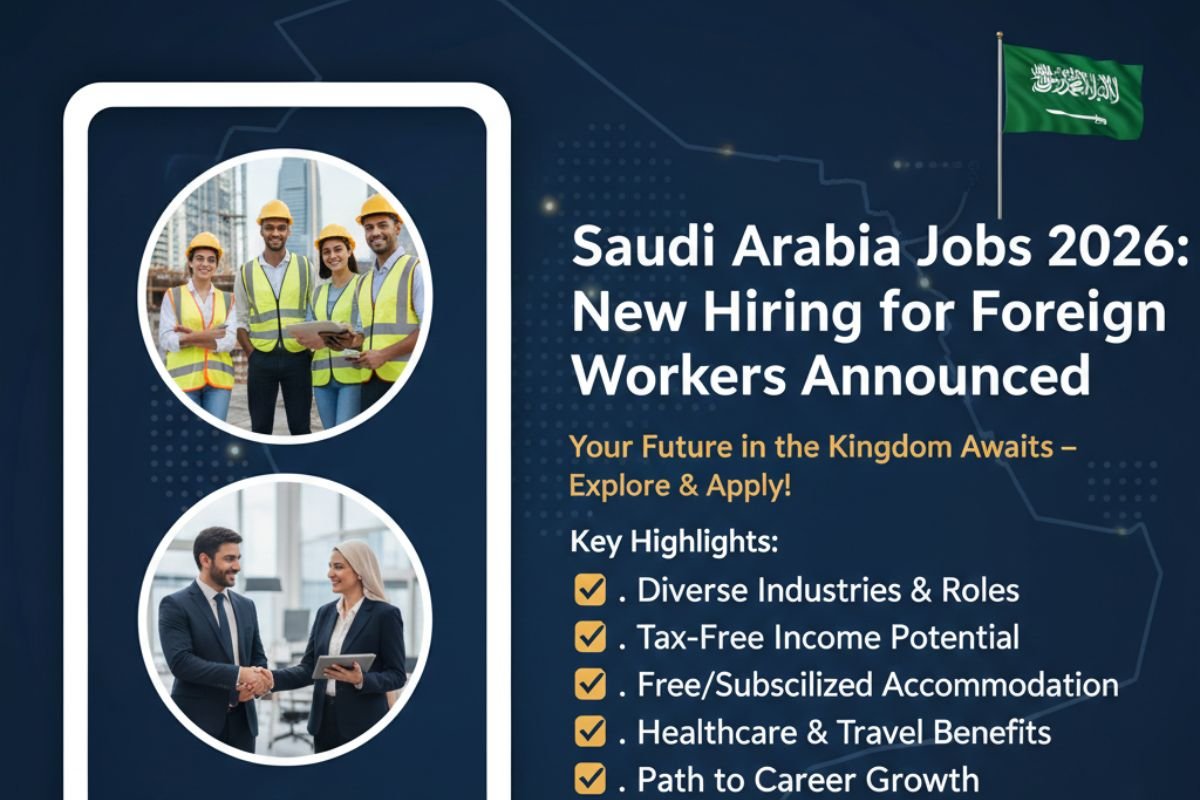
Saudi Arabia Jobs 2026: New Hiring for Foreign Workers Announced

Saudi Arabia Jobs 2026: New Hiring for Foreign Workers Announced

The 2026 Hiring Boom: Your Gateway to a Saudi Career

As Saudi Arabia charges forward with the execution phase of its historic Vision 2030, the job market for foreign workers is entering its most dynamic and opportunity-rich period yet. For skilled professionals worldwide, 2026 represents a pivotal window—a time of new hiring announcements for foreign workers across groundbreaking sectors. The Kingdom is not just building infrastructure; it’s building entire new industries, and it needs global talent to make it happen.

Why 2026 is a Landmark Year for Foreign Workers in Saudi Arabia

Vision 2030 has moved decisively from blueprint to construction site. The giga-projects that once captivated the world’s imagination are now active, multi-billion-dollar employment engines. This transition creates two simultaneous demands:

  1. Construction & Engineering Expertise: To physically build NEOM, The Red Sea Project, Qiddiya, and Diriyah.
  2. Operational & Knowledge Talent: To run the advanced hospitals, resorts, tech hubs, and financial centers within these projects once they open.

The Saudi government and private sector are launching coordinated international recruitment campaigns to meet this unprecedented need, making 2026 the prime time for foreign professionals to explore Saudi careers.

Top Sectors Announcing New Hiring for Foreign Workers

1. Giga-Project Construction & Engineering

The physical creation of Vision 2030’s landmarks requires tens of thousands of skilled professionals.

  • New Hiring Focus: Senior Project Managers, Construction Directors, Civil & Structural Engineers, MEP (Mechanical, Electrical, Plumbing) Managers, BIM (Building Information Modeling) Specialists, and Quantity Surveyors.
  • Key Projects: NEOM (including THE LINE, Oxagon), The Red Sea GlobalQiddiya (entertainment city), Diriyah GateRoshn (housing).
  • Action Point: Target the websites of the principal developers and the international engineering consultancies and contractors they have partnered with (e.g., Bechtel, Jacobs, Dar Al-Handasah, Samsung C&T).

2. Tourism, Hospitality & Leisure

With the first destinations opening and a target of 100 million annual visitors by 2030, the need for world-class hospitality talent is exploding.

  • New Hiring Focus: Hotel General Managers, Executive Chefs, Guest Experience Directors, Tourism Development Managers, Luxury Retail Managers, and Entertainment Facility Operators.
  • Key Projects: The Red Sea (luxury resorts), Sindalah Island (NEOM), Diriyah cultural hub, Riyadh Season events.
  • Action Point: Monitor career pages of global hotel chains (Four Seasons, Ritz-Carlton, Marriott) expanding in KSA, and the operating companies of the new destinations.

3. Technology & Digital Transformation

Saudi Arabia is building a digital economy from the ground up, with a national priority on tech sovereignty.

  • New Hiring Focus: Cybersecurity Architects, AI/Machine Learning Engineers, Data Scientists, Cloud Solutions Architects, Software Developers, and IoT Specialists.
  • Key Hubs: NEOM’s advanced tech ecosystem, Riyadh’s tech valley, King Abdullah Financial District (KAFD).
  • Action Point: Explore opportunities with the Ministry of Communications and IT (MCIT), Saudi tech startups (many funded by PIF), and global tech giants (Google, Microsoft, Oracle) establishing major regional hubs in Riyadh.

4. Advanced Manufacturing & Logistics

As part of diversifying beyond oil, Saudi Arabia is becoming a regional hub for advanced industries and global supply chains.

  • New Hiring Focus: Industrial Engineers, Supply Chain Directors, Automotive Engineers (especially for EV), Renewable Energy Manufacturing Experts, and Quality Assurance Managers.
  • Key Initiatives: EV manufacturing (Ceer, Lucid Motors factory), Solar panel productionPharmaceuticals manufacturingLogistics hubs at major ports.
  • Action Point: Research companies within Economic Cities (like KAEC) and Special Economic Zones, and major logistics firms (Saudi Logistics, Aramco’s supply chain).

5. Healthcare & Life Sciences

A rapidly growing population and a drive for medical tourism excellence are fueling massive investment in healthcare infrastructure.

  • New Hiring Focus: Consultant Physicians (all specializations), Specialist Surgeons, Registered Nurses (ICU, Oncology, Cardiology), Hospital Administrators, and Medical Researchers.
  • Key Locations: Expansion of King Faisal Specialist Hospital, new medical complexes in NEOM and The Red Sea, and network growth of private hospital groups.
  • Action Point: Check career portals of the Saudi Ministry of Health, major private hospital operators (Dr. Sulaiman Al-Habib, Dallah Health), and new specialist medical centers.

The 2026 Saudi Work Visa & Iqama Process: Streamlined for Talent

Understanding the process is key to a smooth transition. It remains employer-sponsored but is increasingly digital.

  1. The Job Offer: You must secure a formal offer from a Saudi company licensed to hire expatriates.
  2. Work Permit (Qiwa): Your employer obtains your work permit through the Ministry of Human Resources’ Qiwa platform.
  3. Document Attestation (Critical): You must attest your educational and professional certificates via your home country’s Foreign Ministry and the Saudi EmbassyStart this immediately upon receiving an offer.
  4. Entry Visa & Arrival: Your employer issues an entry visa. You enter KSA and undergo a medical test.
  5. Iqama (Residence Permit): Your employer processes your Iqama, your official ID card for living and working.

New for 2026: Continued digitization on the Absher and Qiwa platforms makes tracking your application easier. For top-tier talent, the Premium Residency (Privileged Iqama) offers a long-term, more flexible residency option.

How to Find These New Job Announcements: A Proactive Strategy

  1. Target Company Career Pages Directly: This is the most effective method. Identify the top 20-30 companies leading projects in your field and monitor their “Careers” sections weekly.
  2. Leverage LinkedIn Strategically:
    • Set your location to “Riyadh, Saudi Arabia” or “NEOM”.
    • Follow key companies and giga-projects.
    • Use hashtags like #HiringSaudi, #JobsKSA, #Vision2030Careers.
    • Turn on “Open to Work” for recruiters.
  3. Partner with Specialized Recruitment Agencies: Reputable international agencies (e.g., Michael Page, Hays, Brunel, Charterhouse) have dedicated desks for Saudi Arabia and receive direct mandates from companies.
  4. Attend Virtual Saudi Career Fairs: Many are organized by the Saudi Ministry of Human Resources and major chambers of commerce to connect global talent with employers.

Preparing for the Saudi Job Market: Cultural & Professional Readiness

  • Cultural Adaptability: Demonstrate respect for local customs and a willingness to adapt. Research Saudi business etiquette.
  • Long-Term Mindset: Employers seek candidates committed to the long-term journey of Vision 2030. Express this in interviews.
  • Competitive Compensation: Packages include tax-free salary, housing allowance, education for children, annual flights, and healthcare. Negotiate your total package.

Conclusion: Your Role in Building the Future

The new hiring for foreign workers announced for 2026 is more than just job vacancies; it’s an invitation to participate in one of the most ambitious national transformations of the 21st century. For engineers, tech experts, healthcare professionals, and hospitality leaders, Saudi Arabia offers a unique combination of career-defining projects, competitive remuneration, and the chance to leave a tangible legacy.

By strategically targeting the high-growth sectors, meticulously preparing your application, and understanding the streamlined visa process, you can successfully secure your place in the exciting next chapter of Saudi Arabia’s story. The future is being built now—ensure you have a role in it.


5 Frequently Asked Questions (FAQs)

1. Is it true that Saudization (Nitaqat) will reduce jobs for foreigners in 2026?

Saudization prioritizes Saudi nationals in the workforce, but it actually increases demand for specialized foreign expertise. The policy focuses on replacing expatriates in more general or administrative roles. For the highly skilled, niche positions required to build and operate giga-projects and new industries, foreign hiring is not just ongoing—it’s accelerating. Your specialized skill is the key.

2. What is the minimum salary required to get a Saudi work visa in 2026?

There is no universal minimum salary set by the government for a standard work visa. However, the ability to sponsor family members (spouse and children) requires meeting a minimum salary threshold, which is often set by the employer’s corporate policy (typically around SAR 3,500 – 5,000 per month). For the Premium Residency Visa, specific higher salary brackets (e.g., SAR 14,000-16,000+ per month) are one of the eligibility criteria.

3. Can I switch jobs (change my sponsor) in Saudi Arabia easily in 2026?

Labor reforms have made job mobility easier. Under current law, you can transfer your sponsorship to a new employer after completing one year of service with your current sponsor. The process requires following specific procedures, and a No Objection Certificate (NOC) from your current employer, while no longer always mandatory, can still facilitate a smoother transfer. Always check the latest regulations on the Ministry of Human Resources website.

4. Do I need to speak Arabic to work in Saudi Arabia?

For most professional, private-sector roles in international companies or giga-projects, Arabic is not a requirement. The business language is often English. However, learning basic Arabic is highly recommended and respected, as it greatly aids daily life, cultural integration, and can be a significant advantage for client-facing roles or positions within government-linked entities.

5. Are there opportunities for remote work with Saudi companies?

While the predominant model is on-site due to the project-based nature of the work, remote and hybrid roles are emerging, particularly in the technology, consulting, and education sectors. Many global consultancies working with Saudi entities have teams serving the account from abroad. However, for roles directly involved in the core operations, construction, or management within the Kingdom, physical presence is generally required.

Success Story: How I Landed My Dream UAE Job Without an Agent

How I Got a UAE Job Without Agent (Real Story)

The glimmering skyline of Dubai had always been a beacon on my career horizon. Like countless professionals from South Asia, I dreamed of building a life and career in the UAE—a land of tax-free opportunity, unparalleled growth, and cultural dynamism. However, the path was shrouded in warnings about exorbitant agent fees, complex visa processes, and worst of all, pervasive scams. Determined to take control of my destiny, I made a pivotal decision: I would secure a UAE job entirely on my own, without a recruitment agent. This is the story of my six-month journey from hopeful applicant to a proud Dubai resident working in a leading tech firm.

The Starting Point: A Mix of Ambition and Apprehension

My background was in digital marketing, with eight years of experience split between multinational agencies and in-house roles in my home country. While my CV was strong, the Gulf market felt like a different planet. The common narrative was that you needed an agent to navigate the hidden job market and “manage” the visa process. The quotes I received from agents were staggering—often demanding a fee equivalent to one or two months of my future salary. More concerning were the horror stories from friends who had paid but received fake offers or radio silence.

I decided the risk and cost were too high. In January 2023, I launched “Project Dubai: Direct Hire.” My mantra was simple: If my skills were truly valuable, I should be able to sell them directly to an employer.

Phase 1: The Strategic Foundation (Months 1-2)

I knew a generic approach would fail. The Gulf market receives thousands of applications daily. I had to be strategic.

Step 1: The Gulf-Specific CV Overhaul
My first act was to bury my old CV. I created a new one tailored for UAE recruiters:

  • Format: Clean, two-page, professional. No photo, no personal details (age, marital status).
  • Headline: “Senior Digital Marketing Manager | Driving Growth in B2B SaaS & E-commerce | Seeking Role in Dubai, UAE.”
  • Professional Summary: A powerful three-line pitch highlighting my years of experience, key achievements (with metrics: “+150% lead growth,” “-30% CAC”), and my clear objective.
  • Achievement-Oriented Bullets: Every point under my work experience started with a verb and ended with a number. I translated my local brand experience into universal digital KPIs.
  • Skills Section: I front-loaded keywords: “SEO/SEA,” “Google Analytics 4,” “Marketing Automation (HubSpot, Marketo),” “CRM Strategy.”

Step 2: The LinkedIn Transformation
I treated my LinkedIn profile as my primary digital storefront.

  • I updated my headline and summary to mirror my CV.
  • I changed my location to “Dubai, United Arab Emirates” and turned on the “Open to Work” feature (visible only to recruiters).
  • I began posting weekly commentary on global marketing trends, tagging articles from Gulf-based publications like Gulf Marketing Review.
  • I meticulously followed the LinkedIn pages of my target companies: major retail conglomerates, tech startups from Dubai Internet City, and hospitality groups.

Step 3: Target List Creation
I avoided the spray-and-pray method. I researched and built an Excel sheet of 50 target companies. They were a mix:

  • Homegrown Giants: Like Emirates, Emaar, and Chalhoub Group.
  • Regional HQs of Multinationals: Such as Google MENA, Amazon.ae, and Meta.
  • High-Growth Tech Startups: I scoured platforms like Wamda and MAGNiTT for funded startups in Dubai.

Phase 2: The Active Hunt & First Hurdles (Months 3-4)

With my materials ready, I began applying in early March.

The Application Process:

  • Platform of Choice: LinkedIn Jobs was my primary weapon. I used filters for “Marketing” and “Dubai.” I also set up daily alerts on Bayt.com and GulfTalent.
  • Direct Career Pages: For my top 20 companies, I went directly to their “Careers” page and applied, even if the same role was on LinkedIn.
  • The Cover Letter Gambit: For each application, I wrote a 4-5 line cover note in the email/LinkedIn message. It was not a full letter but a hook: “Dear [Hiring Manager], My 8 years of experience scaling digital revenue for B2B brands aligns directly with your need for a Growth Marketing Lead, as seen in your job ad. I have specific ideas for market penetration in the GCC, which I’d welcome the chance to discuss.”

The Initial Silence & Learning:
April was tough. Out of ~70 applications, I received only 3 automated rejections. The silence was deafening. I realized two things:

  1. My applications were likely getting lost in the ATS (Applicant Tracking System) of large firms.
  2. I was competing during a slower period (just before Ramadan).

I doubled down on networking. I started connecting with Marketing Directors and Talent Acquisition Specialists at my target companies on LinkedIn. My connection request was never generic: “Hi [Name], I’ve been following [Company]’s work in [specific campaign/area] and am deeply impressed. As a fellow digital marketer focused on the GCC, I’d be grateful to connect.” A 10% connection rate felt like a victory.

Phase 3: The Breakthrough & Interview Marathon (Month 5)

In mid-May, the momentum shifted. Ramadan had ended, and hiring managers were back.

The First Interview Call:
I received a LinkedIn message from an in-house recruiter at a well-known Dubai-based e-commerce platform. They had found my profile via search. The first call was a 30-minute screening. The recruiter was pleasantly surprised I was applying directly and asked pointed questions about my visa status. I was transparent: “I require employer-sponsored work visa, and I have already begun the process of attestation for my documents to ensure a swift transition should we move forward.” This professionalism scored points.

Over the next two weeks, I had a total of four interviews with this company:

  1. Recruiter Screening
  2. Hiring Manager (Head of Marketing) – A deep dive into my strategic approach.
  3. Case Study Presentation – I was given 48 hours to prepare a go-to-market plan for a new product category in KSA.
  4. Final round with the Director of Commercial – A culture and values fit discussion.

Parallel Tracks:
While this process unfolded, two other applications also moved to first-round interviews—one with a fintech startup and another with a consulting firm. Having multiple irons in the fire boosted my confidence immensely.

Phase 4: The Offer, Visa, and Relocation (Month 6)

In early June, the e-commerce company made an offer. The package was competitive: a tax-free monthly salary, a generous housing allowance, annual flight tickets, and health insurance. Crucially, they covered all visa processing costs.

The Visa Process (My Direct Experience):

  1. Signed Contract: I signed and returned the digital employment contract.
  2. Document Attestation: While the employer initiated the work permit, I simultaneously used a reliable attestation service in my home country. My degrees were attested by my Foreign Ministry and the UAE Embassy. This took 3 weeks.
  3. Entry Permit: The company’s PRO sent me the electronic Entry Permit via email.
  4. Visa Stamping: I booked an appointment at the VFS Global center (the UAE’s visa service partner) in my city. Submitted my attested documents, passport, and permit. Received my passport back with the Employment Visa sticker in 5 working days.
  5. The Move & Final Steps: I booked my flight (reimbursed later). Within a week of landing, I completed my medical test at an authorized center in Dubai. Two weeks later, I had my Emirates ID in hand. The company’s HR guided me at every step; it was seamless because my documents were perfect.

Key Takeaways & Lessons for Your Journey

  1. The Agent is Not a Gatekeeper: The job market is transparent for skilled professionals. Companies want the best talent, not the talent that came through a paid middleman.
  2. Your Online Profile is Your Agent: A polished, active, and keyword-optimized LinkedIn profile is the single most powerful tool. Recruiters do search.
  3. Document Readiness is Non-Negotiable: Starting attestation early signals supreme preparedness to employers and slashes weeks off your start date.
  4. Persistence and Patience are Currency: The process takes 4-6 months minimum. You must manage emotions and maintain a steady, professional output.
  5. Transparency Builds Trust: Being upfront about visa needs and showing you understand the process makes you a lower-risk, more attractive hire.

Conclusion: The Power of Self-Reliance

Today, as I look out from my Dubai Marina apartment towards the Burj Khalifa, the journey feels surreal. I didn’t just save the equivalent of a month’s salary in agent fees; I gained something far more valuable: the confidence that I navigated one of the world’s most competitive job markets on my own merit.

The path to a Gulf job without an agent is not a hidden secret—it’s a clear, professional pathway built on preparation, strategy, and the courage to present your value directly. If you have the skills, the will to prepare meticulously, and the patience to persist, the skyline can be yours too.


Frequently Asked Questions (FAQs)

1. Wasn’t it risky to start document attestation before having a visa?

It was a calculated risk, but one based on strong signals (advanced interview stages). More importantly, you can and should start the initial stages of attestation (notarization, home country Foreign Ministry attestation) as soon as you begin your serious job search. The final step (UAE Embassy attestation) requires an offer or visa paper, but having the first steps done saves 2-3 weeks. It also demonstrates remarkable initiative to a potential employer.

2. How did you handle the question “Are you in Dubai currently?” in interviews?

I was always honest. My response was: “I am currently based in [Home Country] and applying remotely. I understand the full visa sponsorship process and am 100% committed to relocating upon receiving an offer. My documents are in order for a swift transition.” This showed I was serious and had done my homework. Many companies are adept at remote hiring for overseas talent.

3. What was the biggest challenge you faced during the direct application process?

The total silence after the initial application wave was the biggest psychological challenge. It’s easy to feel your CV is disappearing into a void. Overcoming this required shifting my mindset from a passive applicant to an active networker and content creator. Engaging with industry content and connecting with professionals made the wait feel productive and kept me visible.

4. Did you ever feel pressured to just use an agent to speed things up?

Absolutely. During the quiet weeks of April, doubts crept in. Scrolling through forums filled with agent advertisements made me question my strategy. However, speaking with a few friends who had succeeded directly (and some who had been scammed by agents) reaffirmed my resolve. I viewed the time invested as an alternative “payment”—instead of money, I was paying with research and effort.

5. What is your one piece of advice for someone starting this journey today?

Invest a week, before you even apply, in perfecting your LinkedIn profile and CV for the Gulf market. This is not a minor tweak. Research the exact job titles used in the UAE for your role, identify the key skills in demand, and mirror that language precisely. This foundational step will make every application you submit 10x more effective. Your profile is your 24/7 representative; make it impossible for a recruiter to scroll past.

Jobs Hiring Foreigners Without IELTS 2026:

Jobs Hiring Foreigners Without IELTS

For skilled professionals worldwide, the International English Language Testing System (IELTS) can sometimes feel like a gatekeeper to international career opportunities. The good news is that the global job market in 2026 is evolving, with many employers and countries prioritizing skills and experience over standardized language test scores. While English proficiency remains crucial for many roles, there are legitimate pathways and specific job markets where you can secure a position abroad without presenting an IELTS certificate.

Understanding the “No IELTS” Pathway: The Key Exceptions

The requirement for IELTS is typically tied to immigration and visa processes, not necessarily the employer’s hiring criteria. The “no IELTS” route usually applies in these scenarios:

  1. English-Speaking Country Nationals: Citizens from majority English-speaking countries (e.g., USA, UK, Canada, Australia, New Zealand, Ireland) are often exempt.
  2. Graduates from English-Medium Institutions: If you hold a degree where the primary language of instruction was English, you can often provide your degree certificate and transcripts as proof, bypassing IELTS.
  3. Prior Work Experience in an English-Speaking Environment: Significant professional experience in a role where English was the working language can sometimes be accepted.
  4. Country-Specific Alternative Tests: Some countries accept other tests like TOEFL, PTE Academic, or Duolingo English Test.
  5. Skill-Based & Shortage Occupation Visas: For certain high-demand roles, countries may relax language requirements to attract talent.

Top Destinations with Flexible Language Requirements (2026 Focus)

1. The Gulf Cooperation Council (GCC) Countries

(UAE, Saudi Arabia, Qatar, Kuwait, Oman, Bahrain)

  • Policy: English is the primary business language in the private sector. IELTS is almost never required for a work visa. Employers assess your English proficiency directly during the interview.
  • In-Demand Sectors: Engineering, Construction, Healthcare, IT, Finance, Hospitality.
  • Strategy: Your CV, cover letter, and interview performance are your “test.” Focus on demonstrating clear, professional communication skills during the hiring process.

2. Germany

  • Policy: Germany has a high demand for skilled workers, especially in tech and engineering. For the EU Blue Card (for highly qualified non-EU workers), you typically need to prove German OR English proficiency. For English, this can often be demonstrated with a university degree taught in English or work experience in an English-speaking role. Many tech companies (e.g., in Berlin, Munich) operate in English.
  • In-Demand Sectors: Software Development, Mechanical/Automotive Engineering, Nursing, IT Consulting.
  • Strategy: Target multinational companies and startups with English as their corporate language. The German Federal Employment Agency’s “Make it in Germany” portal lists opportunities.

3. The Netherlands

  • Policy: Similar to Germany, the Dutch are highly proficient in English. For the Highly Skilled Migrant Visa, the employer is the sponsor, and language requirements are often assessed by the company. Many companies, especially in tech, agri-tech, and logistics, use English as the working language.
  • In-Demand Sectors: IT, Engineering, Agriculture Technology, Logistics, Finance.
  • Strategy: Look for roles at major multinationals (Philips, ASML, Shell) and scale-ups in Amsterdam, Rotterdam, and Eindhoven.

4. Czech Republic & Poland (Central Europe)

  • Policy: For local hires, the local language is key. However, there is a growing segment of IT and shared services centers (for finance, tech support) that operate entirely in English to serve European markets. These companies often sponsor visas and do not require Czech or Polish language skills.
  • In-Demand Sectors: IT Development, Cybersecurity, Financial Shared Services, BPO (Business Process Outsourcing).
  • Strategy: Target international corporations with regional hubs in Prague, Brno, Warsaw, or Krakow.

5. Portugal

  • Policy: Portugal has been actively attracting digital nomads and tech talent. While Portuguese is the official language, many tech startups and IT companies in Lisbon and Porto work in English. The D7 Passive Income/Digital Nomad Visa and work visas for tech roles may prioritize contracts and professional background over formal language tests.
  • In-Demand Sectors: Web Development, Digital Marketing, Tourism, Tech Startups.
  • Strategy: Explore Portugal’s thriving startup ecosystem and remote work-friendly companies.

High-Demand Job Sectors Where English Proficiency is Assessed Directly (Not via IELTS)

In these fields, your ability to communicate professionally in English is evaluated through your application and interviews.

1. Information Technology & Software Development

  • Why No IELTS Often Works: Coding languages are universal. Tech interviews focus on technical assessments, problem-solving, and system design. Your ability to discuss complex topics in English during the interview is the key test.
  • Job Titles: Software Engineer, DevOps Engineer, Data Analyst, UX/UI Designer.

2. Engineering & Construction

  • Why No IELTS Often Works: Especially in the GCC and on international projects, the focus is on technical qualifications, certifications (PMP, PE), and experience with specific standards or machinery. Site communication is often practical and project-specific.
  • Job Titles: Project Manager, Civil Engineer, Mechanical Engineer, QA/QC Inspector.

3. Healthcare (with Important Caveats)

  • Why It’s Complex: For roles like doctors and nurses, patient safety is paramount. Countries like the UK, Ireland, Australia, and New Zealand have strict, non-negotiable English language requirements for professional registration (often IELTS or OET). However, some Gulf countries may accept a different standard or assess language skills during the licensure process (e.g., dataflow and prometric exams include communication assessment).
  • Verdict: Check the specific healthcare regulatory body (e.g., NMC for UK, DHA for Dubai) for their exact language requirements. It is rarely waived.

4. Hospitality & Cruise Lines

  • Why No IELTS Often Works: For hotel chains, resorts, and cruise lines (e.g., Royal Caribbean, Carnival), the hiring process includes direct spoken English assessments. They value customer service experience and personality as much as a test score.
  • Job Titles: Hotel Operations Manager, Chef, Cruise Staff, Sales Executive.

How to Prove Your English Proficiency Without an IELTS Certificate

  1. Leverage Your Educational Background: If you studied in English, have your university provide a medium of instruction letter.
  2. Highlight Professional Experience: Detail on your CV roles where English was the primary language for reports, presentations, and client interaction.
  3. Excel in the Interview: This is your moment to shine. Clear, confident, and articulate communication will do more for you than any test score.
  4. Provide Alternative Certificates: Some employers may accept TOEFL, PTE, or even a Duolingo English Test score if needed.
  5. Build a Strong Professional Portfolio: A well-written, error-free LinkedIn profile, personal website, or portfolio of work (e.g., code on GitHub, published articles) serves as tangible proof of your written English skills.

Strategic Job Search Tips for 2026

  • Keyword Search: Use terms like “English-speaking workplace,” “international team,” and “visa sponsorship” alongside your job title.
  • Target Global Companies: Large multinationals with English as their corporate language are your best bet.
  • Be Transparent: In your cover letter, you can state: “I am proficient in professional English, as demonstrated through my [X years] of experience working in international environments/English-medium education. I am confident in my ability to communicate effectively in this role.”
  • Use Specialized Platforms: For tech, use Stack Overflow Jobs. For Germany, use StepStone.de (English filter). For the Gulf, use LinkedIn and Bayt.com.

Conclusion: Skills First, Flexibility Follows

The 2026 global job market is increasingly pragmatic. While English remains the lingua franca of business, employers are prioritizing demonstrable skills, experience, and the ability to communicate effectively in a professional setting over a specific test score. By strategically targeting countries and sectors known for flexibility, and by proactively showcasing your communication abilities through every stage of the application, you can successfully unlock overseas opportunities without the IELTS hurdle.

Focus on becoming the undeniable candidate in your field, and let your professional competence speak louder than any certificate.

5 Frequently Asked Questions (FAQs)

1. Can I get a job in Canada or Australia without IELTS?

It is extremely difficult for skilled migration visas. Both Canada (Express Entry) and Australia (Skilled Migration) have mandatory, non-negotiable English language testing (IELTS, CELPIP, or PTE) as part of their points-based system. However, for internal company transfers (Intra-Company Transfer visas) or in some very rare cases where you are an exceptional global leader in your field, exceptions might be pursued by the employer, but this is not the norm.

2. Are there any teaching jobs abroad that don’t require IELTS?

Yes, but with conditions. In the Gulf region, many private international schools will assess your English during a demo lesson and interview. If you are a native English speaker with a teaching license (PGCE, US state license), IELTS is often waived. In countries like China or Vietnam, some private language academies may hire native speakers without IELTS if you hold a TEFL certificate and perform well in the interview. Always check the specific visa requirements of the country.

3. What is the easiest country to get a work visa without IELTS?

Based on current policies, Gulf countries (like the UAE and Saudi Arabia) are among the most straightforward for skilled professionals, as they do not mandate IELTS for work visas. Your employer handles sponsorship, and language is assessed professionally. Some European tech hubs (Germany, Netherlands, Czech Republic) also offer viable pathways through employer sponsorship where the company evaluates your English suitability.

4. Will not having IELTS limit my salary or career growth overseas?

Not necessarily. Your salary is determined by your skills, experience, and the value you bring, not by a test score. However, weak English communication skills will absolutely limit your effectiveness, promotion prospects, and ability to integrate. The key is not the absence of the certificate, but the presence of strong, demonstrable communication ability.

5. How can I improve my chances if I don’t have IELTS but my English is good?

Create a flawless English CV and Cover Letter.
Build a strong LinkedIn profile with endorsements and recommendations from international colleagues.
Prepare extensively for interviews – practice common questions, work on pronunciation and fluency.
Consider taking a less expensive/test like the Duolingo English Test to have a verifiable score if an employer asks.
Gain professional experience in a role or project that requires English communication, even if locally.

Gulf Job Market Trends 2026: Your Must-Read Guide to Opportunities & Strategies

Gulf Job Market Trends 2026

The Gulf Cooperation Council (GCC) job market is undergoing a historic transformation. Driven by ambitious national visions like Saudi Arabia’s Vision 2030 and the UAE’s “We the UAE 2031,” the region is rapidly diversifying its economy beyond oil, creating a dynamic and evolving landscape for job seekers. For professionals worldwide, understanding these 2026 trends is not just useful—it’s essential for making strategic career decisions and securing high-value opportunities.

This comprehensive analysis breaks down the most critical Gulf job market trends for 2026, highlighting the sectors set to boom, the skills in highest demand, and the strategic shifts every candidate must understand.

The Macro-Driver: Economic Diversification in Overdrive

The overarching theme is accelerated economic diversification. Hydrocarbon wealth is now the fuel for building parallel, sustainable economies. This strategic pivot is creating two parallel labor markets: one for national talent (through Saudization, Emiratization, etc.) and another for expatriates with highly specialized, niche skills needed to build these new sectors.

Top 6 Gulf Job Market Trends for 2026

1. The “Niche Expat” & Knowledge Transfer Imperative

  • The Trend: Blanket expatriate hiring is over. The new era is about targeted, skill-specific recruitment. Gulf countries are willing to pay a premium for expatriates who possess critical expertise not yet available locally—especially in emerging technologies and complex project leadership—with the explicit or implicit expectation of knowledge transfer to the national workforce.
  • Impact on Job Seekers: Generic applications will fail. Success requires demonstrating unique, verifiable expertise in a high-demand niche. Your value proposition must be: “I have the specific skill you cannot find locally to build X, and I can help develop your team.”

2. Technology & Digital Sovereignty as a National Priority

Every GCC nation has a “Smart” or digital transformation agenda. This isn’t just IT support; it’s about building national technological capability.

  • Hot Sectors: Artificial Intelligence (AI) & Machine Learning, Cybersecurity, FinTech, Blockchain, and Smart City Infrastructure.
  • In-Demand Roles: AI Ethics Specialists, Cybersecurity Architects, Cloud Migration Experts, Data Scientists, IoT Solution Engineers.
  • Key Projects/Hubs: Saudi Arabia’s NEOM and The Line, UAE’s Dubai Metaverse Strategy and Abu Dhabi’s Hub71, Qatar’s TASMU Smart Qatar.

3. The Green Economy & Sustainable Development Goes Mainstream

With COP28 setting a precedent and net-zero targets (UAE 2050, KSA 2060), sustainability is no longer a buzzword but a core economic pillar.

  • Hot Sectors: Renewable Energy (Solar, Hydrogen, Wind), Green Construction & ESG Consulting, Sustainable Urban Planning, Water Conservation Technology, Electric Vehicle (EV) Infrastructure.
  • In-Demand Roles: Renewable Energy Project Managers, ESG Reporting Analysts, Green Hydrogen Engineers, Sustainability Consultants, Carbon Markets Specialists.

4. Giga-Projects Shift from Planning to Execution & Operations

The massive infrastructure projects announced in the early 2020s are now moving into intense construction and initial operational phases.

  • Hot Sectors: Construction, Advanced Logistics, Operational Technology (OT), Tourism & Hospitality Operations, Mega-Event Planning.
  • In-Demand Roles: Construction Project Directors, BIM Managers, Operational Readiness Managers, Tourism Cluster Managers, Logistics & Supply Chain Directors.
  • Location Focus: Demand will be hyper-concentrated in Saudi Arabia (Riyadh, NEOM, Red Sea, Qiddiya) and specific developments in the UAE and Qatar.

5. The Evolving Nature of Work: Remote, Hybrid, and Talent Ecosystems

  • Remote Work for Global Talent: Gulf companies, especially in tech and services, are increasingly open to hiring specialized global talent on a remote basis, paying competitive salaries without relocation. This widens the talent pool for employers and creates opportunities for those not wishing to relocate.
  • Hybrid Models: Within the Gulf, hybrid work is becoming standardized for roles that allow it, particularly in multinational corporations and knowledge-based industries.
  • Rise of the “Gig” Expert: Short-term, high-value consulting contracts for experts to solve specific problems (e.g., a 6-month contract to set up a cybersecurity framework) are becoming more common.

6. Increased Focus on Quality of Life & Long-Term Residency

To attract and retain top global talent, Gulf states are enhancing livability and offering pathways to long-term ties.

  • Trend: Expansion of long-term residency visas and “Golden” visas (e.g., UAE Golden Visa, Saudi Premium Residency). This offers stability for expats and signals a shift from transient workforces to established talent communities.
  • Impact: This makes the Gulf a more attractive long-term career destination, not just a short-term earning post. It also increases competition for roles, as professionals think about settling down.

Sector-Specific Outlook for 2026

  • Healthcare: Sustained high demand. Focus on specialized care, medical tourism, and digital health. Need for senior consultants, specialized nurses, and healthcare tech integrators.
  • Finance: Evolution towards FinTech and ESG finance. Traditional banking roles face pressure from localization, but high demand exists for fintech developers, Shariah-compliant fintech experts, and sustainable finance specialists.
  • Education & Training: Booming. Demand for educators in STEM, vocational trainers for new industries (e.g., green tech, tourism), and corporate trainers to upskill the national workforce.
  • Logistics & Supply Chain: Strategic growth. As the Gulf positions itself as a global logistics hub connecting East and West, demand for supply chain digitization experts, port managers, and air cargo specialists will rise.

Strategic Advice for Job Seekers in the 2026 Gulf Market

  1. Upskill for Priority Sectors: Invest now in certifications for AI, cybersecurity (CISSP, CISM), ESG reporting (GRI, SASB), or advanced project management (PMP, PMI-SP). This directly translates to higher earning potential.
  2. Build a “Gulf-Relevant” Digital Profile: Your LinkedIn profile must scream your niche expertise. Publish articles or posts on trends like smart cities or renewable energy in the Middle East. Follow and engage with key Gulf companies and thought leaders.
  3. Master the Art of the Niche Application: Tailor your CV and cover letter to tell a specific story: “Here is my proven expertise in [High-Demand Niche], and here is how it directly applies to your project/goal at [Gulf Company].”
  4. Be Open to Regional Hubs: While Dubai remains a powerhouse, Riyadh is the undisputed epicenter of job growth for 2026. Be prepared to explore opportunities in emerging hubs like NEOM, Abu Dhabi, and Doha.
  5. Understand the Total Package: Negotiate beyond the base salary. In a competitive market, housing, education allowances, annual flights, and performance bonuses are key differentiators. Understand the value of long-term residency options.

Conclusion: A Market of Quality Over Quantity

The Gulf job market in 2026 is characterized by selectivity, specialization, and strategic growth. The era of easy, generalist expat roles is fading, replaced by a dynamic market that richly rewards professionals with future-proof skills aligned with the region’s transformative goals.

For the prepared candidate, this represents an unparalleled opportunity. By aligning your skills with the trends of technology, sustainability, and giga-project execution, you position yourself not as just another job seeker, but as a critical partner in building the future of one of the world’s most ambitious regions. The 2026 Gulf market isn’t just hiring workers; it’s recruiting architects of the future.

Frequently Asked Questions (FAQs)

1. Is the Gulf job market still good for expats in 2026?

Yes, but it has fundamentally changed. It is exceptionally strong for highly skilled, specialized expats in technology, engineering, healthcare, and advanced project management. It is increasingly challenging for those in generic administrative, HR, or support roles, as these are major focuses of nationalization (localization) programs.

2. Which Gulf country will have the most job opportunities in 2026?

Saudi Arabia is projected to have the highest volume and growth rate of new job opportunities, driven directly by the execution phase of its giga-projects under Vision 2030. The UAE will remain a stable, diversified hub with strong opportunities in tech, finance, and business services. Qatar and Oman will have targeted growth in energy, logistics, and tourism.

3. Are salaries in the Gulf still competitive internationally in 2026?

For in-demand roles, yes—and often leading. To attract the niche global talent they need, Gulf employers are offering very competitive, tax-free salary packages that can exceed Western net salaries for comparable roles, especially when combined with benefits like housing and education allowances. Salaries for common roles may see more modest growth.

4. How important are professional certifications for Gulf jobs in 2026?

Extremely important. In a market prioritizing proven specialization, certifications (PMP, CFA, CISSP, AWS/Azure certifications, Six Sigma) act as a trusted, third-party validation of your skills. They are often explicitly listed in job requirements and can be the deciding factor between two candidates, justifying a higher salary offer.

5. What is the biggest mistake job seekers make in the 2026 Gulf market?

The biggest mistake is using a generic, non-targeted approach from past years. Sending out hundreds of identical CVs, failing to research the specific strategic goals of target companies, and not highlighting niche, future-focused skills will lead to a low response rate. Success requires a sniper-like approach, not a shotgun approach.

New UAE Labor Law Changes Explained Simply: A 2026 Guide for Employers & Employees

UAE Labor Law Changes

The United Arab Emirates has implemented significant updates to its Federal Labour Law (Federal Decree-Law No. 33 of 2021), with further refinements and executive regulations issued in 2022-2023. These changes represent a major modernization of the employment landscape, introducing greater flexibility, stronger protections, and aligning the UAE with international best practices.

Why the Changes? A Move Towards a Modern, Flexible Economy

The new laws aim to:

  • Boost the UAE’s competitiveness by attracting and retaining global talent.
  • Increase labor market flexibility for both businesses and workers.
  • Enhance employee protections and clarify rights and obligations.
  • Support diverse work models, including remote and part-time work.

Key Changes Explained Simply

1. Introduction of New Flexible Work Models (The Biggest Shift)

The old law was designed primarily for full-time, indefinite contracts. The new law formally recognizes three main types of work:

  • Full-Time: The traditional model, where an employee works for one employer exclusively.
  • Part-Time: An employee can work for one or more employers for a specific number of hours/days.
  • Flexible Work: An employee’s hours/days of work can vary based on the employer’s workload and operational needs (paid for actual hours worked).
  • Temporary Work: For a specific project or fixed period.
  • Remote Work: Work performed fully or partly outside the workplace.

What it means: Employees now have legal pathways for job-sharing, side-hustles (with approval), and flexible schedules. Employers can better manage variable workloads.

2. The End of Unlimited Contracts & Fixed-Term Contracts for All

  • The Change: All employment contracts must now be for a fixed term, not exceeding 3 years. They can be renewed or extended by mutual agreement.
  • What it means:
    • For Employees: Provides more clarity on your commitment period. When a fixed-term contract ends, you are entitled to an end-of-service gratuity. Previously, leaving an unlimited contract required a lengthy notice period.
    • For Employers: Simplifies workforce planning and contract management. No more “unlimited” contracts that are difficult to terminate.

3. New Probation Period Rules (More Protections)

  • The Change: The maximum probation period is 6 months.
    • An employee on probation can leave to join another UAE company, but they must give 14 days’ notice.
    • The new employer may be required to compensate the old employer for recruitment costs, if agreed in the contract.
    • An employer can terminate during probation with 14 days’ notice.
  • What it means: More clarity and fairness during the trial period for both sides. It discourages “probation-hopping” while protecting employees from sudden dismissal.

4. Equal Wages & Stronger Anti-Discrimination Protections

  • The Change: The law explicitly prohibits discrimination on the basis of race, color, sex, religion, national or social origin, or disability.
    • It also mandates equal pay for men and women who perform work of equal value.
  • What it means: A stronger legal framework promoting an inclusive workplace. Women are guaranteed equal pay for equal work.

5. New Leave Entitlements (More Generous)

  • Parental Leave: 5 working days of paid parental leave for both fathers and mothers following the birth of a child (applicable to private sector employees).
  • Study Leave: 10 working days of paid leave per year for employees enrolled in accredited UAE institutions, provided they have completed at least 2 years of service.
  • Compassionate & Bereavement Leave: Enhanced provisions for the death of a spouse (5 days) or a close family member (3 days).
  • Maternity Leave: Remains generous at 45 days at full pay, followed by 15 days at half pay, with the option to extend by an additional 30 days unpaid.

6. New Rules for Termination & End of Service

  • Limited Reasons for Termination: Employers can only terminate for specific, justified reasons outlined in the law (e.g., gross misconduct, chronic underperformance after warnings, redundancy).
  • Notice Periods: Ranges from 30 to 90 days, as stipulated in the contract. During notice, an employee is entitled to one full day off per week to seek new employment.
  • End-of-Service Gratuity (EOSB): Calculation is streamlined. It is based on basic salary:
    • 1-5 years of service: 21 days’ basic salary per year.
    • 5+ years of service: 30 days’ basic salary per year for each additional year.
    • Must be paid within 14 days of the contract’s end.

7. New “Non-Compete” Clause Limits

  • The Change: Non-compete clauses are now only enforceable if they are reasonable in time, place, and scope to protect the employer’s legitimate business interests. They cannot prevent an employee from earning a livelihood indefinitely.
  • What it means: More freedom for employees to move within their industry after leaving a job, preventing overly restrictive clauses.

8. Protection Against Harassment & Bullying

  • The Change: The law explicitly prohibits verbal, physical, or sexual harassment, bullying, and any abusive use of authority.
  • What it means: A safer, more respectful work environment with clear legal recourse for victims.

What Hasn’t Changed (Important Fundamentals)

  • Friday-Saturday Weekend: The official weekend for most of the private sector.
  • Employer-Sponsored Visas: The Kafala (sponsorship) system has been reformed but remains; your visa is still tied to your employment.
  • Mandatory Health Insurance: Provided by the employer.
  • Gratuity on Resignation: You are still entitled to prorated gratuity if you resign after completing 1 year of service, with the amount reduced if you leave before 5 years.

Action Steps for Employees & Employers

For Employees:

  1. Review Your New Contract: Ensure it correctly states your work model (full-time, part-time), fixed term, and all benefits.
  2. Understand Your Rights: Know your leave entitlements, notice periods, and anti-discrimination protections.
  3. Document Issues: In case of disputes, keep records of communication, warnings, or incidents.

For Employers:

  1. Update All Contracts: Ensure all templates comply with the new fixed-term, model, and clause requirements.
  2. Revise HR Policies: Update employee handbooks on leave, probation, termination, and anti-harassment.
  3. Train Managers: Ensure management understands the new rules, especially around termination and discrimination.
  4. Consult Legal Counsel: For complex situations, always seek advice from a UAE labor law specialist.

Conclusion: A More Balanced Future of Work

The new UAE labor law changes signify a pivotal shift towards a more mature, flexible, and equitable job market. They balance the need for business agility with stronger safeguards for employee well-being and rights.

By moving away from indefinite commitments and embracing diverse work models, the UAE is positioning itself as a forward-thinking destination for global talent and investment. Understanding these simplified explanations is the first step for both employees and employers to adapt, thrive, and build successful professional relationships in the UAE’s evolving economic landscape.

Frequently Asked Questions (FAQs)

1. Do the new laws apply to Free Zones (like DIFC, ADGM)?

Not directly. The main Federal Labour Law (Law No. 33) applies to the mainland UAE and most government entities. However, DIFC and ADGM have their own independent employment laws (based on common law), which have also been updated in a similar spirit (e.g., introducing parental leave). Always check the specific regulations of the Free Zone you are employed in.

2. Can my employer still hold my passport?

No. This has been illegal for years under UAE law. An employer cannot withhold an employee’s passport or any other official documents. If this happens, you should report it to the Ministry of Human Resources and Emiratisation (MoHRE).

3. What happens if my fixed-term contract is not renewed?

If your employer chooses not to renew your contract upon its expiry, it is considered a termination. You are entitled to:
Any unpaid salary.
Payment for accrued but untaken annual leave.
Your End-of-Service Gratuity.
repatriation ticket to your home country (if applicable).
You must also receive your notice period or payment in lieu.

4. How do I report a violation of the new labor law?

You can file a complaint with the Ministry of Human Resources and Emiratisation (MoHRE) through their smart app, website, or by calling their hotline (600 665 555). It is recommended to try to resolve issues internally first and keep all written evidence (emails, contracts, payslips).

5. I have an old unlimited contract. Is it still valid?

Yes, existing unlimited contracts remain valid. However, when it comes time for renewal or a significant change in terms, your employer will likely issue you a new fixed-term contract under the provisions of the new law. You cannot be forced to switch mid-contract without mutual agreement on new terms.

How Digital Marketing Skills Are Creating New Career Opportunities Worldwide

Digital Marketing Skills Creating Global Career Opportunities

The global job market is rapidly evolving, and digital marketing has emerged as one of the most in-demand skill sets across industries. From startups to multinational corporations, businesses are actively seeking professionals who understand how to grow brands online.

This shift has not only changed how companies operate but has also created countless career opportunities for job seekers worldwide.

Why Digital Marketing Skills Matter Today

Traditional marketing methods are no longer enough to compete in a digital-first economy. Companies now rely on online channels to reach customers, promote services, and generate revenue.

Key reasons digital marketing skills are in demand:

  • Businesses want measurable results and clear ROI
  • Online platforms allow precise audience targeting
  • Digital campaigns are cost-effective and scalable
  • Data-driven decisions improve performance

As a result, professionals with digital marketing expertise are becoming valuable assets in nearly every industry.


Popular Digital Marketing Career Paths

Digital marketing is a broad field that offers multiple career options, including:

These roles are suitable for fresh graduates, freelancers, and experienced professionals alike.


The Role of Agencies in Digital Skill Development

Digital marketing agencies play an important role in shaping industry standards. They work on real-world projects, manage campaigns, and apply advanced tools to deliver results for clients.

Agencies like Universal Digital Services focus on data-driven strategies, SEO best practices, and performance marketing, helping businesses grow while also contributing to industry knowledge and skill development.


Final Thoughts

Digital marketing is no longer just a business tool — it is a career pathway with long-term growth potential. As businesses continue to invest in online marketing, the demand for skilled professionals will only increase.

Learning digital marketing today can open doors to global opportunities tomorrow.

Destination 2026: Your Ultimate Guide to Landing a Future-Proof Gulf Career (and Visa)

Destination 2026: Future-Proof Gulf Careers & Visas

Introduction

The Gulf region is no longer just a destination for short-term contracts or oil-driven roles. In 2026, it’s a strategic career hub—powered by digital transformation, economic diversification, and forward-looking visa policies.

Whether you’re a tech specialist, healthcare professional, engineer, or entrepreneur, the Gulf offers future-proof career paths—but only if you understand the evolving landscape.

This guide breaks down the top career opportunities, hiring trends, and visa pathways across the GCC, helping you land a role that lasts beyond the hype.

1. The 2026 Gulf Job Market: What’s Changed

  • Non-oil economic expansion (construction, finance, tech, tourism)
  • AI and digital transformation across industries
  • Nationalization policies with smarter integration of local and foreign talent
  • Global Capability Centers (GCCs) hiring for innovation, not just operations

UAE and Saudi Arabia lead the region in job creation, with Qatar, Oman, and Bahrain following closely.

2. High-Demand Careers in 2026

Here are the top future-proof roles across the Gulf:

SectorIn-Demand RolesWhy It’s Future-Proof
Tech & AIData scientists, AI engineers, cybersecurityGCCs and smart cities need digital talent
HealthcareTelehealth experts, medical technologistsAging populations and health tech growth
Green EnergySolar engineers, sustainability consultantsClimate goals and energy diversification
Finance & FintechBlockchain analysts, compliance officersDigital banking and regulatory reforms
Construction & InfraBIM specialists, urban plannersMega projects like Neom, Expo City
Education & TrainingEdTech developers, vocational trainersUpskilling local talent is a priority

3. How Hiring Works in 2026

Employers now use AI-powered platforms to assess candidates based on:

  • Skills and certifications (not just degrees)
  • Soft skills like adaptability, cross-cultural communication
  • Portfolio and impact (what you’ve built, led, or solved)

LinkedIn, Bayt, and GulfTalent remain key platforms, but many firms now recruit via private talent clouds and referral networks.

4. Visa Pathways: Beyond the Golden Visa

2026 introduces new visa categories across the GCC:

  • UAE Talent Pass: For professionals in AI, healthcare, and sustainability
  • Saudi Premium Residency: For investors, entrepreneurs, and skilled workers
  • Qatar Digital Nomad Visa: For remote professionals in tech and media
  • Oman Long-Term Work Visa: Linked to strategic sectors like logistics and tourism

Golden Visas still exist, but skill-based visas are now faster and more accessible.

5. How to Build a Future-Proof Gulf Career

Here’s a step-by-step strategy:

Step 1: Identify Your Sector Fit

Match your skills to high-growth sectors. Use job boards, government portals, and LinkedIn insights.

Step 2: Upskill Strategically

Earn certifications in AI, sustainability, project management, or cybersecurity. Platforms like Coursera, Udemy, and regional academies offer GCC-recognized courses.

Step 3: Build a Gulf-Ready Resume

Highlight impact, certifications, and cross-cultural experience. Include Arabic language skills if possible.

Step 4: Network Regionally

Join Gulf-focused LinkedIn groups, attend virtual career fairs, and connect with recruiters in Dubai, Riyadh, and Doha.

Step 5: Apply Smartly

Use official portals like UAE’s Nafis, Saudi’s Qiwa, and Qatar’s Hukoomi. Tailor each application to the employer’s strategic goals.

6. Living and Working in the Gulf: 2026 Lifestyle Trends

Gulf countries are investing in quality of life to retain talent:

  • Flexible work policies (hybrid, remote options)
  • Smart housing and green cities (Masdar, Neom)
  • Family-friendly benefits (education, healthcare, childcare)
  • Cultural openness (more inclusive workplaces, social reforms)

Dubai and Riyadh are now ranked among the top global cities for expat professionals

7. Common Mistakes to Avoid

  • Applying without understanding localization policies
  • Ignoring soft skills and cultural fit
  • Using generic resumes or cover letters
  • Overlooking visa eligibility criteria
  • Not preparing for AI-based interviews

Conclusion

Landing a future-proof Gulf career in 2026 requires more than ambition—it demands strategy, adaptability, and insight.

By aligning your skills with regional priorities, navigating new visa pathways, and embracing the Gulf’s evolving work culture, you can build a career that thrives in the next decade.

Destination 2026 isn’t just a place—it’s a mindset.

FAQs

Q1: What’s the easiest way to get a Gulf visa in 2026?

Skill-based visas like UAE’s Talent Pass or Saudi’s Premium Residency are faster if you match sector needs.

Q2: Which Gulf country offers the best career growth?

UAE and Saudi Arabia lead in tech, finance, and infrastructure. Qatar is strong in media and sports.

Q3: Do I need Arabic to work in the Gulf?

Not always, but basic Arabic improves your chances and helps with cultural integration.

Q4: How do I know if my skills are in demand?

Check job boards, LinkedIn trends, and government portals like Nafis (UAE) or Qiwa (Saudi).

Q5: Can I work remotely for a Gulf company?

Yes. Many firms now hire remote talent, especially in tech, consulting, and digital services.

The Great Gulf Reboot: Inside the 2026 Policies Reshaping Work, Life, and Residency

The Great Gulf Reboot: 2026 Policies Reshaping Work, Life & Residency

Introduction

The Gulf Cooperation Council (GCC) is undergoing a seismic shift in 2026. What began as isolated reforms in residency and labor laws has evolved into a full-scale policy reboot—reshaping how people work, live, and settle across the region.

From UAE’s new social regulations to Saudi Arabia’s workforce localization, and Qatar’s digital migration strategy, the Gulf is no longer just a destination—it’s becoming a strategically engineered ecosystem for talent, innovation, and sustainable living.

This blog explores the most impactful 2026 policies across the Gulf and what they mean for professionals, families, and employers navigating this new landscape.

1. Residency Reimagined: Beyond Golden Visas

While Golden Visas remain relevant, 2026 introduces tiered residency models based on skill, contribution, and sector alignment.

  • UAE now offers “Talent Residency Tracks” for AI, healthcare, and green energy professionals.
  • Saudi Arabia has launched “National Contribution Residency”, rewarding expats who invest in local training or startups.
  • Qatar is piloting “Digital Nomad Visas” for remote workers in tech and media.

These models prioritize economic value and strategic alignment over wealth or tenure.

2. Workforce Localization 2.0

Nationalization policies like Saudization and Emiratization are evolving from quotas to performance-based incentives.

  • Companies hiring and retaining local talent receive tax rebates and fast-track licensing.
  • Sector-specific localization targets are now tied to economic goals—e.g., 40% local workforce in fintech by 2027.
  • Public-private training partnerships are booming, with firms co-developing curricula with universities.

This shift encourages organic integration of local talent, not just compliance.

3. Work-Life Balance as Policy

2026 marks the Gulf’s pivot toward quality of life as a strategic priority.

  • UAE has introduced mandatory wellness programs for firms with 50+ employees.
  • Saudi Arabia now enforces flexible work hours in tech and education sectors.
  • Oman and Bahrain are investing in green public spaces and community housing to support family life.

These reforms aim to retain global talent by offering not just jobs—but livable futures.

4. Education and Talent Pipelines

Gulf governments are redesigning education to match future workforce needs.

  • AI, robotics, and sustainability are now core subjects in high schools.
  • Vocational training is being elevated with industry certifications and global partnerships.
  • Scholarship programs target niche skills like quantum computing, biotech, and climate tech.

This creates a homegrown talent pipeline aligned with strategic sectors.

5. Digital Governance and Smart Residency

Residency and labor systems are now digitally integrated across the GCC.

  • UAE’s “Smart Residency Portal” allows real-time visa tracking, renewal, and skill upgrades.
  • Saudi Arabia’s “Workforce Cloud” links employers, regulators, and job seekers in one AI-powered platform.
  • Qatar’s “Talent Grid” uses blockchain to verify credentials and employment history.

These systems reduce bureaucracy and improve transparency, mobility, and compliance.

6. Sustainability-Driven Urban Planning

Cities like Neom (Saudi Arabia) and Masdar (UAE) are redefining urban life.

  • Carbon-neutral zones, autonomous transport, and AI-managed utilities are becoming standard.
  • Residency is now linked to green behavior—e.g., incentives for using public transport or solar energy.
  • Smart housing with biometric access and energy dashboards is being rolled out for mid-income families.

This aligns urban development with climate goals and lifestyle innovation.

7. Social Policy Overhaul

2026 brings major updates to daily life regulations:

UAE has revised prayer time flexibility, allowing remote work adjustments

  • Plastic bans, parking reforms, and social media regulations are now part of lifestyle governance.
  • Saudi Arabia is expanding family-friendly zones and women’s participation policies in logistics and finance.

These changes reflect a modernized, inclusive vision for Gulf societies.

8. Employer Branding and Talent Retention

With global competition for talent, Gulf employers are investing in:

  • Employer branding campaigns showcasing work culture, innovation, and lifestyle.
  • Retention bonuses, career growth tracks, and mental health support.
  • Diversity and inclusion programs to attract international professionals.

Companies must now compete not just on salary—but on experience and purpose.

9. Cross-Gulf Mobility and Talent Exchange

2026 sees the rise of GCC-wide talent mobility agreements:

  • Professionals can now transfer residency and employment between UAE, Saudi Arabia, and Qatar with minimal paperwork.
  • Unified skill recognition allows credentials to be valid across borders.
  • Talent exchange programs are emerging for short-term assignments and knowledge sharing.

This creates a regional talent ecosystem, not isolated markets.

10. The Future: Human-Centric Policy Design

The Great Gulf Reboot is more than reform—it’s a philosophical shift.

  • Policies are now designed around human needs, aspirations, and sustainability.
  • Governments are using data, AI, and behavioral insights to shape better outcomes.
  • The goal is not just economic growth—but thriving societies.

Conclusion

The Gulf in 2026 is no longer defined by oil or visas—it’s defined by vision, innovation, and human-centric policy.

For professionals, this means new opportunities, smarter systems, and better living standards. For employers, it means strategic hiring, retention, and compliance. For families, it means a future worth building in the region.

The Great Gulf Reboot is here—and it’s reshaping everything.

FAQs

Q1: What is the biggest change in Gulf residency policies in 2026?

Residency is now tied to skills, contribution, and sector alignment—not just wealth or tenure

Q2: How are work-life balance policies changing in the Gulf?

Governments are enforcing flexible hours, wellness programs, and urban planning that supports family life

Q3: Can professionals move between Gulf countries easily now?

Yes. Talent mobility agreements allow cross-border employment and unified skill recognition across GCC nations.

Q4: What sectors are prioritized in 2026?

AI, green energy, healthcare tech, fintech, and climate innovation are top priorities across the region

Q5: How are employers adapting to these changes?

They’re investing in branding, retention strategies, and compliance with localization and wellness mandates.

Post a Job Opening

Fill in the details below. Your job posting will be reviewed by our team.

Basic Information

Specify years of experience required

Location & Salary

Qualifications & Skills

Specify educational requirements
Separate skills with commas

Company Details

Job Details

Contact Information