Gulf Careers Hub

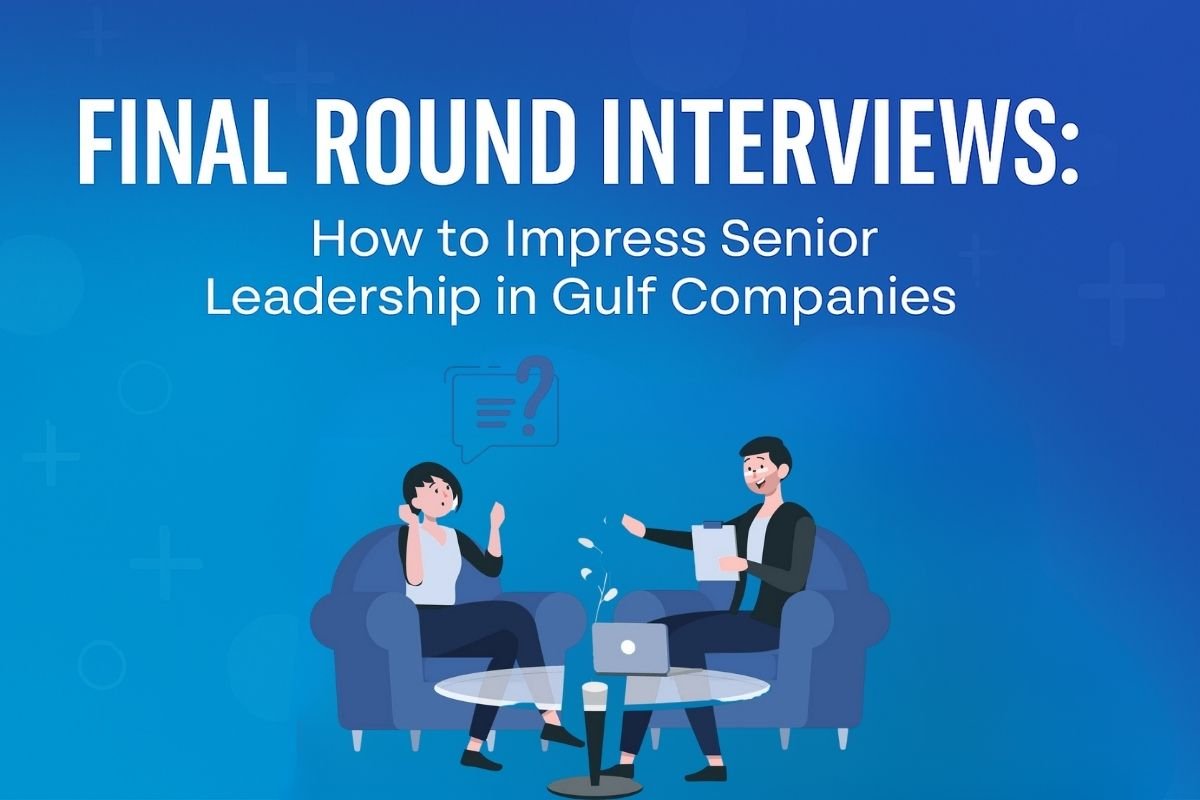
Final Round Interviews: How to Impress Senior Leadership in Gulf Companies

Final Round Interview Tips for Gulf Jobs | Impress Senior Leadership in UAE & Middle East

Reaching the final round of interviews in a Gulf-based company is a significant achievement. It means you’ve passed the technical assessments, HR screenings, and initial managerial evaluations. Now, you’re face-to-face — virtually or in person — with senior leadership: managing directors, board members, or even the CEO.

In the Gulf region, especially in the UAE, Saudi Arabia, and Qatar, many companies are family-owned, founder-led, or hierarchical in structure. Final interviews are often decisive. They’re not just about validating your skills — they’re about assessing your mindset, loyalty, and ability to contribute to the company’s long-term goals.

What Makes Final Interviews in the Gulf Unique?

  • Cultural fit is paramount: Gulf employers value respect, humility, and alignment with company values.
  • Leadership wants strategic thinkers: Expect questions about vision, growth, and your role in shaping the future.
  • Trust matters more than credentials: Senior leaders assess attitude, reliability, and long-term commitment.
  • Formality and etiquette count: Professional attire, respectful language, and punctuality are non-negotiable.

Strategy 1: Understand the Company’s Vision and Leadership Style

Before the interview, research the company’s leadership — especially the person interviewing you.

  • Read CEO or MD interviews, press releases, and LinkedIn profiles.
  • Understand the company’s expansion plans, values, and recent milestones.
  • Prepare to speak about how your role supports their strategic direction.

Example: “I noticed your recent expansion into the Saudi market. I’d love to contribute by leveraging my regional experience and stakeholder management skills.”

✅ Strategy 2: Prepare for Strategic, Values-Based Questions

Final interviews are rarely technical. Expect questions like:

  • “Where do you see yourself in five years — and how does that align with our company?”
  • “What would you do differently in your first 90 days here?”
  • “How do you handle ambiguity and change?”
  • “What does loyalty mean to you in a professional context?”

Tip: Use the STAR method (Situation, Task, Action, Result) to structure answers, but focus on strategic thinking and leadership impact.

Strategy 3: Demonstrate Cultural Awareness and Emotional Intelligence

Senior leaders in the Gulf value candidates who respect local customs and workplace norms.

  • Be mindful of Islamic values, prayer times, and Ramadan etiquette.
  • Use formal greetings and titles (e.g., “Mr. Al-Fahad” or “Dr. Al-Mansoori”).
  • Avoid overly casual language or humor unless the tone is clearly informal.

Example: “I’ve worked in multicultural teams and always prioritize respectful communication, especially in culturally diverse environments like the Gulf.”

Strategy 4: Ask Insightful Questions That Reflect Strategic Thinking

Final interviews are a two-way street. Asking thoughtful questions shows you’re serious about the role.

  • “What are the biggest challenges facing the company in the next 12 months?”
  • “How does this role contribute to your long-term vision?”
  • “What qualities do you value most in your leadership team?”

Tip: Avoid asking about salary or vacation at this stage. Focus on impact, growth, and alignment.

Strategy 5: Show Commitment and Long-Term Vision

Gulf employers are wary of short-term hires. They want candidates who will stay and grow.

  • Express your desire to build a career in the region.
  • Mention your adaptability and willingness to relocate.
  • Align your personal goals with the company’s trajectory.

Example: “I’m looking for a long-term opportunity where I can contribute meaningfully and grow with the organization — and I see that potential here.”

Strategy 6: Master Your Presence — Online or In Person

Whether virtual or face-to-face, your presence matters.

  • Dress professionally — suit and tie for men, modest formal wear for women.
  • Maintain eye contact, sit upright, and speak clearly.
  • In virtual interviews, ensure good lighting, a clean background, and stable internet.

Tip: First impressions are lasting. Treat this interview like a boardroom presentation.

Strategy 7: Follow Up with Professional Gratitude

After the interview, send a concise thank-you email.

  • Reaffirm your interest in the role.
  • Mention one key takeaway from the conversation.
  • Keep it formal, respectful, and brief.

Example: “Thank you for the opportunity to discuss the role. I appreciated learning more about your vision for regional expansion and would be honored to contribute.”

Summary Table of Final Interview Strategies

#StrategyKey Action
1Understand leadership styleResearch CEO/MD and company vision
2Prepare strategic answersFocus on growth, alignment, and leadership impact
3Show cultural awarenessRespect Gulf customs and formal etiquette
4Ask insightful questionsFocus on challenges, vision, and leadership values
5Demonstrate commitmentExpress long-term goals and regional interest
6Master your presenceDress professionally, speak clearly, stay composed
7Follow up professionallySend a thank-you email with strategic reinforcement

FAQs

What do Gulf CEOs look for in final interviews?

They assess strategic thinking, cultural fit, and long-term alignment. It’s less about skills and more about trust and vision

Should I talk about salary in the final round?

No. Focus on impact and alignment. Salary discussions are best reserved for HR or post-offer stages.

What if the final interview is virtual?

Treat it like an in-person meeting. Dress formally, ensure good lighting, and maintain eye contact through the camera.

How long do final interviews usually last?

Anywhere from 30 minutes to an hour, depending on the role and leadership style.

Can I ask about company challenges or future plans?

Yes. Thoughtful questions about strategy and growth show maturity and engagement.

Final Thoughts

Final round interviews in Gulf companies are not just about landing a job — they’re about earning leadership trust. By preparing strategically, demonstrating cultural awareness, and aligning with the company’s vision, you position yourself as a future leader, not just an employee.

Approach this stage with confidence, humility, and clarity. The Gulf region rewards professionals who think long-term, respect tradition, and contribute meaningfully to organizational growth.
Decoding Your Offer Letter: Key Clauses to Check Before Accepting a Job in the Gulf

Decoding Gulf Job Offer Letters | Key Clauses Every Professional Must Check

The Gulf region — including the United Arab Emirates, Saudi Arabia, Qatar, Kuwait, Bahrain, and Oman — is one of the most attractive destinations for professionals worldwide. With tax-free salaries, modern infrastructure, and diverse workforces, thousands of job seekers relocate to the Gulf every year.

But before you pack your bags, there’s one critical step you must not overlook: reading and understanding your offer letter.

An offer letter is more than a formality. It’s a legally binding document that outlines your rights, responsibilities, and benefits as an employee. Many professionals, eager to secure a Gulf role, skim through the details and sign quickly. This can lead to misunderstandings, disputes, or even early resignation.

Why Offer Letters Matter in the Gulf

  • Legal binding: Once signed, your offer letter becomes part of your employment contract.
  • Visa processing: The details in your offer letter are used for work permit and residency applications.
  • Employer expectations: Clauses define your role, responsibilities, and performance standards.
  • Employee rights: Benefits, allowances, and termination conditions are all governed by the offer letter.

Clause 1: Job Title and Responsibilities

Your offer letter should clearly state your job title and a summary of responsibilities.

  • Ensure the title matches what was discussed during interviews.
  • Vague descriptions can lead to role confusion.
  • If responsibilities are too broad, clarify before signing.

Tip: A mismatch between your expectations and the employer’s description can cause frustration later.

Clause 2: Salary and Allowances

Salary packages in the Gulf are often structured differently than in other regions.

  • Base Salary: Usually tax-free, but confirm the currency (AED, SAR, QAR, or USD).
  • Housing Allowance: Many companies provide accommodation or a monthly allowance.
  • Transportation Allowance: Check if commuting costs are covered.
  • Education Allowance: Important for employees with children.
  • Annual Bonus: Some firms offer performance-based bonuses.

Tip: Calculate the total package value, not just the base salary.

Clause 3: Benefits and Perks

Benefits can significantly impact your quality of life in the Gulf.

  • Medical Insurance: Confirm if coverage extends to dependents.
  • Annual Flights: Many employers pay for return flights to your home country.
  • Leave Policy: Compare annual leave days and public holiday entitlements.
  • End-of-Service Gratuity: Mandatory in most Gulf countries, calculated based on years of service.

Tip: A lower salary with strong benefits may be better than a higher salary with minimal perks.

Clause 4: Contract Duration and Renewal

Most Gulf contracts are fixed-term, typically 2–3 years.

  • Check the duration and renewal conditions.
  • Understand whether renewal is automatic or requires renegotiation.
  • Clarify probation period terms (usually 3–6 months).

Tip: During probation, termination is easier for both parties.

Clause 5: Working Hours and Overtime

Work hours in the Gulf can differ from your home country.

  • Standard hours: 40–48 per week, depending on the country.
  • Ramadan hours: Reduced for Muslim employees.
  • Overtime: Clarify rates and eligibility.

Tip: Ensure overtime policies are clearly stated to avoid disputes.

Clause 6: Termination and Notice Period

Termination clauses define how either party can end the contract.

  • Notice Period: Usually 30–90 days.
  • Termination Conditions: Check if termination is possible during probation without notice.
  • Severance Pay: Understand entitlements if terminated after probation.

Tip: A longer notice period provides more security but may limit flexibility.

Clause 7: Non-Compete and Mobility Clauses

Some Gulf employers include restrictions on future employment.

  • Non-Compete: May prevent you from joining competitors for a set period.
  • Geographic Restrictions: Some clauses limit where you can work after leaving.
  • Internal Mobility: Clarify if transfers within the company are possible.

Tip: Seek clarification on restrictive clauses before signing.

Clause 8: Relocation and Visa Sponsorship

Your offer letter should outline relocation support.

  • Visa Sponsorship: Confirm the employer will handle work permit and residency.
  • Relocation Allowance: Some companies cover moving expenses.
  • Family Sponsorship: Check if dependents are included.

Tip: Ensure visa sponsorship is explicitly mentioned to avoid complications.

Clause 9: Performance Evaluation

Performance reviews affect promotions and bonuses.

  • Clarify how often evaluations occur.
  • Understand criteria for promotions and salary increases.
  • Check if performance targets are realistic.

Tip: Ask about career development opportunities during discussions.

Clause 10: Governing Law and Jurisdiction

Offer letters in the Gulf often specify which country’s labor laws apply.

  • UAE, Saudi Arabia, and Qatar each have distinct labor laws.
  • Disputes are resolved under local jurisdiction.
  • Ensure you understand the governing law before signing.

Tip: Familiarize yourself with basic labor rights in the country of employment.

Summary Table of Key Clauses

ClauseWhat to CheckWhy It Matters
Job TitleMatches interview discussionPrevents role confusion
Salary & AllowancesBase + housing + transportTotal package value
BenefitsInsurance, flights, leaveQuality of life
Contract DurationTerm length, probationStability and renewal
Working HoursWeekly hours, overtimeWork-life balance
TerminationNotice period, severanceSecurity and flexibility
Non-CompeteRestrictions on future jobsCareer mobility
RelocationVisa sponsorship, family supportSmooth transition
PerformanceEvaluation criteriaCareer growth
Governing LawApplicable labor lawsLegal protection

Common Mistakes to Avoid

  • Signing without reading the fine print.
  • Ignoring probation period terms.
  • Overlooking benefits in favor of salary.
  • Accepting restrictive non-compete clauses.
  • Failing to confirm visa sponsorship.

FAQs

Can I negotiate my Gulf offer letter?

Yes. Employers expect some negotiation, especially around allowances and benefits. Be respectful and realistic.

What happens if I resign during probation?

You may be required to give short notice or none at all, depending on the contract.

Is end-of-service gratuity mandatory in the Gulf?

Yes, but calculation methods vary by country. It’s based on years of service.

Should I worry about non-compete clauses?

Yes. They can restrict future opportunities. Clarify terms before signing.

How do I verify if benefits apply to dependents?

Ask HR directly and request written confirmation in the offer letter.

Final Thoughts

Your offer letter is the foundation of your employment in the Gulf. It defines your rights, responsibilities, and future career path. By carefully reviewing clauses on salary, benefits, contract terms, and legal jurisdiction, you can avoid unpleasant surprises and ensure a smooth transition.

Remember: a job in the Gulf is not just a career move — it’s a life-changing decision. Take the time to decode your offer letter, ask questions, and negotiate where necessary. The right preparation will set you up for success in one of the world’s most dynamic regions.

You Have Multiple Job Offers in the Gulf? Here’s How to Choose the Right One

How to Choose Between Multiple Gulf Job Offers | Career Guide for UAE & Middle East

The Gulf region — covering the United Arab Emirates, Saudi Arabia, Qatar, Kuwait, Bahrain, and Oman — has become one of the most attractive destinations for professionals worldwide. With tax-free salaries, modern infrastructure, and diverse work environments, it’s no surprise that many job seekers find themselves with more than one offer on the table.

But having multiple job offers, while exciting, can also be overwhelming. Each opportunity may look appealing, yet the right choice depends on more than just salary. You need to weigh factors like career growth, company culture, benefits, location, and long-term stability.

Why Choosing the Right Offer Matters

Accepting a job in the Gulf often means relocating, adapting to a new culture, and committing to a contract that could last two or more years. Making the wrong choice can lead to dissatisfaction, financial strain, or even early resignation — which can hurt your career reputation in the region.

Employers value loyalty and stability. Choosing wisely ensures you not only thrive professionally but also enjoy your personal life in the Gulf.

Step 1: Compare Salary Packages Beyond the Numbers

Salary is often the first thing candidates look at, but Gulf compensation packages are more complex.

  • Base Salary: Tax-free income is a major advantage, but check if it’s competitive for your role.
  • Allowances: Many companies provide housing, transportation, or education allowances.
  • Bonuses: Annual performance bonuses or profit-sharing can significantly boost income.
  • Currency Stability: Consider whether your salary is paid in local currency (AED, SAR, QAR) or USD.

Tip: Don’t just compare numbers. Calculate the total value of each package, including allowances and benefits.

Step 2: Evaluate Benefits and Perks

Benefits in the Gulf can vary widely between employers.

  • Medical Insurance: Check if coverage extends to dependents.
  • Annual Flights: Many companies pay for return flights to your home country.
  • Education Allowance: Crucial if you have children.
  • Leave Policy: Compare annual leave days and public holiday entitlements.
  • End-of-Service Gratuity: Mandatory in most Gulf countries, but amounts differ.

Tip: A slightly lower salary with strong benefits may be better than a higher salary with minimal perks.

Step 3: Assess Career Growth Opportunities

Think long-term. Ask yourself: Will this job help me grow?

  • Training & Development: Does the company invest in employee learning?
  • Promotion Pathways: Are there clear opportunities for advancement?
  • Industry Stability: Is the sector growing (e.g., healthcare, fintech) or shrinking?
  • Company Reputation: A well-known employer can boost your CV for future roles.

Tip: Research the company’s track record of internal promotions and employee retention.

Step 4: Consider Location and Lifestyle

The Gulf is diverse, and lifestyle varies by country and city.

  • UAE (Dubai, Abu Dhabi): Cosmopolitan, multicultural, with high living costs.
  • Saudi Arabia (Riyadh, Jeddah): Rapidly modernizing, more conservative but growing opportunities.
  • Qatar (Doha): Strong economy, family-friendly, smaller expat community.
  • Kuwait & Bahrain: Smaller markets, but close-knit communities.
  • Oman (Muscat): Relaxed lifestyle, scenic environment, slower pace.

Tip: Factor in cost of living, cultural fit, and family needs when choosing location.

Step 5: Analyze Company Culture and Work Environment

Company culture can make or break your experience.

  • Work-Life Balance: Some Gulf companies expect long hours; others promote flexibility.
  • Management Style: Hierarchical vs. collaborative approaches vary.
  • Diversity: Multicultural teams are common, but inclusivity differs.
  • Employee Reviews: Check platforms like Glassdoor or LinkedIn for insights.

Tip: During interviews, ask about team dynamics, leadership style, and turnover rates.

Step 6: Check Contract Terms Carefully

Contracts in the Gulf are legally binding and often include clauses that affect mobility.

  • Duration: Most contracts are 2–3 years.
  • Probation Period: Usually 3–6 months, during which termination is easier.
  • Notice Period: Varies from 30 to 90 days.
  • Non-Compete Clauses: May restrict you from joining competitors.
  • Termination Conditions: Understand your rights if the employer ends the contract early.

Tip: Never sign without reading the fine print. Seek clarification on unclear clauses.

Step 7: Think About Long-Term Stability

Consider the employer’s financial health and industry outlook.

  • Government vs. Private Sector: Government jobs often offer stability but slower growth.
  • Industry Trends: Oil & gas, healthcare, and tech are strong; retail and hospitality fluctuate.
  • Company Size: Larger firms may offer more resources, while smaller firms may provide flexibility.

Tip: Choose an employer aligned with your career goals and industry trends.

Comparison Framework

FactorOffer AOffer BOffer C
Base SalaryAED 18,000AED 20,000AED 17,000
Housing AllowanceIncludedNot includedIncluded
Medical InsuranceFamily coverageSelf onlyFamily coverage
Annual FlightsYesNoYes
Career GrowthStrong trainingLimitedModerate
LocationDubaiRiyadhDoha
Contract Terms2 years, 90-day notice3 years, 60-day notice2 years, 30-day notice

Cultural Considerations

  • Respect Islamic traditions and local laws.
  • Understand workplace hierarchy and formal communication styles.
  • Be mindful of Ramadan etiquette and prayer times.
  • Adapt to multicultural teams with diverse communication styles.

FAQs

Should I always choose the highest-paying offer?

Not necessarily. Consider benefits, career growth, and stability. A balanced package often outweighs raw salary.

How do I know if a company is stable?

Research financial reports, industry news, and employee reviews. Larger firms or government-backed companies tend to be more stable.

What if I accept one offer and then get a better one?

Be cautious. Reneging on an accepted offer can damage your reputation. Decide carefully before signing.

Is it okay to negotiate in the Gulf?

Yes, but do so respectfully. Employers expect some negotiation, especially around allowances.

How do I factor in family needs?

Prioritize housing, medical insurance, education allowances, and location safety when evaluating offers.

Final Thoughts

Having multiple job offers in the Gulf is a privilege, but it requires careful decision-making. The right choice balances salary, benefits, career growth, lifestyle, and stability. Remember, a job in the Gulf isn’t just a career move — it’s a life-changing experience.

By using this framework, you can evaluate offers systematically and choose the one that aligns best with your professional goals and personal needs.

The Insider’s Guide: Common Interview Questions Asked by Gulf Employers

Common Gulf Interview Questions – Insider’s Guide to UAE & Middle East Hiring

Securing a job in the Gulf region — whether in the UAE, Saudi Arabia, Qatar, Kuwait, or Oman — is a dream for many professionals. The Gulf offers competitive salaries, tax-free income, and opportunities to work in multicultural environments. But before you can land that role, you must navigate one of the most critical steps: the interview.

Interviews in the Gulf are unique. They blend global corporate standards with region-specific expectations, often focusing on adaptability, cultural awareness, and long-term commitment. Employers want to ensure that candidates not only have the right skills but also the right mindset to thrive in the region.

Why Gulf Interviews Are Different

Unlike interviews in Western markets, Gulf employers emphasize:

  • Cultural fit: Respect for traditions, values, and workplace etiquette.
  • Adaptability: Ability to work in diverse, multicultural teams.
  • Commitment: Willingness to stay long-term, as turnover is a major concern.
  • Professionalism: Punctuality, appearance, and communication style.

Understanding these priorities will help you tailor your answers and stand out.

Common Interview Questions Asked by Gulf Employers

1. Why do you want to work in the Gulf?

This is often the first question. Employers want to know if you’re motivated by more than just salary. How to answer: Highlight professional growth, exposure to international markets, and interest in contributing to the region’s development. Avoid focusing solely on financial benefits.

2. What do you know about our company and industry?

Employers expect candidates to have done their homework. How to answer: Mention specific projects, achievements, or industry trends. For example, if interviewing with a construction firm in Dubai, reference Expo 2020 projects or regional infrastructure growth.

3. How do you adapt to multicultural environments?

The Gulf workforce is highly diverse, with employees from Asia, Africa, Europe, and the Middle East. How to answer: Share examples of working with colleagues from different backgrounds, emphasizing communication and collaboration skills.

4. Can you commit to a long-term contract?

High turnover is costly. Employers want assurance that you’ll stay. How to answer: Express willingness to relocate and grow with the company. Align your career goals with the organization’s vision.

5. How do you handle pressure and deadlines?

Many Gulf industries, such as construction, healthcare, and hospitality, operate under tight timelines. How to answer: Use the STAR method (Situation, Task, Action, Result) to describe a time you managed stress effectively.

6. What is your understanding of Gulf labor laws and work culture?

Employers want to ensure you’re aware of local regulations and norms. How to answer: Demonstrate basic knowledge of visa processes, probation periods, and respect for Islamic values (e.g., prayer times, Ramadan etiquette).

7. Tell us about a time you resolved a conflict at work.

Conflict resolution is key in multicultural teams. How to answer: Share a real example where you listened, mediated, and achieved a positive outcome.

8. What salary expectations do you have?

Salary discussions are common but tricky. How to answer: Research average salaries for your role in the Gulf. Be flexible but informed. Avoid discussing salary too early unless asked.

9. How do you stay updated with industry trends?

Employers value continuous learning. How to answer: Mention professional courses, certifications, or industry publications you follow.

10. Do you have experience working in the Gulf or similar regions?

If you don’t, employers want to know how you’ll adapt. How to answer: Highlight transferable skills, multicultural teamwork, and willingness to learn.

Summary Table of Common Questions

#Interview QuestionWhy Employers AskHow to Answer
1Why do you want to work in the Gulf?Assess motivation beyond salaryHighlight growth, exposure, contribution
2What do you know about our company?Test preparation and interestMention projects, achievements, industry trends
3How do you adapt to multicultural environments?Evaluate teamwork skillsShare examples of cross-cultural collaboration
4Can you commit to a long-term contract?Reduce turnover riskExpress willingness to relocate and grow
5How do you handle pressure?Test resilienceUse STAR method with real example
6Understanding of Gulf labor lawsEnsure complianceShow awareness of visa, probation, Islamic values
7Conflict resolution exampleAssess interpersonal skillsShare mediation and positive outcome
8Salary expectationsAlign compensationResearch averages, be flexible but informed
9Staying updated with trendsValue continuous learningMention courses, certifications, publications
10Gulf experienceTest adaptabilityHighlight transferable skills and openness

Cultural Awareness Tips

  • Respect Islamic traditions: avoid scheduling meetings during prayer times.
  • Be mindful of Ramadan etiquette: no eating or drinking in public during fasting hours.
  • Understand hierarchy: Gulf workplaces often value seniority and formal titles.

FAQs

Do Gulf employers prefer candidates with prior regional experience?

Yes, but it’s not mandatory. Employers value adaptability and willingness to learn.

How should I prepare for virtual interviews with Gulf companies?

Dress professionally, ensure good lighting, and maintain eye contact through the camera.

Is Arabic required for Gulf jobs?

Not always. English is widely used, but basic Arabic phrases can demonstrate respect.

How do I address relocation concerns?

Show enthusiasm for living in the Gulf, mention adaptability, and highlight past relocations if applicable.

What is the biggest mistake candidates make in Gulf interviews?

Focusing only on salary or failing to research the company. Employers want commitment and preparation.

7 Proven Strategies to Ace Your Interview with a Gulf-Based Company

7 Proven Strategies to Ace Your Gulf Job Interview | Career Success in UAE & Middle East

Landing a job in the Gulf region — whether in the UAE, Saudi Arabia, Qatar, or Kuwait — can be a life-changing opportunity. The Gulf job market is highly competitive, with employers seeking not only technical skills but also adaptability, cultural awareness, and professionalism. To stand out, candidates must prepare strategically for interviews that often blend global standards with region-specific expectations

Understanding the Gulf Job Market

Before diving into strategies, it’s important to understand the Gulf hiring landscape:

  • Employers value reliability, adaptability, and cultural awareness as much as technical expertise.
  • Interviews often include questions about relocation, cultural fit, and long-term commitment.
  • Many companies emphasize professional appearance, punctuality, and respect for hierarchy.

With this context, let’s explore the strategies.

Strategy 1: Research the Company and Industry

One of the most common mistakes candidates make is failing to research the employer. Gulf-based companies expect candidates to demonstrate knowledge of their business, industry, and regional context.

  • Study the company’s website, annual reports, and press releases.
  • Understand their regional footprint — e.g., operations in Dubai, Riyadh, or Doha.
  • Learn about industry trends, such as oil & gas diversification, fintech growth, or healthcare expansion.

Tip: Be ready to answer, “Why do you want to work with us in the Gulf?” with specific references to the company’s projects or values.

Strategy 2: Prepare for Common Gulf Interview Questions

According to AnyGulfJobs, candidates often face questions like:

  • “Why do you want to relocate to the Gulf?”
  • “How do you adapt to multicultural environments?”
  • “What do you know about labor laws and work culture here?”
  • “Can you commit to a long-term contract?”

Action: Practice concise, confident answers that highlight adaptability, respect for diversity, and long-term commitment.

Strategy 3: Showcase Cultural Awareness

Employers in the Gulf value candidates who respect local traditions and workplace norms. Demonstrating cultural sensitivity can set you apart.

  • Learn basic etiquette: greetings, dress codes, and workplace hierarchy.
  • Show respect for Islamic values, holidays, and prayer times.
  • Highlight past experiences working in multicultural teams.

Example: If asked about teamwork, mention how you collaborated with colleagues from different backgrounds and adapted communication styles.

Strategy 4: Highlight Soft Skills Alongside Technical Expertise

While technical skills are crucial, Gulf employers emphasize soft skills such as communication, problem-solving, and adaptability.

  • Stress your ability to work under pressure and meet deadlines.
  • Demonstrate leadership qualities, even if applying for entry-level roles.
  • Share examples of conflict resolution or cross-cultural collaboration.

Tip: Use the STAR method (Situation, Task, Action, Result) to structure your answers.

Strategy 5: Dress Professionally and Mind First Impressions

Appearance matters significantly in Gulf interviews. Employers expect candidates to present themselves with professionalism.

  • Men: Wear a suit or formal attire.
  • Women: Opt for modest, professional clothing.
  • Ensure punctuality — arriving late is considered disrespectful.

Note: In virtual interviews, maintain the same standards: professional attire, clean background, and good lighting.

Strategy 6: Demonstrate Long-Term Commitment

High turnover is a concern in the Gulf job market. Employers want assurance that candidates will stay and grow with the company.

  • Express willingness to relocate and adapt to Gulf life.
  • Emphasize career goals aligned with the company’s growth.
  • Avoid sounding like you’re seeking a short-term opportunity.

Example: “I see this role as a long-term opportunity to contribute to your regional expansion and grow my career in the Gulf.”

Strategy 7: Follow Up Professionally

Post-interview etiquette is critical. A thoughtful follow-up can reinforce your interest.

  • Send a thank-you email within 24 hours.
  • Reiterate enthusiasm for the role and highlight one key strength.
  • Keep communication professional and concise.

Summary Table of Strategies

#StrategyKey Action
1Research the company and industryStudy operations, projects, and values
2Prepare for common Gulf interview questionsPractice answers on relocation, culture, and commitment
3Showcase cultural awarenessRespect traditions, highlight multicultural teamwork
4Highlight soft skillsUse STAR method to demonstrate adaptability
5Dress professionallyFormal attire, punctuality, modest presentation
6Demonstrate long-term commitmentAlign career goals with company growth
7Follow up professionallySend thank-you email, reinforce interest

FAQs

What makes Gulf interviews different from Western interviews?

Gulf interviews emphasize cultural fit, adaptability, and long-term commitment, alongside technical skills.

Do I need to know Arabic to work in the Gulf?

Not always. English is widely used in business, but basic Arabic phrases can demonstrate respect and adaptability.

How should I address salary expectations?

Research average salaries in the Gulf for your role. Be flexible but informed, and avoid discussing salary too early.

What if I have limited Gulf experience?

Highlight transferable skills, multicultural teamwork, and willingness to adapt. Employers value attitude as much as experience.

How do I prepare for virtual interviews with Gulf companies?

Treat them like in-person interviews: dress professionally, ensure good lighting, and maintain eye contact through the camera.

Final Thoughts

Acing an interview with a Gulf-based company requires more than technical expertise. It’s about cultural awareness, adaptability, and professionalism. By applying these seven strategies — from thorough research to professional follow-ups — you’ll position yourself as a candidate who not only fits the role but also thrives in the Gulf’s dynamic work environment.

Post a Job Opening

Fill in the details below. Your job posting will be reviewed by our team.

Basic Information

Specify years of experience required

Location & Salary

Qualifications & Skills

Specify educational requirements
Separate skills with commas

Company Details

Job Details

Contact Information