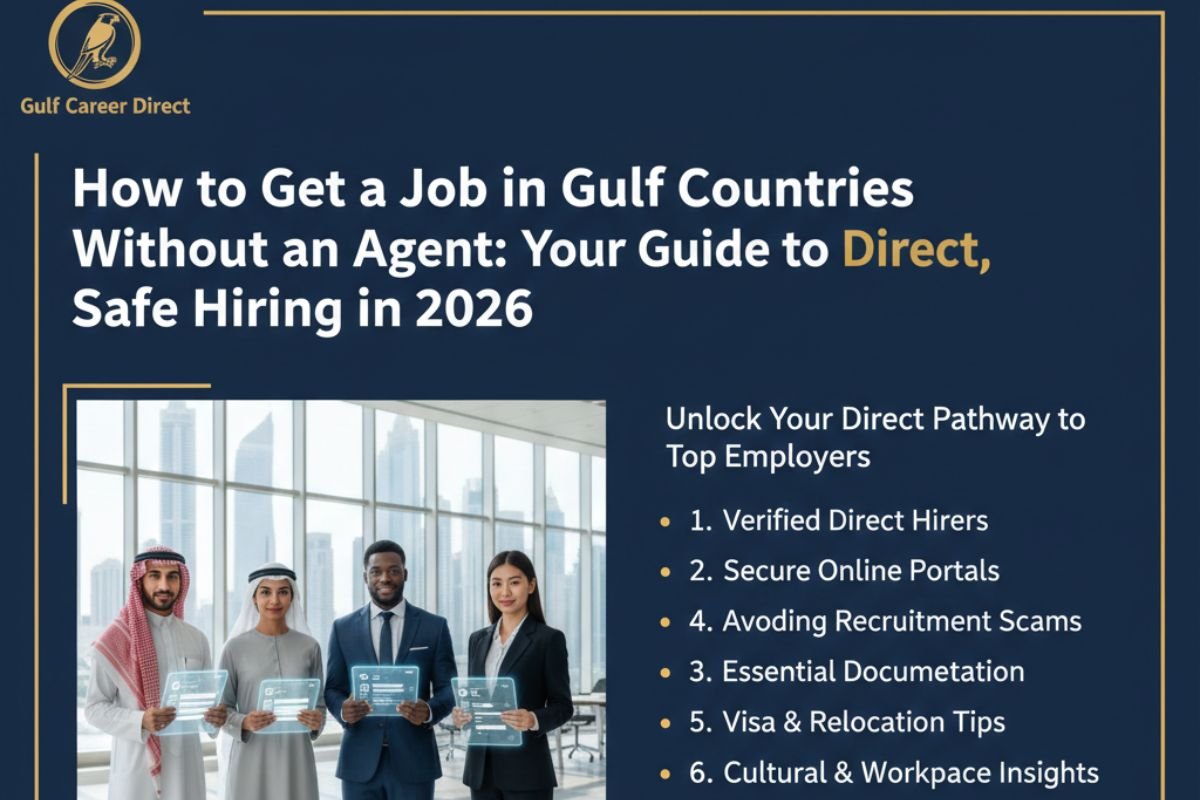
For millions of Pakistani workers, the Gulf region—Saudi Arabia, UAE, Qatar, Kuwait, Oman, and Bahrain—represents a life-changing opportunity. Better salaries, tax-free income, and career growth await those who successfully clear the interview stage .
Question 1: “Tell Me About Yourself”
Why they ask this: This is your 60-second commercial. Recruiters want to know if you can present yourself clearly and professionally. Many candidates are filtered out right here .
What NOT to do: Don’t start with “I was born in…” or give your entire life story. Don’t ramble for 5-7 minutes .
How to answer (The Professional Summary):
“I am a certified HVAC technician with five years of experience working on both commercial and residential projects in Pakistan. I recently completed a major contract at a large hospital in Lahore, where I maintained over 200 air conditioning units. I am now looking for an opportunity to bring my skills to a dynamic team in the Gulf and continue growing professionally.”
For Pakistani candidates: Mention specific projects or employers in Pakistan that demonstrate your experience level. Gulf employers respect hands-on, verifiable experience.
Question 2: “Why Do You Want to Work in the Gulf?”
Why they ask this: Employers want to know you’ve thought this through. Are you running away from problems in Pakistan, or genuinely seeking growth?
What NOT to do: Don’t say “I just need a job” or “The salary is better.” This makes you sound desperate.
How to answer:
“The Gulf region is known for its rapid development and professional work culture. I have followed Saudi Vision 2030 and the UAE’s infrastructure projects with great interest. I want to contribute my skills to these exciting developments while gaining international experience in a competitive environment. I am ready to adapt and work hard.”
For Pakistani candidates: Show that you have researched the specific country you are applying to. Mentioning “Saudi Vision 2030” or “Expo City Dubai” demonstrates genuine interest.
Question 3: “Why Are You Leaving Your Current Job?”
Why they ask this: This is a test of your professionalism and loyalty. Never—ever—badmouth your previous employer, even if they were terrible .
What NOT to do: Don’t complain about your boss, salary, or company politics. This immediately raises red flags.
How to answer (Growth opportunity):
“I have learned a great deal in my current role and I am grateful for the experience. However, I feel I have reached a point where I am ready for more responsibility and new challenges. Working in the Gulf is the natural next step in my career growth.”
Alternative answer (Company change):
“My current company is shifting its focus away from international markets. I am committed to building my career in the Gulf region, so I am looking for an employer with strong regional presence.”
Question 4: “Are You Comfortable Working in a Diverse Team with Different Nationalities?”
Why they ask this: Gulf workplaces are melting pots—you will work alongside Indians, Filipinos, Egyptians, Westerners, and many others. Employers need to know you can collaborate respectfully .
What NOT to do: Don’t hesitate or sound uncertain. Don’t say “I prefer working with Pakistanis only.”
How to answer:
“Yes, absolutely. I have worked with teams from various backgrounds on large projects in Pakistan. I respect different cultures and believe that collaboration brings out the best ideas. I am comfortable learning from colleagues of any nationality and sharing my own knowledge as well.”
For Pakistani candidates: If you have experience working with foreign engineers, consultants, or NGOs in Pakistan, mention it. This is a strong plus point.
Question 5: “What Are Your Strengths?”
Why they ask this: Anyone can say “I am hardworking.” Employers want proof .
What NOT to do: Don’t give generic adjectives without evidence.
How to answer (Skill + Proof):
“My greatest strength is solving problems under pressure. Last year, a critical machine broke down at our factory and the spare part would take three weeks to arrive. I improvised a repair using locally available materials, and we met our production deadline with zero customer impact. The repair lasted until the official part arrived.”
For Pakistani candidates: Gulf employers value jugar (improvisation skills) when applied professionally. Frame it as resourcefulness and quick thinking.
Question 6: “What Are Your Weaknesses?”
Why they ask this: This is NOT a trick. They want self-awareness and a growth mindset .
What NOT to do: Don’t say “I am a perfectionist” or “I work too hard.” Recruiters hear this constantly and it means nothing.
How to answer (Real weakness + How you fix it):
“I used to struggle with delegating tasks. I felt I had to do everything myself to ensure quality. But I realized this doesn’t scale and it burns me out. Over the past year, I have focused on training junior team members and trusting them with more responsibility. It has made me a better supervisor and freed me up for更重要 tasks.”
For Pakistani candidates: Choose a genuine weakness related to technical skills (e.g., “I was not comfortable with computerized maintenance systems, so I took a short course and now I use them daily”).
Question 7: “Can You Work Under Pressure or During Peak Hours?”
Why they ask this: Gulf industries like construction, hospitality, and logistics often require long shifts and deadline-driven work .
What NOT to do: Don’t say “I don’t like overtime” or look uncomfortable.
How to answer:
“Absolutely. I understand that project deadlines and peak seasons may require extra effort. In my previous job, we often worked six days a week during the summer season. I stay calm under pressure and focus on time management to complete tasks efficiently.”
Question 8: “Where Do You See Yourself in Five Years?”
Why they ask this: Are you a flight risk? Will you jump to another company as soon as you arrive? Or will you stay and grow with them?
What NOT to do: Don’t say “I want your job” or “I want to start my own business.” Don’t say “I don’t know.”
How to answer (Commitment track):
“I want to grow into a senior technician or supervisor role, ideally within the same company. I am looking for an employer that invests in training and promotes from within. In five years, I see myself as a valuable, long-term member of the team here.”
For Pakistani candidates: Gulf employers appreciate workers who stay for multiple contract cycles. Show you are looking for stability, not just a quick income.
Question 9: “Tell Me About a Time You Faced Conflict at Work.”
Why they ask this: Conflict is normal. How you handle it shows emotional maturity .
What NOT to do: Don’t say “I avoid conflict.” Don’t blame others.
How to answer (STAR Method):
Situation: Two of my team members disagreed on how to approach a repair job.
Task: As the senior technician, I needed to resolve this so we could meet our deadline.
Action: I brought both colleagues together and let each explain their approach. We tested both ideas on a small scale. One method was faster, but both felt heard.
Result: The project succeeded, and the working relationship remained strong. I learned that listening is more important than being right.”
Question 10: “Do You Have Any Questions for Us?”
Why they ask this: If you say “no,” you look uninterested. Always prepare questions .
Good questions to ask:
- “What does a typical working day look like for this role?”
- “What are the biggest challenges your team is facing right now?”
- “Is there opportunity for overtime or additional training?”
- “How does the company support workers who are new to the Gulf?”
Questions to avoid: Salary, leave, and accommodation details in the first interview (unless the employer brings it up first) .
7 Practical Tips for Pakistani Candidates
1. Research the Employer Thoroughly
Visit their website. Check their LinkedIn page. Know what they do and where they operate. Mentioning specific projects shows you are serious .
2. Improve Your English Communication
You don’t need perfect grammar. You need confidence. Practice speaking English daily with friends or family. Watch English news channels .
3. Learn Basic Arabic Phrases
Simple greetings like “Assalamu Alaikum” (peace be upon you), “Shukran” (thank you), and “Afwan” (you’re welcome) demonstrate cultural respect. This leaves a strong impression .
4. Prepare Your Documents
Keep your passport, educational certificates, experience letters, and trade test certificates neatly organized in a folder. Bring both original and photocopies .
5. Dress Professionally and Modestly
First impressions matter. For men: clean shave or well-trimmed beard, ironed shirt, formal trousers. For women: modest formal wear. Even for online interviews, dress professionally from head to toe .
6. Be Honest, Never Exaggerate
Gulf employers often verify credentials. If you claim experience you don’t have, it will be discovered—and you will lose the job opportunity permanently .
7. Follow Up After the Interview
Send a short thank-you email or WhatsApp message within 24 hours:
“Dear [Interviewer Name], thank you for your time today. I enjoyed learning about your company and I am very interested in this opportunity. I look forward to hearing from you.”
How Recruitment Agencies in Pakistan Can Help
Many Pakistani workers secure Gulf jobs through registered recruitment agencies. These agencies:
- Match your skills with genuine employer requirements
- Provide pre-interview training and mock interviews
- Help with documentation and visa processing
- Offer cultural orientation about Gulf work life
Important Warning: Never pay large sums of money upfront to an agent. Legitimate agencies charge regulated fees, often deducted after you join. Always verify the agency is licensed by the Bureau of Immigration (Pakistan) .
Medical Tests & Visa Process (Brief Overview)
If you pass the interview, the next steps typically include:
- Medical Examination: Conducted at GAMCA/Wafid approved centers. Tests include blood work, chest X-ray, and general physical examination .
- Visa Processing: Your employer sponsors your employment visa. This usually takes 2-6 weeks .
- Final Departure: Once visa is stamped, your flight is arranged (usually paid by employer). Keep all documents in your hand luggage .
Conclusion: Be Prepared, Be Confident, Be Honest
A Gulf job interview is your opportunity to show an employer that you are not just a skilled worker, but a reliable professional who will represent their company well.
The questions in this guide appear in nearly every interview across Saudi Arabia, UAE, Qatar, Kuwait, and Oman . Practice your answers out loud. Record yourself. Ask a friend to do a mock interview.
Remember: Gulf employers value directness, honesty, and a positive attitude. Show them you are ready to work hard, respect their culture, and grow with their company.
Your dream job in the Gulf is closer than you think. Prepare today.
Frequently Asked Questions (FAQs)
1. Do I need to speak fluent English for a Gulf job interview?
Not necessarily. You need to communicate confidently and clearly. Employers understand that English may not be your first language. Focus on simple, direct sentences rather than complex vocabulary. Confidence matters more than perfection
2. What documents should I bring to a Gulf job interview in Pakistan?
3. Should I mention my expected salary in the first interview?
Avoid it unless the employer asks directly. Focus first on demonstrating your value and skills. If asked, research the typical salary for your role in that specific Gulf country and provide a realistic range. Be tactful
4. How long does the entire Gulf recruitment process take?
5. What if I don’t understand a question during the interview?
It is perfectly acceptable to politely ask for clarification. Say: “I’m sorry, could you please repeat the question?” or “Could you explain what you mean?” This is much better than answering incorrectly or freezing up. Honest communication is valued