Gulf Careers Hub

5 In-Demand Skills in the Gulf for 2025 (and How to Develop Them)

Top 5 Gulf Skills for 2025 | Career Growth & Development Guide

In 2025, the Gulf job market is prioritizing digital fluency, sustainability expertise, and cross-functional leadership. This blog explores five high-demand skills across Saudi Arabia, UAE, Qatar, and Bahrain — plus practical ways to build them.

Introduction

The Gulf region is undergoing a seismic shift in workforce priorities. As countries like Saudi Arabia, UAE, Qatar, and Bahrain accelerate their national visions — from Vision 2030 to Digital Economy Strategies — employers are no longer hiring based solely on degrees. Instead, they’re seeking skills that drive innovation, resilience, and transformation.

In 2025, the most valuable professionals will be those who combine technical expertise with strategic thinking, and who can adapt to fast-changing industries like fintech, green energy, healthcare, and digital infrastructure.

This blog explores five of the most in-demand skills in the Gulf for 2025, why they matter, and how you can develop them — whether you’re a fresh graduate, mid-career professional, or job seeker looking to relocate.

1. Digital and Tech Fluency

As Gulf economies diversify away from oil, digital transformation is at the heart of every sector — from banking and logistics to education and tourism.

Why It’s In-Demand

  • UAE and Saudi Arabia are investing billions in AI, cloud computing, and smart cities
  • Qatar and Bahrain are expanding e-government platforms and digital healthcare
  • Employers want candidates who can code, automate, analyze, and secure data

Key Roles

  • Software engineers
  • Data analysts and scientists
  • Cloud architects
  • Cybersecurity specialists
  • AI/ML engineers

How to Develop It

  • Take online courses in Python, SQL, cloud platforms (AWS, Azure)
  • Build a portfolio on GitHub or Kaggle
  • Get certified (CompTIA, Google Cloud, Microsoft Azure)
  • Attend Gulf-based tech bootcamps or virtual hackathons

2. Green Energy and Sustainability Expertise

With COP31 approaching and net-zero targets accelerating, green skills are becoming essential across construction, energy, and urban planning.

Why It’s In-Demand

  • Saudi Arabia and UAE are launching solar, wind, and hydrogen megaprojects
  • Qatar and Bahrain are integrating sustainable design into infrastructure
  • Companies need professionals who understand carbon accounting, ESG, and circular economy

Key Roles

  • Renewable energy engineers
  • Sustainability consultants
  • Environmental analysts
  • Carbon market strategists
  • Green building architects

How to Develop It

  • Study sustainability frameworks (LEED, ISO 14001, GHG Protocol)
  • Take courses in energy modeling, climate finance, or ESG reporting
  • Volunteer with green NGOs or climate startups
  • Follow Gulf climate initiatives and COP announcements

3. Healthcare and Life Sciences Skills

The Gulf’s healthcare sector is expanding rapidly, driven by population growth, medical tourism, and digital health innovation.

Why It’s In-Demand

  • Saudi Arabia is building smart hospitals and biotech hubs
  • UAE and Qatar are investing in telemedicine and genomics
  • Demand is rising for clinical, research, and digital health professionals

Key Roles

  • Doctors, nurses, and allied health workers
  • Biomedical researchers
  • Health data analysts
  • Telehealth coordinators
  • Public health experts

How to Develop It

  • Pursue certifications (DHA, HAAD, SCFHS) for Gulf licensing
  • Learn health informatics and EHR systems
  • Join medical research projects or clinical trials
  • Explore Gulf scholarships for healthcare degrees

4. Project and Construction Management

With mega-projects like NEOM, Lusail City, and Expo City Dubai, the Gulf needs professionals who can plan, execute, and deliver complex infrastructure.

Why It’s In-Demand

  • Billions are being spent on smart cities, transport, and tourism infrastructure
  • Employers want managers who understand cost control, safety, and digital tools
  • Cross-border collaboration requires multilingual and multicultural leadership

Key Roles

  • Construction project managers
  • Civil engineers
  • Quantity surveyors
  • BIM specialists
  • Urban planners

How to Develop It

  • Get certified (PMP, PMI-ACP, RICS, Primavera)
  • Learn BIM software (Revit, AutoCAD, Navisworks)
  • Gain site experience through internships or apprenticeships
  • Study Gulf-specific building codes and safety standards

5. Digital Marketing and Communication

As Gulf businesses go global, they need marketers who understand digital platforms, analytics, and cultural nuance.

Why It’s In-Demand

  • UAE and Saudi Arabia are hubs for e-commerce, fintech, and tourism
  • Brands want professionals who can drive engagement and conversion
  • Arabic-English bilingualism is a major asset

Key Roles

  • Digital marketing specialists
  • SEO/SEM analysts
  • Content strategists
  • Social media managers
  • UX writers and brand storytellers

How to Develop It

  • Learn tools like Google Analytics, Meta Ads Manager, HubSpot
  • Build a personal brand on LinkedIn or Medium
  • Take courses in SEO, copywriting, and performance marketing
  • Study Gulf consumer behavior and regional trends

Summary Table

Skill AreaWhy It’s In-DemandHow to Develop It
Digital & Tech FluencySmart cities, AI, cloud, cybersecurityOnline courses, certifications, GitHub
Green Energy & SustainabilityNet-zero goals, COP31, ESG investmentsClimate courses, green certifications
Healthcare & Life SciencesSmart hospitals, medical tourism, genomicsLicensing, informatics, research projects
Project & Construction ManagementMega-projects, smart cities, infrastructurePMP, BIM, site experience
Digital Marketing & CommunicationE-commerce, tourism, fintech brandingSEO tools, content creation, analytics

FAQs

Are these skills relevant across all Gulf countries?

Yes — while priorities vary, UAE, Saudi Arabia, Qatar, and Bahrain all value these five skill areas in 2025.

Can I get hired without a degree if I have these skills?

Increasingly yes — employers are prioritizing skills, portfolios, and certifications over formal degrees.

What’s the best way to start learning these skills?

Use platforms like Coursera, edX, Udemy, and LinkedIn Learning. Look for Gulf-specific bootcamps and scholarships.

Are these skills useful for remote or freelance work?

Absolutely — especially digital marketing, tech, and sustainability consulting.

How can I find real Gulf job openings in these fields?

Use trusted platforms like Bayt, GulfTalent, Naukrigulf, and follow LinkedIn pages of Gulf employers.
How to Spot a Fake Job Posting in 2025 — Complete Guide for Gulf Job Seekers

How to Spot Fake Job Postings in 2025 – Gulf Careers Hub Guide

In today’s digital job market, finding the right opportunity can feel like navigating a maze. With thousands of listings across platforms like Bayt, LinkedIn, and Indeed, it’s easy to get excited — and just as easy to get scammed. Fake job postings are designed to look legitimate, but they often lead to wasted time, stolen data, or worse.

Whether you’re applying in the UAE, Saudi Arabia, or Pakistan, this guide will help you identify red flags, verify legitimacy, and protect yourself from employment scams.

Why Fake Job Postings Exist

Scammers create fake listings for several reasons:

  • Phishing personal data: They collect your name, ID, CV, and contact info to sell or misuse.
  • Financial fraud: They ask for “training fees,” “visa processing,” or “equipment deposits.”
  • Identity theft: They impersonate real companies to gain trust and access sensitive documents.
  • Malware links: Clicking on fake application portals can infect your device.

15 Red Flags That a Job Posting Might Be Fake

1. Too Good to Be True Offers

If the salary is unusually high for the role or location, be cautious. Scammers use inflated pay to lure applicants.

2. Vague Job Descriptions

Legitimate companies provide clear responsibilities, qualifications, and reporting structures. Scams use generic language.

3. No Company Name or Website

If the listing says “Confidential” or lacks a verifiable website, research before applying.

4. Unprofessional Email Addresses

Emails from Gmail, Yahoo, or Hotmail (e.g., hrjobs2025@gmail.com) are red flags. Real companies use domain-based emails.

5. Requests for Money

No legitimate employer will ask for payment during the hiring process — not for training, equipment, or visa fees.

6. Immediate Hiring Without Interview

Scammers often say “You’re hired!” after a short chat or email exchange. Real jobs require interviews.

7. Poor Grammar and Formatting

Typos, inconsistent fonts, and broken English suggest the post wasn’t created by a professional HR team.

8. No Physical Address or Contact Info

Legitimate companies list their office location, phone number, and contact person.

9. Suspicious URLs

Fake job portals may look real but have odd URLs (e.g., www.careers-uae-jobz.net). Always verify.

10. Pressure to Act Fast

Scammers use urgency (“Apply now or lose your chance!”) to prevent you from thinking critically.

11. No LinkedIn Presence

If the company or recruiter isn’t on LinkedIn, it’s worth investigating further.

12. Repetitive Reposts

If the same job keeps appearing every few days with no updates, it might be bait.

13. Unusual Interview Platforms

Be wary of interviews via WhatsApp, Telegram, or unknown apps. Most companies use Zoom, Teams, or in-person meetings.

14. No Mention of Reporting Structure

Legitimate postings mention who you’ll report to (e.g., “Reports to Marketing Director”).

15. Too Many Personal Questions

If you’re asked for passport scans, bank details, or family info early on — stop immediately.

Sources:

How to Verify a Job Posting

1. Research the Company

  • Visit their official website
  • Check their LinkedIn page
  • Look for reviews on Glassdoor or Google

2. Call or Email Directly

Use the company’s official contact info to confirm the job listing.

3. Check the Domain

Legitimate companies use domain-based emails (e.g., careers@almarai.com). Avoid generic addresses.

4. Use Trusted Platforms

Stick to verified job boards like:

  • Bayt
  • LinkedIn
  • Naukrigulf
  • GulfTalent
  • Rozee.pk (for Pakistan)

5. Never Pay to Apply

If payment is requested, it’s a scam. Period.

What to Do If You Encounter a Fake Job Posting

1. Don’t Engage Further

Stop communication immediately.

2. Report the Listing

Use the job board’s “Report” feature or email their support team.

3. Protect Your Data

Change passwords, monitor your accounts, and alert your bank if you shared financial info.

4. Warn Others

Post on LinkedIn or community forums to help others avoid the same trap.

FAQs

Can fake jobs appear on trusted platforms like Bayt or LinkedIn?

Yes. Scammers sometimes infiltrate legitimate platforms. Always verify before applying.

Is it safe to apply to jobs labeled “Confidential Company”?

Sometimes. But always research the recruiter and ask for company details before sharing personal info.

What if I already sent my CV to a fake job?

Monitor your email and bank accounts. If you shared sensitive data, consider filing a report with local authorities.

How can I verify a recruiter’s identity?

Check their LinkedIn profile, company email, and job board history. Real recruiters have digital footprints.

Are WhatsApp interviews always fake?

Not always, but they’re uncommon. Most professional interviews happen via Zoom, Teams, or in person.

What if the job post looks real but asks for money later?

It’s a scam. No legitimate employer will ask for payment during recruitment.

Final Thoughts

In 2025, job scams are more polished than ever — but so are your tools to fight them. By staying alert, verifying details, and trusting your instincts, you can protect your career and your data.

Always research before you apply. If something feels off, it probably is.

Making a Strong First Impression: How to Win Your Manager’s Trust in Your First Month in the UAE

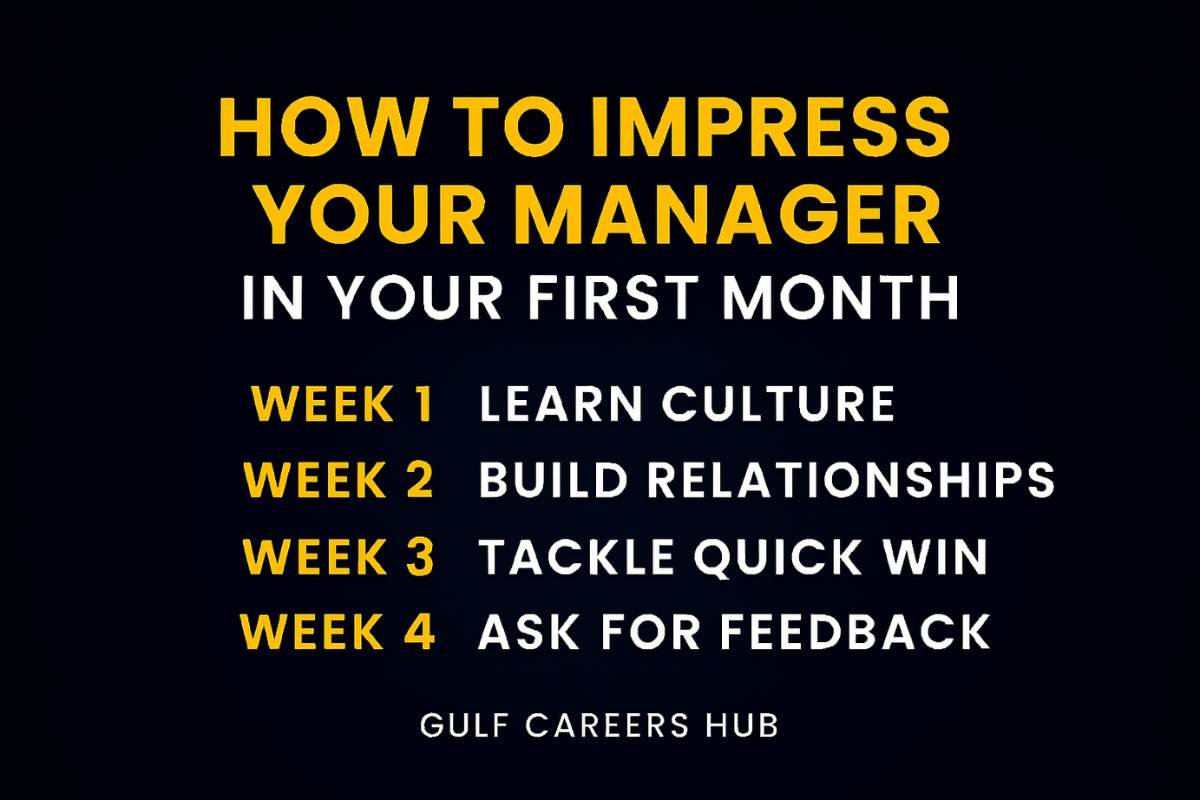
How to Impress Your Manager in Your First Month in the UAE – 2025 Guide

Starting a new job in the UAE is more than just learning the ropes — it’s about proving your value, adapting to a multicultural workplace, and earning your manager’s trust early. Whether you’ve joined a hospital in Abu Dhabi, a tech firm in Dubai, or a construction site in Sharjah, your first 30 days set the tone for your long-term success.

This guide offers practical, culturally aware strategies to help you stand out, build credibility, and become indispensable — all within your first month.

Week 1: Understand the Landscape Before You Act

1. Learn the Company Culture — Fast

The UAE workplace blends global standards with local customs. You’ll find Western-style reporting structures alongside Emirati values like respect, discretion, and hierarchy. Observe how people communicate, dress, and interact. Is the tone formal or relaxed? Are decisions centralized or collaborative?

Tip: Ask your manager or HR for a copy of the employee handbook or onboarding guide. It shows initiative and helps you avoid missteps.

2. Clarify Expectations Early

Don’t wait for your first performance review. Schedule a brief one-on-one with your manager to ask:

  • What are your top priorities for me this month?
  • How will success be measured?
  • Are there any quick wins I can focus on?

Why it works: It shows you’re proactive, goal-oriented, and serious about delivering value.

Week 2: Build Relationships and Visibility

3. Introduce Yourself Strategically

In multicultural UAE offices, relationship-building is key. Don’t just say “Hi” — share a bit about your background, role, and how you can support others. Ask about their work and listen actively.

Tip: Learn a few Arabic greetings like “Marhaba” (Hello) or “Shukran” (Thank you). It’s a small gesture that earns big respect.

4. Communicate Clearly and Often

Managers in the UAE appreciate regular updates, especially in fast-paced sectors like healthcare, logistics, or finance. Send weekly summaries of what you’ve accomplished, what’s in progress, and any blockers.

Why it works: It builds trust and shows you’re organized, accountable, and transparent.

5. Join Cross-Functional Conversations

If invited to meetings outside your department, attend. Ask thoughtful questions and offer insights when appropriate. It shows you’re invested in the company’s broader goals.

Tip: Don’t dominate — contribute strategically. UAE workplaces value humility and respect for hierarchy.

Week 3: Deliver Value and Solve Problems

6. Identify a Quick Win

Look for a small but meaningful problem you can solve — a broken process, a confusing report, or a missed opportunity. Fix it, document it, and share the result.

Example: You notice the HR onboarding checklist is outdated. You update it, align it with current policies, and present it to your manager.

Why it works: It proves you’re observant, resourceful, and action-oriented.

7. Show You Understand the Business

Don’t just do tasks — connect them to business outcomes. If you’re in finance, talk about cost savings. If you’re in marketing, mention engagement metrics. If you’re in operations, highlight efficiency.

Tip: Use phrases like “This will help reduce turnaround time by 20%” or “This aligns with our Q1 revenue goals.”

Week 4: Reflect, Refine, and Reinforce

8. Ask for Feedback Before It’s Offered

Schedule a short feedback session with your manager. Ask:

  • What am I doing well so far?
  • What should I improve or adjust?
  • How can I better support the team?

Why it works: It shows maturity, openness, and a commitment to growth.

9. Document Your Contributions

Keep a simple log of your achievements, challenges, and lessons learned. This will help you prepare for future reviews, promotions, or even internal transfers.

Tip: Use bullet points and metrics. Example: “Streamlined vendor onboarding process — reduced average approval time from 5 days to 2.”

10. Share Learnings with Others

If you’ve discovered a better way to do something, share it. Create a short guide, host a mini training, or offer to mentor a new hire.

Why it works: It positions you as a team player and a future leader.

🇦🇪 UAE-Specific Tips to Impress Your Manager

Respect Cultural Norms

  • Be punctual — time is respected in UAE business culture
  • Dress modestly and professionally
  • Avoid sensitive topics (religion, politics) unless invited
  • Observe Ramadan etiquette if working during the holy month

Embrace Diversity

UAE workplaces are incredibly multicultural. You may work with colleagues from India, Pakistan, Egypt, the Philippines, Europe, and more. Be inclusive, curious, and respectful of different work styles.

Use Tech Smartly

Many UAE companies use tools like Microsoft Teams, Zoho, SAP, or JISR. Learn the platforms quickly and use them to streamline communication and task tracking.

What Managers in the UAE Say They Value Most

Based on feedback from hiring managers across Dubai, Abu Dhabi, and Riyadh, here’s what they look for in new hires:

  • Reliability: Show up, follow through, and meet deadlines
  • Adaptability: Handle change and ambiguity with grace
  • Initiative: Don’t wait to be told — take action
  • Communication: Keep your manager informed, not surprised
  • Respect: Honor hierarchy, culture, and team dynamics

Final Thoughts: Your First Month Is Your Launchpad

The first 30 days aren’t about proving you’re perfect — they’re about proving you’re committed, coachable, and capable. If you listen well, act thoughtfully, and communicate clearly, you’ll earn your manager’s trust and set yourself up for long-term success in the UAE.

Whether you’re in a corporate tower in Dubai or a field office in Al Ain, the principles are the same: show up with purpose, deliver with precision, and grow with humility.

How to Say “I Don’t Know” in a Job Interview — Without Losing Credibility

How to Say “I’m Not Sure” in a Job Interview Without Losing Credibility – 2025 Guide

Job interviews are high-pressure situations. You’ve prepared your resume, rehearsed your strengths, and researched the company. But then comes a curveball: a question you genuinely don’t know how to answer. Should you bluff? Stay silent? Or admit you don’t know?

The truth is, saying “I don’t know” isn’t a deal-breaker — if you handle it with confidence, humility, and a growth mindset. In fact, when done well, it can show self-awareness, honesty, and professionalism.

Let’s break down how to say it, when to say it, and what to say instead.

Why “I Don’t Know” Feels Risky — But Isn’t

Most candidates fear that admitting uncertainty will make them look unqualified. But in reality, interviewers aren’t testing perfection — they’re testing judgment.

They want to know:

  • How you handle pressure
  • Whether you’re honest or prone to bluffing
  • How you approach unfamiliar challenges
  • Whether you’re coachable and open to learning

Saying “I don’t know” the right way can actually build trust and show that you’re not afraid to admit gaps — as long as you follow up with insight, curiosity, or a plan.

When It’s Okay to Say “I’m Not Sure”

Here are common scenarios where it’s perfectly acceptable to admit you don’t know — and how to do it strategically:

1. Technical Questions Outside Your Scope

If you’re asked about a tool, framework, or regulation you haven’t worked with, don’t fake it.

Example: “I haven’t worked directly with JISR HR Software yet, but I’ve used similar platforms like SAP SuccessFactors and I’m confident I can learn it quickly.”

2. Hypothetical Situations You’ve Never Faced

Interviewers love to throw curveballs: “What would you do if X happened?” If you haven’t faced that situation, say so — but show how you’d approach it.

Example: “That’s a situation I haven’t encountered yet, but here’s how I’d approach it…”

3. Data-Driven Questions Without Enough Context

If asked to estimate something without clear data, it’s okay to say you’d need more information.

Example: “I’d need to review the financials before giving a precise answer, but based on similar cases, I’d start by analyzing X and Y.”

7 Smart Ways to Say “I Don’t Know” — Without Saying Those Words

Here are tactful phrases that convey uncertainty while keeping your credibility intact:

1. “That’s a great question — I’d want to explore it further.”

Shows curiosity and respect for complexity.

2. “I haven’t encountered that directly, but here’s how I’d approach it…”

Demonstrates problem-solving and adaptability.

3. “I’d need more context to give a precise answer, but based on what I know…”

Signals analytical thinking and caution.

4. “That’s outside my current experience, but I’m eager to learn more.”

Highlights growth mindset and humility.

5. “I’d consult with the team or review the data before making a decision.”

Shows collaboration and responsibility.

6. “I’m not familiar with that yet, but I’ve picked up similar tools quickly.”

Reassures the interviewer of your learning agility.

7. “I’d research that thoroughly before taking action.”

Demonstrates diligence and strategic thinking.

Real-Life Examples: Turning “I Don’t Know” Into a Strength

Example 1: Finance Role

Question: “How would you handle a client defaulting on a Shariah-compliant loan?” Response: “I haven’t handled a Shariah-compliant default personally, but I understand the principles involved. I’d consult with our legal and compliance teams to ensure any action aligns with Islamic finance guidelines.”

Example 2: HR Role

Question: “What’s your experience with JISR HR Software?” Response: “I haven’t used JISR yet, but I’ve worked extensively with SAP and Zoho People. I’m confident I can adapt quickly — I’ve onboarded new HR systems in under a week before.”

Example 3: Marketing Role

Question: “How would you optimize CTR for a campaign targeting Gen Z in Saudi Arabia?” Response: “That’s a demographic I haven’t targeted directly, but I’d start by researching local trends, preferred platforms, and tone. I’d also A/B test visuals and captions to refine performance.”

What NOT to Do When You Don’t Know

Avoid these credibility-killers:

  • Guessing wildly: It’s better to admit uncertainty than to offer incorrect or misleading information.
  • Over-explaining: Don’t ramble to cover up gaps — be concise and confident.
  • Deflecting: Don’t change the subject or dodge the question.
  • Apologizing excessively: You’re not expected to know everything — don’t undermine yourself.

How to Prepare for Tough Questions

You can’t predict every question, but you can prepare strategies:

1. Know the Job Description Inside Out

Anticipate questions based on required skills, tools, and responsibilities.

2. Review Industry Trends

Stay updated on local regulations, technologies, and market shifts — especially in Saudi Arabia, UAE, and the USA.

3. Practice Behavioral Responses

Use the STAR method (Situation, Task, Action, Result) to structure answers.

4. Prepare a Learning Story

Have an example ready of how you learned something new quickly — it’s a great way to offset gaps.

Final Takeaway: Honesty + Strategy = Credibility

Saying “I don’t know” isn’t a weakness — it’s a chance to show how you think, how you learn, and how you lead under uncertainty.

In fact, many hiring managers prefer candidates who are honest, thoughtful, and coachable over those who pretend to know everything.

So next time you’re stumped in an interview, take a breath, own the moment, and respond with clarity and confidence.

10 Interview Questions and Answers for a Credit Analyst in Saudi Arabia – 2025 Guide

Ace your Credit Analyst interview in Saudi Arabia with expert answers, local insights, and 2025 hiring trends.

Credit analysts are in high demand across Saudi Arabia’s banking, fintech, and investment sectors. Whether you’re applying to a major institution in Riyadh or a growing SME lender in Jeddah, your interview will test your financial acumen, risk assessment skills, and understanding of the local credit landscape.

This guide offers original, in-depth answers tailored to the Saudi market, helping mid-career professionals and fresh graduates alike.

10 Interview Questions and Answers for a Credit Analyst in Saudi Arabia – 2025 Guide

Credit analysts are in high demand across Saudi Arabia’s banking, fintech, and investment sectors. Whether you’re applying to a major institution in Riyadh or a growing SME lender in Jeddah, your interview will test your financial acumen, risk assessment skills, and understanding of the local credit landscape.

This guide offers original, in-depth answers tailored to the Saudi market, helping mid-career professionals and fresh graduates alike.

1. What does a credit analyst do?

Answer: A credit analyst evaluates the creditworthiness of individuals or businesses applying for loans or credit facilities. In Saudi Arabia, this involves analyzing financial statements, market conditions, and regulatory frameworks such as SAMA (Saudi Central Bank) guidelines. The goal is to determine the risk level and recommend whether to approve, modify, or reject credit applications.

Saudi Context Tip: Mention familiarity with SAMA regulations, Islamic finance principles, and local credit scoring models.

2. How do you assess a company’s creditworthiness?

Answer: I begin with a thorough review of the company’s financial statements—balance sheet, income statement, and cash flow. I calculate key ratios like debt-to-equity, current ratio, and interest coverage. I also assess industry trends, management quality, and external risks. In Saudi Arabia, I factor in Zakat obligations, compliance with Shariah-based financing, and regional market volatility.

Saudi Context Tip: Highlight experience with local SMEs, family-owned businesses, and sector-specific risks (e.g., construction, oil & gas).

3. What financial ratios do you rely on most?

Answer: I prioritize:

  • Debt-to-equity ratio: Measures leverage
  • Current ratio: Assesses liquidity
  • Net profit margin: Indicates profitability
  • DSCR (Debt Service Coverage Ratio): Evaluates ability to repay debt
  • ROA/ROE: Measures efficiency and return

Saudi Context Tip: Mention how you adjust ratios for Islamic finance structures like Murabaha or Ijara.

4. How do you handle incomplete or inconsistent financial data?

Answer: I triangulate data using alternative sources—bank statements, tax filings, supplier invoices, and market benchmarks. I also conduct interviews with company stakeholders. In Saudi Arabia, where some SMEs may lack formal records, I rely on cash flow proxies, collateral evaluations, and relationship banking insights.

Saudi Context Tip: Show your adaptability in working with non-standard documentation and Arabic-language financials.

5. Describe a time you identified a high-risk borrower. What did you do?

Answer: In a previous role, I flagged a logistics company with declining revenues and rising short-term debt. Their DSCR was below 1, and they had pending legal disputes. I recommended a conditional approval with collateral requirements, shorter tenor, and monthly monitoring. The client eventually defaulted, but our risk mitigation reduced exposure.

Saudi Context Tip: Discuss how you balance risk and relationship, especially in family-run enterprises.

6. How do you stay updated on market and regulatory changes?

Answer: I follow updates from SAMA, Tadawul, and regional financial news outlets. I attend webinars, subscribe to credit risk journals, and network with peers. I also monitor global trends that impact Saudi credit markets, such as oil price fluctuations, Vision 2030 reforms, and foreign investment flows.

Saudi Context Tip: Mention awareness of Vision 2030 goals, SME financing initiatives, and fintech regulations.

7. What software tools do you use for credit analysis?

Answer: I use:

  • Excel for financial modeling
  • Moody’s Analytics and S&P Global for credit scoring
  • CRM systems for client tracking
  • ERP integrations for real-time data
  • Power BI for dashboards

Saudi Context Tip: Mention experience with local banking platforms, Arabic interfaces, and SAMA-compliant systems.

8. How do you evaluate collateral?

Answer: I assess collateral based on market value, liquidity, legal enforceability, and depreciation risk. For real estate, I consider location, valuation reports, and title clarity. For equipment, I review usage, age, and resale potential. In Saudi Arabia, I also factor in Shariah compliance, property registration norms, and local valuation standards.

Saudi Context Tip: Mention experience with real estate-backed lending, vehicle financing, and inventory-based collateral.

9. How do you communicate credit decisions to clients?

Answer: I ensure transparency and professionalism. I explain the rationale using clear financial terms, offer constructive feedback, and suggest alternatives if rejected. In Saudi Arabia, I’m mindful of cultural sensitivities, hierarchical communication, and Arabic-language preferences.

Saudi Context Tip: Highlight your ability to build trust, especially with family businesses and high-net-worth clients.

10. Why do you want to work as a Credit Analyst in Saudi Arabia?

Answer: Saudi Arabia’s evolving financial landscape offers immense opportunities. With Vision 2030 driving diversification, credit analysts play a key role in enabling growth. I’m excited to contribute to this transformation by applying my skills in risk assessment, financial modeling, and client engagement.

Saudi Context Tip: Mention your interest in Islamic finance, SME development, or fintech innovation.

Final Tips for Interview Success

  • Customize your answers to the role and sector (banking, fintech, investment)
  • Use local examples and terminology (SAMA, Zakat, Vision 2030)
  • Demonstrate soft skills like communication, discretion, and adaptability
  • Prepare a few questions to ask the interviewer about team structure, KPIs, and growth paths

FAQs

Is Arabic required for credit analyst roles in Saudi Arabia?

Not always, but Arabic fluency is a strong advantage, especially for client-facing roles.

Do I need CFA or CPA certification?

Not mandatory, but CFA Level 1 or 2 can boost your profile. Local certifications are also valued.

What industries hire credit analysts in KSA?

Banking, fintech, real estate, manufacturing, and trade finance are key sectors.

How much experience is ideal?

Most roles require 2–5 years, but entry-level and senior positions are also available.

What salary can I expect?

Mid-level credit analysts earn between 10,000–18,000 SAR/month, depending on experience and sector.

Digital Skills Every Job Seeker Over 30 Must Have – 2025 Guide

Digital Skills Every Job Seeker Over 30 Must Have – 2025 Guide

Whether you’re switching careers, re-entering the workforce, or aiming for a promotion, digital fluency is now a baseline expectation. Employers across industries—from healthcare and finance to education and logistics—expect candidates to be comfortable with digital tools, platforms, and workflows.

For job seekers over 30, the challenge isn’t just learning new tech—it’s integrating it with your existing experience and mindset.

Why Digital Skills Matter More Than Ever

  • Remote work is mainstream: You’ll need to navigate virtual meetings, cloud-based tools, and digital collaboration.
  • Recruiters use AI tools: Applicant tracking systems (ATS) scan resumes for keywords and formatting.
  • Digital transformation is everywhere: From hospitals to retail, every sector is digitizing operations.
  • Age bias is real: Demonstrating tech fluency helps counter stereotypes and boosts confidence.

Core Digital Skills You Must Master

1. Basic Computer Literacy

  • Navigating operating systems (Windows/macOS)
  • File management, keyboard shortcuts, and system settings
  • Using printers, scanners, and basic troubleshooting

2. Cloud Collaboration Tools

  • Google Workspace (Docs, Sheets, Drive)
  • Microsoft 365 (Word, Excel, Teams, OneDrive)
  • Dropbox, Slack, Zoom, Trello, Notion

These tools are essential for remote work, team projects, and document sharing.

3. Email Etiquette & Management

  • Professional email writing (Gmail, Outlook)
  • Organizing inboxes, filters, and folders
  • Avoiding spam triggers and formatting errors

4. Digital Communication

  • Video conferencing (Zoom, Google Meet, Teams)
  • Chat platforms (Slack, WhatsApp Business)
  • Screen sharing, virtual backgrounds, and mute discipline

5. Social Media Awareness

  • LinkedIn profile optimization
  • Understanding Facebook, Instagram, TikTok for business
  • Personal branding and digital footprint management

6. Cybersecurity Basics

  • Recognizing phishing emails
  • Using strong passwords and two-factor authentication
  • Safe browsing and data privacy practices

7. Digital Job Search Skills

  • Navigating job portals (Bayt, LinkedIn, Indeed)
  • Using filters, alerts, and saved searches
  • Applying with ATS-friendly resumes

8. Online Learning & Upskilling

  • Platforms: Coursera, Udemy, Skillshare, LinkedIn Learning
  • Tracking certifications and digital badges
  • Building a habit of continuous learning

9. Basic Graphic & Content Tools

  • Canva for resumes, presentations, social posts
  • Grammarly for writing clarity
  • Google Trends and SEO basics for content roles

10. Data Literacy

  • Reading dashboards and reports
  • Basic Excel formulas and charts
  • Understanding KPIs and metrics

🧩 Bonus Skills for Career Growth

SkillWhy It Matters
CRM Tools (e.g., HubSpot)Essential for sales, marketing, and customer service
Project Management (e.g., Asana)Helps organize tasks and timelines across teams
E-commerce Platforms (e.g., Shopify)Useful for retail, freelancing, and product roles
AI Tools (e.g., ChatGPT, Jasper)Boosts productivity and creativity in writing, coding, and research
Digital Payments (e.g., PayPal, Stripe)Important for freelancers and remote workers

How to Build These Skills

  • Start small: Pick one tool per week to explore
  • Use free resources: YouTube tutorials, blogs, and free courses
  • Practice daily: Apply skills in real-life scenarios
  • Join communities: Facebook groups, Reddit forums, LinkedIn circles
  • Track progress: Create a digital portfolio or resume section for new skills

❓ FAQs

I’m not tech-savvy. Where should I start?

Begin with basic computer literacy and email management. These are foundational and easy to learn.

Do I need to learn coding?

Not unless your target job requires it. Focus on digital communication, collaboration, and data literacy first.

Will age affect my chances?

Only if you appear outdated. Show that you’re adaptable, curious, and digitally fluent.

How do I prove my digital skills?

Use certifications, LinkedIn endorsements, and portfolio samples. Mention tools in your resume and cover letter.

Can I learn these skills for free?

Yes. Platforms like Coursera, Google Digital Garage, and Microsoft Learn offer free courses.

What if I’m changing careers?

Digital skills are transferable. Highlight how your past experience complements your new tech fluency.

🇸🇦 How to Land a Job in Riyadh – 2025 Guide for Expats and Locals

How to Land a Job in Riyadh – 2025 Guide for Expats and Locals

Riyadh, the capital of Saudi Arabia, is undergoing a transformation. Fueled by Vision 2030, the city is becoming a global hub for finance, tech, healthcare, and tourism. Whether you’re a Saudi national or an expat, landing a job here requires more than just submitting a CV—it demands preparation, networking, and cultural fluency.

Step-by-Step Guide to Getting Hired in Riyadh

1. Understand the Job Market

Saudi Arabia’s labor market is shaped by two forces:

  • Vision 2030 diversification: Growth in tech, tourism, healthcare, and green energy
  • Saudization (Nitaqat): Preference for Saudi nationals in certain sectors

Top hiring sectors in Riyadh (2025):

  • Technology & AI: Software engineers, data analysts, cybersecurity experts
  • Healthcare: Nurses, lab technicians, hospital administrators
  • Finance: Accountants, auditors, compliance officers
  • Construction & Engineering: Project managers, civil engineers
  • Retail & E-commerce: Sales agents, digital marketers, logistics coordinators
  • Education: ESL teachers, curriculum developers, academic advisors

2. Prepare Your Documents

You’ll need:

  • Updated CV (in English and optionally Arabic)
  • Cover letter tailored to each job
  • Educational certificates (attested by Saudi embassy)
  • Experience letters from past employers
  • Passport copy and professional photo
  • Portfolio (for creative or tech roles)

3. Choose the Right Visa Path

  • Employment visa: Sponsored by your employer
  • Freelancer visa: Available for select professions
  • Investor visa: If starting a business
  • Dependent visa: If joining family already in KSA

Your employer typically handles the Iqama (residency permit) after hiring.

4. Use Trusted Job Portals

  • Bayt.com – Most popular in the Gulf
  • LinkedIn – Great for networking and direct applications
  • Nokryan – Saudi-focused listings
  • Saudiajobs.net – Verified local roles
  • GulfTalent – Mid-to-senior level jobs

5. Network Locally and Online

  • Attend career fairs and industry events in Riyadh
  • Join LinkedIn groups focused on Saudi careers
  • Connect with recruiters and HR managers directly
  • Use referrals—they’re highly valued in Saudi hiring culture

6. Ace the Interview

  • Dress formally (business attire)
  • Be punctual and respectful
  • Prepare for both technical and behavioral questions
  • Highlight your adaptability, teamwork, and cultural awareness
  • Expect interviews in English, but some may include Arabic segments

7. Understand Work Culture

  • Workweek: Sunday to Thursday
  • Working hours: Typically 8–9 hours/day
  • Hierarchical structure: Respect for seniority is key
  • Communication: Polite, formal, and often indirect
  • Religion and culture: Be mindful of prayer times and public conduct

8. Negotiate Your Offer

Typical packages include:

  • Basic salary
  • Housing allowance
  • Transport allowance
  • Medical insurance
  • Annual flight ticket
  • End-of-service benefits

Always ask for a written contract and clarify probation period, leave entitlements, and notice terms.

9. Stay Compliant

  • Respect labor laws and Saudization quotas
  • Renew your Iqama on time
  • Avoid working for multiple employers unless legally permitted
  • Keep copies of all contracts and correspondence

Riyadh Job Market Snapshot (2025)

SectorDemand LevelAverage Salary (SAR/month)
Tech & AIHigh12,000–25,000
HealthcareHigh8,000–18,000
FinanceMedium10,000–20,000
ConstructionMedium9,000–16,000
Retail & SalesModerate5,000–10,000
EducationModerate6,000–12,000

FAQs

Can I get a job in Riyadh without speaking Arabic?

Yes, especially in tech, healthcare, and multinational companies, but basic Arabic helps in daily life.

Do I need a degree to work in Riyadh?

Not always. Many roles accept diplomas or certifications, especially in sales, hospitality, and customer service.

How long does the hiring process take?

Typically 2–6 weeks, depending on visa processing and background checks.

Is it safe to work in Riyadh?

Yes. Riyadh is considered safe and business-friendly, with strict labor protections.

Can I switch jobs after arriving?

Yes, but you’ll need a No Objection Certificate (NOC) or wait until your contract ends.

Are remote jobs available in Riyadh?

Yes. Many companies now offer hybrid or remote roles, especially in tech and marketing.

Video Interview Success: Gulf Employer Expectations in the Remote Era

Video Interview Tips for Gulf Jobs – Remote Hiring Guide

In the Gulf region, video interviews have become the new standard for hiring across industries—from healthcare and hospitality to tech and finance. This guide breaks down real employer expectations, remote etiquette, and strategies to stand out in virtual interviews. Whether you’re applying from abroad or locally, this blog will help you prepare with confidence.

The Rise of Remote Hiring in the Gulf

The COVID-19 pandemic accelerated digital transformation across the GCC. Today, video interviews are no longer a backup—they’re the default. Employers in Dubai, Riyadh, Doha, and Muscat now use platforms like Zoom, Microsoft Teams, and Google Meet to screen candidates before in-person rounds or direct onboarding.

Key drivers of remote hiring:

  • Global talent access: Employers can interview candidates from Pakistan, India, Egypt, Philippines, and beyond without travel costs.
  • Efficiency: Faster scheduling, reduced HR overhead, and quicker decision-making.
  • Hybrid work models: Many Gulf companies now offer remote or hybrid roles, especially in tech, marketing, and customer support.

What Gulf Employers Expect in Video Interviews

1. Professional Setup

  • Quiet environment: No background noise, interruptions, or distractions.
  • Neutral background: Clean wall, tidy room, or virtual background if needed.
  • Good lighting: Natural light or a ring light to ensure your face is clearly visible.
  • Stable internet: Minimum 5 Mbps upload/download speed to avoid lags.

Tip: Test your setup 30 minutes before the interview. Use Zoom’s test room or Google Meet preview.

2. Cultural Awareness & Etiquette

Gulf employers value respect, modesty, and professionalism. Even in remote settings, your tone and body language matter.

  • Dress code: Business formal or smart casual—avoid flashy or overly casual attire.
  • Greeting: Begin with “Assalamu Alaikum” or “Good morning” depending on the company culture.
  • Body language: Sit upright, maintain eye contact, and avoid fidgeting.
  • Punctuality: Join 5 minutes early. Being late—even online—is a red flag.

3. Clear Communication

  • Language: English is the default, but knowing Arabic is a bonus.
  • Accent clarity: Speak slowly and clearly, especially if you’re not a native speaker.
  • Structure: Use the STAR method (Situation, Task, Action, Result) to answer behavioral questions.
  • Conciseness: Avoid long-winded answers. Keep responses under 2 minutes unless asked to elaborate.

4. Tech Familiarity

Employers expect you to be comfortable with basic tech tools:

  • Screen sharing: For presentations or portfolio walkthroughs.
  • Document access: Be ready to share PDFs, resumes, or certificates via chat.
  • Calendar invites: Accept and confirm interview links promptly.

5. Knowledge of the Company & Role

Generic answers won’t cut it. Gulf employers want candidates who’ve done their homework.

  • Company research: Know their mission, recent projects, and regional footprint.
  • Role alignment: Explain how your skills match the job description.
  • Local relevance: Mention your understanding of Gulf work culture, visa processes, or relocation readiness.

Common Interview Questions in Gulf Video Interviews

Question TypeExamples
Behavioral“Tell me about a time you handled a difficult client.”
Technical“How would you optimize a database for speed?”
Cultural Fit“How do you adapt to working in multicultural teams?”
Relocation/Remote“Are you open to relocating to Riyadh or working remotely from Pakistan?”
Salary & Visa“What are your salary expectations and visa status?”

Checklist: Before Your Gulf Video Interview

✅ Test your camera, mic, and internet
✅ Dress professionally (top to bottom)
✅ Prepare answers using STAR method
✅ Research the company and role
✅ Keep your resume and documents ready
✅ Join 5 minutes early
✅ Smile, stay calm, and be confident

Bonus Tips to Stand Out

  • Use a headset: Improves audio clarity and reduces echo.
  • Mention Gulf-specific experience: If you’ve worked with UAE clients or Saudi teams, highlight it.
  • Follow up: Send a thank-you email within 24 hours. Mention one key takeaway from the interview.
  • Portfolio links: Share your GitHub, Behance, or LinkedIn during the call.

Visa & Relocation Questions: What to Expect

Gulf employers often ask about your visa status, especially if you’re applying from abroad.

  • Freelance visa holders: Mention your flexibility and ability to work with multiple clients.
  • Visit visa applicants: Clarify your timeline and readiness to convert to a work visa.
  • Remote candidates: Highlight timezone compatibility and communication skills.

Industries Using Video Interviews Most

SectorCommon Roles
HealthcareNurses, Admin Staff, Telehealth Coordinators
HospitalityGuest Services, Reservation Agents
Tech & ITDevelopers, Designers, QA Engineers
EducationOnline Tutors, Curriculum Developers
LogisticsDispatchers, Customer Support
FinanceAccountants, Compliance Officers

FAQs

Can I interview from outside the Gulf region?

Yes. Many employers interview candidates from Pakistan, India, and Egypt remotely before offering relocation.

Do I need a webcam?

Absolutely. A video interview without video is a missed opportunity.

What if my internet drops?

Apologize, reconnect quickly, and follow up with an email explaining the issue.

Can I use a virtual background?

Yes, but keep it neutral—no beach scenes or animated graphics.

How long are video interviews?

Typically 20–45 minutes. Panel interviews may go up to 1 hour.

The First 90 Days in Dubai: Your Survival Guide for Work and Life (2025)

First 90 Days in Dubai – Survival Guide for Expats

Landing in Dubai for work is exciting, but the first three months can be overwhelming. From visa formalities and housing to cultural etiquette and weekend escapes, this guide breaks down everything you need to know to survive — and thrive — in your first 90 days.

Whether you’re a nurse, engineer, teacher, or retail associate, this guide is tailored to help you settle in quickly and confidently.

Week 1–2: Arrival, Visa, and Setup

Airport Arrival & Immigration

  • Dubai International Airport (DXB) is one of the busiest in the world.
  • Immigration is fast, but make sure you have:
    • A printed copy of your job offer or employment contract
    • Your visa approval (entry permit)
    • Passport with at least 6 months validity
    • Address of your accommodation or hotel

💡 Tip: If you’re arriving on a visit visa and plan to convert it to a work visa, notify your employer in advance.

Emirates ID & Medical Test

Your employer will typically guide you through:

  • Medical Fitness Test – blood test and chest X-ray at a government-approved center
  • Biometric Scanning – fingerprints and photo for Emirates ID
  • Emirates ID Application – mandatory for banking, housing, and SIM cards

Timeline: 7–10 working days 📍 Locations: Al Muhaisnah, Al Quoz, Karama, JLT

SIM Card & Banking

To open a bank account, you’ll need:

  • Emirates ID (or application receipt)
  • Passport copy
  • Salary certificate or job contract

Popular banks for expats:

  • Emirates NBD
  • ADCB
  • Mashreq
  • FAB

For SIM cards:

  • Etisalat and Du offer prepaid and postpaid plans
  • You’ll need your Emirates ID to activate

💡 Tip: Get a prepaid SIM first — easier and faster.

Week 3–4: Housing, Transport & Groceries

Finding Accommodation

TypeMonthly Rent (AED)Areas
Shared Room1,200–2,000Bur Dubai, Karama, Al Nahda
Studio Apartment2,500–4,000International City, Discovery Gardens
1-Bed Apartment4,000–6,500JLT, Business Bay, Al Barsha

💬 Tip: Use platforms like Dubizzle and Bayut to find listings.

Public Transport

Dubai’s transport system is clean, safe, and affordable:

  • Metro – Red and Green lines, AED 3–7 per trip
  • Bus – Extensive network, AED 3–5 per trip
  • Taxi – Starting fare AED 12, higher at night
  • Careem/Uber – App-based, slightly pricier but convenient

Get a NOL Card for metro, bus, and water taxi access.

Grocery & Essentials

Popular supermarkets:

  • Carrefour
  • Lulu Hypermarket
  • Union Coop
  • Spinneys (premium)

💡 Tip: Indian and Pakistani stores like Baqer Mohebi and Al Adil offer spices, lentils, and regional snacks.

Week 5–8: Work Culture, Etiquette & Salary

Work Culture in Dubai

  • Workweek: Monday to Friday (9am–6pm typical)
  • Dress Code: Formal or business casual depending on industry
  • Punctuality: Highly valued — always arrive 5–10 minutes early
  • Hierarchy: Respect for seniority is important
  • Language: English is the business language, but Arabic greetings are appreciated

Cultural Etiquette

  • Greet with “As-salamu alaykum” or “Hello”
  • Avoid public displays of affection
  • Dress modestly in public areas
  • Alcohol is allowed in licensed venues but not in public
  • Friday is a holy day — avoid loud gatherings near mosques

Salary & Banking Tips

  • Salaries are paid monthly, often between the 25th–30th
  • Use WPS (Wage Protection System) accounts for salary deposits
  • Transfer money via:
    • Al Ansari Exchange
    • Lulu Exchange
    • Wise or Western Union

💡 Tip: Compare exchange rates before sending money home.

Weekend Escapes

Dubai offers incredible weekend options:

ActivityLocationCost (AED)
Beach DayJBR, Kite BeachFree–50
Desert SafariLahbab Desert100–250
Theme ParksIMG, Motiongate150–300
Malls & CinemaDubai Mall, MOE50–100
Cultural TourAl Fahidi DistrictFree–30

Making Friends & Networking

  • Join Facebook groups like “Dubai Expats” or “Indians in Dubai”
  • Use Meetup.com for events and interest groups
  • Attend free workshops at Dubai Knowledge Park or DIFC
  • Visit cafes like Tom&Serg, The Sum of Us, or Arabian Tea House

💬 Tip: Respect cultural boundaries when socializing.

  • Always carry your Emirates ID
  • Avoid posting sensitive content online
  • Do not work for another employer without a permit
  • Drugs and banned substances = zero tolerance
  • Rent contracts must be registered via Ejari

📞 Emergency Numbers:

  • Police: 999
  • Ambulance: 998
  • Fire: 997

Mental Health & Wellbeing

Dubai can be fast-paced. Here’s how to stay balanced:

  • Exercise: Join gyms like Fitness First, GymNation, or community parks
  • Mental Health: Free helplines include Lighthouse Arabia and Al Jalila Foundation
  • Faith & Worship: Mosques, churches, temples available across the city
  • Volunteering: Join Dubai Cares or Emirates Red Crescent for community work

💡 Tip: Don’t isolate — reach out and stay connected.

Final Checklist: Your First 90 Days

TaskStatus
Emirates ID & Medical✅ Completed
Bank Account & SIM✅ Completed
Housing Setup✅ Completed
Work Orientation✅ Completed
Weekend Exploration✅ In Progress
Social Connections✅ In Progress
Legal Awareness✅ Reviewed
Mental Wellbeing✅ Ongoing

Frequently Asked Questions (FAQs)

How long does it take to get my Emirates ID?

Typically 7–10 working days after completing your medical fitness test and biometrics. You’ll receive an SMS when it’s ready for pickup or delivery.

Can I work while on a visit visa?

No. Working on a visit or tourist visa is illegal in the UAE. You must wait for your employment visa and labor card to be issued before starting work.

What documents do I need to open a bank account?

Emirates ID (or application receipt)
Passport copy
Job contract or salary certificate Some banks may also ask for a tenancy contract or utility bill.

Is public transport safe and reliable?

Yes. Dubai’s metro, buses, and taxis are clean, safe, and punctual. Get a NOL card to access all modes of transport.

Can I rent a room without an Emirates ID?

Some landlords accept passport and visa copies for short-term rentals, but long-term leases require Emirates ID and Ejari registration.

How much should I budget for monthly living expenses?

On average:
Shared room: AED 1,500–2,000
Food & groceries: AED 800–1,200
Transport: AED 300–500
Mobile & internet: AED 200–300 Total: AED 3,000–4,500/month for modest living

Is Oman the Right Fit for You? A Deep Dive into Career Opportunities and Lifestyle

Working in Oman – Career Opportunities & Lifestyle Guide (2025)

Often overshadowed by its flashier neighbors like the UAE and Qatar, Oman is quietly emerging as a top destination for professionals seeking stability, cultural richness, and long-term career growth. With its strategic Vision 2040 plan, Oman is diversifying beyond oil and gas into sectors like tourism, logistics, healthcare, and digital services — creating new opportunities for both locals and expatriates.

If you’re considering a move to the Middle East, Oman offers a unique blend of professional opportunity and lifestyle balance. But is it the right fit for you? Let’s dive in.

Career Opportunities in Oman (2025)

Oman’s job market is evolving rapidly, with demand rising in both traditional and emerging sectors. Here’s a breakdown of the most promising industries and roles:

🔹 Oil & Gas

Still a cornerstone of Oman’s economy, the hydrocarbon sector offers roles in:

  • Petroleum engineering
  • Drilling operations
  • HSE (Health, Safety & Environment)
  • Refinery maintenance
  • Project management

💬 Tip: Many roles are based in Muscat, Sohar, and Duqm — with competitive salaries and housing allowances.

🔹 Construction & Infrastructure

With major projects underway — including airports, highways, and smart cities — demand is high for:

  • Civil engineers
  • Quantity surveyors
  • Site supervisors
  • MEP technicians
  • Project planners

🔹 Healthcare

Oman’s healthcare sector is expanding, especially in private hospitals and clinics. In-demand roles include:

  • General practitioners
  • Nurses (especially ICU and ER)
  • Radiologists
  • Pharmacists
  • Lab technicians

💬 Tip: Indian and Filipino professionals make up a large portion of Oman’s healthcare workforce.

🔹 IT & Digital Services

As Oman digitizes its public and private sectors, tech professionals are in demand:

  • Software developers
  • Cybersecurity analysts
  • Data scientists
  • Network engineers
  • ERP consultants

🔹 Tourism & Hospitality

With Oman investing in eco-tourism and luxury resorts, roles are opening in:

  • Hotel management
  • Guest relations
  • Tour operations
  • Culinary arts
  • Event planning

💬 Tip: Fluency in English and Arabic is a major asset in hospitality roles.

Top In-Demand Jobs in Oman (2025)

Job TitleSectorAverage Monthly Salary (OMR)
Civil EngineerConstruction800–1,200
Data AnalystIT900–1,400
Registered NurseHealthcare700–1,000
Cybersecurity SpecialistIT1,200–1,800
Tourism ManagerHospitality800–1,300
Electrical TechnicianOil & Gas600–900

Work Culture & Professional Environment

Oman’s work culture is a blend of traditional values and modern professionalism. Here’s what to expect:

  • Workweek: Sunday to Thursday (Friday–Saturday weekend)
  • Dress Code: Conservative business attire; modesty is appreciated
  • Language: English is widely used in business; Arabic is helpful
  • Hierarchy: Respect for seniority and titles is important
  • Pace: Generally slower than Dubai or Riyadh — but more balanced

💬 Tip: Building relationships and trust is key to success in Omani workplaces.

Lifestyle in Oman: What Expats Can Expect

Oman offers a peaceful, family-friendly lifestyle with access to nature, culture, and modern amenities.

Cities to Consider

  • Muscat: Capital city with most job opportunities, international schools, and hospitals
  • Sohar: Industrial hub with port and manufacturing jobs
  • Salalah: Tourism hotspot with seasonal hospitality roles
  • Duqm: Emerging economic zone with oil, logistics, and construction projects

Cost of Living Overview

Expense CategoryMonthly Cost (OMR)
Shared Accommodation150–250
Groceries & Dining100–200
Mobile & Internet20–40
Transport30–60
Entertainment50–100

💬 Note: Salaries are tax-free, and many employers offer housing, transport, and medical benefits.

Family Life & Education

Oman is ideal for families, offering:

  • International schools (British, Indian, American curricula)
  • Safe neighborhoods and gated communities
  • Parks, beaches, and cultural centers
  • Family visas and dependent sponsorship

💬 Tip: Muscat has the highest concentration of international schools and expat-friendly zones.

Visa & Residency Process

Most professionals enter Oman on an employment visa sponsored by their employer. Here’s the typical process:

  1. Offer Letter & Contract
  2. Medical Test in Home Country
  3. Employment Visa Issued
  4. Arrival & Medical Test in Oman
  5. Resident Card (ID) Issued

💬 Note: Family sponsorship is available for eligible roles and salary brackets.

Required Documents

To apply for jobs in Oman, prepare:

  • Updated CV with photo
  • Passport copy
  • Educational certificates
  • Experience letters
  • Police clearance (for some roles)
  • Professional licenses (for healthcare, engineering, etc.)

Pros & Cons of Working in Oman

✅ Pros

  • Tax-free income
  • Peaceful and safe environment
  • Family-friendly lifestyle
  • Growing job market
  • Cultural richness and natural beauty

❌ Cons

  • Slower career progression than UAE/Qatar
  • Limited nightlife and entertainment
  • Arabic language barrier in some sectors
  • Smaller expat community compared to Dubai

💬 Tip: Oman suits professionals seeking stability, not fast-paced corporate hustle.

FAQs

Can I apply for jobs from outside Oman?

Yes. Most employers sponsor visas for overseas candidates.

Is Arabic required?

Not mandatory, but helpful — especially in government or customer-facing roles.

Are salaries competitive?

Yes, especially when factoring in tax-free income and benefits.

Can I bring my family?

Yes, if your salary meets the minimum threshold for dependent sponsorship.

Is Oman safe for women?

Extremely. Oman is one of the safest countries in the region for women and families.

What’s the best time to apply?

January–March and September–November are peak hiring seasons.

Post a Job Opening

Fill in the details below. Your job posting will be reviewed by our team.

Basic Information

Specify years of experience required

Location & Salary

Qualifications & Skills

Specify educational requirements
Separate skills with commas

Company Details

Job Details

Contact Information