Gulf Careers Hub

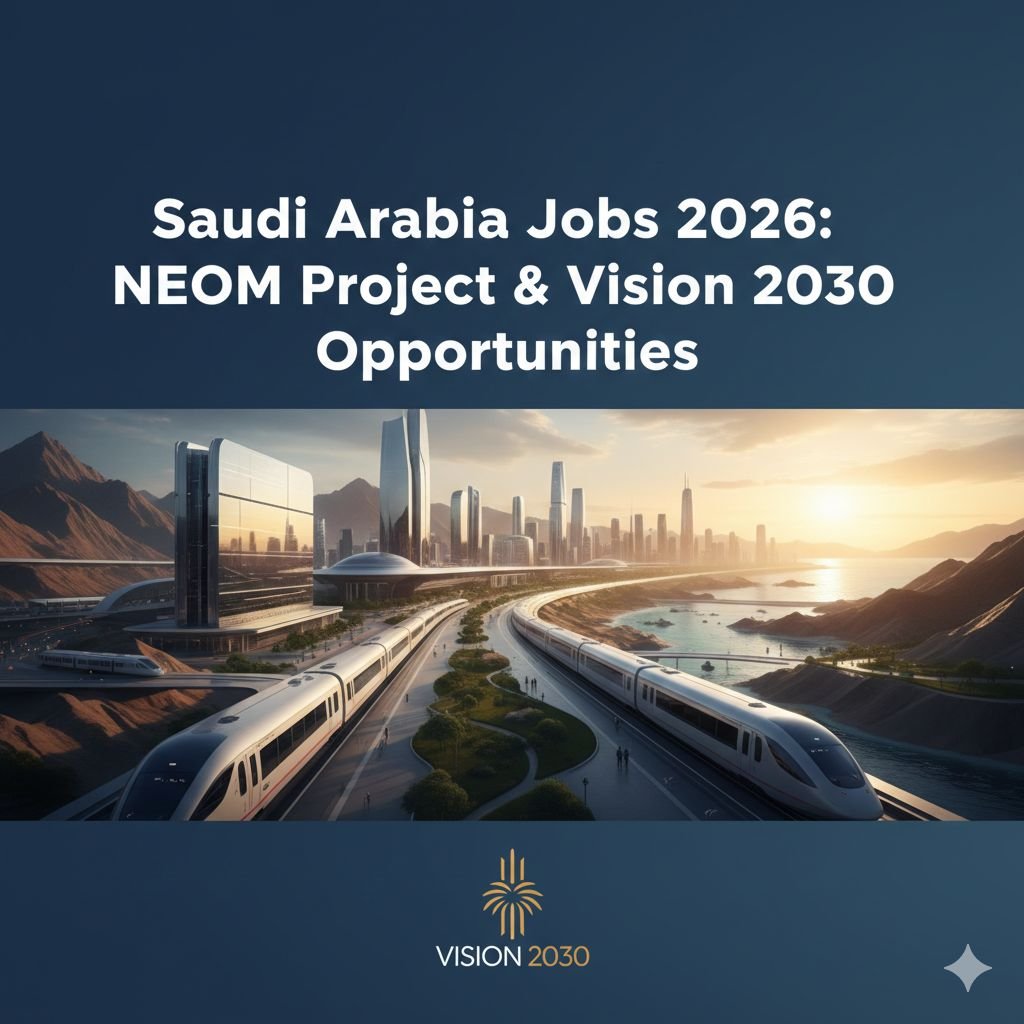
Saudi Arabia Jobs 2026: NEOM Project & Vision 2030 Opportunities

Saudi Jobs 2026 | NEOM Project & Vision 2030 Career Guide

If you’ve been watching the news from Saudi Arabia lately, you already know: something big is happening. Unemployment has dropped to just 2.8% . Female employment has nearly tripled in a decade . And NEOM—the $500 billion mega-city—is moving from blueprint to reality, bringing thousands of jobs with it .

The Big Picture: Saudi Arabia’s Labor Market in 2026

First, the context. Ten years into Vision 2030, the transformation is undeniable.

Unemployment is at an all-time low. By mid-2025, Saudi unemployment hit 2.8% —down from over 12% at the start of the decade . That’s not just a statistic; it means employers are actively competing for talent.

More Saudis are choosing the private sector. Remember when everyone wanted a government job? That’s changing fast. Only 10% of male jobseekers now exclusively target public sector roles, down from 60% a decade ago . The private sector now employs 52.8% of Saudi workers .

Women are entering the workforce at historic rates. Female employment jumped from 11% in 2015 to 32% in 2025 . Among mothers, the increase is even more dramatic—from 8% to 45% . This isn’t just policy; it’s a cultural shift.

The “Jadarat” platform is now your starting point. In late 2025, the government launched Jadarat, the unified national employment platform . Already, over 114,000 jobseekers have found work through it, with more than 48,000 employers actively recruiting . If you’re a Saudi national looking for work, start here.

NEOM: Where the Future is Hiring Now

Let’s talk about the project everyone wants to be part of.

NEOM isn’t one project—it’s dozens, spanning energy, tourism, technology, construction, and environmental restoration. And in early 2026, the hiring has intensified.

Green Hydrogen: 600 Tonnes Per Day, Thousands of Jobs

The NEOM Green Hydrogen Company (NGHC) is building the world’s largest green hydrogen plant at Oxagon . When fully operational at the end of 2026, it will produce 600 tonnes of carbon-free fuel daily and save the planet 5 million tonnes of CO₂ annually .

NGHC recently held a virtual career fair that saw over 9,000 registrations . They’re hiring across:

  • Corporate functions
  • EHSS (Environment, Health, Safety, Security)
  • Risk management
  • Operations & Maintenance
  • Finance
  • IT & Cyber Security 

CEO Wesam Alghamdi put it plainly: “NGHC’s mission aligns with Saudi Vision 2030’s goals of economic diversification and sustainability. We are building a skilled team to deliver the world’s largest green hydrogen plant” .

Currently, 43% of NGHC’s workforce are Saudi nationals, and 16% are women . They’re actively partnering with Saudi universities to train the next generation.

Current NEOM Job Openings (Real Listings)

Scraping job boards reveals the sheer diversity of roles available right now. Here are real, active listings from early 2026 :

Engineering & Construction:

  • QA/QC Piping Engineer & Inspector – 10+ years experience, transferable iqama 
  • Senior Planning Engineer – Primavera P6, 7-12 years 
  • Electrical Engineer – NEOM Primary Nursery Facility 
  • BIM Senior Manager – Design Engineering, 15+ years, Revit/Rhino 

Leadership & Strategy:

  • Program Director – 25+ years experience, Jeddah/NEOM 
  • Director of City Public Realm Design – 25+ years, urban projects 
  • Director of Design Management – THE LINE 
  • Senior Manager – City Design Integration 

Environmental & Marine:

  • Campus Operations Coordinator – Coral Reef Restoration Project 
  • Reefscape Project Coordinator – 3+ years, marine/environmental background 
  • Diver & Dive Centre Supervisor 

Technology & Digital:

  • Cloud & AI Infrastructure Sales Executive – Oracle, Riyadh 
  • Senior Solution Architect – Physical security, IoT, AI 
  • Salesforce Services Sales Lead 
  • Process Senior Specialist – Legal & compliance 

Other Roles:

  • Estimation Manager – Electrical, civil, construction 
  • Safety Engineer – NEBOSH IGC, 8+ years 
  • Senior Project Engineer – Formwork, 12+ years 
  • Planning & Coordination Specialist 

What employers want: For technical roles, 10+ years experience is common. For leadership, 25+ years isn’t unusual. Saudi nationals are strongly preferred, but international talent is still being recruited for specialized positions .

New Saudization Rules: What Changes in April 2026

Here’s a critical update for both employers and jobseekers.

Effective April 19, 2026, Saudization targets for sales and marketing roles are increasing significantly .

For marketing professions (10 roles including marketing manager, PR manager, marketing specialist, graphic designer):

  • Current requirement: 30% Saudi nationals
  • New requirement: 60% Saudi nationals
  • Applies to companies with 3+ workers in these roles 

For sales professions (9 roles including sales manager, sales specialist, sales representative, commodity broker):

  • Current requirement: 15% (for certain roles at companies with 5+ workers)
  • New requirement: 60% Saudi nationals 

Salary threshold: Saudi employees must earn at least SAR 5,500 per month (registered with GOSI) to count toward the quota .

Penalties for non-compliance: Service suspension, including employee transfer facilities and work permit renewals .

What this means: If you’re a Saudi national with sales or marketing experience, your value just went up significantly. If you’re an employer, you need to review your workforce composition immediately.

The ICT Sector: 65,000 Saudis and Counting

Technology is the backbone of Vision 2030, and the numbers prove it.

Between 2020 and mid-2025, the Human Resources Development Fund (HRDF) contributed to the employment of 65,000 Saudi men and women in the ICT sector .

Key facts:

  • Employment sustainability rate: 81% (up from 49% in 2020) 
  • 3,877 Saudis benefited from on-the-job training in ICT 
  • 76 professional certifications supported in AI, data science, cybersecurity, digital engineering 
  • ICT sector contribution to GDP: 15% (up from 10%) 

Target specializations: Big data, cybersecurity, network management, AI, digital knowledge .

If you’re considering a tech career in Saudi Arabia, the government is literally investing billions to train and place you.

Tourism & Hospitality: 400,000-600,000 New Jobs

Tourism Minister Ahmed Al Khateeb recently announced at the Global Labour Market Conference that Saudi Arabia aims to create between 400,000 and 600,000 new hospitality jobs under Vision 2030, backed by large-scale training programmes .

Globally, tourism supports 370 million jobs and contributes 10% of GDP—and Saudi Arabia is positioning itself as a top-tier destination .

How to Actually Find a Job in Saudi Arabia (2026 Edition)

For Saudi Nationals:

  1. Start with Jadarat. This is the official unified platform. Register, upload your CV, and set job alerts .
  2. Check HRDF programs. They’re actively funding training and placement, especially in ICT, sales, and technical fields .
  3. Target companies with Saudization quotas. They need you. Negotiate.

For Expats:

  1. Focus on specialized, high-experience roles. NEOM is still hiring internationally for positions requiring 10-25+ years of experience .
  2. Ensure you have transferable iqama. Most NEOM contractor roles require candidates already in KSA .
  3. Target sectors with expat demand: Engineering, IT/cybersecurity, project management, healthcare, and niche technical roles.
  4. Use Bayt.com, LinkedIn, and niche job boards. NEOM-specific roles often appear on these platforms .

Red flag to avoid: Jobs requiring you to “pay for processing” or “sponsorship transfer fees.” Legitimate employers cover these costs.

The Bottom Line: 2026 is Your Year

Saudi Arabia’s labor market has transformed faster than almost anyone predicted. Unemployment is down, women are entering the workforce in unprecedented numbers, and mega-projects like NEOM are actively hiring.

For Saudi nationals: You have never been more in demand. Use Jadarat, leverage HRDF training programs, and target high-growth sectors like ICT, green energy, and tourism.

For international talent: The door is still open—but it’s narrower. Bring deep expertise, patience, and a willingness to transfer knowledge. The roles that remain are senior, specialized, and competitive.

Vision 2030 isn’t a distant goal anymore. It’s happening now, and the jobs are real.


Frequently Asked Questions (FAQs)

1. What is the current unemployment rate in Saudi Arabia?

As of mid-2025, the overall unemployment rate in Saudi Arabia reached a record low of 2.8% , reflecting the success of labor market reforms under Vision 2030 

2. How do I apply for NEOM jobs in 2026?

NEOM and its partners (like NGHC) recruit through official career portals, job fairs, and platforms like Bayt.com and LinkedIn. For Saudi nationals, the Jadarat platform is the recommended starting point . Many contractor roles require candidates to already be in KSA with transferable iqama .

3. What is the Jadarat platform?

Jadarat is the unified national employment platform launched by the Ministry of Human Resources and Social Development in late 2025. It centralizes job seeker data and connects candidates with opportunities in both public and private sectors. Over 114,000 jobseekers have already been employed through it .

4. What are the new Saudization targets for 2026?

From April 19, 2026, companies with three or more employees in specific sales and marketing roles must achieve 60% Saudi national employment in those positions, up from 30% (marketing) and 15% (sales) respectively. Non-compliance can result in service suspensions 
5. Is NEOM hiring international workers in 2026?

Yes, but primarily for senior, specialized roles requiring significant experience (often 10-25+ years). NEOM and its partners remain committed to attracting both local and global talent . However, localization is a priority, and many postings explicitly seek candidates already in Saudi Arabia .

🇸🇦 How to Land a Job in Riyadh – 2025 Guide for Expats and Locals

How to Land a Job in Riyadh – 2025 Guide for Expats and Locals

Riyadh, the capital of Saudi Arabia, is undergoing a transformation. Fueled by Vision 2030, the city is becoming a global hub for finance, tech, healthcare, and tourism. Whether you’re a Saudi national or an expat, landing a job here requires more than just submitting a CV—it demands preparation, networking, and cultural fluency.

Step-by-Step Guide to Getting Hired in Riyadh

1. Understand the Job Market

Saudi Arabia’s labor market is shaped by two forces:

  • Vision 2030 diversification: Growth in tech, tourism, healthcare, and green energy
  • Saudization (Nitaqat): Preference for Saudi nationals in certain sectors

Top hiring sectors in Riyadh (2025):

  • Technology & AI: Software engineers, data analysts, cybersecurity experts
  • Healthcare: Nurses, lab technicians, hospital administrators
  • Finance: Accountants, auditors, compliance officers
  • Construction & Engineering: Project managers, civil engineers
  • Retail & E-commerce: Sales agents, digital marketers, logistics coordinators
  • Education: ESL teachers, curriculum developers, academic advisors

2. Prepare Your Documents

You’ll need:

  • Updated CV (in English and optionally Arabic)
  • Cover letter tailored to each job
  • Educational certificates (attested by Saudi embassy)
  • Experience letters from past employers
  • Passport copy and professional photo
  • Portfolio (for creative or tech roles)

3. Choose the Right Visa Path

  • Employment visa: Sponsored by your employer
  • Freelancer visa: Available for select professions
  • Investor visa: If starting a business
  • Dependent visa: If joining family already in KSA

Your employer typically handles the Iqama (residency permit) after hiring.

4. Use Trusted Job Portals

  • Bayt.com – Most popular in the Gulf
  • LinkedIn – Great for networking and direct applications
  • Nokryan – Saudi-focused listings
  • Saudiajobs.net – Verified local roles
  • GulfTalent – Mid-to-senior level jobs

5. Network Locally and Online

  • Attend career fairs and industry events in Riyadh
  • Join LinkedIn groups focused on Saudi careers
  • Connect with recruiters and HR managers directly
  • Use referrals—they’re highly valued in Saudi hiring culture

6. Ace the Interview

  • Dress formally (business attire)
  • Be punctual and respectful
  • Prepare for both technical and behavioral questions
  • Highlight your adaptability, teamwork, and cultural awareness
  • Expect interviews in English, but some may include Arabic segments

7. Understand Work Culture

  • Workweek: Sunday to Thursday
  • Working hours: Typically 8–9 hours/day
  • Hierarchical structure: Respect for seniority is key
  • Communication: Polite, formal, and often indirect
  • Religion and culture: Be mindful of prayer times and public conduct

8. Negotiate Your Offer

Typical packages include:

  • Basic salary
  • Housing allowance
  • Transport allowance
  • Medical insurance
  • Annual flight ticket
  • End-of-service benefits

Always ask for a written contract and clarify probation period, leave entitlements, and notice terms.

9. Stay Compliant

  • Respect labor laws and Saudization quotas
  • Renew your Iqama on time
  • Avoid working for multiple employers unless legally permitted
  • Keep copies of all contracts and correspondence

Riyadh Job Market Snapshot (2025)

SectorDemand LevelAverage Salary (SAR/month)
Tech & AIHigh12,000–25,000
HealthcareHigh8,000–18,000
FinanceMedium10,000–20,000
ConstructionMedium9,000–16,000
Retail & SalesModerate5,000–10,000
EducationModerate6,000–12,000

FAQs

Can I get a job in Riyadh without speaking Arabic?

Yes, especially in tech, healthcare, and multinational companies, but basic Arabic helps in daily life.

Do I need a degree to work in Riyadh?

Not always. Many roles accept diplomas or certifications, especially in sales, hospitality, and customer service.

How long does the hiring process take?

Typically 2–6 weeks, depending on visa processing and background checks.

Is it safe to work in Riyadh?

Yes. Riyadh is considered safe and business-friendly, with strict labor protections.

Can I switch jobs after arriving?

Yes, but you’ll need a No Objection Certificate (NOC) or wait until your contract ends.

Are remote jobs available in Riyadh?

Yes. Many companies now offer hybrid or remote roles, especially in tech and marketing.

Should I Put My Photo on My CV in the GCC? (2025 Guide)

Two CVs compared: with and without a photo, for job applications in the GCC region

This is one of the most common questions from job seekers applying for roles in the Gulf Cooperation Council (GCC) countries. The answer isn’t a simple yes or no; it depends on your industry, the specific country, and the company culture.

Based on current hiring practices in 2025, here’s a definitive guide to help you decide whether to include your photo on your CV for jobs in the UAE, Saudi Arabia, Qatar, and other GCC states.

Quick Answer: The General Rule

Yes, it is generally recommended and often expected to include a professional photo on your CV for most jobs in the GCC, particularly in customer-facing, corporate, and senior roles. However, there are important exceptions and best practices to follow.


The GCC CV Photo Decision Matrix

SituationRecommendationReason
Corporate Jobs (UAE, Qatar, Bahrain)✅ Yes, IncludeExpected professional norm
Saudi Arabia & Oman (Conservative sectors)✅ Yes, IncludeShows cultural respect
Tech Startups / Western Companies⚠️ OptionalMay focus on skills over appearance
Government / Public Sector Roles✅ Yes, IncludeOften a formal requirement
Hospitality & Customer-Facing Roles✅ Yes, IncludeHelps assess professional presentation
Academic / Research Positions❌ Usually AvoidFocus should be on publications
Applying to International Companies⚠️ Check PreferenceSome may have anti-bias policies
Your Photo is Unprofessional❌ Do Not IncludeA bad photo is worse than no photo

How to Do It Right: The Professional Photo Guide

If you choose to include a photo, follow these rules strictly:

✅ The DOs:

  • Use a professional headshot: High-resolution, sharp focus.
  • Wear professional attire: Business formal (suit, shirt, blouse).
  • Use a neutral background: Plain white, light gray, or light blue.
  • Maintain a neutral expression: A slight, professional smile is acceptable.
  • Ensure good lighting: No shadows or harsh flashes on your face.
  • Crop appropriately: From mid-chest to just above the head.
  • Place it correctly: Top-right corner of the first page.

❌ The DON’Ts:

  • No selfies or casual photos.
  • No group photos (cropped or not).
  • No distracting backgrounds.
  • No wearing casual clothes, sunglasses, or hats.
  • No outdated photos (use one from the last 2 years).

Example of a good photo: A professional headshot in business attire against a plain background, with a neutral expression and good lighting.


Country-by-Country Breakdown

1. United Arab Emirates (UAE) & Qatar

  • Expectation: Highly Recommended.
  • Reason: The professional norm across most industries. Recruiters are used to seeing photos and it helps them put a face to a name, especially in client-facing roles.

2. Saudi Arabia & Oman

  • Expectation: Recommended.
  • Reason: Shows cultural adaptability. For roles in more conservative industries, professional dress and presentation in the photo are particularly important.

3. Kuwait & Bahrain

  • Expectation: Generally Expected.
  • Reason: Similar to the UAE, it is a common part of the professional application process.

The Pros and Cons

Pros of Including a Photo:

  • Meets Local Expectations: Adheres to GCC professional norms.
  • Personalizes Your Application: Helps you be memorable.
  • Shows Professionalism: A good photo demonstrates you take your career seriously.
  • Advantage for Client-Facing Roles: Allows employers to assess your professional presentation.

Cons of Including a Photo:

  • Potential for Unconscious Bias: A recruiter might make assumptions based on appearance.
  • Takes Up Space: Uses valuable space on your CV.
  • If Done Poorly, It Hurts You: An unprofessional photo will damage your chances.
  • Not Always ATS Friendly: Some automated systems can’t read images.

What If I Don’t Want to Include a Photo?

You have a few options:

  1. Have a Professional LinkedIn Profile: If your CV doesn’t have a photo, recruiters will look you up on LinkedIn. Ensure your LinkedIn profile has an excellent, professional photo.
  2. Be Prepared to Send It Later: You can omit it from the CV but be ready to email a professional photo if the recruiter requests it later in the process.
  3. Research the Company: For multinational tech companies or startups with a strong Western culture, a photo-free CV is often perfectly acceptable.

Frequently Asked Questions (FAQ)

What is the ideal photo size for a CV?

Approximately 3.5 cm x 4.5 cm (passport size). It should be large enough to be clear but not so large that it dominates the page.

Can I use a photo with national dress?

For GCC nationals, professional photos in national dress (e.g., Kandura, Abaya) are perfectly acceptable and often preferred. For expats, Western business formal is standard.

What if my industry doesn’t typically use photos?

If you’re in tech, engineering, or academia, it’s more optional. Check the standard practice for your specific field within the GCC.

 Will not having a photo get my CV rejected?

 In most cases, no. But for many traditional HR managers, it may seem like an oversight or a lack of effort. Including one is often the safer choice.

Should I smile in my CV photo?

A slight, professional smile is fine and can make you look approachable. Avoid a big, casual grin. A neutral expression is also perfectly acceptable.


Final Verdict

For 95% of applications in the GCC, you should include a professional photo on your CV.

It is the cultural and professional standard. The key is to ensure the photo is high-quality, recent, and professional. A bad photo will hurt your chances far more than having no photo at all.

When in doubt, include the photo. It demonstrates that you understand and respect regional business norms, which is a valuable soft skill in itself.

Need a professional CV template designed for the GCC market? Download our free ATS-friendly template here.


Author Bio:

About Gulf Careers Hub: We provide expert, localized career advice for professionals navigating the job markets of the UAE, Saudi Arabia, Qatar, and the wider GCC. Our guidance is tailored to the unique cultural and professional nuances of the region.


Post a Job Opening

Fill in the details below. Your job posting will be reviewed by our team.

Basic Information

Specify years of experience required

Location & Salary

Qualifications & Skills

Specify educational requirements
Separate skills with commas

Company Details

Job Details

Contact Information