Gulf Careers Hub

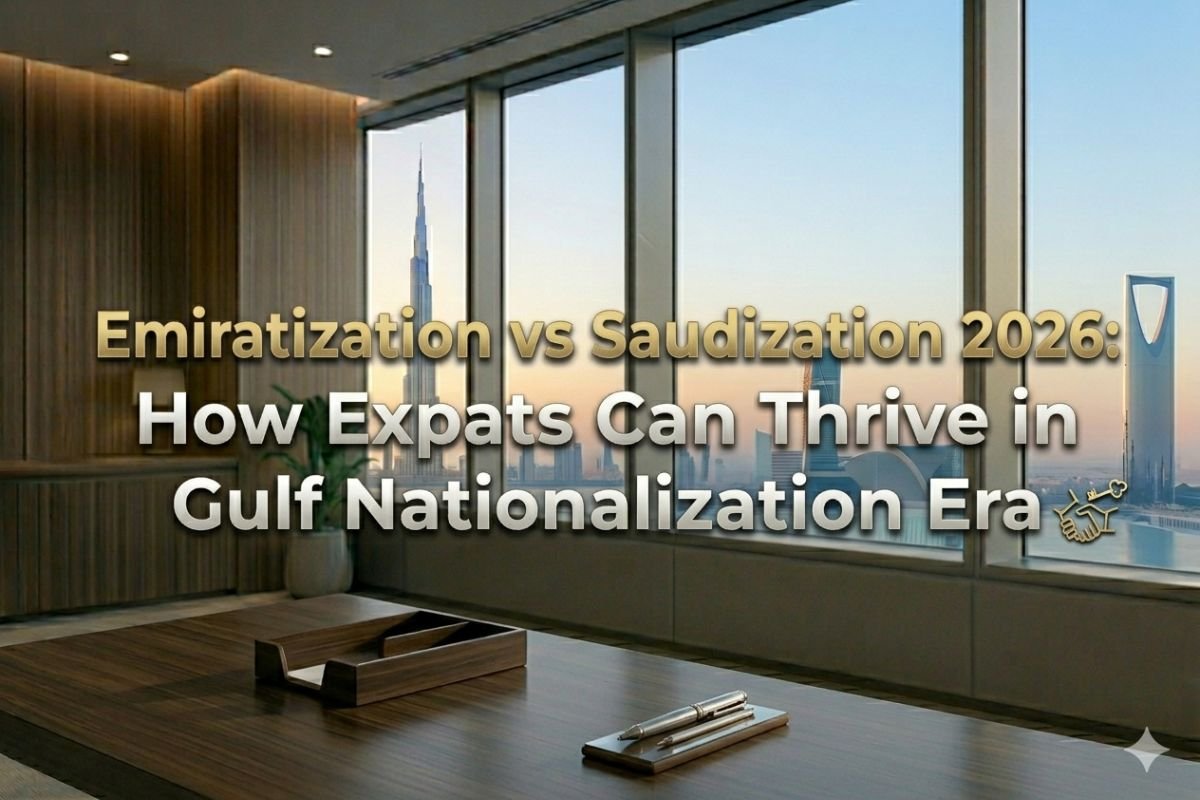
Emiratization vs Saudization 2026: How Expats Can Thrive in Gulf Nationalization Era

Emiratization vs Saudization 2026: Expats Guide to Gulf Nationalization

The Gulf Cooperation Council (GCC) region has long been a magnet for expatriates seeking lucrative career opportunities, tax-free salaries, and world-class infrastructure. However, the landscape is shifting dramatically. By 2026, nationalization programs—Emiratization in the UAE and Saudization in Saudi Arabia—have evolved from policy buzzwords into formidable frameworks reshaping the job market. If you’re an expat wondering whether there’s still room for you in this new era, the answer is yes—but only if you adapt strategically.

Understanding the 2026 Landscape

Emiratization: The UAE’s Accelerated Push

The UAE’s Emiratization strategy has entered its most aggressive phase yet. The government isn’t just encouraging private sector companies to hire Emiratis; it’s mandating it with teeth. As of 2026, companies with 50 or more employees must ensure that Emiratis comprise at least 10% of their skilled workforce, with this target set to increase incrementally through 2027.

Key 2026 updates include:

  • Sector-specific targets: Banking, insurance, and real estate now face higher quotas than other industries
  • Financial penalties: Non-compliant companies face monthly fines of AED 7,000 per missing Emirati hire
  • Nafis program expansion: Enhanced benefits for Emirati job seekers, including salary top-ups and training subsidies, making them more competitive candidates

The message is clear: Emiratization isn’t a suggestion—it’s a business imperative.

Saudization: Saudi Arabia’s Vision 2030 in Action

Saudi Arabia’s Saudization program has similarly intensified. The Kingdom’s Vision 2030 has supercharged efforts to reduce unemployment among Saudi nationals, currently hovering around 8% but targeted for significant reduction.

2026 Saudization highlights:

  • Nitaqat system refinement: The color-coded classification system (Platinum, High Green, Medium Green, Low Green, Red, and Yellow) now features stricter requirements across all tiers
  • Key sector mandates: Retail, hospitality, engineering, and healthcare face some of the highest Saudization rates, often requiring 30-70% Saudi national representation
  • Localization of knowledge: Beyond headcount, there’s increasing emphasis on knowledge transfer and Saudi leadership development

The Expat Reality Check: Challenges and Opportunities

Let’s be honest—these policies present real challenges for expatriates. Visa restrictions have tightened, certain job categories are now reserved exclusively for nationals, and competition for remaining positions has intensified. Some industries, particularly administrative and mid-level management roles, have seen significant expat displacement.

However, the narrative isn’t one of wholesale expat exclusion. Instead, it’s about evolution and specialization.

Strategic Adaptation: How Expats Can Thrive

1. Develop Niche Expertise in High-Demand Sectors

Nationalization policies primarily target roles that can be reasonably filled by qualified nationals. This creates opportunities in specialized areas where local talent pools remain shallow.

2026 high-opportunity sectors for expats:

  • Advanced technology and AI: Saudi Arabia and the UAE are investing billions in AI, fintech, and smart city infrastructure
  • Healthcare specialties: Complex surgical specialties, rare disease treatment, and healthcare technology integration
  • Renewable energy: Both nations are pivoting aggressively from oil dependency to solar and hydrogen economies
  • Executive leadership and transformation consulting: Guiding organizations through digital and cultural transformation

The key is becoming genuinely irreplaceable—not just experienced, but possessing specialized knowledge that takes years to develop.

2. Embrace Knowledge Transfer as Your Value Proposition

Forward-thinking expats are repositioning themselves not as permanent fixtures, but as knowledge transfer specialists. Companies still need experienced professionals to upskill national workforces, but they need them with clear exit strategies and mentorship mindsets.

Consider positioning yourself as:

  • A mentor and coach for emerging Emirati and Saudi leaders
  • A process documentation specialist who creates sustainable systems
  • A transition consultant who helps organizations navigate nationalization while maintaining operational excellence

This approach aligns perfectly with government objectives while securing your immediate value.

3. Invest in Cultural Fluency and Language Skills

Technical skills get you hired; cultural intelligence keeps you employed. In 2026, Arabic language proficiency has become a significant differentiator, even in international companies. Beyond language, deep understanding of local business customs, decision-making hierarchies, and relationship-building protocols separates thriving expats from struggling ones.

Consider:

  • Formal Arabic language certification (ACTFL or similar)
  • Cultural intelligence training specific to Gulf business contexts
  • Building genuine relationships with national colleagues beyond transactional interactions

4. Explore Emerging Free Zones and Specialized Economic Areas

Both countries have created economic zones with distinct regulatory frameworks that offer alternative pathways for expat professionals.

In the UAE:

  • Dubai International Financial Centre (DIFC) and Abu Dhabi Global Market (ADGM) operate under common law frameworks with specific employment regulations
  • Dubai Silicon Oasis and Masdar City focus on technology and sustainability with specialized talent needs

In Saudi Arabia:

  • King Abdullah Economic City (KAEC) and NEOM are essentially building economies from scratch, requiring diverse international expertise
  • Special Economic Zones (SEZs) offer 50-year tax holidays and streamlined visa processes for strategic sectors

These zones often operate with more flexible employment policies while still contributing to national economic goals.

5. Consider Entrepreneurship and Investment Pathways

If traditional employment feels increasingly constrained, the Gulf is actively welcoming expat entrepreneurs and investors. The UAE’s Golden Visa program and Saudi Arabia’s Premium Residency (Saudi Green Card) offer long-term stability for those willing to invest in local economies.

2026 opportunities include:

  • Tech startups: Both governments offer substantial funding and incubator support
  • Consulting boutiques: Specialized advisory services for nationalization compliance and transformation
  • Import/export businesses: Leveraging international networks for local market entry

The Mindset Shift: From Expat to Global Citizen

Perhaps the most important adaptation is psychological. The era of the “permanent expat” who spends decades in the Gulf without deeper integration is ending. The new model is the global citizen who contributes significantly, builds local capacity, and maintains flexibility.

This means:

  • Viewing Gulf experience as one chapter in a global career, not necessarily a lifetime commitment
  • Building transferable skills and international networks that work anywhere
  • Contributing to local communities beyond the workplace
  • Maintaining awareness that policies will continue evolving—agility is essential

Looking Ahead: The 2027-2030 Horizon

Nationalization will intensify, not retreat. The UAE aims for 20% Emiratization in skilled private sector roles by 2028. Saudi Arabia targets 12 million private sector jobs for nationals by 2030. These aren’t aspirational goals—they’re backed by policy mechanisms and political will.

However, this doesn’t mean expat exodus. It means expat evolution. The Gulf will continue needing international talent, but the nature of that talent will shift toward higher specialization, entrepreneurship, and strategic advisory roles.

Conclusion: Thriving Through Adaptation

The Gulf nationalization era isn’t the end of expat opportunity—it’s the end of expat complacency. Professionals who treat these markets as easy money destinations will struggle. Those who bring genuine expertise, embrace knowledge transfer, develop cultural fluency, and remain strategically agile will not just survive but thrive.

The question isn’t whether there’s a place for expats in the Gulf’s future. There absolutely is. The question is whether you’re prepared to earn that place through continuous value creation rather than historical entitlement.

The Gulf is transforming. Smart expats are transforming with it.

Green Careers Gulf 2026: Renewable Energy Jobs Booming in UAE, Saudi & Oman

Green Careers Gulf 2026: Renewable Energy Jobs UAE, Saudi

The Arabian Peninsula is undergoing a transformation that would have seemed impossible just a decade ago. While oil has long been the region’s economic lifeblood, 2026 marks a pivotal moment where green careers are no longer niche positions—they’re becoming the engine of employment growth across the Gulf Cooperation Council (GCC).

If you’re considering a career pivot or wondering where the next wave of opportunity lies, the renewable energy sector in the UAE, Saudi Arabia, and Oman deserves your attention. Here’s why this shift matters and where the jobs are actually opening up.

The Policy Push Driving This Boom

The UAE has positioned itself as the region’s clean energy leader through concrete policy frameworks. The National Energy Strategy 2050, updated in late 2024, now targets 50% clean energy in the national mix—up from the previous 44% goal. More significantly, the Emirates has mandated that all new government buildings achieve net-zero status by 2027, creating immediate demand for energy auditors, sustainable architects, and smart grid specialists.

Dubai’s Green Building Regulations have evolved beyond voluntary certifications. Since January 2026, commercial developments over 50,000 square meters must integrate renewable generation capacity equivalent to 15% of their projected energy consumption. This isn’t aspirational—it’s enforced through building permit approvals, meaning project delays occur without compliance.

Saudi Arabia’s approach operates at an entirely different scale. The Saudi Green Initiative and Vision 2030 aren’t merely environmental commitments; they’re economic diversification strategies with employment targets attached. The Kingdom has publicly committed to generating 50% of its electricity from renewable sources by 2030, requiring an estimated 175 gigawatts of installed capacity—up from negligible levels in 2020.

What makes this relevant for job seekers? The Human Resources Development Fund (Hadaf) has introduced specific subsidies for renewable energy employers, covering up to 50% of training costs for Saudi nationals entering solar, wind, and hydrogen sectors. The National Renewable Energy Program (NREP) now requires 30% local content in project development, forcing international developers to build local teams rather than fly in expatriate workforces.

Oman, often overlooked in regional energy discussions, has emerged as perhaps the most pragmatic player. The National Energy Strategy 2040 recognizes that the Sultanate’s oil reserves face depletion within two decades, creating genuine urgency. The Hydrogen Oman (HYDRO) initiative, launched in 2023, has accelerated beyond projections—Oman now targets 1 million tons annually of green hydrogen production by 2030.

The Oman Vision 2040 implementation follow-up unit has mandated that all new industrial zone developments in Duqm and Sohar include renewable energy training centers. This isn’t abstract planning; these facilities opened in late 2025 and are actively recruiting instructors and curriculum developers.

Where the Jobs Actually Are

Solar Energy: Beyond Installation

The solar sector remains the largest employer, but the nature of work has shifted. Utility-scale project development now dominates hiring in the UAE, with Mohammed bin Rashid Al Maktoum Solar Park’s Phase V completion requiring hundreds of project managers, grid integration specialists, and performance engineers.

In Saudi Arabia, the Sudair and Al Shuaibah solar projects—among the world’s largest single-site facilities—have moved from construction into operations and maintenance. This transition creates demand for predictive maintenance technicians using drone inspection and thermal imaging, SCADA system operators, and performance optimization analysts who can maximize output during dust storm conditions that plague the region.

Oman’s solar sector differs significantly. With less available land than its neighbors, the Sultanate focuses on agrivoltaics—combining agriculture with solar generation. This hybrid approach requires specialists who understand both crop science and photovoltaic systems, a genuinely rare skill combination commanding premium salaries.

Green Hydrogen: The Emerging Heavyweight

If solar represents today’s employment, green hydrogen represents tomorrow’s. The UAE’s Al Reyadah facility in Abu Dhabi has expanded operations, but the real growth lies in export infrastructure. The Abu Dhabi National Oil Company (ADNOC) and TAQA joint venture is constructing facilities specifically for European and Asian export markets, requiring liquefaction specialists, pipeline integrity engineers, and international certification managers who understand EU regulatory frameworks.

Saudi Arabia’s NEOM project contains Helios Green Fuels, arguably the world’s most ambitious green hydrogen facility. The project entered full production phases in early 2026, creating an estimated 3,000 direct positions in electrolyzer operations, desalination integration, and ammonia conversion for maritime transport.

The hiring profile here favors chemical engineers with process safety experience, electrolyzer maintenance technicians, and logistics coordinators familiar with hazardous material handling. NEOM’s unique governance structure—operating outside traditional Saudi regulatory frameworks—allows faster work visa processing for specialized technical roles.

Oman’s hydrogen strategy targets European export markets specifically, leveraging existing port infrastructure. The Port of Duqm is being retrofitted for hydrogen export, creating immediate demand for maritime safety inspectors, storage facility engineers, and customs specialists familiar with emerging international hydrogen trade standards.

Energy Storage and Grid Modernization

The intermittent nature of renewable generation has created an unexpected employment sector: battery storage and grid stabilization. The UAE’s Etihad Water and Electricity company has deployed grid-scale battery systems across the Northern Emirates, requiring battery management system technicians and grid stability analysts.

Saudi Arabia faces particular challenges given its geographical scale. The Saudi Electricity Company is implementing high-voltage direct current (HVDC) transmission lines connecting renewable generation in remote areas to consumption centers. This infrastructure build-out employs transmission line engineers, substation automation specialists, and grid protection relay technicians.

Circular Economy and Sustainable Construction

Perhaps the most accessible entry point for career changers lies in green building and sustainable materials. The UAE’s Estidama Pearl Rating System, mandatory for new developments in Abu Dhabi, requires sustainability consultants during design phases. These roles emphasize life-cycle assessment, embodied carbon calculation, and material sourcing verification—skills obtainable through certification programs rather than decade-long career tracks.

Saudi Arabia’s Saudi Green Building Forum has professionalized this sector, creating standardized job classifications for LEED AP and WELL AP certified professionals. The Riyadh Sustainability Week events now include dedicated career fairs where employers actively recruit for positions that didn’t exist five years ago.

Skills That Actually Get You Hired

After reviewing hundreds of job postings across these markets, certain patterns emerge. Technical certifications carry more weight than general degrees—specifically NABCEP (North American Board of Certified Energy Practitioners) for solar, Certified Energy Manager (CEM) for efficiency roles, and Project Management Professional (PMP) with energy sector specialization.

Language capabilities matter more than expected. While English dominates technical operations, Arabic proficiency differentiates candidates for roles involving regulatory compliance or government liaison. For Oman’s hydrogen export focus, French and German language skills provide genuine advantages given European partnership structures.

Digital literacy has become non-negotiable. Building Information Modeling (BIM) with energy analysis plugins, Python for data analysis in performance optimization, and drone operation licenses for inspection work appear repeatedly in job requirements.

The Reality Check

This growth isn’t without friction. Housing availability in remote project locations—particularly Saudi Arabia’s northern regions and Oman’s interior—remains problematic. Salary compression occurs as training programs graduate increasing numbers of local candidates, particularly affecting entry-level positions.

Regulatory uncertainty persists. While policy frameworks exist, implementation details—specifically grid connection standards and power purchase agreement structures—continue evolving. Professionals who can navigate ambiguity while maintaining technical competence find themselves rapidly promoted.

Looking Forward

The renewable energy employment boom in the Gulf isn’t a temporary construction spike. These economies are genuinely restructuring, and the skills being developed now—grid integration, hydrogen safety management, performance optimization in harsh climates—will prove transferable globally as other regions confront similar transitions.

For professionals considering relocation or career transition, 2026 offers unusual timing: the projects are funded and underway, the training infrastructure exists, and the regulatory frameworks have matured beyond experimental phases. The positions being advertised today represent operational roles rather than speculative planning positions.

The Arabian Gulf’s energy transition has moved from announcement to implementation. For those with relevant skills—or the capacity to develop them—the employment landscape has genuinely shifted.

Networking in Ramadan: How to Build Stronger Professional Relationships

Networking in Ramadan | Build Stronger Professional Relationships

Ramadan is a time of spirituality, reflection, and community. But for professionals in the Gulf, it’s also a uniquely powerful season for building deeper, more meaningful business relationships. The holy month transforms the rhythm of daily life—shorter working hours, evening gatherings, and a collective spirit of generosity create an environment where connections are made differently.

Understanding the Ramadan Business Landscape

Before diving into networking strategies, it’s essential to understand how the month changes the business environment.

Shorter Working Hours, Different Rhythms

During Ramadan, working hours across the Gulf are significantly reduced. In the UAE, typical working hours are no longer than six hours per day . Government offices in Oman operate from 9 AM to 2 PM, while private sector employees work six-hour days . This condensed schedule means business happens differently—mornings are often more focused, and afternoons are quieter as energy levels dip.

The Rise of Iftar Gatherings

As the sun sets and the fast is broken, the social scene comes alive. Banks, companies, and professional organizations frequently host Iftar dinners, inviting clients and stakeholders to share the meal . These gatherings are prime networking opportunities, blending business with the spirit of community and generosity that defines the month.

Essential Ramadan Networking Etiquette

1. Start with the Right Greeting

The simplest yet most powerful way to show respect is to begin conversations with an appropriate Ramadan greeting. A warm “Ramadan Kareem” (Generous Ramadan) or “Ramadan Mubarak” (Blessed Ramadan) immediately signals cultural awareness and respect . This small gesture can quickly bridge cultural gaps and create a positive first impression.

2. Timing Is Everything

When invited to an Iftar, punctuality matters. If the invitation says 6:30 PM, aim to arrive 20 minutes earlier . Arriving late might unintentionally suggest you’re only attending for the meal. Being on time demonstrates respect for your host and the significance of the gathering.

3. Dress Conservatively and Respectfully

Ramadan calls for heightened attention to dress codes. For men, avoid shorts or open shirts—smart casual is the appropriate choice. Women should opt for clothing that doesn’t reveal cleavage, shoulders, or legs . When attending gatherings in private homes, be prepared to remove your shoes at the door, and consider bringing your own slippers .

4. Gift-Giving with Thoughtfulness

While elaborate gifts aren’t expected, a thoughtful gesture is always appreciated. A box of halal-certified dates or高品质 chocolates is a courteous and appropriate choice . These small tokens reflect the spirit of generosity without creating obligation.

5. Mind Your Manners During the Day

For those not fasting, discretion is key during daylight hours. Avoid eating, drinking, or smoking in public places, including in your car . In the office, consume food and drinks discreetly at your desk or in designated areas out of sight of fasting colleagues . This simple consideration builds immense goodwill.

6. Speak Softly, Listen Attentively

Ramadan emphasizes reflection and calm. This extends to communication—speak quietly both in the office and on the phone . More importantly, practice active listening. In Middle Eastern business culture, listening is often valued more than speaking . Ask open-ended questions, avoid interrupting, and show genuine interest in your conversation partner.

Where to Network During Ramadan

Iftar Events and Gatherings

Professional Iftar events are the cornerstone of Ramadan networking. Companies across industries invite clients and partners to break the fast together . These events range from intimate dinners to large gatherings in Ramadan tents. Accept invitations whenever possible—they’re opportunities to connect in a relaxed, communal setting.

Attendees can include bankers, fund managers, insurance executives, and entrepreneurs . The shared experience of breaking fast creates a sense of camaraderie that’s harder to achieve in formal business meetings.

Community Initiatives and Festivals

Look for community-focused events. For example, Sharjah’s “Dhay Al Layyah” initiative brings together entrepreneurs and the public in a vibrant Ramadan atmosphere, featuring retail projects, food vendors, and traditional seating areas . These events run from 9 PM to 1 AM, offering late-night networking in a festive environment.

Such initiatives demonstrate how Ramadan fosters connections between business owners and local communities . Participating in or attending these events can introduce you to entrepreneurs and potential partners in an informal, welcoming setting.

Virtual Networking Opportunities

For those unable to attend in person, virtual networking has become increasingly accessible. During Ramadan, many organizations host webinars, panel discussions, and virtual networking sessions . These online gatherings allow professionals from around the world to connect, share insights, and expand their networks across geographical boundaries.

Strategies for Effective Ramadan Networking

1. Focus on Relationship, Not Transaction

Ramadan is fundamentally about community and spiritual reflection. Approach networking during this month with a focus on building genuine relationships rather than pushing immediate business agendas . The connections you nurture now may bear fruit long after Ramadan ends.

2. Leverage Social Media Thoughtfully

Platforms like LinkedIn, Instagram, and Twitter are powerful tools for maintaining connections . After meeting someone at an Iftar event, follow up by connecting on social media. When sending a connection request, include a personalized message referencing your meeting—this helps the other person remember your interaction .

During Ramadan, share respectful content that acknowledges the spirit of the month. This demonstrates cultural awareness and keeps you on people’s radar in a positive way.

3. Offer Support and Assistance

Ramadan emphasizes giving and generosity. As a professional, you can embody these values by offering support to others in your network . This might mean mentoring younger professionals, volunteering for community initiatives, or simply offering helpful advice to fellow job seekers or entrepreneurs. Acts of kindness strengthen relationships and leave lasting positive impressions.

4. Follow Up Thoughtfully

After networking events, timely follow-up is crucial. Send personalized messages within 24 hours, expressing gratitude for the conversation . Reference specific discussion points to show you were genuinely engaged. If you promised to share information or make an introduction, follow through promptly .

5. Be Patient and Build Long-Term Trust

In Middle Eastern business culture, trust is built over time through repeated positive interactions . Use Ramadan as an opportunity to deepen existing relationships and plant seeds for new ones. Don’t expect immediate business outcomes—focus instead on laying foundations for long-term partnerships.

What Job Seekers Should Know

For those actively seeking employment, Ramadan offers unique advantages.

Attend Community Events

Mosques, Islamic centers, and community organizations often host Iftar dinners and social gatherings during Ramadan . Job seekers can attend these events to meet professionals from various industries, share career goals, and seek advice. The informal setting makes it easier to build genuine connections.

Engage in Online Communities

Join LinkedIn groups and online forums focused on Muslim professionals or Gulf career development . Participate in discussions, share insights, and connect with individuals in your target industries. Virtual engagement during Ramadan can be particularly effective as professionals may have more flexible schedules.

Stay Organized and Energized

Job searching while fasting requires careful energy management. Schedule your most important tasks during your peak energy hours . Focus on quality over quantity—targeted, thoughtful applications are more effective than mass submissions. And crucially, take care of yourself by staying hydrated after Iftar and getting adequate rest .

Prepare for Interviews Strategically

If you secure an interview during Ramadan, prepare thoroughly. Practice answering questions clearly and concisely. If it’s a video interview, ensure you’re in a quiet, well-lit space. Don’t hesitate to suggest a time when you’re most alert .

What to Avoid During Ramadan Networking

Don’t Schedule Business Lunches

Avoid inviting Muslim colleagues or clients to business lunches during daylight hours . If you’re hosting meetings, be mindful that offering food or drink would be inappropriate. Similarly, avoid requiring Muslim employees to attend training sessions or extended meetings that could conflict with fasting schedules .

Don’t Pressure for Decisions

Energy levels and focus naturally fluctuate during Ramadan. Avoid pushing for major business decisions or contract signings during the month unless the other party initiates. Allow conversations to progress at a comfortable pace.

Don’t Forget to Confirm Plus-Ones

If you’re invited to an Iftar and wish to bring a guest, check in advance whether the invitation includes a “plus one.” Space in Ramadan tents and Iftar venues is often limited . Confirming ahead prevents awkward situations.

Don’t Photograph Without Permission

While photos may be taken at gatherings, always ask other guests for permission before photographing them . Respect people’s privacy and preferences, especially in more intimate settings.

Lessons from Ramadan That Enhance Professional Life

Beyond networking strategies, Ramadan offers timeless lessons that can transform your approach to work and relationships.

Patience and Emotional Control

Fasting teaches patience—a crucial quality when dealing with tight deadlines, demanding clients, and diverse colleagues . The self-restraint practiced during Ramadan can help professionals navigate workplace challenges with greater composure.

Discipline and Time Management

The structured rhythm of Ramadan—waking for Suhoor, working shorter hours, breaking fast at sunset—reinforces discipline and effective time management . These habits, carried forward, enhance productivity year-round.

Honesty and Integrity

Ramadan emphasizes truthfulness in all dealings. In a well-known hadith, Prophet Muhammad (PBUH) stated, “The truthful and trustworthy merchant will be with the Prophets, the truthful, and the martyrs” . Upholding honesty in professional relationships builds trust that becomes the foundation of lasting partnerships.

Self-Restraint and Fairness

Learning to pause, reflect, and respond thoughtfully rather than react impulsively is a gift of Ramadan. This measured approach serves professionals well in negotiations, conflict resolution, and decision-making .

Conclusion: Embrace the Spirit of the Season

Networking during Ramadan is fundamentally different from networking at other times. It’s slower, more intentional, and focused on genuine human connection rather than transactional outcomes. The month’s emphasis on community, generosity, and reflection creates space for relationships to deepen in meaningful ways.

By approaching Ramadan with cultural sensitivity—using appropriate greetings, respecting fasting practices, dressing conservatively, and embracing the spirit of giving—you position yourself as a trusted, respectful professional. The connections you build during these weeks can become the foundation for partnerships that last far beyond the month.

Whether you’re an entrepreneur seeking new clients, a professional expanding your network, or a job seeker exploring opportunities, Ramadan offers a unique window for authentic relationship-building. Embrace it with an open heart, and watch your professional community grow.

Ramadan Kareem.

Frequently Asked Questions (FAQs)

1. Is it appropriate to schedule business meetings during Ramadan?

Yes, but with adjustments. Working hours are shorter, and energy levels fluctuate. Schedule meetings in the morning when possible, as people are fresher. Avoid business lunches during daylight hours, and be mindful that meetings may need to be shorter or more focused than usual .

2. What should I bring if invited to an Iftar dinner?

A small, thoughtful gift is appreciated. A box of halal-certified dates or quality chocolates is an excellent choice . Avoid alcohol or non-halal items. The gesture matters more than the value—it’s the thoughtfulness that counts.

3. Can non-Muslims attend Iftar events?

Absolutely. In fact, many companies actively invite non-Muslim clients and partners to Iftar dinners as a gesture of goodwill and relationship-building . It’s a wonderful opportunity to experience the spirit of Ramadan and connect with colleagues in a meaningful setting.

4. How should I greet Muslim colleagues and clients during Ramadan?

The most common and appropriate greetings are “Ramadan Kareem” (Generous Ramadan) and “Ramadan Mubarak” (Blessed Ramadan) . These simple phrases demonstrate respect and cultural awareness, helping to build rapport instantly.

5. Is it okay to eat or drink in front of fasting colleagues?

In professional settings, it’s best to be discreet. While non-Muslims in the UAE can eat in restaurants during the day, in the office it’s considerate to consume food and drinks out of sight of fasting colleagues—at your desk, in a break room, or designated area . This small courtesy is greatly appreciated.

How to Ace Your Performance Review During Ramadan

Performance Review During Ramadan | Ace Your Review While Fasting

Ramadan is a time of spiritual reflection, discipline, and community. But if your annual or quarterly performance review falls during this holy month, you might feel a unique pressure. How do you showcase your best self when you’re fasting, running on fewer hours of sleep, and navigating shifted priorities?

Understanding the Challenge: Why Ramadan Reviews Require Strategy

Before diving into tactics, let’s acknowledge the realities of a performance review during Ramadan:

Energy Fluctuations Are Normal. Fasting affects energy levels, especially in the afternoon. Your body is adapting to a new rhythm of hydration and nutrition. This is natural and manageable with planning.

Sleep Patterns Shift. Late-night prayers (Taraweeh) and early pre-dawn meals (Suhoor) mean your sleep architecture changes. This can impact focus and cognitive performance if not managed intentionally .

Work Hours May Be Reduced. Many companies in the Gulf region implement shorter working hours during Ramadan, which can compress the time available for deep work and preparation .

Spiritual Priorities Are Heightened. Ramadan is first and foremost a month of worship. Your review preparation must honor your spiritual commitments, not compete with them.

The key is working with your body’s rhythms, not against them. Let’s explore how.

Step 1: Timing Is Everything—Schedule Strategically

When your review is scheduled during Ramadan, timing can significantly impact your performance.

Request a Morning Slot

Energy levels are typically highest in the morning, shortly after Suhoor. Your blood glucose is stable, and you haven’t yet gone many hours without hydration. Aim to schedule your review within the first 2-3 hours of your workday .

Avoid Late Afternoon

By late afternoon, energy naturally dips. If possible, request a time before 2 PM. If your company offers flexible scheduling, take advantage of it.

Consider Post-Iftar Options

Some organizations accommodate evening reviews after Iftar, when hydration and energy are restored. This can be an excellent option if your manager is open to non-traditional hours .

Pro Tip: When requesting a specific time, frame it professionally: “I want to ensure I’m at my best for our discussion. Would it be possible to schedule our review in the morning?”

Step 2: Prepare Thoroughly—But Smartly

Preparation is the foundation of any successful review. During Ramadan, you need to prepare in a way that conserves energy while maximizing impact.

Use the “Start, Stop, Continue” Framework

This simple but powerful framework helps you structure your self-assessment clearly. It’s also a method used for spiritual reflection during Ramadan, making it a natural fit .

Start: What should I begin doing that will bring me closer to my goals?

  • New skills to develop
  • Projects to initiate
  • Behaviors to adopt (e.g., speaking up in meetings)

Stop: What am I doing that’s not yielding results?

  • Inefficient habits
  • Time-wasters
  • Micromanaging tendencies

Continue: What am I doing right that I should maintain?

  • Strengths to leverage
  • Positive behaviors to reinforce
  • Successful project elements

This framework keeps your preparation focused and actionable.

Gather Evidence in Advance

Collecting accomplishments while fasting can be draining if you leave it to the last minute. Instead:

  • Keep a running “win list” throughout the year
  • Dedicate 20-30 minutes after Suhoor (when you’re fresh) to compile examples
  • Use bullet points with specific metrics: “Increased X by Y% through Z initiative”

Practice Your Talking Points

Run through your key messages aloud. This builds confidence and helps you communicate clearly even if energy dips during the actual review.

Step 3: Manage Your Energy on Review Day

The day of your review requires intentional energy management.

Optimize Suhoor

Your pre-dawn meal is critical. Focus on:

  • Complex carbohydrates (oats, whole grains) for sustained energy
  • Protein to maintain satiety
  • Hydration—drink plenty of water
  • Avoid excessive salt and caffeine, which can dehydrate you 

Protect Your Morning

In the hours before your review:

  • Avoid non-essential meetings
  • Limit email and Slack checking
  • Conserve mental energy for the main event

Arrive Early and Centered

Arrive at the meeting room (or log into the video call) a few minutes early. Take slow, deep breaths. Remind yourself that you are prepared and capable.

During the Review

  • Speak slowly and deliberately. This projects confidence and gives you thinking time.
  • Pause before answering. It’s okay to take a moment to gather your thoughts.
  • Ask for clarification if needed. This shows engagement, not weakness.

Step 4: Showcase Your Ramadan Strengths

Here’s a perspective shift: Ramadan isn’t a handicap to overcome. The qualities you’re actively cultivating are professional superpowers.

Highlight Your Discipline

Fasting requires immense self-control. This same discipline translates to meeting deadlines, managing projects, and maintaining focus.

Demonstrate Patience

Ramadan teaches patience in the face of physical challenge. In the workplace, this means handling difficult situations with grace and maintaining composure under pressure.

Show Empathy and Teamwork

Ramadan emphasizes community and caring for others. Use examples in your review that highlight how you’ve supported colleagues, collaborated effectively, or contributed to team morale.

Reference Your Adaptability

Navigating work while fasting proves you can adapt to changing circumstances—a quality every employer values.

Step 5: Communicate Openly with Your Manager

Your manager may not fully understand what Ramadan entails. A brief, professional conversation can make a significant difference.

What to Share

  • “I’m observing Ramadan, which involves fasting from dawn to sunset. I’m fully committed to my work, but my energy may be best in the mornings.”
  • “If you notice me working different hours or taking brief breaks, this is related to my religious observance.”

What to Ask

  • “Would it be possible to schedule our review in the morning when I’m at my best?”
  • “If deadlines shift, I appreciate advance notice so I can plan my energy accordingly.”

Most managers appreciate this transparency and will work with you.

Step 6: Use Feedback for Post-Ramadan Growth

Performance reviews aren’t just about the past—they’re about the future. Use the feedback you receive to plan your post-Ramadan professional development.

Identify Skill Gaps

If your review highlights areas for growth, consider using the remaining days of Ramadan to:

  • Research online courses
  • Identify mentors
  • Set learning goals for Shawwal (the month after Ramadan)

Plan for the Hiring Surge

Many companies ramp up recruitment after Eid to fill pending vacancies . If your review touches on career progression or internal opportunities, be ready to act quickly once Ramadan ends.

Set Faith-Aligned Career Goals

Use the spiritual clarity of Ramadan to reflect on whether your career aligns with your values. Are you in a role that allows you to contribute positively? Does your work environment respect your beliefs? These questions can guide your long-term planning .

The Manager’s Role: Supporting Team Members During Ramadan

If you’re a manager reading this, you have a unique opportunity to support your team members observing Ramadan.

Best Practices for Managers

  • Check in proactively. Ask team members what support looks like for them .
  • Adjust meeting schedules. Avoid late afternoon meetings when possible.
  • Respect prayer breaks. Ensure team members have time and space for prayers.
  • Model sustainable pacing. When managers adjust behavior, teams follow .
  • Celebrate Eid. A simple “Eid Mubarak” goes a long way in building inclusion .

What to Avoid

  • Don’t ask individuals if they’re fasting—this can be personal .
  • Don’t schedule mandatory iftar-time events.
  • Don’t assume reduced output; focus on outcomes, not hours.

A Sample Preparation Timeline

Use this timeline to stay on track without last-minute stress.

1-2 Weeks Before Ramadan

  • Confirm review date and request optimal timing
  • Begin tracking accomplishments and metrics
  • Set spiritual and professional goals for the month

First Week of Ramadan

  • Establish your new daily rhythm
  • Complete your “Start, Stop, Continue” self-assessment
  • Draft key talking points

Week Before Review

  • Finalize your achievement list
  • Practice aloud once or twice
  • Prepare questions for your manager

Day Before Review

  • Review your materials briefly
  • Plan Suhoor for sustained energy
  • Get as much rest as possible

Review Day

  • Optimize Suhoor
  • Arrive early and centered
  • Speak confidently and listen actively

After the Review: Celebrate and Plan Forward

Once your review is complete, take time to:

  • Reflect on what went well and what you’d do differently
  • Document any action items or goals discussed
  • Rest—you’ve earned it
  • Prepare for Eid and the post-Ramadan professional season

Final Thoughts: You’ve Got This

Your performance review during Ramadan is an opportunity to demonstrate that you can excel under unique circumstances. The discipline, patience, and focus you’re cultivating this month are the same qualities that drive long-term career success.

Remember: Ramadan is not a barrier to your professional growth. It’s a framework for becoming a more centered, intentional, and resilient professional. When you walk into that review room, you’re bringing the best of both your spiritual and professional selves.

Wishing you a productive review, continued growth, and a blessed Ramadan.

Ramadan Mubarak.

Frequently Asked Questions (FAQs)

1. Should I tell my manager I’m fasting before my performance review?

Yes, a brief, professional conversation can be helpful. You don’t need to go into detail, but letting your manager know that you’re observing Ramadan and may prefer a morning review time shows proactive communication. Most managers appreciate this transparency and will accommodate reasonable requests .

2. How do I handle low energy during the review itself?

Preparation is your best defense. When you know your material thoroughly, you can deliver it even when energy dips. During the review, speak slowly, pause when needed, and don’t be afraid to take a sip of water (if you’re not fasting that day) or ask for a moment to collect your thoughts. Morning reviews also help avoid afternoon fatigue .

3. What if my review is scheduled late in the day?

If you can’t reschedule, adjust your day to conserve energy. Consider resting briefly after work, having a light Iftar before the review if timing allows, and arriving prepared to engage. You can also ask if a virtual review is possible, saving commuting energy .

4. Can I use Ramadan as an excuse for underperformance in my review?

No. While Ramadan presents challenges, professional standards remain. The key is to plan ahead, manage your energy, and deliver on your commitments. If you’re concerned about specific deadlines, discuss them with your manager early rather than waiting for the review. Focus on outcomes, not obstacles .

5. How do I follow up on review action items after Ramadan?

Use the post-Ramadan period (Shawwal) to act on feedback. Update your professional development plan, pursue any training discussed, and schedule follow-up conversations. Companies often ramp up activity after Eid, making this an ideal time to implement changes .

Managing Your Energy: A Productivity Guide for Professionals in Ramadan

Ramadan Productivity Guide: Managing Energy at Work

Ramadan trains patience, focus, and intention. These same qualities carry over into work. When approached with care, this month becomes a time where spiritual commitment and professional responsibility support each other .

Why Work Feels Harder During Ramadan

Fasting changes how your body uses energy and time. During Ramadan, meals shift to night hours, and sleep often becomes shorter.

These changes can affect how sharp you feel, especially in the first days. Slower thinking, forgetfulness, and low motivation are common.

The cause is not fasting alone. Mild dehydration, lower blood sugar, caffeine withdrawal, and reduced sleep all play a role. Together, they can create what people describe as brain fog .

Your body responds by conserving energy. It prioritizes essential functions and reduces output where it can. So tasks that usually feel simple may require more effort.

For most people, this phase is temporary. As the body adapts, focus and mental clarity often improve within one to two weeks .

The key is not to fight these signals. Adjust expectations, plan demanding tasks earlier in the day, and protect sleep where possible. Working with your body allows you to move through Ramadan with more patience, balance, and awareness.

Know Your Legal Rights: Reduced Working Hours in the Gulf

One of the most important factors in managing your Ramadan workload is understanding your legal entitlements. Across the Gulf Cooperation Council (GCC) countries, working hours are officially reduced during the holy month.

United Arab Emirates

In the UAE, private-sector working hours are reduced by two hours per day for all employees, regardless of whether they are fasting. This applies across both public and private sectors .

Federal government entities typically operate:

  • Monday to Thursday: 9:00 AM to 2:30 PM
  • Friday: 9:00 AM to 12:00 PM 

In the Dubai International Financial Centre (DIFC), Muslim employees are not required to work more than six hours each day without a reduction in pay .

Saudi Arabia

In Saudi Arabia, Muslim employees work a maximum of six hours per day or 36 hours per week during Ramadan under labour law provisions .

Qatar

In Qatar, employees may work up to 36 hours per week during Ramadan, and this rule applies to all staff regardless of religion. The government has confirmed that public sector employees will work five hours daily throughout the holy month .

Bahrain, Oman, and Kuwait

  • Bahrain and Oman: Muslim employees are limited to six hours per day or 36 hours per week .
  • Kuwait: The weekly cap is 36 hours for all employees, regardless of religion .

Knowing these entitlements allows you to plan your schedule effectively and discuss any necessary adjustments with your employer.

Practical Strategies to Maintain Productivity

You must be strategic with your energy to survive the workday. Here are proven strategies you can implement.

1. Plan Your Deep Work Hours

Your mental clarity is highest in the first few hours of the morning, right after Fajr prayer and Suhoor. Schedule your most difficult tasks right after you clock in .

Your energy will naturally dip around 2–3 PM. Use this window for low-effort administrative work, responding to emails, or routine tasks. When your day is structured around your energy, your focus lasts longer and burnout becomes less likely .

“Working smarter, not harder, is key during this time. Focusing on priority tasks first helps avoid last-minute stress, and breaking big projects into smaller, manageable steps can make them feel less daunting” .

2. Take Strategic Breaks

A short nap can help reset your focus and energy. Try to sleep for 20 minutes after Dhuhr prayer if your schedule allows. This kind of break supports alertness without making you feel groggy .

If napping is not possible at work, take a few minutes to sit quietly. Close your eyes in a calm space or your parked car and slow your breathing. Even brief rest helps clear mental fatigue .

The Pomodoro technique—working for 25 minutes and then taking a 5-minute break—can help maintain productivity while preventing burnout .

3. Leverage Technology

Using a planner or a to-do list can help you stay on track without overwhelming yourself. Productivity tools like Notion, Asana, or Google Calendar can help keep your tasks organised .

Automation apps like Zapier or Microsoft Power Automate can handle repetitive work for you. AI-powered assistants like ChatGPT can be useful for quick research, drafting emails, or summarising information efficiently .

Additionally, opting for video calls instead of in-person meetings can help conserve energy .

Optimize Your Nutrition for Sustained Energy

Your pre-dawn meal determines your energy for the rest of the day. Do not skip Suhoor.

What to Eat at Suhoor

Focus on slow-digesting foods that provide sustained energy:

  • Complex carbohydrates: Oats, whole grains, barley
  • Lean proteins: Eggs, yogurt, chicken
  • Healthy fats: Nuts, avocados, olive oil
  • Fibre-rich foods: Vegetables, legumes, beans 

Dr Salman Waqar, Academic GP, advises: “For pre-dawn meals, aim for slow release carbohydrates, fibre, and adequate fluids; after sunset, hydrate deliberately rather than reactively” .

What to Avoid

Avoid sugary cereals, refined carbs, and fried foods that cause an energy crash later. These can lead to sluggishness and reduced focus .

Dr Jihad Malasi, GP, adds: “Manage your sugar intake. Dates and traditional pastries are firm favourites at this time of year, for cultural and religious reasons, and although delicious they are high in sugar so avoid consuming too many” .

Hydration Strategy

Hydration is critical. Drink water slowly throughout the night rather than chugging it all at once. Aim for 8–10 glasses of water between Iftar and Suhoor .

Limit caffeine gradually in the weeks before Ramadan to avoid withdrawal headaches during the first days of fasting .

Integrating Spirituality into Your Workday

Small acts of worship can turn your desk into a place of reward. Make Dhikr while you organize files. Listen to a podcast about the Seerah during your commute. Make a short Dua before a big presentation .

Technology can help you stay connected to your faith. Use Muslim Pro to track prayer times on your phone. You can also read a few verses of the Quran on the app during your lunch break. These micro-moments of worship keep your heart focused this Ramadan .

The Difference Between Busy and Productive

Activity does not always equal achievement. True productivity is about doing the right things rather than just doing many things. In Ramadan, wasted efforts are exposed quickly. When your energy is limited, you cannot afford unnecessary tasks .

Busy Work During Ramadan vs. Productive Work During Ramadan:

Busy WorkProductive Work
Attending meetings without a clear purposeAsking for agendas or summaries
Constantly checking emailSetting two specific email blocks
Multitasking while tiredCompleting one task fully
Working late to “catch up”Protecting sleep to work better
Saying yes out of guiltSetting clear, respectful limits

Ramadan productivity is not about doing more. It is about doing what matters with intention and restraint .

Mental Wellbeing and Self-Awareness

Ramadan is not only a physical challenge but a time of introspection and mindfulness. Employers and individuals alike can support mental wellbeing by:

  • Encouraging moments of reflection or gratitude during the workday
  • Offering flexible work arrangements to ease the demands of fasting
  • Fostering an empathetic and understanding workplace culture 

Be attentive to your own signals. If you feel unwell or unable to practise safely, breaking the fast is supported by religious authorities. Approached with planning, self-awareness, and balance, Ramadan can be one of the most rewarding and sustaining periods of the working year .

What Employers Should Know

For managers and team leaders, supporting fasting colleagues during Ramadan is about awareness, flexibility, and respect. These adjustments require little effort but yield significant benefits in fostering an inclusive workplace .

Practical Tips for Employers

  • Be considerate: Not all employees will be fasting. Avoid scheduling meetings that involve drinking or eating (e.g., client lunches), and provide a separate space where non-fasting employees can eat .
  • Consider a shift system: Where a large number of employees observe reduced working hours, put in place a shift system to ensure adequate staffing .
  • Be mindful of decreased productivity: Productivity levels may decline during Ramadan. Manage client expectations and schedule important meetings for earlier in the day .
  • Allow short breaks: With lunch off the menu, provide opportunities for employees to rest or pray as needed .

Conclusion: Work Is Worship When Intention Is Pure

Your work is a form of worship when your intention is pure. You are providing for yourself and your family. That is a noble act .

The values learned during Ramadan—patience, honesty, discipline and self-restraint—enhance professional conduct and contribute positively to the workplace. By embracing these qualities, professionals can create a more productive and harmonious work environment, proving that Ramadan is not just a month of spiritual devotion but a season of personal and professional growth .

Do not separate your career from your spirituality. Let them fuel each other. Stay disciplined. Stay patient. You will find that you are stronger than you think .

Ramadan Mubarak.


Frequently Asked Questions (FAQs)

1. How can I maintain energy levels throughout the working day while fasting?

Focus on a nutrient-rich Suhoor with complex carbs, protein, and healthy fats. Schedule demanding tasks in the morning when energy is highest, and take short breaks or a power nap after Dhuhr if possible. Stay hydrated between Iftar and Suhoor, and avoid sugary and fried foods that cause energy crashes .

2. What are my legal rights regarding working hours during Ramadan in the Gulf?

In the UAE, working hours are reduced by two hours daily for all employees. In Saudi Arabia, Muslim employees work a maximum of six hours daily or 36 hours weekly. In Qatar, the weekly cap is 36 hours for all employees. Rules vary by country, so check local labour laws .

3. Can I request flexible working hours or remote work during Ramadan?

Yes. Many employers in the Gulf offer flexible or remote working arrangements during Ramadan, particularly in office-based roles. Have an open discussion with your manager about your needs while ensuring business continuity .

4. How do I handle team lunches or meetings scheduled during fasting hours?

You can attend without eating—it shows team spirit. If seeing food bothers you, politely decline by saying you have other commitments. For meetings, suggest rescheduling to the morning when energy and focus are higher .

5. What should I eat at Suhoor to avoid feeling sluggish at work?

Choose slow-digesting foods like oats, eggs, yogurt, whole grains, and healthy fats. Include fibre-rich vegetables and drink plenty of water. Avoid sugary cereals, fried foods, and excessive caffeine, as these can lead to dehydration and energy crashes later in the day .

Why Ramadan is the Perfect Time to Re-evaluate Your Career Path

Why Ramadan is the Perfect Time to Re-evaluate Your Career Path

As the crescent moon ushers in the holy month of Ramadan, millions across the Gulf and the Muslim world enter a period of profound spiritual reflection, self-discipline, and renewed purpose. While many focus on the physical and spiritual aspects of fasting, Ramadan offers something equally valuable for professionals: a unique opportunity for deep career introspection.

The Spiritual Foundation of Career Reflection

Ramadan is fundamentally about intention (niyyah). Muslims fast, pray, and give charity with the intention of drawing closer to God and becoming better versions of themselves. This emphasis on intentionality naturally extends to how we view our work and professional lives.

The Quran reminds us: “And say, ‘Work [righteousness]; soon will Allah see your work and His Messenger and the believers'” (Quran 9:105). This verse establishes that our work is witnessed and matters—not just as a means of earning, but as a form of worship when done with the right intention.

During Ramadan, the heightened spiritual awareness makes us more conscious of how we spend our time and energy. This awareness creates fertile ground for asking fundamental questions:

  • Is my work aligned with my values?
  • Am I using my God-given talents in the most meaningful way?
  • Does my career contribute positively to my community and family?
  • Am I earning in a halal (permissible) and ethical manner?

Why Ramadan Provides Unique Conditions for Career Reflection

Reduced Distractions and Slower Pace

Across the Gulf, working hours are typically reduced during Ramadan. Many organizations operate on shortened schedules, allowing for more rest and reflection. This slower pace creates mental space that’s often absent during the rest of the year.

The reduced social obligations—fewer dinners out, less socializing—means more time at home. The quiet evenings after taraweeh prayers offer uninterrupted moments perfect for journaling, planning, and honest self-assessment.

Heightened Emotional and Spiritual Intelligence

Fasting teaches patience, empathy, and self-control—qualities essential for career success. The physical experience of hunger creates solidarity with the less fortunate, often prompting reflection on whether our work serves others meaningfully.

The spiritual exercises of Ramadan—reading Quran, increased prayer, charity—elevate our emotional intelligence. We become more attuned to our inner voices and more honest about what truly fulfills us.

The Power of Communal Introspection

Ramadan is both deeply personal and profoundly communal. As millions engage in simultaneous reflection, there’s a collective energy that supports personal growth. Conversations with family and friends naturally turn toward purpose, values, and life direction.

This communal introspection normalizes the act of asking big questions. In the workplace, colleagues may share their own reflections, creating an environment where career conversations feel more natural and less transactional.

Practical Steps for Career Reflection During Ramadan

1. Create a Dedicated Reflection Space and Time

Identify the times when you’re most alert and reflective. For many, this is after Fajr prayer in the early morning or after Isha and taraweeh at night. Keep a notebook specifically for career reflections.

Ask yourself structured questions:

  • Gratitude: What aspects of my current role am I grateful for?
  • Alignment: Does my work energize me or drain me? Why?
  • Impact: How does my work serve others? Could it serve more?
  • Growth: Am I learning and growing, or stagnating?
  • Balance: Does my career support or undermine my family and spiritual life?

2. Review the Past Year with Honesty

Ramadan falls at different times each year, offering a unique vantage point. Use this month to honestly assess the past 12 months of your career:

  • What were my biggest professional achievements?
  • What challenges did I face, and how did I respond?
  • Did I meet the goals I set last Ramadan?
  • What patterns do I notice—recurring frustrations or moments of flow?
  • What would I do differently if I could?

3. Seek Counsel Through Thoughtful Conversation

Ramadan gatherings often involve deeper conversations than usual. Use iftar invitations and family gatherings as opportunities to discuss career matters with trusted mentors, family members, or friends.

Ask those who know you well:

  • What strengths do they see in you that you might undervalue?
  • Do they notice misalignments between your values and your work?
  • What career paths have they observed that might suit you?

4. Evaluate Your Work’s Ethical Dimension

Ramadan heightens awareness of halal and haram. Use this sensitivity to examine your work’s ethical dimensions:

  • Is your income source completely clean?
  • Does your work involve any elements that conflict with your values?
  • Are you honest and transparent in your professional dealings?
  • How does your workplace treat its employees and customers?

5. Plan Forward with Intention

The Prophet Muhammad (peace be upon him) said: “The strong believer is better and more beloved to Allah than the weak believer, while there is good in both.” This hadith encourages strength and capability—including professional capability.

Use the clarity gained during Ramadan to set intentional career goals for the coming year:

  • Short-term goals (next 3-6 months): What specific steps can you take immediately?
  • Medium-term goals (1-2 years): What skills or roles should you target?
  • Long-term vision (3-5 years): Where do you ideally want to be?

Frame these goals with the intention of serving others, supporting your family, and using your talents responsibly.

Common Career Realizations During Ramadan

Many professionals report similar insights during this reflective month:

“I’m in the wrong field entirely.” Some realize their current industry doesn’t align with their deeper values. This recognition, while uncomfortable, is the first step toward meaningful change.

“I need more balance.” The physical demands of fasting make work-life balance impossible to ignore. Many resolve to set better boundaries and prioritize family and spiritual life.

“I’ve been undervaluing myself.” The confidence that comes from spiritual strength often translates into professional assertiveness—seeking promotions, negotiating salaries, or pursuing opportunities previously deemed out of reach.

“My skills could serve others more directly.” The charitable spirit of Ramadan inspires some to explore careers in education, healthcare, or social enterprise where impact is more tangible.

Turning Reflection into Action After Ramadan

The challenge of any spiritual practice is sustaining its lessons beyond the month. Here’s how to ensure your career reflections translate into lasting change:

Document Your Insights

Write down everything you realize during Ramadan. Don’t trust memory alone. Create a “Ramadan Career Reflection” document that captures your thoughts, goals, and commitments.

Share Your Intentions

Tell trusted friends or family members about your career reflections. Accountability increases follow-through. Consider finding a “reflection partner” who will check in on your progress throughout the year.

Create an Action Plan with Milestones

Break your career goals into concrete steps with specific timelines. If you’ve decided to pursue additional training, research programs by a specific date. If you’re planning to change industries, identify networking targets for each month.

Schedule Regular Check-Ins

Mark your calendar for quarterly career reviews. Use these check-ins to assess progress against the goals you set during Ramadan and make adjustments as needed.

Maintain the Spirit of Reflection

Carry forward one or two practices from Ramadan into the rest of the year—perhaps weekly journaling, regular volunteer work, or monthly career check-ins. These anchors will help you stay connected to the clarity Ramadan provided.

The Wisdom of Seasons in Career Planning

Islamic tradition recognizes the rhythm of seasons and their spiritual significance. Just as farmers plant in spring and harvest in autumn, careers have seasons of growth, rest, and renewal. Ramadan serves as an annual reset—a time to pause, reflect, and realign.

The Prophet Muhammad (peace be upon him) would increase his worship during Ramadan, but he also maintained consistency in good deeds throughout the year. Similarly, the career clarity gained during Ramadan should inform consistent, intentional action across all months.

A Prayer for Career Guidance During Ramadan

As you navigate your career reflections this Ramadan, consider this supplication:

“Rabbi inni lima anzalta ilayya min khayrin faqir” (My Lord, indeed I am, for whatever good You would send down to me, in need). This du’a of Prophet Musa (Moses) acknowledges our complete dependence on Allah’s guidance and provision.

Also recite the du’a for seeking the best: “Allahumma khir li wa khtar li” (O Allah, choose what is good for me and decree it for me).

Trust that the clarity you seek will come, in Allah’s perfect timing.

Conclusion: Ramadan as Your Annual Career Compass

In the fast-paced professional world of the Gulf, where ambition often drives relentless forward motion, Ramadan offers something precious: permission to pause. This sacred month creates space for the kind of deep reflection that’s impossible in the noise of ordinary life.

By intentionally using Ramadan for career introspection, you transform it from simply a month of fasting into an annual compass reset. The clarity gained during these blessed days can illuminate your professional path for the entire year ahead.

Whether you realize you’re exactly where you belong or discover a need for significant change, the self-knowledge gained through Ramadan reflection is invaluable. Trust the process, be honest with yourself, and have the courage to act on what you discover.

May this Ramadan bring you closer to your Creator, to yourself, and to the career that allows you to serve both excellently. Ramadan Mubarak.

Frequently Asked Questions (FAQs)

1. How can I find time for career reflection during busy Ramadan schedules?

Use the quiet hours after Fajr prayer or after Isha and taraweeh when distractions are minimal. Even 15-20 minutes daily of focused reflection can yield significant insights. Consider keeping a small notebook with you to jot down thoughts that arise during the day.

2. Is it appropriate to actively job search during Ramadan?

Yes, with consideration for the spiritual nature of the month. Many companies in the Gulf continue hiring during Ramadan, though interview processes may move more slowly. Focus applications early in the day and be mindful of prayer and iftar times when scheduling interviews.

3. What if my career reflections reveal I need to make a major change?

First, acknowledge that this realization is a gift of clarity. Use the remaining days of Ramadan to pray for guidance (istikhara) and plan your first steps. Major changes shouldn’t be rushed, but the clarity gained during Ramadan provides a solid foundation for intentional action after Eid.

4. How do I discuss career aspirations with my employer during Ramadan?

The reflective atmosphere can actually make these conversations easier. Request a brief meeting during reduced-stress hours (mid-morning often works well). Frame the conversation around your desire to contribute more meaningfully and grow with the organization—values that resonate during this holy month.

5. Can career reflection during Ramadan benefit non-Muslim professionals in the Gulf?

Absolutely. The quieter pace and reflective atmosphere of Ramadan in the Gulf creates space for introspection regardless of faith. Many non-Muslim professionals find the month offers unique opportunities for thoughtful career assessment that’s harder to achieve during busier periods.

The Spirit of Ramadan: Balancing Faith, Family, and Your Professional Life

Ramadan at Work: Balance Faith, Family & Career Successfully

As the crescent moon appears and the holy month of Ramadan approaches, millions of Muslims around the world prepare for a period of deep spiritual reflection, increased worship, and community connection. For professionals in the Gulf and beyond, Ramadan presents a unique challenge: how do you maintain your career momentum while fully embracing the spiritual essence of the month?

Understanding the True Spirit of Ramadan

Before diving into strategies, let’s reconnect with what Ramadan truly means. It’s more than abstaining from food and drink from dawn to sunset. Ramadan is the month when the Quran was revealed—a time for:

  • Spiritual Renewal: Deepening your relationship with Allah through prayer, Quran recitation, and reflection
  • Self-Discipline: Training the soul to resist desires and focus on higher purposes
  • Empathy and Charity: Feeling the pangs of hunger to understand the less fortunate and giving generously (Zakat and Sadaqah)
  • Community and Family: Strengthening bonds through shared iftars, Taraweeh prayers, and family gatherings

When you internalize these deeper purposes, the temporary adjustments to your work routine become meaningful acts of worship rather than burdensome obligations.

The Professional Reality: Navigating Ramadan at Work

For many professionals, the workplace doesn’t pause for Ramadan. Deadlines continue, meetings are scheduled, and responsibilities remain. The key is approaching this reality with intention and planning.

1. Communicate Early and Professionally

Transparency builds understanding. Before Ramadan begins:

  • Inform your manager and team about your adjusted schedule, especially if you’ll be arriving later or leaving earlier
  • Discuss workload expectations—most employers in the Gulf are accustomed to Ramadan rhythms, but clear communication prevents misunderstandings
  • Suggest alternatives like coming in earlier to compensate for shorter hours or focusing on deep-work tasks during peak energy periods

2. Master Your Energy, Not Just Your Time

Fasting changes your body’s rhythms. Work with your biology, not against it.

Peak Energy Hours (Post-Suhoor to Midday): This is your golden window. Schedule your most demanding cognitive tasks—strategy, writing, complex problem-solving—during these hours when your energy is highest.

Midday Dip (Early Afternoon): Use this time for routine tasks, emails, or meetings that don’t require deep concentration. If possible, take a short rest.

Post-Iftar Surge: After breaking your fast, many people experience renewed energy. This can be an excellent time for creative work, planning, or catching up on lighter tasks.

3. Rethink Meetings and Collaboration

Traditional meeting schedules may not serve anyone well during Ramadan.

  • Schedule meetings mid-morning when energy levels are reasonable for everyone
  • Keep meetings focused and concise—respect everyone’s limited energy
  • Consider asynchronous communication where possible, allowing colleagues to respond when they’re most alert
  • Avoid late-afternoon meetings when energy and focus are naturally lowest

4. Create a Focused Work Environment

Distractions feel magnified when you’re fasting. Set yourself up for success:

  • Identify your most important tasks (MITs) each day and tackle them first
  • Use noise-cancelling headphones if your office environment is active
  • Batch similar tasks to maintain flow and reduce context-switching
  • Take short breaks—even a few minutes of quiet reflection can recharge your focus

Nurturing Family Bonds During Ramadan

Ramadan is profoundly family-centered. Iftar gatherings, late-night prayers, and shared moments of worship create memories that last a lifetime. Yet professional demands can pull us away.

1. Protect Iftar Time (Within Reason)

For many, iftar is non-negotiable family time. When possible:

  • Block your calendar for iftar, just as you would for an important client meeting
  • Communicate your availability—colleagues will respect boundaries they understand
  • Return to work if needed after iftar, refreshed and ready for evening tasks

2. Create Family Rituals

Small, consistent traditions matter more than grand gestures:

  • Suhoor together when schedules align—even 15 minutes of quiet connection sets a beautiful tone
  • Short Quran time with children, reading and reflecting on one verse together
  • Charity as a family—involving children in giving creates lifelong values
  • Taraweeh attendance when possible, or praying together at home

3. Quality Over Quantity

Working professionals may have less time during Ramadan, but the time you have can be deeply meaningful. Be fully present—put away phones, listen actively, and cherish these moments.

Deepening Your Spiritual Practice

Work and family are important, but Ramadan’s primary purpose is spiritual growth. Intentionality transforms scattered moments into meaningful worship.

1. Set Realistic Spiritual Goals

Instead of ambitious plans that collapse by week two, set achievable intentions:

  • Read Quran with translation—even one page with understanding beats 10 pages without reflection
  • Choose one extra prayer to pray on time consistently
  • Give daily charity—even a small amount with sincere intention
  • Learn one new dua each week and reflect on its meaning

2. Integrate Worship into Your Day

Your workday contains spiritual opportunities:

  • Take wudu (ablution) as a physical and spiritual reset during breaks
  • Listen to Quran during your commute or while completing routine tasks
  • Make dhikr (remembrance of Allah) during quiet moments—while waiting for meetings or walking between offices
  • Pray on time—most Gulf workplaces accommodate prayer, and this discipline anchors your day

3. The Night Power Hours

The last third of the night and the hours before suhoor are spiritually charged. Even if you can’t pray for hours:

  • Wake up 15 minutes earlier for sincere supplication (dua)
  • Pray even two rakats with presence of heart
  • Make dua for your family, your career, and the Ummah—this time is precious

Common Challenges and Practical Solutions

Challenge: Extreme Fatigue

Solution: Prioritize sleep. Skip late-night TV or social media scrolling. A short qaylulah (afternoon nap) is a sunnah and practical energy booster.

Challenge: Irritability and Short Temper

Solution: Fasting exposes our weaknesses. When you feel irritation rising, pause, make wudu, and remember that “fasting is a shield.” Respond with silence or a kind word—this is part of the fast’s training.

Challenge: Social Obligations Overload

Solution: It’s okay to politely decline some invitations. Choose gatherings that genuinely nurture your relationships and spirit. Quality over quantity applies here too.

Challenge: Declining Work Performance

Solution: Communicate proactively. Most employers understand Ramadan adjustments. Focus on delivering excellence in fewer, high-impact tasks rather than spreading yourself thin.

The Gift of Ramadan: Lasting Transformation

The ultimate goal isn’t just to survive Ramadan—it’s to emerge transformed. The discipline, empathy, and spiritual connection cultivated this month can enrich your entire year.

After Ramadan, ask yourself:

  • How can I maintain some of this Quran connection?
  • Can I keep one daily act of charity going?
  • What did I learn about my priorities that should carry forward?

A Message for Non-Muslim Colleagues and Managers

If you’re reading this as someone supporting Muslim colleagues during Ramadan, thank you. Your understanding makes an enormous difference. Simple gestures—asking how someone is doing, respecting their fast during lunch meetings, acknowledging the month—build inclusive, respectful workplaces.

Conclusion: Embracing Ramadan’s Fullness

The spirit of Ramadan is not found in perfection—it’s found in presence. Presence with Allah in prayer, presence with family at iftar, presence with colleagues in collaboration, and presence with yourself in reflection.

This Ramadan, release the pressure to do everything perfectly. Instead, focus on doing a few things with sincere intention and full presence. The professional who prays, the parent who listens, the colleague who serves—these are the people who embody Ramadan’s true spirit.

May this Ramadan bring you closer to your Creator, deepen your family bonds, and infuse your work with barakah (blessing). Ramadan Kareem.

Frequently Asked Questions (FAQs)

1. How can I stay productive at work while fasting?

Focus on your peak energy hours (morning to midday) for demanding tasks. Schedule routine work for the afternoon dip. Stay hydrated during non-fasting hours, prioritize sleep, and communicate your schedule with colleagues. Remember that productivity isn’t about doing more—it’s about doing what matters with excellence.

2. What if my employer doesn’t understand Ramadan adjustments?

Communicate professionally and early. Explain your needs clearly and propose solutions (adjusted hours, focused work periods). Most employers appreciate employees who take ownership of their performance. If challenges persist, consult your HR department—many Gulf companies have formal Ramadan policies.

3. How do I balance attending Taraweeh prayers with work responsibilities?

Taraweeh length varies by mosque. Consider praying part of Taraweeh at the mosque and completing at home. On work nights, choose shorter prayers or attend on weekends. The key is consistency and quality over quantity—even shortened night prayers with presence are valuable.

4. How can I involve young children in Ramadan without overwhelming them?

Start small. Let them “fast” for a few hours. Involve them in simple acts of charity. Read children’s books about Ramadan. Let them help prepare iftar. The goal is positive association, not perfection. Your joy and peace during Ramadan will influence them more than any lesson.

5. What’s the best way to handle iftar invitations while managing work and family?

Accept invitations that nurture important relationships without overcommitting. It’s perfectly acceptable to politely decline or suggest meeting on weekends. When attending, arrive on time, contribute meaningfully, and excuse yourself graciously when needed. Balance is key—community is important, but so is your family’s rhythm.

Staying Motivated at Work: Tips for the Last 10 Days of Ramadan

Staying Motivated at Work: Last 10 Days of Ramadan Tips

If you’re feeling the weight of these final days, you’re not alone. Many professionals in the Gulf and beyond find this stretch both rewarding and exhausting. The key is not to just “push through,” but to work with your rhythm, not against it. Here are practical, human ways to stay motivated and productive at work during the last 10 days of Ramadan, while still honouring the spiritual depth of this sacred time.

1. Rethink Your Work Rhythm: Work WITH Your Energy, Not Against It

During Ramadan, your energy isn’t a straight line—it ebbs and flows. Fighting this only leads to burnout . Instead, structure your workday around your natural peaks.

  • Mornings (after Suhoor): This is often when focus is highest. Tackle deep work, complex problem-solving, writing, or strategic planning now .
  • Late Afternoons: Energy typically dips. Switch to lighter tasks: responding to emails, updating records, or administrative work that doesn’t require heavy concentration .
  • Evenings (after Iftar): If you work remotely or have evening commitments, this can be a second wind for catching up on less urgent work or creative brainstorming .

Action Step: Look at your to-do list right now. Move your three most important tasks to your peak energy window tomorrow. Protect that time fiercely.

2. The Power of “Enough”: Set Realistic Daily Goals

Ramadan teaches us discipline, not perfection. The last 10 days are not the time for grand, sweeping work projects that require immense mental bandwidth. It’s about focus and intention .

  • Prioritise ruthlessly: Ask yourself: “What is the one thing I must accomplish today?” Focus on the 20% of tasks that deliver 80% of the results .
  • Break it down: Instead of “finish the report,” aim for “write the introduction and first section.”
  • Celebrate small wins: Checking off smaller tasks gives a dopamine hit that fuels motivation to keep going.

Action Step: Write down just three achievable work goals for today. When you complete them, allow yourself to feel good about it.

3. Fuel Smart: What You Eat Matters for Your 9-to-5

This isn’t just about spirituality; it’s biology. What you consume at Suhoor (pre-dawn meal) directly impacts your focus and energy levels during working hours.

  • Suhoor is your fuel station: Aim for slow-release energy—complex carbohydrates (oats, whole grains), protein (eggs, yoghurt), and healthy fats . This keeps you fuller longer and stabilises blood sugar.
  • Hydrate deliberately: Drink water between Iftar and Suhoor in measured amounts. If you wait until you’re thirsty, you’re already behind .
  • Manage the sugar crash: Dates are sunnah and provide quick energy, but balance them. Avoid loading up on sugary pastries and fried foods at Iftar if you have evening work—they lead to sluggishness .

Action Step: Plan your Suhoor tonight with staying power in mind. Add an extra glass of water before dawn.

4. Communicate with Your Team and Manager

You don’t have to be a silent hero. A quick, professional conversation about your capacity during these final days can make a world of difference.

  • Set expectations early: If you know your afternoons will be slower, let your manager know you’ll be focusing on deep work in the mornings .
  • Negotiate flexibility if possible: Many companies in the Gulf are understanding. Could you start earlier and leave earlier? Work from home on certain days to save commute energy? .
  • Be mindful of colleagues: If you’re not fasting, a small gesture—avoiding eating lunch at your desk in front of a fasting colleague, or scheduling meetings away from prayer times—builds immense goodwill and a supportive team culture .

Action Step: Send a brief, positive message to your manager or team letting them know your focus hours and how you plan to manage your workload this week.

5. Use Breaks to Reset, Not Just Scroll

When you’re tired, the instinct is to zone out on your phone. But a quick mental reset can be more effective than mindless scrolling.

  • Use prayer as a reset: Even a short break for prayer (or quiet reflection) can recentre your mind and reduce stress .
  • Step outside: Five minutes of fresh air and sunlight can do wonders for alertness.
  • Power nap (if possible): A 15-20 minute nap after work or during a long lunch break can recharge your brain for the evening’s worship .

Action Step: Schedule two five-minute “reset” breaks into your workday tomorrow—one mid-morning, one mid-afternoon.

6. Remember the “Why”: Career Motivation Meets Spiritual Purpose

Feeling drained? Connect your daily work to a higher purpose. This isn’t just corporate fluff—it’s a powerful motivator.

  • Your work is a form of worship: When you work with honesty, integrity, and excellence, intending to provide for yourself and your family, it becomes an act of ibadah (worship).
  • Use Laylatul Qadr for career clarity: The last 10 nights hold Laylatul Qadr, a night of decree and immense blessings. Use this time not just for spiritual duas, but to pray for clarity in your career path, for opportunities that are good for you, and for the strength to pursue them with purpose .
  • Reflect on your “why”: What motivated you to pursue your career in the first place? Reconnecting with that core purpose can reignite passion when you’re running on empty .

Action Step: Take five minutes tonight, before sleeping, to write down one career intention you want to pray for in these last 10 nights.

7. Don’t Abandon Your Job Search (Yes, Really!)

Many professionals assume hiring freezes during Ramadan. This is a myth. While some processes slow down, many companies are still actively recruiting, especially in sectors like retail, e-commerce, and logistics that gear up for Eid .

  • Less competition: Many job seekers pause their applications, meaning fewer resumes for recruiters to sift through. Your application has a higher chance of standing out .
  • HR is shortlisting: HR teams often use this time to screen candidates and schedule interviews for immediately after Eid .
  • Network strategically: A brief, respectful LinkedIn message wishing someone Ramadan Kareem and expressing interest in their company can open doors .

Action Step: If you’re job hunting, spend 30 minutes today updating your LinkedIn profile or sending out one well-crafted application. You’ll be ahead of the post-Eid crowd.

8. Prepare for Eid (A Little Bit) to Ease End-of-Month Stress

Nothing kills focus like last-minute panic. The last 10 days are for worship, but a tiny bit of planning can prevent anxiety from creeping in.

  • Outsource or defer: Can groceries be ordered online? Can non-urgent purchases wait? .
  • Finalise the big things: Decide on Eid plans, prayer location, and major menu items now, so you’re not mentally juggling logistics while trying to work and pray .

Action Step: Spend just 15 minutes this evening listing three things you can do now to make Eid week less stressful. Delegate or schedule them.

Conclusion: Finish Strong, Not Just Finished

The last 10 days of Ramadan are a gift—a chance for spiritual breakthrough and, yes, for professional focus and intention. By working with your body’s natural rhythm, communicating clearly, and connecting your daily tasks to a deeper purpose, you can navigate this period with grace and effectiveness.

You don’t have to be perfect. You just have to keep going, one intentional day at a time. May these final days bring you clarity, barakah in your work, and the fulfilment of your sincere prayers.


Frequently Asked Questions (FAQs)

1. Is it okay to take time off work during the last 10 days of Ramadan?

Yes, if possible. Many Muslims aim to take leave during the last 10 days to focus on worship, particularly for Laylatul Qadr. If your company allows, consider booking annual leave or requesting adjusted hours to balance work and spirituality .

2. How can I avoid feeling guilty about low work productivity right now?

Shift your mindset from “low productivity” to “focused productivity.” You may be doing less, but you can do it with more intention. Prioritise essential tasks, communicate with your team, and remember that rest and worship are also valid uses of your energy during this sacred time.

3. Should I continue applying for jobs during the last 10 days?

Absolutely. While response times may slow, many companies continue to accept applications and shortlist candidates for post-Eid interviews. Applying now means you’ll be ahead of the rush after Eid .

4. What are the best foods for Suhoor to sustain energy at work?

Focus on complex carbohydrates (oats, wholemeal bread), protein (eggs, yoghurt, cheese), and healthy fats (nuts, avocado). Drink plenty of water and avoid salty or sugary foods that can cause thirst and energy crashes later .

5. How can I support my Muslim colleagues during this time if I’m not fasting?

Small gestures matter. Avoid eating in front of them if possible, be flexible with meeting times around prayer breaks, and offer a genuine “Ramadan Kareem.” Your understanding creates an inclusive and respectful workplace for everyone .

Ramadan 2026: A Time for Reflection, Growth, and Career Success in the Gulf

Ramadan 2026 Career Guide | Growth & Success in the Gulf

As the crescent moon appears over the skies of the Gulf, ushering in the holy month of Ramadan 2026, millions across the region pause, reflect, and reconnect with what truly matters. For those building careers in Dubai, Riyadh, Doha, and beyond, this sacred month offers something unexpected: a unique opportunity for professional growth.

Understanding the Rhythm of Ramadan in the Gulf Workplace

Before diving into strategies, it’s essential to understand how the Gulf workplace transforms during Ramadan. Working hours typically reduce by 2-3 hours daily. The pace slows, but purpose deepens. Meetings become more efficient, distractions diminish, and a collective sense of mindfulness settles over offices from Dubai to Dammam.

This shift creates a unique professional environment. The usual rush gives way to intentionality. Colleagues break bread together at iftar. Conversations over qahwa (Arabic coffee) build bridges that formal meetings never could.

For the savvy professional, Ramadan offers a canvas to paint with deliberate strokes of growth and connection.

Five Ways to Accelerate Your Career During Ramadan 2026

1. Leverage the Slower Pace for Deep Work

With fewer meetings and reduced interruptions, Ramadan provides uninterrupted blocks of time perfect for deep, focused work. Use these hours to:

  • Tackle complex projects requiring concentration
  • Update your professional portfolio or CV
  • Complete online certifications relevant to your field
  • Strategize your next career move

The quiet focus of Ramadan mornings can yield professional breakthroughs that rushed months never allow.

2. Build Authentic Relationships Through Iftar Connections

Throughout the Gulf, iftar is more than a meal—it’s a sacred invitation. Being invited to an iftar gathering is a sign of trust and respect. These evenings offer priceless opportunities to:

  • Connect with colleagues on a human level beyond job titles
  • Network with industry peers in relaxed settings
  • Build rapport with senior leadership outside office formality
  • Strengthen relationships with clients and partners

Attend iftars with genuine presence. Listen more than you speak. Ask about families, traditions, and what the month means to them. These authentic connections often lead to opportunities months later.

3. Demonstrate Cultural Intelligence and Respect

Showing understanding and respect for Ramadan customs sets exceptional professionals apart. Simple gestures carry profound meaning:

  • Avoid eating, drinking, or smoking in front of fasting colleagues
  • Schedule meetings mindful of prayer times and energy levels
  • Learn and use basic Arabic phrases like “Ramadan Kareem” and “Mubarak Aleik al-Shahr”
  • Show flexibility and patience with colleagues observing the fast

These actions signal cultural intelligence—a highly valued trait in the Gulf’s diverse workplace. They build trust and position you as someone who genuinely belongs.

4. Reflect and Realign Your Career Path

Ramadan’s emphasis on reflection extends naturally to professional life. The month’s spiritual pause invites honest assessment:

  • Where is your current career path leading?
  • Does your work align with your values and purpose?
  • What skills should you develop in the coming year?
  • Are there changes you’ve postponed making?

Use the quiet moments of Ramadan to journal, meditate, or simply think deeply about your professional direction. Clarity gained now becomes action taken later.

5. Position Yourself for Post-Ramadan Opportunities

Many Gulf organizations announce new initiatives, projects, and even job openings after Eid. Use Ramadan to position yourself advantageously:

  • Complete pending tasks before Eid, starting the next quarter fresh
  • Express interest in upcoming projects to relevant decision-makers
  • Strengthen relationships with mentors who may advocate for you
  • Research companies and roles you’d like to pursue after the month

The professional who prepares during Ramadan is ready to move when opportunities arise in Shawwal.

Balancing Work, Worship, and Wellbeing

Career growth during Ramadan shouldn’t come at the expense of spiritual or physical health. The most successful professionals find balance:

Manage Energy, Not Just Time: Your energy naturally dips in the afternoon. Schedule demanding tasks for morning hours when focus peaks. Use post-iftar energy for planning and reflection.

Prioritize Sleep: Late nights for prayers and early mornings for suhoor require intentional rest. Short power naps (15-20 minutes) can restore focus without disrupting sleep cycles.

Stay Hydrated and Nourished: When you can eat and drink, choose foods that sustain energy—complex carbohydrates, proteins, and plenty of water. What you consume during non-fasting hours directly impacts your daytime performance.

Honor Your Limits: Ramadan is a marathon, not a sprint. Listen to your body. Adjust expectations. Excellence doesn’t require exhaustion.

What Employers Look for During Ramadan

Forward-thinking Gulf employers observe how professionals navigate Ramadan. They notice:

  • Consistency: Does your performance remain steady despite reduced hours?
  • Attitude: Do you complain about fasting colleagues or accommodate gracefully?
  • Initiative: Do you use the slower pace productively or simply coast?
  • Team Spirit: Do you contribute to iftar gatherings and team bonding?

How you show up during Ramadan often speaks louder than how you perform during the rest of the year. It reveals character, not just competence.

Preparing for Post-Ramadan Momentum

As Ramadan draws to a close and Eid approaches, shift your focus toward the opportunities ahead:

  • Set specific, measurable career goals for the next 12 months
  • Schedule follow-up meetings with connections made during Ramadan
  • Update your LinkedIn profile with any new skills or certifications
  • Research salary trends and job markets across the Gulf for the coming year

The spiritual renewal of Ramadan can fuel professional renewal. Carry the clarity, connection, and purpose you’ve gained into the months ahead.

A Personal Note on Purpose

Beyond strategies and tactics, Ramadan invites a deeper question: Why do you work?

In the Gulf’s fast-paced, ambitious environment, it’s easy to chase titles, salaries, and status. Ramadan gently asks whether your work serves a purpose larger than yourself. Does it contribute to your community? Does it honor your values? Does it leave room for what truly matters—faith, family, and fulfillment?

Professionals who can answer these questions with clarity don’t just build careers. They build lives of meaning.

Conclusion: Make Ramadan 2026 Your Launchpad

Ramadan 2026 arrives as a gift—a month of intentional slowing in a world that never stops. For professionals across the Gulf, it offers a rare chance to reflect, connect, and grow in ways that the rushed pace of ordinary months prevents.

Embrace the rhythm of the month. Honor its spiritual depth. And let it shape not just your days, but your direction.

Whether you’re in Dubai’s financial district, Riyadh’s government corridors, or Doha’s education city, may this Ramadan bring you closer to your goals—and to what matters most.

Ramadan Kareem. May it be a month of blessing, growth, and success for you and your loved ones.

Frequently Asked Questions (FAQs)

1. Is it appropriate to network during Ramadan?

Absolutely. In fact, Ramadan offers unique networking opportunities through iftar gatherings and community events. The key is approaching connections with genuine warmth and respect rather than transactional intent. Build relationships first; opportunities follow naturally.

2. How do working hours change during Ramadan in the Gulf?

Most Gulf countries reduce working hours by 2-3 hours daily for both Muslim and non-Muslim employees during Ramadan. Private sector hours typically run 9am-3pm or similar, though this varies by company. Check your organization’s specific policy.

3. Should non-Muslims fast or pretend to fast out of respect?

No. Non-Muslims are not expected to fast, and pretending to do so is unnecessary. However, showing respect by not eating, drinking, or smoking in front of fasting colleagues during daylight hours is both courteous and appreciated.

4. How can I maximize productivity during reduced Ramadan hours?

Focus on deep, priority work during morning hours when energy peaks. Minimize distractions, batch similar tasks together, and use the quieter pace for strategic thinking and planning. Quality of output matters more than quantity during Ramadan.

5. When is the best time to look for new jobs during Ramadan?

While hiring slows during Ramadan, many companies plan post-Eid recruitment drives. Use Ramadan to research opportunities, update your CV, and strengthen networks. Begin active applications in the week after Eid, when business momentum returns.

Ramadan Mubarak! 2026: A Gulf Career Hub Guide to a Blessed and Productive Month

Ramadan Mubarak 2026: Gulf Career Guide for Success

Ramadan Mubarak! As the holy month begins in the Gulf, learn how to balance your faith, career, and well-being. Your ultimate guide to productivity and job search success in Ramadan 2026.

Introduction

Ramadan Mubarak to our entire Gulf Careers Hub community!

As the crescent moon is sighted and the holy month of Ramadan 2026 begins, a profound shift sweeps across the Gulf region. The pace of life changes. The aroma of evening meals fills the air, and the quiet contemplation of the day gives way to vibrant community life at night.

For professionals and job seekers in Saudi Arabia, the UAE, Qatar, Kuwait, Bahrain, and Oman, Ramadan is a unique time. It is a period of immense spiritual reflection, but it is also a time where the professional world adapts. Working hours are reduced, routines are altered, and the focus shifts from frantic activity to mindful productivity.

If you are wondering how to navigate your career during this sacred month—whether you are in a stable job or actively searching for a new role—you have come to the right place. This guide from Gulf Careers Hub is designed to help you embrace the blessings of Ramadan while staying on top of your professional game.

The Rhythm of the Gulf During Ramadan

To be productive in Ramadan, you must first understand the new rhythm of life in the Gulf.

Across the region, working hours for both public and private sectors are typically reduced by two to three hours. This isn’t a time for doing less work, but rather a time for doing focused work in a shorter window.

  • The Morning Peak: The hours between 10:00 AM and 1:00 PM are often the most productive. Energy levels are highest, and the distraction of lunch is absent.
  • The Afternoon Dip: As the day progresses and energy wanes (especially with fasting), this is a good time for administrative tasks, planning, or meetings that require less creative energy.
  • The Evening Surge: Post-Iftar, many people experience a second wind. This is a popular time for networking, catching up on emails, or, for job seekers, polishing applications.

Understanding this flow is the first step to turning Ramadan into a month of achievement, not just survival.

Part 1: Productivity and Career Advice for Professionals

Many professionals worry that fasting will lead to a drop in performance. However, with the right strategy, Ramadan can actually be your most focused month of the year.

1. Redefine Your “To-Do” List

This is not the time for massive, sprawling projects. Break your goals down into smaller, more manageable tasks.

  • Before Fajr (Suhoor): Review your top three priorities for the day. Knowing exactly what you need to accomplish prevents wasted time later.
  • Prioritize Depth over Breadth: It is better to complete one significant task exceptionally well than to start five and finish none.

2. Master Your Energy, Not Your Time

Time management is obsolete if you have no energy. Focus on energy management.

  • Task Batching: Group similar tasks together. Answer all emails in one block. Make all your phone calls in another. This reduces “context switching,” which is mentally draining.
  • The Power Nap: If your schedule and workplace allow, a 15-20 minute nap during the afternoon dip can recharge your batteries for the rest of the day.

3. Communicate with Empathy

Your colleagues are fasting too. Be mindful of scheduling.

  • Meeting Etiquette: Try to schedule important meetings in the late morning when possible. If you must meet in the afternoon, keep it concise.
  • Respect Boundaries: Avoid scheduling meetings or sending non-urgent requests right before Maghrib (Iftar time), as people are focused on breaking their fast.

Part 2: Navigating Your Job Search During Ramadan

A common myth is that hiring freezes during Ramadan. While the process may slow down, companies are still looking for talent. In fact, competing against fewer active job seekers can be a massive advantage.

1. The Pre-Eid Hiring Surge

Many companies in the Gulf aim to fill positions before the summer months and the Eid al-Fitr holiday. HR departments are working diligently to process applications and schedule interviews. Don’t stop applying.

2. How to Prepare for Interviews While Fasting

Interviewing while fasting can be challenging, but it also demonstrates discipline and time management—traits employers love.

  • Timing is Everything: When an employer asks for your availability, suggest late morning slots (e.g., 11:00 AM). You are still fresh, but you’ve had Suhoor to fuel your brain.
  • Be Upfront (If Necessary): You don’t need to apologize for fasting, but if you are asked for an afternoon interview, it is perfectly acceptable to say, “I would be happy to meet. As we are in Ramadan, would it be possible to schedule it in the late morning?” This is a normal and respected request in the Gulf.
  • Post-Iftar Interviews: For remote roles or companies with flexible hours, evening interviews are becoming increasingly common. This allows you to break your fast, pray, and then focus on the conversation with a clear mind and stable energy.

3. Refresh Your “Digital First Impression”

With shorter workdays, recruiters are spending more time online in the evenings. Use the quiet moments of Ramadan to audit your professional presence.

  • LinkedIn Profile: Update your headline, summary, and experience. Is your profile picture professional and welcoming?
  • Powerful CV: Take the time to tailor your CV for specific roles. Remove old, irrelevant experience. Focus on quantifiable achievements. (Check out our [Powerful CV] section for more in-depth guides!).

Part 3: Understanding the Market & Your Future

Ramadan is a time for introspection. Apply that same logic to your career.

1. Market Trends During the Holy Month

Certain industries boom during Ramadan.

  • Retail & E-commerce: With shopping for Eid and nightly gatherings, retail hiring often remains steady.
  • Logistics & Delivery: The demand for food and goods delivery surges.
  • Hospitality: Hotels and restaurants catering to Iftar and Suhoor buffets are in high gear.

If you are looking for work in these sectors, Ramadan is your peak season.

2. Strategic Planning for the Future

The reduced pace of work gives you mental space to think about the long term.

  • Upskilling: Use 30 minutes of your post-Iftar time to take an online course or watch a tutorial related to your field.
  • Goal Setting: Where do you want to be in 2027? Use the spiritual clarity of Ramadan to map out your career path for the next 12 months.

Part 4: Practical Tips for Remote Workers

For those in Remote Jobs, Ramadan presents a unique opportunity to customize your workflow.

  • The “Deep Work” Window: If your team is distributed across time zones, you might find that the early morning (before the workday starts in the Gulf) or the late evening are completely quiet. Use these windows for deep, focused work.
  • Asynchronous Communication: Embrace tools like Loom or detailed project management updates. This reduces the need for real-time meetings and allows everyone to work when they are most alert.
  • Set Clear Boundaries: Just because you are working from home doesn’t mean you are always available. If you are taking a longer midday rest, set your status to “Away” or “Busy” to manage expectations.

Conclusion: Embracing the Blessings

As the days of Ramadan 2026 pass, remember that this month is a gift. It is a chance to reset your habits, reconnect with your values, and refocus your energy on what truly matters.

Whether you are navigating a complex project at work, searching for a new opportunity, or planning your next career move, carry the spirit of Ramadan with you. Let patience guide your interactions, discipline drive your productivity, and gratitude shape your perspective.

From all of us at Gulf Careers Hub, we wish you a Ramadan filled with peace, prosperity, and professional success. May your fasts be accepted, your prayers be answered, and your career flourish.

Ramadan Mubarak!


[Call to Action]

Liked this guide?

  • Subscribe to the Gulf Careers Hub newsletter for more insights delivered straight to your inbox.
  • Explore our latest [Jobs & Hiring] listings to find your next role.
  • Share this article with a friend or colleague who is navigating their career this Ramadan.

Post a Job Opening

Fill in the details below. Your job posting will be reviewed by our team.

Basic Information

Specify years of experience required

Location & Salary

Qualifications & Skills

Specify educational requirements
Separate skills with commas

Company Details

Job Details

Contact Information