Gulf Careers Hub

UAE’s Aim to Lead in AI: New National AI Strategy 2031 – Early Impacts in 2026

UAE National AI Strategy 2031 | Early Impacts in 2026

✅ The UAE’s National AI Strategy 2031 is already reshaping government services, education, and industry in 2026—positioning the country as a global leader in artificial intelligence and data-driven innovation.

Introduction: UAE’s Bold Bet on Artificial Intelligence

In a world increasingly shaped by algorithms, automation, and predictive analytics, the United Arab Emirates has made a decisive move: to become a global leader in artificial intelligence by 2031. The UAE National AI Strategy 2031, launched by the Artificial Intelligence Office, is one of the most ambitious national frameworks for AI adoption, integration, and governance.

Now, in 2026, we’re beginning to see the early impacts of this strategy—from smart government services and AI-powered education platforms to predictive healthcare and autonomous infrastructure. The UAE isn’t just talking about AI—it’s building it into the core of its national identity.

What Is the UAE National AI Strategy 2031?

The strategy outlines eight strategic objectives designed to transform the UAE into a global AI hub. These include:

  • Building a reputation as an AI destination
  • Increasing competitive assets in priority sectors
  • Developing a fertile ecosystem for AI startups and research
  • Adopting AI across customer services and government operations
  • Attracting and training regional talent for AI careers
  • Bringing world-class research capabilities to UAE industries
  • Creating robust data governance and infrastructure
  • Launching national AI challenges and innovation programs

The strategy is backed by institutions like MBZUAI (Mohamed bin Zayed University of Artificial Intelligence), the UAE Artificial Intelligence and Blockchain Council, and a growing network of accelerators, incubators, and regulatory bodies.

Early Impacts in 2026: What’s Already Changing?

1. Smart Government Services

The UAE has integrated AI into dozens of public services, including:

  • Chatbots and virtual assistants for visa, licensing, and legal queries
  • Predictive analytics for traffic management and urban planning
  • AI-powered document verification and fraud detection
  • Automated case handling in judicial and municipal systems

Dubai’s Roads and Transport Authority (RTA) now uses AI to predict maintenance needs, while Abu Dhabi’s judicial system has deployed AI case triage to reduce backlog.

2. AI in Healthcare

Hospitals across the UAE are using AI for:

  • Radiology diagnostics (e.g., early cancer detection)
  • Predictive patient monitoring
  • AI-assisted surgery planning
  • Drug discovery and genomics research

The Ministry of Health and Prevention has partnered with global AI firms to develop personalized health dashboards for citizens.

3. Education & Talent Development

MBZUAI has expanded its programs in machine learning, computer vision, and natural language processing, attracting students from over 30 countries. Public schools now use adaptive learning platforms powered by AI to personalize instruction.

The UAE also launched AI Bootcamps for Emirati youth and AI career pathways for mid-career professionals.

4. Industry Transformation

AI is being deployed across:

  • Logistics: predictive supply chain optimization
  • Energy: smart grid management and fault detection
  • Finance: fraud detection, credit scoring, and robo-advisory
  • Retail: customer behavior analytics and inventory automation

Etisalat and ADNOC have both launched AI innovation labs, while Dubai Internet City now hosts over 100 AI-focused startups.

Infrastructure & Ecosystem Development

To support AI growth, the UAE has invested in:

  • High-performance computing centers
  • National data lakes and federated data platforms
  • AI regulatory sandboxes for ethical testing
  • Cloud infrastructure partnerships with Microsoft, Google, and Oracle
  • AI incentive schemes for overseas companies to relocate to the UAE

The Applied AI Accelerator launched in 2025 has already incubated 40+ startups, with a focus on climate tech, fintech, and smart mobility.

International Collaboration

The UAE is working with:

  • OECD and World Economic Forum on AI governance
  • UNESCO on AI ethics and education
  • China and South Korea on smart city AI deployments
  • MIT and Oxford on joint research in explainable AI and quantum computing

These partnerships are helping the UAE position itself as a neutral, innovation-friendly AI hub in the Middle East.

Economic Impact

According to PwC and local think tanks:

  • AI could contribute $96 billion to UAE GDP by 2030
  • Over 100,000 AI-related jobs will be created by 2031
  • AI adoption could increase government efficiency by 30%
  • UAE ranks among the top 20 countries globally in AI readiness

In 2026 alone, AI-related exports and foreign investment have grown by 18% year-on-year, driven by confidence in the strategy’s execution.

Ethics, Governance & Regulation

The UAE has taken a proactive stance on AI ethics:

  • National AI Ethics Guidelines were published in 2025
  • AI audit frameworks are being piloted in finance and healthcare
  • Bias detection protocols are mandatory for public sector AI tools
  • Citizen data rights are protected under new digital governance laws

The UAE Artificial Intelligence and Blockchain Council is tasked with monitoring compliance, advising on policy, and engaging with civil society.

FAQs

Who oversees the UAE’s AI strategy?

The Artificial Intelligence Office, in collaboration with MBZUAI, the AI Council, and various ministries.

Is AI being taught in schools?

Yes. AI literacy is part of the national curriculum, and students have access to coding, robotics, and machine learning modules.

Can foreign companies participate?

Absolutely. The UAE offers incentives, free zones, and regulatory support for global AI firms.

What sectors are prioritized?

Healthcare, energy, logistics, finance, education, and smart government.

Are there risks with AI adoption?

Yes. The UAE is addressing risks like bias, surveillance, and job displacement through ethics frameworks and retraining programs.

Final Thoughts

The UAE’s National AI Strategy 2031 is more than a policy—it’s a national transformation blueprint. In just a few years, the country has moved from vision to execution, embedding AI into the fabric of its economy, society, and governance.

As we enter 2026, the UAE is proving that strategic foresight, investment in talent, and ethical innovation can turn a desert nation into a global AI powerhouse.
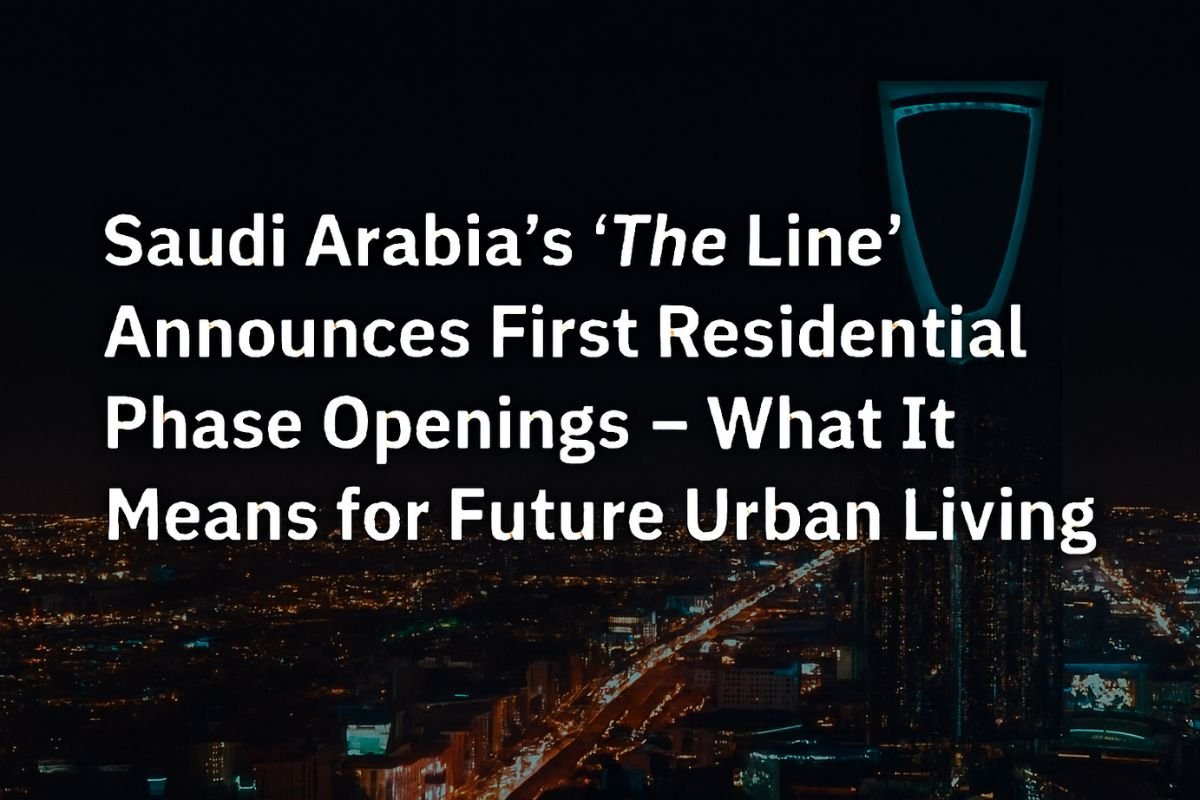
Saudi Arabia’s “The Line” Announces First Residential Phase Openings – What It Means for Future Urban Living

The Line NEOM 2025 | Hidden Marina Residential Phase & Future Urban Living

✅ Saudi Arabia’s NEOM project has officially launched the first residential phase of “The Line” with Hidden Marina—marking a bold step toward redefining urban living through vertical design, zero-carbon infrastructure, and AI-powered ecosystems.

Introduction: The Future Has a Zip Code—and It’s NEOM

In 2025, Saudi Arabia’s most ambitious urban experiment, The Line, has entered its first residential phase with the unveiling of Hidden Marina—a 2.5-kilometer vertical city module designed to house over 200,000 residents. This marks a pivotal moment in the Kingdom’s Vision 2030, as NEOM transitions from concept to reality.

The Line is not just a city—it’s a revolution in urban planning, promising zero cars, zero emissions, and zero urban sprawl. With Hidden Marina now under construction, the world is watching to see whether Saudi Arabia can deliver on its promise of hyper-efficient, AI-integrated, vertically stacked living.

What Is “The Line”?

Unveiled in 2021, The Line is the flagship development of NEOM, a $500 billion mega-city in northwest Saudi Arabia. The Line is envisioned as a 170-kilometer-long, 200-meter-wide, 500-meter-high linear city, stretching from the Red Sea inland, with:

  • No cars or roads
  • 100% renewable energy
  • AI-powered infrastructure
  • Integrated vertical zoning for living, working, and recreation
  • 9 million residents by 2030 (original target)

The Line is designed to compress urban life into a narrow footprint, preserving 95% of surrounding nature while offering 5-minute access to all daily needs.

Hidden Marina: The First Residential Phase

Announced in February 2025, Hidden Marina is the first segment of The Line to enter active development. According to NEOM’s Chief Development Officer Denis Hickey:

  • It will stretch 2.5 kilometers in length
  • Rise 500 meters high
  • Include three interconnected modules
  • Feature 80,000 residential units
  • Accommodate 200,000+ residents
  • Include 9,000 hotel rooms, commercial zones, and essential infrastructure

Hidden Marina is designed to dwarf global benchmarks like the Burj Khalifa in scale and ambition. It will serve as a testbed for vertical living, smart mobility, and AI-driven urban services.

What Makes The Line Different?

The Line challenges every convention of city-building. Here’s how:

1. Vertical Urbanism

Instead of expanding outward, The Line stacks life vertically. Residential, commercial, and recreational zones are layered within modules, connected by high-speed transit and AI logistics.

2. Zero Carbon Footprint

The city will run entirely on renewable energy, with solar, wind, and hydrogen powering homes, transport, and infrastructure.

3. AI-Driven Ecosystems

From waste management to traffic flow, AI will optimize every aspect of urban life. Residents will interact with predictive systems that anticipate needs and reduce inefficiencies.

4. 5-Minute City Model

Every essential service—schools, clinics, groceries, parks—will be accessible within a 5-minute walk or ride, eliminating the need for cars.

5. Nature Preservation

The Line’s narrow footprint ensures that 95% of NEOM’s land remains untouched, promoting biodiversity and eco-tourism.

Residential Life in Hidden Marina

Living in Hidden Marina will feel more like inhabiting a smart vertical village than a traditional city. Residents can expect:

  • Modular apartments with adaptive layouts
  • Smart home systems integrated with city-wide AI
  • Vertical gardens and green walls for air quality and aesthetics
  • Shared amenities like co-working spaces, fitness centers, and rooftop parks
  • High-speed transit pods connecting modules in minutes
  • Multilingual digital concierge services

The design prioritizes privacy, accessibility, and community engagement, with zones tailored for families, professionals, and retirees.

Economic & Employment Impact

The Line is expected to generate hundreds of thousands of jobs across construction, tech, hospitality, and urban services. Hidden Marina alone will require:

  • Architects and urban planners
  • AI and data engineers
  • Green energy technicians
  • Smart infrastructure specialists
  • Hospitality and retail staff
  • Security and compliance officers

Saudi nationals and global talent are being recruited through platforms like Bayt, LinkedIn, and NEOM’s official portal.

Global Reactions & Criticism

While The Line has been praised for its visionary ambition, it has also faced scrutiny:

  • Construction delays and financial hurdles have slowed progress
  • Critics question the feasibility of vertical living at such scale
  • Concerns about privacy, surveillance, and AI governance remain
  • Environmentalists debate the impact of building in desert ecosystems

NEOM officials maintain that Hidden Marina is on track and will serve as a proof of concept for future modules.

What This Means for Urban Living Worldwide

The Line’s first residential phase signals a shift in how cities might evolve globally:

  • Compact, vertical cities could reduce urban sprawl
  • AI-managed infrastructure may become standard
  • Zero-emission zones could redefine sustainability benchmarks
  • Mixed-use modules may replace traditional zoning laws
  • Digital citizenship and smart governance could reshape civic engagement

If successful, The Line could inspire similar projects in Singapore, Dubai, Shenzhen, and beyond.

FAQs

When will Hidden Marina be ready for residents?

Construction is underway in 2025, but no official move-in date has been announced.

Who can live in The Line?

Saudi nationals, expatriates, and global citizens—subject to NEOM’s residency and employment policies.

Will there be schools and hospitals?

Yes. Each module will include education, healthcare, and recreational facilities.

How will people commute?

High-speed autonomous pods and vertical elevators will replace cars and roads.

Is The Line affordable?

Pricing tiers are expected to vary, with luxury, mid-range, and subsidized housing options.

Final Thoughts

The launch of Hidden Marina marks a historic moment in Saudi Arabia’s urban evolution. Whether The Line becomes a global blueprint or remains a bold experiment, it’s already reshaping how we think about space, sustainability, and society.

As NEOM continues to rise, the world will be watching—not just to see if it works, but to see if it inspires a new era of human-centric, planet-friendly urban living.

Sales Director – KSA (B2B & B2G) | Risk & Analytics MNC

Sales Director KSA | Risk & Analytics MNC | $10K–$15K Salary

Michael Page is a global recruitment leader and talent partner for some of the world’s most respected organizations. This role is for a confidential multinational client—a global provider of credit ratings, risk analytics, and financial intelligence. Their platforms support governments, banks, insurers, and corporates in navigating risk across domains like supply chain, climate, cyber, credit, and compliance.

Job title: Sales Director – KSA (B2B & B2G) | Risk & Analytics MNC

📍 Location: KSA (role based out of Dubai with travel)
💼 Industry: Risk, Analytics, Data Solutions
💰 Salary: $10,000–$15,000/month
🧭 Travel: Up to 50% across KSA
🕘 Work Mode: Hybrid

Apply now:

Role Overview: Sales Director – KSA

This is a high-impact commercial leadership role focused on selling complex enterprise solutions to both government (B2G) and corporate (B2B) clients in Saudi Arabia. You’ll lead strategic engagements, build C-suite relationships, and scale adoption of the company’s risk and analytics offerings.

Key Responsibilities

  • Manage strategic accounts across Energy, Government, Corporate, and Professional Services sectors
  • Deliver full enterprise solutions across data, analytics, AI, KYX, credit, cyber, and climate domains
  • Develop tailored propositions for high-value clients and government-owned entities
  • Build and track account plans, forecasts, and growth strategies
  • Establish C-suite relationships and drive long-term commercial partnerships
  • Identify new opportunities through strategic projects and sector insights
  • Collaborate cross-functionally with internal teams and external stakeholders
  • Travel up to 50% across KSA for client engagement

Candidate Profile

  • 10+ years experience in complex software/data sales across GCC
  • Proven success in enterprise-level B2B and B2G engagements
  • Deep network within KSA’s government and corporate sectors
  • Strong understanding of risk management workflows and regulatory frameworks
  • Fluent in Arabic and English
  • Excellent communicator and strategic thinker
  • Comfortable with hybrid work and frequent travel

Why This Role Matters

Saudi Arabia is undergoing rapid digital and regulatory transformation. This role places you at the center of that shift—helping clients navigate risk, unlock data-driven insights, and build resilient systems.

You’ll be working with a market-leading MNC, backed by Michael Page’s global recruitment expertise, and positioned to make a lasting impact in KSA’s evolving business landscape.

FAQs

Is this a Dubai-based role or KSA-based?

The role is based out of Dubai but requires up to 50% travel across KSA.

What sectors will I work with?

Energy, Government, Corporate, Professional Services, and Government-owned entities.

Is Arabic mandatory?

Yes. Fluency in Arabic and English is essential for client engagement.

What kind of solutions will I sell?

Risk analytics, data platforms, AI, KYX, credit, cyber, and climate intelligence.

Is this a team leadership role?

No direct reports initially, but you’ll lead strategic engagements and collaborate across teams.

BIM Coordinator Jobs in Riyadh | $2,000–$3,000 Salary | Apply Now

BIM Coordinator Jobs in Riyadh | $2,000–$3,000 Salary | Apply Now

Saudi Arabia’s real estate and infrastructure sectors are undergoing rapid transformation, driven by Vision 2030, NEOM, and other mega-projects. As digital construction becomes the norm, BIM (Building Information Modeling) roles are in high demand—especially in Riyadh, where smart city planning and sustainable development are top priorities.

This BIM Coordinator role offers a chance to work with a leading real estate developer (Confidential Company) and contribute to high-impact projects across architecture, structure, and MEP disciplines.

Job title: Bim Coordinator

📍Location: Riyadh, Saudi Arabia
💼 Industry: Real Estate
💰 Salary: $2,000–$3,000/month

Apply now

Job Overview: BIM Coordinator

As a BIM Coordinator, you’ll be responsible for managing and optimizing BIM models throughout the project lifecycle. You’ll work closely with the BIM Manager to ensure coordination, clash detection, and execution plans are implemented effectively.

This is a full-time, entry-level role ideal for professionals with 3–6 years of experience in architecture or construction technology.

Key Responsibilities

  • Oversee BIM models across all project phases
  • Perform clash detection and resolve coordination issues
  • Support the BIM Manager in developing and enforcing execution plans
  • Collaborate with architects, engineers, and contractors to ensure model accuracy
  • Maintain documentation and version control of BIM files
  • Ensure compliance with LOD 400 standards and project protocols

Required Skills & Qualifications

  • Bachelor’s degree in Architecture
  • 3–6 years of experience in BIM coordination or related roles
  • Proficiency in Autodesk Revit and other BIM authoring tools
  • Strong understanding of LOD 400 standards
  • Ability to coordinate across Architecture, Structure, and MEP disciplines
  • Excellent communication skills—able to explain technical issues to non-technical stakeholders
  • Analytical mindset with strong problem-solving skills

Preferred Candidate Profile

  • Entry-level career stage with hands-on BIM experience
  • Familiarity with Saudi building codes and project workflows
  • Ability to work independently and within cross-functional teams
  • Fluent in English (Arabic is a plus)
  • Based in Riyadh or willing to relocate

Why This Role Matters

BIM Coordinators are the backbone of modern construction projects. In Saudi Arabia, where digital twin technology and smart infrastructure are gaining traction, this role offers:

  • Exposure to cutting-edge real estate projects
  • Opportunities to work with multidisciplinary teams
  • Career growth in a digitally driven construction environment
  • Competitive salary and benefits

FAQs

Is this a remote or on-site role?

This is an on-site role based in Riyadh.

What BIM tools should I know?

Autodesk Revit is essential. Knowledge of Navisworks, BIM 360, and AutoCAD is a plus.

Is this role open to expats?

Yes, qualified candidates from all backgrounds are welcome to apply.

What does LOD 400 mean?

Level of Development 400 refers to fabrication-level modeling, including detailed geometry and documentation.

Will I work on residential or commercial projects?

The company handles a mix of real estate developments—details will be shared during the interview.

Ready to Apply?

If you’re passionate about digital construction and want to be part of Riyadh’s real estate transformation, this is your opportunity.

🔗 Apply Now

Receptionist Jobs at King’s College Riyadh: Join a World-Class School in 2026

Receptionist Jobs at King’s College Riyadh | Apply for 2026 Openings

2 Openings · Full-Time · Entry Level · Apply Now

Job title: Receptionist

📍 Location: Al Khalidiyah, Riyadh, Saudi Arabia
🗓️ Start Date: February 2026

Apply now

About King’s College Riyadh & Cognita Schools

King’s College Riyadh is part of the Cognita global network, which includes 14 leading schools across the Middle East. From Repton Dubai to Downe House Muscat, Cognita schools are known for delivering academic excellence, character development, and global citizenship.

As a Receptionist at King’s College Riyadh Sedra, you’ll be the first point of contact for families, visitors, and staff—playing a vital role in shaping the school’s welcoming atmosphere and supporting the admissions journey.

Job Overview: Receptionist

This is more than a front desk role—it’s a chance to be part of a dynamic Admissions and Parent Experience Team. You’ll help families feel at home, guide them through the enrolment process, and ensure every interaction reflects the school’s values of kindness, fairness, and professionalism.

🕒 Working Days: Wednesday to Sunday
🕘 Shifts: 09:00 AM–5:00 PM or 3:00 PM–11:00 PM
📚 School Levels: Primary, Prep, and Secondary

Key Responsibilities

Front of House Excellence

  • Greet parents, visitors, and staff with warmth and professionalism
  • Manage incoming calls and direct enquiries accurately
  • Answer frequently asked questions with confidence and clarity
  • Ensure all visitors are signed in according to school protocol

Admissions & Tour Coordination

  • Schedule and confirm school tours and open days
  • Support document collection and follow-ups for new admissions
  • Maintain CRM data accuracy to support admissions decisions

Customer Experience & Engagement

  • Stay informed about school events and calendar updates
  • Communicate effectively with new and prospective parents
  • Keep the reception area tidy, organized, and welcoming

Administrative Support

  • Manage the absence mailbox and update iSAMS records
  • Respond to parent emails and relay information to teachers
  • Provide admin support to other departments as needed

General Responsibilities

  • Uphold the school’s values in all interactions
  • Follow safeguarding policies and maintain confidentiality
  • Participate in personal development and community initiatives

What You’ll Need

Skills & Qualities

  • Fluent in English and Arabic (spoken and written)
  • Experience with CRM platforms and school management systems
  • Detail-oriented and proactive, with strong organizational skills
  • Able to manage sensitive information with tact and discretion
  • Passionate about education and aligned with King’s College values
  • Flexible and adaptable to a fast-paced school environment

🇸🇦 Preferred Candidate

  • Saudi nationals are encouraged to apply
  • Entry-level candidates welcome—training and support provided

Why Join King’s College Riyadh?

  • Be part of a globally respected education group
  • Work in a collaborative, inclusive, and values-driven environment
  • Gain exposure to international best practices in admissions and parent engagement
  • Contribute to a school that’s shaping the future of education in Saudi Arabia

FAQs

Is this a teaching role?

No, this is a front-of-house administrative role focused on admissions and parent experience.

Do I need prior school experience?

Not necessarily. Experience in customer service, hospitality, or administration is valuable.

Is this open to expats?

Preference is given to Saudi nationals, but qualified residents may be considered.

What software will I use?

You’ll work with CRM systems and iSAMS, the school’s management platform.

Is training provided?

Yes. King’s College Riyadh offers onboarding and ongoing professional development.

Ready to Apply?

If you’re passionate about education, hospitality, and making families feel welcome, this is your chance to join one of Riyadh’s most prestigious schools.

🔗 gulfcareershub.com

Saudi Arabia Launches ‘Green Riyadh’ 2025: 10 New Urban Parks & How It Creates 5,000+ Green Jobs

Green Riyadh 2025 | Saudi Arabia’s Urban Parks & Green Jobs Boom

✅ Saudi Arabia’s Green Riyadh 2025 initiative is transforming the capital with 10 new urban parks and over 5,000 green jobs, aligning with Vision 2030’s sustainability goals.

Introduction: Riyadh’s Green Revolution Begins

In 2025, Saudi Arabia is accelerating its environmental transformation with the launch of Green Riyadh, one of the world’s largest urban afforestation projects. The initiative, part of the Saudi Vision 2030, aims to make Riyadh one of the most livable and sustainable cities globally by dramatically increasing green space, improving air quality, and creating thousands of eco-sector jobs.

At the heart of this transformation are 10 new urban parks, each designed to serve as a hub for biodiversity, recreation, and climate resilience. But Green Riyadh isn’t just about trees—it’s about economic opportunity, urban innovation, and community well-being.

What Is Green Riyadh?

Launched in 2019 and now entering a major expansion phase in 2025, Green Riyadh is a flagship project under the Royal Commission for Riyadh City (RCRC). It aims to:

  • Plant 7.5 million trees across the city
  • Increase per capita green space from 1.7 m² to 28 m²
  • Use treated water for sustainable irrigation
  • Reduce urban heat and improve air quality
  • Support biodiversity and eco-tourism

The initiative complements other mega-projects like King Salman Park, Riyadh Art, and Sports Boulevard, creating a holistic urban experience.

The 10 New Urban Parks: Locations & Features

Each of the 10 parks is strategically placed to serve high-density neighborhoods, underserved communities, and future growth zones. Here’s a breakdown:

Park NameDistrictKey Features
Al Wadi ParkAl WadiNative tree groves, walking trails, water recycling center
Al Janadriyah ParkJanadriyahCultural gardens, amphitheater, eco-education zones
Al Malaz ParkAl MalazFamily zones, shaded playgrounds, smart irrigation
Al Diriyah ParkDiriyahHeritage landscaping, palm clusters, bioswale systems
Al Rawdah ParkRawdahButterfly gardens, vertical greenery, solar lighting
Al Shifa ParkShifaMedicinal plant zones, community gardens, composting stations
Al Yasmin ParkYasminSports fields, green rooftops, native desert flora
Al Qirawan ParkQirawanRainwater harvesting, picnic zones, bird habitats
Al Nakheel ParkNakheelDate palm groves, shaded seating, smart benches
Al Arid ParkAridUrban forest, biodiversity trails, green job training center

Each park is designed with sustainability, accessibility, and community engagement in mind.

How Green Riyadh Creates 5,000+ Green Jobs

The expansion of Green Riyadh is expected to generate over 5,000 direct and indirect jobs across multiple sectors. These include:

1. Urban Forestry & Landscaping

  • Tree planting crews
  • Irrigation system technicians
  • Landscape architects
  • Soil and water specialists

2. Environmental Engineering

  • Wastewater treatment operators
  • Green infrastructure planners
  • Sustainability consultants

3. Park Operations & Maintenance

  • Park rangers
  • Groundskeepers
  • Facility managers
  • Safety and compliance officers

4. Eco-Tourism & Education

  • Nature guides
  • Environmental educators
  • Visitor center staff
  • Event coordinators

5. Technology & Smart Systems

  • GIS analysts
  • Smart irrigation developers
  • Data monitoring technicians

Many of these roles are open to Saudi nationals and residents, with training programs offered through RCRC and local universities.

Vision 2030 Alignment

Green Riyadh directly supports several Vision 2030 goals:

  • Quality of Life Program: Enhancing urban livability
  • National Transformation Program: Promoting environmental sustainability
  • Human Capability Development Program: Creating future-ready jobs
  • Tourism Strategy: Attracting eco-tourists and global visitors

By 2030, Riyadh aims to be among the top 100 cities globally in terms of green space, air quality, and urban resilience.

Skills in Demand for Green Jobs

If you’re looking to enter the green sector in Saudi Arabia, here are the top skills employers are seeking:

  • Environmental science & sustainability
  • GIS and remote sensing
  • Irrigation and water management
  • Urban planning and landscape design
  • Community engagement and education
  • Arabic-English bilingual communication
  • Compliance with Saudi environmental regulations

Certifications like LEED, ISO 14001, and PMP are highly valued.

Economic & Environmental Impact

According to RCRC projections:

  • Green Riyadh will reduce ambient temperatures by 2°C–3°C
  • It will improve air quality by 20%
  • It will save millions of liters of potable water annually through treated reuse
  • It will increase property values near green zones
  • It will create new business opportunities in landscaping, eco-tourism, and urban farming

FAQs

Who is eligible for green jobs in Riyadh?

Saudi nationals, residents, and qualified expats with relevant experience or certifications.

Are these jobs permanent or project-based?

Both. Some roles are tied to construction phases, while others are long-term operations and maintenance positions.

Do I need Arabic to work in this sector?

Arabic is preferred, especially for community-facing roles, but many technical positions require English fluency.

How can I apply for these jobs?

Jobs are posted on platforms like Naukrigulf, Bayt, and LinkedIn, as well as the Royal Commission for Riyadh City website.

Will there be training programs?

Yes. RCRC is partnering with universities and vocational institutes to offer green job training and certifications.

Final Thoughts

Green Riyadh 2025 is more than a beautification project—it’s a blueprint for sustainable urban living, economic diversification, and job creation. With 10 new parks and thousands of green jobs, Saudi Arabia is proving that environmental transformation can be both visionary and practical.

Whether you’re a job seeker, urban planner, or eco-entrepreneur, now is the time to engage with Riyadh’s green future.

Gulf Market Intelligence 2025: The Top 5 Industries Hiring Now (and the Skills They’re Paying For)

Gulf Jobs 2025 | Top Hiring Industries & In-Demand Skills

✅ In 2025, the Gulf job market is booming across five key industries—tech, construction, healthcare, finance, and hospitality—with employers actively hiring candidates who bring digital fluency, compliance knowledge, and cross-cultural communication skills.

Introduction: The Gulf’s Hiring Landscape in 2025

The Gulf Cooperation Council (GCC) countries—UAE, Saudi Arabia, Qatar, Oman, Kuwait, and Bahrain—are undergoing a seismic shift in employment trends. Fueled by Vision 2030, Expo legacies, and digital transformation mandates, hiring is surging across sectors that were once considered niche.

In 2025, the Gulf job market is no longer just about oil and gas. It’s about tech-driven growth, infrastructure megaprojects, healthcare expansion, and financial modernization. Employers are hiring fast—and they’re paying for skills that deliver results.

Here’s your real-time breakdown of the top 5 industries hiring now, and the skills Gulf employers are actively investing in.

1. Technology & Digital Transformation

Where it’s booming:

  • UAE: Dubai Internet City, Abu Dhabi Hub71
  • Saudi Arabia: NEOM, Riyadh Digital City
  • Qatar: Lusail Smart City

Why it’s hiring: Governments are pushing for AI adoption, cloud migration, and cybersecurity readiness. The UAE’s Digital Economy Strategy aims to double the tech sector’s contribution to GDP by 2031.

Top roles:

  • Cloud Engineers
  • Cybersecurity Analysts
  • AI/ML Developers
  • ERP Consultants
  • Digital Product Managers

Skills they’re paying for:

  • AWS, Azure, Google Cloud certifications
  • Python, Java, React, Node.js fluency
  • ISO 27001, GDPR, SOC2 compliance knowledge
  • Agile/Scrum methodologies
  • Arabic-English bilingual tech support

Salary range: AED 18,000–35,000/month for mid-senior roles

2. Construction & Infrastructure

Where it’s booming:

  • Saudi Arabia: NEOM, The Line, Red Sea Project
  • UAE: Dubai South, Abu Dhabi Reem Island
  • Qatar: Lusail, Pearl-Qatar

Why it’s hiring: Mega-projects are driving demand for engineers, planners, and compliance experts. Saudi Arabia alone has over $1.3 trillion in active construction projects.

Top roles:

  • Civil Engineers
  • Quantity Surveyors
  • Project Managers
  • HSE Officers
  • BIM Specialists

Skills they’re paying for:

  • PMP, PMI, LEED certifications
  • AutoCAD, Revit, Primavera P6 proficiency
  • GCC building code compliance
  • Cost estimation and tendering
  • Arabic-English site coordination

Salary range: SAR 12,000–28,000/month depending on project scale

3. Healthcare & Medical Services

Where it’s booming:

  • UAE: Dubai Healthcare City, Abu Dhabi SEHA
  • Saudi Arabia: Ministry of Health expansion
  • Qatar: Hamad Medical Corporation

Why it’s hiring: Post-pandemic reforms and population growth are fueling demand for licensed professionals. Telemedicine and digital health are also expanding.

Top roles:

  • Registered Nurses (DHA/MOH licensed)
  • General Practitioners
  • Radiologists & Lab Technicians
  • Medical Coders
  • Healthcare Administrators

Skills they’re paying for:

  • DHA, MOH, HAAD licensing
  • ICD-10, CPT coding
  • Electronic Medical Records (EMR) systems
  • Arabic-English patient communication
  • Infection control and compliance

Salary range: AED 8,000–25,000/month depending on specialization

4. Finance & Fintech

Where it’s booming:

  • UAE: DIFC, ADGM
  • Saudi Arabia: Riyadh Fintech Hub
  • Bahrain: Fintech Bay

Why it’s hiring: Digital banking, crypto regulation, and VAT compliance are reshaping the finance sector. Gulf governments are pushing for cashless ecosystems and financial inclusion.

Top roles:

  • Financial Analysts
  • Compliance Officers
  • Internal Auditors
  • Fintech Product Managers
  • Tax Consultants

Skills they’re paying for:

  • IFRS, GAAP, VAT expertise
  • CPA, CFA, ACCA certifications
  • AML/KYC compliance
  • Fintech UX/UI and product design
  • Arabic-English financial reporting

Salary range: AED 12,000–30,000/month for certified professionals

5. Hospitality & Tourism

Where it’s booming:

  • Saudi Arabia: Red Sea resorts, Diriyah Gate
  • UAE: Expo City, Yas Island, Palm Jumeirah
  • Qatar: FIFA legacy zones, Lusail

Why it’s hiring: Gulf countries are investing heavily in tourism infrastructure. Saudi Arabia aims for 100 million annual visitors by 2030, while Dubai continues to lead in luxury hospitality.

Top roles:

  • Guest Relations Managers
  • Hotel Operations Executives
  • Chefs & Culinary Experts
  • Event Coordinators
  • Travel Consultants

Skills they’re paying for:

  • Opera PMS, Fidelio, Amadeus systems
  • Multilingual communication (Arabic, Russian, Mandarin)
  • Luxury service training
  • Event planning and logistics
  • Cross-cultural customer service

Salary range: AED 6,000–18,000/month depending on role and brand

What This Means for Job Seekers

If you’re targeting the Gulf market in 2025, here’s how to stand out:

  • Customize your CV with Gulf-specific keywords and certifications
  • Mention your visa status and availability clearly
  • Highlight bilingual skills and compliance experience
  • Stay updated with regional hiring trends and salary benchmarks
  • Use platforms like Bayt, LinkedIn, and Naukrigulf to track openings

FAQs

Are remote roles available in the Gulf?

Yes, especially in tech and finance. But most employers still prefer on-site or hybrid models.

Do I need Arabic to get hired?

Not always, but it’s a major advantage—especially in hospitality, healthcare, and compliance.

What certifications are most valued?

PMP, CPA, CFA, DHA/MOH licenses, AWS, and ISO certifications are highly sought after.

How fast is the hiring process?

It varies. Tech and healthcare roles move fast (1–2 weeks), while construction and finance may take longer due to compliance checks.

The ‘Final Interview’ Checklist: 7 Things Gulf HR Managers Verify Before Sending the Offer Letter

Final Interview Checklist Gulf HR | Offer Letter Prep Guide

Introduction: Why the Final Interview Is a Make-or-Break Moment

You’ve passed the screening, aced the technical rounds, and impressed the department head. Now comes the final interview—often with HR or senior leadership. In the Gulf region, this isn’t just a formality. It’s a strategic checkpoint where hiring managers verify your readiness, compliance, and fit before issuing the offer letter.

Whether you’re applying in Dubai, Riyadh, Doha, or Muscat, this final stage is where many candidates stumble—not because they lack skills, but because they miss the signals HR is trained to detect.

This blog breaks down the 7-point checklist Gulf HR managers use to validate candidates before sending the offer letter. If you understand this framework, you can prepare smarter, answer sharper, and get hired faster.

1. Visa Status & Joining Availability

Why it matters: In the Gulf, hiring timelines are tight. Companies want to know if you can join immediately, need a notice period, or require visa sponsorship. HR managers verify:

  • Your current visa type (Visit Visa, Employment Visa, Freelance Visa)
  • Whether you’re inside the country or abroad
  • If you need relocation support
  • Your notice period and earliest joining date
  • Whether you’re eligible for a transfer, cancellation, or new work permit

How to prepare:

  • Be honest and specific: “I’m on a Visit Visa valid until Jan 15, available to join immediately.”
  • If you’re abroad, mention your relocation timeline and readiness.
  • Know your visa rules—especially in UAE and Saudi Arabia, where sponsorship and labor law compliance are strict.

2. Salary Expectations & Budget Alignment

Why it matters: HR needs to ensure your expectations match their budget. If you’re too high, they may drop you. If you’re too low, they may question your experience.

What they verify:

  • Your expected gross salary (monthly or annual)
  • Whether it includes housing, transport, or other allowances
  • Bonus expectations or commission structures
  • Comparison with internal salary bands for the role
  • Whether you’re flexible or fixed on your number

How to prepare:

  • Research market rates on Bayt, Glassdoor, and GulfTalent.
  • Give a range: “I’m targeting AED 10,000–12,000 depending on benefits.”
  • Mention if you’re open to negotiation or performance-based increments.
  • Avoid vague answers like “as per company policy”—they signal indecision.

3. Background Verification & Document Readiness

Why it matters: According to ScreeningStar, 42% of resumes contain discrepancies. Gulf HR teams are trained to spot inflated titles, fake degrees, and unverifiable experience.

What they verify:

  • Your educational certificates (attested if required)
  • Previous employment letters or contracts
  • Reference contacts (email + phone)
  • National ID, passport, and visa copies
  • Criminal record or civil litigation history (if applicable)

How to prepare:

  • Keep scanned copies of all documents ready in a single folder.
  • Ensure your degree is attested by the Ministry of Foreign Affairs and UAE Embassy (if applying in UAE).
  • Inform your references in advance—they may be contacted.
  • Be transparent about any gaps or issues in your history.

4. Cultural Fit & Team Compatibility

Why it matters: Gulf companies value team harmony, especially in multicultural environments. HR wants to know if you’ll adapt to their work culture, hierarchy, and pace.

What they assess:

  • Your attitude toward teamwork, feedback, and leadership
  • Your ability to work with diverse nationalities
  • Whether you’re proactive, respectful, and collaborative
  • How you handle pressure, deadlines, and ambiguity
  • Your alignment with company values and mission

How to prepare:

  • Share examples of working in diverse teams: “I’ve led projects with Indian, Filipino, and Arab colleagues.”
  • Show emotional intelligence: “I value feedback and adapt quickly to new environments.”
  • Avoid rigid or overly assertive language—Gulf HR prefers humility with confidence.

5. Role Clarity & Expectation Alignment

Why it matters: HR wants to confirm you understand the job scope, KPIs, and reporting structure. Misalignment here leads to early exits and wasted onboarding.

What they verify:

  • Your understanding of the role’s responsibilities
  • Whether you’ve researched the company and department
  • Your expectations around growth, training, and promotions
  • Your willingness to take on cross-functional tasks
  • Whether you’ve read the job description carefully

How to prepare:

  • Re-read the job post and mention specific tasks: “I saw the role includes vendor negotiations and ERP reporting.”
  • Ask smart questions: “How is performance measured in this role?”
  • Clarify any doubts about reporting lines or team structure.
  • Avoid generic answers like “I’ll do whatever is needed”—be specific.

6. Language & Communication Skills

Why it matters: In the Gulf, English is the business language—but Arabic, Hindi, Tagalog, and Urdu are often spoken in teams. HR checks if you can communicate clearly and professionally.

What they assess:

  • Your spoken and written English fluency
  • Ability to write emails, reports, and presentations
  • Comfort with video calls and in-person meetings
  • Accent clarity and listening skills
  • Multilingual ability (Arabic is a bonus)

How to prepare:

  • Practice your elevator pitch: “I’m a procurement specialist with 8 years in FMCG across UAE and KSA.”
  • Use professional vocabulary: “I optimized vendor contracts and reduced costs by 18%.”
  • Avoid filler words (“like,” “you know”) and slang.
  • Mention any language certifications or fluency levels.

7. Compliance & Policy Awareness

Why it matters: Gulf companies operate under strict labor laws, especially in regulated sectors like healthcare, finance, and alcohol. HR ensures you understand the rules.

What they verify:

  • Your awareness of local labor laws (UAE, Saudi, Qatar)
  • Whether you’ve worked under similar compliance frameworks
  • Your understanding of confidentiality, data protection, and ethics
  • Willingness to sign NDAs or non-compete clauses
  • Whether you’ve had any past compliance violations

How to prepare:

  • Mention previous compliance experience: “I ensured all imports met KEZAD and DCT alcohol regulations.”
  • Ask about onboarding policies: “Will there be compliance training during induction?”
  • Be ready to sign documents and provide ID verification.
  • Avoid casual or dismissive attitudes toward rules—Gulf HR takes compliance seriously.

Final Interview Tips from Gulf HR Managers

  • Dress professionally, even for video calls.
  • Arrive early and test your tech setup.
  • Speak clearly, avoid jargon, and stay concise.
  • Show gratitude: thank the interviewer and express enthusiasm.
  • Follow up with a polite email summarizing your interest and availability.

What Happens After the Final Interview?

If you pass all seven checks, HR will:

  • Prepare the offer letter with salary, benefits, and joining date
  • Send it via email or recruitment portal
  • Request final documents and references
  • Begin visa processing or onboarding steps

If there’s a delay, it may be due to:

  • Budget approvals
  • Internal restructuring
  • Pending reference checks
  • Visa quota limitations

Tip: If you haven’t heard back in 5–7 days, send a polite follow-up email.

FAQs

Can I negotiate the offer after the final interview?

Yes, but do it respectfully. Mention your value and market benchmarks.

What if I’m waiting on another offer?

Be transparent: “I’m in final stages with another company but very interested in your role.”

Will HR ask personal questions?

Sometimes—about relocation, family, or housing. Answer professionally and briefly.

Can I ask about career growth?

Absolutely. Ask: “What does the growth path look like for this role over 2–3 years?”

What if I fail the final interview?

Request feedback. Use it to improve. Many candidates get hired in second attempts.

Final Thoughts

The final interview isn’t just a wrap-up—it’s a strategic filter. Gulf HR managers are trained to verify readiness, compliance, and fit before sending the offer letter. If you understand their checklist, you’ll walk in prepared, confident, and aligned.

Remember:

  • Be clear about your visa and salary
  • Prepare your documents
  • Show cultural and role alignment
  • Communicate professionally
  • Respect compliance protocols

Master these seven areas, and you’ll not only pass the final interview—you’ll start your Gulf career with confidence.

The ‘Gulf-Ready’ CV: A Hiring Manager’s Blueprint to Get Shortlisted in 48 Hours

Gulf-Ready CV Guide | Get Shortlisted in 48 Hours

If your CV isn’t tailored for the Gulf market, it’s likely getting ignored. Gulf hiring managers scan hundreds of applications daily—and they know exactly what to look for. This blog breaks down the anatomy of a “Gulf-Ready” CV, why most candidates miss the mark, and how to fix yours in under 48 hours.

Why Most CVs Fail in the Gulf

Let’s start with the truth: generic CVs don’t get shortlisted. Whether you’re applying in Dubai, Riyadh, Doha, or Muscat, hiring managers are trained to spot relevance, clarity, and compliance in seconds.

Here’s what typically goes wrong:

  • No mention of visa status or location
  • Missing keywords for ATS (Applicant Tracking Systems)
  • Overly long or vague summaries
  • No alignment with Gulf-specific job formats
  • Lack of quantifiable achievements

According to Recrenza, recruiters in the Gulf follow a structured, fast-paced hiring style. They want CVs that are region-specific, compliance-aware, and easy to scan.

What Makes a CV “Gulf-Ready”?

A Gulf-Ready CV isn’t just about formatting—it’s about strategy. It’s designed to:

  • Pass ATS filters used by Bayt, Naukrigulf, and LinkedIn
  • Highlight your GCC experience, certifications, and language skills
  • Show you understand local business culture and expectations
  • Make it easy for HR to say “yes” in under 60 seconds

Let’s break down the blueprint.

Section-by-Section Breakdown

1. Header with Personal Details

Include:

  • Full name
  • Mobile number with country code
  • Email address
  • Current location (e.g., Dubai, UAE)
  • Nationality
  • Visa status (e.g., Visit Visa, Employment Visa, Freelance Visa)
  • LinkedIn URL (customized)

Why it matters: Gulf employers often filter by nationality and visa eligibility. If you’re on a visit visa and available immediately, say so.

2. Professional Summary (3–4 lines max)

This is your elevator pitch. Focus on:

  • Your job title and years of experience
  • Industry specialization (e.g., FMCG, Construction, Healthcare)
  • Key strengths (e.g., cost control, team leadership, ERP systems)
  • Location preference or availability

Example: “Senior Procurement Manager with 10+ years in FMCG and retail operations across UAE and Saudi Arabia. Expert in vendor negotiations, cost optimization, and ERP integration. Available immediately in Dubai.”

3. Key Skills & Competencies

Use bullet points and include Gulf-relevant keywords:

  • Budgeting & Forecasting
  • VAT Compliance
  • PMP / CFA / DHA Licensed
  • Arabic & English fluency
  • SAP / Oracle / Salesforce
  • Gulf Labor Law Knowledge
  • Vendor Management
  • POSM Development
  • Retail Expansion Strategy

Tip: Use job descriptions from Bayt and LinkedIn to extract trending keywords.

4. Professional Experience

Use reverse chronological order. For each role, include:

  • Job title
  • Company name
  • Location
  • Dates of employment
  • 4–6 bullet points using the STAR method (Situation, Task, Action, Result)

Example: Procurement Manager – CityDrinks, Abu Dhabi (2021–2024)

  • Negotiated supplier contracts saving AED 1.2M annually
  • Managed 2,500+ SKUs across 3 warehouses
  • Reduced stock-outs by 35% through predictive ordering
  • Ensured compliance with KEZAD and DCT alcohol regulations

Why it matters: Gulf hiring managers want results, not responsibilities. Use metrics, savings, growth, and compliance wins.

5. Education & Certifications

Include:

  • Degree name
  • University name
  • Graduation year
  • Location
  • Relevant certifications (PMP, CPA, CFA, Google Ads, AWS, DHA)

Tip: If you’re applying for healthcare, finance, or engineering roles, certifications are often mandatory filters.

6. Languages

List your spoken and written fluency:

  • Arabic: Fluent
  • English: Native
  • Hindi: Conversational
  • Tagalog: Fluent

Why it matters: Multilingual candidates are preferred in customer-facing and compliance-heavy roles.

7. Technical Tools & Platforms

Include tools relevant to your field:

  • HR: SAP SuccessFactors, Oracle HCM
  • Finance: QuickBooks, Xero, SAP FICO
  • Marketing: Meta Ads, Google Analytics, Canva
  • Logistics: WMS, ERP, TMS
  • Design: AutoCAD, Revit, Adobe Suite

8. Achievements & Awards (Optional)

Only include if relevant to the Gulf market:

  • “Best Sales Manager – GCC Region 2023”
  • “Reduced delivery delays by 40% in Ramadan peak season”
  • “Implemented ERP system across 5 branches in UAE”

How Hiring Managers Actually Shortlist

According to Applyzone, Gulf hiring managers follow a 3-step scan:

  1. Eligibility Check: Nationality, visa, location
  2. Keyword Match: ATS filters for skills, certifications, tools
  3. Impact Scan: Metrics, achievements, and clarity

If your CV doesn’t pass all three, it’s skipped.

Time spent per CV:

  • ATS: 6–10 seconds
  • Human scan: 30–60 seconds
  • Interview shortlist: 5–10 minutes

How to Fix Your CV in 48 Hours

Day 1: Audit & Keyword Optimization

  • Compare your CV with 5 job descriptions
  • Highlight missing keywords
  • Rewrite your summary and skills section
  • Add metrics to your experience bullets

Day 2: Format & ATS Compliance

  • Use a clean layout (no tables, no columns)
  • Save as PDF and Word (.docx)
  • Test your CV on free ATS tools like Jobscan or Recrenza’s CV checker
  • Update your LinkedIn to match your CV

Real-Life Before & After Example

SectionBeforeAfter
Summary“Experienced HR professional”“HR Generalist6+ YearsUAE Labor LawTalent AcquisitionAvailable Immediately”
Skills“Good communication, team player”“Talent Acquisition, UAE Labor Law, SAP SuccessFactors, Employee Onboarding, Arabic & English”
Experience“Handled recruitment”“Recruited 120+ staff across 3 branchesReduced hiring time by 40%Implemented onboarding SOPs”

FAQs

Should I include a photo?

Yes, unless the job description says otherwise. Use a professional headshot.

What’s the ideal CV length?

1–2 pages. Senior roles may extend to 3 if packed with achievements.

Should I mention salary expectations?

Only if requested. Otherwise, leave it out.

Can I use color or design?

Keep it minimal. Use dark blue or gray accents. Avoid bright colors or graphics.

Should I include references?

No need. Just write “Available upon request.”

Final Thoughts

A Gulf-Ready CV isn’t just a resume—it’s a strategic tool. It shows hiring managers you understand the region, the role, and the results they expect.

In the Gulf, speed matters. Relevance matters. Compliance matters.

If you follow this blueprint, you’ll be shortlisted faster, interviewed sooner, and hired smarter.

And if you need help, Gulf Careers Hub offers CV rewriting, LinkedIn optimization, and job campaign support across UAE, Saudi Arabia, and Qatar.

The #1 Mistake Professionals Make on Their LinkedIn Profile in the Gulf (And How to Fix It in 30 Minutes)

LinkedIn Profile Mistake Gulf Professionals Make | Fix in 30 Minutes

The biggest mistake Gulf professionals make on LinkedIn is having a vague or generic headline. This single oversight can cost visibility, credibility, and job opportunities. In this blog, we’ll break down why it matters, how to fix it fast, and what recruiters in the UAE, Saudi Arabia, and Qatar actually look for.

The #1 Mistake: A Generic LinkedIn Headline

If your LinkedIn headline says “Engineer at XYZ Company” or “Marketing Professional,” you’re missing out. Gulf recruiters scan hundreds of profiles daily, and your headline is the first thing they see. It’s your elevator pitch, your brand, and your hook.

Yet thousands of professionals across Dubai, Riyadh, Doha, and Muscat still use default job titles or vague descriptors. Why? Because LinkedIn auto-fills your headline with your current job title—and most people never change it.

Here’s why that’s a problem:

  • It’s not searchable. Recruiters use keywords like “Digital Marketing Manager – FMCG – UAE” or “Civil Engineer – Infrastructure – Saudi Arabia.” If your headline doesn’t match, you won’t show up.
  • It’s not memorable. “Sales Executive” is forgettable. “Retail Sales Strategist | Driving 7-Figure Growth in UAE” is not.
  • It doesn’t sell your value. Your headline should show what you do, who you help, and what results you deliver.

Why This Mistake Is So Common in the Gulf

In the Gulf region, LinkedIn adoption is high—but optimization is low. According to CV Gulf and Bayt analytics:

  • 90% of recruiters check LinkedIn before contacting a candidate
  • Only 30% of professionals have customized their headline
  • Most job seekers focus on CVs and ignore LinkedIn until they’re actively applying

This leads to missed opportunities, especially in industries like oil & gas, healthcare, hospitality, and tech—where headhunting is common.

What Recruiters Actually Look For

Recruiters in the Gulf don’t just search by job title. They use filters like:

  • Location: UAE, Saudi Arabia, Qatar
  • Industry keywords: FMCG, Fintech, Civil Engineering, Hospitality
  • Seniority level: Mid-level, Senior, Executive
  • Certifications: PMP, CPA, CFA, Google Ads, AWS
  • Languages: Arabic, English, Tagalog, Hindi

If your headline doesn’t include these keywords, you’re invisible.

How to Fix It in 30 Minutes

Here’s a simple 3-step method to rewrite your headline and boost your visibility instantly.

Step 1: Identify Your Core Value

Ask yourself:

  • What do I actually do?
  • What problems do I solve?
  • What results have I delivered?

Example: Instead of “HR Executive,” say “HR Executive | Driving Talent Acquisition & Compliance in UAE Retail Sector”

Step 2: Add Keywords

Use terms that recruiters search for. These vary by industry:

  • Finance: “Financial Analyst | IFRS | Budgeting & Forecasting | UAE”
  • Engineering: “Civil Engineer | Infrastructure Projects | Saudi Arabia | PMP Certified”
  • Marketing: “Digital Marketing Manager | FMCG | SEO | Meta Ads | Dubai”

Use tools like LinkedIn’s job search, Bayt, and GulfTalent to find trending keywords.

Step 3: Format for Impact

Use vertical bars (|) or bullets (•) to separate ideas. Keep it under 220 characters.

Formula: [Job Title] | [Industry/Function] | [Key Skills or Certifications] | [Location]

Example: “Procurement Manager | FMCG & Retail | Cost Optimization & Vendor Management | UAE”

Real-Life Before & After Examples

RoleBefore HeadlineAfter Headline
AccountantAccountant at ABC LLCSenior AccountantIFRSVAT ComplianceUAE
NurseRegistered NurseRNICU & Emergency CareDHA LicensedDubai
SalesSales ExecutiveRetail Sales StrategistDriving 7-Figure GrowthUAE
ITIT SpecialistCloud & Network EngineerAWS CertifiedSaudi Arabia
HRHR OfficerHR GeneralistTalent Acquisition & UAE Labor LawAbu Dhabi

Notice how each “after” version is keyword-rich, location-specific, and value-driven.

What Happens After You Fix It

Professionals who optimize their headline report:

  • More profile views within 48 hours
  • Higher acceptance rates on connection requests
  • Better engagement on posts and comments
  • More recruiter messages (especially for passive candidates)

It’s not magic—it’s visibility. And in the Gulf, visibility leads to opportunity.

Bonus Tips for Gulf Professionals

1. Use Arabic and English keywords

If you’re bilingual, include both. Example: “مدير مبيعات | Sales Manager | FMCG | UAE”

2. Mention your visa status if relevant

Especially in UAE: “Open to relocation | Visit Visa | Immediate Joiner”

3. Highlight certifications

PMP, CFA, DHA, MOH, AWS, Google Ads—these are filters recruiters use.

4. Avoid buzzwords

“Hardworking,” “team player,” “motivated” are filler. Use real skills and metrics.

5. Update your headline every 6 months

As your role evolves, so should your headline.

FAQs

Should I include my current company name?

Only if it’s well-known or adds credibility. Otherwise, focus on your role and impact.

Can I write “Looking for opportunities”?

Yes, but don’t make it the whole headline. Combine it with your skills: “Digital Marketer | SEO & Meta Ads | Open to Opportunities | UAE”

What if I’m unemployed?

Use your target role and skills:
“Project Manager | PMP | Construction & Fit-Out | UAE | Available Immediately”

Should I include emojis?

Use them sparingly. A UAE flag 🇦🇪 or checkmark ✅ can add flair, but don’t overdo it.

How often should I update my headline?

Every 6 months or whenever your role, skills, or goals change.

Final Thoughts

Your LinkedIn headline is your digital handshake. In the Gulf, where competition is fierce and recruiters rely heavily on LinkedIn, a generic headline is a silent career killer.

Fixing it takes 30 minutes. The impact lasts for years.

So take a moment today. Rewrite your headline. Add your value. Own your brand.

And if you need help, Gulf Careers Hub offers LinkedIn optimization services, CV rewriting, and job campaign support across UAE, Saudi Arabia, and Qatar.

Post a Job Opening

Fill in the details below. Your job posting will be reviewed by our team.

Basic Information

Specify years of experience required

Location & Salary

Qualifications & Skills

Specify educational requirements
Separate skills with commas

Company Details

Job Details

Contact Information