The Gulf Cooperation Council (GCC) economies are defying global headwinds in 2025, with fresh data showing a stronger-than-expected rebound across the region. According to revised forecasts from Oxford Economics and the World Bank, the GCC’s collective GDP growth is now projected at 4.4%, up from earlier estimates of 4.0%. This upward revision reflects a potent mix of oil sector recovery, non-oil diversification, and resilient consumer demand.
While global growth is expected to slow to 2.4% — the lowest since the pandemic — the GCC continues to outperform, driven by strategic reforms, infrastructure investment, and a renewed push toward economic diversification.
What’s Fueling the GCC’s Growth?
The region’s economic momentum in 2025 is powered by five key drivers:
Oil sector rebound: With OPEC+ production cuts easing, oil output is rising. Saudi Arabia and the UAE are ramping up production, contributing to a 4.5% growth in the oil sector.
Non-oil expansion: Tourism, logistics, fintech, and manufacturing are thriving. Dubai’s hospitality sector and Riyadh’s construction boom are notable contributors.
Consumer confidence: Rising employment and wage growth are fueling domestic consumption, especially in retail and services.
Public investment: Mega-projects like NEOM, Duqm Port, and Expo City Dubai are stimulating infrastructure and job creation.
Vision-driven reforms: National strategies like Saudi Vision 2030 and UAE’s Net Zero 2050 are attracting foreign direct investment and reshaping economic priorities.
Country-Level Growth Snapshot
Country
2025 GDP Growth Forecast
Key Drivers
UAE
4.6%
Tourism, real estate, clean energy
Saudi Arabia
2.8%
Oil recovery, NEOM investments
Oman
3.5%
Hydrogen exports, logistics hubs
Qatar
3.2%
LNG expansion, tech innovation
Kuwait
2.9%
Infrastructure, banking sector
Bahrain
2.7%
Financial services, SMEs
Sources: Oxford Economics, World Bank, IMF Regional Outlook
Sectoral Highlights
Tourism: Dubai, Doha, and Muscat are seeing record visitor numbers, supported by visa reforms and global events.
Energy: Green hydrogen, solar, and LNG are reshaping the region’s energy mix. Oman and UAE are leading clean energy exports.
Finance: Fintech startups and digital banking are expanding, especially in Bahrain and Saudi Arabia.
Construction: Mega-projects like The Line, Lusail City, and Expo City are driving demand for materials, labor, and logistics.
Retail & E-commerce: Online shopping and luxury retail are booming, with GCC consumers embracing digital platforms.
Risks and Challenges
Despite the upbeat outlook, the GCC faces several risks:
Global slowdown: Weak demand from Europe and Asia could impact exports.
Geopolitical tensions: Regional instability may affect investor sentiment.
Climate adaptation: Transitioning to low-carbon economies requires sustained investment and innovation.
Youth employment: Ensuring job creation for a growing young population remains a priority.
FAQs
Why was the GCC’s GDP forecast revised upward in 2025?
Due to stronger oil output, resilient non-oil sectors, and faster-than-expected recovery from global shocks.
Which GCC country has the highest projected growth this year?
The UAE leads with 4.6%, driven by tourism, real estate, and clean energy initiatives.
Is this growth sustainable beyond 2025?
Yes — if structural reforms, diversification, and green investments continue. Projections for 2026 and 2027 show further acceleration.
How does GCC growth compare to global trends?
While global GDP is slowing to 2.4%, the GCC is outperforming with a regional average of 4.4%.
What sectors are driving non-oil growth?
Tourism, fintech, logistics, manufacturing, and renewable energy are key contributors.
Final Thoughts
The GCC’s economic boom in 2025 is more than a rebound — it’s a reflection of strategic foresight, policy agility, and regional cooperation. As the world grapples with uncertainty, the Gulf is charting a path of resilience and transformation, proving that its future extends far beyond oil.
From NEOM’s futuristic cities to Dubai’s global tourism appeal and Oman’s hydrogen exports, the region is rewriting its economic story — one built on innovation, inclusion, and long-term sustainability.
For decades, the Gulf Cooperation Council (GCC) countries — Saudi Arabia, UAE, Oman, Qatar, Kuwait, and Bahrain — have been synonymous with oil wealth. But in 2025, a new narrative is emerging: the GCC is rapidly positioning itself as a global leader in green hydrogen, a clean energy source that could redefine the future of power, industry, and transport.
Green hydrogen, produced using renewable energy to split water into hydrogen and oxygen, emits zero carbon and is seen as a cornerstone of global decarbonization. As the world races toward net-zero targets, the GCC is leveraging its natural resources, infrastructure, and strategic vision to lead this transformation.
Why Green Hydrogen Is the Future
Green hydrogen is not just a buzzword — it’s a solution to some of the world’s toughest climate challenges. Unlike grey or blue hydrogen, which rely on fossil fuels, green hydrogen is produced using solar or wind power, making it truly sustainable.
Key benefits:
Zero carbon emissions during production
Can decarbonize hard-to-abate sectors like steel, cement, aviation, and shipping
Easily stored and transported as ammonia
Supports energy independence and diversification
Global demand is expected to reach 530 million tonnes by 2050, and the GCC is already laying the groundwork to meet this surge.
GCC’s Strategic Edge in the Hydrogen Race
The GCC’s leadership in green hydrogen is no accident. It’s built on five key advantages:
Abundant solar and wind resources: Ideal for powering electrolysis at scale
Existing energy infrastructure: Pipelines, ports, and industrial zones can be repurposed
Government support: National visions like Saudi Vision 2030 and UAE Net Zero 2050
Global partnerships: Collaborations with Europe, Asia, and multinational energy firms
Financial strength: Billions allocated to clean energy and hydrogen projects
🇸🇦 Saudi Arabia: NEOM’s Hydrogen Megaproject
Saudi Arabia’s NEOM is home to one of the world’s largest green hydrogen plants. The $8.4 billion facility, powered entirely by solar and wind, aims to produce 600 tonnes of hydrogen per day by 2026.
The hydrogen will be converted into ammonia for export, primarily to Europe and Asia. This positions Saudi Arabia as a major global supplier of clean fuel, diversifying its energy exports beyond oil.
🇴🇲 Oman: The Emerging Export Giant
Oman is quietly becoming a powerhouse in green hydrogen. With vast desert land and strong wind corridors, it has attracted billions in foreign investment.
Projects like HYPORT Duqm and Hydrogen Oman aim to make the country one of the top exporters by 2030. Oman’s strategy focuses on:
Large-scale hydrogen clusters
Export terminals linked to Europe and Asia
Long-term offtake agreements with global partners
🇦🇪 UAE: Innovation Meets Integration
The UAE is integrating green hydrogen into its broader clean energy strategy. Companies like Masdar and ADNOC are investing in hydrogen production, mobility solutions, and pilot projects.
Dubai and Abu Dhabi are exploring:
Hydrogen-powered public transport
AI-driven energy optimization
Hydrogen blending in natural gas pipelines
The UAE’s goal: become a regional hub for hydrogen innovation and export.
GCC Green Hydrogen Snapshot
Country
Key Projects
2025 Milestone
Saudi Arabia
NEOM Hydrogen Plant
600 tonnes/day by 2026
Oman
HYPORT Duqm, Hydrogen Oman
Export-ready infrastructure
UAE
Masdar, ADNOC pilot programs
Mobility and industrial integration
Qatar
R&D and pilot initiatives
Diversification beyond LNG
Kuwait
Feasibility studies underway
Regional collaboration
Bahrain
Early-stage planning
Policy alignment with GCC peers
Challenges and Opportunities
While the GCC is making strides, green hydrogen adoption comes with hurdles:
High production costs
Storage and transport complexities
Global market readiness
Need for skilled workforce and technology transfer
However, the region’s proactive approach — from policy reform to international partnerships — is helping overcome these barriers.
FAQs
What is green hydrogen and how is it produced?
Green hydrogen is created by using renewable energy to split water into hydrogen and oxygen via electrolysis. It emits zero carbon.
Why is the GCC investing in green hydrogen?
To diversify economies, reduce carbon emissions, and become global exporters of clean energy.
Can green hydrogen replace oil in the GCC?
Not entirely, but it complements oil by creating new revenue streams and reducing environmental impact.
What are the main uses of green hydrogen?
Industrial processes, power generation, transportation (especially heavy-duty), and as a feedstock for ammonia and synthetic fuels.
Is green hydrogen available for consumers in the GCC?
Currently limited to industrial and pilot use, but consumer applications like hydrogen vehicles and blended fuels are being explored.
Final Thoughts
In 2025, the GCC is proving that its energy leadership extends far beyond oil. By investing in green hydrogen, the region is not only securing its economic future but also contributing meaningfully to the global climate agenda.
From Saudi Arabia’s NEOM to Oman’s export ambitions and the UAE’s innovation hubs, the Gulf is writing a new chapter — one powered by clean energy, strategic foresight, and global collaboration.
The green hydrogen race is on. And the GCC is leading it.
In 2022, the government of the United Arab Emirates (UAE) unveiled a bold, forward-looking roadmap: We the UAE 2031. This ten-year vision — nested within the broader long-term development strategy of the UAE — sets ambitious targets across economic, social, diplomatic, and infrastructure spheres.
Now, three years into the journey and roughly halfway to the 2031 deadline, 2025 offers a natural moment for a mid-point assessment. How far has the UAE come? Which objectives are on track — and where are the gaps? This review aims to summarise the major achievements, provide context on ongoing efforts, and reflect on what lies ahead.
Understanding the Vision: What is “We the UAE 2031”
At its core, We the UAE 2031 rests on four strategic pillars:
Forward Society — focusing on human capital, health, education, social cohesion, quality of life.
Forward Economy — driving diversified economic growth, reducing reliance on oil, boosting non-oil exports, foreign trade, tourism, and attracting global talent.
Forward Diplomacy — enhancing the UAE’s global standing, partnerships, humanitarian and environmental leadership, and proactive engagement in global affairs.
Forward Ecosystem — building advanced infrastructure, digital government, efficient public services, security, regulatory frameworks, and a modern ecosystem to support growth and innovation.
The plan includes concrete national target-indicators: doubling GDP from AED 1.49 trillion to AED 3 trillion; generating AED 800 billion in non-oil exports; raising foreign trade value to AED 4 trillion; increasing tourism’s contribution to GDP; and positioning the UAE among global top 10 in human development, healthcare quality, quality of life, global talent attraction, food security, cybersecurity, and citizen safety.
With this framework in mind, the milestones reached by 2025 merit close attention — especially given the volatile global environment, technological disruption, shifting geopolitics, and economic uncertainty.
Key Achievements by 2025: Progress across Pillars
According to reports during the 2025 UAE Government Annual Meetings, the country has already achieved around 67% of the We the UAE 2031 targets, with six years remaining. Below are critical areas of progress across the four pillars.
1. Economic Diversification & Non-Oil Growth
Non-oil sector contribution: As of first half of 2025, non-oil sectors account for 77.5% of GDP, a substantial move toward the 2031 goal (target ~ 80%).
Foreign trade and non-oil exports: Non-oil foreign trade reached nearly AED 3 trillion in 2024. In the first half of 2025 alone, non-oil foreign trade expanded by 24.5% compared to the same period last year.
Growth in economic activities beyond oil: Several non-oil sectors — including financial and insurance services, transportation and storage, construction, hospitality and tourism, among others — have posted solid growth.
Competitiveness and investment attractiveness: The UAE ranks among global top in multiple competitiveness indices. Officials highlight that the country ranked first worldwide in 264 indicators, top-five in 504, and top-ten in 710 indicators in 2025.
Foreign Direct Investment (FDI): FDI inflows exceeded AED 167 billion in the past year, placing the UAE among the top global destinations.
These economic markers signal that the UAE is not only reducing dependence on hydrocarbons but also building a resilient, diversified economy — a central aim of the Forward Economy pillar.
2. Government Efficiency, Digital Transformation & Smart Planning
One of the most consequential developments of 2025 has been the pivot toward a more agile, technology-driven governance model. The federal government adopted a new planning framework, shifting from a five-year cycle to a three-year strategic planning cycle — explicitly aligned with the 2031 Vision.
At the heart of this new cycle is a strong emphasis on artificial intelligence (AI), process optimization, and resource efficiency. This approach is intended to make governance more responsive to global shifts — from technological change to geopolitical turbulence — while achieving more with fewer resources.
Complementing this, regulatory bodies like the Telecommunications and Digital Government Regulatory Authority (TDRA) have launched transformation projects under the 2031 vision, including a “Digital Vault” for banking, insurance, and telecom sectors; enhanced digital customer-journey programs; and services aimed at improving digital government performance.
All of these developments reinforce the Forward Ecosystem pillar, creating a foundation for future-ready governance, innovation, and public service delivery.
3. Human Capital, Talent Attraction, and Social Development
While economic metrics are easier to quantify, “we-the-people” goals such as education, healthcare, social cohesion, and talent attraction are more qualitative — yet critical.
Through 2025, the UAE has intensified efforts to position itself globally as a destination for top talent. According to recent global reports, the country has improved significantly in global talent competitiveness rankings.
Additionally, the expansion of digital infrastructure and smarter government services — from fintech to digital government — offers improved access to services, flexibility, and quality of life, which indirectly supports goals under the Forward Society pillar (education, health, social welfare, quality of life).
While some official health or education-quality metrics are not always publicly updated, the structural measures (infrastructure, governance, digital readiness) taken in 2025 create a strong base for long-term human development objectives.
4. Diplomacy, Global Positioning & Soft Power
Under the Forward Diplomacy pillar, the UAE has sought to expand its influence on the global stage — economically, politically, and diplomatically. As of 2025, officials assert that the UAE has strengthened its diplomatic and humanitarian presence worldwide, not just as a participant but as a shaper of global cooperation and agenda-setting.
On multiple global competitiveness and security indices — from cybersecurity to foreign investment attractiveness to quality-of-life measures — the UAE is increasingly positioned among the global leaders.
Moreover, the agile and tech-forward governance model, combined with economic diversification and human capital development, enhances the UAE’s soft power — presenting it as a modern, forward-looking, and globally-engaged nation.
What the Numbers Say: A Snapshot of Where Things Stand
Here is a summary table capturing key target metrics and approximate 2025 status based on available public data:
Target (2031)
2025 Status / Progress
GDP: AED 3 trillion
Non-oil sectors account for 77.5% of GDP — strong shift toward diversified economy
First worldwide in 264 indicators; top-five in 504; top-10 in 710 (2025)
FDI inflows / attractiveness
FDI exceeded AED 167 billion; among top global destinations
Government efficiency & digital governance
New AI-driven planning cycle adopted; multiple digital government reforms underway
Human development, quality of life, global talent ranking
Significant improvements in global talent competitiveness rankings; infrastructure/social reforms ongoing
Overall, with 67% of targets reportedly achieved, the numbers suggest the UAE is broadly on track — if not ahead of schedule in many respects.
What Makes 2025 a Crucial Milestone Year
Why does 2025 stand out as a critical year in the “We the UAE 2031” journey? Several factors converge to make this year both a checkpoint and a pivot.
Global Uncertainty & Rapid Change
As noted by officials during the 2025 Government Annual Meetings, the world is witnessing accelerating geopolitical risk, economic volatility, technological disruption (especially AI), and shifting global priorities.
In this context, the UAE’s decision to adopt a shorter — three-year — strategic planning cycle for federal government entities (instead of a rigid five-year plan) reflects heightened agility, responsiveness, and adaptability.
Momentum in Non-Oil Growth & Diversification
With non-oil sectors contributing 77.5% to GDP and foreign trade and non-oil exports surging, 2025 appears to be a turning point away from oil dependency. This diversification is perhaps the single most significant structural shift under the 2031 plan and forms the backbone of long-term resilience.
Technology, Governance & Future Readiness
The adoption of AI-driven planning and digital government reforms show the UAE’s commitment to building a governance model suited for the future — efficient, data-driven, agile. This not only helps deliver public services more effectively but also supports innovation, private sector growth, and global competitiveness.
Talent Attraction, Infrastructure & Global Integration
By strengthening global talent competitiveness, improving infrastructure and governance, and enhancing investment attractiveness, the UAE is positioning itself as a global hub — for business, innovation, tourism, and residency. These structural shifts are essential for meeting the 2031 ambitions in human development, quality of life, and international standing.
Remaining Challenges & Areas to Watch
While the progress is impressive, the 2025 mid-point also reveals areas where the journey ahead may not be entirely smooth. Some of these are structural, others stem from unpredictability of global dynamics. Here are a few to keep an eye on:
1. Translating Momentum into Social & Human Development Outcomes
Much of the publicly cited progress revolves around economic indicators — GDP growth, non-oil trade, FDI, competitiveness. But the success of pillars such as Forward Society depends on improvements in quality of life, healthcare, education, social welfare, and human development indices — metrics that are slower to shift and harder to quantify publicly. While infrastructure and governance reforms are underway, the real test will be long-term, sustained improvements in social indicators.
2. Sustainability, Environment, and Long-Term Resilience
While the 2031 vision under its diplomatic & ecosystem goals speaks to environmental responsibility and global leadership in sustainability, publicly available data (as of 2025) emphasises economic and governance reforms more than environmental or climate-related metrics. As global climate risks intensify and sustainability becomes more central, the UAE will need to double down on environmental action, green energy, and climate resilience to align with its long-term vision.
3. Global Risks and External Dependencies
Global economic volatility, geopolitical tensions, fluctuations in global demand, and shifting trade dynamics pose risks. Additionally, as the UAE integrates more deeply into global supply chains, attracts foreign investment and talent, and pushes non-oil economic dependencies, it may become more exposed to external shocks. The three-year strategic planning cycle helps, but long-term stability will depend on adaptability and hedging against global uncertainties.
4. Implementation Pace and Structural Reforms
Ambitious targets — such as doubling GDP, raising non-oil exports, building digital infrastructure, improving global talent competitiveness — require not just plans, but consistent execution. The mid-point success arguably reflects early momentum, but maintaining pace across all sectors (education, health, environment, social welfare) over the remaining six years will demand sustained effort, cross-sector coordination, and civil-society engagement.
What’s Next: Looking Forward to 2026–2031
Given the achievements so far and challenges ahead, here are some themes and priorities likely to define the next phase of “We the UAE 2031.”
✅ Consolidating Gains & Closing Gaps
With 67% of targets already reportedly met, the next step should be consolidation — maintaining economic growth while deepening investments in social development, healthcare, education, environment, and long-term sustainability.
Enhancing Governance, Innovation & Resilience
Continue leveraging AI, data-driven planning, and governance reforms — but also invest in innovation ecosystems, research & development, digital infrastructure, and smart regulation to support entrepreneurs, SMEs, and future-oriented industries.
Sustainability & Global Leadership in Environment
Develop clearer metrics and public reporting for environmental, climate, and sustainability goals. Expand renewable energy, green infrastructure, environmental protections, and climate adaptation — aligning with global best practices and reinforcing the UAE’s role as a responsible global actor.
Human Development, Inclusivity & Talent
Further strengthen policies to improve healthcare, education, social welfare, inclusivity, and quality of life; attract global talent not just for business, but also for academia, research, healthcare, creativity, and social sectors; ensure that growth benefits all segments of society.
Adaptive Strategy & Long-Term Planning
Leverage the new three-year planning cycle to remain responsive to global developments. Build flexibility into policies to adapt to shocks, technological change, and evolving global economic landscapes.
Conclusion: 2025 — A Landmark Year in the 2031 Journey
At the mid-point of the “We the UAE 2031” vision, 2025 stands out as a landmark year — one of achievement, structural shift, and renewed ambition. With 67% of targets reportedly achieved and many economic and governance goals on track, the UAE appears to be making tangible progress toward becoming a diversified, globally competitive powerhouse.
Yet, as with any large-scale national vision, the real success will be measured over time — not just by GDP or trade numbers, but by quality of life, social welfare, sustainability, and equitable development. The coming years will test the UAE’s capacity to sustain momentum, translate structural reforms into human-centric outcomes, and navigate a global environment marked by uncertainty and change.
If 2025 is any indication, the UAE is not only aiming to meet its 2031 targets — it is preparing to redefine what a modern, ambitious, resilient nation can look like in the 21st century.
Are you passionate about fragrances and skilled in sales? Deep Blue Perfume LLC, a growing perfume and cosmetics company based in Dubai, UAE, is hiring a dynamic Sales Executive to join its team. If you have a flair for selling, a strong network, and a desire to work in the heart of the UAE’s retail scene, this opportunity could be your next career move.
Table of Contents
About Deep Blue Perfume LLC
Deep Blue Perfume LLC is a Dubai-based company specializing in premium perfumes and cosmetics. Known for its elegant blends and high-quality formulations, the brand caters to both individual consumers and businesses across the UAE. From luxury hotels to boutique salons, Deep Blue Perfume products are designed to elevate environments and personal experiences.
The company is expanding its footprint and is now looking for a Sales Executive who can drive growth, build relationships, and represent the brand with professionalism and passion.
Job Title: Sales Executive
Location: Dubai, United Arab Emirates
Employment Type: Full-time
Career Level: Mid-career
Experience Required: Minimum 1 year in perfume or cosmetics sales
Salary Range: AED 0–500 base + 20% commission
Age Range: 24–40 years
Visa Requirement: Must have a valid UAE residence visa
Gender: Male or Female
Job Description
As a Sales Executive at Deep Blue Perfume LLC, you will be responsible for marketing and selling our fragrance products to both B2B and B2C clients. You’ll play a key role in expanding our customer base, meeting monthly sales targets, and building long-term relationships with clients.
Key Responsibilities:
Promote and sell premium perfumes to businesses such as hotels, gyms, restaurants, and private clients.
Identify new sales opportunities and convert leads into customers.
Conduct product presentations and fragrance demonstrations.
Provide consistent follow-up on orders, inquiries, and client feedback.
Develop and implement creative sales strategies to boost revenue.
Maintain accurate records of sales activity and client interactions.
Collaborate with the marketing team to align campaigns with sales goals.
Required Skills and Qualities
To succeed in this role, candidates should possess:
Strong communication and interpersonal skills
Proven sales experience in the perfume or cosmetics industry
Ability to work independently and meet targets
Confidence in engaging with clients in person and over the phone
Passion for fragrances and customer service
Fluency in English (Arabic is a plus)
Familiarity with Dubai’s retail and hospitality landscape
What We Offer
Deep Blue Perfume LLC provides a performance-driven environment with attractive incentives.
Base Salary: AED 1000/month
Commission: 20% on all sales — uncapped earning potential
Flexible Work Structure: Focused on results, not micromanagement
Growth Opportunities: Expand your role as the company grows
Product Training: Learn the art and science of fragrance sales
How to Apply
Interested candidates should send their CV and a brief cover letter to: deepblueperfume@gmail.com (replace “at” and “dot” with @ and .)
Yes. A minimum of 1 year in perfume or cosmetics sales is required to be considered.
Can I apply if I’m on a visit visa?
No. Candidates must already hold a valid UAE residence visa.
Is the salary negotiable?
The base salary is fixed at AED 1000/month, but the 20% commission offers high earning potential based on performance.
What kind of clients will I be selling to?
You’ll engage with both B2B clients (hotels, gyms, restaurants) and B2C customers (individual buyers, home fragrance clients).
Is there a probation period?
Yes, standard probation terms apply and will be discussed during the interview.
Will training be provided?
Yes. Product and sales training will be provided to help you succeed.
Final Thoughts
If you’re a driven salesperson with a passion for fragrance and a strong understanding of Dubai’s retail landscape, Deep Blue Perfume LLC offers a rewarding opportunity to grow your career. With a generous commission structure and a premium product line, this role is ideal for professionals who thrive in fast-paced, client-facing environments.
Apply today and become part of a brand that’s redefining luxury fragrance in the UAE.
Finding the right talent has become one of the biggest challenges for companies today. Whether you’re a growing startup, a small business, or a large organization, hiring the right candidate at the right time can make all the difference in your success.
To make the hiring process faster and easier, Gulf Careers Hub is excited to announce a new feature: Employers can now submit job postings directly on our website — completely free of cost.
This means no complicated processes, no long waiting times, and no hidden fees. Just a simple, smooth, and user-friendly way to reach active job seekers across the Gulf region.
Why Post Your Job on Gulf Careers Hub?
1. Reach Thousands of Active Job Seekers
Every day, job seekers visit Gulf Careers Hub to find new opportunities across multiple industries. By posting your job here, you instantly get access to a large audience actively looking for roles.
2. Fast & Easy Job Submission
You don’t need technical knowledge to publish a job. Our job submission form is simple, intuitive, and designed to take only a few minutes.
3. 100% Free for Employers
Hiring already comes with costs — your job posting shouldn’t. We offer this feature completely free to support employers and help job seekers connect with the right opportunities.
4. Get the Right Candidate Quickly
Our platform ensures your job listing gets visibility, allowing you to receive quality applications faster. The more exposure your job post gets, the quicker you find the right match.
Who Can Use This Feature?
This free job posting feature is ideal for:
Companies hiring for multiple positions
Small businesses needing quick staffing solutions
Startups looking to grow fast
Recruitment agencies posting openings for clients
HR managers wanting to expand their talent pipeline
No matter the size or industry, if you’re looking to hire, Gulf Careers Hub is here to help.
How to Submit Your Job?
Posting your job is simple:
Visit: gulfcareershub.com
Click on “Post a Job”
Fill in your job details
Publish your listing instantly
Once your job is live, candidates can start applying right away.
Connecting Talent With Opportunity
At Gulf Careers Hub, our mission is to bridge the gap between employers and job seekers. By offering free job submissions, we aim to support businesses in their growth and help candidates find opportunities that match their skills and goals.
If you’re ready to hire, post your first job today and experience how easy it is to reach the right talent.
👉 Visit gulfcareershub.com and submit your job now.
Saudi Arabia’s ambitious $500 billion megacity, NEOM, has unveiled its latest tourism campaign: “Discover NEOM 2025.” This initiative marks a major milestone in the Kingdom’s Vision 2030 strategy, aiming to attract millions of international visitors to the northwest region of the country — where desert meets sea, and innovation meets sustainability.
With a goal of hosting 5 million tourists by 2030, NEOM is rapidly transforming from a bold vision into a tangible reality. The “Discover NEOM 2025” initiative is designed to showcase the region’s unique blend of natural beauty, cutting-edge architecture, and immersive experiences — all while promoting sustainable travel and cultural preservation.
What Is NEOM?
NEOM is a futuristic city being built in the Tabuk Province of northwestern Saudi Arabia. Announced in 2017 by Crown Prince Mohammed bin Salman, NEOM is part of the Kingdom’s Vision 2030 plan to diversify the economy beyond oil.
The city will span over 26,500 square kilometers, featuring smart infrastructure, renewable energy, and AI-driven services. It includes sub-projects like:
The Line: A linear city with no cars or streets.
Oxagon: A floating industrial hub.
Trojena: A mountain tourism destination.
Sindalah: A luxury island resort in the Red Sea.
What Is “Discover NEOM 2025”?
“Discover NEOM 2025” is a tourism-focused initiative that invites global travelers to experience NEOM’s emerging destinations. It includes:
Curated travel packages for eco-tourism, adventure, and luxury stays.
Interactive visitor centers showcasing NEOM’s vision and progress.
Cultural immersion programs with local heritage and traditions.
Sustainability tours highlighting conservation and green innovation.
The campaign emphasizes transformative travel — where visitors not only explore but engage with futuristic living, nature preservation, and community development.
Key Attractions Under the Initiative
Destination
Highlights
Trojena
Skiing, hiking, and wellness retreats in the mountains
Sindalah Island
Yacht clubs, coral reef diving, and luxury resorts
The Line
Futuristic urban living with zero carbon footprint
Oxagon
Smart industrial zones and tech exhibitions
Desert & Coastal Tours
Stargazing, dune safaris, and Red Sea cruises
Sustainability at the Core
NEOM’s tourism model is built on sustainable development, aiming to:
Preserve natural landscapes and biodiversity.
Use renewable energy for all operations.
Limit visitor numbers to avoid over-tourism.
Train local communities for hospitality roles.
According to NEOM’s official tourism sector, the goal is to create “transformative travel experiences” that balance innovation with environmental stewardship.
Economic and Cultural Impact
The “Discover NEOM 2025” initiative is expected to:
Boost Saudi Arabia’s non-oil GDP.
Create thousands of jobs in tourism and hospitality.
Position NEOM as a global destination rivaling Dubai and Doha.
Promote Saudi heritage through curated cultural experiences.
NEOM’s leadership has emphasized that tourism will be a pillar of economic diversification, with infrastructure already underway and international partnerships forming.
FAQs
When will tourists be able to visit NEOM?
Select destinations like Sindalah and Trojena are expected to open in phases starting in 2025. Full access will expand through 2026 and beyond.
Is NEOM open to all nationalities?
Yes. NEOM aims to welcome global travelers, with visa facilitation and international flight connectivity planned.
What kind of experiences will “Discover NEOM 2025” offer?
Eco-tourism, luxury stays, adventure sports, cultural immersion, and sustainability-focused tours.
How is NEOM different from other Gulf cities?
NEOM combines futuristic design, AI-driven infrastructure, and zero-carbon living with natural landscapes and heritage preservation.
Will NEOM be affordable for budget travelers?
While luxury tourism is a focus, NEOM plans to offer tiered packages for different budgets, including eco-lodges and cultural stays.
Final Thoughts
“Discover NEOM 2025” isn’t just a tourism campaign — it’s a statement of intent. Saudi Arabia is inviting the world to witness the future of travel, built on sustainability, innovation, and cultural pride. For tourists seeking something beyond the ordinary, NEOM offers a glimpse into what tomorrow’s cities might look like — and how they can coexist with nature.
As NEOM continues to rise from the desert, this initiative marks the beginning of a new chapter in Gulf tourism — one that blends vision with experience, and ambition with authenticity.
Receiving a job offer is a moment of pride. It validates your skills, your preparation, and your potential. But what happens when the offer isn’t the right fit? Whether it’s due to salary, location, company culture, or a better opportunity elsewhere, declining a job offer is sometimes necessary — and it must be done with tact.
In the Gulf region, where professional networks are tightly knit and reputation matters, how you decline an offer can impact future opportunities. Employers appreciate honesty, but they value professionalism even more. This guide walks you through how to decline a job offer gracefully while preserving relationships and your reputation.
Why Declining Professionally Matters in the Gulf
The Gulf job market — spanning the UAE, Saudi Arabia, Qatar, Kuwait, Bahrain, and Oman — is built on trust, referrals, and long-term relationships. Many companies operate in close-knit industries, and word travels fast.
Declining an offer poorly can:
Damage your reputation with recruiters and HR teams.
Close doors to future roles in the same organization.
Affect how other companies perceive your professionalism.
Declining with respect and clarity, however, can:
Leave the door open for future collaboration.
Strengthen your credibility as a thoughtful professional.
Build goodwill with hiring managers and recruiters.
Step 1: Decide with Clarity and Confidence
Before you decline, be absolutely sure of your decision. Common reasons include:
Better offer elsewhere: Higher salary, stronger benefits, or better career growth.
Misalignment with role or culture: The job doesn’t match your goals or values.
Personal circumstances: Relocation, family, or timing issues.
Contract terms: Unfavorable clauses, probation period, or lack of visa support.
Tip: Don’t rush. Take 24–48 hours to evaluate the offer thoroughly before responding.
Step 2: Respond Promptly
Once you’ve made your decision, don’t delay. Gulf employers often operate on tight hiring timelines.
Aim to respond within 2–3 business days.
If you need more time, communicate that respectfully.
Example: “Thank you for the offer. I’m reviewing all aspects carefully and will respond by [date]. I appreciate your patience.”
Step 3: Use a Professional Tone
Your message should be respectful, appreciative, and clear. Avoid emotional language or excessive detail.
Structure your response like this:
Express gratitude: Thank them for the offer and the time invested.
Decline politely: Be direct but courteous.
Optional explanation: Briefly mention your reason (without overexplaining).
Maintain goodwill: Express interest in future opportunities or staying in touch.
Example Email:
Subject: Job Offer Response – [Your Name]
Dear [Hiring Manager’s Name],
Thank you very much for offering me the [Job Title] position at [Company Name]. I truly appreciate the time and effort you and your team invested throughout the interview process.
After careful consideration, I’ve decided to decline the offer. While I hold your organization in high regard, I believe another opportunity aligns more closely with my current career goals.
I hope we can stay in touch, and I would welcome the chance to collaborate in the future.
Warm regards, [Your Full Name] [Your LinkedIn Profile or Contact Info]
Step 4: Avoid Common Mistakes
Ghosting: Never ignore an offer. Silence is unprofessional and disrespectful.
Overexplaining: You don’t need to justify every detail. Keep it concise.
Being vague: Avoid unclear language like “I’m not sure” or “Maybe later.”
Burning bridges: Don’t criticize the company or compare offers negatively.
Step 5: Stay Connected
Declining an offer doesn’t mean ending the relationship.
Connect with the hiring manager or recruiter on LinkedIn.
Send a follow-up message a few months later to check in.
Refer other candidates if appropriate — it shows goodwill.
Tip: Gulf recruiters often remember candidates who were respectful and proactive, even if they declined.
Sample Phrases for Declining Offers
Situation
Sample Phrase
Better offer elsewhere
“I’ve accepted another opportunity that aligns more closely with my long-term goals.”
Salary concerns
“After reviewing the package, I’ve decided to pursue roles that better match my financial expectations.”
Role mismatch
“I’ve realized the position doesn’t fully align with my current career direction.”
Personal reasons
“Due to personal circumstances, I’m unable to proceed at this time.”
Timing issues
“The timing isn’t right for me to make a move, but I appreciate the offer.”
Gulf-Specific Considerations
Visa and relocation clauses: If these are unclear or unfavorable, it’s okay to cite them as part of your decision.
Probation periods: Some Gulf contracts have strict probation terms. Declining due to these is valid.
Family sponsorship: If the offer doesn’t support dependents, mention this respectfully.
Cultural fit: Gulf companies value loyalty and respect. If you feel misaligned, it’s better to decline than accept and resign early.
FAQs
Is it okay to negotiate before declining?
Yes. If the offer is close to acceptable, you can negotiate first. Only decline once you’re sure the gap can’t be bridged.
Should I give detailed reasons for declining?
No. A brief, respectful explanation is enough. Avoid personal or emotional details.
Can I decline and still apply to the same company later?
Absolutely — if you decline professionally. Many Gulf employers appreciate candidates who return with stronger alignment.
What if I already accepted but want to back out?
This is delicate. Inform the employer immediately, apologize sincerely, and explain your change in circumstances. Be prepared for reputational impact.
Should I call or email to decline?
Email is standard and preferred. If you had a close rapport with the hiring manager, a follow-up call can be a thoughtful gesture.
Final Thoughts
Declining a job offer is a professional decision — not a personal rejection. In the Gulf region, where relationships and reputation carry weight, how you say “no” matters as much as why.
By responding promptly, using respectful language, and maintaining goodwill, you demonstrate maturity, integrity, and strategic thinking. These are the very traits Gulf employers value — and they’ll remember you for them.
Whether you’re declining due to a better offer, personal reasons, or misalignment, do it with grace. The opportunity you turn down today could lead to a better one tomorrow — especially if you leave the door open.
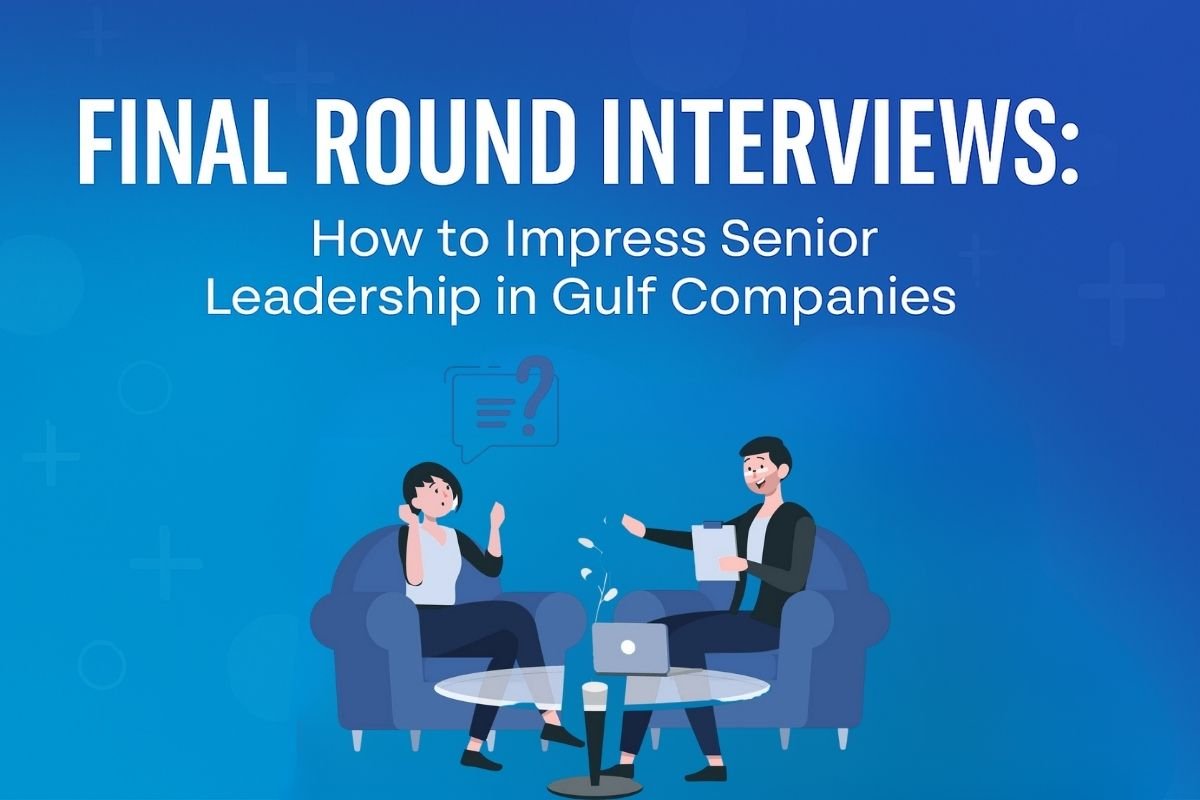
Reaching the final round of interviews in a Gulf-based company is a significant achievement. It means you’ve passed the technical assessments, HR screenings, and initial managerial evaluations. Now, you’re face-to-face — virtually or in person — with senior leadership: managing directors, board members, or even the CEO.
In the Gulf region, especially in the UAE, Saudi Arabia, and Qatar, many companies are family-owned, founder-led, or hierarchical in structure. Final interviews are often decisive. They’re not just about validating your skills — they’re about assessing your mindset, loyalty, and ability to contribute to the company’s long-term goals.
What Makes Final Interviews in the Gulf Unique?
Cultural fit is paramount: Gulf employers value respect, humility, and alignment with company values.
Leadership wants strategic thinkers: Expect questions about vision, growth, and your role in shaping the future.
Trust matters more than credentials: Senior leaders assess attitude, reliability, and long-term commitment.
Formality and etiquette count: Professional attire, respectful language, and punctuality are non-negotiable.
Strategy 1: Understand the Company’s Vision and Leadership Style
Before the interview, research the company’s leadership — especially the person interviewing you.
Read CEO or MD interviews, press releases, and LinkedIn profiles.
Understand the company’s expansion plans, values, and recent milestones.
Prepare to speak about how your role supports their strategic direction.
Example: “I noticed your recent expansion into the Saudi market. I’d love to contribute by leveraging my regional experience and stakeholder management skills.”
✅ Strategy 2: Prepare for Strategic, Values-Based Questions
Final interviews are rarely technical. Expect questions like:
“Where do you see yourself in five years — and how does that align with our company?”
“What would you do differently in your first 90 days here?”
“How do you handle ambiguity and change?”
“What does loyalty mean to you in a professional context?”
Tip: Use the STAR method (Situation, Task, Action, Result) to structure answers, but focus on strategic thinking and leadership impact.
Strategy 3: Demonstrate Cultural Awareness and Emotional Intelligence
Senior leaders in the Gulf value candidates who respect local customs and workplace norms.
Be mindful of Islamic values, prayer times, and Ramadan etiquette.
Use formal greetings and titles (e.g., “Mr. Al-Fahad” or “Dr. Al-Mansoori”).
Avoid overly casual language or humor unless the tone is clearly informal.
Example: “I’ve worked in multicultural teams and always prioritize respectful communication, especially in culturally diverse environments like the Gulf.”
Strategy 4: Ask Insightful Questions That Reflect Strategic Thinking
Final interviews are a two-way street. Asking thoughtful questions shows you’re serious about the role.
“What are the biggest challenges facing the company in the next 12 months?”
“How does this role contribute to your long-term vision?”
“What qualities do you value most in your leadership team?”
Tip: Avoid asking about salary or vacation at this stage. Focus on impact, growth, and alignment.
Strategy 5: Show Commitment and Long-Term Vision
Gulf employers are wary of short-term hires. They want candidates who will stay and grow.
Express your desire to build a career in the region.
Mention your adaptability and willingness to relocate.
Align your personal goals with the company’s trajectory.
Example: “I’m looking for a long-term opportunity where I can contribute meaningfully and grow with the organization — and I see that potential here.”
Strategy 6: Master Your Presence — Online or In Person
Whether virtual or face-to-face, your presence matters.
Dress professionally — suit and tie for men, modest formal wear for women.
Maintain eye contact, sit upright, and speak clearly.
In virtual interviews, ensure good lighting, a clean background, and stable internet.
Tip: First impressions are lasting. Treat this interview like a boardroom presentation.
Strategy 7: Follow Up with Professional Gratitude
After the interview, send a concise thank-you email.
Reaffirm your interest in the role.
Mention one key takeaway from the conversation.
Keep it formal, respectful, and brief.
Example: “Thank you for the opportunity to discuss the role. I appreciated learning more about your vision for regional expansion and would be honored to contribute.”
Summary Table of Final Interview Strategies
#
Strategy
Key Action
1
Understand leadership style
Research CEO/MD and company vision
2
Prepare strategic answers
Focus on growth, alignment, and leadership impact
3
Show cultural awareness
Respect Gulf customs and formal etiquette
4
Ask insightful questions
Focus on challenges, vision, and leadership values
Send a thank-you email with strategic reinforcement
FAQs
What do Gulf CEOs look for in final interviews?
They assess strategic thinking, cultural fit, and long-term alignment. It’s less about skills and more about trust and vision
Should I talk about salary in the final round?
No. Focus on impact and alignment. Salary discussions are best reserved for HR or post-offer stages.
What if the final interview is virtual?
Treat it like an in-person meeting. Dress formally, ensure good lighting, and maintain eye contact through the camera.
How long do final interviews usually last?
Anywhere from 30 minutes to an hour, depending on the role and leadership style.
Can I ask about company challenges or future plans?
Yes. Thoughtful questions about strategy and growth show maturity and engagement.
Final Thoughts
Final round interviews in Gulf companies are not just about landing a job — they’re about earning leadership trust. By preparing strategically, demonstrating cultural awareness, and aligning with the company’s vision, you position yourself as a future leader, not just an employee.
Approach this stage with confidence, humility, and clarity. The Gulf region rewards professionals who think long-term, respect tradition, and contribute meaningfully to organizational growth.
The Gulf region — including the United Arab Emirates, Saudi Arabia, Qatar, Kuwait, Bahrain, and Oman — is one of the most attractive destinations for professionals worldwide. With tax-free salaries, modern infrastructure, and diverse workforces, thousands of job seekers relocate to the Gulf every year.
But before you pack your bags, there’s one critical step you must not overlook: reading and understanding your offer letter.
An offer letter is more than a formality. It’s a legally binding document that outlines your rights, responsibilities, and benefits as an employee. Many professionals, eager to secure a Gulf role, skim through the details and sign quickly. This can lead to misunderstandings, disputes, or even early resignation.
Why Offer Letters Matter in the Gulf
Legal binding: Once signed, your offer letter becomes part of your employment contract.
Visa processing: The details in your offer letter are used for work permit and residency applications.
Employer expectations: Clauses define your role, responsibilities, and performance standards.
Employee rights: Benefits, allowances, and termination conditions are all governed by the offer letter.
Clause 1: Job Title and Responsibilities
Your offer letter should clearly state your job title and a summary of responsibilities.
Ensure the title matches what was discussed during interviews.
Vague descriptions can lead to role confusion.
If responsibilities are too broad, clarify before signing.
Tip: A mismatch between your expectations and the employer’s description can cause frustration later.
Clause 2: Salary and Allowances
Salary packages in the Gulf are often structured differently than in other regions.
Base Salary: Usually tax-free, but confirm the currency (AED, SAR, QAR, or USD).
Housing Allowance: Many companies provide accommodation or a monthly allowance.
Transportation Allowance: Check if commuting costs are covered.
Education Allowance: Important for employees with children.
Annual Bonus: Some firms offer performance-based bonuses.
Tip: Calculate the total package value, not just the base salary.
Clause 3: Benefits and Perks
Benefits can significantly impact your quality of life in the Gulf.
Medical Insurance: Confirm if coverage extends to dependents.
Annual Flights: Many employers pay for return flights to your home country.
Leave Policy: Compare annual leave days and public holiday entitlements.
End-of-Service Gratuity: Mandatory in most Gulf countries, calculated based on years of service.
Tip: A lower salary with strong benefits may be better than a higher salary with minimal perks.
Clause 4: Contract Duration and Renewal
Most Gulf contracts are fixed-term, typically 2–3 years.
Check the duration and renewal conditions.
Understand whether renewal is automatic or requires renegotiation.
Clarify probation period terms (usually 3–6 months).
Tip: During probation, termination is easier for both parties.
Clause 5: Working Hours and Overtime
Work hours in the Gulf can differ from your home country.
Standard hours: 40–48 per week, depending on the country.
Ramadan hours: Reduced for Muslim employees.
Overtime: Clarify rates and eligibility.
Tip: Ensure overtime policies are clearly stated to avoid disputes.
Clause 6: Termination and Notice Period
Termination clauses define how either party can end the contract.
Notice Period: Usually 30–90 days.
Termination Conditions: Check if termination is possible during probation without notice.
Severance Pay: Understand entitlements if terminated after probation.
Tip: A longer notice period provides more security but may limit flexibility.
Clause 7: Non-Compete and Mobility Clauses
Some Gulf employers include restrictions on future employment.
Non-Compete: May prevent you from joining competitors for a set period.
Geographic Restrictions: Some clauses limit where you can work after leaving.
Internal Mobility: Clarify if transfers within the company are possible.
Tip: Seek clarification on restrictive clauses before signing.
Clause 8: Relocation and Visa Sponsorship
Your offer letter should outline relocation support.
Visa Sponsorship: Confirm the employer will handle work permit and residency.
Relocation Allowance: Some companies cover moving expenses.
Family Sponsorship: Check if dependents are included.
Tip: Ensure visa sponsorship is explicitly mentioned to avoid complications.
Clause 9: Performance Evaluation
Performance reviews affect promotions and bonuses.
Clarify how often evaluations occur.
Understand criteria for promotions and salary increases.
Check if performance targets are realistic.
Tip: Ask about career development opportunities during discussions.
Clause 10: Governing Law and Jurisdiction
Offer letters in the Gulf often specify which country’s labor laws apply.
UAE, Saudi Arabia, and Qatar each have distinct labor laws.
Disputes are resolved under local jurisdiction.
Ensure you understand the governing law before signing.
Tip: Familiarize yourself with basic labor rights in the country of employment.
Summary Table of Key Clauses
Clause
What to Check
Why It Matters
Job Title
Matches interview discussion
Prevents role confusion
Salary & Allowances
Base + housing + transport
Total package value
Benefits
Insurance, flights, leave
Quality of life
Contract Duration
Term length, probation
Stability and renewal
Working Hours
Weekly hours, overtime
Work-life balance
Termination
Notice period, severance
Security and flexibility
Non-Compete
Restrictions on future jobs
Career mobility
Relocation
Visa sponsorship, family support
Smooth transition
Performance
Evaluation criteria
Career growth
Governing Law
Applicable labor laws
Legal protection
Common Mistakes to Avoid
Signing without reading the fine print.
Ignoring probation period terms.
Overlooking benefits in favor of salary.
Accepting restrictive non-compete clauses.
Failing to confirm visa sponsorship.
FAQs
Can I negotiate my Gulf offer letter?
Yes. Employers expect some negotiation, especially around allowances and benefits. Be respectful and realistic.
What happens if I resign during probation?
You may be required to give short notice or none at all, depending on the contract.
Is end-of-service gratuity mandatory in the Gulf?
Yes, but calculation methods vary by country. It’s based on years of service.
Should I worry about non-compete clauses?
Yes. They can restrict future opportunities. Clarify terms before signing.
How do I verify if benefits apply to dependents?
Ask HR directly and request written confirmation in the offer letter.
Final Thoughts
Your offer letter is the foundation of your employment in the Gulf. It defines your rights, responsibilities, and future career path. By carefully reviewing clauses on salary, benefits, contract terms, and legal jurisdiction, you can avoid unpleasant surprises and ensure a smooth transition.
Remember: a job in the Gulf is not just a career move — it’s a life-changing decision. Take the time to decode your offer letter, ask questions, and negotiate where necessary. The right preparation will set you up for success in one of the world’s most dynamic regions.
Dubai continues to be one of the most sought-after destinations for professionals worldwide. With competitive salaries, tax-free income, and a thriving business environment, opportunities in the city attract thousands of applicants every year. One such opportunity is with Confidential Company, offering a full-time role in Dubai with a salary range of $4,000–$5,000.
Table of Contents
Job Overview
Company: Confidential Company
Location: Dubai, UAE
Salary: $4,000–$5,000 per month
Employment Type: Full-time
Role: Public Relations / Administrative Support (based on responsibilities outlined)
Job Responsibilities
While the company has kept the role description concise, the responsibilities are expected to include:
Supporting administrative and client-facing tasks.
Coordinating with internal teams and external stakeholders.
Managing documentation and ensuring compliance with UAE regulations.
Providing professional support in line with company standards.
How to Apply (Step-by-Step)
Unlike most companies that use LinkedIn or job portals, Confidential Company requires applicants to follow a specific Google search process. Here’s how:
Visit Google.com on your phone.
Open your browser and go to Google.
Search for “Chiropractor Dubai.”
Type this exact phrase into the search bar.
Find the Chiropractors.ae website (page 3 or 4).
Scroll through the search results until you reach page 3 or 4.
Locate the website “Chiropractors.ae.”
Enter the page and find the “Submit CV” section.
Once inside the website, look for the CV submission option.
Upload your CV directly through that portal.
Wait for a call.
The company will contact you if your CV matches their requirements.
⚠️ Important Note: If you apply through any other channel (LinkedIn, email, or job boards), your CV will not be reviewed.
Why This Process Is Different
Confidential Company uses this method to:
Filter applicants who can follow instructions carefully.
Ensure only serious candidates apply.
Manage CV submissions through a controlled portal.
This approach may seem unusual, but it reflects the company’s emphasis on precision and attention to detail.
Benefits of the Role
Competitive salary ($4,000–$5,000).
Tax-free income in Dubai.
Exposure to a multicultural work environment.
Opportunity to grow within a confidential but established organization.
FAQs
Why do I need to search “Chiropractor Dubai” to apply?
This is the company’s unique way of filtering candidates. It ensures applicants can follow instructions and reach the correct CV submission portal.
Can I apply through LinkedIn or other job sites?
No. The company has clearly stated that CVs submitted through other channels will not be reviewed.
What happens after I submit my CV?
If your profile matches the company’s requirements, you will receive a call for the next stage of the hiring process.
Is the salary negotiable?
The advertised range is $4,000–$5,000. Negotiation may be possible depending on experience and qualifications.
How long does it take to hear back after applying?
Response times vary, but most Gulf employers take 2–4 weeks to review applications and contact shortlisted candidates.
Post a Job Opening
Fill in the details below. Your job posting will be reviewed by our team.