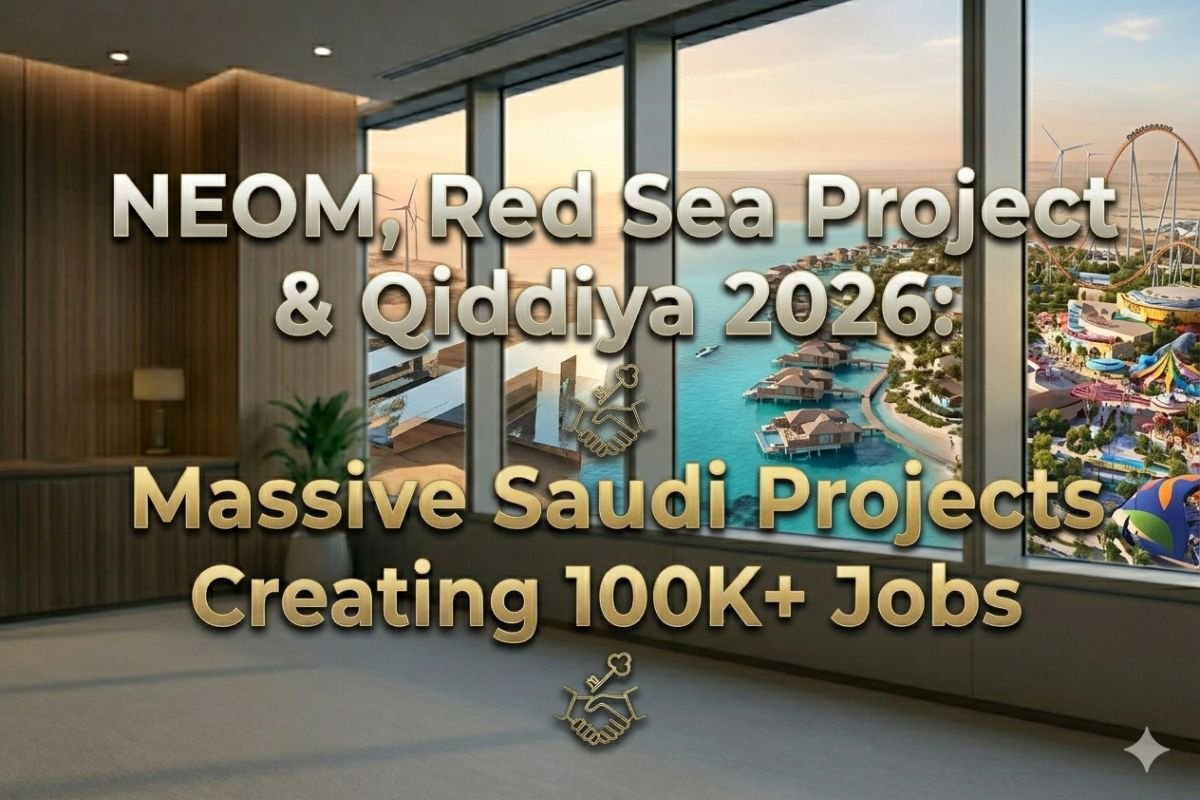
If you’ve been watching the Middle East job market lately, you’ve probably noticed something big happening in Saudi Arabia. And I mean literally big. We’re talking about three of the most ambitious construction projects on the planet—NEOM, The Red Sea Project, and Qiddiya—collectively generating over 100,000 employment opportunities this year alone.
As someone who’s been tracking Gulf employment trends for years, I can tell you this isn’t just another infrastructure boom. This is a fundamental reshaping of how an entire economy operates. Whether you’re an engineer looking for your next challenge, a hospitality professional seeking something extraordinary, or simply curious about where the world’s talent is flowing in 2026, here’s what you need to know about these game-changing developments.
NEOM: Where the Future is Being Built Today
Let’s start with the one everyone’s talking about. NEOM isn’t just a project; it’s a $500 billion bet on the future of human civilization
. When Crown Prince Mohammed bin Salman first announced this vision back in 2017, plenty of skeptics dismissed it as fantasy. Fast forward to 2026, and those renderings of floating cities and linear urban developments? They’re becoming reality.
The Scale is Mind-Boggling
NEOM currently represents the largest active construction site on Earth
. But here’s what makes 2026 different from previous years: we’ve moved from the “dreaming phase” to the “doing phase.” The first modules of The Line are actually operational now, Sindalah luxury island is welcoming guests, and Oxagon’s industrial zones are coming online
.
What does this mean for jobs? Massive demand for mid-level operations managers—the people who actually keep these futuristic cities running. We’re seeing salary packages 35% higher than Dubai and 50% above UK/EU standards, completely tax-free
. Senior project managers are pulling in 35,000–55,000 SAR monthly, while specialized engineers command 15,000–30,000 SAR plus remote location allowances
.
Who’s Actually Hiring?
Here’s a pro tip most people miss: don’t just apply through NEOM’s official portal. About 90% of the workforce is employed through major contractors like Bechtel, AECOM, Parsons, and WSP
. These companies have the mandate to hire thousands of expats right now, particularly for:
- The Line: Civil engineers, tunneling experts, and geotechnical specialists for the underground “Spine” infrastructure
- Oxagon: Marine engineers and logistics managers for the floating industrial port
- Trojena: Structural engineers and hospitality staff for the mountain ski resort (yes, skiing in Saudi Arabia)
- Sindalah: Hotel staff, chefs, and marine crew for the luxury island destination
The lifestyle isn’t for everyone—think 10-hour shifts, six days a week, living in temporary camps far from traditional cities. But with housing, meals, laundry, and gym access completely covered, professionals are saving nearly 100% of their tax-free salaries
.
The Red Sea Project: Sustainable Luxury at Scale
While NEOM grabs headlines, The Red Sea Project (now operated by Red Sea Global) is quietly becoming one of the most fascinating sustainable tourism developments anywhere. This isn’t your typical beach resort construction. We’re talking about 28,000 square kilometers of islands, beaches, desert, mountains, and volcanic areas being transformed into an eco-friendly luxury destination
.
2026: The Operational Shift
Like NEOM, The Red Sea Project has transitioned from pure construction to operational readiness. With the Red Sea International Airport now operational and the first resorts welcoming guests, the hiring focus has shifted dramatically
.
Current job openings (over 159 vacancies as of March 2026) include everything from dive masters and adventure operations managers to aviation security specialists and logistics directors
. What makes these roles unique is the emphasis on “cognitive hospitality”—blending traditional white-glove service with AI-integrated systems and predictive guest management
.
The project aims to set a new global standard for sustainable luxury tourism. That means professionals here aren’t just building hotels; they’re pioneering how high-end tourism operates in harmony with environmental preservation
.
Qiddiya: The Entertainment Capital Taking Shape
Just outside Riyadh, something equally impressive is happening. Qiddiya Investment Company is building what will become the world’s largest entertainment, sports, and cultural destination
. Think theme parks, motorsports facilities, sports stadiums, and cultural venues spanning an area larger than some small countries.
The Numbers Behind the Vision
Qiddiya Investment Company currently employs 1,200 direct staff, but that’s just the tip of the iceberg
. Through infrastructure partnerships and contractor networks, the project is generating thousands of additional construction and operational roles. Parsons Corporation alone is actively recruiting senior construction managers for workers’ villages and logistics coordination
.
Recent job postings show demand for:
- Rail station design and construction directors
- Modern methods of construction specialists
- Commercial managers (30,000–35,000 SAR monthly)
- Street lighting and generator technicians
- Sports and entertainment instructors
What makes Qiddiya particularly interesting for job seekers is its proximity to Riyadh. Unlike NEOM’s remote location, Qiddiya offers the excitement of a giga-project with the accessibility of a major metropolitan area. You get the career acceleration without the isolation.
The Bigger Picture: Saudi Arabia’s Employment Transformation
These three projects represent just the most visible elements of Saudi Vision 2030’s economic diversification strategy. What’s happening here goes beyond construction—it’s a deliberate, systematic transfer of skills and expertise into the Kingdom.
For international professionals, 2026 presents a unique window. The projects are mature enough to offer stable, well-compensated roles, but still early enough that early joiners can shape foundational systems and processes. The “pioneer” phase (complete with shipping container accommodation) is largely over; today’s workers enjoy proper housing, international schools, and developing community infrastructure
.
What Employers Are Really Looking For
Having reviewed hundreds of job postings across these projects, I notice consistent patterns in what recruiters prioritize:
1. Data Literacy: Even non-technical managers need to interrogate dashboards and make data-driven decisions
. If you can’t navigate PowerBI or Tableau, you’re at a disadvantage.
2. Sustainability Fluency: Carbon credits, circular economy principles, and ESG standards aren’t buzzwords here—they’re operational requirements
.
3. Agile Leadership: These projects move at what insiders call “Vegas speed.” If you need six months of committee meetings to make decisions, you’ll struggle
.
4. Cross-Cultural Competence: With over 100 nationalities working across these sites, cultural intelligence isn’t optional—it’s essential for career progression.
Is 2026 Your Year to Make the Move?
The opportunity is real, but so are the challenges. These projects demand professionals who can handle intensity, isolation (particularly at NEOM), and the pressure of delivering while the world watches. The rewards—financial and professional—are substantial for those who thrive in such environments.
My advice? Don’t wait for the perfect moment. These projects are actively recruiting right now, with contractors holding regular career fairs in London, Dubai, and Singapore
. Update your portfolio to include specific case studies and outcomes, consider recording a brief video introduction explaining your “why,” and target department heads directly on LinkedIn rather than waiting for HR portals
.
The Saudi giga-projects of 2026 aren’t just creating jobs—they’re creating the future of urban development, sustainable tourism, and entertainment. Whether you see yourself managing autonomous delivery fleets in a car-free city, overseeing AI-integrated luxury hospitality, or building the infrastructure for tomorrow’s entertainment experiences, there’s probably a role with your name on it.