
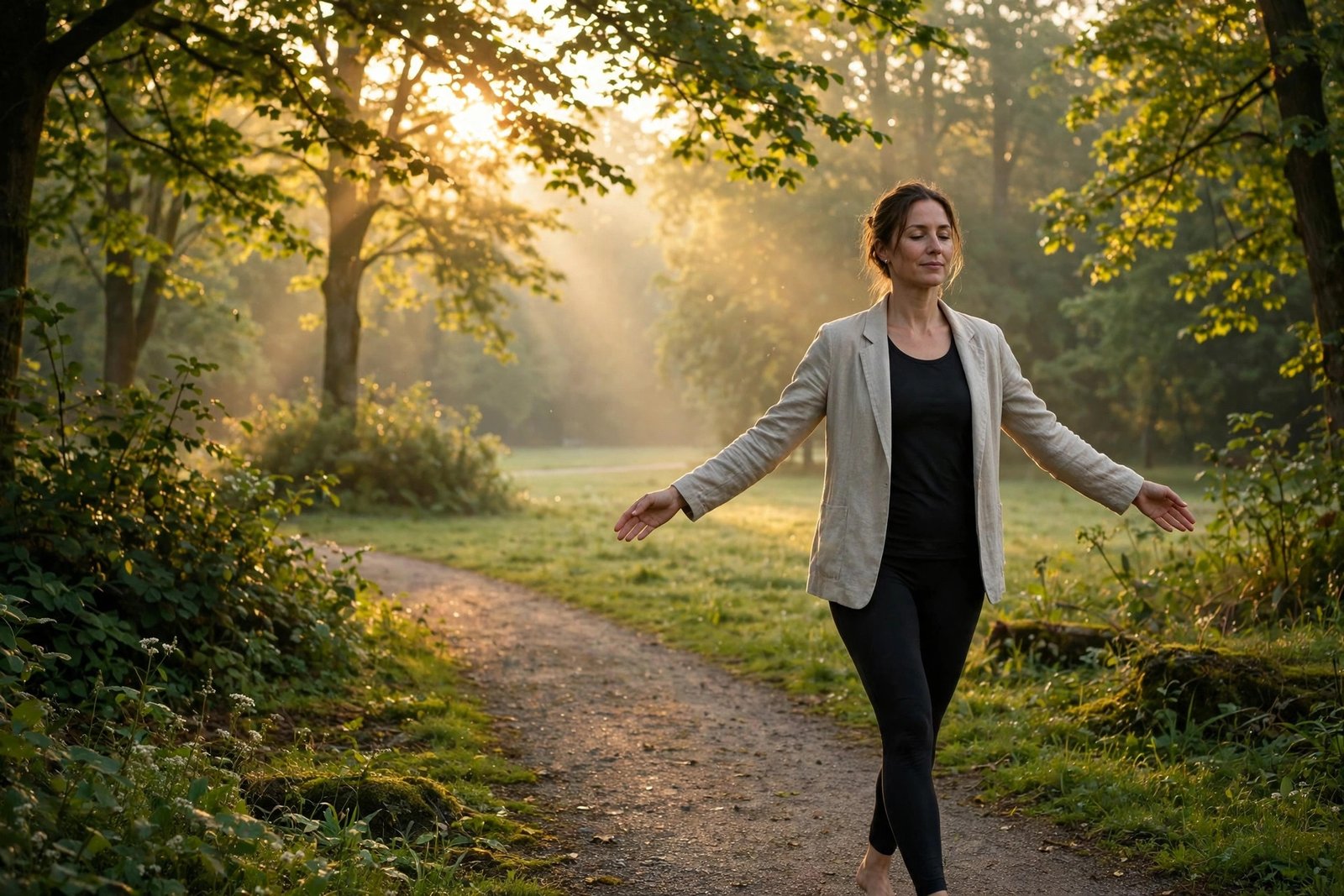
Forget intense gym sessions and complicated poses. The fitness world has a gentler obsession in 2026: walking yoga. This simple practice combines the mindfulness of yoga with the natural rhythm of walking, and people everywhere are giving it a try.
Searches for walking yoga have exploded this year, and it is easy to see why. It needs no equipment, no gym membership, and no experience. All you need is a pair of comfortable shoes and a few minutes.
What Exactly Is Walking Yoga?
Walking yoga is the practice of bringing yogic principles — breath awareness, posture, and mindfulness — into your walk. Instead of rushing from point A to point B, you slow down and pay attention to each step, each breath, and how your body feels.
- Coordinated breathing with your steps
- Shoulder rolls and neck stretches as you move
- Mindful posture checks
- Brief pauses for standing stretches
Why Is It So Popular Right Now?
- It is accessible. Almost anyone can walk, regardless of age or fitness level.
- It fights stress. Slow, mindful movement lowers cortisol better than scrolling on a couch.
- It fits busy schedules. A 15-minute mindful walk counts — no hour-long class needed.
- It is social. Walking yoga groups are popping up in parks worldwide.
- It is free. No subscriptions, no gear, no excuses.
The Health Benefits of Walking Yoga
Physical Benefits
- Improves posture: Paying attention to alignment while walking strengthens core awareness.
- Eases joint stiffness: Gentle movement keeps joints mobile without high impact.
- Boosts circulation: Rhythmic walking gets blood flowing.
- Supports balance: Mindful stepping improves coordination.
Mental Benefits
- Reduces anxiety: Focusing on breath and steps pulls attention away from worried thoughts.
- Improves focus: Regular practice trains your brain to stay present.
- Lifts mood: Even short walks in nature increase serotonin.
- Better sleep: People who practice in the evening often report falling asleep faster.
How to Start: A Simple 15-Minute Routine
Minutes 1–3: Settle In
Start walking at a comfortable pace. Notice your feet touching the ground. Take slow, deep breaths.
Minutes 4–8: Sync Breath and Steps
Try breathing in for four steps, then out for four steps. If that feels forced, just breathe naturally and notice the rhythm.
Minutes 9–12: Add Gentle Movement
- Interlace your fingers and stretch your arms overhead for a few steps
- Do slow neck rolls, one side then the other
- Squeeze your shoulder blades together, hold for three steps, release
Minutes 13–15: Cool Down
Slow your pace. Take three deep breaths. Notice how your body feels compared to when you started.
Tips for the Best Experience
- Choose a pleasant route. Parks, tree-lined streets, or quiet paths work best.
- Leave the headphones off — natural sounds deepen the mindfulness.
- Be consistent. Even 10 minutes daily beats one long session a week.
Key Takeaways
- Walking yoga blends mindful walking with gentle yoga principles — no equipment needed.
- It improves posture, reduces stress, lifts mood, and supports better sleep.
- Start with just 10–15 minutes a day.
- The secret is consistency, not intensity.
Frequently Asked Questions
Is walking yoga as effective as regular yoga? It serves a different purpose — gentler, focused on mindfulness and light movement.
Can beginners try walking yoga? Absolutely — if you can walk, you can do walking yoga.
Do I need special shoes? No. Comfortable walking shoes work perfectly.