Gulf Careers Hub

Complete Guide to Warehouse Jobs in United Arab Emirates 2026

Warehouse Jobs UAE 2026 | Latest Logistics Careers Guide

If you’re looking for warehouse jobs UAE, you’re in the right place at the right time. Major companies across defense, luxury retail, food and beverage, healthcare, and e-commerce are actively hiring. This comprehensive guide covers everything you need to know—from current vacancies and salary expectations to the qualifications that will make you stand out.

Why the UAE Warehouse and Logistics Sector Is Booming in 2026

The UAE’s logistics sector is projected to continue its robust growth, driven by several key factors:

  • E-commerce Expansion: Online retail giants like Amazon and Noon require massive warehouse networks to fulfill orders at lightning speed.
  • Expo 2020 Legacy: The infrastructure built for Expo continues to attract global trade and investment, sustaining demand for supply chain professionals.
  • Vision 2030 Spillover: Saudi Arabia’s giga-projects create ripple demand for logistics hubs in the UAE, particularly for construction materials and equipment.
  • Free Zones: Dubai’s Jebel Ali Free Zone (JAFZA) and Abu Dhabi’s KIZAD remain magnets for multinational companies setting up regional distribution centers.

All this translates to thousands of warehouse vacancies Abu Dhabi, Dubai, Sharjah, and the Northern Emirates throughout 2026.

Current Warehouse Job Openings in UAE (March 2026)

Let’s look at real, active job postings to give you a clear picture of what employers are seeking right now.

1. Warehouse Officer (Abu Dhabi) – EDGE Group

Company: HALCON (EDGE Group)
Location: Abu Dhabi
Experience Required: 4–5 years in warehouse environment, with minimum 2 years in defense, aerospace, or manufacturing 

Key Responsibilities:

  • Oversee daily warehouse activities including receiving, handling, storage, picking, and packing
  • Maintain inventory control and accuracy through regular physical counts
  • Ensure efficient space utilization and coordinate material movement across departments
  • Monitor incoming receiving and report discrepancies 

Requirements:

  • SAP EWM (Extended Warehouse Management) knowledge
  • Bachelor’s degree in Supply Chain Management, Logistics, or Business Administration
  • Experience in defense or aerospace industry preferred 

Why This Role Stands Out: This position offers exposure to advanced ERP systems and the opportunity to work in a cutting-edge defense manufacturing environment.

2. Warehouse Assistant II (Dubai) – DHL Global Forwarding

Company: DHL Group
Location: Dubai
Experience Required: Less than 2 years 

Key Responsibilities:

  • Receive goods, accurately sort, label, and store items optimizing warehouse space
  • Verify items against shipment records and inspect for damage
  • Pack items for shipment according to specifications
  • Operate scanners to process incoming and outgoing shipments
  • Support forklift operations and material handling activities 

Requirements:

  • Vocational or technical certification
  • Basic understanding of warehouse processes
  • Ability to work within established procedures 

Why This Role Stands Out: DHL is the world’s leading logistics company, operating in over 220 countries. This entry-level position offers clear career progression pathways .

3. Operations Team Member (Dubai) – Iron Mountain

Company: Iron Mountain
Location: Dubai
Language Requirement: Arabic speaker (Mandatory) 

Key Responsibilities:

  • Oversee lifecycle management of physical assets including receipt, storage, and shipment
  • Coordinate shipping and receiving schedules
  • Ensure compliance with operating procedures and optimize space utilization
  • Maintain accurate accountability and reporting 

Requirements:

  • Skills developed through formal training or relevant work experience
  • Strong knowledge of inventory control and auditing practices
  • Good command of English and Arabic 

Why This Role Stands Out: Iron Mountain is a global leader in storage and information management services, trusted by over 225,000 organizations worldwide .

4. Warehouse Picker (Abu Dhabi) – Ghitha Holdings

Company: Ghitha Holdings
Location: Abu Dhabi
Salary: AED 1,500 – AED 2,500 per month 

Key Responsibilities:

  • Pick orders according to picking slips
  • Ensure correct items, boxes, and cartons are on pallets
  • Load and unload trucks using totes and jacks
  • Comply with HACCP, ISO, OSHA, and safety regulations
  • Maintain clean and organized work areas 

Requirements:

  • 1 year FMCG picking experience (required)
  • Ability to commute/relocate to Abu Dhabi
  • Understanding of safety regulations 

5. Warehouse Operator (Dubai) – Al-Futtaim

Company: Al-Futtaim
Location: Dubai
Employment Type: Full Time 

Key Responsibilities:

  • Efficient binning, picking, sorting, and counting of products
  • Check outbound shipments for product codes, quantity, and condition
  • Perform PI counting and report variances
  • Maintain warehouse housekeeping and cleanliness 

Requirements:

  • Primary or basic education
  • Basic numerical and English communication skills
  • Physically fit
  • Previous warehouse experience preferred
  • Ability to work under pressure and tight deadlines 

6. Logistics Specialist (Dubai) – Chaumet (LVMH)

Company: Chaumet (LVMH Group)
Location: Dubai
Experience Required: Minimum 4 years progressive experience in logistics 

Key Responsibilities:

  • Oversee entire shipment process from pick-up to delivery
  • Track shipments and ensure accurate, timely delivery
  • Develop distribution plans and coordinate with stakeholders
  • Analyze logistics performance metrics and implement improvements
  • Optimize transportation routes and negotiate with carriers 

Requirements:

  • Bachelor’s degree in Supply Chain, Logistics, Industrial Engineering, or Business
  • Fluency in English; Arabic preferred
  • Strong analytical and problem-solving skills
  • Proficiency in data analysis tools, PowerBI, and Microsoft Office Suite
  • Knowledge of transportation management systems (TMS) 

Why This Role Stands Out: Work for a prestigious 240-year-old French luxury maison in the heart of Dubai’s luxury retail scene .

7. Logistics and Expediting Specialist (Abu Dhabi) – ENEC

Company: ENEC (Emirates Nuclear Energy Corporation)
Location: Abu Dhabi
Experience Required: 3 years relevant experience 

Key Responsibilities:

  • Carry out logistics activities for Barakah Nuclear Power Plant materials
  • Liaise with government authorities for duty exemption and customs clearance
  • Manage special cargo including radioactive, dangerous, and heavy materials
  • Process claims for damages, shortages, or loss of cargo 

Requirements:

  • Bachelor’s degree in Business, Engineering, or Supply Chain Management
  • Knowledge of dangerous goods transportation regulations
  • Experience with government clearance processes 

Why This Role Stands Out: Contribute to the UAE’s peaceful nuclear energy program with one of the nation’s most strategic employers.

Salary Guide for Warehouse Jobs in UAE 2026

Salaries vary based on experience, qualifications, and the specific sector. Here’s a general overview:

Job RoleExperience LevelMonthly Salary Range (AED)
Warehouse Assistant / PickerEntry Level (0-2 years)1,500 – 3,500 
Warehouse Operator1-3 years2,500 – 4,500 
Operations Team Member2-4 years4,000 – 7,000 
Warehouse Officer / Specialist3-5 years7,000 – 12,000 
Logistics Specialist / Coordinator4-6 years10,000 – 18,000 
Warehouse Manager8+ years20,000 – 35,000+

Note: These figures are estimates and include basic salary plus allowances. Many companies also provide benefits such as housing, transportation, annual airfare, and medical insurance.

Essential Skills and Qualifications for Warehouse Jobs UAE

To stand out in the competitive UAE job market, focus on developing these in-demand skills:

Technical Skills

  • ERP Systems: SAP (especially EWM and MM modules) is highly valued 
  • WMS (Warehouse Management Systems): Experience with systems like Oracle WMS, Manhattan, or Infor
  • Data Analysis: PowerBI, Excel (pivot tables, VLOOKUP) 
  • Equipment Operation: Forklift, reach truck, pallet jack certifications
  • Inventory Control: Cycle counting, FIFO/FEFO methods, stock reconciliation 

Soft Skills

  • Communication: English is essential; Arabic is a major advantage 
  • Attention to Detail: Critical for accurate order fulfillment and inventory management
  • Physical Fitness: Many roles require standing, lifting, and moving for extended periods 
  • Teamwork: Warehouse operations rely on seamless coordination
  • Problem-Solving: Ability to resolve issues like shipment delays or discrepancies 

Education and Certifications

  • Entry-level: High school diploma or vocational training 
  • Supervisory/Management: Bachelor’s degree in Supply Chain, Logistics, or Business 
  • Certifications: CSCP (Certified Supply Chain Professional), CPIM, or forklift operator licenses

Top Industries Hiring Warehouse Staff in UAE

  • Defense and Aerospace: Companies like EDGE Group require specialized warehouse staff for sensitive materials 
  • FMCG (Fast-Moving Consumer Goods): Almarai and similar companies need warehouse teams for high-volume distribution 
  • Luxury Retail: LVMH brands seek logistics professionals for high-value inventory management 
  • Healthcare: Companies like Zahrawi Group require careful handling of medical supplies 
  • E-commerce and Logistics: DHL, Amazon, and Noon have massive warehousing needs 
  • Energy: ENEC and oil and gas companies require logistics specialists for complex supply chains 

How to Apply for Warehouse Jobs in UAE

Step 1: Prepare Your Documents

  • Updated CV highlighting relevant warehouse experience and skills
  • Copies of educational certificates and professional certifications
  • Passport-sized photographs
  • Passport copy and visa pages (if already in UAE)

Step 2: Where to Search

  • Job Portals: Bayt.com, Indeed, LinkedIn, Gulftalent
  • Company Websites: Check career pages of DHL, Al-Futtaim, EDGE, LVMH
  • Recruitment Agencies: Specialized logistics recruitment firms
  • Networking: LinkedIn connections and industry events

Step 3: Application Tips

  • Tailor Your CV: Highlight warehouse-specific keywords from the job description
  • Include Certifications: List all equipment operation certifications
  • Mention Language Skills: Clearly state your proficiency in English and Arabic
  • Follow Up: Send a polite follow-up message one week after applying

Step 4: Interview Preparation

  • Research the company and its industry
  • Be ready to discuss specific warehouse experience (picking accuracy, inventory counts, equipment operation)
  • Prepare questions about working hours, shift patterns, and safety protocols
  • Bring copies of your documents to the interview

Frequently Asked Questions (FAQs)

1. Do I need previous experience for warehouse jobs in UAE?

Not always. Entry-level positions like Warehouse Assistant or Picker often accept candidates with less than 2 years of experience or even freshers with the right attitude and basic skills . However, having some experience or relevant certifications will significantly improve your chances.

2. Is Arabic language required for warehouse jobs?

For many roles, English is sufficient, especially in multinational companies. However, Arabic is “mandatory” or “preferred” for certain positions, particularly those involving local coordination or customer interaction . Learning basic Arabic phrases can give you a competitive edge.

3. What is the average salary for warehouse jobs in UAE?

Salaries range from AED 1,500–2,500 for entry-level positions  to AED 7,000–12,000+ for experienced officers and specialists. Supervisory and managerial roles command significantly higher packages. Most companies also offer benefits like accommodation, transport, and medical insurance.

4. Can I apply for warehouse jobs if I’m currently outside UAE?

Yes, many companies are open to hiring from abroad, especially for specialized roles. However, you’ll need to be clear about your notice period and availability for interviews (which are often conducted via video call). Be prepared to cover your own relocation costs unless the company offers a relocation package.

5. What are the working hours like in UAE warehouses?

Warehouse operations often run in shifts, including early mornings, evenings, and weekends, to meet delivery deadlines . Some roles require working long hours in temperature-controlled conditions, especially in FMCG and food logistics. Overtime pay or shift allowances are common.

Conclusion: Your Warehouse Career Starts Now

The UAE’s logistics sector offers abundant opportunities for motivated individuals at every career stage. Whether you’re just starting as a Warehouse Assistant or aiming for a Logistics Specialist role with a luxury brand, the key is preparation—understand the requirements, tailor your application, and highlight the skills employers value most.

With major players like DHL, Al-Futtaim, EDGE, and LVMH actively hiring in early 2026, now is the perfect time to take the next step in your warehouse career. Use this guide as your roadmap, and start applying today.
UAE Job Market 2026: Top Industries Hiring in Dubai & Abu Dhabi

UAE Job Market 2026 | Top Industries Hiring in Dubai & Abu Dhabi

If you’re planning your next career move, the UAE should be high on your radar. Despite global economic uncertainty, the UAE job market in 2026 is characterized by cautious optimism, strong hiring in key sectors, and a fundamental shift toward AI-powered roles . With nearly half of UAE employers planning to expand their workforce and GDP forecast to grow by over 5%, opportunities abound—but competition has never been fiercer .

The 2026 UAE Job Market: Overview

Hiring sentiment remains positive. A Cooper Fitch survey of over 1,000 Gulf organizations found that 48% of UAE companies plan to increase hiring in 2026, supported by robust GDP growth forecasts of 5.3% . However, 29% anticipate job reductions as companies maintain cost discipline, creating a mixed but largely stable outlook .

Competition is intense. More than 72% of UAE employees intend to look for a new role in 2026, according to a LinkedIn survey . Around 65% say it has become harder to find a job over the past year, with 63% citing increased competition as the main reason . The UAE’s population has grown from 11.02 million at the end of 2024 to 11.52 million in 2025, significantly expanding the talent pool .

Salaries are rising modestly. The broad trend is upwards but modest—just under 2% on average, according to Cooper Fitch . However, specialist roles and senior individual contributors saw healthy increases between 5-9% last year . Packages for AI, automation, and high-performing sales roles are rising faster than the market average .

Top Industries Hiring in Dubai & Abu Dhabi for 2026

1. Construction and Infrastructure

Why it’s booming: Major infrastructure and sustainability projects are driving massive demand. Dubai’s large-scale developments—including roads, metro expansion, and a new airport—require extensive workforce capacity as the population continues to grow . Key projects include the Etihad Rail national network, Hafeet Rail (UAE-Oman corridor), Dubai Metro Blue Line expansion, and Abu Dhabi Tram projects .

Roles in demand:

  • Project and construction managers
  • Civil engineers
  • Planning, cost control, and contracts engineers
  • HSE and sustainability professionals
  • Rail and infrastructure experts

What employers want: Professionals who can combine technical depth with leadership and digital fluency .

2. Technology and AI

Why it’s booming: The UAE leads globally in AI hiring growth, which rose to 48% in 2024–25 . Demand for data scientists rose 43%, AI product manager roles grew 37%, and AI engineer hiring increased 31% between 2024 and 2025 . Dubai International Financial Centre (DIFC) now hosts over 1,500 AI, fintech, and innovation firms, which have collectively raised over $4.2 billion .

Roles in demand:

  • Data scientists and AI specialists
  • AI product managers
  • AI engineers
  • Software developers
  • Digital transformation specialists
  • Cybersecurity experts

What employers want: Technical depth, execution experience, and the ability to deliver measurable outcomes . The market now demands specialized and value-added skill sets rather than generalist roles .

3. Financial Services

Why it’s booming: “I would be very optimistic about financial services for this year,” says Vlacheslav Shakhov, managing director at Cooper Fitch, pointing to banking, non-banking financial institutions, fintech, and crypto . The first full cycle of mandatory corporate tax submissions in the UAE drove short-term recruitment needs as businesses worked through compliance requirements .

Roles in demand:

  • Finance business partners
  • Controllership roles
  • FP&A professionals
  • Tax and compliance specialists
  • Treasury accounting experts
  • Banking operations (especially with escrow management skills for real estate)

What employers want: Technical capability remains non-negotiable, but strong stakeholder management and clear communication skills are increasingly valued as finance functions expand their strategic role .

4. Energy and Renewables

Why it’s booming: The industrial sector, including manufacturing and energy utilities, shows strong hiring signals . Clean energy, hydrogen, and sustainability zones are being developed across Abu Dhabi and Dubai, supported by the UAE’s commitment to net-zero goals .

Roles in demand:

  • Energy engineers
  • Sustainability specialists
  • Renewable energy project managers
  • Utilities experts

5. Aviation, Defence, and Aerospace

Why it’s booming: These sectors show the strongest hiring signals, with nearly half of respondents expecting double-digit workforce growth . Dubai’s status as a global aviation hub continues to drive demand.

Roles in demand:

  • Aviation engineers and technicians
  • Defence specialists
  • Aerospace professionals

6. Healthcare

Why it’s booming: The UAE’s growing population and focus on world-class healthcare infrastructure continue to drive demand across medical and administrative roles .

Roles in demand:

  • Medical professionals (doctors, nurses, specialists)
  • Healthcare administrators
  • Health technology specialists

Salary Trends 2026: What You Can Expect

By level:

LevelOutlook
Junior professionalsSalaries expected to increase, driven by strong academic backgrounds and competitive pricing 
Mid-level professionalsLikely to remain steady, with potential uplift after summer 2026 
Senior/executive levelMarket saturated; salaries for directors not expected to rise unless roles carry significant transformation or regulatory accountability 

By sector:

  • Specialist roles: 5-9% increases 
  • AI and data roles: Premium salaries, with AI talent commanding top packages 
  • Sales and commercial roles: Strong packages for high performers 

Typical salary ranges:

Role CategoryMonthly Range (AED)
Entry-Level Professional5,000 – 15,000
Mid-Level Manager15,000 – 35,000
Senior Manager/Director35,000 – 70,000+
Specialized Tech Roles20,000 – 50,000+

Source: Rivermate recruitment guide 

Bonuses typically range from one to six months’ salary, with most clustered around two to three months .

Skills That Will Make You Stand Out in 2026

1. AI Literacy (Without Overpromising)

Nearly 25% of jobs and tasks globally are exposed to AI transformation, and they are more likely to benefit from augmentation rather than elimination . Employers want candidates who understand AI—but they value authenticity.

“Be authentic, so don’t overdress it,” advises Vlacheslav Shakhov. “If you did do a certain course, or you worked on a pilot project, or any sort of involvement, I think it’s important you add it to your CV” .

2. Data Analysis and Critical Thinking

“One key skill set is the data analysis,” says Shakhov. Candidates need to demonstrate judgment and critical thinking rather than claiming to be certified experts. “Working with that data and being able to process what’s actually critical and what’s true is very important” .

3. GCC Experience

Experience in the UAE and wider GCC markets is increasingly becoming a differentiator. “Understanding the nuances of the local market—from cultural dynamics to business regulations—is increasingly seen as a major advantage. Global experience still matters, but GCC experience now often tips the scales” .

4. Hybrid Skills

“The future belongs to those who blend human skills with technology,” says Nicki Wilson at Genie Recruitment. “A marketing professional who understands data analytics or an HR professional who can leverage AI for talent mapping” will stand out .

5. Core Technical Skills

For finance professionals: financial analysis, reporting, consolidation, budgeting, and ERP implementation experience .

How to Land a Job in the UAE in 2026

1. Optimize Your CV for Applicant Tracking Systems

For entry-level, administrative, and high-volume roles, automated systems increasingly act as the first gatekeeper. Structure, clarity, and relevance are essential. Poorly formatted or generic CVs may never reach a human reviewer .

For senior and specialist roles, storytelling, clarity of impact, and relevance matter more than keyword optimization alone .

2. Network Strategically

“Networking is still one of the most powerful tools,” says Wilson . Build relationships before you need them. Connect with professionals in your target industry, attend industry events, and engage meaningfully on LinkedIn.

3. Be Authentic

“Employers can spot generic, ChatGPT-style messages and CVs instantly,” warns Wilson. “Don’t ask for flexibility or remote work too early in the process” .

4. Understand the Market Before Applying

Overseas candidates need to understand how the local market works before applying. Speak to people already in the region, build networks, and learn about sector-specific dynamics rather than applying blindly .

5. Show, Don’t Just Tell

“Never lie about your salary or experience. Honesty and integrity will always outlast shortcuts” .

The Future: What’s Next for the UAE Job Market

AI will continue reshaping roles. While jobs that could be fully automated account for only about 3.3%, nearly 25% of jobs and tasks are exposed to transformation and are more likely to benefit from augmentation rather than elimination .

Mega-projects will drive long-term demand. The UAE is entering a new growth cycle, with next-gen transport networks, AI-powered cities, and sustainability zones creating long-term careers and leadership opportunities .

Talent shortages persist in specialized areas. Candidate shortages are concentrated in business analysis, data science, AI implementation, tax and treasury accounting, sales, and digital marketing .

Conclusion

The UAE job market in 2026 offers real opportunities—but only for those who come prepared. The days of easy moves are over. Success now requires genuine skills, cultural understanding, and strategic career management.

Focus on the booming sectors: construction and infrastructure, technology and AI, financial services, energy, aviation, and healthcare. Build skills that matter: AI literacy, data analysis, and hybrid capabilities. Network authentically. And never stop learning.

The opportunities are there. The question is: are you ready?

Frequently Asked Questions (FAQs)

1. Is the UAE job market slowing down in 2026?

No, but it’s becoming more selective. Hiring is continuing, with 48% of employers planning to expand. However, decision-making is slower as employers weigh global uncertainty against regional growth. The mood is one of cautious optimism .

2. Which industries are hiring the most in Dubai and Abu Dhabi for 2026?

Construction and infrastructure, technology and AI, financial services, energy and renewables, aviation and defence, and healthcare are leading hiring demand . Mega-projects across transport, smart cities, and sustainability are driving significant recruitment .

3. Are salaries rising in the UAE for 2026?

Yes, but modestly overall—just under 2% on average. However, specialist roles and senior individual contributors saw increases between 5-9% last year . AI, data science, and high-performing sales roles command premium packages .

4. How important are AI skills for job seekers in 2026?

Extremely important. Demand for data scientists rose 43%, AI product manager roles grew 37%, and AI engineer hiring increased 31% between 2024 and 2025 . Nearly 25% of jobs are exposed to AI transformation, but most will be augmented rather than eliminated .

5. How can overseas candidates improve their chances of getting hired in the UAE?

Understand the local market before applying. Speak to people already in the region, build networks, and learn about sector-specific dynamics . GCC experience is increasingly valued, and candidates who understand local expectations and regulations tend to stand out . Be authentic in your applications—generic, AI-generated messages are easily spotted .

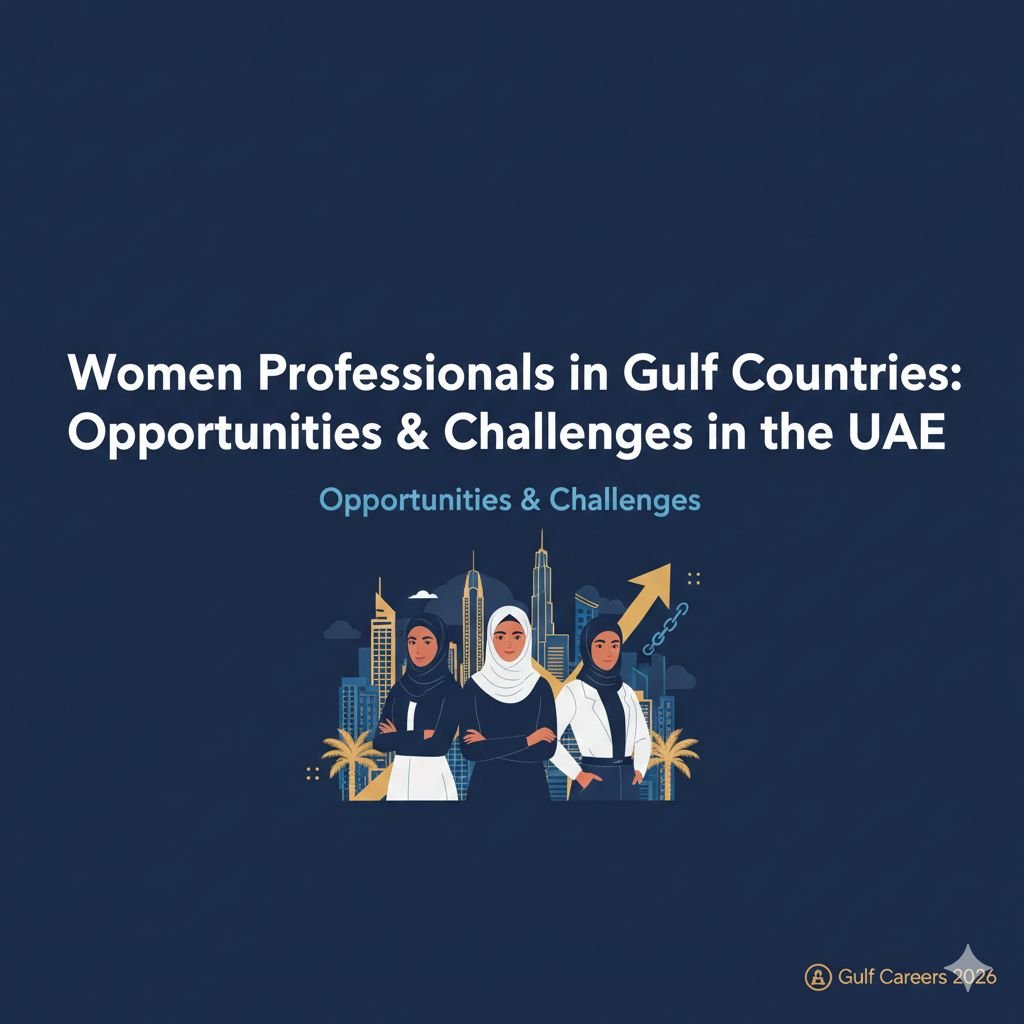
Women Professionals in Gulf Countries: Opportunities & Challenges in the UAE

Gulf Career Advice 2026 | Women Professionals in UAE: Opportunities & Challenges

In 2026, the UAE stands as a regional leader in gender balance, ranking first in the Middle East and North Africa in the 2025 Gender Inequality Index issued by the United Nations Development Programme . This progress reflects decades of strategic investment in women’s education and employment. This guide offers practical Gulf career advice for women professionals looking to build successful careers in the UAE.

Part 1: The Landscape of Opportunity

Government Vision and Strategic Support

The UAE has embedded women’s empowerment into its national strategy. The UAE Gender Balance Council Strategy 2026 aims to further reduce the gender gap across all sectors, enhance the UAE’s ranking in global competitiveness reports, and achieve gender balance in decision-making positions .

Key pillars of this strategy include:

  • Economic Participation: Growing women’s participation, retention, and leadership in the economy
  • Entrepreneurship: Increasing women’s presence in the entrepreneurial sector
  • Financial Inclusion: Improving women’s financial literacy
  • Wellbeing and Protections: Ensuring gender-equitable health support and legal protections 

Impressive Statistics Tell the Story

The numbers speak volumes about women’s progress in the UAE:

  • 70% of university graduates in the UAE are women, with 46% specialising in Science, Technology, Engineering and Mathematics (STEM) fields 
  • Women account for around 50% of the workforce in the UAE National Space Programme and nearly 80% of the scientific team behind the Emirates Mars Mission “Hope Probe” 
  • In the private sector, Emirati women hold 54.9% of leadership roles occupied by nationals 
  • Women account for 94.1% of Emiratis employed in private-sector education and 91.2% in healthcare professions 

High-Growth Sectors for Women Professionals

For women seeking Gulf career advice, targeting the right sectors is essential. These fields show strong demand and growth potential:

1. Technology and AI
The UAE’s focus on leading AI initiatives globally has created significant opportunities. Programmes like the ‘sAIdaty’ AI initiative have enabled 500 women to acquire skills in AI and cloud computing . Women now represent 56% of those enrolled at 42 Abu Dhabi, a coding school .

2. Healthcare
Medical specialists, particularly surgeons and consultants, consistently rank among the highest-paid professionals. Entry-level salaries range from Dh12,000 to Dh20,000 monthly .

3. Finance and Accounting
Finance degrees lead to strategy and C-level roles. With certifications like CFA or CPA, women can aspire to become chief financial officers or senior investment bankers .

4. Engineering
With major development projects across the UAE, engineers remain in high demand. Adding qualifications like PMP can significantly boost earning potential .

5. Space and Nuclear Energy
The UAE has made remarkable progress in training women in these cutting-edge fields, with women comprising half of the space programme workforce .

Part 2: Navigating the Challenges

Despite progress, women professionals in the Gulf still face significant hurdles. Understanding these challenges is crucial for anyone seeking authentic Gulf career advice.

The Participation Gap

While women excel in education, workforce participation tells a different story. The female labour participation ratio remains below 30% in some Gulf countries . In the GCC, only 9% of senior positions are held by women, compared to 35% in the Americas .

The Leadership Ceiling

Women’s representation on corporate boards ranges from just 0.01% in Saudi Arabia to 1.7% in Kuwait, while globally, 17% of board members are female . This gap persists despite women’s qualifications and ambitions—62% of women in the GCC aspire to management roles within seven years .

Work-Life Balance Pressures

Many women juggle demanding careers with family responsibilities. However, research shows that only 7% of women in the GCC work exclusively for financial gains—most are motivated by career fulfilment and ambition .

Access to Mentorship

Finding mentors remains challenging for women entrepreneurs and professionals. In Bahrain, 57% of male entrepreneurs report having access to a mentor, while only 38% of female entrepreneurs report the same .

Stereotypes in Male-Dominated Industries

Women entering traditionally male fields still encounter stereotypes. As one Emirati aerospace engineer noted: “Earlier, the stereotype was that girls should be doctors, teachers, or limited to certain fields. But we had the support of a nation that gave us all the backing we could ask for, and Emirati women were able to make their mark” .

Part 3: Practical Gulf Career Advice for Women Professionals

1. Strategic Education and Skill Development

The right qualifications open doors. Top certifications for the UAE market include:

FieldRecommended Certifications
Banking/ComplianceACAMS, ICA, AML certifications
FinanceCFA, FRM
Project ManagementPMP
HRCIPD
TechnologyAI, data science, cybersecurity certifications 

2. Master the UAE Job Application Process

CV Strategy:

  • Keep it to 1–2 pages, clean and simple
  • Include a UAE mobile number and Dubai location to increase callback chances
  • Highlight GCC experience and use keywords from job descriptions—ATS (applicant tracking systems) is strict 

Where to Apply:
Apply directly on company websites for banks, airlines, healthcare, tech, and real estate firms. Best platforms include LinkedIn, Bayt, Naukri Gulf, and Dubizzle Jobs for entry-level roles .

Timing Matters:
Peak hiring months are January–April and September–November. Avoid slow periods like Ramadan and December .

3. Build a Powerful Network

The UAE job market runs heavily on references—25% of all jobs are filled through referrals . To build your network:

  • Attend networking events, career fairs, and industry seminars
  • Use LinkedIn to send personalised messages to HR professionals and hiring managers
  • Join UAE-based groups focused on your industry
  • Post 2–3 times weekly about your field to increase visibility 

4. Prepare for UAE-Style Interviews

Interviewers look for:

  • Professional communication
  • Cultural awareness
  • Teamwork and people skills
  • Ability to work in fast-paced environments

Be ready for questions like:

  • “Why UAE?”
  • “Tell me about a challenge you solved at work.”
  • “Why did you leave your last job?” 

5. Embrace Continuous Learning

Panelists at recent forums emphasised that staying updated and acquiring critical skills are central to professional advancement. As one aviation training specialist explained: “Innovation never stops. Aviation is constantly evolving, so continuous learning is essential” .

6. Be Flexible in Your Career Path

Many successful professionals start with contract roles, temporary jobs, or entry-level openings. The UAE rewards adaptability—people often start small and grow quickly .

7. Protect Yourself From Scams

No genuine company asks for money, visa fees, or medical fees. Only trust:

  • Company HR emails
  • Interviews conducted through official channels 

Part 4: Success Stories and Inspiration

Women in Space and Science

Emirati women have achieved remarkable milestones in space exploration. They comprise nearly 80% of the scientific team behind the Emirates Mars Mission “Hope Probe” . This achievement demonstrates that women can lead in the most challenging scientific fields.

Breaking Barriers in Aviation

Women like Saleheh Ali Reza Badpa, an Operational Training Specialist, and Marwa Al Mamari, an Aerospace Engineer, are proving that women can excel in aviation—a traditionally male-dominated industry .

Entrepreneurs and Innovators

Despite challenges in accessing capital and mentorship, women entrepreneurs across the GCC are launching successful ventures. Programmes like the “Investment Readiness Accelerator for Female Entrepreneurs” are helping women gain the expertise needed to lead technology start-ups and attract investment .

Conclusion: The Future Is Bright

The trajectory for women professionals in the UAE is undeniably positive. With strong government support, world-class education, and changing social attitudes, opportunities continue to expand. The challenges—from the leadership gap to work-life balance—are real but surmountable with the right strategy and support.

As one Emirati leader reflected: “There are no limits here—in aviation, communication, media, or any other industry. Every field is welcoming if you step up your game. With technology and innovation, women can always extend their reach and redefine what is possible” .

For women seeking Gulf career advice, the message is clear: prepare thoroughly, build your network, embrace continuous learning, and pursue your ambitions with confidence. The UAE offers a landscape rich with possibility for those ready to seize it.


Frequently Asked Questions (FAQs)

1. What are the best industries for women professionals in the UAE right now?

Technology, healthcare, finance, engineering, and education are currently the strongest sectors for women professionals. STEM fields offer particularly strong growth potential, with government initiatives actively supporting women’s participation in AI, space, and renewable energy .

2. How can I find a mentor as a woman professional in the UAE?

Start by attending industry networking events and conferences. Use LinkedIn to connect with senior professionals in your field and send personalised, respectful messages expressing your interest in learning from their experience. Many professional organisations and industry groups also offer formal mentorship programmes 

3. What salary can I expect as an entry-level professional in the UAE?

Salaries vary by industry. Entry-level ranges include: Technology (Dh10,000–18,000/month), Healthcare (Dh12,000–20,000), Finance (Dh10,000–14,000), and Engineering (Dh8,000–15,000). Remember that many factors influence offers, including qualifications, experience, and the specific employer 

4. Do I need to speak Arabic to work professionally in the UAE?

While many multinational companies operate in English, Arabic proficiency is a significant advantage, especially for roles in government, education, and local companies. For legal, healthcare, and client-facing roles, Arabic skills can be essential and command higher salaries 

5. How do I balance career ambitions with family expectations in Gulf culture?

This balance varies for each individual. Many successful women professionals in the UAE manage both careers and families with support systems in place. Flexible working arrangements are increasingly available, and government policies are evolving to support working mothers. Open communication with family about career goals is essential, as is building a strong support network 

UAE Salary Guide 2026: Industry-Wise Average Salaries & Complete Market Outlook

UAE Salary Guide 2026 | Industry-Wise Average Salaries & Forecast

If you are a professional planning your next career move in the UAE—or an employer trying to set competitive compensation packages—you have probably noticed one thing: the rules have changed. The era of automatic double-digit salary hikes is behind us. In its place is a mature, highly strategic labor market where specialist skills command premiums, while generalist roles face intense competition.

Part 1: The 2026 UAE Salary Landscape – What You Need to Know

1.1 Average Salary Increase: Modest but Targeted

Let’s address the biggest question upfront: Are salaries rising in the UAE in 2026?

The short answer is yes, but selectively.

According to Cooper Fitch’s UAE Salary Guide 2026, the overall average salary increase is forecast at 1.6% . Korn Ferry projects a slightly higher figure of 4.1% , noting that the UAE remains competitive with regional neighbours like Saudi Arabia (4.6%) and Qatar (4.3%) .

However, these averages hide a critical truth. Across-the-board salary hikes are dead. Employers are moving decisively toward targeted pay increases reserved for:

  • High performers who directly impact revenue.
  • Hard-to-replace specialists in AI, cybersecurity, data science, and transformation roles.
  • Senior individual contributors who missed out on raises in 2024–2025 .

Trefor Murphy, CEO of Cooper Fitch, sums it up: *”New joiners that don’t have UAE or Gulf experience are likely to come in on leaner packages. But individual contributors stand out in 2026, with 14.3% expected to receive mid-range salary increases of 6% to 9%—almost triple the rate seen at leadership levels”* .

1.2 The Population Effect: Why Wage Growth Is Contained

The UAE’s population has surged past 4 million in both Dubai and Abu Dhabi. Over 100,000 new residents arrive annually, creating a deep talent pool . For employers, this means supply now meets demand for most mid-level and operational roles.

The result?

  • Generalist and administrative positions face flat or minimal salary growth.
  • Employers are pricing roles based on value creation, not tenure or hierarchy .
  • 40% of employers now refuse to hire candidates without proven UAE experience, citing tight project margins and the need for immediate impact .

Part 2: Industry-Wise Average Salaries 2026 (AED/Month)

The following tables represent monthly base salaries compiled from Michael Page, Cooper Fitch, ScoutJobs.ai, and Gulf Business data. Figures are averages/typical ranges for Dubai and Abu Dhabi.

2.1 Technology & Artificial Intelligence – The Premium Tier

Why it leads: The UAE’s AI and digital transformation agenda—spanning Dubai Internet City, G42, and national “Digital Twin” initiatives—has created a scarcity premium for specialised tech talent .

RoleEntry-LevelMid-LevelSenior/Leadership
AI Engineer / Machine Learning Specialist35,000 – 45,00050,000 – 70,00080,000+
Data Scientist25,000 – 35,00040,000 – 55,00065,000 – 85,000
Software Developer (Python/Rust/Cloud)22,000 – 28,00030,000 – 48,00055,000 – 75,000
Cybersecurity Analyst/Engineer25,000 – 32,00038,000 – 52,00060,000 – 80,000
Cloud Architect (AWS/Azure)28,000 – 35,00045,000 – 60,00070,000 – 90,000

Key Insight: Entry-level AI Specialists now command AED 35,000–45,000/month—higher than many mid-level traditional roles. Candidates with LLM integration or predictive analytics portfolios are in highest demand .

2.2 Banking, Financial Services & Fintech

Why it matters: DIFC and ADGM continue to expand, with strong demand in compliance, Islamic finance, and digital banking.

RoleMonthly Salary Range (AED)
Head of Wholesale Banking (EVP)110,000 – 240,000
Managing Director (Investment Banking)100,000 – 180,000
Senior Relationship Manager50,000 – 70,000
Relationship Officer27,000 – 37,000
Compliance Head70,000 – 120,000
Risk Analyst25,000 – 40,000
Fund Accountant20,000 – 40,000
Entry-Level Associate (PE/VC)25,000 – 35,000

Standardised Entry Level: Relationship Managers start at a firm AED 25,000 baseline in major retail banks .

2.3 Sales & Marketing

Context: Top-level marketing and commercial roles remain highly compensated, but middle-management faces compression.

RoleMonthly Salary Range (AED)
CEO100,000 – 160,000
Chief Marketing Officer (CMO)80,000 – 130,000
Sales Director75,000 – 135,000
Regional Sales Manager35,000 – 60,000
PR & Communications Manager30,000 – 65,000
Marketing Manager25,000 – 50,000
Business Development Executive10,000 – 25,000

Note: CMOs average AED 100,000/month. Entry-level marketing researchers start at AED 12,000–30,000 .

2.4 Engineering, Architecture & Construction

Drivers: Dubai Urban Master Plan 2040, Masdar City expansion, Etihad Rail, and mega-projects.

RoleExperience LevelMonthly Salary (AED)
Junior Civil Engineer0–2 years6,500 – 10,500
Junior Mechanical Engineer0–2 years6,000 – 9,500
Junior Sustainability/Green Engineer0–2 years8,500 – 12,500
Junior Architect0–2 years7,500 – 11,000
Senior Project Manager10+ years45,000 – 70,000

Green Premium: Sustainability engineers aligned with UAE Net Zero 2050 command a 30-40% premium over general civil roles .

2.5 Human Resources

RoleMonthly Salary Range (AED)
CHRO / HR Director60,000 – 80,000
HR Manager35,000 – 55,000
Talent Acquisition Specialist20,000 – 30,000
HR Coordinator (Entry)15,000 – 18,000
L&D Officer18,000 – 25,000

Trend: HR is now viewed as a strategic partner in the UAE’s “Great Retention” era. CIPD or SHRM certification adds 10-15% to offers .

2.6 Legal

RoleMonthly Salary Range (AED)
Partner80,000 – 150,000+
Senior Associate55,000 – 75,000
Associate40,000 – 55,000
Paralegal20,000 – 28,000

Source: Michael Page UAE Salary Guide 2026 .

2.7 Tourism & Hospitality

Reality: High-volume hiring but modest cash salaries. Total compensation includes accommodation, transport, and meals.

RoleMonthly Cash Salary (AED)Total Package Value
Front Office / Guest Relations8,000 – 12,000+40-60% in benefits
Junior Chef / Commis6,000 – 9,000Accommodation + meals
Hotel Supervisor12,000 – 18,000Housing + transport
Sales Coordinator (Hospitality)10,000 – 15,000Performance bonuses

Effective starting wage: When benefits are monetised, an AED 10,000 cash salary often functions like AED 16,000–18,000 .

Part 3: Critical 2026 Updates – MoHRE Minimum Wage & Compliance

3.1 New MoHRE Minimum Wage Mandate (Effective 2026)

This is a landmark regulatory change.

As of January 2026, the Ministry of Human Resources and Emiratisation (MoHRE) has mandated a minimum monthly salary of AED 6,000 for all Emirati employees in the private sector.

  • Increase: 50% rise from the previous AED 4,000 benchmark.
  • Deadline for existing staff: All active Emirati contracts must comply by June 30, 2026.
  • Penalties: Non-compliance results in steep administrative fines and potential work permit blocks .

Strategic Impact: This mandate works in tandem with the Nafis program, which provides salary subsidies. Employers are shifting recruitment toward higher-skill technical roles to justify the elevated base.

Part 4: In-Demand Skills & The AI Factor

4.1 Who Gets the Big Raises?

According to Korn Ferry and Cooper Fitch, the following roles will see above-average salary increases (6-9%) in 2026:

  • AI and Machine Learning Engineers
  • Cybersecurity Specialists (finance, healthcare, infrastructure)
  • Data Scientists & Analysts
  • Risk & Compliance Experts (banking/fintech)
  • Supply Chain & Logistics Strategists
  • Sustainability & Green Engineering Specialists
  • Digital Transformation Project Leaders 

4.2 AI: Threat or Opportunity?

43% of companies plan to replace certain roles with AI, primarily targeting:

  • Back-office and operations (58%)
  • Entry-level administrative positions (37%)

However, job losses remain limited (only 7% of firms reported layoffs due to AI). Instead, roles are merging. Professionals who can use AI as a productivity tool—not compete against it—are heavily favoured .

Advice from recruiters:

  • Be authentic about AI skills. You do not need to be a certified expert, but you must demonstrate applied use (pilot projects, courses, workflow integration).
  • Data analysis and critical thinking are the foundational skills employers seek .

Part 5: UAE Experience Premium & Job Switching

5.1 “Local Experience Required”

40% of UAE employers now refuse to hire candidates without proven UAE experience .

Why?

  • Immediate contribution is expected.
  • Familiarity with local regulations, business culture, and project delivery cycles reduces risk.
  • Margins for error in UAE mega-projects are extremely small.

For overseas candidates: Network first. Apply second. Understanding sector-specific dynamics and local hiring timelines is essential .

5.2 The Great Resignation 2.0?

98% of UAE employees are open to changing jobs in 2026, primarily for better pay, career progression, and access to exciting projects .

Key stat from Fletcher Piccolo Associates:

  • In 2025, 82% of employers did not increase salaries, and 51% of professionals received no bonus.
  • 35% of UAE professionals are actively seeking salary improvements in 2026 .

Conclusion: Job mobility is the primary way UAE professionals protect their earning power in a low-inflation salary environment.

Part 6: Beyond Base Salary – Total Rewards in 2026

Employers are increasingly competing on total rewards, not just base pay.

Common 2026 benefits packages include:

  • Performance-linked bonuses (10-40% of annual salary in banking/FMCG).
  • Hybrid/flexible working options.
  • Enhanced health insurance (including family coverage).
  • Wellness initiatives and learning budgets.
  • Retention bonuses for critical roles .

Bonus Outlook: Banking, fintech, energy, and real estate offer the highest bonuses, typically 1–3 months’ salary, with senior revenue-generating roles reaching 40% of annual base .

Conclusion: Strategic Planning for 2026

The UAE salary guide 2026 tells a clear story: stabilisation, not stagnation. Broad wage inflation is contained, but specialists win. For employers, this is the year to differentiate compensation based on performance and critical skills. For professionals, the path forward is clear:

  1. Develop AI-adjacent capabilities – even outside technical roles.
  2. Prioritise UAE-specific experience or build networks before relocating.
  3. Benchmark aggressively using real-time data (this guide is your starting point).
  4. Look beyond base salary – evaluate total package value, especially in hospitality and junior roles.

The UAE remains one of the world’s most attractive talent destinations. In 2026, success belongs to those who adapt to its new, mature compensation reality.


Frequently Asked Questions (FAQs)

1. What is the average salary increase in the UAE for 2026?

Forecasts vary between 1.6% (Cooper Fitch) and 4.1% (Korn Ferry) , reflecting modest, targeted growth. Across-the-board hikes are rare .

2. Which industry pays the highest salaries in the UAE in 2026?

Technology and AI lead, with entry-level AI Engineers earning AED 35,000–45,000/month. Senior banking and executive roles also command top-tier packages .

3. Is UAE experience still required to get a job?

Increasingly, yes. 40% of employers now insist on proven UAE experience, particularly in construction, real estate, and project delivery .

4. What is the new minimum wage for Emiratis in the private sector?

AED 6,000 per month, effective 2026, with a compliance deadline of June 30, 2026 

5. Are salaries rising for fresh graduates?

Entry-level wages in retail and hospitality remain stable (AED 4,500–7,000) . However, graduates with applied digital skills and AI familiarity can command significantly higher packages, especially in tech 

Gulf on the Move: The Complete UAE, Saudi & Qatar Job Market Report 2026

UAE Job Market Report 2026

If you’re hiring in the Gulf—or hoping to be hired—2026 is shaping up as a year of stark contrasts. The UAE is navigating cautious optimism against global headwinds. Saudi Arabia is accelerating its workforce transformation with ambitious new quotas. And Qatar is quietly building one of the most sophisticated, AI-driven employment platforms in the world.

Part One: UAE – Cautious Growth, Intense Competition, and the AI Premium

The Mood: Optimism, But Slower Decisions

Let’s start with the honest truth: the UAE is still hiring, but the brakes are slightly on.

Vlacheslav Shakhov, managing director at Cooper Fitch, describes the current climate as “cautious optimism” . Companies aren’t freezing budgets. They’re just spending more deliberately. Decision-making cycles have lengthened as employers weigh global economic uncertainty against regional growth momentum.

The headline numbers support this. Nadia Global tracking shows about 48% of UAE companies expect to increase hiring in 2026, with overall labour market growth estimated at around 2.5% carrying momentum from late 2025 .

Salaries: Up, But Not Evenly

Here’s where averages deceive. The broad forecast is modest: just under 2% overall . But dig deeper, and a different picture emerges.

Specialist roles and senior individual contributors aren’t seeing 2%. They received increases between 5% and 9% last year . The market is polarizing. Generalists face flat offers. Niche experts command premiums.

Average increases across the board settled around 5% in 2025, with bonuses ranging from one to six months’ salary, most commonly two to three months .

The Workforce Shuffle: 72% Are Looking

This is the stat that should worry employers: more than seven in ten UAE employees (72%) plan to look for a new job in 2026 .

Here’s the paradox. Most of these workers—74%—say they’re currently happy in their roles . Happiness, apparently, is no longer enough to guarantee loyalty.

Staff turnover is expected to climb above the traditional 7-10% range, intensifying pressure on employers to retain skilled people . Yet finding replacements is getting harder. 65% of UAE employees say it’s become more difficult to find a new job over the past year, with 63% citing increased competition .

The math is simple: the UAE added nearly two million people over five years, reaching 11.52 million in 2025 . More talent chasing roles, combined with slower decision-making, creates a tougher environment on both sides.

AI: Not Replacing Jobs, Rewiring Them

The AI panic? It’s largely misplaced.

Only 7% of companies report any job loss due to AI adoption . What’s actually happening, says Cooper Fitch’s Shakhov, is “a merger of roles, and not a loss of roles or merger of skills” .

This is critical to understand. Employers aren’t looking for AI specialists in every hire. They’re looking for foundational data skills, critical thinking, and judgment . The ability to work with AI tools, interpret outputs, and separate signal from noise.

Adoption is already widespread. Hays GCC Salary Guide 2026 reports 66% of professionals already use AI regularly at work, citing benefits in creativity, productivity, and communication .

The UAE leads globally in AI hiring growth, reaching 48% year-on-year between 2024 and 2025 . Demand for data scientists rose 43%, AI product managers 37%, and AI engineers 31% over the same period .

What employers will penalize? Exaggeration. Candidates who oversell their AI expertise are “exposed quickly” . The advice from recruiters is consistent: be authentic. If you completed a course, worked on a pilot, or used AI meaningfully in a project, include it. Frame it honestly.

Sectors Hiring in 2026 UAE

Financial services leads the pack. Banking, non-banking financial institutions, fintech, and crypto are all flagged as strong performers .

Industrial sectors—manufacturing, energy, utilities—are equally optimistic .

Technology, healthcare, and logistics continue their steady demand . Dubai International Financial Centre (DIFC) now hosts over 1,500 AI, fintech, and innovation firms, collectively raising over $4.2 billion .

Part Two: Saudi Arabia – The Great Transformation, Now Codified

Employment Growth: 4.5% and Climbing

Saudi Arabia’s job market is operating at a different tempo. Employment growth is estimated at roughly 4.5% in 2025, significantly outpacing the UAE . Long-term demand projections point to hundreds of thousands of additional workers needed by 2030 under Vision 2030.

The Hays GCC Salary Guide confirms this momentum: 93% of employers already employ Saudi nationals, and 75% plan further increases in 2026 .

The New Saudization: 60% by April

If there’s one number every employer and jobseeker in Saudi Arabia must memorize in 2026, it’s this: 60% by April 19.

The Ministry of Human Resources and Social Development has dramatically raised Saudization targets for sales and marketing professions .

Private sector firms employing three or more workers in 10 marketing professions—including marketing manager, public relations manager, marketing specialist, and graphic designer—must now ensure 60% of these positions are held by Saudi nationals. This is up from 30% .

For nine sales professions—sales manager, sales specialist, sales representative, commodity broker—the threshold also rises to 60%, a steep increase from the previous 15% requirement for certain roles .

Crucially, Saudi employees count toward the quota only if their monthly salary registered with GOSI is at least SAR 5,500 .

Non-compliance carries real teeth: suspension of ministry services, including employee transfer facilities and work permit renewals .

A Decade of Progress: The Numbers Behind the Narrative

On January 27, 2026, the Global Labor Market Conference (GLMC), World Bank, and Ministry of Human Resources released “A Decade of Progress,” a comprehensive report on Saudi labor market transformation since Vision 2030 .

The headline achievements are extraordinary:

  • Labor force participation reached 67.1% by 2025.
  • Overall unemployment declined to 2.8% by mid-2025.
  • Female employment surged from 11% (2015) to 32% (2025).
  • Employment among mothers rose from 8% to 45%.
  • Youth employment (18-24) increased from 10% to 33%.
  • Share of youth not in education, employment, or training (NEET) fell from 40% to 25%.
  • Private sector now employs 52.8% of Saudi citizens.
  • Education-to-job matching improved from 41% to 62%.

Perhaps most striking: the share of individuals unwilling to work declined from 49% to 12% .

Jobseekers exclusively targeting public sector work fell from 60% to 10% for men, and 48% to 22% for women . A generation that once saw government employment as the only respectable path now actively pursues private sector careers.

This is not incremental change. This is structural, cultural, and irreversible.

What Employers Face

Talent shortages remain acute. Hays reports 90% of organizations experienced skills gaps in 2025 . Employers cite low salaries and benefits (38%), high competition (31%), and lack of career progression (28%) as leading causes .

The message is clear: nationalization is no longer just a quota exercise. Retention, career development, and genuine skills investment are now competitive necessities.

Part Three: Qatar – Building the Smarter Labor Market

Less Noise, More Strategy

If the UAE is about speed and Saudi about scale, Qatar is about precision.

January 2026 saw two significant developments. First, HE Minister of Labour Dr Ali bin Samikh Al Marri chaired the Workforce Planning Committee meeting, reviewing strategic initiatives to strengthen Qatari talent capabilities, expand national workforce participation in the private sector, and attract highly skilled expatriate professionals .

The language is important. Qatar explicitly frames its approach around both developing nationals and deliberately attracting global expertise—not as alternatives, but as complements.

Kawader: AI-Powered, Skills-First, Bias-Reduced

The upgraded Kawader platform, launched in January 2026, represents a philosophical shift in how government employment works .

Key features:

  • Skills-based matching prioritizing competencies over rigid job titles.
  • Anonymous shortlisting—government entities can nominate candidates without accessing names during early stages.
  • Student integration allowing university students part-time government work aligned with 2026 workforce needs.
  • School-level exposure helping students align academic choices with national priorities.
  • Clear progression pathways and mobility within government to retain Qatari talent.
  • Retiree inclusion, recognizing experienced talent as a national asset.

This is not a job board. It’s a lifelong workforce development ecosystem .

The Peninsula’s editorial captured the significance: “Employment is no longer treated as a single transaction, but as a lifelong journey that begins at school and evolves across every professional stage” .

For a region where public sector employment remains highly sought after, Kawader’s merit-based, anonymized recruitment mechanism is genuinely innovative. It builds trust. It signals that opportunity follows capability, not familiarity.

Part Four: The Gulf Talent Shortage – A Regional Crisis

Zoom out, and one pattern dominates every market: demand exceeds supply.

Hays GCC Salary Guide 2026 reports 90% of organizations experienced skills gaps in 2025 .

Which skills? Across all three countries, recruiters consistently identify shortages in:

  • Data science and AI implementation
  • Business analysis
  • Leadership and project management
  • Software development and engineering
  • Tax, treasury, and accounting
  • Sales and digital marketing 

Nadia Global reports a 65% increase in new clients year-on-year and a 25% rise from existing clients, reflecting sustained vacancy growth .

Egypt remains the region’s primary talent reservoir, leading hiring volume across software, engineering, data science, and QA roles. Pakistan ranks second across several engineering categories .

Part Five: Practical Advice for 2026 Job Seekers and Employers

For Job Seekers

1. Tailor CVs strategically. Applicant tracking systems are real gatekeepers for high-volume roles. Structure matters. Relevance matters. Keywords matter. For senior roles, storytelling and measurable impact outweigh keyword density .

2. Demonstrate AI capability authentically. Don’t claim expertise you don’t have. Do highlight genuine courses, pilot projects, or practical applications. The question isn’t “Are you an AI expert?” It’s “Can you work effectively with AI tools?” .

3. Understand local context before applying from abroad. Overseas candidates who network, speak to people already in-region, and demonstrate knowledge of sector-specific dynamics stand out. Blind applications rarely succeed .

4. Keep skills current. LinkedIn’s survey found digital readiness and proactive career management increasingly differentiate successful candidates in competitive markets .

5. Signal interest clearly. Update online profiles. Leverage professional networks. Make it easy for recruiters to find you .

For Employers

1. Salary alone won’t win. Low salaries and benefits top the list of why organizations lose talent (38%) . Competitive hiring now hinges on strong benefits, career development opportunities, and positive work environments.

2. Saudi compliance is tightening. The April 19, 2026 deadline for 60% Saudization in sales and marketing is real. Review workforce composition now .

3. UAE retention requires active management. With 72% of employees considering moves, passive satisfaction isn’t loyalty. Visibility, impact, and value recognition matter—whether in-office or remote .

4. Invest in skills. The organizations best positioned to compete in 2026 are those addressing skills gaps through training, progression pathways, and genuine development investment .

5. Understand Qatar’s Kawader shift. If you’re recruiting in Qatar’s public sector or targeting Qatari national talent, familiarity with Kawader’s skills-based, anonymous model is now essential .

Conclusion: Three Markets, One Region, Unlimited Opportunity

The Gulf in 2026 is not pausing. It’s rebalancing.

UAE employers are hiring with more precision, paying premiums for genuine specialists, and navigating a workforce that has never been more mobile. Saudi Arabia is codifying its transformation into binding quotas while celebrating a decade of historic labor market gains. Qatar is quietly building one of the world’s most sophisticated public employment platforms—skills-first, AI-powered, and designed for the long arc of a career.

For professionals with in-demand capabilities—data, AI, leadership, engineering, finance, digital—this region remains the most attractive destination on earth.

For employers willing to invest in retention, skills development, and authentic talent strategies, the opportunity has never been greater.

The Gulf is on the move. The question is whether you’re ready to move with it.


Frequently Asked Questions (FAQs)

1. Are salaries actually rising in the UAE in 2026, or is it just inflation?

Salaries are rising modestly overall—forecast at just under 2%—but this average hides significant variation. Specialist roles and senior individual contributors saw increases of 5-9% in 2025. The market is polarizing: generalists face flat offers while niche experts command genuine premiums. Cost-of-living pressures are real, but in-demand skills are driving real wage growth .

2. What is the new 60% Saudization rule, and who does it affect?

Effective April 19, 2026, private sector firms with three or more employees in 10 marketing professions and nine sales professions must ensure 60% of these roles are held by Saudi nationals. This is a significant increase from previous thresholds (30% for marketing, 15% for certain sales roles). Covered roles include marketing manager, PR manager, graphic designer, sales manager, and sales representative. Non-compliance risks suspension of ministry services .

3. How is Qatar’s Kawader platform different from other job portals?

Kawader represents a philosophical shift. It uses AI for skills-based matching rather than rigid job titles. It enables anonymous shortlisting in government recruitment—nominations without accessing candidate names in early stages. It integrates students, working professionals, and even retirees into a single lifelong career ecosystem. This is workforce planning as national strategy, not just a vacancy board 

4. Is AI really replacing jobs in the Gulf?

No. Only 7% of companies report any job loss due to AI. What’s happening is role transformation—tasks are being redistributed, not eliminated. Employers increasingly seek foundational data literacy and critical thinking rather than specialist AI certifications. Two-thirds of professionals already use AI regularly at work. The risk isn’t replacement; it’s failing to adapt 

5. Which Gulf country has the strongest job market right now?

It depends on your profile. Saudi Arabia shows the highest employment growth (4.5%) and aggressive nationalization targets creating both compliance pressure and opportunities. The UAE remains the region’s talent hub with the deepest concentration of international firms, though competition is intense. Qatar offers strategic, deliberate opportunities, particularly for those aligned with its skills-based, digitally-driven workforce reforms. All three are strong—but for very different reasons 

UAE Companies Offering Free Work Visa in 2026

UAE Jobs with Free Visa Sponsorship in 2026

The United Arab Emirates continues to be the undisputed hub of career opportunity in the Middle East, attracting global talent with its tax-free income, dynamic cities, and visionary projects. For job seekers, one of the most attractive prospects is securing a position where the employer sponsors the full cost of the work visa. As we look ahead to 2026, the UAE’s labor market is evolving, with specific sectors aggressively hiring and offering these comprehensive packages to secure the best international talent.

Understanding “Free Work Visa” Sponsorship in the UAE

In the UAE, the “work visa” is formally known as the Employment Residence Visa. It is tied directly to your employer, who acts as your sponsor. The process involves several costs, including:

  • Visa Application & Processing Fees
  • Emirates ID Fees
  • Medical Fitness Test Fees
  • Work Permit (Ministry of Human Resources & Emiratisation – MoHRE) Fees
  • Potential Agency Fees

When a company advertises a “free work visa,” it typically means they will bear the financial burden of these government and processing fees on your behalf. This is a standard and expected practice for mid-to-senior level professional roles in most multinational corporations and reputable local conglomerates. It signifies a serious commitment from the employer to invest in you.

However, for certain entry-level or blue-collar positions, some employers may attempt to recoup these costs through salary deductions or fees—a practice that is illegal under UAE law. Knowing your rights is crucial.

The 2026 Landscape: High-Growth Sectors Driving Sponsorship

The UAE’s economic diversification strategy, focused on sectors beyond oil, is creating immense demand for skilled professionals. Companies in these sectors are actively sponsoring visas to build their workforce.

1. Technology & Artificial Intelligence

A cornerstone of the UAE’s future, with hubs in Dubai (Dubai Internet City, DIFC) and Abu Dhabi (Hub71).

  • Top Companies: G42 (Abu Dhabi), Careem (Dubai), DarkMatter (Abu Dhabi), Amazon Web Services (Dubai), Microsoft Gulf, and scores of fintech and blockchain startups.
  • In-Demand Roles: AI/ML Engineers, Data Scientists, Full-Stack Developers, Cyber Security Specialists, Cloud Architects, DevOps Engineers.
  • Visa Practice: Major tech firms universally offer full visa sponsorship, relocation assistance, and competitive benefits as they compete for global talent.

2. Renewable Energy & Sustainability

With the UAE hosting COP28 and targeting net-zero by 2050, this sector is booming.

  • Top Companies: Masdar (Abu Dhabi), DEWA (Dubai), Taqa (Abu Dhabi), Emirates Water and Electricity Company (EWEC), and major EPC contractors like L&T and Siemens Energy.
  • In-Demand Roles: Renewable Energy Engineers, Sustainability Consultants, Grid Management Specialists, Environmental Project Managers, Solar/Wind Technicians.
  • Visa Practice: Government-owned entities (like Masdar, DEWA) and large international contractors offer comprehensive visa and benefits packages.

3. Healthcare & Life Sciences

The UAE aims to be a leading medical tourism and research hub.

  • Top Companies: SEHA (Abu Dhabi Health Services), Dubai Health Authority (DHA) facilities, Cleveland Clinic Abu DhabiMayo Clinic (partnership in Abu Dhabi), VPS Healthcare, and Pfizer Gulf.
  • In-Demand Roles: Specialist Physicians, Surgeons, Registered Nurses, Medical Researchers, Lab Directors, Hospital Administrators.
  • Visa Practice: Reputable healthcare providers always handle full visa sponsorship for licensed medical staff, often including family sponsorship.

4. Logistics & Supply Chain

The UAE’s geographic position makes it a global logistics powerhouse.

  • Top Companies: DP World (Dubai), Emirates SkyCargo (Dubai), Etihad Cargo (Abu Dhabi), Maersk regional offices, DHL Middle East HQ.
  • In-Demand Roles: Supply Chain Managers, Logistics Analysts, Port Operations Managers, Aerospace Engineers, Procurement Specialists.
  • Visa Practice: Large multinational logistics firms have standardized global relocation policies that include full visa sponsorship for eligible roles.

5. Hospitality & Mega-Event Planning

With a relentless calendar of events (e.g., Expo 2025, World Cup 2034 preparations), the sector is in perpetual growth.

  • Top Companies: Jumeirah GroupEmaar HospitalityAtlantis The RoyalMeraas/DXB Entertainments, and major international hotel chains (Marriott, Hilton, Accor).
  • In-Demand Roles: Hotel General Managers, Executive Chefs, Event Directors, Guest Experience Managers, Marketing Directors.
  • Visa Practice: Standard for managerial and specialized roles. Always confirm the package details for more junior positions.

Your Action Plan: How to Secure a Job with Free Visa Sponsorship in 2026

Step 1: Optimize Your Professional Profile

  • Tailor Your CV: Format it for the UAE market. Prominently feature keywords from the job description. Clearly state your notice period and visa requirement (e.g., “Requiring Employment Visa Sponsorship”).
  • Master LinkedIn: Set your location to “Dubai, UAE” or “Abu Dhabi, UAE.” Follow target companies. Engage with content from UAE industry leaders. A complete, professional profile is non-negotiable.

Step 2: Execute a Targeted Job Search

  • Primary Job Portals: Use LinkedIn JobsBayt.comGulfTalent, and Indeed.ae.
  • Company Career Pages: The most reliable method. Identify your top 20 target companies from the sectors above and apply directly on their websites.
  • Recruitment Agencies: Reputable agencies like Michael PageHaysCharterhouse, and BAC Middle East work on behalf of employers who pay the fees, including visa costs.

Step 3: Ace the Interview & Negotiate the Offer

  • Interview Preparedness: Research the company’s recent projects in the UAE. Be ready to discuss how your skills contribute to national agendas like “We the UAE 2031” or “Dubai Economic Agenda D33.”
  • The Crucial Offer Discussion: When an offer is made, the visa sponsorship terms will be in the employment contract. Verify that it states: “The Company will bear all costs associated with the Employee’s work visa, residency permit, and medical testing.” Do not accept verbal assurances.

Critical Legal Rights and Red Flags

Your Rights:

  • The employer is legally responsible for your visa sponsorship and associated costs for the role they hired you for.
  • They must provide you with health insurance.
  • They cannot legally hold your passport; you have the right to keep it in your possession.

Red Flags to Avoid:

  1. Any Request for Payment: A legitimate company will never ask you to pay for your own work visa, “processing fees,” or “visa deposit.”
  2. Salary Deductions for Visa Costs: This is illegal if not explicitly agreed upon in a very specific, legal manner (which is rare and not standard for professionals).
  3. Vague Contract Language: Avoid contracts that are unclear about who bears visa costs, insurance, or flight tickets.
  4. Unlicensed Recruiters: Verify the credibility of any recruitment agency or individual contacting you.

The Future of Work Visas: The UAE Green Visa

For 2026, also be aware of the UAE Green Visa. This is a 5-year self-sponsored residency permit for skilled professionals, freelancers, investors, and entrepreneurs. While not employer-dependent, it represents a significant shift in UAE policy, offering greater job mobility. You can be hired on a Green Visa, meaning the employer does not need to sponsor you, potentially making you an even more attractive candidate.

Conclusion: Your Pathway to a Sponsored Career in the UAE

The UAE job market in 2026 is characterized by strategic growth in knowledge-based and service industries. Companies at the forefront of this transformation are not just offering jobs; they are offering complete career packages, with full work visa sponsorship being a fundamental component.

Success requires a professional, focused approach: target the right sectors, engage with reputable companies, and secure clear contractual terms. By leveraging this guide, you are positioning yourself to not only find a job in the UAE but to build a long-term, thriving career in one of the world’s most forward-thinking nations.

Begin your targeted application process today—your sponsored role in the dynamic UAE awaits.

Frequently Asked Questions (FAQs)

1. Is it really “free,” or will the visa cost be deducted from my salary?

In a legitimate professional role, the employer pays the visa costs directly to the government and does not deduct them from your salary. This should be explicitly stated in your employment contract. Any deduction for visa costs without prior, clear contractual agreement is illegal under UAE labor law.

2. Does free visa sponsorship include my family (spouse and children)?

Typically, the employer-sponsored visa covers only the employee. To sponsor your family (spouse and children under 18), you must meet a minimum salary threshold (often AED 4,000-5,000 or higher, depending on housing allowance) and you, as the sponsor, will bear the costs for their visas, medical tests, and Emirates IDs. Some senior-level packages may include family sponsorship.

3. What documents are required for a UAE work visa sponsored by a company?

Common requirements include: attested educational certificates and degree, passport copy, passport-sized photographs, a signed employment contract, and a medical fitness test certificate (completed in the UAE). Your employer’s PRO (Public Relations Officer) will guide you through the specific process.

4. How long does the work visa process take with a company in 2026?

From offer acceptance to visa stamping, the process typically takes 2 to 6 weeks, assuming all documents are in order. It involves securing an entry permit, entering the UAE, completing a medical test, and finally receiving your Emirates ID and residency visa stamp.

5. Can I switch jobs if my visa is sponsored by my current company?

Yes, UAE labor law allows job mobility. You can switch employers once you complete your standard probation period (usually 6 months). The new employer will initiate a visa transfer process. Since 2023, the ability to switch jobs has become more streamlined, especially for skilled professionals.

Top 10 UAE Jobs Hiring Fresh Graduates in 2026

Top 10 UAE Jobs Hiring Fresh Graduates in 2026

Discover the top 10 in-demand jobs for fresh graduates in the UAE for 2026. Explore roles, skills, industries, and tips to launch your career in the thriving Gulf job market. Perfect for new grads seeking UAE opportunities.

The United Arab Emirates remains a beacon of opportunity, constantly evolving with ambitious visions like the UAE Centennial 2071 and the ongoing diversification under “Operation 300bn.” For fresh graduates in 2026, this translates into a dynamic job market ripe with potential beyond traditional sectors. This guide explores the top 10 roles that will be actively hiring new talent, offering you a roadmap to kickstart a successful career in the Gulf.

Why the UAE is a Prime Launchpad for Graduates in 2026

The UAE’s economy is strategically shifting towards knowledge-based and tech-driven industries. With massive investments in artificial intelligence, renewable energy, digital transformation, and advanced manufacturing, new graduates with contemporary skills are in high demand. Initiatives like the “NAFIS” program further emphasize Emiratization in the private sector, creating a supportive environment for national and international graduates to build a future-proof career.

The Top 10 UAE Jobs for Fresh Graduates in 2026

1. AI & Machine Learning Specialist

Industry Focus: Technology, Finance, Healthcare, Smart Cities
Why It’s In-Demand: The UAE’s National AI Strategy 2031 aims to make the country a global leader in AI. Companies are integrating AI for efficiency, data analysis, and customer experience.
Key Skills for Graduates: Python, R, understanding of ML algorithms, data modeling, TensorFlow/PyTorch.
Entry-Level Roles: Junior AI Developer, ML Analyst, AI Solutions Assistant.
Tips: Build a portfolio with projects (e.g., GitHub repositories). Certifications from Coursera or Udacity in AI/ML are highly valuable.

2. Sustainability & Environmental Analyst

Industry Focus: Energy, Construction, Consulting, Government
Why It’s In-Demand: With the UAE hosting COP28 and aiming for Net Zero by 2050, ESG (Environmental, Social, and Governance) is paramount. Every major company needs sustainability reporting and green initiative management.
Key Skills for Graduates: Knowledge of ESG frameworks, data analysis, carbon accounting, strong reporting skills.
Entry-Level Roles: ESG Analyst, Sustainability Coordinator, Environmental Impact Assistant.
Tips: Understand the UAE’s Net Zero strategic initiative. Courses in sustainable development or carbon management give you an edge.

3. Cybersecurity Analyst

Industry Focus: All Sectors (especially Finance, Government, Critical Infrastructure)
Why It’s In-Demand: Increased digitalization means increased cyber threats. The UAE has stringent cybersecurity laws, forcing organizations to fortify their digital defenses.
Key Skills for Graduates: Network security fundamentals, threat analysis, familiarity with SIEM tools, ethical hacking basics.
Entry-Level Roles: SOC (Security Operations Center) Analyst, Junior Penetration Tester, IT Security Assistant.
Tips: Pursue entry-level certifications like CompTIA Security+ or Certified Ethical Hacker (CEH).

4. Digital Marketing & E-commerce Specialist

Industry Focus: Retail, Tourism, Real Estate, Start-ups
Why It’s In-Demand: The UAE has one of the world’s highest smartphone penetrations and a booming e-commerce market. Brands are in a perpetual race for online visibility and customer engagement.
Key Skills for Graduates: SEO/SEM, social media strategy, content creation, data analytics (Google Analytics), familiarity with platforms like Shopify.
Entry-Level Roles: Digital Marketing Executive, Social Media Coordinator, E-commerce Assistant.
Tips: Run a small campaign (even for a personal project) to show practical results. Stay updated on TikTok/Instagram shopping trends.

5. Healthcare Technologist (Health Tech)

Industry Focus: Healthcare, Biotechnology, Telemedicine
Why It’s In-Demand: Post-pandemic health infrastructure expansion and tech integration (telehealth, AI diagnostics, health informatics) are booming.
Key Skills for Graduates: Biomedical knowledge, data analysis, understanding of health informatics systems, regulatory basics.
Entry-Level Roles: Health Informatics Assistant, Telemedicine Support Specialist, Medical Device Tech Support.
Tips: A blend of basic medical knowledge and tech savvy is key. Follow innovations from the Dubai Health Authority.

6. Logistics & Supply Chain Analyst

Industry Focus: Logistics, E-commerce, Manufacturing, Ports & Free Zones
Why It’s In-Demand: The UAE is a global logistics hub. With initiatives like “Dubai Silk Road” and advanced ports, optimizing supply chains is critical for efficiency and cost-saving.
Key Skills for Graduates: Data analysis, ERP software knowledge (like SAP), problem-solving, understanding of procurement.
Entry-Level Roles: Supply Chain Coordinator, Logistics Analyst, Procurement Assistant.
Tips: Knowledge of blockchain for supply chain transparency is a plus. Familiarize yourself with major players like DP World.

7. Renewable Energy Engineer

Industry Focus: Energy, Utilities, Engineering Consultancies
Why It’s In-Demand: Massive projects like Mohammed bin Rashid Al Maktoum Solar Park and the UAE’s hydrogen ambitions create a sustained demand for engineers in solar, wind, and green hydrogen.
Key Skills for Graduates: Engineering fundamentals, project management basics, CAD software, knowledge of renewable technologies.
Entry-Level Roles: Graduate Engineer, Project Coordinator, Design Assistant in renewable firms.
Tips: Specialize in solar PV or energy storage systems. Internships with Masdar or DEWA are golden.

8. Financial Technology (FinTech) Analyst

Industry Focus: Banking, Financial Services, Start-ups
Why It’s In-Demand: Dubai is a declared FinTech hub. From digital banking and blockchain to robo-advisors, traditional finance is being disrupted.
Key Skills for Graduates: Understanding of blockchain, APIs, data analytics, financial modeling, regulatory tech (RegTech).
Entry-Level Roles: Junior FinTech Analyst, Product Support Specialist, Compliance Tech Assistant.
Tips: Get comfortable with concepts like open banking and digital wallets. Engage with the Dubai FinTech Hub ecosystem.

9. UX/UI Designer

Industry Focus: Technology, Banking, Retail, Government Services
Why It’s In-Demand: As every service goes digital, user experience is a key differentiator. The UAE government’s digital-first approach (like the UAE PASS app) sets a high standard.
Key Skills for Graduates: Figma/Adobe XD, wireframing, prototyping, user research basics, visual design.
Entry-Level Roles: Junior UX Designer, UI Designer, Product Design Assistant.
Tips: Your portfolio is everything. Include case studies that show your design thinking process.

10. Robotics & Automation Technician

Industry Focus: Manufacturing, Logistics, Healthcare, Service Industries
Why It’s In-Demand: Automation is key to productivity. From warehouse robots to service automation in hospitality, technical support and management roles are growing.
Key Skills for Graduates: Robotics fundamentals, programming (Python, C++), systems troubleshooting, mechatronics basics.
Entry-Level Roles: Automation Technician, Robotics Systems Support, Maintenance Engineer.
Tips: Hands-on experience through labs or internships is crucial. Follow trends in collaborative robots (cobots).

How to Land Your First UAE Job as a Fresh Graduate in 2026

  1. Tailor Your Application: Don’t use a generic CV. Highlight projects, internships, and coursework relevant to the UAE’s key industries. Use keywords from the job description.
  2. Master the Digital Presence: Optimize your LinkedIn profile. A clean, professional profile with a strong summary and details on projects attracts recruiters.
  3. Network Strategically: Attend virtual and physical career fairs (like those at Gulf Careers Hub), industry webinars, and connect with alumni on LinkedIn. The UAE job market values connections.
  4. Understand Visa Sponsorship: Research if the role typically offers visa sponsorship. Many graduate programs in large companies do. Platforms like Gulf Careers Hub often filter these opportunities.
  5. Prepare for Cultural Fit: UAE workplaces are multicultural. Demonstrate adaptability, respect, and professional etiquette in interviews.
  6. Upskill Continuously: Use online platforms (Coursera, edX, Udemy) to bridge any skill gaps, especially in tech and data-related fields.

FAQs for Fresh Graduates Seeking UAE Jobs in 2026

Do I need to speak Arabic to get a job in the UAE as a fresh graduate?

 While Arabic is beneficial and respected, it is not a mandatory requirement for most private-sector roles, especially in multinational companies and tech-focused industries. Business communication is primarily conducted in English. However, learning basic Arabic can be a significant advantage for cultural integration and certain government-linked roles.

What is the average starting salary for fresh graduates in the UAE?

 Starting salaries vary widely by industry and role. For the in-demand fields listed above, fresh graduates can expect monthly salaries ranging from AED 8,000 to AED 15,000. Tech roles like AI Specialist or Cybersecurity Analyst often start at the higher end, while roles in marketing or logistics may start lower but offer rapid growth. Always research specific companies on platforms like Gulf Careers Hub for accurate expectations.

When is the best time to apply for graduate roles in the UAE?

Major companies and graduate programs often recruit year-round, but there are peak cycles. The primary intake often aligns with the academic year-end, so Q1 (Jan-Mar) and Q3 (Sept-Nov) are highly active. Set up job alerts on Gulf Careers Hub to never miss an opportunity.

How important is an internship experience for landing a full-time job in the UAE?

Extremely important. UAE employers highly value practical, regional experience. An internship, especially one completed within the GCC, demonstrates your adaptability to the work culture and provides tangible skills. It’s often the most critical differentiator between two fresh graduate candidates.

Can I apply from outside the UAE, or do I need to be in the country?

You can and should apply from outside the UAE. Many large firms conduct virtual hiring processes for graduate roles. Ensure your contact information (with international dialing code) is correct on your CV, and be prepared for video interviews across time zones. Once you secure a job offer, the company will typically sponsor your employment visa and assist with relocation.

Final Thoughts

The UAE job market in 2026 presents a landscape of exciting possibilities for fresh graduates who are prepared, skilled, and proactive. By aligning your skills with the nation’s strategic economic directions—technology, sustainability, and digital innovation—you position yourself at the forefront of opportunity. Start building your relevant skill set today, craft a targeted application, and leverage resources like Gulf Careers Hub to find curated opportunities that match your profile.

Your future in the Gulf starts now. Explore, apply, and launch your career in the UAE.

Post a Job Opening

Fill in the details below. Your job posting will be reviewed by our team.

Basic Information

Specify years of experience required

Location & Salary

Qualifications & Skills

Specify educational requirements
Separate skills with commas

Company Details

Job Details

Contact Information