Gulf Careers Hub

Senior Sales Executive at NEWMATIC INTERNATIONAL (Saudi Arabia · Riyadh)

Senior Sales Executive Job in Riyadh - Laundry Equipment (SAR 8k-10k)

NEWMATIC INTERNATIONAL is a premier trading company established in 1993, specializing in high-level commercial laundry equipment. As one of the leading world-class laundry equipment suppliers and laundry solutions providers in the entire Middle East, the company operates across multiple divisions with branches in the UAE, Qatar, and Saudi Arabia. They serve a diverse B2B clientele, offering cutting-edge machinery, spare parts, and comprehensive maintenance solutions.

Apply now

Position Overview: Senior Sales Executive

NEWMATIC INTERNATIONAL is seeking a dynamic, results-driven Senior Sales Executive to join their Riyadh team. This is a senior-level, target-oriented role for a sales professional with 5-6 years of B2B experience. You will be responsible for driving the sales of commercial laundry equipment, spare parts, and Annual Maintenance Contracts (AMCs) across the Riyadh region. The ideal candidate is a strategic hunter with a strong technical aptitude (ideally with a mechanical/electrical engineering background), who can build lasting client relationships and deliver tailored solutions in a specialized industrial market.

Key Responsibilities

The successful candidate will be entrusted with the following core duties:

  • Business Development: Proactively identify and develop new business opportunities within the commercial laundry equipment and spare parts markets across various sectors (hotels, hospitals, industrial laundries, etc.).
  • Sales Target Achievement: Aggressively pursue new clients while nurturing and growing existing accounts to consistently meet and exceed assigned sales targets.
  • Technical Presentations & Proposals: Confidently present and demonstrate laundry machinery and parts. Prepare and deliver compelling, technically sound sales proposals and quotations.
  • AMC Promotion: Actively promote and sell Annual Maintenance Contracts (AMCs) to ensure long-term customer service agreements and recurring revenue.
  • Pipeline & Relationship Management: Maintain a robust sales pipeline using CRM tools, coordinate with the technical/service teams to ensure client needs are met, and provide excellent after-sales support to resolve queries and build long-term partnerships.
  • Market Intelligence: Stay constantly updated on industry trends, competitor activities, and new technological advancements in the laundry sector.

Candidate Requirements (Mandatory)

Requirement CategorySpecific Qualification
Experience5-6 years of proven, hands-on experience in B2B sales. Experience selling capital equipment, industrial machinery, or related technical products is highly preferred.
EducationBachelor’s degree or diploma in Mechanical Engineering, Electrical Engineering, or a relevant technical field.
Language & LicensePreferred Arabic-speaking candidates. Must hold a valid KSA driver’s license.
Industry KnowledgeA strong understanding of laundry machinery, spare parts, and maintenance solutions is a significant advantage.
Core SkillsExcellent communication, negotiation, and presentation skills. A results-oriented mindset with strong organizational abilities.

Ideal Candidate Profile

The ideal executive for this role will be:

  • “hunter” and strategic seller, comfortable with complex B2B sales cycles and technical products.
  • Technically proficient, able to discuss machinery specifications and maintenance needs credibly with engineering and procurement managers.
  • Fluent in both English and Arabic, enabling clear communication with a diverse client base in Riyadh.
  • Self-motivated and organized, with the discipline to manage a territory and report accurately on sales activities.

Compensation & Benefits

  • Salary: A competitive monthly salary ranging from SAR 8,000 to 10,000.
  • Location: Based in Riyadh, with travel required to client sites across the region.
  • Company Stability: Join an established, reputable market leader with over 30 years of industry presence in the Middle East.

Frequently Asked Questions (FAQs)

1. How important is an engineering background?

A degree or diploma in Mechanical/Electrical Engineering is preferred. This ensures you have the foundational technical knowledge to understand client needs, explain equipment functionality, and build credibility with technical buyers.

2. What are “AMC contracts”?

AMC stands for Annual Maintenance Contract. Selling these is a key responsibility. They are service agreements where NEWMATIC provides ongoing preventative maintenance and repair for the laundry equipment, ensuring client uptime and generating stable, recurring revenue for the company.

3. What industries will I be selling to?

Your primary clients will be in sectors requiring heavy-duty laundry solutions, such as hotels and hospitality, hospitals and healthcare, industrial laundries, military and government institutions, and large commercial facilities.

4. Is this a field sales or office-based role?

This is a field sales role. You will be expected to travel extensively within Riyadh and potentially to other parts of the Kingdom to meet clients, conduct site visits, and demonstrate equipment. A valid driver’s license is mandatory for this reason.

How to Apply

If you are a technical sales professional with the required experience and a drive to succeed in the specialized field of commercial laundry solutions, NEWMATIC INTERNATIONAL encourages you to apply.

Submit your application via the official listing:
👉 Apply for Senior Sales Executive Position

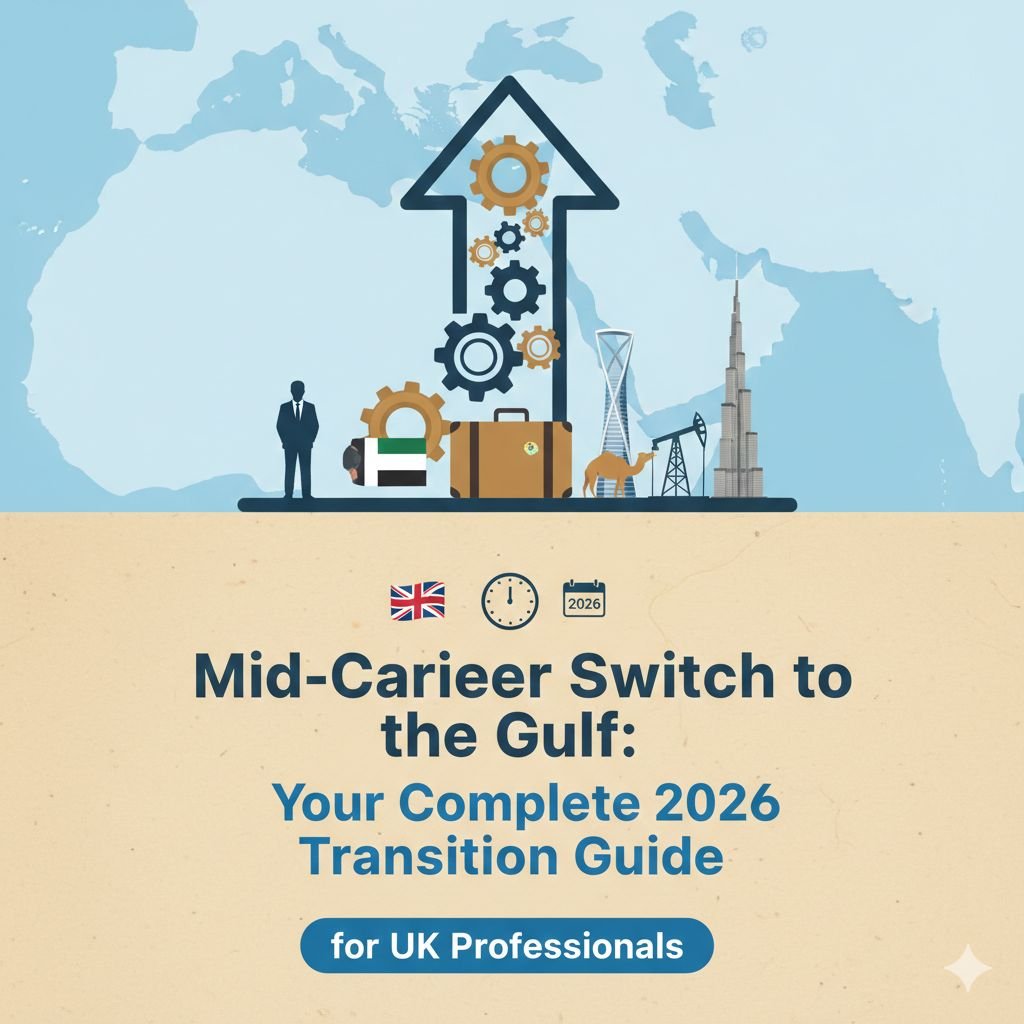
Mid-Career Switch to the Gulf: Your Complete 2026 Transition Guide for UK Professionals

Gulf Career Advice 2026 | UK to UAE/Saudi Transition Guide

Are you a UK professional feeling stuck? Rising taxes, stagnant wages, and limited career progression have many British workers asking the same question: “Is it time to leave the UK and work abroad?”

Why UK Professionals Are Looking to the Gulf

The numbers tell a compelling story. In the UK, professionals face high income tax and national insurance, rising living costs, and limited salary growth. The Gulf offers a fundamentally different equation:

  • Tax-free income – What you earn is what you take home, resulting in 30-45% higher net income for many UK professionals
  • Career acceleration – Companies expand faster, promotions come sooner, and international exposure is common
  • Quality of life – Year-round sunshine, modern infrastructure, world-class healthcare, and vibrant expat communities
  • High demand for Western-educated talent – UK qualifications are highly regarded across the UAE and Saudi Arabia

For context, a manager earning £80,000 in London takes home approximately £5,300 monthly. The same role in Dubai at AED 34,000 monthly delivers £7,400-8,000 take-home pay—roughly 50% more, tax-free.

The Challenge: Why Career Switching in the GCC Is Hard

Before you book that flight, understand the obstacles. Changing careers in the Gulf is steeper than in the UK for several reasons:

1. Employers Prioritize Direct Industry Experience

Unlike some global markets where transferable skills are highly valued, GCC employers tend to favor candidates who can hit the ground running. A sales professional in construction may struggle to move into healthcare sales. A project manager from banking may be passed over for government roles.

2. Visa and Sponsorship Constraints

Your legal status is tied to your employer. Changing careers means ending contracts, losing sponsorship, and navigating complex labor regulations—financial and logistical risks, especially if the transition involves a probation period.

3. Fierce Competition

With talent flowing in from around the world, employers have access to highly specialized candidates. Standing out without direct experience is genuinely difficult.

4. Cultural Perceptions

In the region, long-term stability is prized. Jumping industries can be seen as lack of focus—unless the move is strategically explained.

When Does a Career Change Make Sense?

Despite these hurdles, a career switch can be the right move when:

  • Your current industry is shrinking or being disrupted
  • You’re burned out or disengaged
  • Your interests or values have changed
  • You’ve developed transferable skills that align with another industry

How to Successfully Pivot to the Gulf: Step-by-Step

Step 1: Self-Assessment and Market Research

Before anything else, get clear on your direction:

  • What are your core transferable skills?
  • Which Gulf industries value these skills?
  • What kind of work energizes you?

Research GCC job market trends on platforms like Bayt.comGulftalent.com, and LinkedIn to see where your skills align.

Step 2: Focus on Transferable Skills

Employers won’t care what you want to do unless you show what you can do for them. Reframe your experience by highlighting:

  • Problem-solving across industries
  • Leadership and communication
  • Data analysis or digital skills
  • Sales, strategy, or operational expertise

Your CV must draw clear links between your past roles and your target Gulf industry.

Step 3: Invest in Credentials

Credibility matters enormously in career switching. Enrolling in reputable certifications helps you:

  • Build confidence
  • Gain structured knowledge
  • Show commitment to the change

Gulf employers value certifications in project management (PMP), data analysis, HR, digital marketing, BIM, and more.

Step 4: Leverage Internal Mobility

Already working in a large UK organization with Gulf operations? Explore internal transfers. This allows you to:

  • Switch functions while potentially retaining visa sponsorship
  • Learn from within a familiar environment
  • Build bridges with stakeholders in your target region

Internal transfers are often more flexible than external moves.

Step 5: Network with Purpose

Changing careers requires strategic networking. Focus on:

  • Attending industry-specific events or webinars
  • Connecting with professionals in your target field on LinkedIn
  • Asking for informational interviews, not job offers

Use these conversations to understand Gulf hiring practices, expectations, and how others made the switch.

Step 6: Tailor Your CV and Online Presence

Generic applications fail. Recruiters ignore them. Instead:

  • Add job-specific keywords for Gulf employers
  • Optimize your LinkedIn profile—no profile = no visibility
  • Tailor your CV for each country and position

Your cover letter should tell a compelling story: why the shift, what you’ve done to prepare, and how you’ll add value.

Step 7: Be Realistic About Entry Points

Sometimes, a step sideways is necessary before moving up. You may need to accept:

  • A slightly lower role
  • A smaller company
  • A probationary period

The key is gaining relevant regional experience that opens long-term doors.

Sectors Hiring in 2026

Leadership demand in the GCC is closely tied to national development strategies. High-growth sectors include:

  • Government transformation and public administration
  • Infrastructure, construction, and smart city development
  • Energy, renewables, and climate transition projects
  • Financial services, fintech, and regulatory leadership
  • Healthcare systems and hospital management
  • Technology and digital transformation

Saudi Arabia, in particular, is expanding management roles linked to Vision 2030 projects.

The Cultural Intelligence Factor

Perhaps the most significant adjustment for UK professionals is cultural. Leadership styles in the Gulf blend formal authority with relationship-based management. Key characteristics include:

  • High respect for seniority, experience, and reputation
  • Decision-making influenced by consensus and informal consultation
  • Strong emphasis on loyalty, discretion, and long-term relationships
  • Increasing demand for transparent, data-driven management

Western leadership models focused purely on individual authority often underperform without adaptation. Successful leaders balance decisiveness with cultural sensitivity.

For senior clinical or executive roles, this shift is even more pronounced. You’re not just hired to do a job—you’re expected to build systems and mentor local talent.

Common Mistakes to Avoid

1. Sending Generic Resumes

Recruiters ignore them. Always tailor for each position and country.

2. Relying Only on Agents

Many “agents” promise easy jobs but disappear after collecting fees. Apply directly on verified portals:

3. Ignoring Skill Upgrades

The Gulf market needs professionals with recognized certifications. Invest in one short-term course—it can triple your interview calls.

4. Falling for Fake Offers

If someone promises a visa before an interview—red flag. Verify all offers.

5. Underestimating Cultural Adaptation

Cultural understanding isn’t optional. It directly affects trust, team performance, and long-term credibility.

A Realistic Timeline

Changing careers won’t happen overnight. Expect:

  • A longer job search
  • More rejections than usual
  • A steeper learning curve once hired

Sample action plan:

  • Month 1: Fix resume + optimize LinkedIn
  • Month 2: Apply to verified jobs daily + practice interviews
  • Month 3: Earn a relevant certification + follow up with recruiters

The Verdict: Is the Gulf Right for You?

A mid-career switch to the Gulf isn’t for everyone. It requires shedding old institutional comforts and embracing dynamic, high-stakes environments. But for the right professional, it’s the ultimate career accelerant.

You’re not just changing jobs—you’re contributing to institutional growth, national priorities, and regional transformation. The region offers a professional canvas that doesn’t exist elsewhere.

With persistence, strategy, and skill development, the Gulf job market offers real opportunities for UK professionals looking to reinvent themselves.

Frequently Asked Questions (FAQs)Are you a UK professional feeling stuck? Rising taxes, stagnant wages, and limited career progression have many British workers asking the same question: “Is it time to leave the UK and work abroad?”

For thousands of mid-career professionals, the answer in 2026 is the Gulf Cooperation Council (GCC) region—specifically the UAE and Saudi Arabia. With tax-free salaries, ambitious national development projects, and strong demand for Western-educated talent, the Gulf offers a fundamentally different career equation.

But here’s the reality: switching careers and countries simultaneously is one of the boldest—and riskiest—moves you can make. This guide walks you through everything you need to know to make a successful mid-career pivot to the Gulf.

Why UK Professionals Are Looking to the Gulf

The numbers tell a compelling story. In the UK, professionals face high income tax and national insurance, rising living costs, and limited salary growth. The Gulf offers a fundamentally different equation:

  • Tax-free income – What you earn is what you take home, resulting in 30-45% higher net income for many UK professionals
  • Career acceleration – Companies expand faster, promotions come sooner, and international exposure is common
  • Quality of life – Year-round sunshine, modern infrastructure, world-class healthcare, and vibrant expat communities
  • High demand for Western-educated talent – UK qualifications are highly regarded across the UAE and Saudi Arabia

For context, a manager earning £80,000 in London takes home approximately £5,300 monthly. The same role in Dubai at AED 34,000 monthly delivers £7,400-8,000 take-home pay—roughly 50% more, tax-free.

The Challenge: Why Career Switching in the GCC Is Hard

Before you book that flight, understand the obstacles. Changing careers in the Gulf is steeper than in the UK for several reasons:

1. Employers Prioritize Direct Industry Experience

Unlike some global markets where transferable skills are highly valued, GCC employers tend to favor candidates who can hit the ground running. A sales professional in construction may struggle to move into healthcare sales. A project manager from banking may be passed over for government roles.

2. Visa and Sponsorship Constraints

Your legal status is tied to your employer. Changing careers means ending contracts, losing sponsorship, and navigating complex labor regulations—financial and logistical risks, especially if the transition involves a probation period.

3. Fierce Competition

With talent flowing in from around the world, employers have access to highly specialized candidates. Standing out without direct experience is genuinely difficult.

4. Cultural Perceptions

In the region, long-term stability is prized. Jumping industries can be seen as lack of focus—unless the move is strategically explained.

When Does a Career Change Make Sense?

Despite these hurdles, a career switch can be the right move when:

  • Your current industry is shrinking or being disrupted
  • You’re burned out or disengaged
  • Your interests or values have changed
  • You’ve developed transferable skills that align with another industry

How to Successfully Pivot to the Gulf: Step-by-Step

Step 1: Self-Assessment and Market Research

Before anything else, get clear on your direction:

  • What are your core transferable skills?
  • Which Gulf industries value these skills?
  • What kind of work energizes you?

Research GCC job market trends on platforms like Bayt.comGulftalent.com, and LinkedIn to see where your skills align.

Step 2: Focus on Transferable Skills

Employers won’t care what you want to do unless you show what you can do for them. Reframe your experience by highlighting:

  • Problem-solving across industries
  • Leadership and communication
  • Data analysis or digital skills
  • Sales, strategy, or operational expertise

Your CV must draw clear links between your past roles and your target Gulf industry.

Step 3: Invest in Credentials

Credibility matters enormously in career switching. Enrolling in reputable certifications helps you:

  • Build confidence
  • Gain structured knowledge
  • Show commitment to the change

Gulf employers value certifications in project management (PMP), data analysis, HR, digital marketing, BIM, and more.

Step 4: Leverage Internal Mobility

Already working in a large UK organization with Gulf operations? Explore internal transfers. This allows you to:

  • Switch functions while potentially retaining visa sponsorship
  • Learn from within a familiar environment
  • Build bridges with stakeholders in your target region

Internal transfers are often more flexible than external moves.

Step 5: Network with Purpose

Changing careers requires strategic networking. Focus on:

  • Attending industry-specific events or webinars
  • Connecting with professionals in your target field on LinkedIn
  • Asking for informational interviews, not job offers

Use these conversations to understand Gulf hiring practices, expectations, and how others made the switch.

Step 6: Tailor Your CV and Online Presence

Generic applications fail. Recruiters ignore them. Instead:

  • Add job-specific keywords for Gulf employers
  • Optimize your LinkedIn profile—no profile = no visibility
  • Tailor your CV for each country and position

Your cover letter should tell a compelling story: why the shift, what you’ve done to prepare, and how you’ll add value.

Step 7: Be Realistic About Entry Points

Sometimes, a step sideways is necessary before moving up. You may need to accept:

  • A slightly lower role
  • A smaller company
  • A probationary period

The key is gaining relevant regional experience that opens long-term doors.

Sectors Hiring in 2026

Leadership demand in the GCC is closely tied to national development strategies. High-growth sectors include:

  • Government transformation and public administration
  • Infrastructure, construction, and smart city development
  • Energy, renewables, and climate transition projects
  • Financial services, fintech, and regulatory leadership
  • Healthcare systems and hospital management
  • Technology and digital transformation

Saudi Arabia, in particular, is expanding management roles linked to Vision 2030 projects.

The Cultural Intelligence Factor

Perhaps the most significant adjustment for UK professionals is cultural. Leadership styles in the Gulf blend formal authority with relationship-based management. Key characteristics include:

  • High respect for seniority, experience, and reputation
  • Decision-making influenced by consensus and informal consultation
  • Strong emphasis on loyalty, discretion, and long-term relationships
  • Increasing demand for transparent, data-driven management

Western leadership models focused purely on individual authority often underperform without adaptation. Successful leaders balance decisiveness with cultural sensitivity.

For senior clinical or executive roles, this shift is even more pronounced. You’re not just hired to do a job—you’re expected to build systems and mentor local talent.

Common Mistakes to Avoid

1. Sending Generic Resumes

Recruiters ignore them. Always tailor for each position and country.

2. Relying Only on Agents

Many “agents” promise easy jobs but disappear after collecting fees. Apply directly on verified portals:

3. Ignoring Skill Upgrades

The Gulf market needs professionals with recognized certifications. Invest in one short-term course—it can triple your interview calls.

4. Falling for Fake Offers

If someone promises a visa before an interview—red flag. Verify all offers.

5. Underestimating Cultural Adaptation

Cultural understanding isn’t optional. It directly affects trust, team performance, and long-term credibility.

A Realistic Timeline

Changing careers won’t happen overnight. Expect:

  • A longer job search
  • More rejections than usual
  • A steeper learning curve once hired

Sample action plan:

  • Month 1: Fix resume + optimize LinkedIn
  • Month 2: Apply to verified jobs daily + practice interviews
  • Month 3: Earn a relevant certification + follow up with recruiters

The Verdict: Is the Gulf Right for You?

A mid-career switch to the Gulf isn’t for everyone. It requires shedding old institutional comforts and embracing dynamic, high-stakes environments. But for the right professional, it’s the ultimate career accelerant.

You’re not just changing jobs—you’re contributing to institutional growth, national priorities, and regional transformation. The region offers a professional canvas that doesn’t exist elsewhere.

With persistence, strategy, and skill development, the Gulf job market offers real opportunities for UK professionals looking to reinvent themselves.


Frequently Asked Questions (FAQs)

1. Do I need to find a job before moving to the Gulf?

Yes, absolutely. In almost all cases, you must secure employment before relocating. Your employer will sponsor your work visa and residency. Moving on a tourist visa and searching locally is risky and often illegal

2. How much more money will I actually take home?

Substantially more. Example: A £80,000 UK manager salary nets ~£5,300/month after tax. A comparable Dubai role at AED 34,000/month nets ~£7,400-8,000/month tax-free—roughly 40-50% higher take-home pay

3. Is it easier to transfer internally with my current company?

Yes—this is often the smoothest path. Internal transfers allow you to switch functions while retaining sponsorship and company support. Many UK professionals successfully pivot this way

4. What qualifications do Gulf employers value most?

Gulf employers value:
UK/Western university degrees
British professional certifications (RICS, CCT, PMP, etc.)
Sector-specific expertise aligned with regional priorities
Strong English communication skills (Arabic is a major advantage)

5. How long does the job search typically take?

Realistically, 3-6 months for a targeted search. Changing industries extends this timeline. Be patient, systematic, and prepared for more rejections than a domestic UK search

From Entry to Executive: Your Complete Career Growth Blueprint for Saudi Arabia (2026)

Gulf Career Advice 2026 | From Entry Level to Executive in Saudi Arabia

If you’re building a career in Saudi Arabia right now, you’ve picked the right moment. The numbers don’t lie: unemployment has dropped to 2.8%, female employment has tripled since 2015, and over half of all Saudis in work are now in the private sector . This isn’t just a job market—it’s a national transformation happening in real time.

Part 1: The Entry Level – Starting Strong in 2026

The Landscape

Good news first: companies are hiring. 66% of employers increased headcount in 2025, and demand for fresh talent remains high . But here’s what’s different: employers are pickier. They want graduates who can contribute from day one, not just “potential.”

What Entry-Level Looks Like Now

Entry-level salaries for Saudi nationals vary by sector, but here’s a realistic benchmark:

Role TypeMonthly Salary (SAR)Notes
Engineering (Water/Process)10,000 – 12,000Recent posting from Riyadh 
Business/Finance Grad8,000 – 12,000Varies by company size
Sales/Marketing (Entry)5,500+Minimum for Saudization quota 

Three Rules for Entry-Level Success in 2026

1. Target the right sectors. Technology, healthcare, finance, and logistics are where the growth is . Construction hiring has slowed; AI and data science hiring is up 26-39% year-on-year .

2. Get comfortable with AI. 66% of professionals already use AI tools regularly at work . If you’re not experimenting with ChatGPT, Copilot, or data analytics tools, you’re falling behind before you start.

3. Understand Saudization—and use it. The new 60% Saudization targets for sales and marketing roles (effective April 2026) mean companies are actively looking for Saudi talent . This isn’t just compliance; it’s your leverage.

Real Example: JLL recently advertised an “Early Career Opportunity” in Riyadh specifically for KSA nationals. No prior experience required—just a degree, strong communication skills, and willingness to learn . These roles exist. You just need to find them.

Part 2: Mid-Career – The Critical Climb

Where Most People Get Stuck

Mid-career in Saudi Arabia (typically 5-12 years experience) is where careers either accelerate or stall. The challenge? Employers prioritize direct industry experience . A project manager from banking will struggle to move into healthcare. A construction salesperson won’t easily switch to pharma.

But here’s the reality: the old model of staying in one silo for 20 years is dying. With automation and AI reshaping industries, career transitions are becoming necessary—and possible.

What Actually Works for Career Switchers

1. Focus on transferable skills, not job titles.
You weren’t “just” a salesperson. You managed client relationships, negotiated contracts, forecasted revenue. Those skills translate across industries. Reframe your CV to highlight what you accomplished, not where you did it.

2. Certifications open doors.
Gulf employers value credentials. A PMP for project management, a CFA for finance, a Certified Digital Marketing Professional—these signal commitment and bridge the experience gap .

3. Internal mobility is your secret weapon.
Already employed? Check internal vacancies first. Switching departments within the same company means keeping your visa, your tenure, and your network .

4. Network with purpose, not desperation.
In the Gulf, relationships matter. Attend industry events, connect on LinkedIn, ask for informational interviews. Don’t ask for a job; ask for advice. The job often follows.

Salary Reality Check:

LevelAnnual Salary (SAR)Notes
Mid-Level Manager180,000 – 300,000Varies by sector
Senior Manager/Associate Director300,000 – 450,000Strong digital/AI skills command premiums 

Part 3: Executive Level – Leading the Transformation

This is Not Your Father’s Executive Market

Here’s the most important thing to understand about executive hiring in Saudi Arabia right now: it’s a seller’s market.

79% of employers are actively recruiting for permanent positions. C-suite compensation has reached world-class levels: CEOs in the SAR 850,000 – 1.4 million range, Executive Directors between SAR 300,000 – 550,000+ . Some CFOs in PIF-backed entities now earn more than their global counterparts.

But here’s what’s really changed: the best Saudi executives aren’t chasing money anymore.

What Actually Closes the Deal

According to executive search specialists who’ve placed hundreds of Saudi leaders, the winning packages include :

Non-Negotiables:

  • Competitive base salary (benchmarked globally, not just locally)
  • Performance bonus tied to measurable impact
  • Comprehensive family benefits (education, healthcare)

Differentiators:

  • Executive education opportunities (top-tier MBA programmes)
  • Board observation or committee participation
  • Clarity on the role’s strategic importance to Vision 2030
  • A genuine leadership mandate, not a figurehead position

The Mindset Shift

“Saudi executives aren’t short of options,” says one veteran headhunter. “What makes them move isn’t just money—it’s the opportunity to shape their country’s future at a pivotal moment in history.” 

If you’re targeting executive roles, your narrative must reflect this. You’re not looking for a job. You’re looking for impact.

Skills That Command Premiums in 2026:

Skill AreaWhy It Matters
Digital TransformationEvery organisation is modernising
AI Strategy & ImplementationNot just using AI—leading AI adoption
Sustainability & ESGAligned with Saudi Green Initiative
Bilingual LeadershipArabic fluency + global business English
Giga-Project ExperienceNEOM, Red Sea, Diriyah—these are career-defining

The Big Picture: What Success Looks Like in 2026

Here’s what the data tells us:

  • The private sector is now the engine of Saudi careers. 52.8% of Saudis work in private companies—a structural shift from the public sector dependency of the past .
  • Women’s career trajectories have transformed. From 11% employment in 2015 to 32% in 2025. Among working mothers: from 8% to 45% .
  • Youth unemployment (NEET) has halved from 40% to 25% .
  • AI fluency is now baseline. 66% of professionals use AI regularly. Those who don’t will be left behind .

This isn’t just statistics. It’s proof that the barriers that once limited careers in Saudi Arabia are falling.

Final Advice: Your Career is a Strategy, Not a Hope

If you’re entry-level: be intentional. Target growth sectors, build AI skills, and don’t wait for perfect opportunities—create them.

If you’re mid-career: be adaptable. Your experience is valuable, but your willingness to learn is more valuable. Certify your skills, network strategically, and don’t fear a lateral move if it opens a better long-term path.

If you’re executive-level: be purposeful. You have the rare privilege of leading during one of history’s most ambitious national transformations. Choose roles where you can build, not just manage.

The Saudi job market in 2026 is the most dynamic it has ever been. The opportunities are real. The question is: what will you do with yours?


Frequently Asked Questions

1. What are the best entry-level jobs in Saudi Arabia right now?

Technology, finance, healthcare, logistics, and specialised engineering (water treatment, process engineering) are hiring actively. Entry-level process engineers in Riyadh are seeing offers between SAR 10,000–12,000 . Sales and marketing roles are also expanding due to new Saudization targets .

2. How do I switch careers in the Gulf without starting over?

Focus on transferable skills, earn a recognised certification in your target field, and consider internal transfers if you’re already employed. Networking with purpose—seeking advice, not just jobs—is critical .

3. What salary should I expect as a mid-career professional in KSA?

Mid-level managers typically earn SAR 180,000–300,000 annually. Senior managers and associate directors range from SAR 300,000–450,000+. Professionals with AI, digital transformation, or sustainability skills command significant premiums .

4. Is it realistic to aim for an executive role as a Saudi national?

Absolutely—and companies are actively competing for Saudi leadership talent. With 79% of employers hiring and a limited pool of transformation-ready Saudi executives, the demand far exceeds supply. Compensation now matches global benchmarks .

5. How important is AI skills for career growth in 2026?

Non-negotiable. 66% of professionals already use AI regularly at work. Employers are prioritising candidates who can deploy AI for productivity, creativity, and decision-making. This applies at every career level 

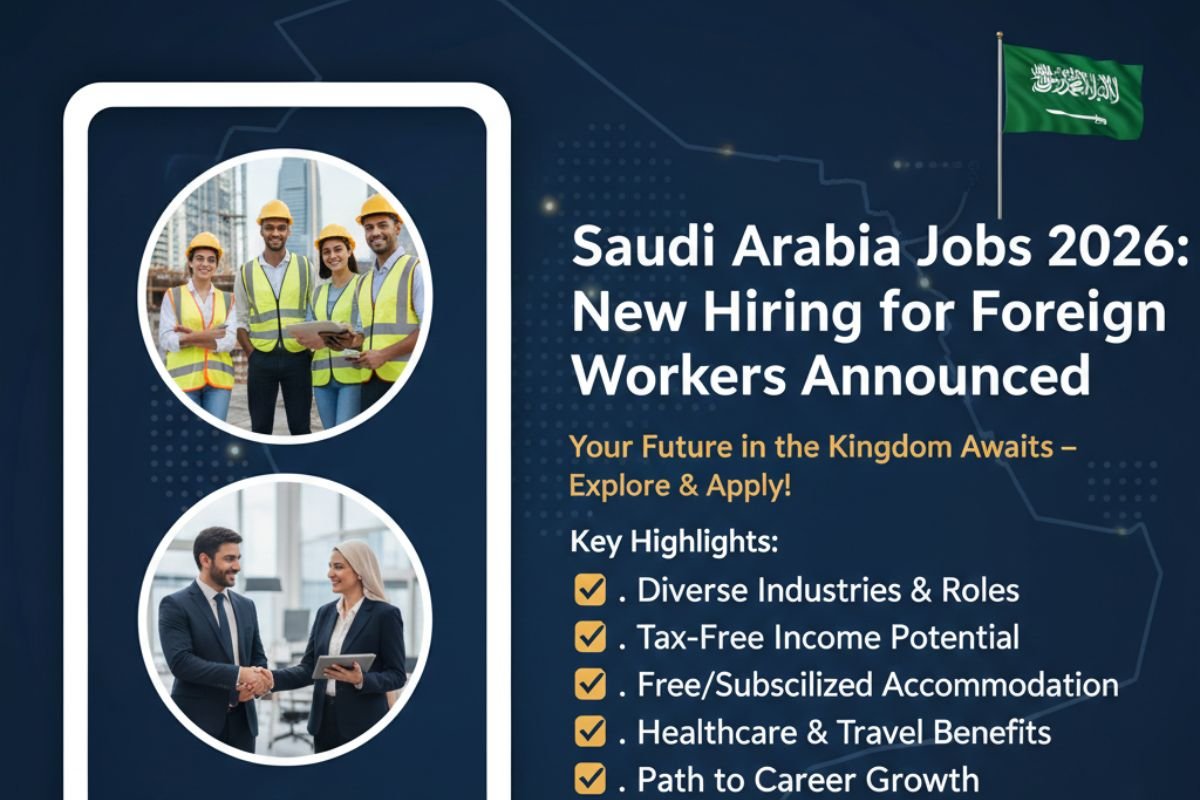
Saudi Arabia Jobs 2026: New Hiring for Foreign Workers Announced

Saudi Arabia Jobs 2026: New Hiring for Foreign Workers Announced

The 2026 Hiring Boom: Your Gateway to a Saudi Career

As Saudi Arabia charges forward with the execution phase of its historic Vision 2030, the job market for foreign workers is entering its most dynamic and opportunity-rich period yet. For skilled professionals worldwide, 2026 represents a pivotal window—a time of new hiring announcements for foreign workers across groundbreaking sectors. The Kingdom is not just building infrastructure; it’s building entire new industries, and it needs global talent to make it happen.

Why 2026 is a Landmark Year for Foreign Workers in Saudi Arabia

Vision 2030 has moved decisively from blueprint to construction site. The giga-projects that once captivated the world’s imagination are now active, multi-billion-dollar employment engines. This transition creates two simultaneous demands:

  1. Construction & Engineering Expertise: To physically build NEOM, The Red Sea Project, Qiddiya, and Diriyah.
  2. Operational & Knowledge Talent: To run the advanced hospitals, resorts, tech hubs, and financial centers within these projects once they open.

The Saudi government and private sector are launching coordinated international recruitment campaigns to meet this unprecedented need, making 2026 the prime time for foreign professionals to explore Saudi careers.

Top Sectors Announcing New Hiring for Foreign Workers

1. Giga-Project Construction & Engineering

The physical creation of Vision 2030’s landmarks requires tens of thousands of skilled professionals.

  • New Hiring Focus: Senior Project Managers, Construction Directors, Civil & Structural Engineers, MEP (Mechanical, Electrical, Plumbing) Managers, BIM (Building Information Modeling) Specialists, and Quantity Surveyors.
  • Key Projects: NEOM (including THE LINE, Oxagon), The Red Sea GlobalQiddiya (entertainment city), Diriyah GateRoshn (housing).
  • Action Point: Target the websites of the principal developers and the international engineering consultancies and contractors they have partnered with (e.g., Bechtel, Jacobs, Dar Al-Handasah, Samsung C&T).

2. Tourism, Hospitality & Leisure

With the first destinations opening and a target of 100 million annual visitors by 2030, the need for world-class hospitality talent is exploding.

  • New Hiring Focus: Hotel General Managers, Executive Chefs, Guest Experience Directors, Tourism Development Managers, Luxury Retail Managers, and Entertainment Facility Operators.
  • Key Projects: The Red Sea (luxury resorts), Sindalah Island (NEOM), Diriyah cultural hub, Riyadh Season events.
  • Action Point: Monitor career pages of global hotel chains (Four Seasons, Ritz-Carlton, Marriott) expanding in KSA, and the operating companies of the new destinations.

3. Technology & Digital Transformation

Saudi Arabia is building a digital economy from the ground up, with a national priority on tech sovereignty.

  • New Hiring Focus: Cybersecurity Architects, AI/Machine Learning Engineers, Data Scientists, Cloud Solutions Architects, Software Developers, and IoT Specialists.
  • Key Hubs: NEOM’s advanced tech ecosystem, Riyadh’s tech valley, King Abdullah Financial District (KAFD).
  • Action Point: Explore opportunities with the Ministry of Communications and IT (MCIT), Saudi tech startups (many funded by PIF), and global tech giants (Google, Microsoft, Oracle) establishing major regional hubs in Riyadh.

4. Advanced Manufacturing & Logistics

As part of diversifying beyond oil, Saudi Arabia is becoming a regional hub for advanced industries and global supply chains.

  • New Hiring Focus: Industrial Engineers, Supply Chain Directors, Automotive Engineers (especially for EV), Renewable Energy Manufacturing Experts, and Quality Assurance Managers.
  • Key Initiatives: EV manufacturing (Ceer, Lucid Motors factory), Solar panel productionPharmaceuticals manufacturingLogistics hubs at major ports.
  • Action Point: Research companies within Economic Cities (like KAEC) and Special Economic Zones, and major logistics firms (Saudi Logistics, Aramco’s supply chain).

5. Healthcare & Life Sciences

A rapidly growing population and a drive for medical tourism excellence are fueling massive investment in healthcare infrastructure.

  • New Hiring Focus: Consultant Physicians (all specializations), Specialist Surgeons, Registered Nurses (ICU, Oncology, Cardiology), Hospital Administrators, and Medical Researchers.
  • Key Locations: Expansion of King Faisal Specialist Hospital, new medical complexes in NEOM and The Red Sea, and network growth of private hospital groups.
  • Action Point: Check career portals of the Saudi Ministry of Health, major private hospital operators (Dr. Sulaiman Al-Habib, Dallah Health), and new specialist medical centers.

The 2026 Saudi Work Visa & Iqama Process: Streamlined for Talent

Understanding the process is key to a smooth transition. It remains employer-sponsored but is increasingly digital.

  1. The Job Offer: You must secure a formal offer from a Saudi company licensed to hire expatriates.
  2. Work Permit (Qiwa): Your employer obtains your work permit through the Ministry of Human Resources’ Qiwa platform.
  3. Document Attestation (Critical): You must attest your educational and professional certificates via your home country’s Foreign Ministry and the Saudi EmbassyStart this immediately upon receiving an offer.
  4. Entry Visa & Arrival: Your employer issues an entry visa. You enter KSA and undergo a medical test.
  5. Iqama (Residence Permit): Your employer processes your Iqama, your official ID card for living and working.

New for 2026: Continued digitization on the Absher and Qiwa platforms makes tracking your application easier. For top-tier talent, the Premium Residency (Privileged Iqama) offers a long-term, more flexible residency option.

How to Find These New Job Announcements: A Proactive Strategy

  1. Target Company Career Pages Directly: This is the most effective method. Identify the top 20-30 companies leading projects in your field and monitor their “Careers” sections weekly.
  2. Leverage LinkedIn Strategically:
    • Set your location to “Riyadh, Saudi Arabia” or “NEOM”.
    • Follow key companies and giga-projects.
    • Use hashtags like #HiringSaudi, #JobsKSA, #Vision2030Careers.
    • Turn on “Open to Work” for recruiters.
  3. Partner with Specialized Recruitment Agencies: Reputable international agencies (e.g., Michael Page, Hays, Brunel, Charterhouse) have dedicated desks for Saudi Arabia and receive direct mandates from companies.
  4. Attend Virtual Saudi Career Fairs: Many are organized by the Saudi Ministry of Human Resources and major chambers of commerce to connect global talent with employers.

Preparing for the Saudi Job Market: Cultural & Professional Readiness

  • Cultural Adaptability: Demonstrate respect for local customs and a willingness to adapt. Research Saudi business etiquette.
  • Long-Term Mindset: Employers seek candidates committed to the long-term journey of Vision 2030. Express this in interviews.
  • Competitive Compensation: Packages include tax-free salary, housing allowance, education for children, annual flights, and healthcare. Negotiate your total package.

Conclusion: Your Role in Building the Future

The new hiring for foreign workers announced for 2026 is more than just job vacancies; it’s an invitation to participate in one of the most ambitious national transformations of the 21st century. For engineers, tech experts, healthcare professionals, and hospitality leaders, Saudi Arabia offers a unique combination of career-defining projects, competitive remuneration, and the chance to leave a tangible legacy.

By strategically targeting the high-growth sectors, meticulously preparing your application, and understanding the streamlined visa process, you can successfully secure your place in the exciting next chapter of Saudi Arabia’s story. The future is being built now—ensure you have a role in it.


5 Frequently Asked Questions (FAQs)

1. Is it true that Saudization (Nitaqat) will reduce jobs for foreigners in 2026?

Saudization prioritizes Saudi nationals in the workforce, but it actually increases demand for specialized foreign expertise. The policy focuses on replacing expatriates in more general or administrative roles. For the highly skilled, niche positions required to build and operate giga-projects and new industries, foreign hiring is not just ongoing—it’s accelerating. Your specialized skill is the key.

2. What is the minimum salary required to get a Saudi work visa in 2026?

There is no universal minimum salary set by the government for a standard work visa. However, the ability to sponsor family members (spouse and children) requires meeting a minimum salary threshold, which is often set by the employer’s corporate policy (typically around SAR 3,500 – 5,000 per month). For the Premium Residency Visa, specific higher salary brackets (e.g., SAR 14,000-16,000+ per month) are one of the eligibility criteria.

3. Can I switch jobs (change my sponsor) in Saudi Arabia easily in 2026?

Labor reforms have made job mobility easier. Under current law, you can transfer your sponsorship to a new employer after completing one year of service with your current sponsor. The process requires following specific procedures, and a No Objection Certificate (NOC) from your current employer, while no longer always mandatory, can still facilitate a smoother transfer. Always check the latest regulations on the Ministry of Human Resources website.

4. Do I need to speak Arabic to work in Saudi Arabia?

For most professional, private-sector roles in international companies or giga-projects, Arabic is not a requirement. The business language is often English. However, learning basic Arabic is highly recommended and respected, as it greatly aids daily life, cultural integration, and can be a significant advantage for client-facing roles or positions within government-linked entities.

5. Are there opportunities for remote work with Saudi companies?

While the predominant model is on-site due to the project-based nature of the work, remote and hybrid roles are emerging, particularly in the technology, consulting, and education sectors. Many global consultancies working with Saudi entities have teams serving the account from abroad. However, for roles directly involved in the core operations, construction, or management within the Kingdom, physical presence is generally required.

Saudi Arabia Jobs With Free Accommodation 2026:

Saudi Jobs with Free Accommodation 2026 | Apply for Premium Benefits

For thousands of global professionals, a career in Saudi Arabia represents more than just a job—it’s a transformative life experience offering financial growth, cultural immersion, and unparalleled professional development. A cornerstone of this attractive package is often the provision of free accommodation, a significant benefit that boosts disposable income and reduces relocation stress. As Saudi Vision 2030 accelerates into 2026, the demand for skilled international talent is soaring, accompanied by generous employment packages. This comprehensive guide will navigate the lucrative landscape of Saudi jobs with free accommodation and explore the extensive benefits you can expect in 2026.

Understanding the Saudi Arabian Job Market in 2026

Saudi Arabia’s economy is undergoing a historic transformation. Driven by Crown Prince Mohammed bin Salman’s Vision 2030, the Kingdom is aggressively diversifying away from oil dependency. This ambitious blueprint is fueling massive investments in:

  • Giga-Projects: NEOM, The Red Sea Project, Qiddiya, and Diriyah Gate.
  • Sectors: Renewable Energy, Tourism & Hospitality, Technology (AI, IoT), Healthcare, Financial Services, Logistics, and Advanced Manufacturing.

This economic boom translates into a voracious appetite for talent. The government’s Saudization (Nitaqat) program prioritizes Saudi nationals in the workforce, but it simultaneously creates a parallel demand for specialized international expertise to train, lead, and execute these visionary projects. For expatriates, this means high-demand roles come with highly competitive compensation packages, where free accommodation is a standard and expected benefit, especially for mid to senior-level positions.

Which Industries & Companies Offer Jobs with Free Accommodation?

While many sectors offer robust packages, the following are renowned for including free housing or a generous housing allowance as part of their employment contracts:

1. Healthcare & Medical Services:
A top priority under Vision 2030. Hospitals (like King Faisal Specialist HospitalSaudi German Health) and new medical cities constantly recruit doctors, surgeons, nurses, and medical technicians, offering free or subsidized hospital housing or compounds.

2. Construction, Engineering & Project Management:
The backbone of the giga-projects. Companies like Saudi AramcoACWA PowerSaudi Binladin Group, and international conglomerates like Bechtel and Fluor provide excellent camp-style or compound housing for engineers, project managers, architects, and site supervisors, often near project locations.

3. Education & Academia:
International schools (ISGBritish International School), and prestigious universities (KAUST – King Abdullah University of Science and TechnologyKSU) offer free on-campus housing or substantial allowances for teachers, professors, and administrators. KAUST is famous for its world-class residential community.

4. Oil, Gas & Energy:
The traditional powerhouse. Saudi Aramco is legendary for its expat benefits, including high-quality, family-friendly compounds with amenities like schools, gyms, and recreation centers. Similar packages are found with SABIC and Aramco subsidiaries.

5. Hospitality & Tourism:
With the aim to attract millions of tourists, luxury hotel chains (MarriottRotanaHilton) opening across the Kingdom often provide shared or single accommodation for managerial and front-line staff.

6. Military & Defense Contractors:
Companies like BoeingLockheed Martin, and BAE Systems providing defense services often include secure housing as part of their contracts for technical and advisory staff.

7. Information Technology & Telecom:
Tech giants (stcMobilyGoogle CloudMicrosoft) investing in Saudi’s digital transformation offer competitive packages, with housing allowances being a key component for relocated specialists.

Decoding the “Free Accommodation” Benefit: What Does It Really Mean?

The term “free accommodation” can manifest in several ways. It’s crucial to clarify this during your job offer negotiations:

  • Company-Provided Housing/Compound: Fully furnished apartments or villas within secure, gated communities. These often include utilities, maintenance, and access to pools, gyms, and retail outlets. Common with mega-corporations like Aramco and in remote project sites.
  • Housing Allowance (Or EOSB): A monthly cash allowance paid on top of your basic salary, allowing you to rent your own chosen accommodation. This offers more freedom but requires personal management of the lease.
  • Shared vs. Single Accommodation: Entry-level or certain roles may offer shared housing, while managerial positions typically warrant private units.
  • Utilities & Services: Confirm if electricity, water, internet, and municipal taxes are covered or if they are your responsibility.

Pro-Tip: Always ask for specifics. Request photos of typical accommodations, inquire about the compound amenities, and understand the location relative to your workplace.

Beyond Free Housing: The Complete Benefits Package of Saudi Jobs in 2026

A Saudi employment contract is a holistic package designed to attract and retain global talent. Beyond free accommodation, look for these key benefits:

  1. Tax-Free Income: Your basic salary is 100% tax-free, leading to significantly higher disposable income.
  2. Annual Flight Tickets: Typically, annual round-trip airfare for the employee and often for spouse and dependent children to their home country.
  3. Education Allowance: A substantial allowance for children’s tuition fees at international private schools.
  4. Transportation Allowance: A monthly car allowance or a company-provided vehicle.
  5. End-of-Service Bonus (EOSB): A legally mandated gratuity paid at the end of your contract, calculated as a percentage of your final basic salary for each year served.
  6. Comprehensive Health Insurance: High-quality medical coverage for you and your dependents, often including dental and optical.
  7. Relocation Allowance: A one-time payment to cover the costs of shipping personal effects and initial settlement.

How to Find & Apply for Saudi Jobs with Free Accommodation in 2026

1. Target the Right Job Portals:

  • Bayt.com & GulfTalent: The leading regional job boards.
  • LinkedIn: Optimize your profile with keywords like “seeking opportunities in KSA” and connect with recruiters specializing in the Middle East.
  • Company Career Pages: Direct applications on the websites of target companies (e.g., careers.aramco.comkaust.edu.sa/careers).
  • Specialized Recruitment Agencies: Work with reputable agencies like HaysCharterhouseMichael Page, and Morgan McKinley, which have dedicated Middle East desks.

2. Craft a Saudi-Friendly Application:

  • CV/Resume: Include a professional photo, nationality, visa status, and date of birth. Prominently list your specific, quantifiable achievements.
  • Cover Letter: Express your understanding of Vision 2030 and how your skills contribute to it. Explicitly state your willingness to relocate.

3. Ace the Interview & Negotiation:

  • Be prepared for video interviews across time zones.
  • Negotiate the entire package, not just the salary. Discuss housing type, education allowance amount, and flight entitlements.
  • Research standard benefits for your role, industry, and experience level.

4. The Visa Process:
Once hired, your employer will sponsor your Iqama (residence permit). The process involves medical tests, fingerprinting, and document attestation. A reputable company will guide you through every step.

Living in Saudi Arabia: A Cultural Shift

Embracing life in Saudi is part of the adventure. The society is deeply rooted in Islamic tradition and culture.

  • Cultural Respect: Adherence to local customs and laws (e.g., public decorum, dress code) is essential.
  • Quality of Life: Modern compounds offer a very comfortable Western-style lifestyle. Cities like Riyadh, Jeddah, and Al Khobar have world-class malls, restaurants, and entertainment venues.
  • A Changing Landscape: Reforms in recent years have increased social freedoms, including expanded entertainment options and eased gender-mixing regulations.

Conclusion: Your 2026 Career Opportunity Awaits in Saudi Arabia

Securing a Saudi job with free accommodation in 2026 is a strategic career move that offers financial security, professional growth, and a unique cultural experience. By targeting the right industries, leveraging the correct job platforms, and expertly negotiating your full benefits package, you can position yourself to be a part of the Kingdom’s historic transformation.

The combination of tax-free income, free housing, and premium benefits creates a savings potential unmatched in most Western countries. Start your job search today, prepare thoroughly, and take the bold step toward a rewarding future in the heart of the Middle East.


FAQs: Saudi Arabia Jobs With Free Accommodation

1. Is free accommodation really “free,” or are there hidden costs?

Generally, the company covers the rent. However, you are often responsible for personal living costs like groceries, phone bills, and sometimes utilities. Always have your contract specify what is included (water, electricity, internet).

2. Can I choose to take a housing allowance instead of company-provided accommodation?

This depends on company policy. Some offer a choice, others have a fixed provision. The allowance (or EOSB) is often calculated as a percentage of your basic salary (e.g., 25-30%). Negotiate this upfront.

3. Are these jobs with free accommodation open to all nationalities?

Yes, Saudi companies hire talent globally based on skills and experience. However, due to Saudization, some roles are reserved for Saudi nationals. The job description will usually specify if it’s open to expatriates.

4. What is the typical contract duration, and is accommodation provided during leave?

Standard contracts are for 1-3 years, renewable. Your accommodation is yours for the duration of the contract, even when you are on annual leave.

5. Can my family join me, and will the company provide accommodation for them?

Most professional roles include family status, allowing you to sponsor your spouse and children. The free accommodation provided is typically sized for your family (e.g., a 2-3 bedroom villa for a couple with kids). Always confirm “family status” in your offer.

Post a Job Opening

Fill in the details below. Your job posting will be reviewed by our team.

Basic Information

Specify years of experience required

Location & Salary

Qualifications & Skills

Specify educational requirements
Separate skills with commas

Company Details

Job Details

Contact Information