Gulf Careers Hub

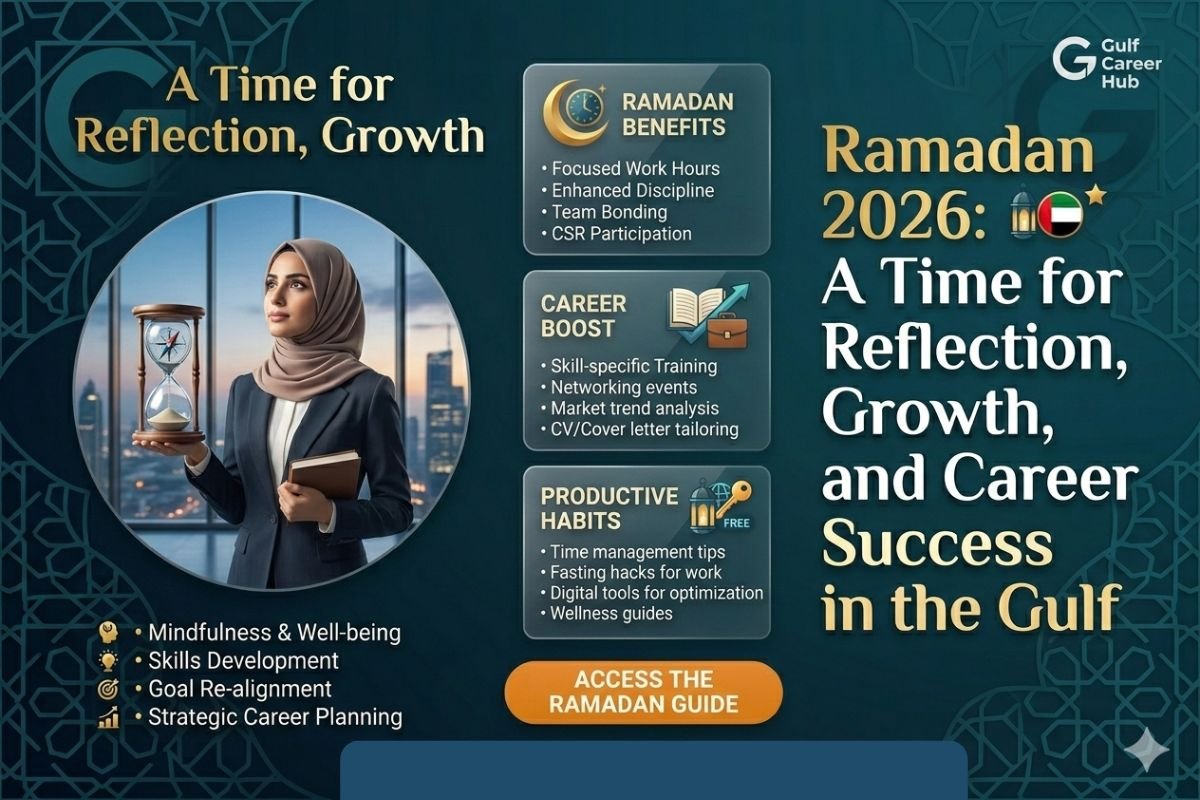
Ramadan 2026: A Time for Reflection, Growth, and Career Success in the Gulf

Ramadan 2026 Career Guide | Growth & Success in the Gulf

As the crescent moon appears over the skies of the Gulf, ushering in the holy month of Ramadan 2026, millions across the region pause, reflect, and reconnect with what truly matters. For those building careers in Dubai, Riyadh, Doha, and beyond, this sacred month offers something unexpected: a unique opportunity for professional growth.

Understanding the Rhythm of Ramadan in the Gulf Workplace

Before diving into strategies, it’s essential to understand how the Gulf workplace transforms during Ramadan. Working hours typically reduce by 2-3 hours daily. The pace slows, but purpose deepens. Meetings become more efficient, distractions diminish, and a collective sense of mindfulness settles over offices from Dubai to Dammam.

This shift creates a unique professional environment. The usual rush gives way to intentionality. Colleagues break bread together at iftar. Conversations over qahwa (Arabic coffee) build bridges that formal meetings never could.

For the savvy professional, Ramadan offers a canvas to paint with deliberate strokes of growth and connection.

Five Ways to Accelerate Your Career During Ramadan 2026

1. Leverage the Slower Pace for Deep Work

With fewer meetings and reduced interruptions, Ramadan provides uninterrupted blocks of time perfect for deep, focused work. Use these hours to:

  • Tackle complex projects requiring concentration
  • Update your professional portfolio or CV
  • Complete online certifications relevant to your field
  • Strategize your next career move

The quiet focus of Ramadan mornings can yield professional breakthroughs that rushed months never allow.

2. Build Authentic Relationships Through Iftar Connections

Throughout the Gulf, iftar is more than a meal—it’s a sacred invitation. Being invited to an iftar gathering is a sign of trust and respect. These evenings offer priceless opportunities to:

  • Connect with colleagues on a human level beyond job titles
  • Network with industry peers in relaxed settings
  • Build rapport with senior leadership outside office formality
  • Strengthen relationships with clients and partners

Attend iftars with genuine presence. Listen more than you speak. Ask about families, traditions, and what the month means to them. These authentic connections often lead to opportunities months later.

3. Demonstrate Cultural Intelligence and Respect

Showing understanding and respect for Ramadan customs sets exceptional professionals apart. Simple gestures carry profound meaning:

  • Avoid eating, drinking, or smoking in front of fasting colleagues
  • Schedule meetings mindful of prayer times and energy levels
  • Learn and use basic Arabic phrases like “Ramadan Kareem” and “Mubarak Aleik al-Shahr”
  • Show flexibility and patience with colleagues observing the fast

These actions signal cultural intelligence—a highly valued trait in the Gulf’s diverse workplace. They build trust and position you as someone who genuinely belongs.

4. Reflect and Realign Your Career Path

Ramadan’s emphasis on reflection extends naturally to professional life. The month’s spiritual pause invites honest assessment:

  • Where is your current career path leading?
  • Does your work align with your values and purpose?
  • What skills should you develop in the coming year?
  • Are there changes you’ve postponed making?

Use the quiet moments of Ramadan to journal, meditate, or simply think deeply about your professional direction. Clarity gained now becomes action taken later.

5. Position Yourself for Post-Ramadan Opportunities

Many Gulf organizations announce new initiatives, projects, and even job openings after Eid. Use Ramadan to position yourself advantageously:

  • Complete pending tasks before Eid, starting the next quarter fresh
  • Express interest in upcoming projects to relevant decision-makers
  • Strengthen relationships with mentors who may advocate for you
  • Research companies and roles you’d like to pursue after the month

The professional who prepares during Ramadan is ready to move when opportunities arise in Shawwal.

Balancing Work, Worship, and Wellbeing

Career growth during Ramadan shouldn’t come at the expense of spiritual or physical health. The most successful professionals find balance:

Manage Energy, Not Just Time: Your energy naturally dips in the afternoon. Schedule demanding tasks for morning hours when focus peaks. Use post-iftar energy for planning and reflection.

Prioritize Sleep: Late nights for prayers and early mornings for suhoor require intentional rest. Short power naps (15-20 minutes) can restore focus without disrupting sleep cycles.

Stay Hydrated and Nourished: When you can eat and drink, choose foods that sustain energy—complex carbohydrates, proteins, and plenty of water. What you consume during non-fasting hours directly impacts your daytime performance.

Honor Your Limits: Ramadan is a marathon, not a sprint. Listen to your body. Adjust expectations. Excellence doesn’t require exhaustion.

What Employers Look for During Ramadan

Forward-thinking Gulf employers observe how professionals navigate Ramadan. They notice:

  • Consistency: Does your performance remain steady despite reduced hours?
  • Attitude: Do you complain about fasting colleagues or accommodate gracefully?
  • Initiative: Do you use the slower pace productively or simply coast?
  • Team Spirit: Do you contribute to iftar gatherings and team bonding?

How you show up during Ramadan often speaks louder than how you perform during the rest of the year. It reveals character, not just competence.

Preparing for Post-Ramadan Momentum

As Ramadan draws to a close and Eid approaches, shift your focus toward the opportunities ahead:

  • Set specific, measurable career goals for the next 12 months
  • Schedule follow-up meetings with connections made during Ramadan
  • Update your LinkedIn profile with any new skills or certifications
  • Research salary trends and job markets across the Gulf for the coming year

The spiritual renewal of Ramadan can fuel professional renewal. Carry the clarity, connection, and purpose you’ve gained into the months ahead.

A Personal Note on Purpose

Beyond strategies and tactics, Ramadan invites a deeper question: Why do you work?

In the Gulf’s fast-paced, ambitious environment, it’s easy to chase titles, salaries, and status. Ramadan gently asks whether your work serves a purpose larger than yourself. Does it contribute to your community? Does it honor your values? Does it leave room for what truly matters—faith, family, and fulfillment?

Professionals who can answer these questions with clarity don’t just build careers. They build lives of meaning.

Conclusion: Make Ramadan 2026 Your Launchpad

Ramadan 2026 arrives as a gift—a month of intentional slowing in a world that never stops. For professionals across the Gulf, it offers a rare chance to reflect, connect, and grow in ways that the rushed pace of ordinary months prevents.

Embrace the rhythm of the month. Honor its spiritual depth. And let it shape not just your days, but your direction.

Whether you’re in Dubai’s financial district, Riyadh’s government corridors, or Doha’s education city, may this Ramadan bring you closer to your goals—and to what matters most.

Ramadan Kareem. May it be a month of blessing, growth, and success for you and your loved ones.

Frequently Asked Questions (FAQs)

1. Is it appropriate to network during Ramadan?

Absolutely. In fact, Ramadan offers unique networking opportunities through iftar gatherings and community events. The key is approaching connections with genuine warmth and respect rather than transactional intent. Build relationships first; opportunities follow naturally.

2. How do working hours change during Ramadan in the Gulf?

Most Gulf countries reduce working hours by 2-3 hours daily for both Muslim and non-Muslim employees during Ramadan. Private sector hours typically run 9am-3pm or similar, though this varies by company. Check your organization’s specific policy.

3. Should non-Muslims fast or pretend to fast out of respect?

No. Non-Muslims are not expected to fast, and pretending to do so is unnecessary. However, showing respect by not eating, drinking, or smoking in front of fasting colleagues during daylight hours is both courteous and appreciated.

4. How can I maximize productivity during reduced Ramadan hours?

Focus on deep, priority work during morning hours when energy peaks. Minimize distractions, batch similar tasks together, and use the quieter pace for strategic thinking and planning. Quality of output matters more than quantity during Ramadan.

5. When is the best time to look for new jobs during Ramadan?

While hiring slows during Ramadan, many companies plan post-Eid recruitment drives. Use Ramadan to research opportunities, update your CV, and strengthen networks. Begin active applications in the week after Eid, when business momentum returns.
Work Down Under from the Gulf: Top Companies in UAE & Saudi Hiring Remote Workers in 2026

Remote Jobs UAE & Saudi 2026 | Work for Australian Companies

Picture this: you’re sipping your morning coffee in Sydney or Melbourne, logging into your computer, and working for a cutting-edge company based in Dubai or Riyadh—all without leaving Australia. In 2026, this isn’t a distant dream; it’s a rapidly growing reality. The Gulf region, particularly the UAE and Saudi Arabia, is experiencing a massive digital transformation, and they need global talent to fuel it.

Why Gulf Companies Are Hiring Australian Remote Workers

The Middle East is undergoing an economic revolution. With Saudi Arabia’s Vision 2030 and the UAE’s continued push as a global innovation hub, companies are scrambling for top talent. But there’s a skills gap, and they’re looking globally to fill it .

Why you? Australian professionals are highly regarded for their strong work ethic, English proficiency, and technical skills. Plus, the time zone difference is manageable, allowing for overlapping work hours with Gulf teams.

Top Companies Hiring Remote Workers from the Gulf (2026)

Here are verified opportunities from companies in the UAE and Saudi Arabia actively seeking remote talent this year.

1. CrowdStrike (UAE) – Customer Value Architect

The Company: CrowdStrike is a global leader in cybersecurity, protecting some of the world’s largest organizations with its AI-native platform. They’re known for a culture of flexibility and autonomy .

The Role: They are hiring a Customer Value Architect based in the UAE (remote role with up to 40% travel). You would be the key partner to sales and customers, driving onboarding and ensuring clients maximize their security investment. It’s a high-level role requiring 8+ years of experience and deep industry knowledge .

Why it’s great: You get to work for a certified “Great Place to Work” with market-leading compensation and global impact.

2. Division50 (UAE) – Cold Caller (Project Based)

The Company: Division50 is seeking confident, target-driven professionals for a short-term outreach project targeting the UAE market .

The Role: This is a 100% remote Cold Caller position. Your mission is to connect with UAE-based clients, introduce products, and generate qualified leads. It’s a temporary contract paying a base of $400 + $200 commission .

The Australian Connection: This role specifically requires you to work during Australian business hours, making it perfect for Aussies looking for a flexible, project-based role from home. You just need reliable internet and a confident phone manner .

3. Moove (UAE) – Senior DevSecOps Engineer

The Company: Moove is a fast-growing scale-up building the world’s largest fleet and powering mobility platforms like Uber. They operate across 19 cities on 6 continents .

The Role: They are looking for a Senior DevSecOps Engineer to join their Technology Operations team. This is a senior, hands-on role designing and scaling security and operational foundations. You’ll work with AWS, Terraform, and Datadog, and help shape the company’s future .

Why it’s great: You’ll have high ownership and the chance to work in a globally operating, enterprise-grade organization.

4. Pepperstone (UAE) – Client Onboarding Officer

The Company: Pepperstone is a global fintech company .

The Role: They are seeking a Client Onboarding Officer fluent in Arabic and English. While based in Dubai, the role offers hybrid working options, ensuring a balance between collaboration and flexibility. You’ll review and approve account applications while enhancing customer experience .

The Opportunity: This is a competitive salary role with a great culture in a fast-paced financial environment.

5. Respond.io (Saudi Arabia) – Customer Success Manager (EMEA)

The Company: Respond.io is a technology company providing customer communication and messaging solutions .

The Role: They are hiring a Customer Success Manager for the EMEA region. This is a remote position based in Saudi Arabia, but open to international applicants who can manage the region. You’ll be responsible for ensuring client success and driving growth .

The Appeal: You get to work for a global tech company while contributing to the Saudi market’s growth.

6. Fortinet (Saudi Arabia) – Cloud Solutions Architect (EMEA)

The Company: Fortinet is a worldwide leader in cybersecurity .

The Role: They are seeking a Cloud Solutions Architect for the EMEA region, with the role based in Saudi Arabia. This is a senior technical position requiring deep expertise in cloud security and architecture .

7. Fieldcore (Saudi Arabia) – Multiple Remote Roles

The Company: Fieldcore is an active recruiter in Saudi Arabia, hiring for various technical positions .

The Roles: They have multiple openings including:

  • Tooling Lead (Remote, Saudi Arabia) 
  • Experienced GT Controls Installation (Remote, Saudi Arabia) 
  • Rigger (Remote, Saudi Arabia) 
  • I&C Technician (Remote, Saudi Arabia) 

These are excellent opportunities for engineers and technicians looking for remote project-based work in the Kingdom.

8. Whitecollars (Saudi Arabia) – Road Construction Consultant

The Company: Whitecollars is seeking a specialist for a Road Construction Consultant role with a focus on Saudi Arabia .

The Role: This is a remote position focused on road construction projects. You’ll provide expert consultation and guidance to ensure project success in the Saudi market .

9. Müller’s Solutions (Saudi Arabia) – Multiple SAP Remote Roles

The Company: Müller’s Solutions is actively recruiting for SAP consultants in Saudi Arabia .

The Roles: They are hiring:

  • SAP GRC Consultant (Implementation) – Remote 
  • SAP Business Data Cloud Consultant – Remote 
  • SAP SF ECP Payroll Consultant – Remote 

These are specialized roles for SAP experts looking to contribute to Saudi Arabia’s digital transformation.

10. Dubai Future Foundation (UAE) – Verified Contributors Program

The Company: The Dubai Future Foundation (DFF) has launched a global initiative called the Verified Contributors Program, connecting experts worldwide with short-term projects to guide Dubai’s future development .

The Roles: They seek contributors from diverse fields, including:

  • Researchers and policy experts
  • Industry leaders and independent researchers
  • Designers, editors, and translators
  • Professionals with expertise in emerging trends and transformative technologies 

Why it’s unique: You can contribute from anywhere in the world, are formally contracted and remunerated, and have the flexibility to accept or decline assignments. Projects range from concise briefings to in-depth research, offered in both Arabic and English .

How to Land a Remote Gulf Job from Australia

  1. Tailor Your CV and Cover Letter: Highlight your relevant experience and specifically mention your ability to work during Gulf business hours or Australian hours as required .
  2. Network Actively: Connect with professionals at these companies on LinkedIn. The Gulf market values relationships and personal connections .
  3. Showcase Your Skills: For technical roles (DevSecOps, SAP, engineering), have a portfolio or detailed case studies ready .
  4. Follow Up: After applying, send a polite follow-up email 1-2 weeks later. Persistence is noticed .
  5. Prepare for Interviews: Be ready to discuss how you’ll manage remote collaboration, time zones, and deliver results independently.

Conclusion: Your Gulf Opportunity Awaits

The Gulf region is open for business and hungry for global talent. In 2026, the barriers to working for a top UAE or Saudi company from Australia have never been lower. Whether you’re a cybersecurity expert, an SAP consultant, a customer success pro, or a cold-calling champion, there’s a remote role waiting for you.

Start your search today. Update your LinkedIn profile, polish that CV, and apply to one of these incredible companies. Your next career adventure might just begin in your own home office, working for a company transforming the Middle East.


Frequently Asked Questions (FAQs)

1. Do I need to speak Arabic to get a remote job in the Gulf?

For many technical roles (IT, engineering, development), English is the primary business language, and Arabic is not always required. However, for customer-facing roles like Client Onboarding or Customer Success, fluency in Arabic is often a significant advantage or requirement 

2. How do taxes work if I work remotely for a Gulf company while living in Australia?

This depends on your residency status and the company’s structure. Generally, if you are an Australian resident for tax purposes, you will need to declare your worldwide income to the Australian Taxation Office (ATO). Some companies may hire you as a contractor, making you responsible for your own tax payments. Always consult with a qualified tax professional to understand your obligations.

3. What are the typical working hours for these roles?

It varies. Some roles, like the Cold Caller position at Division50, explicitly require working during Australian business hours . Others may require you to align with Gulf工作时间 (UAE/Saudi time), which is typically 6-7 hours behind AEDT. Many companies offer flexibility as long as there is some overlap for collaboration.

4. Are these remote jobs legitimate?

Yes, the companies listed here (CrowdStrike, Moove, Fortinet, Pepperstone, etc.) are well-established, reputable global organizations. Always verify job postings through official company career pages and be cautious of any opportunity that asks for upfront payment. The listings in this article are sourced from legitimate job boards like Accel Jobs, Bayt.com, and company career portals .

5. How competitive are these roles?

Highly competitive. The Gulf attracts top talent from around the world. To stand out, ensure your application is tailored, your skills are up-to-date, and you clearly communicate the unique value you bring as an Australian professional. Highlighting relevant experience and a strong track record of remote work will give you an edge .

🇸🇦 How to Land a Job in Riyadh – 2025 Guide for Expats and Locals

How to Land a Job in Riyadh – 2025 Guide for Expats and Locals

Riyadh, the capital of Saudi Arabia, is undergoing a transformation. Fueled by Vision 2030, the city is becoming a global hub for finance, tech, healthcare, and tourism. Whether you’re a Saudi national or an expat, landing a job here requires more than just submitting a CV—it demands preparation, networking, and cultural fluency.

Step-by-Step Guide to Getting Hired in Riyadh

1. Understand the Job Market

Saudi Arabia’s labor market is shaped by two forces:

  • Vision 2030 diversification: Growth in tech, tourism, healthcare, and green energy
  • Saudization (Nitaqat): Preference for Saudi nationals in certain sectors

Top hiring sectors in Riyadh (2025):

  • Technology & AI: Software engineers, data analysts, cybersecurity experts
  • Healthcare: Nurses, lab technicians, hospital administrators
  • Finance: Accountants, auditors, compliance officers
  • Construction & Engineering: Project managers, civil engineers
  • Retail & E-commerce: Sales agents, digital marketers, logistics coordinators
  • Education: ESL teachers, curriculum developers, academic advisors

2. Prepare Your Documents

You’ll need:

  • Updated CV (in English and optionally Arabic)
  • Cover letter tailored to each job
  • Educational certificates (attested by Saudi embassy)
  • Experience letters from past employers
  • Passport copy and professional photo
  • Portfolio (for creative or tech roles)

3. Choose the Right Visa Path

  • Employment visa: Sponsored by your employer
  • Freelancer visa: Available for select professions
  • Investor visa: If starting a business
  • Dependent visa: If joining family already in KSA

Your employer typically handles the Iqama (residency permit) after hiring.

4. Use Trusted Job Portals

  • Bayt.com – Most popular in the Gulf
  • LinkedIn – Great for networking and direct applications
  • Nokryan – Saudi-focused listings
  • Saudiajobs.net – Verified local roles
  • GulfTalent – Mid-to-senior level jobs

5. Network Locally and Online

  • Attend career fairs and industry events in Riyadh
  • Join LinkedIn groups focused on Saudi careers
  • Connect with recruiters and HR managers directly
  • Use referrals—they’re highly valued in Saudi hiring culture

6. Ace the Interview

  • Dress formally (business attire)
  • Be punctual and respectful
  • Prepare for both technical and behavioral questions
  • Highlight your adaptability, teamwork, and cultural awareness
  • Expect interviews in English, but some may include Arabic segments

7. Understand Work Culture

  • Workweek: Sunday to Thursday
  • Working hours: Typically 8–9 hours/day
  • Hierarchical structure: Respect for seniority is key
  • Communication: Polite, formal, and often indirect
  • Religion and culture: Be mindful of prayer times and public conduct

8. Negotiate Your Offer

Typical packages include:

  • Basic salary
  • Housing allowance
  • Transport allowance
  • Medical insurance
  • Annual flight ticket
  • End-of-service benefits

Always ask for a written contract and clarify probation period, leave entitlements, and notice terms.

9. Stay Compliant

  • Respect labor laws and Saudization quotas
  • Renew your Iqama on time
  • Avoid working for multiple employers unless legally permitted
  • Keep copies of all contracts and correspondence

Riyadh Job Market Snapshot (2025)

SectorDemand LevelAverage Salary (SAR/month)
Tech & AIHigh12,000–25,000
HealthcareHigh8,000–18,000
FinanceMedium10,000–20,000
ConstructionMedium9,000–16,000
Retail & SalesModerate5,000–10,000
EducationModerate6,000–12,000

FAQs

Can I get a job in Riyadh without speaking Arabic?

Yes, especially in tech, healthcare, and multinational companies, but basic Arabic helps in daily life.

Do I need a degree to work in Riyadh?

Not always. Many roles accept diplomas or certifications, especially in sales, hospitality, and customer service.

How long does the hiring process take?

Typically 2–6 weeks, depending on visa processing and background checks.

Is it safe to work in Riyadh?

Yes. Riyadh is considered safe and business-friendly, with strict labor protections.

Can I switch jobs after arriving?

Yes, but you’ll need a No Objection Certificate (NOC) or wait until your contract ends.

Are remote jobs available in Riyadh?

Yes. Many companies now offer hybrid or remote roles, especially in tech and marketing.

Post a Job Opening

Fill in the details below. Your job posting will be reviewed by our team.

Basic Information

Specify years of experience required

Location & Salary

Qualifications & Skills

Specify educational requirements
Separate skills with commas

Company Details

Job Details

Contact Information