Gulf Careers Hub

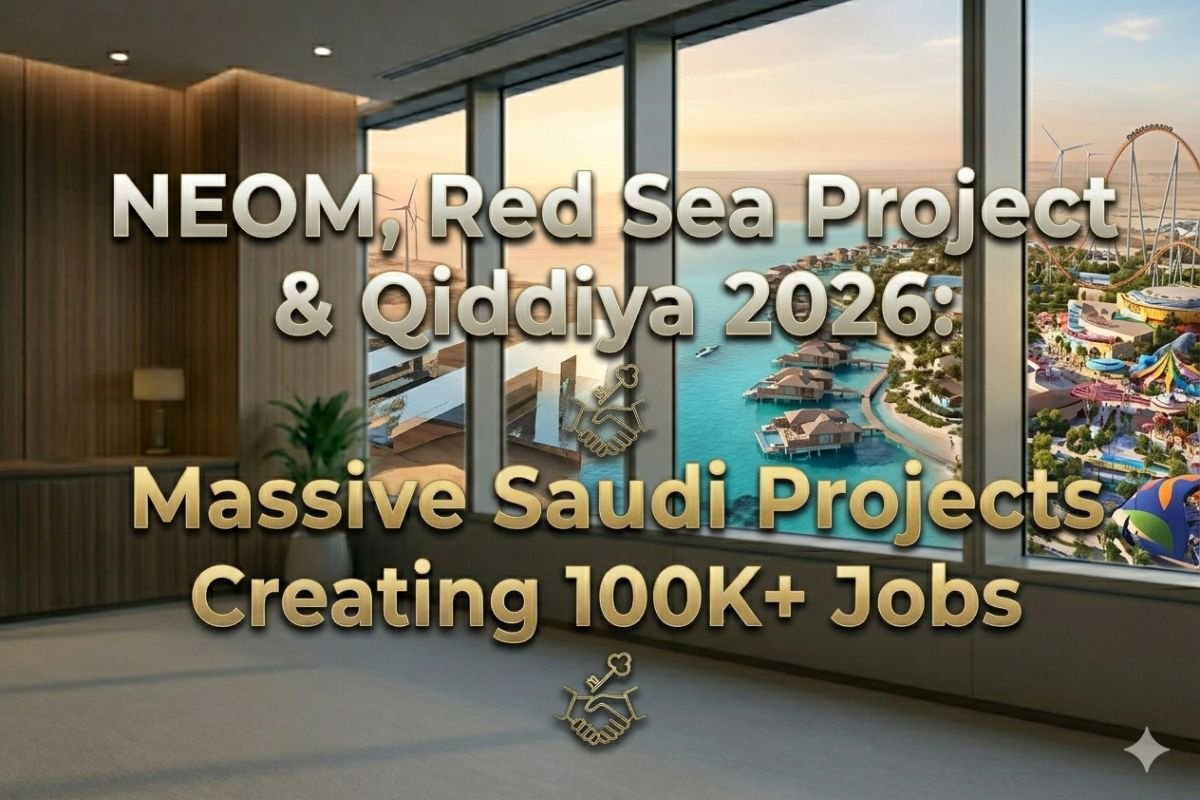
NEOM, Red Sea Project & Qiddiya 2026: Massive Saudi Projects Creating 100K+ Jobs

NEOM & Saudi Mega Projects 2026: 100K+ New Jobs Available

If you’ve been watching the Middle East job market lately, you’ve probably noticed something big happening in Saudi Arabia. And I mean literally big. We’re talking about three of the most ambitious construction projects on the planet—NEOM, The Red Sea Project, and Qiddiya—collectively generating over 100,000 employment opportunities this year alone.

As someone who’s been tracking Gulf employment trends for years, I can tell you this isn’t just another infrastructure boom. This is a fundamental reshaping of how an entire economy operates. Whether you’re an engineer looking for your next challenge, a hospitality professional seeking something extraordinary, or simply curious about where the world’s talent is flowing in 2026, here’s what you need to know about these game-changing developments.

NEOM: Where the Future is Being Built Today

Let’s start with the one everyone’s talking about. NEOM isn’t just a project; it’s a $500 billion bet on the future of human civilization

. When Crown Prince Mohammed bin Salman first announced this vision back in 2017, plenty of skeptics dismissed it as fantasy. Fast forward to 2026, and those renderings of floating cities and linear urban developments? They’re becoming reality.

The Scale is Mind-Boggling

NEOM currently represents the largest active construction site on Earth

. But here’s what makes 2026 different from previous years: we’ve moved from the “dreaming phase” to the “doing phase.” The first modules of The Line are actually operational now, Sindalah luxury island is welcoming guests, and Oxagon’s industrial zones are coming online

.

What does this mean for jobs? Massive demand for mid-level operations managers—the people who actually keep these futuristic cities running. We’re seeing salary packages 35% higher than Dubai and 50% above UK/EU standards, completely tax-free

. Senior project managers are pulling in 35,000–55,000 SAR monthly, while specialized engineers command 15,000–30,000 SAR plus remote location allowances

.

Who’s Actually Hiring?

Here’s a pro tip most people miss: don’t just apply through NEOM’s official portal. About 90% of the workforce is employed through major contractors like Bechtel, AECOM, Parsons, and WSP

. These companies have the mandate to hire thousands of expats right now, particularly for:

  • The Line: Civil engineers, tunneling experts, and geotechnical specialists for the underground “Spine” infrastructure
  • Oxagon: Marine engineers and logistics managers for the floating industrial port
  • Trojena: Structural engineers and hospitality staff for the mountain ski resort (yes, skiing in Saudi Arabia)
  • Sindalah: Hotel staff, chefs, and marine crew for the luxury island destination

The lifestyle isn’t for everyone—think 10-hour shifts, six days a week, living in temporary camps far from traditional cities. But with housing, meals, laundry, and gym access completely covered, professionals are saving nearly 100% of their tax-free salaries

.

The Red Sea Project: Sustainable Luxury at Scale

While NEOM grabs headlines, The Red Sea Project (now operated by Red Sea Global) is quietly becoming one of the most fascinating sustainable tourism developments anywhere. This isn’t your typical beach resort construction. We’re talking about 28,000 square kilometers of islands, beaches, desert, mountains, and volcanic areas being transformed into an eco-friendly luxury destination

.

2026: The Operational Shift

Like NEOM, The Red Sea Project has transitioned from pure construction to operational readiness. With the Red Sea International Airport now operational and the first resorts welcoming guests, the hiring focus has shifted dramatically

.

Current job openings (over 159 vacancies as of March 2026) include everything from dive masters and adventure operations managers to aviation security specialists and logistics directors

. What makes these roles unique is the emphasis on “cognitive hospitality”—blending traditional white-glove service with AI-integrated systems and predictive guest management

.

The project aims to set a new global standard for sustainable luxury tourism. That means professionals here aren’t just building hotels; they’re pioneering how high-end tourism operates in harmony with environmental preservation

.

Qiddiya: The Entertainment Capital Taking Shape

Just outside Riyadh, something equally impressive is happening. Qiddiya Investment Company is building what will become the world’s largest entertainment, sports, and cultural destination

. Think theme parks, motorsports facilities, sports stadiums, and cultural venues spanning an area larger than some small countries.

The Numbers Behind the Vision

Qiddiya Investment Company currently employs 1,200 direct staff, but that’s just the tip of the iceberg

. Through infrastructure partnerships and contractor networks, the project is generating thousands of additional construction and operational roles. Parsons Corporation alone is actively recruiting senior construction managers for workers’ villages and logistics coordination

.

Recent job postings show demand for:

  • Rail station design and construction directors
  • Modern methods of construction specialists
  • Commercial managers (30,000–35,000 SAR monthly)
  • Street lighting and generator technicians
  • Sports and entertainment instructors

What makes Qiddiya particularly interesting for job seekers is its proximity to Riyadh. Unlike NEOM’s remote location, Qiddiya offers the excitement of a giga-project with the accessibility of a major metropolitan area. You get the career acceleration without the isolation.

The Bigger Picture: Saudi Arabia’s Employment Transformation

These three projects represent just the most visible elements of Saudi Vision 2030’s economic diversification strategy. What’s happening here goes beyond construction—it’s a deliberate, systematic transfer of skills and expertise into the Kingdom.

For international professionals, 2026 presents a unique window. The projects are mature enough to offer stable, well-compensated roles, but still early enough that early joiners can shape foundational systems and processes. The “pioneer” phase (complete with shipping container accommodation) is largely over; today’s workers enjoy proper housing, international schools, and developing community infrastructure

.

What Employers Are Really Looking For

Having reviewed hundreds of job postings across these projects, I notice consistent patterns in what recruiters prioritize:

1. Data Literacy: Even non-technical managers need to interrogate dashboards and make data-driven decisions

. If you can’t navigate PowerBI or Tableau, you’re at a disadvantage.

2. Sustainability Fluency: Carbon credits, circular economy principles, and ESG standards aren’t buzzwords here—they’re operational requirements

.

3. Agile Leadership: These projects move at what insiders call “Vegas speed.” If you need six months of committee meetings to make decisions, you’ll struggle

.

4. Cross-Cultural Competence: With over 100 nationalities working across these sites, cultural intelligence isn’t optional—it’s essential for career progression.

Is 2026 Your Year to Make the Move?

The opportunity is real, but so are the challenges. These projects demand professionals who can handle intensity, isolation (particularly at NEOM), and the pressure of delivering while the world watches. The rewards—financial and professional—are substantial for those who thrive in such environments.

My advice? Don’t wait for the perfect moment. These projects are actively recruiting right now, with contractors holding regular career fairs in London, Dubai, and Singapore

. Update your portfolio to include specific case studies and outcomes, consider recording a brief video introduction explaining your “why,” and target department heads directly on LinkedIn rather than waiting for HR portals

.

The Saudi giga-projects of 2026 aren’t just creating jobs—they’re creating the future of urban development, sustainable tourism, and entertainment. Whether you see yourself managing autonomous delivery fleets in a car-free city, overseeing AI-integrated luxury hospitality, or building the infrastructure for tomorrow’s entertainment experiences, there’s probably a role with your name on it.

Architect Engineer Job – Dammam, Saudi Arabia | Confidential Company

Architect Engineer Job – Dammam | Full-Time | Confidential Company

A leading recruitment agency is hiring a full-time Architect Engineer to support high-impact projects across Saudi Arabia. This role blends creative design thinking with technical execution, offering the opportunity to lead architectural solutions from concept to completion.

If you’re passionate about transforming client visions into functional, sustainable spaces—and ready to grow within a collaborative, innovation-driven team—this is your chance to make a lasting impact.

Job Title: Architect Engineer

Full-Time · Human Resources Outsourcing · Architecture & Engineering

📍 Location: Dammam, Saudi Arabia
🏢 Company: Confidential

Apply now

Job Overview: Architect Engineer

You’ll be responsible for designing architectural plans, conducting feasibility studies, and managing multidisciplinary teams to deliver exceptional projects. This role offers career progression, mentorship opportunities, and exposure to cutting-edge tools and technologies.

Key Responsibilities

  • Design and develop architectural plans and 3D models using AutoCAD, Revit, SketchUp
  • Ensure compliance with local building codes and safety regulations
  • Collaborate with clients to translate vision into functional, innovative designs
  • Conduct site assessments and feasibility studies to evaluate project viability
  • Prepare detailed specifications, drawings, and reports for stakeholder alignment
  • Coordinate with engineers and contractors to ensure timely, budget-conscious execution
  • Integrate sustainable materials and modern technologies into architectural solutions
  • Participate in project meetings and presentations, communicating design concepts clearly
  • Review and approve shop drawings and contractor submissions
  • Mentor junior architects and engineers, fostering team growth and capability

Required Skills

Skill AreaDetails
Software ProficiencyAutoCAD, Revit, SketchUp
Regulatory KnowledgeBuilding codes, safety standards
CommunicationClient collaboration, team coordination
Project ManagementTimelines, budgets, resource allocation
Problem SolvingCreative, functional design solutions
Continuous LearningIndustry trends, materials, technologies

Candidate Profile

  • Degree: Master’s in Architecture or related field
  • Experience Level: Mid to senior career
  • Mindset: Innovative, collaborative, detail-oriented
  • Growth Path: Opportunity to lead projects and mentor junior staff
  • Industry: Human Resources Outsourcing (Architecture & Engineering focus)

Compensation & Career Path

  • Employment Type: Full-Time
  • Location: Dammam, Saudi Arabia
  • Industry: Human Resources Outsourcing
  • Career Level: Architect Engineer (Mid–Senior)

How to Apply

Ready to design the future of Saudi architecture?

🔗 Apply Now


Frequently Asked Questions (FAQs)

What software tools are required for this role?

You’ll need proficiency in AutoCAD, Revit, and SketchUp to develop detailed architectural plans and models.

Is this a design-only role or does it include project management?

It includes both. You’ll be involved in design, site assessments, documentation, and team coordination throughout the project lifecycle.

What kind of projects will I be working on?

You’ll work on diverse architectural projects tailored to client needs, with a focus on innovation, sustainability, and compliance.

Will I have opportunities to grow or lead?

Yes. The role offers career progression, including project leadership and mentoring junior architects.

What qualifications are preferred?

A Master’s degree in Architecture is preferred, along with 5+ years of experience in architectural design and engineering.

5 In-Demand Skills in the Gulf for 2025 (and How to Develop Them)

Top 5 Gulf Skills for 2025 | Career Growth & Development Guide

In 2025, the Gulf job market is prioritizing digital fluency, sustainability expertise, and cross-functional leadership. This blog explores five high-demand skills across Saudi Arabia, UAE, Qatar, and Bahrain — plus practical ways to build them.

Introduction

The Gulf region is undergoing a seismic shift in workforce priorities. As countries like Saudi Arabia, UAE, Qatar, and Bahrain accelerate their national visions — from Vision 2030 to Digital Economy Strategies — employers are no longer hiring based solely on degrees. Instead, they’re seeking skills that drive innovation, resilience, and transformation.

In 2025, the most valuable professionals will be those who combine technical expertise with strategic thinking, and who can adapt to fast-changing industries like fintech, green energy, healthcare, and digital infrastructure.

This blog explores five of the most in-demand skills in the Gulf for 2025, why they matter, and how you can develop them — whether you’re a fresh graduate, mid-career professional, or job seeker looking to relocate.

1. Digital and Tech Fluency

As Gulf economies diversify away from oil, digital transformation is at the heart of every sector — from banking and logistics to education and tourism.

Why It’s In-Demand

  • UAE and Saudi Arabia are investing billions in AI, cloud computing, and smart cities
  • Qatar and Bahrain are expanding e-government platforms and digital healthcare
  • Employers want candidates who can code, automate, analyze, and secure data

Key Roles

  • Software engineers
  • Data analysts and scientists
  • Cloud architects
  • Cybersecurity specialists
  • AI/ML engineers

How to Develop It

  • Take online courses in Python, SQL, cloud platforms (AWS, Azure)
  • Build a portfolio on GitHub or Kaggle
  • Get certified (CompTIA, Google Cloud, Microsoft Azure)
  • Attend Gulf-based tech bootcamps or virtual hackathons

2. Green Energy and Sustainability Expertise

With COP31 approaching and net-zero targets accelerating, green skills are becoming essential across construction, energy, and urban planning.

Why It’s In-Demand

  • Saudi Arabia and UAE are launching solar, wind, and hydrogen megaprojects
  • Qatar and Bahrain are integrating sustainable design into infrastructure
  • Companies need professionals who understand carbon accounting, ESG, and circular economy

Key Roles

  • Renewable energy engineers
  • Sustainability consultants
  • Environmental analysts
  • Carbon market strategists
  • Green building architects

How to Develop It

  • Study sustainability frameworks (LEED, ISO 14001, GHG Protocol)
  • Take courses in energy modeling, climate finance, or ESG reporting
  • Volunteer with green NGOs or climate startups
  • Follow Gulf climate initiatives and COP announcements

3. Healthcare and Life Sciences Skills

The Gulf’s healthcare sector is expanding rapidly, driven by population growth, medical tourism, and digital health innovation.

Why It’s In-Demand

  • Saudi Arabia is building smart hospitals and biotech hubs
  • UAE and Qatar are investing in telemedicine and genomics
  • Demand is rising for clinical, research, and digital health professionals

Key Roles

  • Doctors, nurses, and allied health workers
  • Biomedical researchers
  • Health data analysts
  • Telehealth coordinators
  • Public health experts

How to Develop It

  • Pursue certifications (DHA, HAAD, SCFHS) for Gulf licensing
  • Learn health informatics and EHR systems
  • Join medical research projects or clinical trials
  • Explore Gulf scholarships for healthcare degrees

4. Project and Construction Management

With mega-projects like NEOM, Lusail City, and Expo City Dubai, the Gulf needs professionals who can plan, execute, and deliver complex infrastructure.

Why It’s In-Demand

  • Billions are being spent on smart cities, transport, and tourism infrastructure
  • Employers want managers who understand cost control, safety, and digital tools
  • Cross-border collaboration requires multilingual and multicultural leadership

Key Roles

  • Construction project managers
  • Civil engineers
  • Quantity surveyors
  • BIM specialists
  • Urban planners

How to Develop It

  • Get certified (PMP, PMI-ACP, RICS, Primavera)
  • Learn BIM software (Revit, AutoCAD, Navisworks)
  • Gain site experience through internships or apprenticeships
  • Study Gulf-specific building codes and safety standards

5. Digital Marketing and Communication

As Gulf businesses go global, they need marketers who understand digital platforms, analytics, and cultural nuance.

Why It’s In-Demand

  • UAE and Saudi Arabia are hubs for e-commerce, fintech, and tourism
  • Brands want professionals who can drive engagement and conversion
  • Arabic-English bilingualism is a major asset

Key Roles

  • Digital marketing specialists
  • SEO/SEM analysts
  • Content strategists
  • Social media managers
  • UX writers and brand storytellers

How to Develop It

  • Learn tools like Google Analytics, Meta Ads Manager, HubSpot
  • Build a personal brand on LinkedIn or Medium
  • Take courses in SEO, copywriting, and performance marketing
  • Study Gulf consumer behavior and regional trends

Summary Table

Skill AreaWhy It’s In-DemandHow to Develop It
Digital & Tech FluencySmart cities, AI, cloud, cybersecurityOnline courses, certifications, GitHub
Green Energy & SustainabilityNet-zero goals, COP31, ESG investmentsClimate courses, green certifications
Healthcare & Life SciencesSmart hospitals, medical tourism, genomicsLicensing, informatics, research projects
Project & Construction ManagementMega-projects, smart cities, infrastructurePMP, BIM, site experience
Digital Marketing & CommunicationE-commerce, tourism, fintech brandingSEO tools, content creation, analytics

FAQs

Are these skills relevant across all Gulf countries?

Yes — while priorities vary, UAE, Saudi Arabia, Qatar, and Bahrain all value these five skill areas in 2025.

Can I get hired without a degree if I have these skills?

Increasingly yes — employers are prioritizing skills, portfolios, and certifications over formal degrees.

What’s the best way to start learning these skills?

Use platforms like Coursera, edX, Udemy, and LinkedIn Learning. Look for Gulf-specific bootcamps and scholarships.

Are these skills useful for remote or freelance work?

Absolutely — especially digital marketing, tech, and sustainability consulting.

How can I find real Gulf job openings in these fields?

Use trusted platforms like Bayt, GulfTalent, Naukrigulf, and follow LinkedIn pages of Gulf employers.

Post a Job Opening

Fill in the details below. Your job posting will be reviewed by our team.

Basic Information

Specify years of experience required

Location & Salary

Qualifications & Skills

Specify educational requirements
Separate skills with commas

Company Details

Job Details

Contact Information