Gulf Careers Hub

Remote Work in the Gulf: How to Maintain Visibility and Advance Your Career from Anywhere

Remote Work in the Gulf: How to Maintain Visibility and Advance Your Career from Anywhere

Remote work is rising across the Gulf, but staying visible and advancing your career requires deliberate strategy. This guide shows professionals in the UAE, Saudi Arabia, Qatar, and beyond how to build influence, earn recognition, and grow — even from home.

Introduction

Remote work in the Gulf is no longer a fringe concept. From Dubai’s tech startups to Riyadh’s Vision 2030 initiatives, hybrid and fully remote roles are becoming mainstream. But with this flexibility comes a challenge: how do you stay visible, relevant, and promotable when you’re not physically present?

This guide offers a step-by-step strategy for Gulf-based professionals to thrive remotely — with insights tailored to regional workplace culture, digital infrastructure, and career expectations.

The Rise of Remote Work in the Gulf

According to GulfTalent’s 2025 report, over 40% of professionals in the GCC now work remotely or in hybrid setups, with the UAE and Saudi Arabia leading adoption. Industries embracing remote work include:

  • Tech and digital services
  • Finance and consulting
  • Education and training
  • Marketing and media
  • Healthcare administration

Government initiatives like Saudi’s Digital Transformation Program and Dubai’s Virtual Working Program have accelerated this shift.

Visibility Challenges in Remote Work

Remote professionals often face:

  • Reduced face time with managers
  • Fewer spontaneous conversations
  • Limited access to informal networks
  • Delayed recognition for contributions
  • Misalignment with team goals or culture

In Gulf workplaces, where hierarchy and relationship-building are key, these gaps can stall career growth.

Strategies to Stay Visible and Advance

1. Over-Communicate with Purpose

  • Send weekly updates to your manager
  • Use bullet points to highlight achievements
  • Share blockers and solutions proactively
  • Use voice notes or video messages for clarity

Example:

“Hi Ahmed, here’s a quick update on the client onboarding dashboard. We’ve completed 80%, and I’ve added a new filter for UAE-based users. Let me know if you’d like a walkthrough.”

2. Show Up on Camera

  • Turn on video during meetings
  • Dress professionally, even from home
  • Use neutral backgrounds or branded visuals
  • Maintain eye contact and body language

Visibility isn’t just about presence — it’s about presence with impact.

3. Document Your Wins

  • Keep a personal achievement log
  • Quantify results: “Reduced churn by 18%”
  • Share dashboards, reports, or testimonials
  • Use LinkedIn’s Featured section to showcase work

4. Engage in Company Culture Remotely

  • Attend virtual town halls and team events
  • Celebrate Gulf holidays and milestones (e.g., Eid, National Day)
  • Share shout-outs for colleagues
  • Join internal groups or Slack channels

5. Build Relationships Intentionally

  • Schedule virtual coffees with peers and leaders
  • Send thoughtful follow-ups after meetings
  • Congratulate colleagues on promotions or achievements
  • Offer help or insights across departments

In Gulf workplaces, relationships often drive promotions — even more than performance.

6. Ask for Feedback Regularly

  • Request monthly check-ins
  • Ask: “What could I improve to better support the team?”
  • Use feedback to shape your development plan
  • Share progress updates to show growth

7. Align with Regional Goals

  • Mention how your work supports Vision 2030 or UAE’s digital economy
  • Use region-specific metrics or case studies
  • Stay updated on Gulf business trends and policies

Example:

“This new automation workflow supports our Saudi clients’ compliance with the Tawteen program.”

8. Upskill with Gulf-Relevant Certifications

  • PMP, Agile, Scrum
  • Arabic language or translation
  • ESG, LEED, GHG Protocol
  • Gulf-specific HR or finance tools (e.g., Bayzat, Zoho, SAP GCC modules)

Certifications show initiative and readiness for leadership.

9. Be Visible on LinkedIn

  • Share Gulf-specific insights or articles
  • Comment on regional trends (e.g., NEOM, Expo City Dubai)
  • Use hashtags: #RemoteWorkGulf #UAEJobs #SaudiCareers
  • Tag colleagues and companies in posts

LinkedIn is a visibility engine — especially in remote setups.

Remote Visibility Checklist

StrategyAction Example
Weekly UpdatesEmail manager with bullet-point progress
Video PresenceTurn on camera, dress professionally
Achievement LogTrack KPIs, share dashboards
Culture EngagementAttend virtual Eid celebration
Relationship BuildingSchedule virtual coffee with team lead
Feedback LoopMonthly check-in with manager
Regional AlignmentReference Vision 2030 in project summary
UpskillingComplete PMP and Arabic language course
LinkedIn ActivityShare post on Gulf remote work trends

Common Mistakes to Avoid

  • Staying silent or invisible
  • Assuming your work speaks for itself
  • Ignoring cultural norms or holidays
  • Failing to document achievements
  • Not asking for feedback or growth opportunities
  • Avoiding camera or team interactions

FAQs

Can I get promoted while working remotely in the Gulf?

Yes — but you must be proactive. Visibility, impact, and relationships matter more than ever.

Is remote work accepted in Saudi Arabia and UAE?

Increasingly yes. Hybrid models are common in tech, finance, and education. Government support is growing.

How do I build relationships remotely in Gulf culture?

Be respectful, consistent, and warm. Use video calls, voice notes, and thoughtful follow-ups.

Should I mention remote work on my CV or LinkedIn?

Yes — highlight achievements and remote tools used (e.g., Zoom, Asana, Slack). Show adaptability.

What tools help with remote visibility?

Use Notion, Trello, Loom, and LinkedIn. Track progress and share updates visually.
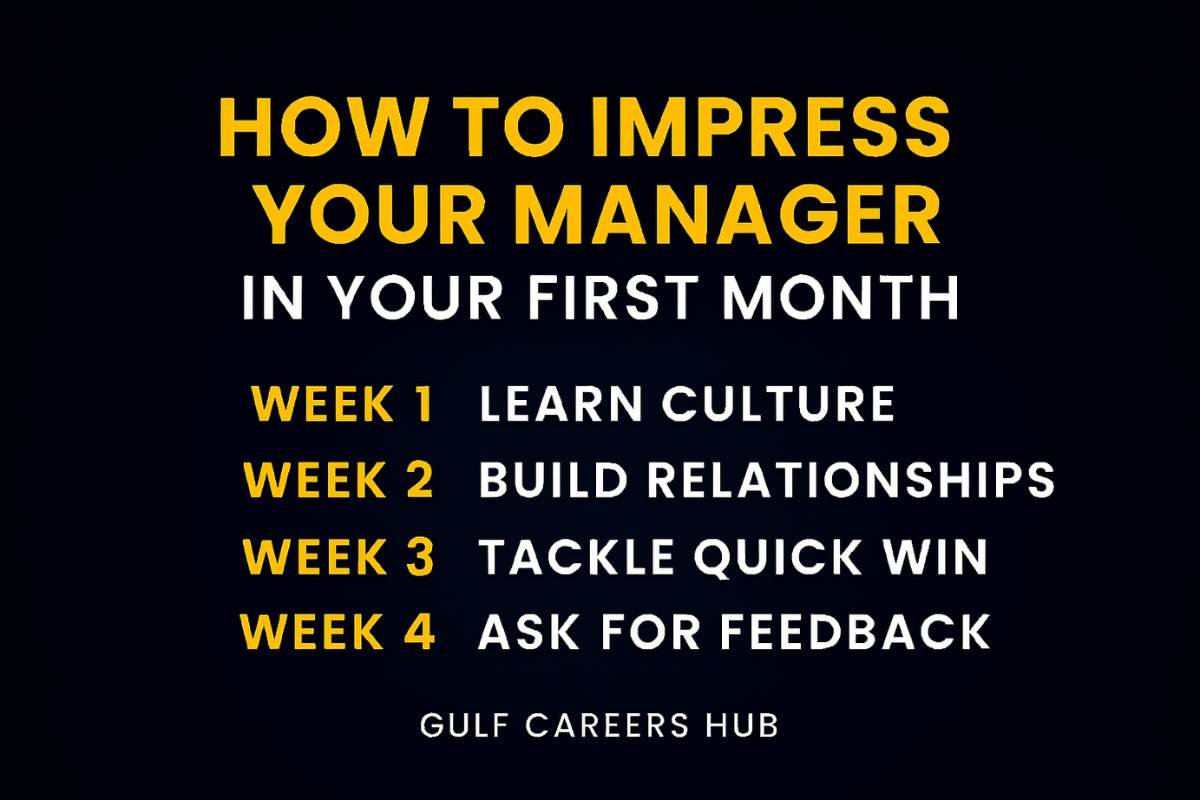
Making a Strong First Impression: How to Win Your Manager’s Trust in Your First Month in the UAE

How to Impress Your Manager in Your First Month in the UAE – 2025 Guide

Starting a new job in the UAE is more than just learning the ropes — it’s about proving your value, adapting to a multicultural workplace, and earning your manager’s trust early. Whether you’ve joined a hospital in Abu Dhabi, a tech firm in Dubai, or a construction site in Sharjah, your first 30 days set the tone for your long-term success.

This guide offers practical, culturally aware strategies to help you stand out, build credibility, and become indispensable — all within your first month.

Week 1: Understand the Landscape Before You Act

1. Learn the Company Culture — Fast

The UAE workplace blends global standards with local customs. You’ll find Western-style reporting structures alongside Emirati values like respect, discretion, and hierarchy. Observe how people communicate, dress, and interact. Is the tone formal or relaxed? Are decisions centralized or collaborative?

Tip: Ask your manager or HR for a copy of the employee handbook or onboarding guide. It shows initiative and helps you avoid missteps.

2. Clarify Expectations Early

Don’t wait for your first performance review. Schedule a brief one-on-one with your manager to ask:

  • What are your top priorities for me this month?
  • How will success be measured?
  • Are there any quick wins I can focus on?

Why it works: It shows you’re proactive, goal-oriented, and serious about delivering value.

Week 2: Build Relationships and Visibility

3. Introduce Yourself Strategically

In multicultural UAE offices, relationship-building is key. Don’t just say “Hi” — share a bit about your background, role, and how you can support others. Ask about their work and listen actively.

Tip: Learn a few Arabic greetings like “Marhaba” (Hello) or “Shukran” (Thank you). It’s a small gesture that earns big respect.

4. Communicate Clearly and Often

Managers in the UAE appreciate regular updates, especially in fast-paced sectors like healthcare, logistics, or finance. Send weekly summaries of what you’ve accomplished, what’s in progress, and any blockers.

Why it works: It builds trust and shows you’re organized, accountable, and transparent.

5. Join Cross-Functional Conversations

If invited to meetings outside your department, attend. Ask thoughtful questions and offer insights when appropriate. It shows you’re invested in the company’s broader goals.

Tip: Don’t dominate — contribute strategically. UAE workplaces value humility and respect for hierarchy.

Week 3: Deliver Value and Solve Problems

6. Identify a Quick Win

Look for a small but meaningful problem you can solve — a broken process, a confusing report, or a missed opportunity. Fix it, document it, and share the result.

Example: You notice the HR onboarding checklist is outdated. You update it, align it with current policies, and present it to your manager.

Why it works: It proves you’re observant, resourceful, and action-oriented.

7. Show You Understand the Business

Don’t just do tasks — connect them to business outcomes. If you’re in finance, talk about cost savings. If you’re in marketing, mention engagement metrics. If you’re in operations, highlight efficiency.

Tip: Use phrases like “This will help reduce turnaround time by 20%” or “This aligns with our Q1 revenue goals.”

Week 4: Reflect, Refine, and Reinforce

8. Ask for Feedback Before It’s Offered

Schedule a short feedback session with your manager. Ask:

  • What am I doing well so far?
  • What should I improve or adjust?
  • How can I better support the team?

Why it works: It shows maturity, openness, and a commitment to growth.

9. Document Your Contributions

Keep a simple log of your achievements, challenges, and lessons learned. This will help you prepare for future reviews, promotions, or even internal transfers.

Tip: Use bullet points and metrics. Example: “Streamlined vendor onboarding process — reduced average approval time from 5 days to 2.”

10. Share Learnings with Others

If you’ve discovered a better way to do something, share it. Create a short guide, host a mini training, or offer to mentor a new hire.

Why it works: It positions you as a team player and a future leader.

🇦🇪 UAE-Specific Tips to Impress Your Manager

Respect Cultural Norms

  • Be punctual — time is respected in UAE business culture
  • Dress modestly and professionally
  • Avoid sensitive topics (religion, politics) unless invited
  • Observe Ramadan etiquette if working during the holy month

Embrace Diversity

UAE workplaces are incredibly multicultural. You may work with colleagues from India, Pakistan, Egypt, the Philippines, Europe, and more. Be inclusive, curious, and respectful of different work styles.

Use Tech Smartly

Many UAE companies use tools like Microsoft Teams, Zoho, SAP, or JISR. Learn the platforms quickly and use them to streamline communication and task tracking.

What Managers in the UAE Say They Value Most

Based on feedback from hiring managers across Dubai, Abu Dhabi, and Riyadh, here’s what they look for in new hires:

  • Reliability: Show up, follow through, and meet deadlines
  • Adaptability: Handle change and ambiguity with grace
  • Initiative: Don’t wait to be told — take action
  • Communication: Keep your manager informed, not surprised
  • Respect: Honor hierarchy, culture, and team dynamics

Final Thoughts: Your First Month Is Your Launchpad

The first 30 days aren’t about proving you’re perfect — they’re about proving you’re committed, coachable, and capable. If you listen well, act thoughtfully, and communicate clearly, you’ll earn your manager’s trust and set yourself up for long-term success in the UAE.

Whether you’re in a corporate tower in Dubai or a field office in Al Ain, the principles are the same: show up with purpose, deliver with precision, and grow with humility.

Post a Job Opening

Fill in the details below. Your job posting will be reviewed by our team.

Basic Information

Specify years of experience required

Location & Salary

Qualifications & Skills

Specify educational requirements
Separate skills with commas

Company Details

Job Details

Contact Information