Gulf Careers Hub

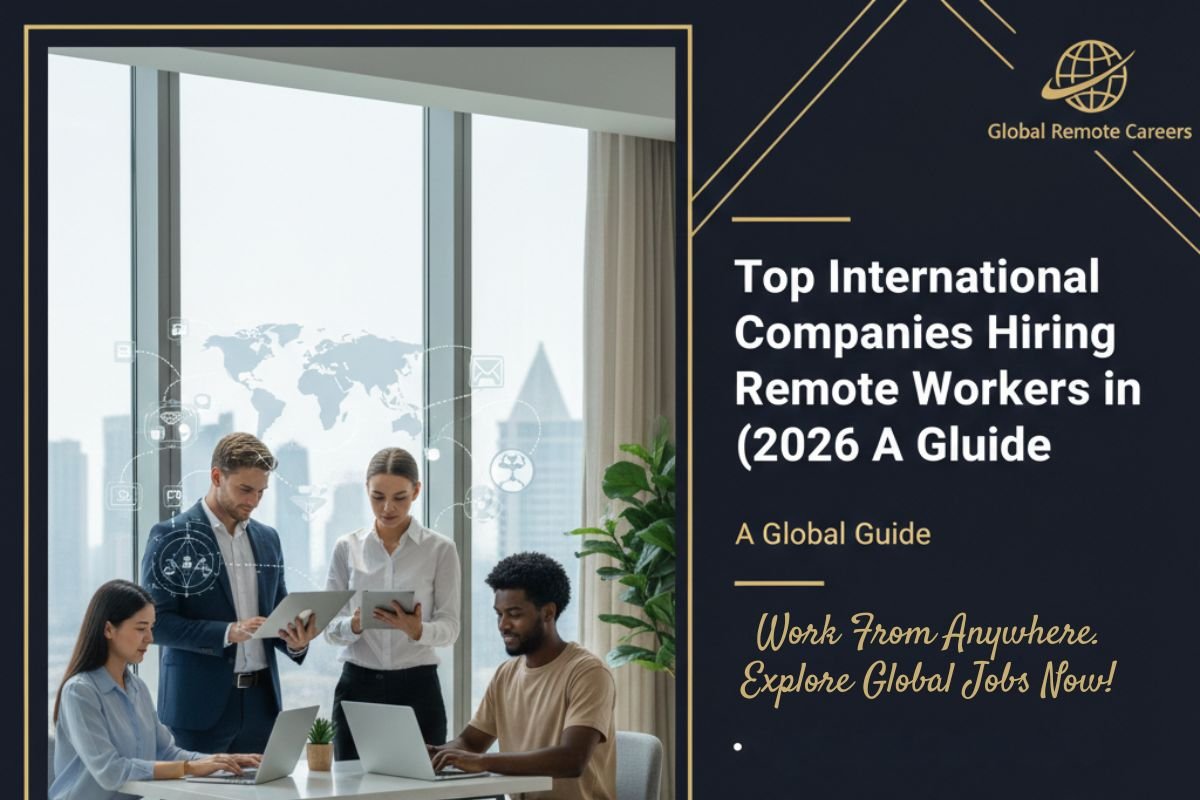
Top International Companies Hiring Remote Workers in 2026: A Global Guide

Top International Companies Hiring Remote Workers

The world of work has undergone a seismic shift. Remote and hybrid work models are no longer a pandemic-era contingency but a permanent, strategic feature of the global job market. For professionals in the Gulf and beyond, this revolution unlocks unprecedented access to careers with world-leading companies—without ever needing to relocate.

This guide explores the top international companies actively hiring remote workers in 2026, the roles they’re filling, and the skills they value most. We’ll also provide actionable strategies for landing these coveted positions and navigating the practicalities of working for a global firm from your home base.

The State of Remote Work in 2026: Beyond the Hype

By 2026, remote work has matured. It’s no longer just about where you can work, but about building sustainable, productive, and inclusive distributed teams. Key trends shaping the landscape include:

  • Asynchronous Communication as Standard: Teams spanning multiple time zones rely on tools like Slack, Notion, and Loom to collaborate without requiring real-time overlap.
  • Focus on Outcomes, Not Hours: Performance is measured by deliverables and impact, not online presence or screen time.
  • Digital Nomad Visas & Compliance: Countries and companies are formalizing arrangements for globally distributed employees, though tax and legal complexities remain.
  • Specialized Remote-First Recruitment: Companies are developing expertise in hiring, onboarding, and managing talent they may never meet in person.

Top International Companies Hiring Remote Workers (2026)

The following companies have not only adapted to remote work but have embedded it into their operational DNA. They offer robust remote infrastructures, strong cultures, and career growth opportunities for distributed employees.

1. Technology & Software Giants

These companies were pioneers of distributed work and continue to offer the largest number of remote opportunities.

  • GitLab: The world’s largest all-remote company. With over 2,000 team members in 65+ countries, GitLab has written the handbook on remote work. They hire extensively in engineering, marketing, sales, and people ops. All processes are transparent and documented.
  • Automattic (Parent company of WordPress.com, Tumblr, WooCommerce): A fully distributed company since its 2005 founding. They look for “code wranglers, support heroes, and design divas” who are passionate about making the web a better place. Hiring is global, with a strong focus on writing and communication skills.
  • Shopify: Embraced “digital by default” in 2020. They hire remote workers globally for roles in software engineering, data science, UX design, and merchant support. Their culture emphasizes impact and entrepreneurship.
  • Dropbox: Adopted a “Virtual First” model, with remote work as the primary experience. They hire for technical and non-technical roles, offering “Dropbox Studios” as optional co-working spaces in some cities.

2. Professional Services & Consulting

The client-service model has successfully transitioned to a remote-first approach.

  • Deloitte, PwC, EY, KPMG (The Big Four): All have significantly expanded their remote and flexible work policies. They hire for remote roles in consulting, advisory, risk analysis, and internal functions like IT and HR. Often, roles are tied to a regional “home office” but allow for predominantly remote work.
  • Accenture: Has a “Omni-connected” model, expecting most of its workforce to work remotely at least 25-50% of the time. They offer a wide array of remote opportunities in technology strategy, cloud migration, and digital transformation.

3. Financial Technology (FinTech) & Services

This fast-moving sector thrives on digital talent, regardless of location.

  • Stripe: A financial infrastructure platform for businesses. They are known for hiring exceptional remote engineering and product talent globally. Their remote setup is highly polished, with a focus on deep work and clear documentation.
  • Coinbase: The cryptocurrency exchange has a “remote-first” policy, allowing employees to work from anywhere within their country of employment. They hire for security, engineering, legal, and finance roles.
  • Wise (formerly TransferWise): With a mission of money without borders, they naturally embrace a borderless workforce. They offer remote roles in many of their operational markets.

4. Marketing, Content & Creative Agencies

Creative collaboration has found its digital groove.

  • Buffer: A fully remote social media management platform and a thought leader in transparency and remote culture. They hire for roles in customer advocacy, engineering, and marketing, with salaries tied to role and experience, not location.
  • Zapier: An automation tool that connects apps; the company is 100% remote. They are famous for their asynchronous work culture and hiring for “Zapiens” across the globe in engineering, marketing, and support.
  • HubSpot: Offers a flexible “3:2 hybrid model” but has a growing number of roles classified as “remote.” They are a major hirer in inbound marketing, sales, and CRM software development.

5. Healthcare & EdTech

Mission-driven sectors leveraging remote talent to scale impact.

  • Khan Academy: A non-profit educational platform. They hire remote professionals in content creation, software engineering, and partnership roles to further their mission of free, world-class education.
  • Teladoc Health: A leader in virtual healthcare. They hire clinicians, software developers, and customer service representatives for remote roles to support their telemedicine platform.

How to Find and Land a Remote Job with a Global Company

1. Optimize Your Presence for Remote Hiring

  • LinkedIn Profile: Use headlines like “Remote Software Engineer | Open to Global Opportunities.” Highlight experience with asynchronous tools (Slack, Asana, Jira, Notion) and self-management.
  • Digital Portfolio: For creatives, developers, and writers, a strong personal website or GitHub profile is non-negotiable.
  • Resume/CV: Include a “Remote Work” section showcasing successful remote projects, highlighting skills like “self-motivated,” “excellent written communication,” and “time-zone flexibility.”

2. Target the Right Job Boards

Move beyond generic sites. Use platforms built for remote work:

  • We Work Remotely: One of the largest and most reputable remote-only job boards.
  • Remote.co: Curated remote jobs across categories.
  • FlexJobs: Screened listings for remote and flexible jobs (subscription-based).
  • AngelList: For startup roles, many of which are remote-friendly.
  • Company Career Pages: Always check the “Remote” or “Location: Anywhere” filter on the career sites of the companies listed above.

3. Ace the Remote-Focused Interview Process

  • Showcase Communication Skills: Your application and interviews must demonstrate crystal-clear, concise communication—the lifeblood of remote work.
  • Prepare for Asynchronous Tests: You may be asked to complete a project or respond to emails/Slack messages on your own time as part of the assessment.
  • Demonstrate Proactivity & Tool Proficiency: Be ready to discuss how you manage your time, avoid burnout, and collaborate digitally. Mention specific tools you’re adept with.
  • Ask Insightful Questions: “How does the team build trust and rapport remotely?” “What does your asynchronous communication workflow look like?” “How is performance evaluated for remote team members?”

Critical Considerations for Remote Global Work

  • Tax Implications: Working for a company in another country can create complex tax liabilities in both your country of residence and the company’s base. Consult a tax professional.
  • Legal & Compliance: Ensure the company is legally set up to hire in your country (often as a contractor) or can sponsor you as an official employee. Many use Employer of Record (EOR) services like Remote.com, Deel, or Oyster to handle this.
  • Salary Benchmarks: Salaries can be location-adjusted, tied to a global pay band, or based on the company’s home country. Research the policy during negotiations.
  • Time Zone Management: Be realistic about working hours if your team is 8+ hours away. Some overlap is usually required.

The Future is Distributed

The barrier between you and a dream job at an innovative global company is no longer geographic—it’s about skills, preparation, and mindset. By targeting truly remote-first organizations, honing the specific competencies of distributed work, and navigating the logistical details wisely, you can build a world-class career from anywhere, including right where you are.

The companies leading this charge are not just offering jobs; they are offering a new way of living and working. In 2026, your professional network and opportunities are truly global.

5 Frequently Asked Questions (FAQs)

1. Do international remote jobs pay less if I live in a lower-cost country?

It depends on the company’s policy. There are three main models: 1) Location-Adjusted Salary: Salary is based on your local market (common at large tech firms). 2) Global Pay Band: Same salary range for a role regardless of location (common at remote-first pioneers like GitLab, Buffer). 3) Home-Country Based: Salary is based on the company’s headquarters location. You must research and ask about the policy during the hiring process.

2. Will I be hired as an employee or a contractor?

This is a crucial distinction. Many companies hire remote workers internationally as independent contractors for simplicity. This means you are responsible for your own taxes, benefits, and insurance. Some companies use an Employer of Record (EOR) service to hire you as a formal, legal employee in your country, providing benefits and handling payroll taxes. Always clarify the employment status.

3. How do I handle visa and legal right-to-work issues?

In most cases, you are working remotely from your country of legal residence. The company is not sponsoring a work visa for you to live elsewhere. If you wish to be a digital nomad, the onus is on you to secure a visa that permits remote work in your chosen country (e.g., Portugal’s D7, Spain’s Digital Nomad Visa, UAE’s Remote Work Visa). The company must agree to your location for tax/legal reasons.

4. What are the biggest challenges of working remotely for a global company?

Isolation & Culture: Building relationships and feeling connected to company culture requires extra effort.
Communication Overhead: Misunderstandings are more common without face-to-face cues. Over-communication is key.
Time Zone Fatigue: Early morning or late-night calls can lead to burnout if not managed carefully.
Home Office Setup: You are responsible for a reliable internet connection, power backup, and a professional workspace.

5. Can I work remotely for a US or European company from the Gulf?

Yes, it is increasingly common. However, key considerations include: 1) Time Zone Overlap: You may need to be available for meetings during some late evening or early morning hours. 2) Internet Reliability: Ensure you have a business-grade, redundant connection. 3) Company Policy: The company must be willing to hire in your country of residence (often via an EOR or as a contractor). 4) Local Law: Ensure your residence visa in the Gulf permits remote work for a foreign entity (most do, but check).

Hybrid & Remote Work Trends That Will Dominate 2025

Hybrid & Remote Work Trends That Will Shape 2025

The global workplace has transformed dramatically over the last few years, driven by technology, shifting employee expectations, and evolving business needs. What started as an emergency shift to remote work has now matured into a strategic advantage for companies across industries. As we enter 2025, hybrid and remote work arrangements are no longer optional—they have become the backbone of modern organizations.

From AI-powered productivity tools to flexible work cultures, companies are adopting innovative approaches to attract talent, reduce costs, and improve performance. At the same time, employees are demanding more autonomy, better work-life balance, and workplaces that adapt to their personal needs.

This blog explores the most influential hybrid and remote work trends that will dominate 2025, based on real industry signals, workforce patterns, and global business transformations.

1. The Rise of “Flexible Hybrid Work” — Employees Choose Their Own Schedule

Earlier hybrid models required employees to come into the office on fixed days—usually two or three days a week. But in 2025, companies are shifting away from rigid schedules toward “flexible hybrid work”, where employees have the autonomy to decide:

  • When they come in
  • Which days they work from home
  • How often they visit the office
  • Which environment best supports their tasks

This trend is growing because:

  • Productivity increases when employees plan their own schedules.
  • Organizations want to reduce office real estate costs.
  • Employees prefer autonomy and balance.
  • Global teams require flexibility due to time-zone differences.

Flexible hybrid work highlights trust, results, and outcomes—not physical presence.


2. AI-Powered Workflows Are Becoming Standard

AI has moved far beyond chatbots. In 2025, AI assistants and automation tools play a major role in hybrid and remote workflows:

AI is used for:

  • Scheduling and time management
  • Content creation
  • Data analysis
  • Project reporting
  • Meeting notes and summaries
  • Task automation
  • Personalized learning and training

AI tools like Notion AI, Google Workspace AI, Microsoft Copilot, and ClickUp AI are now essential productivity partners.

This allows workers to focus more on creativity, strategy, and decision-making—while AI handles repetitive tasks. For remote workforces, AI bridges the gap by enabling faster communication and reducing time spent on administrative work.


3. Global Hiring Has Become a Competitive Advantage

The biggest advantage of remote and hybrid work? Companies can hire talent from anywhere.

In 2025, organizations increasingly adopt a global talent strategy, allowing them to:

  • Access a larger talent pool
  • Hire specialized professionals from different countries
  • Reduce recruitment costs
  • Maintain productivity in multiple time zones
  • Avoid talent shortages in local markets

Remote-first companies especially are using platforms like Deel, Remote.com, OysterHR, and Rippling to manage international payroll and compliance.

Employees benefit too—they can work for top global companies without relocating.


4. Office Spaces Are Turning Into Collaboration Hubs

Traditional office spaces are rapidly fading. In 2025, companies are redesigning offices to support collaboration, creativity, and social connection rather than everyday work.

Offices now include:

  • Meeting lounges
  • Brainstorming rooms
  • Hybrid video meeting technology
  • Soundproof pods
  • Co-working zones
  • Social interaction areas

Employees only come in for:

  • Team meetings
  • Brainstorming sessions
  • Training workshops
  • Important presentations
  • Relationship-building events

The goal is to create purpose-driven workdays, not mandatory office attendance.


5. The Four-Day Workweek Is Becoming a Growing Trend

Although not widespread yet, the 4-day workweek is gaining momentum in 2025.

Countries like the UK, Germany, Iceland, Spain, and Japan have conducted large-scale trials showing:

  • Higher employee satisfaction
  • Lower burnout
  • Equal or improved productivity
  • Better retention
  • Lower absenteeism

Companies using hybrid or remote work are more likely to experiment with shorter workweeks because flexible environments already support efficiency.

The 4-day model works especially well for:

  • Tech companies
  • Marketing & creative agencies
  • Startups
  • Professional services
  • Remote-first businesses

Employees work fewer hours but perform better due to increased focus and motivation.


6. Digital Well-being & Burnout Prevention Are Business Priorities

Remote work has many benefits, but it has also created challenges such as:

  • Overworking
  • Lack of boundaries
  • Digital fatigue
  • Social isolation

To combat these issues, companies in 2025 are investing in employee well-being programs tailored for hybrid and remote environments.

New well-being initiatives include:

  • Mandatory “offline hours”
  • Wellness stipends
  • Virtual counseling and therapy
  • Mental health days
  • Workshops on stress management
  • Ergonomic home-office allowances
  • Digital detox policies

Organizations realize that burnout directly affects performance, turnover, and company culture. Happy employees = higher productivity.


7. Virtual Reality (VR) and Mixed Reality (MR) Meetings Are Emerging

Virtual reality is quietly transforming remote work. By 2025, VR and MR tools are becoming more mainstream for:

  • Virtual office spaces
  • Training and onboarding
  • Team-building sessions
  • Complex design and engineering tasks
  • Sales presentations
  • Virtual conferences

Companies like Meta, Apple, and Microsoft are developing lightweight VR/AR devices that enable realistic, immersive collaboration.

While not fully mainstream yet, VR meetings will become a major part of remote work by 2026–2028.


8. Cybersecurity in Hybrid Work Is Getting Smarter

With employees working from multiple locations, cybersecurity threats have increased. As a result, companies are implementing:

  • Zero-trust security frameworks
  • Multi-factor authentication
  • Secure VPN alternatives
  • Employee cybersecurity training
  • Encrypted devices
  • AI-based threat detection

Remote workers are required to maintain secure work environments, even from home.

Cybersecurity is now a shared responsibility between employer and employee.


9. “Outcome-Based Work Culture” Is Replacing Time-Based Work

In 2025, companies care more about results than about hours spent working.

Managers are shifting to:

  • Clear KPIs
  • Performance metrics
  • Goal-based evaluations
  • Task ownership
  • Quality of output

This is a natural evolution of hybrid and remote work: trust + accountability + flexibility = high performance.

Employees feel empowered and perform better when evaluated fairly.


10. Freelancing & Contract Work Are Becoming Common

More professionals are choosing contract-based roles instead of full-time jobs.

Reasons include:

  • Freedom to choose projects
  • Higher earning potential
  • Better work-life balance
  • Variety of opportunities
  • Global clients
  • Remote-first industries

Companies also benefit because:

  • Hiring freelancers is cheaper
  • They get specialized talent
  • They can scale teams quickly

The freelance workforce is expected to cross over 1 billion remote workers globally by the end of 2025.


Conclusion: The Future of Work Is Flexible, Digital, and Human-Centric

The trends shaping 2025 make one thing clear:

Hybrid and remote work are the future—not temporary work styles.

Organizations that embrace flexibility, invest in technology, and build people-centered cultures will lead the future job market. Employees now prioritize autonomy, mental well-being, learning, and meaningful work—and companies that provide this will attract the best global talent.

2025 is not just another year of remote work evolution—it’s a year of transformation that sets the foundation for the next decade of how the world works.


FAQs (Frequently Asked Questions)

Is hybrid work better than fully remote work?

Both have advantages.
Hybrid work is ideal for collaboration and in-person connection, while remote work supports deep focus and flexibility. The best model depends on company culture and job requirements.

Which industries are fastest in adopting hybrid and remote work?

IT & Software
Digital Marketing
E-commerce
Consulting
Finance
Customer Support
Creative agencies
Education and EdTech
These fields use digital tools heavily and benefit from flexible work structures.

Will companies completely eliminate office spaces in the future?

Not entirely. Offices will still exist but will function more as collaboration hubs rather than daily workspaces.

How can remote workers avoid burnout?

Set clear boundaries
Take digital breaks
Maintain a routine
Use ergonomic setups
Communicate availability
Prioritize health and rest
Employers also play a role by promoting healthy work policies.

Is hybrid work more productive?

Yes. Studies show employees are more productive in hybrid environments due to:
Reduced commute
Better work-life balance
Increased autonomy
Customizable work environments

How will AI impact remote work in 2025?

AI will automate routine tasks, enhance collaboration, assist with scheduling, generate reports, and support decision-making—allowing workers to focus on high-value creative and strategic tasks.

The 5 Biggest Mistakes International Applicants Make on Their CVs (2025)

In 2025, global job mobility is at an all-time high. From Dubai to Dublin, employers are hiring international talent across tech, healthcare, education, and finance. But with increased competition comes increased scrutiny — and your CV is often the first (and only) impression you get to make.

International applicants face unique challenges: cultural formatting differences, language nuances, and automated screening systems that reject even qualified candidates due to small errors. Recruiters now spend an average of 7 seconds scanning a CV, while AI-driven ATS filters eliminate up to 75% of applications before a human ever sees them.

So what are the biggest mistakes international applicants make — and how can you avoid them?

Mistake #1: Not Tailoring Your CV to the Country or Role

Why It Hurts: A generic CV that doesn’t reflect the job description or local expectations is the #1 reason for rejection. Employers want to see relevance — not a laundry list of unrelated achievements.

Examples:

  • Applying to a UK-based marketing role with a US-style resume that lacks metrics or campaign outcomes
  • Using a single CV for roles in HR, sales, and logistics without adjusting keywords or responsibilities
  • Including irrelevant experience (e.g., part-time tutoring) for a senior finance role

Fix It:

  • Use country-specific formats (e.g., UK prefers CVs with personal profiles; UAE favors achievement-based summaries)
  • Mirror the job description’s language and keywords
  • Highlight only the most relevant roles and skills for each application

💬 Tip: Save multiple versions of your CV tailored to different industries or regions.

Mistake #2: Overloading with Buzzwords and No Proof

Why It Hurts: Recruiters are tired of seeing “team player,” “results-driven,” and “hardworking” without any evidence. These phrases mean nothing unless backed by measurable outcomes.

Examples:

  • “Excellent communicator” without examples of presentations, reports, or stakeholder engagement
  • “Strategic thinker” without any mention of projects, KPIs, or decision-making impact
  • “Problem solver” without a single problem solved

Fix It:

  • Replace vague adjectives with action verbs and quantifiable results
  • Use bullet points that start with verbs: “Led,” “Improved,” “Generated,” “Reduced”
  • Include metrics: “Increased sales by 22%,” “Reduced onboarding time by 40%,” “Managed $500K budget”

💬 Tip: If you can’t measure it, rephrase it.

Mistake #3: Poor Formatting and Visual Clutter

Why It Hurts: A cluttered CV with inconsistent fonts, poor spacing, or outdated design gets rejected instantly — especially by ATS systems that rely on clean parsing.

Examples:

  • Using tables, columns, or graphics that confuse ATS bots
  • Mixing serif and sans-serif fonts
  • Overusing bold, italics, or underlines
  • Including photos or personal details in countries where it’s discouraged (e.g., UK, Canada)

Fix It:

  • Stick to clean, single-column layouts
  • Use one professional font (e.g., Poppins, Arial, Calibri)
  • Avoid images, logos, or decorative elements
  • Use consistent spacing, bullet styles, and section headers

💬 Tip: Run your CV through an ATS checker before submitting.

Mistake #4: Ignoring Language and Grammar Nuances

Why It Hurts: International applicants often write in English as a second language — and small grammar errors can undermine credibility, especially in communication-heavy roles.

Examples:

  • “I am responsible for manage the team…”
  • “Worked hardly to meet deadlines…”
  • “I have good knowledge in computer…”

Fix It:

  • Use tools like Grammarly or Hemingway to polish your writing
  • Ask a native speaker or professional editor to review your CV
  • Avoid slang, idioms, or overly casual phrases
  • Use formal, professional tone throughout

💬 Tip: If applying to a role in a non-English-speaking country, check if CVs are expected in the local language.

Mistake #5: Missing Key Sections or Overloading Irrelevant Ones

Why It Hurts: A CV that lacks structure or includes unnecessary details confuses recruiters and wastes space. Every section should serve a purpose.

Examples:

  • Omitting a personal profile or summary
  • Listing every job since college, including unrelated part-time roles
  • Including hobbies like “watching Netflix” or “playing video games”
  • Writing “References available upon request” — outdated and unnecessary

Fix It: Include these essential sections:

  • Header: Name, phone, email, LinkedIn (no photo unless required)
  • Personal Profile: 3–4 lines summarizing your value proposition
  • Key Skills: Tailored to the job description
  • Work Experience: Reverse chronological, with bullet points and metrics
  • Education & Certifications: Relevant degrees, licenses, and courses
  • Languages & Tools: Only if relevant to the role
  • Optional: Awards, publications, volunteer work (if impressive)

💬 Tip: Keep your CV to 1–2 pages max, unless applying for academic or research roles.

Bonus: Cultural CV Differences You Should Know

CountryCV LengthPhoto RequiredPersonal InfoPreferred Format
UAE & Gulf2 pagesYes (often)Nationality, DOBAchievement-based, ATS-friendly
UK2 pagesNoNoPersonal profile + metrics
USA1 pageNoNoSkills-first, results-driven
Germany2 pagesYesYesFormal, detailed, with certificates
Canada2 pagesNoNoATS-optimized, clean layout
Australia2 pagesNoNoClear sections, no fluff

💬 Tip: Always research local norms before submitting your CV abroad.

CV Checklist for International Applicants

✅ Tailored to the job and country
✅ Clear, ATS-friendly formatting
✅ Action verbs + measurable results
✅ No grammar or spelling errors
✅ Relevant sections only
✅ Professional tone and layout
✅ No unnecessary personal info
✅ Saved as PDF (unless otherwise requested)

FAQs

Should I include a photo on my CV?

Only if the country or employer expects it. In the UAE, Germany, and parts of Asia, photos are common. In the UK, US, and Canada, they’re discouraged.

Can I use Canva or graphic templates?

Avoid overly designed templates unless applying for creative roles. ATS bots often reject CVs with columns, graphics, or tables.

How do I pass ATS filters?

Use keywords from the job description, avoid images/tables, and save your CV as a plain PDF or Word file.

Is it okay to apply with the same CV to multiple jobs?

No. Always tailor your CV to each job — even small tweaks can improve your chances.

What’s the best file format for submitting my CV?

PDF is safest for formatting. Word (.docx) is preferred by some ATS systems. Check the job listing for instructions.

Post a Job Opening

Fill in the details below. Your job posting will be reviewed by our team.

Basic Information

Specify years of experience required

Location & Salary

Qualifications & Skills

Specify educational requirements
Separate skills with commas

Company Details

Job Details

Contact Information