
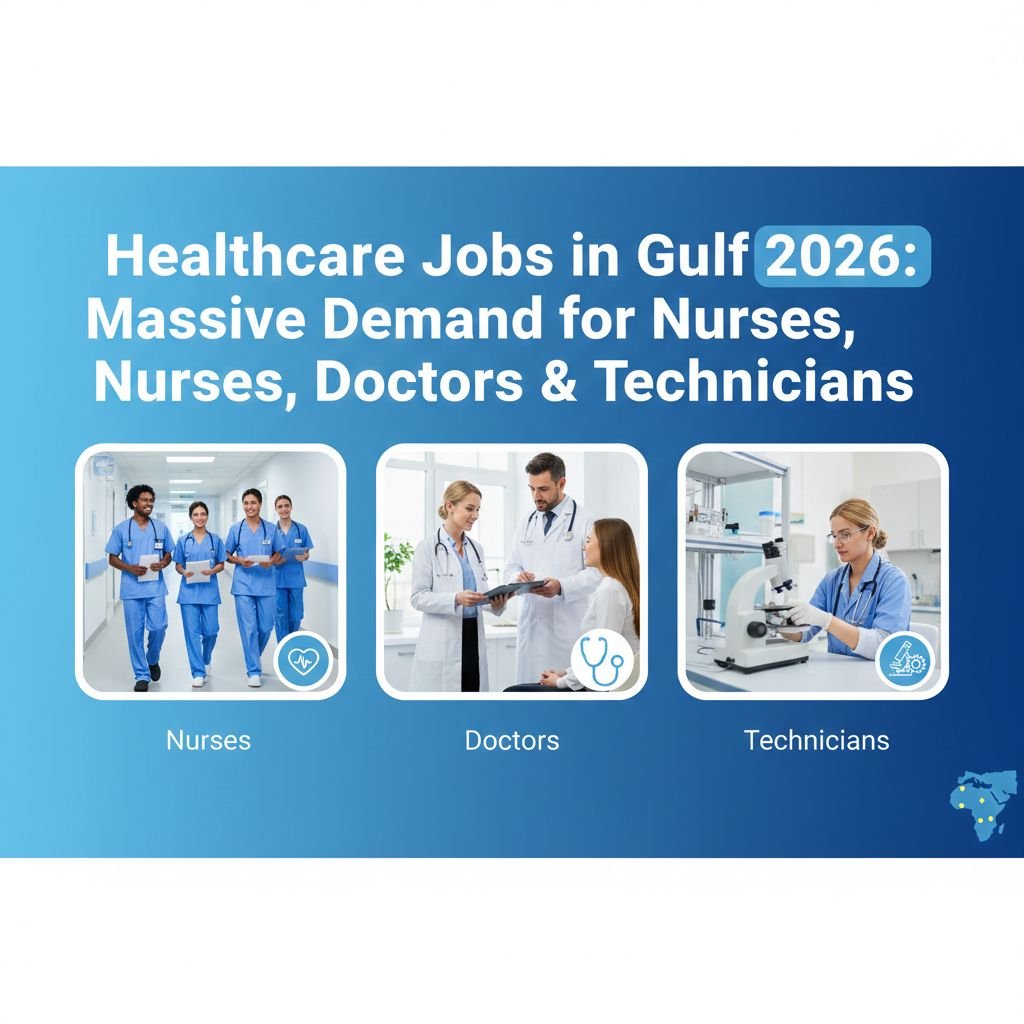
The Gulf region is witnessing an unprecedented boom in healthcare hiring. If you’re a nurse, doctor, or medical technician looking for international opportunities, 2026 is your year. With massive government investments, hospital expansions, and ambitious healthcare transformation projects across Saudi Arabia, the UAE, and Qatar, the demand for qualified medical professionals has never been higher.
The Big Picture: Why Healthcare Hiring Is Exploding in the Gulf
The numbers tell a compelling story. The Gulf Cooperation Council (GCC) healthcare ecosystem is projected to require over 50,000 additional nurses by 2027 alone . And that’s just one category. Demand for specialist doctors, technicians, and allied health professionals is growing at an annual rate of 10-15%, with some markets like Saudi Arabia seeing increases of 20-25% .
What’s driving this massive demand?
- Population growth across the region
- Hospital expansion projects tied to national development plans
- Medical tourism initiatives requiring world-class staffing
- Aging healthcare infrastructure being replaced and upgraded
- Vision 2030 in Saudi Arabia and similar programs in the UAE prioritizing healthcare excellence
The Gulf is investing heavily in becoming a global healthcare destination. And that means they need you.
Nursing: The Greatest Demand
If you’re a nurse, your skills are needed now more than ever. India alone sends approximately 25,000 to 30,000 nurses to the GCC annually, representing 45-50% of the nurse workforce joining from other countries . And the demand continues to outpace supply.
Why Nurses Are in Such High Demand
- Critical shortages across ICU, operating rooms, and emergency departments
- Expansion of long-term care facilities requiring specialized nursing staff
- Locum contracts creating flexible, fast-track opportunities
- Competitive packages making Gulf roles attractive globally
What Nurses Can Expect
Salaries for nurses in the Gulf are highly competitive. Typical monthly packages range from approximately ₹1.3 to ₹1.5 lakh (around AED 5,700 to AED 6,600), with the added benefit of no income tax . Most positions also include:
- Free accommodation or housing allowance
- Transportation to and from work
- Comprehensive medical coverage
- Annual return airfare to home country
- End-of-service benefits
For ICU, critical care, and operating room nurses, demand is particularly intense, and packages reflect that priority .
Doctors: Specialists Wanted
The Gulf is not just looking for general practitioners. The real demand—and the real money—is in specializations. Population growth, evolving regulations, and hospital expansion are driving strong demand for Western-trained doctors across the UAE, Saudi Arabia, and Qatar .
Specialties in Highest Demand for 2026
Based on current hospital needs and recruitment data, these specialties are at the top of every employer’s wish list :
- Interventional Radiology
- ENT (Otolaryngology)
- Female Breast Surgery and Radiology
- Neurology
- Urology
- Female Obstetrics & Gynaecology
- Fetal Medicine
- IVF & Reproductive Medicine
- All Pediatric Subspecialties (Cardiovascular, Endocrinology, Hematology Oncology, Orthopedics)
Pediatric subspecialties are particularly hot right now. Hospitals are shifting toward senior and niche consultant roles as they expand subspecialty services. Positions like Pediatric Cardiovascular Consultant and Pediatric Cardiothoracic Transplant Consultant don’t open often—but when they do, hospitals move quickly .
Doctor Salary Ranges
In the UAE, doctors earn between AED 120,000 and AED 360,000 per year, depending on specialty, experience, and qualifications . Senior consultants and those in high-demand subspecialties command the top end of this range, plus generous benefits packages.
Medical Technicians and Allied Health Professionals
Doctors and nurses get most of the attention, but the Gulf also desperately needs skilled technicians and allied health professionals.
Roles in High Demand
- Anesthesia Technicians: Strong demand for both permanent and locum contracts
- Cardiovascular Technologists
- Radiology and Imaging Technicians
- Laboratory Technologists
- Respiratory Therapists
- Perfusionists
- Surgical Technologists
The expansion of specialized cardiac centers, oncology units, and advanced surgical suites means technicians with specific expertise are being recruited aggressively.
Locum Opportunities: The Fast Track to the Gulf
One of the biggest trends in the 2026 Gulf healthcare market is the explosion of locum (temporary) contracts. These aren’t just stop-gap measures anymore—they’ve become a permanent feature of Gulf hiring .
Why Locum Contracts Are Growing
- Faster hiring: Hospitals need coverage now, and locum roles typically bypass longer approval chains
- Lower commitment: You can test life and work in the region without a long initial contract
- Pathway to permanent: Many locum assignments convert to permanent roles after a successful term
- Broad demand: Anesthesia, ICU, emergency medicine, and nursing dominate locum requests
If you want speed and flexibility while working in the Middle East, locum contracts remain the fastest entry point.
Leadership and Executive Roles
For experienced healthcare professionals, 2026 offers unprecedented leadership opportunities. IHR Canada reports a clear increase in executive-level and senior leadership recruitment .
Executive Roles Currently in Demand
- Executive Director, Medical Tourism and Medical Services
- Associate Executive Director, Nursing Services
- Head of Clinical Data
- Health Services Manager, Oncology
- Executive Health Medicine Chairperson
- Program Manager, Healthcare Improvement
- Executive Director, Business Development
This signals growing investment in medical tourism, patient experience, nursing leadership, and data-driven service improvement. For many professionals, career options now extend well beyond bedside practice .
How to Prepare: Your Action Plan
Hospitals in the Gulf strongly favor candidates who are already licensed or fully prepared for rapid licensing. In many cases, licensing delays slow hiring more than interviews or credentialing .
Getting “Deployment Ready”
To be among the first candidates considered when new roles open, you need:
- Professional licenses up to date and verified
- Employment and education certificates organized and attested
- References identified and contactable
- Clean, clear credentialing records
- Prometric exam preparation (required for most Gulf licensing)
The Licensing Process
Most Gulf countries require healthcare professionals to pass licensing exams:
- Saudi Arabia: Saudi Commission for Health Specialties (SCFHS) exam
- UAE: Dubai Health Authority (DHA) or Department of Health (DOH) exam
- Qatar: Qatar Council for Healthcare Practitioners (QCHP) exam
Many recruitment platforms now offer end-to-end support, including training for these exams, documentation assistance, and visa processing .
What You Can Expect: Compensation and Benefits
The financial package for healthcare professionals in the Gulf remains one of the most attractive globally.
Typical Package Components
| Component | What to Expect |
|---|---|
| Base Salary | Tax-free, competitive with Western markets |
| Housing | Free accommodation or generous allowance |
| Transport | Provided or allowance included |
| Medical Insurance | Comprehensive coverage for you and family |
| Education | School fee allowances for children (senior roles) |
| Annual Leave | 30-45 days plus public holidays |
| Flight Allowance | Annual return tickets to home country |
| End of Service | Gratuity payment upon contract completion |
The combination of tax-free income and comprehensive benefits means Gulf opportunities offer exceptional savings potential compared to Western markets.
The Future: Beyond 2026
The healthcare transformation in the Gulf is just beginning. Saudi Vision 2030, UAE Centennial 2071, and Qatar National Vision 2030 all prioritize healthcare excellence as a cornerstone of their post-oil economies .
This means sustained demand for international talent for years to come. For healthcare professionals willing to invest in the right credentials and adapt to Gulf work culture, the opportunities are truly limitless.
Ready to Make Your Move?
The Gulf healthcare market in 2026 is a seller’s market—and you’re the seller. Whether you’re an experienced consultant looking for a leadership role, a specialist nurse seeking adventure and savings, or a technician ready to advance your career, the opportunities are here.
Your next step: Get your documents in order, start your licensing preparation, and connect with reputable recruitment partners who specialize in Gulf placements. The hospitals are ready. The packages are waiting. The only question is: are you?
Frequently Asked Questions (FAQs)
1. What are the most in-demand healthcare jobs in the Gulf for 2026?
Nurses (especially ICU, OR, and critical care), specialist doctors in radiology, pediatrics, neurology, and reproductive medicine, and medical technicians across anesthesia, cardiology, and imaging are in highest demand. Leadership roles in medical tourism and nursing administration are also growing rapidly
2. How much can I earn as a healthcare professional in the Gulf?
Nurses typically earn tax-free packages equivalent to AED 5,700-6,600+ monthly plus benefits. Doctors earn AED 120,000-360,000 annually depending on specialty. All roles include accommodation, transport, medical coverage, and annual flights
3. What qualifications do I need to work in Gulf healthcare?
You need recognized professional degrees (MBBS, BSN, etc.), valid licenses from your home country, and usually 2-5 years experience. You’ll also need to pass country-specific licensing exams (DHA, DOH, SCFHS) and have your credentials attested
4. Are locum contracts a good option for first-timers in the Gulf?
Yes! Locum contracts offer faster hiring, lower commitment, and let you test the region before committing long-term. Many locum positions convert to permanent roles after successful assignments
5. Is the demand real, or just hype?
The demand is absolutely real. The GCC needs over 50,000 additional nurses by 2027. Major hospital expansions, medical tourism growth, and national healthcare transformation plans are driving sustained, documented demand across all specialties