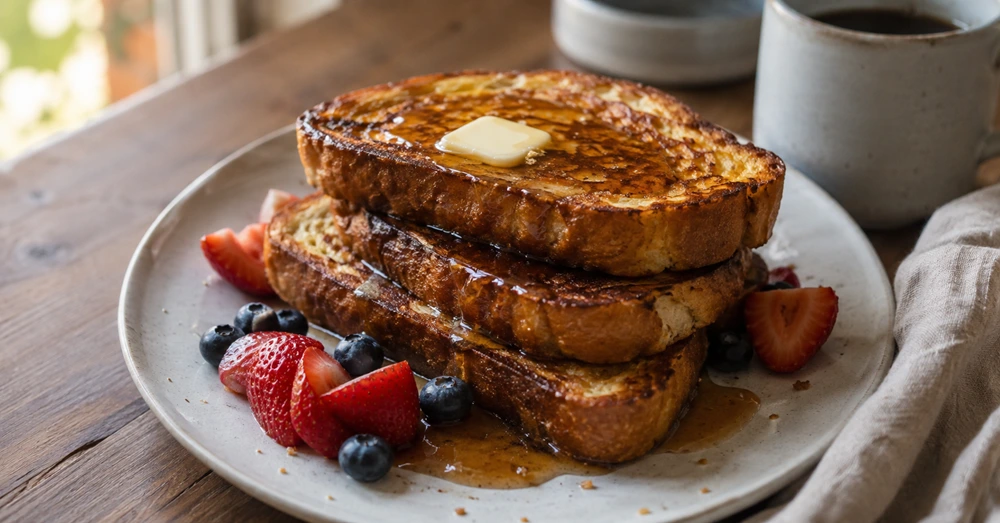
There’s something especially comforting about a warm plate of homemade French toast in the morning. With golden-brown edges, a soft custardy center, a touch of cinnamon and vanilla, and maple syrup drizzled over the top, this easy French Toast Recipe turns simple ingredients into a satisfying breakfast.
You don’t need any complicated equipment or hard-to-find ingredients. Eggs, milk, bread, cinnamon, vanilla, and butter are enough to make a classic breakfast that works just as well for a quick family meal as it does for a relaxed weekend brunch.
The key is getting the balance right: the bread should absorb enough custard to become tender inside without turning soggy, while medium heat gives the outside time to develop a beautiful golden crust.
Why You’ll Love This French Toast Recipe
This homemade French toast is designed to be simple enough for beginners while still giving you the rich flavor and texture expected from a classic breakfast.
Here are a few reasons to make it:
- Ready in about 20 minutes
- Made with basic kitchen ingredients
- Beginner-friendly cooking method
- Golden and lightly crisp outside
- Soft and custardy inside
- Warm cinnamon and vanilla flavor
- Easy to double for a larger family
- Works with several different types of bread
- Easy to customize with different toppings
- Perfect for breakfast or weekend brunch
Another advantage is that the custard itself takes only a few minutes to prepare. Once your bread and pan are ready, most of the work is simply dipping, cooking, and serving.
French Toast Ingredients
You only need a handful of ingredients to prepare classic French toast.
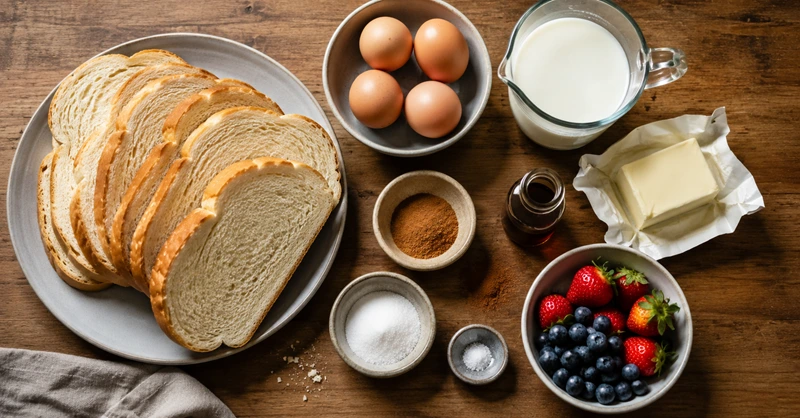
Ingredients for 4 Servings
- 8 thick slices of bread
- 4 large eggs
- 1 cup whole milk
- 1 tablespoon granulated sugar
- 1 teaspoon pure vanilla extract
- 1 teaspoon ground cinnamon
- 1/4 teaspoon salt
- 2–3 tablespoons butter, as needed for cooking
- Pure maple syrup, for serving
- Fresh strawberries, optional
- Fresh blueberries, optional
- Powdered sugar, optional
Bread
Bread is the foundation of good French toast.
Thick slices are usually easier to work with because they can absorb the egg mixture while maintaining their structure. Bread around 3/4 to 1 inch thick is a good starting point.
Slightly stale bread can actually be better than extremely fresh bread. Because it contains less moisture, it can absorb more custard without becoming as fragile.
Eggs
Eggs create the structure of the custard mixture and help give French toast its rich interior.
Make sure the eggs are whisked thoroughly. Large pieces of unbeaten egg white can cook separately in the pan and give the toast an unwanted scrambled-egg texture.
Whole Milk
Milk loosens the eggs and helps create the soft center associated with classic French toast.
Whole milk provides a nice balance between richness and simplicity. You can also use another milk depending on your dietary preferences.
Vanilla Extract
Vanilla gives the custard a sweet, aromatic flavor without requiring a large amount of sugar.
Pure vanilla extract works particularly well, but you can leave it out if necessary.
Cinnamon
Ground cinnamon provides the familiar warm flavor found in many homemade French toast recipes.
Cinnamon tends to float on the surface of the custard, so whisk the mixture again occasionally while cooking multiple batches.
Sugar
A tablespoon of sugar gives the custard a little sweetness and helps with browning.
Avoid adding too much sugar because French toast is usually served with sweet toppings such as maple syrup, fruit, or powdered sugar.
Salt
A small amount of salt may seem insignificant, but it helps balance the sweetness and brings out the vanilla and cinnamon flavors.
Butter
Butter adds flavor while helping the bread develop a golden exterior.
You only need enough to lightly coat the skillet. Too much butter can begin to burn during multiple batches.
What Is the Best Bread for French Toast?
Choosing the right bread can make a noticeable difference.
You want bread that can absorb the custard while remaining strong enough to transfer from the bowl to the skillet.
Brioche
Brioche is one of the most popular choices for rich French toast.
It has a tender, buttery texture and absorbs the egg mixture well. Thick-cut brioche is especially useful for a more indulgent weekend breakfast.
Challah
Challah has a soft interior with enough structure to hold the custard.
Its slightly rich flavor works particularly well with cinnamon, vanilla, maple syrup, and fresh fruit.
Texas Toast
Texas toast is a convenient option because the slices are already thick.
It can be an excellent everyday choice when brioche or challah isn’t available.
French Bread
A loaf of French bread can be cut into slices at your preferred thickness.
Slightly older French bread works particularly well because it absorbs plenty of custard without immediately falling apart.
Regular Sandwich Bread
Regular sandwich bread can also work.
Because the slices are thinner, don’t leave them sitting in the custard for too long. A quick coating on both sides is usually enough.
Quick Tip
Whatever bread you choose, slightly stale bread is often better than extremely fresh bread for French toast.
How to Make French Toast
Now that your ingredients are ready, it’s time to start cooking.
The complete process can be broken down into a few easy steps.
Step 1: Prepare the Bread
If you’re using an unsliced loaf, cut it into slices approximately 3/4 to 1 inch thick.
If possible, use bread that is a day old or slightly dry.
Arrange the slices on a plate close to your cooking area.
Step 2: Make the French Toast Custard
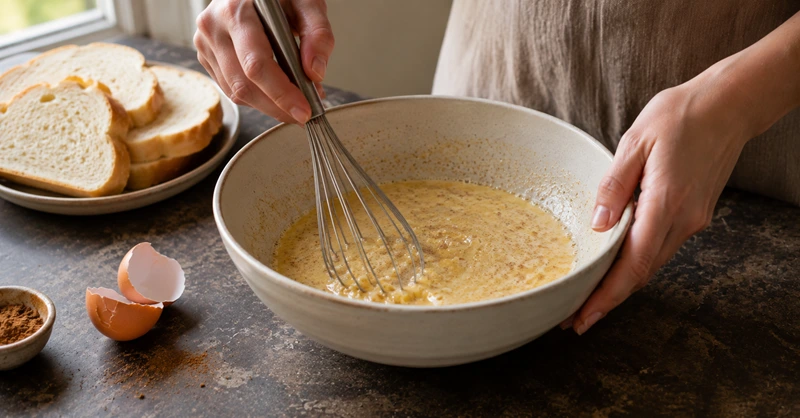
Crack 4 large eggs into a wide, shallow bowl.
Add:
- 1 cup whole milk
- 1 tablespoon granulated sugar
- 1 teaspoon vanilla extract
- 1 teaspoon ground cinnamon
- 1/4 teaspoon salt
Whisk everything together until the egg whites and yolks are completely combined.
The mixture should be pale yellow with small cinnamon specks throughout.
Using a wide bowl makes dipping the bread much easier than using a narrow mixing bowl.
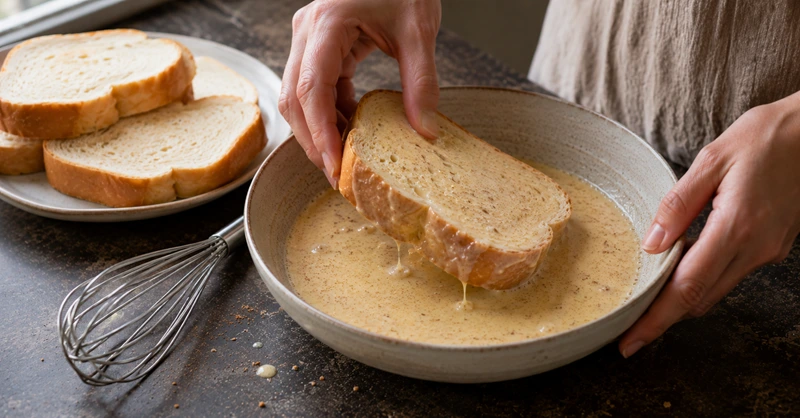
Step 3: Dip the Bread
Place one slice of bread into the custard mixture.
Coat the first side, turn it over, and coat the second side.
The ideal soaking time depends on the bread.
Thick, slightly stale brioche or challah can absorb the custard for longer. Thin sandwich bread should only be dipped briefly because it can become soggy very quickly.
The goal is for the custard to penetrate the bread without causing it to fall apart.
Step 4: Heat the Skillet
Place a large skillet or griddle over medium heat.
Allow it to warm before adding a small amount of butter.
Once the butter has melted and begins to gently foam, spread it around the cooking surface.
Avoid extremely high heat. A pan that’s too hot can burn the exterior before the custard in the center has enough time to cook.
Step 5: Cook the First Side
Carefully transfer the soaked bread to the skillet.
Cook only as many pieces as comfortably fit without touching or overcrowding one another.
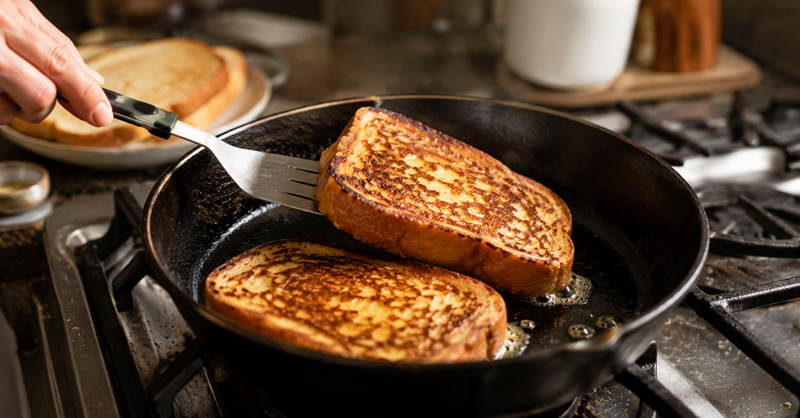
Cook for approximately 2–4 minutes on the first side.
Look underneath the bread. Once it has developed an even-enough golden-brown surface, it’s ready to flip.
Step 6: Flip and Finish Cooking
Use a wide spatula to flip each slice.
Cook the second side for another 2–4 minutes, or until golden brown and cooked through.
The exact time depends on:
- Thickness of the bread
- Type of bread
- Amount of custard absorbed
- Pan temperature
- Type of skillet
Adjust the heat if the bread begins browning too quickly.
How Do You Know When French Toast Is Done?
Properly cooked French toast should have a golden-brown exterior and a soft but cooked center.
Look for these signs:
- Both sides are golden brown
- Edges feel lightly crisp
- Center feels soft but not wet
- No obvious raw egg mixture remains
- Bread holds its shape when lifted
- Toast feels warm through the center
Remember that thick slices require more time than thin sandwich bread.
If the outside is becoming dark while the middle remains undercooked, reduce the heat.
Tips for the Best French Toast
A simple French Toast Recipe can still go wrong if the bread becomes too wet or the skillet gets too hot.
These tips will help you get better results.
1. Choose Thick Bread
Thick bread gives you more room to create the contrast between a golden exterior and tender center.
2. Try Slightly Stale Bread
Day-old bread usually absorbs custard more effectively while remaining structurally strong.
3. Whisk the Eggs Thoroughly
Make sure there are no large streaks of egg white remaining.
4. Don’t Oversoak Thin Bread
Thin bread absorbs liquid very quickly.
Give it a quick dip rather than leaving it submerged.
5. Cook Over Medium Heat
Medium heat gives the inside time to cook before the outside burns.
6. Don’t Overcrowd the Skillet
Leaving space between slices makes them easier to flip and helps maintain the pan temperature.
7. Add Butter Between Batches
Use a small amount of fresh butter when necessary.
If old butter starts becoming very dark, carefully wipe the skillet before adding fresh butter.
8. Serve French Toast Warm
French toast tastes best shortly after cooking.
If you’re making a large batch, keep finished slices on a baking sheet in a low oven until you’re ready to serve.
Common French Toast Mistakes
Why Is My French Toast Soggy?
The bread may have been soaked for too long.
Very fresh or thin bread can also absorb more liquid than it can comfortably hold.
Use thicker or slightly stale bread and reduce the soaking time.
Why Does the Outside Burn?
Your skillet is probably too hot.
Reduce the temperature to medium or medium-low and allow the bread a little more time to cook.
Why Does My Bread Fall Apart?
This usually happens when delicate bread absorbs too much custard.
Dip thinner bread quickly rather than soaking it.
Why Are There Pieces of Egg on My Toast?
The eggs probably weren’t whisked thoroughly enough.
Whisk until the whites and yolks are completely combined before dipping the bread.
Why Does My French Toast Taste Bland?
Don’t forget the salt, vanilla, and cinnamon.
Even a small amount of salt helps bring the other flavors forward.
French Toast Topping Ideas
One of the best things about homemade French toast is how easily you can change the toppings.
Try:
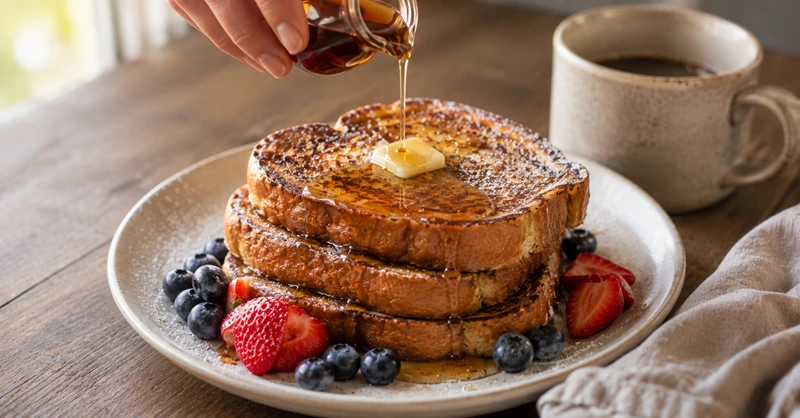
- Pure maple syrup
- Fresh strawberries
- Fresh blueberries
- Sliced bananas
- Powdered sugar
- Cinnamon sugar
- Whipped cream
- Berry compote
- Honey
- Peanut butter
- Almond butter
- Chopped walnuts
- Chopped pecans
- Greek yogurt
Simple Combination
Try maple syrup, strawberries, blueberries, and a light dusting of powdered sugar.
Banana Nut Combination
Add sliced bananas, maple syrup, and chopped pecans.
Berry Combination
Serve with strawberries, blueberries, raspberries, and a spoonful of Greek yogurt.
French Toast Variations
Once you know the basic method, there are plenty of ways to customize it.
Cinnamon French Toast
Increase the cinnamon slightly for a stronger warm-spice flavor.
You can also sprinkle a small amount of cinnamon sugar over the finished toast.
Brioche French Toast
Replace regular bread with thick brioche slices.
Because brioche is already rich, simple toppings such as berries and maple syrup work particularly well.
Vanilla French Toast
Increase the vanilla slightly if you prefer a stronger vanilla aroma.
Avoid adding so much that it overwhelms the other flavors.
Strawberry French Toast
Top classic French toast with sliced fresh strawberries.
For additional flavor, add a spoonful of homemade strawberry compote.
Banana French Toast
Add fresh banana slices, chopped nuts, and maple syrup.
Stuffed French Toast
Use two slices of sturdy bread with a thin layer of cream cheese or another suitable filling between them.
Dip and cook carefully because stuffed French toast is thicker than standard slices.
Dairy-Free French Toast
Replace whole milk with an unsweetened dairy-free alternative.
Oat milk or almond milk can work well. Use a suitable cooking fat instead of butter if you need the entire recipe to be dairy-free.
What to Serve With French Toast
French toast can be served alone, but a few side dishes can turn it into a complete breakfast or brunch.
For a classic breakfast, serve it with:
- Scrambled eggs
- Fresh berries
- Breakfast potatoes
- Bacon
- Breakfast sausage
For something lighter, try:
- Greek yogurt
- Strawberries
- Blueberries
- Banana
- Fresh orange juice
For a relaxed brunch, serve French toast with eggs, fruit, coffee, tea, or a smoothie.
How to Store French Toast
Allow leftover French toast to cool, but don’t leave it sitting at room temperature for an extended period.
Transfer it to an airtight container and refrigerate promptly.
For best quality, use refrigerated French toast within about 3–4 days.
Separating slices with parchment paper can help prevent them from sticking together.
Can You Freeze French Toast?
Yes.
French toast freezes well, making it useful for meal preparation.
Allow the cooked slices to cool before freezing.
For easier individual portions:
- Arrange slices in a single layer on a baking sheet.
- Freeze until firm.
- Transfer the frozen slices to a freezer-safe bag or container.
- Remove as much excess air as practical.
- Label and freeze.
For best quality, try to use frozen French toast within about 1–2 months.
How to Reheat French Toast
Toaster or Toaster Oven
This is one of the easiest ways to bring back some crispness.
Heat until the center is warm and the outside is lightly crisp.
Skillet
Place the toast in a skillet over medium-low heat.
Heat both sides until warmed through.
Oven
The oven works particularly well when reheating several pieces at once.
Arrange the slices on a baking sheet and heat until warmed through.
Microwave
The microwave is fast but usually produces softer French toast.
Heat in short intervals to avoid making the bread overly chewy.
Easy Homemade French Toast Recipe
Prep Time: 10 minutes
Cook Time: 10–15 minutes
Total Time: 20–25 minutes
Servings: 4
Course: Breakfast, Brunch
Cuisine: American
Ingredients
- 8 thick slices of bread
- 4 large eggs
- 1 cup whole milk
- 1 tablespoon granulated sugar
- 1 teaspoon pure vanilla extract
- 1 teaspoon ground cinnamon
- 1/4 teaspoon salt
- 2–3 tablespoons butter, as needed
- Maple syrup, for serving
- Fresh strawberries, optional
- Fresh blueberries, optional
- Powdered sugar, optional
Instructions
- Cut the bread into 3/4- to 1-inch slices if necessary.
- Crack the eggs into a wide shallow bowl.
- Add the milk, sugar, vanilla, cinnamon, and salt.
- Whisk thoroughly until the eggs are completely combined.
- Heat a large skillet over medium heat.
- Add a small amount of butter.
- Dip one bread slice into the custard and coat both sides. Avoid oversoaking delicate bread.
- Transfer the bread to the heated skillet.
- Repeat with additional slices without overcrowding the pan.
- Cook for approximately 2–4 minutes on the first side.
- Flip once the underside is golden brown.
- Cook the second side for another 2–4 minutes, adjusting the heat as necessary.
- Repeat with the remaining bread, adding small amounts of fresh butter when needed.
- Serve warm with maple syrup, berries, powdered sugar, or your favorite toppings.
Recipe Notes
- Thick bread is easier to work with than very thin bread.
- Slightly stale bread is excellent for absorbing custard.
- Don’t oversoak thin sandwich bread.
- Keep the skillet around medium heat.
- Reduce the temperature if the toast browns too quickly.
- Whisk the custard again between batches if the cinnamon begins collecting on top.
- Cook in batches rather than overcrowding the skillet.
- Serve immediately for the best texture.
- When cooking for several people, finished slices can be held briefly in a low oven.
Estimated Nutrition
Nutrition varies depending on the bread, butter, toppings, and exact ingredients used.
Approximate nutrition per serving before substantial toppings:
- Calories: 350–450
- Protein: 12–16 g
- Carbohydrates: 40–55 g
- Fat: 14–20 g
Nutrition information is an estimate only.
A Simple Breakfast Worth Making
A good French Toast Recipe doesn’t need to be complicated. With thick bread, a simple egg-and-milk custard, cinnamon, vanilla, and a little butter, you can make a warm breakfast with crisp golden edges and a tender center.
Serve it simply with maple syrup or dress it up with fresh berries, bananas, nuts, or powdered sugar. Once you’ve learned the basic method, it’s also easy to adjust the bread and toppings to create your own favorite version.