Gulf Careers Hub

Skill-Based Hiring vs Degrees in 2025 – Why Employers Prefer Skills

Skill-Based Hiring vs Degrees in 2025 – Why Employers Prefer Skills

For decades, a college degree was the golden ticket to career success. It signaled discipline, intelligence, and job readiness. But in 2025, that dominance is fading fast. Employers across industries — from tech and healthcare to logistics and media — are embracing a new paradigm: skill-based hiring.

This shift isn’t just a trend. It’s a structural transformation in how talent is sourced, evaluated, and retained. In this blog, we’ll explore why skill-based hiring is overtaking traditional degrees, how it’s impacting job seekers and recruiters, and what you can do to stay competitive in a skills-first economy.

What Is Skill-Based Hiring?

Skill-based hiring is a recruitment strategy that prioritizes practical abilities, certifications, and performance over formal education. Instead of asking “Where did you study?”, employers now ask “What can you do?”

This model focuses on:

  • Hands-on experience
  • Technical proficiency
  • Soft skills like communication and adaptability
  • Portfolio work, certifications, and project outcomes

It’s especially popular in industries where technology evolves faster than curricula, and where real-world results matter more than theoretical knowledge.

Why Employers Are Making the Shift

1. Faster Hiring Cycles

Traditional hiring — with degree filters and long interview rounds — slows down recruitment. Skill-based hiring allows companies to quickly identify candidates who can perform from day one.

2. Access to Larger Talent Pools

By removing degree requirements, employers tap into non-traditional candidates: bootcamp grads, freelancers, career switchers, and self-taught professionals.

3. Better Job Performance

Studies show that candidates hired for skills — not degrees — often outperform their peers in adaptability, problem-solving, and innovation.

4. Reduced Bias

Skill-based hiring reduces bias linked to university prestige, socioeconomic background, or geographic location. It’s a step toward inclusive hiring.

5. Alignment with Modern Work

Today’s jobs require continuous learning, not static credentials. Skill-based hiring supports agile teams that evolve with market demands.

Industries Leading the Way

Tech & Software

Companies like Google, IBM, and Microsoft now hire developers based on GitHub portfolios, coding challenges, and certifications — not degrees.

Healthcare

Roles like medical coders, technicians, and care coordinators are increasingly filled via certification programs and skill assessments.

Manufacturing & Logistics

Employers prioritize hands-on training, safety compliance, and equipment handling over academic backgrounds.

Creative & Media

Designers, writers, and marketers are hired based on portfolios, campaign results, and client feedback — not diplomas.

Finance & Data

Data analysts and financial planners are evaluated on Excel fluency, dashboard creation, and scenario modeling, often proven via online courses.

How Recruiters Assess Skills in 2025

Recruiters now use:

  • Skills assessments (e.g., coding tests, writing samples, simulations)
  • Portfolio reviews (GitHub, Behance, LinkedIn projects)
  • Behavioral interviews focused on problem-solving
  • Micro-credentials and badges from platforms like Coursera, Udemy, and LinkedIn Learning
  • Real-world challenges (e.g., “Build a landing page in 2 hours”)

This approach helps recruiters see what candidates can actually do, not just what they claim on paper.

What This Means for Job Seekers

You Don’t Need a Degree to Compete

If you have the skills, you can land the job — even without a formal education.

Continuous Learning Is Key

Online courses, bootcamps, and certifications are now career accelerators. Invest in learning platforms that offer practical, project-based training.

Build a Portfolio

Whether you’re a developer, designer, or marketer, showcase your work. Portfolios are the new résumés.

Highlight Soft Skills

Communication, teamwork, and adaptability are critical differentiators. Use examples from freelance work, volunteering, or side projects.

Be Ready for Assessments

Practice coding tests, writing samples, and simulations. These are now standard in skill-based hiring.

Degree vs. Skill-Based Hiring: A Comparison

CriteriaTraditional Degree HiringSkill-Based Hiring
FocusAcademic credentialsPractical skills
Candidate poolUniversity graduatesAll skill holders
Assessment methodRésumé + interviewTests + portfolios
Bias riskHigh (school prestige)Lower (performance)
Speed of hiringSlowerFaster
AdaptabilityLimitedHigh
Cost to candidateExpensive (tuition)Affordable (courses)

Sources: WhatJobs, LinkedIn Pulse

How to Transition to Skill-Based Hiring (For Employers)

1. Redesign Job Descriptions

Focus on outcomes and tasks, not degrees. Example: “Build and maintain dashboards” vs. “Bachelor’s in Data Science.”

2. Use Skill Assessments

Integrate coding tests, writing samples, or simulations into your hiring funnel.

3. Train Hiring Managers

Educate teams on evaluating portfolios, soft skills, and non-traditional backgrounds.

4. Partner with Learning Platforms

Collaborate with Coursera, Udemy, or bootcamps to source certified talent.

5. Track Performance

Monitor how skill-based hires perform vs. degree-based hires. Adjust strategies accordingly.

FAQs

Is skill-based hiring only for tech jobs?

No. It’s expanding into healthcare, logistics, finance, media, and more.

Do degrees still matter?

Yes — especially in regulated fields like law or medicine. But for many roles, skills matter more.

What if I have a degree and skills?

Great! Highlight both. But make sure your skills are visible through portfolios and assessments.

Are online certifications enough?

Yes, if they’re from reputable platforms and backed by real-world projects.

How do I prepare for skill-based interviews?

Practice tasks, build a portfolio, and be ready to demonstrate your abilities live.

Can I switch careers without a degree?

Absolutely. Many career switchers succeed by learning new skills and showcasing them through freelance work or bootcamp projects.

Final Thoughts

In 2025, skills are the new currency. Whether you’re hiring or applying, the ability to demonstrate real-world capabilities is more valuable than ever. Degrees aren’t obsolete — but they’re no longer the gatekeepers they once were.

If you want to thrive in today’s job market, focus on what you can do — not just what you studied.
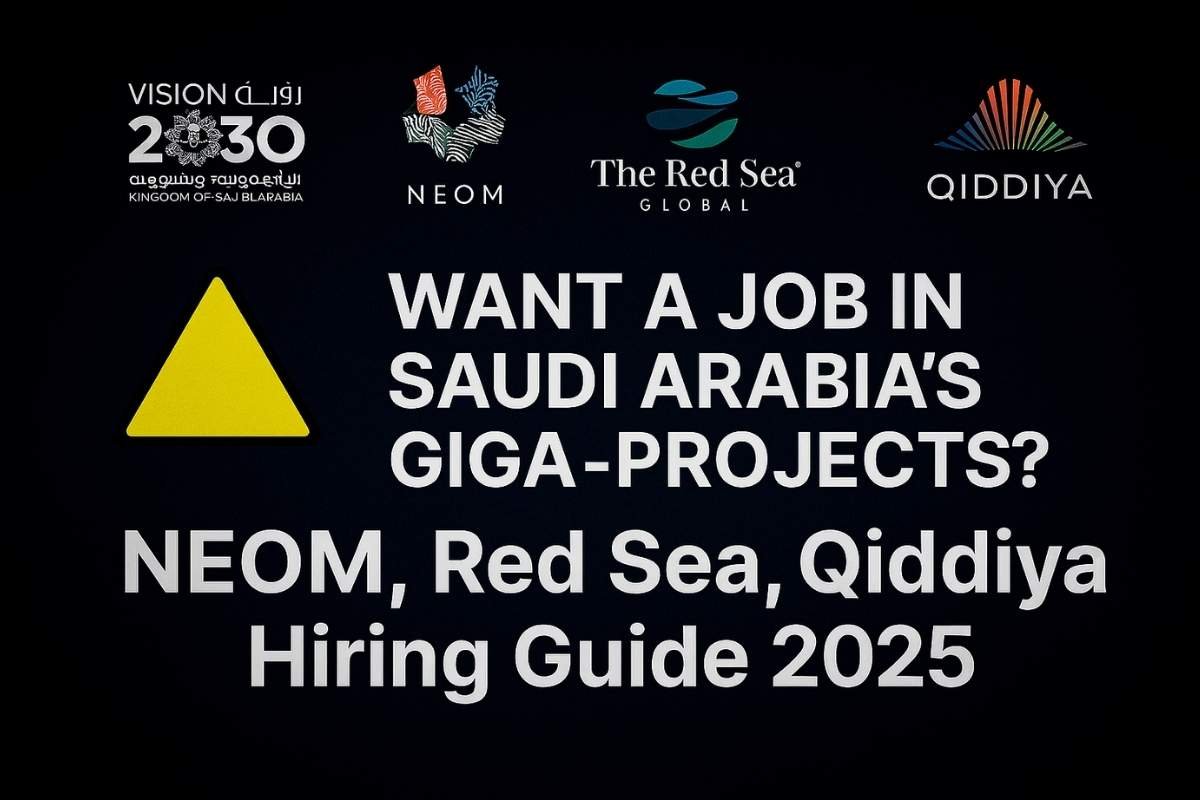
Want a Job in Saudi Arabia’s Giga-Projects? NEOM, Red Sea, Qiddiya Hiring Guide 2025

Want a Job in Saudi Arabia’s Giga-Projects? NEOM, Red Sea, Qiddiya Hiring Guide 2025

Saudi Arabia’s giga-projects are rewriting the future of urban development, sustainability, and tourism. These multi-billion-dollar initiatives — part of the Kingdom’s Vision 2030 — are attracting global talent, cutting-edge technology, and massive investment. But landing a job in one of these high-profile projects isn’t as simple as clicking “Apply.”

Whether you’re targeting NEOM, The Line, Red Sea Global, Qiddiya, or Diriyah Gate, this guide will help you understand the landscape, prepare strategically, and avoid common pitfalls.

What Are Saudi Giga-Projects?

Giga-projects are large-scale, government-backed developments designed to diversify Saudi Arabia’s economy beyond oil. They focus on futuristic cities, tourism, entertainment, infrastructure, and sustainability.

🔹 Examples of Giga-Projects:

  • NEOM: A $500 billion smart city in Tabuk, powered by renewable energy
  • The Line: A linear city with no cars, streets, or carbon emissions
  • Red Sea Global: Luxury tourism destination with coral reef preservation
  • Qiddiya: Entertainment and sports hub near Riyadh
  • Diriyah Gate: Cultural heritage site and lifestyle destination

These projects are not just ambitious — they’re transformational, aiming to position Saudi Arabia as a global leader in innovation and sustainability.

Why These Projects Matter for Job Seekers

Saudi giga-projects are creating tens of thousands of jobs across sectors:

  • Engineering & Construction
  • Architecture & Urban Planning
  • Environmental Science
  • Hospitality & Tourism
  • IT & Smart Infrastructure
  • Marketing, HR, and Operations
  • Legal, Finance, and Procurement

Global talent is welcome, but competition is fierce. Employers are looking for professionals who bring technical expertise, cultural adaptability, and a commitment to long-term development.

Who’s Hiring?

Recruitment is handled through:

  • Official project websites (e.g., careers.neom.com)
  • Global job boards like Bayt, LinkedIn, and Naukrigulf
  • Specialized manpower agencies (e.g., Khawaja Manpower, NES Fircroft, Hill International)
  • Direct partnerships with universities and global firms

Many roles are posted under “Confidential Company” or “Government Project”, so it’s important to research the recruiter and verify the listing.

Eligibility & Requirements

Common Qualifications:

  • Bachelor’s or Master’s degree in relevant field
  • 5–15 years of experience (depending on role seniority)
  • English fluency (Arabic is a plus)
  • GCC experience preferred but not mandatory
  • Willingness to relocate to remote areas (e.g., Tabuk for NEOM)

Visa & Relocation:

  • Most roles offer relocation support, including housing, transport, and visa processing
  • Some positions are open to expats only, while others prioritize Saudi nationals under Saudization policies

How to Stand Out

1. Tailor Your CV for Giga-Projects

Highlight:

  • Large-scale project experience
  • Sustainability or smart tech involvement
  • Multicultural team collaboration
  • Remote site adaptability

2. Use Keywords Strategically

Include terms like:

  • “Vision 2030”
  • “Smart city infrastructure”
  • “LEED-certified projects”
  • “Remote site logistics”
  • “Cross-border stakeholder management”

3. Prepare for Technical Interviews

Expect:

  • Scenario-based questions
  • Problem-solving under constraints
  • Cultural fit assessments
  • Safety and compliance knowledge

4. Show Long-Term Commitment

Giga-projects prefer candidates who are ready to stay for 2–5 years, not short-term contractors.

Common Mistakes to Avoid

  • Generic applications without project-specific experience
  • Ignoring location challenges (e.g., NEOM is remote and under development)
  • Overlooking cultural expectations — respect, hierarchy, and discretion matter
  • Falling for fake job posts — always verify the recruiter and platform

Salary Expectations

Salaries vary widely depending on role, seniority, and nationality. Here’s a rough breakdown:

Role TypeMonthly Salary (USD)
Site Engineer$3,500 – $6,000
Project Manager$7,000 – $12,000
Sustainability Consultant$5,000 – $9,000
Hospitality Director$6,000 – $10,000
IT Infrastructure Lead$8,000 – $14,000

Note: Packages often include housing, transport, annual flights, and medical insurance.

Insider Tips from Recruiters

  • “NEOM interviews are rigorous — expect multiple rounds and technical assessments.”
  • “Red Sea Global prefers candidates with luxury hospitality experience.”
  • “Qiddiya values entertainment industry backgrounds, especially from theme parks and sports.”
  • “Diriyah Gate looks for cultural sensitivity and heritage experience.”

FAQs

Do I need to speak Arabic?

Not mandatory, but helpful. English is the working language in most giga-projects.

Can I apply from outside the GCC?

Yes. Many roles are open to international applicants, especially in engineering, IT, and hospitality.

Are these jobs permanent or contract-based?

Both exist. Some are 2–3 year contracts; others are long-term roles with renewal options.

Is NEOM really hiring thousands of people?

Yes. NEOM is expected to employ over 100,000 people by 2030 across various sectors

What’s the work-life balance like?

It depends on the role and location. Remote sites may have longer hours but offer premium compensation.

How do I avoid fake job listings?

Apply only through verified platforms and official project websites. Never pay fees upfront.

Final Thoughts

Saudi Arabia’s giga-projects are more than jobs — they’re a chance to be part of history. If you’re ready to work on futuristic cities, sustainable tourism, and world-class infrastructure, now is the time to prepare.

Research deeply, apply strategically, and bring your best to the table. These projects are changing the region — and they need people who can help build the future.

How to Spot a Fake Job Posting in 2025 — Complete Guide for Gulf Job Seekers

How to Spot Fake Job Postings in 2025 – Gulf Careers Hub Guide

In today’s digital job market, finding the right opportunity can feel like navigating a maze. With thousands of listings across platforms like Bayt, LinkedIn, and Indeed, it’s easy to get excited — and just as easy to get scammed. Fake job postings are designed to look legitimate, but they often lead to wasted time, stolen data, or worse.

Whether you’re applying in the UAE, Saudi Arabia, or Pakistan, this guide will help you identify red flags, verify legitimacy, and protect yourself from employment scams.

Why Fake Job Postings Exist

Scammers create fake listings for several reasons:

  • Phishing personal data: They collect your name, ID, CV, and contact info to sell or misuse.
  • Financial fraud: They ask for “training fees,” “visa processing,” or “equipment deposits.”
  • Identity theft: They impersonate real companies to gain trust and access sensitive documents.
  • Malware links: Clicking on fake application portals can infect your device.

15 Red Flags That a Job Posting Might Be Fake

1. Too Good to Be True Offers

If the salary is unusually high for the role or location, be cautious. Scammers use inflated pay to lure applicants.

2. Vague Job Descriptions

Legitimate companies provide clear responsibilities, qualifications, and reporting structures. Scams use generic language.

3. No Company Name or Website

If the listing says “Confidential” or lacks a verifiable website, research before applying.

4. Unprofessional Email Addresses

Emails from Gmail, Yahoo, or Hotmail (e.g., hrjobs2025@gmail.com) are red flags. Real companies use domain-based emails.

5. Requests for Money

No legitimate employer will ask for payment during the hiring process — not for training, equipment, or visa fees.

6. Immediate Hiring Without Interview

Scammers often say “You’re hired!” after a short chat or email exchange. Real jobs require interviews.

7. Poor Grammar and Formatting

Typos, inconsistent fonts, and broken English suggest the post wasn’t created by a professional HR team.

8. No Physical Address or Contact Info

Legitimate companies list their office location, phone number, and contact person.

9. Suspicious URLs

Fake job portals may look real but have odd URLs (e.g., www.careers-uae-jobz.net). Always verify.

10. Pressure to Act Fast

Scammers use urgency (“Apply now or lose your chance!”) to prevent you from thinking critically.

11. No LinkedIn Presence

If the company or recruiter isn’t on LinkedIn, it’s worth investigating further.

12. Repetitive Reposts

If the same job keeps appearing every few days with no updates, it might be bait.

13. Unusual Interview Platforms

Be wary of interviews via WhatsApp, Telegram, or unknown apps. Most companies use Zoom, Teams, or in-person meetings.

14. No Mention of Reporting Structure

Legitimate postings mention who you’ll report to (e.g., “Reports to Marketing Director”).

15. Too Many Personal Questions

If you’re asked for passport scans, bank details, or family info early on — stop immediately.

Sources:

How to Verify a Job Posting

1. Research the Company

  • Visit their official website
  • Check their LinkedIn page
  • Look for reviews on Glassdoor or Google

2. Call or Email Directly

Use the company’s official contact info to confirm the job listing.

3. Check the Domain

Legitimate companies use domain-based emails (e.g., careers@almarai.com). Avoid generic addresses.

4. Use Trusted Platforms

Stick to verified job boards like:

  • Bayt
  • LinkedIn
  • Naukrigulf
  • GulfTalent
  • Rozee.pk (for Pakistan)

5. Never Pay to Apply

If payment is requested, it’s a scam. Period.

What to Do If You Encounter a Fake Job Posting

1. Don’t Engage Further

Stop communication immediately.

2. Report the Listing

Use the job board’s “Report” feature or email their support team.

3. Protect Your Data

Change passwords, monitor your accounts, and alert your bank if you shared financial info.

4. Warn Others

Post on LinkedIn or community forums to help others avoid the same trap.

FAQs

Can fake jobs appear on trusted platforms like Bayt or LinkedIn?

Yes. Scammers sometimes infiltrate legitimate platforms. Always verify before applying.

Is it safe to apply to jobs labeled “Confidential Company”?

Sometimes. But always research the recruiter and ask for company details before sharing personal info.

What if I already sent my CV to a fake job?

Monitor your email and bank accounts. If you shared sensitive data, consider filing a report with local authorities.

How can I verify a recruiter’s identity?

Check their LinkedIn profile, company email, and job board history. Real recruiters have digital footprints.

Are WhatsApp interviews always fake?

Not always, but they’re uncommon. Most professional interviews happen via Zoom, Teams, or in person.

What if the job post looks real but asks for money later?

It’s a scam. No legitimate employer will ask for payment during recruitment.

Final Thoughts

In 2025, job scams are more polished than ever — but so are your tools to fight them. By staying alert, verifying details, and trusting your instincts, you can protect your career and your data.

Always research before you apply. If something feels off, it probably is.

Sales Manager Job in PVC Pipes Manufacturing – Riyadh, Saudi Arabia

Sales Manager Job in PVC Pipes Manufacturing – Riyadh, Saudi Arabia

Are you a seasoned sales leader with deep expertise in building materials and PVC manufacturing? A Confidential Company in Riyadh is hiring a Sales Manager to lead regional sales operations, drive market expansion, and manage high-value client relationships in the PVC pipes and fittings sector.

Job title: Sales Manager

📍 Location: Riyadh, Saudi Arabia
🏢 Industry: PVC Pipes Manufacturing
🎯 Reports To: General Manager / Director – Sales & Marketing

Apply now

Role Overview

This is a strategic, senior-level position designed for professionals with 5–10 years of experience in the building materials industry. The Sales Manager will be responsible for developing sales strategies, managing key accounts, leading a sales team, and ensuring revenue growth across Saudi Arabia.

The ideal candidate will have a strong technical understanding of PVC products, excellent leadership skills, and a proven ability to close deals in construction, infrastructure, and water supply sectors.

Key Responsibilities

Sales Strategy & Business Development

  • Develop and execute sales strategies aligned with company goals
  • Identify new business opportunities in construction, infrastructure, and water supply
  • Expand market reach by targeting contractors, distributors, consultants, and government bodies
  • Conduct competitor benchmarking and market analysis to refine positioning

Client Relationship Management

  • Build and nurture long-term relationships with key clients and strategic partners
  • Conduct product presentations, technical discussions, and solution-based selling
  • Provide post-sale support and ensure high levels of customer satisfaction

Team Leadership & Development

  • Lead and motivate the sales team to meet KPIs and revenue targets
  • Provide training on product specs, market trends, and sales techniques
  • Set performance goals and conduct regular evaluations

Sales Operations & Execution

  • Oversee the full sales cycle from lead generation to deal closure
  • Coordinate with production, supply chain, and logistics for timely delivery
  • Approve quotations, pricing strategies, and commercial proposals
  • Ensure compliance with pricing policies and credit control guidelines

Reporting & Analysis

  • Prepare weekly, monthly, and quarterly sales reports
  • Forecast demand and recommend strategic adjustments
  • Monitor collections and maintain healthy receivables

Required Skills

  • Strategic Sales Planning
  • Market Expansion & Penetration
  • Key Account Management
  • Team Leadership & Coaching
  • Negotiation & Deal Closing
  • Customer Relationship Management
  • Analytical & Reporting Skills
  • PVC Product Knowledge
  • ERP/SAP Experience (preferred)

Qualifications & Experience

  • Bachelor’s degree in Business, Marketing, Engineering, or related field
  • 5–10 years of sales experience in PVC pipes, building materials, or related sectors
  • Strong understanding of PVC manufacturing and product specifications
  • Proven leadership experience managing sales teams
  • Excellent communication, negotiation, and presentation skills
  • Valid driving license and willingness to travel across KSA

Why This Role Matters

Saudi Arabia’s infrastructure and construction sectors are expanding rapidly under Vision 2030. PVC pipes are essential for water supply, drainage, and industrial applications. This role places you at the center of that growth — driving sales, building partnerships, and shaping the future of sustainable infrastructure.

FAQs

Is this a client-facing role?

Yes. You’ll be expected to manage key accounts, conduct presentations, and maintain strong client relationships.

What industries will I be selling to?

Primarily construction, infrastructure, water supply, and government projects.

Is travel required?

Yes. The role involves frequent travel across Saudi Arabia to meet clients and oversee regional sales.

Is ERP or SAP experience mandatory?

Preferred but not mandatory. Familiarity with ERP systems will help streamline reporting and operations.

Will I manage a team?

Yes. You’ll lead a team of sales professionals and be responsible for their performance and development.

What kind of support will I receive?

You’ll work closely with production, supply chain, and logistics teams to ensure smooth order fulfillment and client satisfaction.

Final Thoughts

This is a high-impact opportunity for a strategic sales leader ready to shape the future of PVC infrastructure in Saudi Arabia. If you have the technical knowledge, leadership skills, and drive to succeed in a fast-paced industrial environment — this role is for you.

📍 Location: Riyadh, Saudi Arabia
🏢 Company: Confidential
🎯 Industry: PVC Pipes Manufacturing
📩 Apply via your preferred recruitment platform or contact Gulf Careers Hub for guidance

🇸🇦 Join Al Gosaibi Company as an Events/Advertising Sales Manager in Khobar, Saudi Arabia

Events/Advertising Sales Manager Job in Khobar – Al Gosaibi Company Hiring Now

Are you a seasoned Arabic-speaking sales leader with a passion for advertising, branding, and event management? Al Gosaibi Company — one of Saudi Arabia’s most respected business groups — is hiring an Events/Advertising Sales Manager to lead high-impact campaigns and drive client acquisition across the Kingdom.

Job Overview

Al Gosaibi Company is seeking a dynamic, results-driven Sales Manager with deep expertise in:

  • Advertising solutions
  • Event concept selling
  • Brand activations
  • Sponsorship acquisition
  • Exhibition and trade show sales

This is a senior-level role ideal for professionals with 10+ years of experience in media planning, client management, and cross-functional coordination. You’ll be responsible for leading sales strategies, managing high-value accounts, and collaborating with creative and production teams to deliver exceptional campaigns.

Job title: Events/Advertising Sales Manager

📍 Location: Khobar, Saudi Arabia
🏢 Company: Al Gosaibi Company

Apply now

Key Responsibilities

As the Events/Advertising Sales Manager, you’ll be expected to:

Drive Advertising Sales

  • Sell integrated advertising solutions across print, digital, and outdoor (OOH) platforms
  • Develop customized media plans based on client goals and budgets
  • Pitch creative campaigns to corporate clients, government entities, and event sponsors

Lead Event Sales & Sponsorships

  • Conceptualize and sell event packages, including exhibitions, trade shows, and brand activations
  • Secure sponsorships and partnerships for high-profile events
  • Coordinate with internal teams to ensure seamless execution

Manage Client Relationships

  • Build and maintain long-term relationships with key clients
  • Understand client needs and translate them into actionable sales strategies
  • Provide post-sale support and performance reporting

Team Leadership & Collaboration

  • Lead and mentor junior sales executives
  • Work closely with creative, production, and finance teams
  • Oversee event budgeting and resource allocation

Required Skills & Expertise

To succeed in this role, you’ll need:

  • Media Planning & Advertising Solutions Selling
  • Event Concept Selling & Sponsorship Acquisition
  • Brand Activation & Promotional Campaigns
  • Exhibition & Trade Show Sales
  • Creative Campaign Coordination
  • Understanding of Print, Digital, Outdoor (OOH) Ads
  • Cross-Functional Collaboration with Creative/Production Teams
  • Event Budgeting & Resource Management

Preferred Candidate Profile

  • Language: Fluent in Arabic (spoken and written)
  • Experience: Minimum 10 years in advertising, events, or media sales
  • Career Level: Management
  • Location: Based in or willing to relocate to Khobar, Saudi Arabia
  • Industry Background: Advertising, Events, Media, Branding, or Corporate Communications

Why Join Al Gosaibi Company?

Al Gosaibi Company is a legacy brand in Saudi Arabia, known for its diversified business interests and commitment to excellence. As part of their advertising and events division, you’ll gain access to:

  • High-profile clients and premium campaigns
  • A collaborative, multicultural work environment
  • Opportunities to lead regional activations and exhibitions
  • Competitive compensation and career growth

FAQs

Is Arabic fluency mandatory for this role?

Yes. The role requires strong Arabic communication skills to manage local clients and coordinate with regional partners.

What industries will I be selling to?

You’ll work across sectors including retail, hospitality, government, healthcare, and FMCG, depending on campaign scope.

Is this a client-facing role?

Absolutely. You’ll be expected to pitch, negotiate, and manage relationships with high-value clients and sponsors.

Will I manage a team?

Yes. You’ll lead a small team of sales executives and collaborate with creative and production departments.

What types of events will I be involved in?

Expect to work on corporate exhibitions, trade shows, product launches, brand activations, and promotional campaigns.

Is relocation support provided?

This depends on the final offer and candidate profile. It’s best to discuss this during the interview process.


Final Thoughts

This is a rare opportunity to join a prestigious Saudi company and lead advertising and event sales at a strategic level. If you’re ready to take your career to the next stage — with high-impact campaigns, premium clients, and regional visibility — apply today.

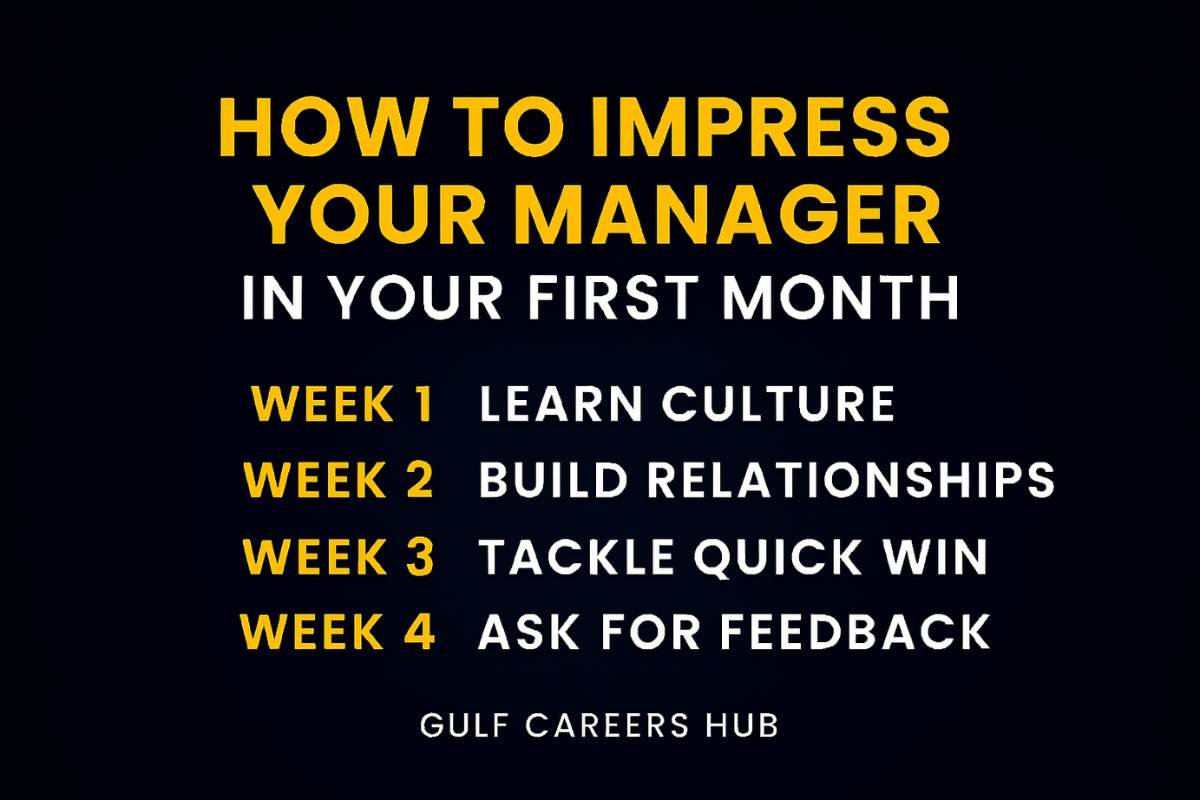
Making a Strong First Impression: How to Win Your Manager’s Trust in Your First Month in the UAE

How to Impress Your Manager in Your First Month in the UAE – 2025 Guide

Starting a new job in the UAE is more than just learning the ropes — it’s about proving your value, adapting to a multicultural workplace, and earning your manager’s trust early. Whether you’ve joined a hospital in Abu Dhabi, a tech firm in Dubai, or a construction site in Sharjah, your first 30 days set the tone for your long-term success.

This guide offers practical, culturally aware strategies to help you stand out, build credibility, and become indispensable — all within your first month.

Week 1: Understand the Landscape Before You Act

1. Learn the Company Culture — Fast

The UAE workplace blends global standards with local customs. You’ll find Western-style reporting structures alongside Emirati values like respect, discretion, and hierarchy. Observe how people communicate, dress, and interact. Is the tone formal or relaxed? Are decisions centralized or collaborative?

Tip: Ask your manager or HR for a copy of the employee handbook or onboarding guide. It shows initiative and helps you avoid missteps.

2. Clarify Expectations Early

Don’t wait for your first performance review. Schedule a brief one-on-one with your manager to ask:

  • What are your top priorities for me this month?
  • How will success be measured?
  • Are there any quick wins I can focus on?

Why it works: It shows you’re proactive, goal-oriented, and serious about delivering value.

Week 2: Build Relationships and Visibility

3. Introduce Yourself Strategically

In multicultural UAE offices, relationship-building is key. Don’t just say “Hi” — share a bit about your background, role, and how you can support others. Ask about their work and listen actively.

Tip: Learn a few Arabic greetings like “Marhaba” (Hello) or “Shukran” (Thank you). It’s a small gesture that earns big respect.

4. Communicate Clearly and Often

Managers in the UAE appreciate regular updates, especially in fast-paced sectors like healthcare, logistics, or finance. Send weekly summaries of what you’ve accomplished, what’s in progress, and any blockers.

Why it works: It builds trust and shows you’re organized, accountable, and transparent.

5. Join Cross-Functional Conversations

If invited to meetings outside your department, attend. Ask thoughtful questions and offer insights when appropriate. It shows you’re invested in the company’s broader goals.

Tip: Don’t dominate — contribute strategically. UAE workplaces value humility and respect for hierarchy.

Week 3: Deliver Value and Solve Problems

6. Identify a Quick Win

Look for a small but meaningful problem you can solve — a broken process, a confusing report, or a missed opportunity. Fix it, document it, and share the result.

Example: You notice the HR onboarding checklist is outdated. You update it, align it with current policies, and present it to your manager.

Why it works: It proves you’re observant, resourceful, and action-oriented.

7. Show You Understand the Business

Don’t just do tasks — connect them to business outcomes. If you’re in finance, talk about cost savings. If you’re in marketing, mention engagement metrics. If you’re in operations, highlight efficiency.

Tip: Use phrases like “This will help reduce turnaround time by 20%” or “This aligns with our Q1 revenue goals.”

Week 4: Reflect, Refine, and Reinforce

8. Ask for Feedback Before It’s Offered

Schedule a short feedback session with your manager. Ask:

  • What am I doing well so far?
  • What should I improve or adjust?
  • How can I better support the team?

Why it works: It shows maturity, openness, and a commitment to growth.

9. Document Your Contributions

Keep a simple log of your achievements, challenges, and lessons learned. This will help you prepare for future reviews, promotions, or even internal transfers.

Tip: Use bullet points and metrics. Example: “Streamlined vendor onboarding process — reduced average approval time from 5 days to 2.”

10. Share Learnings with Others

If you’ve discovered a better way to do something, share it. Create a short guide, host a mini training, or offer to mentor a new hire.

Why it works: It positions you as a team player and a future leader.

🇦🇪 UAE-Specific Tips to Impress Your Manager

Respect Cultural Norms

  • Be punctual — time is respected in UAE business culture
  • Dress modestly and professionally
  • Avoid sensitive topics (religion, politics) unless invited
  • Observe Ramadan etiquette if working during the holy month

Embrace Diversity

UAE workplaces are incredibly multicultural. You may work with colleagues from India, Pakistan, Egypt, the Philippines, Europe, and more. Be inclusive, curious, and respectful of different work styles.

Use Tech Smartly

Many UAE companies use tools like Microsoft Teams, Zoho, SAP, or JISR. Learn the platforms quickly and use them to streamline communication and task tracking.

What Managers in the UAE Say They Value Most

Based on feedback from hiring managers across Dubai, Abu Dhabi, and Riyadh, here’s what they look for in new hires:

  • Reliability: Show up, follow through, and meet deadlines
  • Adaptability: Handle change and ambiguity with grace
  • Initiative: Don’t wait to be told — take action
  • Communication: Keep your manager informed, not surprised
  • Respect: Honor hierarchy, culture, and team dynamics

Final Thoughts: Your First Month Is Your Launchpad

The first 30 days aren’t about proving you’re perfect — they’re about proving you’re committed, coachable, and capable. If you listen well, act thoughtfully, and communicate clearly, you’ll earn your manager’s trust and set yourself up for long-term success in the UAE.

Whether you’re in a corporate tower in Dubai or a field office in Al Ain, the principles are the same: show up with purpose, deliver with precision, and grow with humility.

How to Say “I Don’t Know” in a Job Interview — Without Losing Credibility

How to Say “I’m Not Sure” in a Job Interview Without Losing Credibility – 2025 Guide

Job interviews are high-pressure situations. You’ve prepared your resume, rehearsed your strengths, and researched the company. But then comes a curveball: a question you genuinely don’t know how to answer. Should you bluff? Stay silent? Or admit you don’t know?

The truth is, saying “I don’t know” isn’t a deal-breaker — if you handle it with confidence, humility, and a growth mindset. In fact, when done well, it can show self-awareness, honesty, and professionalism.

Let’s break down how to say it, when to say it, and what to say instead.

Why “I Don’t Know” Feels Risky — But Isn’t

Most candidates fear that admitting uncertainty will make them look unqualified. But in reality, interviewers aren’t testing perfection — they’re testing judgment.

They want to know:

  • How you handle pressure
  • Whether you’re honest or prone to bluffing
  • How you approach unfamiliar challenges
  • Whether you’re coachable and open to learning

Saying “I don’t know” the right way can actually build trust and show that you’re not afraid to admit gaps — as long as you follow up with insight, curiosity, or a plan.

When It’s Okay to Say “I’m Not Sure”

Here are common scenarios where it’s perfectly acceptable to admit you don’t know — and how to do it strategically:

1. Technical Questions Outside Your Scope

If you’re asked about a tool, framework, or regulation you haven’t worked with, don’t fake it.

Example: “I haven’t worked directly with JISR HR Software yet, but I’ve used similar platforms like SAP SuccessFactors and I’m confident I can learn it quickly.”

2. Hypothetical Situations You’ve Never Faced

Interviewers love to throw curveballs: “What would you do if X happened?” If you haven’t faced that situation, say so — but show how you’d approach it.

Example: “That’s a situation I haven’t encountered yet, but here’s how I’d approach it…”

3. Data-Driven Questions Without Enough Context

If asked to estimate something without clear data, it’s okay to say you’d need more information.

Example: “I’d need to review the financials before giving a precise answer, but based on similar cases, I’d start by analyzing X and Y.”

7 Smart Ways to Say “I Don’t Know” — Without Saying Those Words

Here are tactful phrases that convey uncertainty while keeping your credibility intact:

1. “That’s a great question — I’d want to explore it further.”

Shows curiosity and respect for complexity.

2. “I haven’t encountered that directly, but here’s how I’d approach it…”

Demonstrates problem-solving and adaptability.

3. “I’d need more context to give a precise answer, but based on what I know…”

Signals analytical thinking and caution.

4. “That’s outside my current experience, but I’m eager to learn more.”

Highlights growth mindset and humility.

5. “I’d consult with the team or review the data before making a decision.”

Shows collaboration and responsibility.

6. “I’m not familiar with that yet, but I’ve picked up similar tools quickly.”

Reassures the interviewer of your learning agility.

7. “I’d research that thoroughly before taking action.”

Demonstrates diligence and strategic thinking.

Real-Life Examples: Turning “I Don’t Know” Into a Strength

Example 1: Finance Role

Question: “How would you handle a client defaulting on a Shariah-compliant loan?” Response: “I haven’t handled a Shariah-compliant default personally, but I understand the principles involved. I’d consult with our legal and compliance teams to ensure any action aligns with Islamic finance guidelines.”

Example 2: HR Role

Question: “What’s your experience with JISR HR Software?” Response: “I haven’t used JISR yet, but I’ve worked extensively with SAP and Zoho People. I’m confident I can adapt quickly — I’ve onboarded new HR systems in under a week before.”

Example 3: Marketing Role

Question: “How would you optimize CTR for a campaign targeting Gen Z in Saudi Arabia?” Response: “That’s a demographic I haven’t targeted directly, but I’d start by researching local trends, preferred platforms, and tone. I’d also A/B test visuals and captions to refine performance.”

What NOT to Do When You Don’t Know

Avoid these credibility-killers:

  • Guessing wildly: It’s better to admit uncertainty than to offer incorrect or misleading information.
  • Over-explaining: Don’t ramble to cover up gaps — be concise and confident.
  • Deflecting: Don’t change the subject or dodge the question.
  • Apologizing excessively: You’re not expected to know everything — don’t undermine yourself.

How to Prepare for Tough Questions

You can’t predict every question, but you can prepare strategies:

1. Know the Job Description Inside Out

Anticipate questions based on required skills, tools, and responsibilities.

2. Review Industry Trends

Stay updated on local regulations, technologies, and market shifts — especially in Saudi Arabia, UAE, and the USA.

3. Practice Behavioral Responses

Use the STAR method (Situation, Task, Action, Result) to structure answers.

4. Prepare a Learning Story

Have an example ready of how you learned something new quickly — it’s a great way to offset gaps.

Final Takeaway: Honesty + Strategy = Credibility

Saying “I don’t know” isn’t a weakness — it’s a chance to show how you think, how you learn, and how you lead under uncertainty.

In fact, many hiring managers prefer candidates who are honest, thoughtful, and coachable over those who pretend to know everything.

So next time you’re stumped in an interview, take a breath, own the moment, and respond with clarity and confidence.

10 Interview Questions and Answers for a Credit Analyst in Saudi Arabia – 2025 Guide

Ace your Credit Analyst interview in Saudi Arabia with expert answers, local insights, and 2025 hiring trends.

Credit analysts are in high demand across Saudi Arabia’s banking, fintech, and investment sectors. Whether you’re applying to a major institution in Riyadh or a growing SME lender in Jeddah, your interview will test your financial acumen, risk assessment skills, and understanding of the local credit landscape.

This guide offers original, in-depth answers tailored to the Saudi market, helping mid-career professionals and fresh graduates alike.

10 Interview Questions and Answers for a Credit Analyst in Saudi Arabia – 2025 Guide

Credit analysts are in high demand across Saudi Arabia’s banking, fintech, and investment sectors. Whether you’re applying to a major institution in Riyadh or a growing SME lender in Jeddah, your interview will test your financial acumen, risk assessment skills, and understanding of the local credit landscape.

This guide offers original, in-depth answers tailored to the Saudi market, helping mid-career professionals and fresh graduates alike.

1. What does a credit analyst do?

Answer: A credit analyst evaluates the creditworthiness of individuals or businesses applying for loans or credit facilities. In Saudi Arabia, this involves analyzing financial statements, market conditions, and regulatory frameworks such as SAMA (Saudi Central Bank) guidelines. The goal is to determine the risk level and recommend whether to approve, modify, or reject credit applications.

Saudi Context Tip: Mention familiarity with SAMA regulations, Islamic finance principles, and local credit scoring models.

2. How do you assess a company’s creditworthiness?

Answer: I begin with a thorough review of the company’s financial statements—balance sheet, income statement, and cash flow. I calculate key ratios like debt-to-equity, current ratio, and interest coverage. I also assess industry trends, management quality, and external risks. In Saudi Arabia, I factor in Zakat obligations, compliance with Shariah-based financing, and regional market volatility.

Saudi Context Tip: Highlight experience with local SMEs, family-owned businesses, and sector-specific risks (e.g., construction, oil & gas).

3. What financial ratios do you rely on most?

Answer: I prioritize:

  • Debt-to-equity ratio: Measures leverage
  • Current ratio: Assesses liquidity
  • Net profit margin: Indicates profitability
  • DSCR (Debt Service Coverage Ratio): Evaluates ability to repay debt
  • ROA/ROE: Measures efficiency and return

Saudi Context Tip: Mention how you adjust ratios for Islamic finance structures like Murabaha or Ijara.

4. How do you handle incomplete or inconsistent financial data?

Answer: I triangulate data using alternative sources—bank statements, tax filings, supplier invoices, and market benchmarks. I also conduct interviews with company stakeholders. In Saudi Arabia, where some SMEs may lack formal records, I rely on cash flow proxies, collateral evaluations, and relationship banking insights.

Saudi Context Tip: Show your adaptability in working with non-standard documentation and Arabic-language financials.

5. Describe a time you identified a high-risk borrower. What did you do?

Answer: In a previous role, I flagged a logistics company with declining revenues and rising short-term debt. Their DSCR was below 1, and they had pending legal disputes. I recommended a conditional approval with collateral requirements, shorter tenor, and monthly monitoring. The client eventually defaulted, but our risk mitigation reduced exposure.

Saudi Context Tip: Discuss how you balance risk and relationship, especially in family-run enterprises.

6. How do you stay updated on market and regulatory changes?

Answer: I follow updates from SAMA, Tadawul, and regional financial news outlets. I attend webinars, subscribe to credit risk journals, and network with peers. I also monitor global trends that impact Saudi credit markets, such as oil price fluctuations, Vision 2030 reforms, and foreign investment flows.

Saudi Context Tip: Mention awareness of Vision 2030 goals, SME financing initiatives, and fintech regulations.

7. What software tools do you use for credit analysis?

Answer: I use:

  • Excel for financial modeling
  • Moody’s Analytics and S&P Global for credit scoring
  • CRM systems for client tracking
  • ERP integrations for real-time data
  • Power BI for dashboards

Saudi Context Tip: Mention experience with local banking platforms, Arabic interfaces, and SAMA-compliant systems.

8. How do you evaluate collateral?

Answer: I assess collateral based on market value, liquidity, legal enforceability, and depreciation risk. For real estate, I consider location, valuation reports, and title clarity. For equipment, I review usage, age, and resale potential. In Saudi Arabia, I also factor in Shariah compliance, property registration norms, and local valuation standards.

Saudi Context Tip: Mention experience with real estate-backed lending, vehicle financing, and inventory-based collateral.

9. How do you communicate credit decisions to clients?

Answer: I ensure transparency and professionalism. I explain the rationale using clear financial terms, offer constructive feedback, and suggest alternatives if rejected. In Saudi Arabia, I’m mindful of cultural sensitivities, hierarchical communication, and Arabic-language preferences.

Saudi Context Tip: Highlight your ability to build trust, especially with family businesses and high-net-worth clients.

10. Why do you want to work as a Credit Analyst in Saudi Arabia?

Answer: Saudi Arabia’s evolving financial landscape offers immense opportunities. With Vision 2030 driving diversification, credit analysts play a key role in enabling growth. I’m excited to contribute to this transformation by applying my skills in risk assessment, financial modeling, and client engagement.

Saudi Context Tip: Mention your interest in Islamic finance, SME development, or fintech innovation.

Final Tips for Interview Success

  • Customize your answers to the role and sector (banking, fintech, investment)
  • Use local examples and terminology (SAMA, Zakat, Vision 2030)
  • Demonstrate soft skills like communication, discretion, and adaptability
  • Prepare a few questions to ask the interviewer about team structure, KPIs, and growth paths

FAQs

Is Arabic required for credit analyst roles in Saudi Arabia?

Not always, but Arabic fluency is a strong advantage, especially for client-facing roles.

Do I need CFA or CPA certification?

Not mandatory, but CFA Level 1 or 2 can boost your profile. Local certifications are also valued.

What industries hire credit analysts in KSA?

Banking, fintech, real estate, manufacturing, and trade finance are key sectors.

How much experience is ideal?

Most roles require 2–5 years, but entry-level and senior positions are also available.

What salary can I expect?

Mid-level credit analysts earn between 10,000–18,000 SAR/month, depending on experience and sector.

Yuksel Insaat Saudi LLC Is Hiring: HR Software Specialist (Data Entry) – Riyadh, Saudi Arabia

HR Software Specialist – Yuksel Insaat Saudi LLC Riyadh

Yuksel Insaat Saudi LLC is seeking a detail-oriented HR Software Specialist to manage employee data using JISR HR Software. Based in Riyadh, this role is ideal for professionals with 2–5 years of HRIS or data entry experience who thrive in fast-paced environments and value accuracy, confidentiality, and collaboration.

About Yuksel Insaat Saudi LLC

Yuksel Insaat is a prominent player in Saudi Arabia’s construction sector, known for delivering high-impact infrastructure and civil engineering projects. With a workforce exceeding 500 employees, the company emphasizes operational excellence, digital transformation, and workforce integrity.

Job Title: HR Software Specialist (Data Entry)

📍 Location: Riyadh, Saudi Arabia
🏢 Company: Yuksel Insaat Saudi LLC

Apply now

Job Overview

The HR Software Specialist will:

  • Maintain and update employee records in JISR HR Software
  • Ensure real-time accuracy of workforce data
  • Manage documents like Iqama, medical reports, contracts, and passports
  • Coordinate with the head office HR team for seamless data flow
  • Generate reports and support payroll, attendance, and leave tracking

Key Responsibilities

  • Create and maintain employee profiles during onboarding
  • Update personal and job-related data in JISR HR Software
  • Upload and organize documents (passport, Iqama, medical, contracts)
  • Verify attendance, leave, and payroll data daily
  • Ensure real-time data accuracy across the site workforce
  • Maintain confidentiality and comply with HR policies
  • Generate HR reports for management
  • Coordinate with head office HR for system updates and data flow

Qualifications & Requirements

CategoryDetails
EducationBachelor’s in HR, Business Administration, or related field
Experience2–5 years in HR data entry, HRIS, or HR operations
Software SkillsProven hands-on experience with JISR HR Software
Computer SkillsProficiency in Excel, Word, and document management
LanguagesEnglish required; Arabic is an advantage
Soft SkillsAttention to detail, accuracy, organization, communication

Preferred Candidate Profile

  • Years of Experience: 2–5 years
  • Gender: Male
  • Degree: Bachelor’s or higher diploma
  • Career Level: Mid-career
  • Location: Riyadh, Saudi Arabia

FAQs

Is JISR HR Software experience mandatory?

Yes. Candidates must have hands-on experience with JISR to be considered.

Is this a site-based or office-based role?

This is a site-based role at a project location in Riyadh.

What kind of documents will I manage?

You’ll handle passport, Iqama, medical records, contracts, and other employee-related files.

Is Arabic required?

Arabic is preferred but not mandatory. English proficiency is essential.

Will I work with the head office team?

Yes. You’ll coordinate regularly with the head office HR department to ensure data accuracy and system updates.

Tornado Group Is Hiring: Lead Planning Engineer – Abu Dhabi, UAE

Lead Planning Engineer – Tornado Group Abu Dhabi

Join one of the UAE’s leading construction and engineering firms and play a pivotal role in delivering ADNOC-aligned mega-projects. This is a mid-career opportunity for seasoned professionals with deep expertise in planning, scheduling, and project controls.

About Tornado Group

Tornado Group is a UAE-based powerhouse in construction, MEP, and infrastructure development. With a portfolio spanning oil & gas, industrial, and commercial projects, the company is known for its precision, quality, and alignment with national standards like ADNOC and FIDIC.

Job TitleLead Planning Engineer – Tornado Group

📍 Location: Abu Dhabi, United Arab Emirates
🏢 Company: Tornado Group

Apply now

Job Overview

The Lead Planning Engineer will:

  • Develop and manage baseline schedules
  • Lead planning across FEED, EPC, and commissioning phases
  • Align deliverables with ADNOC procedures and contract terms
  • Provide accurate forecasts, dashboards, and progress reports
  • Support claims, EoT submissions, and scenario planning
  • Mentor junior planning engineers and ensure procedural compliance

Key Responsibilities

  • Establish baseline schedules aligned with ADNOC standards
  • Prepare Level 1–4 Primavera P6 schedules based on WBS and execution plans
  • Monitor progress and generate S-curves, KPIs, and dashboards
  • Conduct time-impact analysis for delays and change orders
  • Review subcontractor schedules for milestone compliance
  • Coordinate with cost and risk teams to ensure alignment
  • Present schedule status in client and internal meetings
  • Mentor planning engineers and enforce planning standards

Qualifications & Experience

CategoryRequirements
EducationBachelor’s in Civil, Mechanical, Electrical, or related Engineering field
Experience10–15 years total, 5+ years in ADNOC or UAE oil & gas mega-projects
Project TypesFEED/EPC, pipelines, refinery, petrochemical, offshore/onshore
Contract KnowledgeFIDIC conditions and ADNOC technical standards

Preferred Certifications

  • PMI-SP / PMP
  • AACEI PSP or CCP
  • Primavera P6 Professional Certification

Skills & Competencies

  • Primavera P6 mastery and advanced planning tools
  • EPC workflow expertise and earned value management
  • Strong communication and stakeholder coordination
  • Risk analysis and resource planning
  • Compliance with ADNOC stage gates and reporting formats

Preferred Candidate Profile

  • Years of Experience: 9–16 years
  • Residence Location: United Arab Emirates
  • Degree: Bachelor’s or higher diploma
  • Career Level: Mid-career

FAQs

Is ADNOC experience mandatory?

Yes. Candidates must have at least 5 years of experience in ADNOC or similar oil & gas mega-projects.

Is Primavera P6 certification required?

It’s preferred, but hands-on expertise in Primavera P6 is essential.

What kind of projects will I work on?

You’ll be involved in FEED/EPC phases of ADNOC-aligned projects including pipelines, refineries, and petrochemical plants.

Is this a site-based or office-based role?

Primarily office-based in Abu Dhabi, with coordination across engineering and construction teams.

Will I lead a team?

Yes. You’ll mentor junior planning engineers and ensure procedural compliance across planning deliverables.

Post a Job Opening

Fill in the details below. Your job posting will be reviewed by our team.

Basic Information

Specify years of experience required

Location & Salary

Qualifications & Skills

Specify educational requirements
Separate skills with commas

Company Details

Job Details

Contact Information