
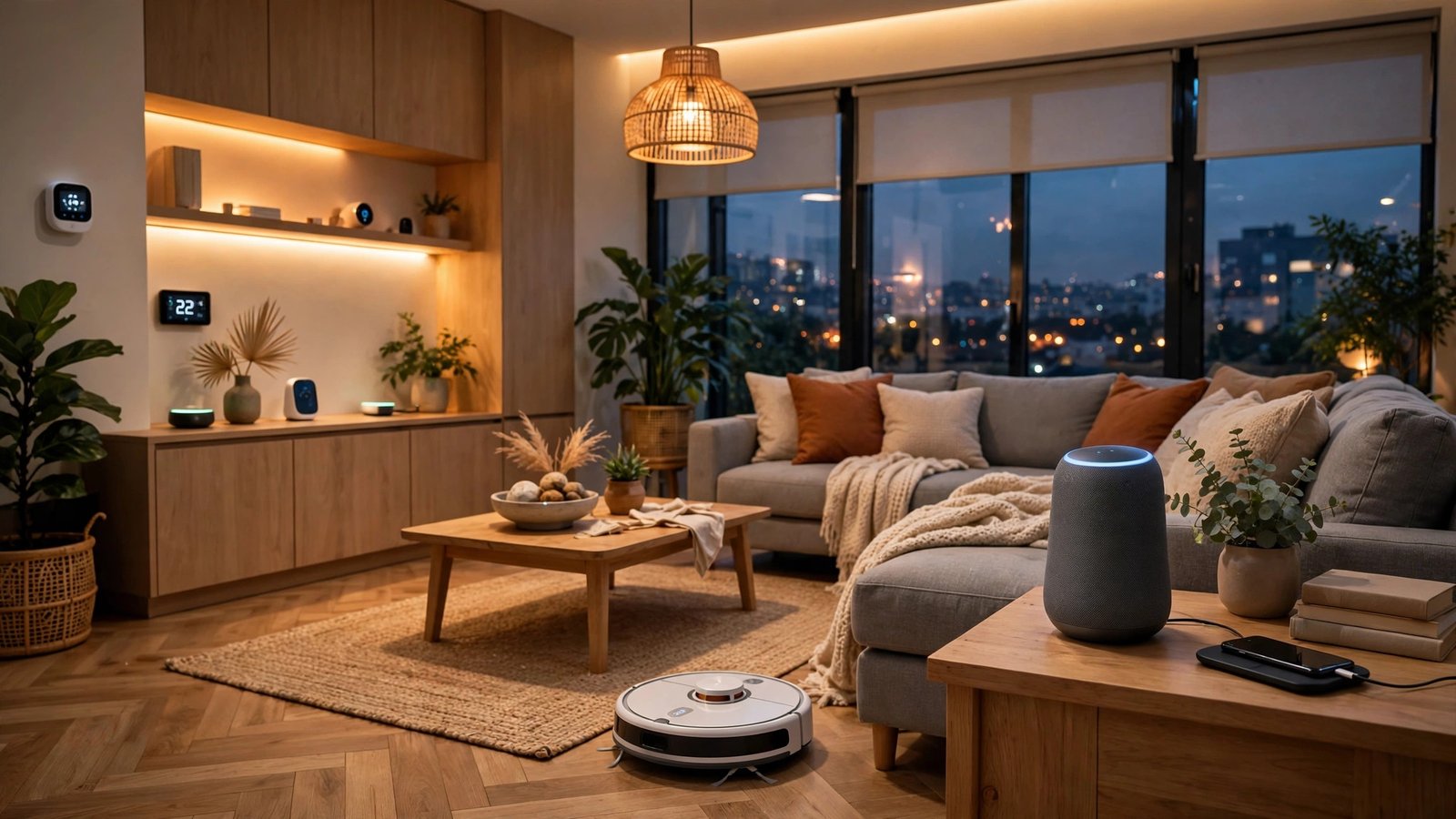
Walk into an electronics store today and everything seems to have “AI” in its name. AI air fryers, AI robot vacuums, AI doorbells — the list keeps growing. But which AI gadgets for a smart home are genuinely useful, and which are just marketing hype?
This guide cuts through the noise with practical picks that real owners love in 2026.
What Makes a Gadget “AI-Powered”?
True AI gadgets do more than follow simple rules. They learn from your behavior and improve over time. For example:
- A smart thermostat learns your schedule and adjusts heating automatically
- A robot vacuum maps your home and avoids new obstacles
- A security camera distinguishes between a person, a pet, and a passing car
If a gadget just has an app but never learns anything, the “AI” label is mostly marketing.
The Best AI Gadgets Worth Buying in 2026
1. Smart Speakers with Better Assistants
The humble smart speaker has grown up. New models understand follow-up questions, handle multiple languages in one household, and control far more devices than before. They remain the cheapest entry point into a smart home.
Best for: Beginners who want voice control of music, timers, and basic smart devices.
2. AI Robot Vacuums
This is the category with the biggest leap. Modern robot vacuums:
- Build detailed maps of every room
- Avoid shoes, cables, and pet messes using cameras
- Empty themselves into a base station
- Mop as well as vacuum
Best for: Pet owners and busy families. The time saved is real.
3. Smart Displays
A smart display combines a speaker with a screen — perfect for video calls, following recipes, or checking who is at the door. Newer models double as digital photo frames and home control hubs.
Best for: Kitchens and home offices.
4. AI Security Cameras and Doorbells
Today’s cameras can tell the difference between a delivery driver, a neighbor’s cat, and a stranger loitering. You get alerts that matter instead of 50 notifications about moving shadows.
Best for: Anyone who wants peace of mind without subscription overload — look for local storage options.
5. Smart Thermostats
A learning thermostat studies your routine for a week, then starts adjusting automatically. Many users report 10 to 15 percent lower energy bills. In 2026, models also factor in weather forecasts and electricity prices.
Best for: Homeowners looking to cut energy costs.
6. AI-Powered Lighting
Smart bulbs have moved beyond simple on/off. They now:
- Adjust color temperature through the day to support sleep
- Simulate sunrise for gentler wake-ups
- React to music or movies for immersive experiences
Best for: Creating atmosphere and supporting healthy sleep habits.
Gadgets to Think Twice About
- AI fridges with screens: Fun for a week, then most people stop using the screen.
- Single-purpose AI kitchen tools: An “AI” toaster rarely justifies double the price.
- Cheap no-name smart plugs: Security matters. Stick to reputable brands.
How to Build Your Smart Home Step by Step
- Start with a smart speaker or display — it becomes your control center
- Add lighting — the most satisfying daily upgrade
- Get a robot vacuum — the biggest time saver
- Install a smart thermostat — cuts bills year-round
- Add security — cameras and doorbells once the basics work well
Privacy and Security Tips
- Change default passwords on every device
- Enable two-factor authentication where available
- Keep firmware updated
- Review what data each gadget collects
- Use a guest Wi-Fi network for smart home devices if your router supports it
Key Takeaways
- The most worthwhile AI gadgets in 2026 are robot vacuums, smart thermostats, learning security cameras, and improved smart speakers.
- Skip gimmicks like AI fridges with screens — invest where AI truly helps.
- Build gradually, keep everything in one ecosystem, and protect your privacy.
Frequently Asked Questions
Do AI smart home gadgets work without internet? Basic functions of some devices work offline, but most AI features need an internet connection.
Are smart home gadgets safe from hackers? Reputable brands with regular updates are reasonably safe. The biggest risks come from cheap unknown brands and weak passwords.
How much does it cost to start a smart home in 2026? A solid starter setup costs under $150. Add a robot vacuum ($300+) and thermostat ($130+) as your budget allows.