
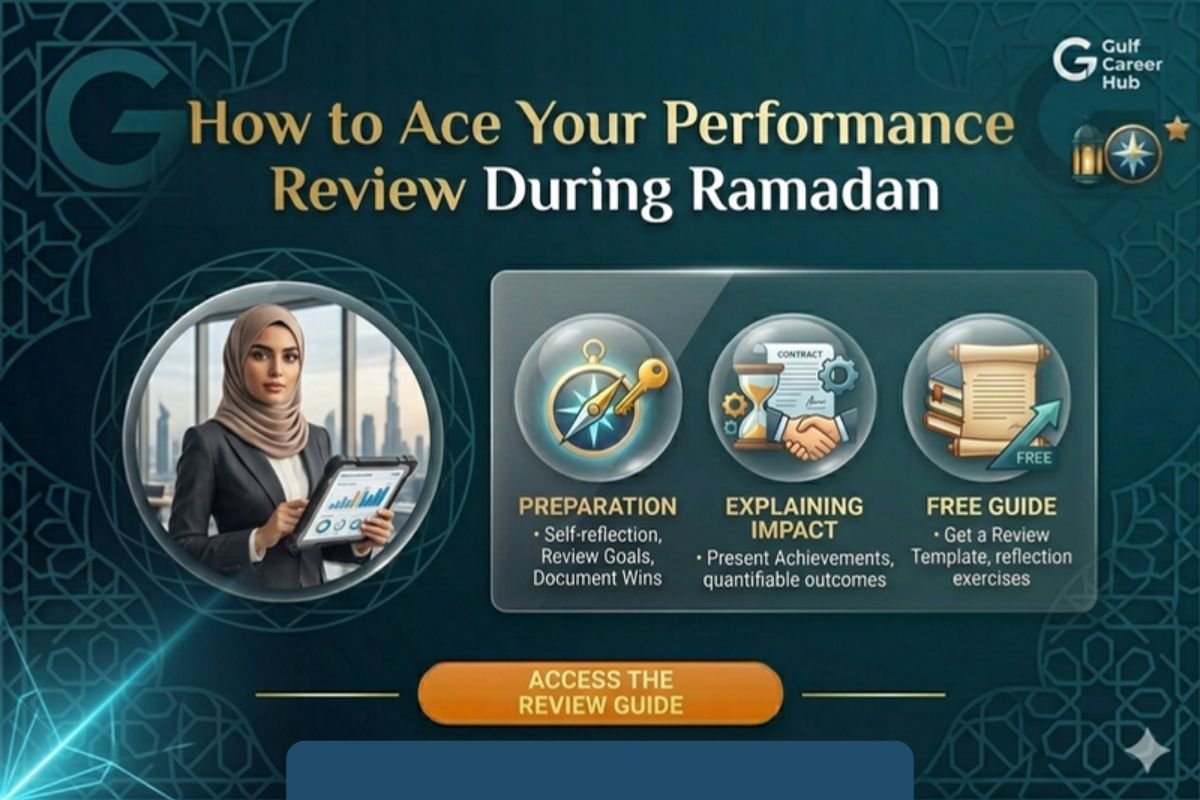
Ramadan is a time of spiritual reflection, discipline, and community. But if your annual or quarterly performance review falls during this holy month, you might feel a unique pressure. How do you showcase your best self when you’re fasting, running on fewer hours of sleep, and navigating shifted priorities?
Understanding the Challenge: Why Ramadan Reviews Require Strategy
Before diving into tactics, let’s acknowledge the realities of a performance review during Ramadan:
Energy Fluctuations Are Normal. Fasting affects energy levels, especially in the afternoon. Your body is adapting to a new rhythm of hydration and nutrition. This is natural and manageable with planning.
Sleep Patterns Shift. Late-night prayers (Taraweeh) and early pre-dawn meals (Suhoor) mean your sleep architecture changes. This can impact focus and cognitive performance if not managed intentionally .
Work Hours May Be Reduced. Many companies in the Gulf region implement shorter working hours during Ramadan, which can compress the time available for deep work and preparation .
Spiritual Priorities Are Heightened. Ramadan is first and foremost a month of worship. Your review preparation must honor your spiritual commitments, not compete with them.
The key is working with your body’s rhythms, not against them. Let’s explore how.
Step 1: Timing Is Everything—Schedule Strategically
When your review is scheduled during Ramadan, timing can significantly impact your performance.
Request a Morning Slot
Energy levels are typically highest in the morning, shortly after Suhoor. Your blood glucose is stable, and you haven’t yet gone many hours without hydration. Aim to schedule your review within the first 2-3 hours of your workday .
Avoid Late Afternoon
By late afternoon, energy naturally dips. If possible, request a time before 2 PM. If your company offers flexible scheduling, take advantage of it.
Consider Post-Iftar Options
Some organizations accommodate evening reviews after Iftar, when hydration and energy are restored. This can be an excellent option if your manager is open to non-traditional hours .
Pro Tip: When requesting a specific time, frame it professionally: “I want to ensure I’m at my best for our discussion. Would it be possible to schedule our review in the morning?”
Step 2: Prepare Thoroughly—But Smartly
Preparation is the foundation of any successful review. During Ramadan, you need to prepare in a way that conserves energy while maximizing impact.
Use the “Start, Stop, Continue” Framework
This simple but powerful framework helps you structure your self-assessment clearly. It’s also a method used for spiritual reflection during Ramadan, making it a natural fit .
Start: What should I begin doing that will bring me closer to my goals?
- New skills to develop
- Projects to initiate
- Behaviors to adopt (e.g., speaking up in meetings)
Stop: What am I doing that’s not yielding results?
- Inefficient habits
- Time-wasters
- Micromanaging tendencies
Continue: What am I doing right that I should maintain?
- Strengths to leverage
- Positive behaviors to reinforce
- Successful project elements
This framework keeps your preparation focused and actionable.
Gather Evidence in Advance
Collecting accomplishments while fasting can be draining if you leave it to the last minute. Instead:
- Keep a running “win list” throughout the year
- Dedicate 20-30 minutes after Suhoor (when you’re fresh) to compile examples
- Use bullet points with specific metrics: “Increased X by Y% through Z initiative”
Practice Your Talking Points
Run through your key messages aloud. This builds confidence and helps you communicate clearly even if energy dips during the actual review.
Step 3: Manage Your Energy on Review Day
The day of your review requires intentional energy management.
Optimize Suhoor
Your pre-dawn meal is critical. Focus on:
- Complex carbohydrates (oats, whole grains) for sustained energy
- Protein to maintain satiety
- Hydration—drink plenty of water
- Avoid excessive salt and caffeine, which can dehydrate you
Protect Your Morning
In the hours before your review:
- Avoid non-essential meetings
- Limit email and Slack checking
- Conserve mental energy for the main event
Arrive Early and Centered
Arrive at the meeting room (or log into the video call) a few minutes early. Take slow, deep breaths. Remind yourself that you are prepared and capable.
During the Review
- Speak slowly and deliberately. This projects confidence and gives you thinking time.
- Pause before answering. It’s okay to take a moment to gather your thoughts.
- Ask for clarification if needed. This shows engagement, not weakness.
Step 4: Showcase Your Ramadan Strengths
Here’s a perspective shift: Ramadan isn’t a handicap to overcome. The qualities you’re actively cultivating are professional superpowers.
Highlight Your Discipline
Fasting requires immense self-control. This same discipline translates to meeting deadlines, managing projects, and maintaining focus.
Demonstrate Patience
Ramadan teaches patience in the face of physical challenge. In the workplace, this means handling difficult situations with grace and maintaining composure under pressure.
Show Empathy and Teamwork
Ramadan emphasizes community and caring for others. Use examples in your review that highlight how you’ve supported colleagues, collaborated effectively, or contributed to team morale.
Reference Your Adaptability
Navigating work while fasting proves you can adapt to changing circumstances—a quality every employer values.
Step 5: Communicate Openly with Your Manager
Your manager may not fully understand what Ramadan entails. A brief, professional conversation can make a significant difference.
What to Share
- “I’m observing Ramadan, which involves fasting from dawn to sunset. I’m fully committed to my work, but my energy may be best in the mornings.”
- “If you notice me working different hours or taking brief breaks, this is related to my religious observance.”
What to Ask
- “Would it be possible to schedule our review in the morning when I’m at my best?”
- “If deadlines shift, I appreciate advance notice so I can plan my energy accordingly.”
Most managers appreciate this transparency and will work with you.
Step 6: Use Feedback for Post-Ramadan Growth
Performance reviews aren’t just about the past—they’re about the future. Use the feedback you receive to plan your post-Ramadan professional development.
Identify Skill Gaps
If your review highlights areas for growth, consider using the remaining days of Ramadan to:
- Research online courses
- Identify mentors
- Set learning goals for Shawwal (the month after Ramadan)
Plan for the Hiring Surge
Many companies ramp up recruitment after Eid to fill pending vacancies . If your review touches on career progression or internal opportunities, be ready to act quickly once Ramadan ends.
Set Faith-Aligned Career Goals
Use the spiritual clarity of Ramadan to reflect on whether your career aligns with your values. Are you in a role that allows you to contribute positively? Does your work environment respect your beliefs? These questions can guide your long-term planning .
The Manager’s Role: Supporting Team Members During Ramadan
If you’re a manager reading this, you have a unique opportunity to support your team members observing Ramadan.
Best Practices for Managers
- Check in proactively. Ask team members what support looks like for them .
- Adjust meeting schedules. Avoid late afternoon meetings when possible.
- Respect prayer breaks. Ensure team members have time and space for prayers.
- Model sustainable pacing. When managers adjust behavior, teams follow .
- Celebrate Eid. A simple “Eid Mubarak” goes a long way in building inclusion .
What to Avoid
- Don’t ask individuals if they’re fasting—this can be personal .
- Don’t schedule mandatory iftar-time events.
- Don’t assume reduced output; focus on outcomes, not hours.
A Sample Preparation Timeline
Use this timeline to stay on track without last-minute stress.
1-2 Weeks Before Ramadan
- Confirm review date and request optimal timing
- Begin tracking accomplishments and metrics
- Set spiritual and professional goals for the month
First Week of Ramadan
- Establish your new daily rhythm
- Complete your “Start, Stop, Continue” self-assessment
- Draft key talking points
Week Before Review
- Finalize your achievement list
- Practice aloud once or twice
- Prepare questions for your manager
Day Before Review
- Review your materials briefly
- Plan Suhoor for sustained energy
- Get as much rest as possible
Review Day
- Optimize Suhoor
- Arrive early and centered
- Speak confidently and listen actively
After the Review: Celebrate and Plan Forward
Once your review is complete, take time to:
- Reflect on what went well and what you’d do differently
- Document any action items or goals discussed
- Rest—you’ve earned it
- Prepare for Eid and the post-Ramadan professional season
Final Thoughts: You’ve Got This
Your performance review during Ramadan is an opportunity to demonstrate that you can excel under unique circumstances. The discipline, patience, and focus you’re cultivating this month are the same qualities that drive long-term career success.
Remember: Ramadan is not a barrier to your professional growth. It’s a framework for becoming a more centered, intentional, and resilient professional. When you walk into that review room, you’re bringing the best of both your spiritual and professional selves.
Wishing you a productive review, continued growth, and a blessed Ramadan.
Ramadan Mubarak.
Frequently Asked Questions (FAQs)
1. Should I tell my manager I’m fasting before my performance review?
Yes, a brief, professional conversation can be helpful. You don’t need to go into detail, but letting your manager know that you’re observing Ramadan and may prefer a morning review time shows proactive communication. Most managers appreciate this transparency and will accommodate reasonable requests .
2. How do I handle low energy during the review itself?
Preparation is your best defense. When you know your material thoroughly, you can deliver it even when energy dips. During the review, speak slowly, pause when needed, and don’t be afraid to take a sip of water (if you’re not fasting that day) or ask for a moment to collect your thoughts. Morning reviews also help avoid afternoon fatigue .
3. What if my review is scheduled late in the day?
4. Can I use Ramadan as an excuse for underperformance in my review?
No. While Ramadan presents challenges, professional standards remain. The key is to plan ahead, manage your energy, and deliver on your commitments. If you’re concerned about specific deadlines, discuss them with your manager early rather than waiting for the review. Focus on outcomes, not obstacles .