Gulf Careers Hub

From Entry to Executive: Your Complete Career Growth Blueprint for Saudi Arabia (2026)

Gulf Career Advice 2026 | From Entry Level to Executive in Saudi Arabia

If you’re building a career in Saudi Arabia right now, you’ve picked the right moment. The numbers don’t lie: unemployment has dropped to 2.8%, female employment has tripled since 2015, and over half of all Saudis in work are now in the private sector . This isn’t just a job market—it’s a national transformation happening in real time.

Part 1: The Entry Level – Starting Strong in 2026

The Landscape

Good news first: companies are hiring. 66% of employers increased headcount in 2025, and demand for fresh talent remains high . But here’s what’s different: employers are pickier. They want graduates who can contribute from day one, not just “potential.”

What Entry-Level Looks Like Now

Entry-level salaries for Saudi nationals vary by sector, but here’s a realistic benchmark:

Role TypeMonthly Salary (SAR)Notes
Engineering (Water/Process)10,000 – 12,000Recent posting from Riyadh 
Business/Finance Grad8,000 – 12,000Varies by company size
Sales/Marketing (Entry)5,500+Minimum for Saudization quota 

Three Rules for Entry-Level Success in 2026

1. Target the right sectors. Technology, healthcare, finance, and logistics are where the growth is . Construction hiring has slowed; AI and data science hiring is up 26-39% year-on-year .

2. Get comfortable with AI. 66% of professionals already use AI tools regularly at work . If you’re not experimenting with ChatGPT, Copilot, or data analytics tools, you’re falling behind before you start.

3. Understand Saudization—and use it. The new 60% Saudization targets for sales and marketing roles (effective April 2026) mean companies are actively looking for Saudi talent . This isn’t just compliance; it’s your leverage.

Real Example: JLL recently advertised an “Early Career Opportunity” in Riyadh specifically for KSA nationals. No prior experience required—just a degree, strong communication skills, and willingness to learn . These roles exist. You just need to find them.

Part 2: Mid-Career – The Critical Climb

Where Most People Get Stuck

Mid-career in Saudi Arabia (typically 5-12 years experience) is where careers either accelerate or stall. The challenge? Employers prioritize direct industry experience . A project manager from banking will struggle to move into healthcare. A construction salesperson won’t easily switch to pharma.

But here’s the reality: the old model of staying in one silo for 20 years is dying. With automation and AI reshaping industries, career transitions are becoming necessary—and possible.

What Actually Works for Career Switchers

1. Focus on transferable skills, not job titles.
You weren’t “just” a salesperson. You managed client relationships, negotiated contracts, forecasted revenue. Those skills translate across industries. Reframe your CV to highlight what you accomplished, not where you did it.

2. Certifications open doors.
Gulf employers value credentials. A PMP for project management, a CFA for finance, a Certified Digital Marketing Professional—these signal commitment and bridge the experience gap .

3. Internal mobility is your secret weapon.
Already employed? Check internal vacancies first. Switching departments within the same company means keeping your visa, your tenure, and your network .

4. Network with purpose, not desperation.
In the Gulf, relationships matter. Attend industry events, connect on LinkedIn, ask for informational interviews. Don’t ask for a job; ask for advice. The job often follows.

Salary Reality Check:

LevelAnnual Salary (SAR)Notes
Mid-Level Manager180,000 – 300,000Varies by sector
Senior Manager/Associate Director300,000 – 450,000Strong digital/AI skills command premiums 

Part 3: Executive Level – Leading the Transformation

This is Not Your Father’s Executive Market

Here’s the most important thing to understand about executive hiring in Saudi Arabia right now: it’s a seller’s market.

79% of employers are actively recruiting for permanent positions. C-suite compensation has reached world-class levels: CEOs in the SAR 850,000 – 1.4 million range, Executive Directors between SAR 300,000 – 550,000+ . Some CFOs in PIF-backed entities now earn more than their global counterparts.

But here’s what’s really changed: the best Saudi executives aren’t chasing money anymore.

What Actually Closes the Deal

According to executive search specialists who’ve placed hundreds of Saudi leaders, the winning packages include :

Non-Negotiables:

  • Competitive base salary (benchmarked globally, not just locally)
  • Performance bonus tied to measurable impact
  • Comprehensive family benefits (education, healthcare)

Differentiators:

  • Executive education opportunities (top-tier MBA programmes)
  • Board observation or committee participation
  • Clarity on the role’s strategic importance to Vision 2030
  • A genuine leadership mandate, not a figurehead position

The Mindset Shift

“Saudi executives aren’t short of options,” says one veteran headhunter. “What makes them move isn’t just money—it’s the opportunity to shape their country’s future at a pivotal moment in history.” 

If you’re targeting executive roles, your narrative must reflect this. You’re not looking for a job. You’re looking for impact.

Skills That Command Premiums in 2026:

Skill AreaWhy It Matters
Digital TransformationEvery organisation is modernising
AI Strategy & ImplementationNot just using AI—leading AI adoption
Sustainability & ESGAligned with Saudi Green Initiative
Bilingual LeadershipArabic fluency + global business English
Giga-Project ExperienceNEOM, Red Sea, Diriyah—these are career-defining

The Big Picture: What Success Looks Like in 2026

Here’s what the data tells us:

  • The private sector is now the engine of Saudi careers. 52.8% of Saudis work in private companies—a structural shift from the public sector dependency of the past .
  • Women’s career trajectories have transformed. From 11% employment in 2015 to 32% in 2025. Among working mothers: from 8% to 45% .
  • Youth unemployment (NEET) has halved from 40% to 25% .
  • AI fluency is now baseline. 66% of professionals use AI regularly. Those who don’t will be left behind .

This isn’t just statistics. It’s proof that the barriers that once limited careers in Saudi Arabia are falling.

Final Advice: Your Career is a Strategy, Not a Hope

If you’re entry-level: be intentional. Target growth sectors, build AI skills, and don’t wait for perfect opportunities—create them.

If you’re mid-career: be adaptable. Your experience is valuable, but your willingness to learn is more valuable. Certify your skills, network strategically, and don’t fear a lateral move if it opens a better long-term path.

If you’re executive-level: be purposeful. You have the rare privilege of leading during one of history’s most ambitious national transformations. Choose roles where you can build, not just manage.

The Saudi job market in 2026 is the most dynamic it has ever been. The opportunities are real. The question is: what will you do with yours?


Frequently Asked Questions

1. What are the best entry-level jobs in Saudi Arabia right now?

Technology, finance, healthcare, logistics, and specialised engineering (water treatment, process engineering) are hiring actively. Entry-level process engineers in Riyadh are seeing offers between SAR 10,000–12,000 . Sales and marketing roles are also expanding due to new Saudization targets .

2. How do I switch careers in the Gulf without starting over?

Focus on transferable skills, earn a recognised certification in your target field, and consider internal transfers if you’re already employed. Networking with purpose—seeking advice, not just jobs—is critical .

3. What salary should I expect as a mid-career professional in KSA?

Mid-level managers typically earn SAR 180,000–300,000 annually. Senior managers and associate directors range from SAR 300,000–450,000+. Professionals with AI, digital transformation, or sustainability skills command significant premiums .

4. Is it realistic to aim for an executive role as a Saudi national?

Absolutely—and companies are actively competing for Saudi leadership talent. With 79% of employers hiring and a limited pool of transformation-ready Saudi executives, the demand far exceeds supply. Compensation now matches global benchmarks .

5. How important is AI skills for career growth in 2026?

Non-negotiable. 66% of professionals already use AI regularly at work. Employers are prioritising candidates who can deploy AI for productivity, creativity, and decision-making. This applies at every career level 
Saudi Arabia Jobs 2026: New Hiring for Foreign Workers Announced

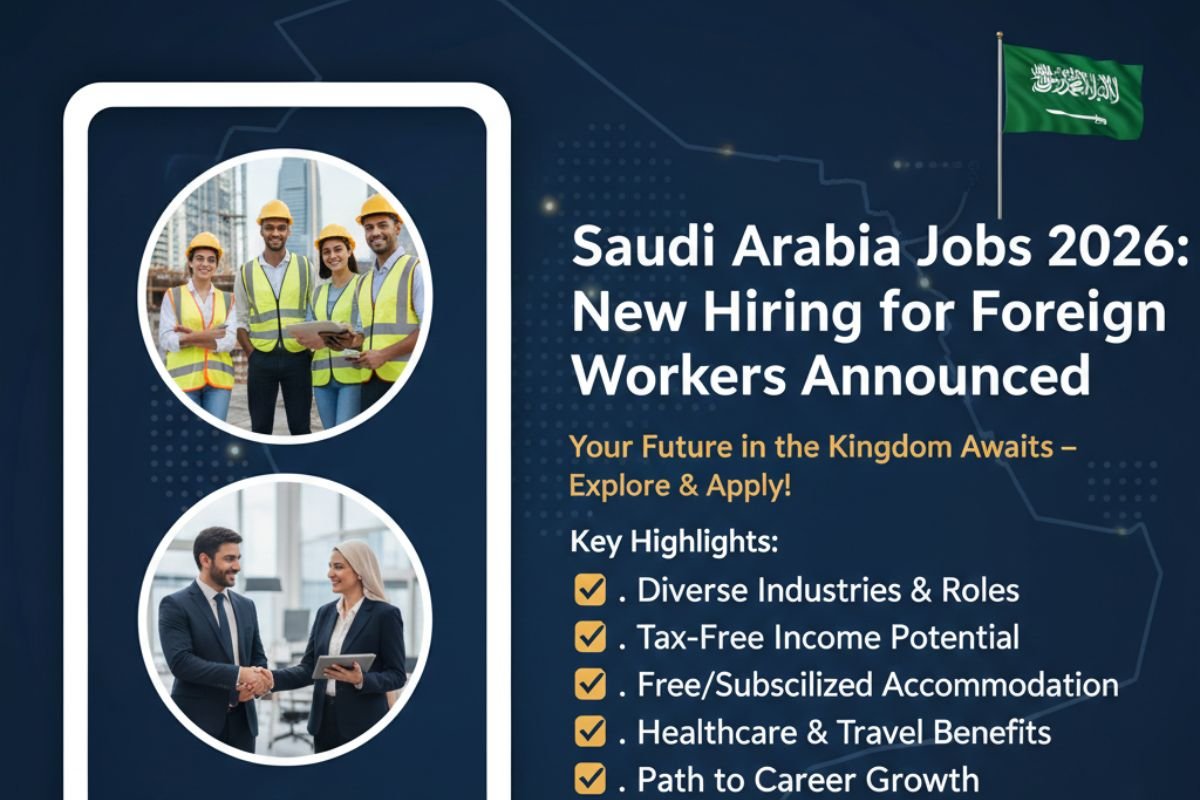
Saudi Arabia Jobs 2026: New Hiring for Foreign Workers Announced

The 2026 Hiring Boom: Your Gateway to a Saudi Career

As Saudi Arabia charges forward with the execution phase of its historic Vision 2030, the job market for foreign workers is entering its most dynamic and opportunity-rich period yet. For skilled professionals worldwide, 2026 represents a pivotal window—a time of new hiring announcements for foreign workers across groundbreaking sectors. The Kingdom is not just building infrastructure; it’s building entire new industries, and it needs global talent to make it happen.

Why 2026 is a Landmark Year for Foreign Workers in Saudi Arabia

Vision 2030 has moved decisively from blueprint to construction site. The giga-projects that once captivated the world’s imagination are now active, multi-billion-dollar employment engines. This transition creates two simultaneous demands:

  1. Construction & Engineering Expertise: To physically build NEOM, The Red Sea Project, Qiddiya, and Diriyah.
  2. Operational & Knowledge Talent: To run the advanced hospitals, resorts, tech hubs, and financial centers within these projects once they open.

The Saudi government and private sector are launching coordinated international recruitment campaigns to meet this unprecedented need, making 2026 the prime time for foreign professionals to explore Saudi careers.

Top Sectors Announcing New Hiring for Foreign Workers

1. Giga-Project Construction & Engineering

The physical creation of Vision 2030’s landmarks requires tens of thousands of skilled professionals.

  • New Hiring Focus: Senior Project Managers, Construction Directors, Civil & Structural Engineers, MEP (Mechanical, Electrical, Plumbing) Managers, BIM (Building Information Modeling) Specialists, and Quantity Surveyors.
  • Key Projects: NEOM (including THE LINE, Oxagon), The Red Sea GlobalQiddiya (entertainment city), Diriyah GateRoshn (housing).
  • Action Point: Target the websites of the principal developers and the international engineering consultancies and contractors they have partnered with (e.g., Bechtel, Jacobs, Dar Al-Handasah, Samsung C&T).

2. Tourism, Hospitality & Leisure

With the first destinations opening and a target of 100 million annual visitors by 2030, the need for world-class hospitality talent is exploding.

  • New Hiring Focus: Hotel General Managers, Executive Chefs, Guest Experience Directors, Tourism Development Managers, Luxury Retail Managers, and Entertainment Facility Operators.
  • Key Projects: The Red Sea (luxury resorts), Sindalah Island (NEOM), Diriyah cultural hub, Riyadh Season events.
  • Action Point: Monitor career pages of global hotel chains (Four Seasons, Ritz-Carlton, Marriott) expanding in KSA, and the operating companies of the new destinations.

3. Technology & Digital Transformation

Saudi Arabia is building a digital economy from the ground up, with a national priority on tech sovereignty.

  • New Hiring Focus: Cybersecurity Architects, AI/Machine Learning Engineers, Data Scientists, Cloud Solutions Architects, Software Developers, and IoT Specialists.
  • Key Hubs: NEOM’s advanced tech ecosystem, Riyadh’s tech valley, King Abdullah Financial District (KAFD).
  • Action Point: Explore opportunities with the Ministry of Communications and IT (MCIT), Saudi tech startups (many funded by PIF), and global tech giants (Google, Microsoft, Oracle) establishing major regional hubs in Riyadh.

4. Advanced Manufacturing & Logistics

As part of diversifying beyond oil, Saudi Arabia is becoming a regional hub for advanced industries and global supply chains.

  • New Hiring Focus: Industrial Engineers, Supply Chain Directors, Automotive Engineers (especially for EV), Renewable Energy Manufacturing Experts, and Quality Assurance Managers.
  • Key Initiatives: EV manufacturing (Ceer, Lucid Motors factory), Solar panel productionPharmaceuticals manufacturingLogistics hubs at major ports.
  • Action Point: Research companies within Economic Cities (like KAEC) and Special Economic Zones, and major logistics firms (Saudi Logistics, Aramco’s supply chain).

5. Healthcare & Life Sciences

A rapidly growing population and a drive for medical tourism excellence are fueling massive investment in healthcare infrastructure.

  • New Hiring Focus: Consultant Physicians (all specializations), Specialist Surgeons, Registered Nurses (ICU, Oncology, Cardiology), Hospital Administrators, and Medical Researchers.
  • Key Locations: Expansion of King Faisal Specialist Hospital, new medical complexes in NEOM and The Red Sea, and network growth of private hospital groups.
  • Action Point: Check career portals of the Saudi Ministry of Health, major private hospital operators (Dr. Sulaiman Al-Habib, Dallah Health), and new specialist medical centers.

The 2026 Saudi Work Visa & Iqama Process: Streamlined for Talent

Understanding the process is key to a smooth transition. It remains employer-sponsored but is increasingly digital.

  1. The Job Offer: You must secure a formal offer from a Saudi company licensed to hire expatriates.
  2. Work Permit (Qiwa): Your employer obtains your work permit through the Ministry of Human Resources’ Qiwa platform.
  3. Document Attestation (Critical): You must attest your educational and professional certificates via your home country’s Foreign Ministry and the Saudi EmbassyStart this immediately upon receiving an offer.
  4. Entry Visa & Arrival: Your employer issues an entry visa. You enter KSA and undergo a medical test.
  5. Iqama (Residence Permit): Your employer processes your Iqama, your official ID card for living and working.

New for 2026: Continued digitization on the Absher and Qiwa platforms makes tracking your application easier. For top-tier talent, the Premium Residency (Privileged Iqama) offers a long-term, more flexible residency option.

How to Find These New Job Announcements: A Proactive Strategy

  1. Target Company Career Pages Directly: This is the most effective method. Identify the top 20-30 companies leading projects in your field and monitor their “Careers” sections weekly.
  2. Leverage LinkedIn Strategically:
    • Set your location to “Riyadh, Saudi Arabia” or “NEOM”.
    • Follow key companies and giga-projects.
    • Use hashtags like #HiringSaudi, #JobsKSA, #Vision2030Careers.
    • Turn on “Open to Work” for recruiters.
  3. Partner with Specialized Recruitment Agencies: Reputable international agencies (e.g., Michael Page, Hays, Brunel, Charterhouse) have dedicated desks for Saudi Arabia and receive direct mandates from companies.
  4. Attend Virtual Saudi Career Fairs: Many are organized by the Saudi Ministry of Human Resources and major chambers of commerce to connect global talent with employers.

Preparing for the Saudi Job Market: Cultural & Professional Readiness

  • Cultural Adaptability: Demonstrate respect for local customs and a willingness to adapt. Research Saudi business etiquette.
  • Long-Term Mindset: Employers seek candidates committed to the long-term journey of Vision 2030. Express this in interviews.
  • Competitive Compensation: Packages include tax-free salary, housing allowance, education for children, annual flights, and healthcare. Negotiate your total package.

Conclusion: Your Role in Building the Future

The new hiring for foreign workers announced for 2026 is more than just job vacancies; it’s an invitation to participate in one of the most ambitious national transformations of the 21st century. For engineers, tech experts, healthcare professionals, and hospitality leaders, Saudi Arabia offers a unique combination of career-defining projects, competitive remuneration, and the chance to leave a tangible legacy.

By strategically targeting the high-growth sectors, meticulously preparing your application, and understanding the streamlined visa process, you can successfully secure your place in the exciting next chapter of Saudi Arabia’s story. The future is being built now—ensure you have a role in it.


5 Frequently Asked Questions (FAQs)

1. Is it true that Saudization (Nitaqat) will reduce jobs for foreigners in 2026?

Saudization prioritizes Saudi nationals in the workforce, but it actually increases demand for specialized foreign expertise. The policy focuses on replacing expatriates in more general or administrative roles. For the highly skilled, niche positions required to build and operate giga-projects and new industries, foreign hiring is not just ongoing—it’s accelerating. Your specialized skill is the key.

2. What is the minimum salary required to get a Saudi work visa in 2026?

There is no universal minimum salary set by the government for a standard work visa. However, the ability to sponsor family members (spouse and children) requires meeting a minimum salary threshold, which is often set by the employer’s corporate policy (typically around SAR 3,500 – 5,000 per month). For the Premium Residency Visa, specific higher salary brackets (e.g., SAR 14,000-16,000+ per month) are one of the eligibility criteria.

3. Can I switch jobs (change my sponsor) in Saudi Arabia easily in 2026?

Labor reforms have made job mobility easier. Under current law, you can transfer your sponsorship to a new employer after completing one year of service with your current sponsor. The process requires following specific procedures, and a No Objection Certificate (NOC) from your current employer, while no longer always mandatory, can still facilitate a smoother transfer. Always check the latest regulations on the Ministry of Human Resources website.

4. Do I need to speak Arabic to work in Saudi Arabia?

For most professional, private-sector roles in international companies or giga-projects, Arabic is not a requirement. The business language is often English. However, learning basic Arabic is highly recommended and respected, as it greatly aids daily life, cultural integration, and can be a significant advantage for client-facing roles or positions within government-linked entities.

5. Are there opportunities for remote work with Saudi companies?

While the predominant model is on-site due to the project-based nature of the work, remote and hybrid roles are emerging, particularly in the technology, consulting, and education sectors. Many global consultancies working with Saudi entities have teams serving the account from abroad. However, for roles directly involved in the core operations, construction, or management within the Kingdom, physical presence is generally required.

Gulf Job Market Trends 2026: Your Must-Read Guide to Opportunities & Strategies

Gulf Job Market Trends 2026

The Gulf Cooperation Council (GCC) job market is undergoing a historic transformation. Driven by ambitious national visions like Saudi Arabia’s Vision 2030 and the UAE’s “We the UAE 2031,” the region is rapidly diversifying its economy beyond oil, creating a dynamic and evolving landscape for job seekers. For professionals worldwide, understanding these 2026 trends is not just useful—it’s essential for making strategic career decisions and securing high-value opportunities.

This comprehensive analysis breaks down the most critical Gulf job market trends for 2026, highlighting the sectors set to boom, the skills in highest demand, and the strategic shifts every candidate must understand.

The Macro-Driver: Economic Diversification in Overdrive

The overarching theme is accelerated economic diversification. Hydrocarbon wealth is now the fuel for building parallel, sustainable economies. This strategic pivot is creating two parallel labor markets: one for national talent (through Saudization, Emiratization, etc.) and another for expatriates with highly specialized, niche skills needed to build these new sectors.

Top 6 Gulf Job Market Trends for 2026

1. The “Niche Expat” & Knowledge Transfer Imperative

  • The Trend: Blanket expatriate hiring is over. The new era is about targeted, skill-specific recruitment. Gulf countries are willing to pay a premium for expatriates who possess critical expertise not yet available locally—especially in emerging technologies and complex project leadership—with the explicit or implicit expectation of knowledge transfer to the national workforce.
  • Impact on Job Seekers: Generic applications will fail. Success requires demonstrating unique, verifiable expertise in a high-demand niche. Your value proposition must be: “I have the specific skill you cannot find locally to build X, and I can help develop your team.”

2. Technology & Digital Sovereignty as a National Priority

Every GCC nation has a “Smart” or digital transformation agenda. This isn’t just IT support; it’s about building national technological capability.

  • Hot Sectors: Artificial Intelligence (AI) & Machine Learning, Cybersecurity, FinTech, Blockchain, and Smart City Infrastructure.
  • In-Demand Roles: AI Ethics Specialists, Cybersecurity Architects, Cloud Migration Experts, Data Scientists, IoT Solution Engineers.
  • Key Projects/Hubs: Saudi Arabia’s NEOM and The Line, UAE’s Dubai Metaverse Strategy and Abu Dhabi’s Hub71, Qatar’s TASMU Smart Qatar.

3. The Green Economy & Sustainable Development Goes Mainstream

With COP28 setting a precedent and net-zero targets (UAE 2050, KSA 2060), sustainability is no longer a buzzword but a core economic pillar.

  • Hot Sectors: Renewable Energy (Solar, Hydrogen, Wind), Green Construction & ESG Consulting, Sustainable Urban Planning, Water Conservation Technology, Electric Vehicle (EV) Infrastructure.
  • In-Demand Roles: Renewable Energy Project Managers, ESG Reporting Analysts, Green Hydrogen Engineers, Sustainability Consultants, Carbon Markets Specialists.

4. Giga-Projects Shift from Planning to Execution & Operations

The massive infrastructure projects announced in the early 2020s are now moving into intense construction and initial operational phases.

  • Hot Sectors: Construction, Advanced Logistics, Operational Technology (OT), Tourism & Hospitality Operations, Mega-Event Planning.
  • In-Demand Roles: Construction Project Directors, BIM Managers, Operational Readiness Managers, Tourism Cluster Managers, Logistics & Supply Chain Directors.
  • Location Focus: Demand will be hyper-concentrated in Saudi Arabia (Riyadh, NEOM, Red Sea, Qiddiya) and specific developments in the UAE and Qatar.

5. The Evolving Nature of Work: Remote, Hybrid, and Talent Ecosystems

  • Remote Work for Global Talent: Gulf companies, especially in tech and services, are increasingly open to hiring specialized global talent on a remote basis, paying competitive salaries without relocation. This widens the talent pool for employers and creates opportunities for those not wishing to relocate.
  • Hybrid Models: Within the Gulf, hybrid work is becoming standardized for roles that allow it, particularly in multinational corporations and knowledge-based industries.
  • Rise of the “Gig” Expert: Short-term, high-value consulting contracts for experts to solve specific problems (e.g., a 6-month contract to set up a cybersecurity framework) are becoming more common.

6. Increased Focus on Quality of Life & Long-Term Residency

To attract and retain top global talent, Gulf states are enhancing livability and offering pathways to long-term ties.

  • Trend: Expansion of long-term residency visas and “Golden” visas (e.g., UAE Golden Visa, Saudi Premium Residency). This offers stability for expats and signals a shift from transient workforces to established talent communities.
  • Impact: This makes the Gulf a more attractive long-term career destination, not just a short-term earning post. It also increases competition for roles, as professionals think about settling down.

Sector-Specific Outlook for 2026

  • Healthcare: Sustained high demand. Focus on specialized care, medical tourism, and digital health. Need for senior consultants, specialized nurses, and healthcare tech integrators.
  • Finance: Evolution towards FinTech and ESG finance. Traditional banking roles face pressure from localization, but high demand exists for fintech developers, Shariah-compliant fintech experts, and sustainable finance specialists.
  • Education & Training: Booming. Demand for educators in STEM, vocational trainers for new industries (e.g., green tech, tourism), and corporate trainers to upskill the national workforce.
  • Logistics & Supply Chain: Strategic growth. As the Gulf positions itself as a global logistics hub connecting East and West, demand for supply chain digitization experts, port managers, and air cargo specialists will rise.

Strategic Advice for Job Seekers in the 2026 Gulf Market

  1. Upskill for Priority Sectors: Invest now in certifications for AI, cybersecurity (CISSP, CISM), ESG reporting (GRI, SASB), or advanced project management (PMP, PMI-SP). This directly translates to higher earning potential.
  2. Build a “Gulf-Relevant” Digital Profile: Your LinkedIn profile must scream your niche expertise. Publish articles or posts on trends like smart cities or renewable energy in the Middle East. Follow and engage with key Gulf companies and thought leaders.
  3. Master the Art of the Niche Application: Tailor your CV and cover letter to tell a specific story: “Here is my proven expertise in [High-Demand Niche], and here is how it directly applies to your project/goal at [Gulf Company].”
  4. Be Open to Regional Hubs: While Dubai remains a powerhouse, Riyadh is the undisputed epicenter of job growth for 2026. Be prepared to explore opportunities in emerging hubs like NEOM, Abu Dhabi, and Doha.
  5. Understand the Total Package: Negotiate beyond the base salary. In a competitive market, housing, education allowances, annual flights, and performance bonuses are key differentiators. Understand the value of long-term residency options.

Conclusion: A Market of Quality Over Quantity

The Gulf job market in 2026 is characterized by selectivity, specialization, and strategic growth. The era of easy, generalist expat roles is fading, replaced by a dynamic market that richly rewards professionals with future-proof skills aligned with the region’s transformative goals.

For the prepared candidate, this represents an unparalleled opportunity. By aligning your skills with the trends of technology, sustainability, and giga-project execution, you position yourself not as just another job seeker, but as a critical partner in building the future of one of the world’s most ambitious regions. The 2026 Gulf market isn’t just hiring workers; it’s recruiting architects of the future.

Frequently Asked Questions (FAQs)

1. Is the Gulf job market still good for expats in 2026?

Yes, but it has fundamentally changed. It is exceptionally strong for highly skilled, specialized expats in technology, engineering, healthcare, and advanced project management. It is increasingly challenging for those in generic administrative, HR, or support roles, as these are major focuses of nationalization (localization) programs.

2. Which Gulf country will have the most job opportunities in 2026?

Saudi Arabia is projected to have the highest volume and growth rate of new job opportunities, driven directly by the execution phase of its giga-projects under Vision 2030. The UAE will remain a stable, diversified hub with strong opportunities in tech, finance, and business services. Qatar and Oman will have targeted growth in energy, logistics, and tourism.

3. Are salaries in the Gulf still competitive internationally in 2026?

For in-demand roles, yes—and often leading. To attract the niche global talent they need, Gulf employers are offering very competitive, tax-free salary packages that can exceed Western net salaries for comparable roles, especially when combined with benefits like housing and education allowances. Salaries for common roles may see more modest growth.

4. How important are professional certifications for Gulf jobs in 2026?

Extremely important. In a market prioritizing proven specialization, certifications (PMP, CFA, CISSP, AWS/Azure certifications, Six Sigma) act as a trusted, third-party validation of your skills. They are often explicitly listed in job requirements and can be the deciding factor between two candidates, justifying a higher salary offer.

5. What is the biggest mistake job seekers make in the 2026 Gulf market?

The biggest mistake is using a generic, non-targeted approach from past years. Sending out hundreds of identical CVs, failing to research the specific strategic goals of target companies, and not highlighting niche, future-focused skills will lead to a low response rate. Success requires a sniper-like approach, not a shotgun approach.

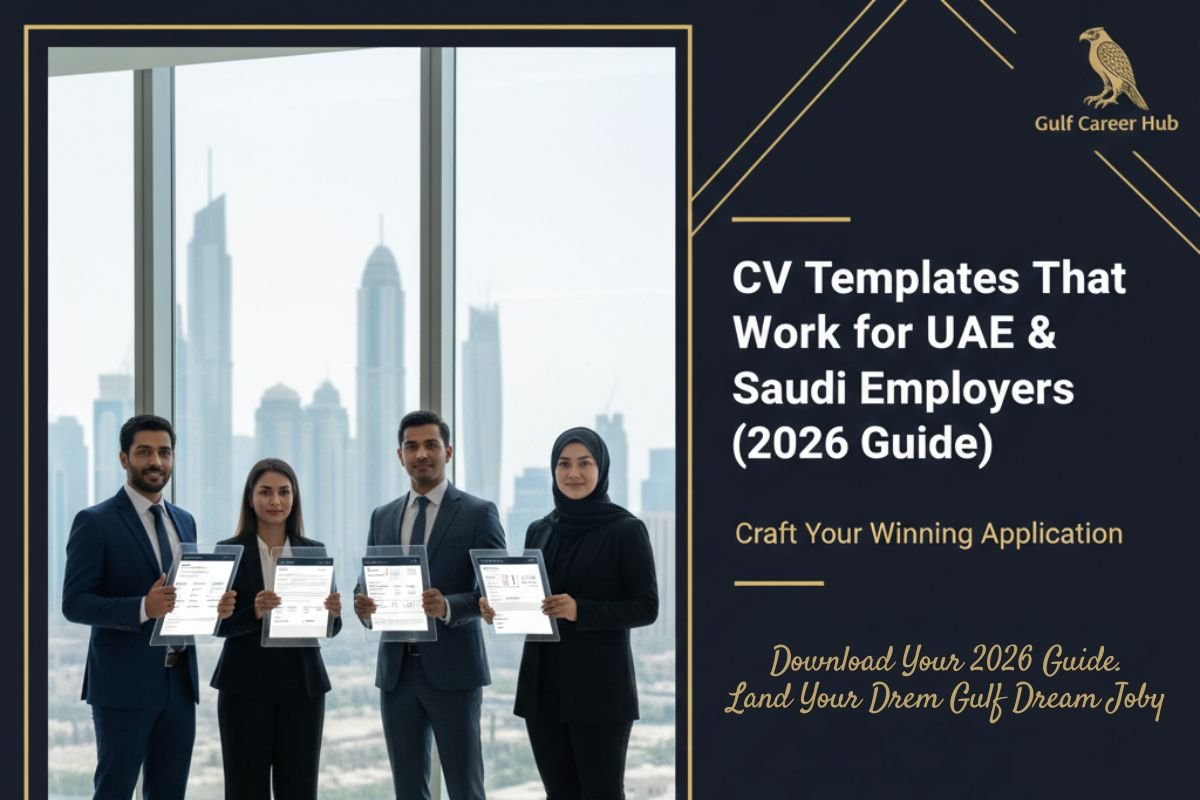
CV Templates That Work for UAE & Saudi Employers (2026 Guide)

CV Templates That Work for UAE & Saudi Employers

Securing your dream job in the dynamic Gulf Cooperation Council (GCC) starts with a single, crucial document: your CV. For hiring managers in the United Arab Emirates and the Kingdom of Saudi Arabia, your CV is more than a career summary—it’s a first impression, a test of your attention to local detail, and a demonstration of your professional adaptability. Using generic international CV templates can immediately disadvantage you. This 2026 guide provides the definitive blueprint for creating a winning UAE CV and Saudi CV, complete with ready-to-use templates, cultural nuances, and strategies to make your application rank at the top of the pile.

Why GCC CVs Are Different: Understanding the Local Hiring Mindset

The Gulf job market is unique, blending global business practices with strong local culture. Your CV must bridge this gap. Recruiters in the UAE and Saudi Arabia often look for:

  • Clarity & Directness: Information must be easy to find quickly. Recruiters may spend only 6-8 seconds on an initial scan.
  • Professional Formality: A polished, conservative, and professional tone is preferred over overly creative or casual formats.
  • Relevance is King: Highlighting experience relevant to the Middle East or similar markets (e.g., project scale, clientele) is a significant advantage.
  • Structured Hierarchy: Clearly defined career progression and achievements within respected organizations are highly valued.
  • Compliance & Completeness: Including details sometimes omitted elsewhere—like nationality, visa status, age, and a professional photo—is often expected.

The Foundational Rules for Your 2026 Gulf CV

Before diving into templates, master these non-negotiable rules:

  1. Length: 2 pages maximum. Be concise and impactful.
  2. Format: Save and send as a PDF (unless specified otherwise) to preserve formatting. Use a clean, professional font like Calibri, Arial, or Helvetica (10-12 pt).
  3. Photo: Include a professional headshot in formal business attire with a plain, light background. This is a standard expectation.
  4. Personal Details: Prominently include:
    • Full Name
    • Nationality
    • Current Location & Visa Status (e.g., “UAE Residence Visa,” “Available for Sponsorship”)
    • Contact Information (Phone with country code, Email, LinkedIn Profile URL)
  5. Keyword Optimization: Integrate keywords from the job description naturally. For roles in the Gulf, terms like “budget management,” “stakeholder management,” “compliance,” “multicultural team,” and specific software/standards relevant to your industry are crucial.
  6. Achievement-Oriented Language: Use bullet points and action verbs (Led, Managed, Increased, Reduced, Implemented). Quantify results with numbers, percentages, and timeframes.

Template 1: The Modern Professional (Ideal for UAE – Private Sector)

This template is clean, strategic, and perfect for sectors like Finance, Tech, Consulting, Hospitality, and Marketing in Dubai, Abu Dhabi, etc.

[Your Name]
[Professional Headshot]
[Your Phone Number] | [Your Email] | [LinkedIn Profile URL] | [Nationality] | [Current Location/Visa Status]

Professional Summary
*A concise 3-4 line pitch. Example: “Results-driven Project Manager with 8+ years of experience delivering large-scale infrastructure projects in the Middle East. Proven expertise in managing multicultural teams and budgets exceeding $5M. Seeking to leverage my expertise in cost control and stakeholder engagement to contribute to the success of [Target Company Name].”*

Core Competencies
A keyword-rich bulleted list. Example:

  • Project Lifecycle Management (PMI/PRINCE2)
  • Budgeting & Cost Control
  • Client & Stakeholder Relations (GCC Experience)
  • Team Leadership & Development
  • Risk Management & Mitigation
  • ERP Software (SAP Oracle)
  • Fluent in English & Arabic

Professional Experience
Project Manager | ABC Construction, Dubai, UAE | Jan 2021 – Present

  • Led a team of 15+ engineers and contractors on the $12M “Marina Towers” project, delivering it 3 weeks ahead of schedule, resulting in a 5% cost saving.
  • Managed all client communications with a major government entity, ensuring 100% compliance with UAE regulations and securing a contract extension.
  • Implemented a new safety protocol that reduced onsite incidents by 40% year-over-year.

Senior Engineer | DEF Engineering, Riyadh, KSA | Jun 2017 – Dec 2020

  • Played a key role in the design phase of [Project Name], a mixed-use development, coordinating with 3 international consultancies.

Education
Master of Business Administration (MBA) | [University Name, Country] | Year
Bachelor of Science in Civil Engineering | [University Name, Country] | Year

Certifications & Training

  • Project Management Professional (PMP)® – Project Management Institute
  • UAE Health & Safety Officer Certification

Languages

  • English (Fluent)
  • Arabic (Native)
  • [Other Language] (Proficient)

Template 2: The Executive & Saudi Market Format

This structure is highly effective for senior roles and is particularly well-suited for the formal business environment of Saudi Arabia. It places strong emphasis on leadership and strategic impact.

[Your Name]
[Professional Headshot]
[Phone] | [Email] | [LinkedIn] | [Nationality] | [Location/Visa]

Career Profile
*A more comprehensive 5-6 line summary focusing on leadership and vision. Example: “Strategic Finance Director with over 15 years of experience steering financial performance for multinational corporations across the GCC. Expertise in financial restructuring, IPO preparation, and navigating the regulatory landscape of Saudi Arabia’s Vision 2030 initiatives. A proven leader in building high-performing teams to drive profitability and sustainable growth.”*

Key Achievements
*A dedicated section to highlight 3-4 major, quantified career wins.*

  • Spearheaded the financial due diligence and integration for a $50M acquisition in Jeddah, achieving synergy savings of 15% within 18 months.
  • Directed the IPO readiness program for a family-owned conglomerate, successfully listing on the Tadawul (Saudi Stock Exchange).
  • Built and led a finance team of 25+ professionals, improving reporting efficiency by 30% through digital transformation.

Professional Experience
Finance Director | Major Industrial Group, Riyadh, KSA | 2020 – Present

  • Provide full strategic financial leadership for a portfolio of 3 subsidiaries with a combined annual revenue of $300M.
  • Report directly to the Group CEO and board, advising on all financial matters, investments, and risk management.
  • Cultivate key relationships with Saudi banks, investors, and government authorities (e.g., MISA, ZATCA).

Group Financial Controller | Manufacturing Group, Dubai, UAE | *2015 – 2020*

  • [Additional details…]

Education & Qualifications

  • Chartered Financial Analyst (CFA) – CFA Institute
  • Master of Finance – [University Name]
  • Bachelor of Commerce (Accounting) – [University Name]

Skills & Expertise
[Same structured bullet-point approach as Template 1]

Languages
[Include proficiency levels]

Cultural & Sector-Specific Tailoring for 2026

  • For Saudi Arabia: Emphasize any experience with Vision 2030 projects (giga-projects like NEOM, Red Sea Global, Qiddiya), familiarity with Saudi labor laws (Qiwa), and respect for local business hierarchy. Mentioning “seeking a long-term role to contribute to the Kingdom’s growth” can be favorable.
  • For Government & Semi-Government Roles (UAE & KSA): Be meticulous about dates, attestations, and certificates. A more detailed CV is acceptable. Highlight experience with government procedures, compliance, and serving public-sector clients.
  • For Fresh Graduates (including those who pursued studies in Saudi Arabia): Lead with a strong Education section. Highlight your degree, any Saudi scholarships you were awarded (this demonstrates merit), relevant coursework, projects, and internships. Include a section on “Academic Projects” or “University Leadership.”

The Digital Edge: LinkedIn & ATS Compliance

  1. LinkedIn Sync: Your LinkedIn profile must be a 100% match to your CV in terms of dates, titles, and key points. Add rich media and recommendations.
  2. Beat the Bots (ATS): Use standard section headings (e.g., “Work Experience,” “Education”), avoid graphics/text boxes, and incorporate relevant keywords naturally to pass Applicant Tracking Systems used by large firms.

5 Essential FAQs for Your Gulf CV

1. Should I write my CV in British or American English?

British English is generally preferred in the UAE and Saudi Arabia (e.g., “Curriculum Vitae,” “Centre,” “Organisation”). However, consistency is key. Choose one style and stick to it throughout the document.

2. Is it mandatory to include my age, marital status, and nationality?

While not always legally required, it is a strongly expected practice in the Gulf. Including your nationality and current visa status helps recruiters immediately assess sponsorship requirements. Age and marital status are commonly included in the personal details section.

3. How do I handle gaps in my employment history?

Be prepared to explain any significant gap. You can address it briefly in your cover letter or, on the CV, use years instead of months for employment dates (e.g., 2020 – 2022). If the gap was for upskilling, mention a relevant course or certification.

4. What’s the biggest mistake applicants make on a Gulf CV?

Submitting a one-size-fits-all, non-tailored CV. The most successful candidates adapt their CV for each application, mirroring the job description’s language and highlighting the most relevant experience for that specific role and company.

5. I studied in Saudi Arabia on a scholarship. How should I highlight this?

In your Education section, list your degree and university. In bold or brackets, you can add: “Awarded the [Name of Saudi Scholarship] for Academic Excellence.” This immediately signals merit, your familiarity with the region, and is a strong positive differentiator for employers.

Post a Job Opening

Fill in the details below. Your job posting will be reviewed by our team.

Basic Information

Specify years of experience required

Location & Salary

Qualifications & Skills

Specify educational requirements
Separate skills with commas

Company Details

Job Details

Contact Information