Gulf Careers Hub

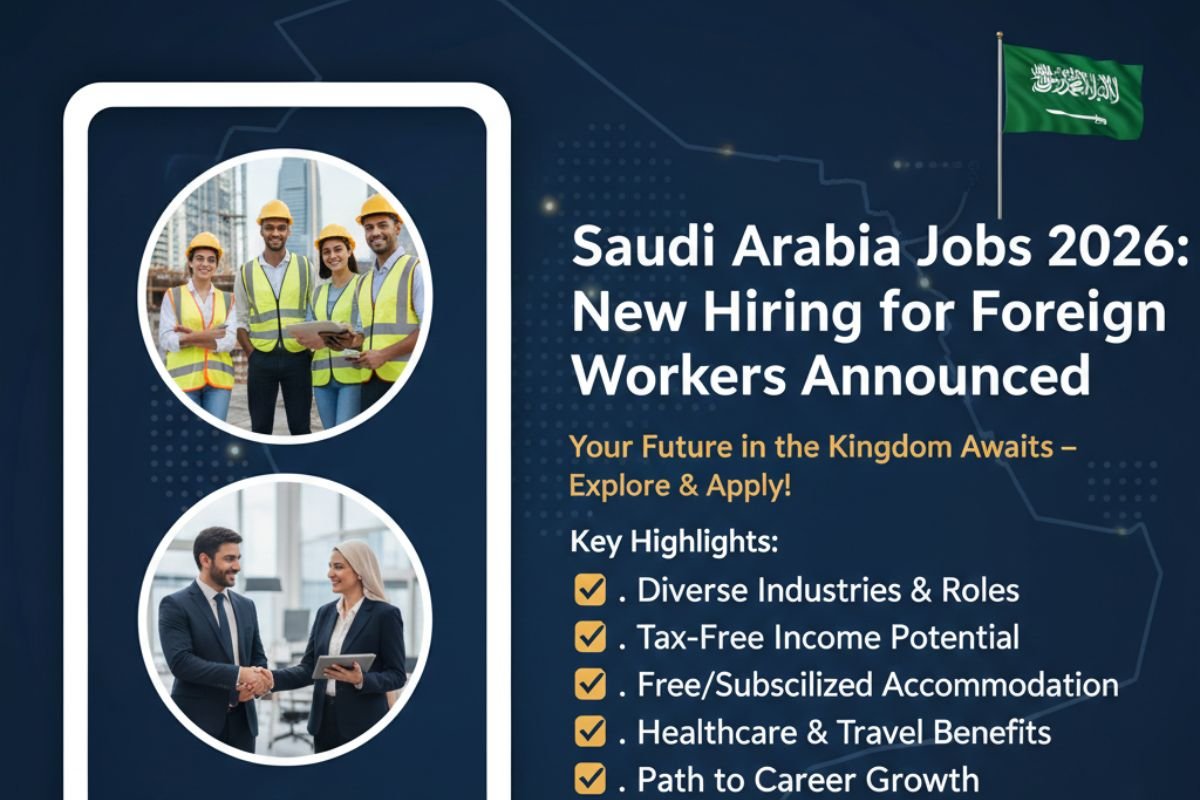
Saudi Arabia Jobs 2026: New Hiring for Foreign Workers Announced

Saudi Arabia Jobs 2026: New Hiring for Foreign Workers Announced

The 2026 Hiring Boom: Your Gateway to a Saudi Career

As Saudi Arabia charges forward with the execution phase of its historic Vision 2030, the job market for foreign workers is entering its most dynamic and opportunity-rich period yet. For skilled professionals worldwide, 2026 represents a pivotal window—a time of new hiring announcements for foreign workers across groundbreaking sectors. The Kingdom is not just building infrastructure; it’s building entire new industries, and it needs global talent to make it happen.

Why 2026 is a Landmark Year for Foreign Workers in Saudi Arabia

Vision 2030 has moved decisively from blueprint to construction site. The giga-projects that once captivated the world’s imagination are now active, multi-billion-dollar employment engines. This transition creates two simultaneous demands:

  1. Construction & Engineering Expertise: To physically build NEOM, The Red Sea Project, Qiddiya, and Diriyah.
  2. Operational & Knowledge Talent: To run the advanced hospitals, resorts, tech hubs, and financial centers within these projects once they open.

The Saudi government and private sector are launching coordinated international recruitment campaigns to meet this unprecedented need, making 2026 the prime time for foreign professionals to explore Saudi careers.

Top Sectors Announcing New Hiring for Foreign Workers

1. Giga-Project Construction & Engineering

The physical creation of Vision 2030’s landmarks requires tens of thousands of skilled professionals.

  • New Hiring Focus: Senior Project Managers, Construction Directors, Civil & Structural Engineers, MEP (Mechanical, Electrical, Plumbing) Managers, BIM (Building Information Modeling) Specialists, and Quantity Surveyors.
  • Key Projects: NEOM (including THE LINE, Oxagon), The Red Sea GlobalQiddiya (entertainment city), Diriyah GateRoshn (housing).
  • Action Point: Target the websites of the principal developers and the international engineering consultancies and contractors they have partnered with (e.g., Bechtel, Jacobs, Dar Al-Handasah, Samsung C&T).

2. Tourism, Hospitality & Leisure

With the first destinations opening and a target of 100 million annual visitors by 2030, the need for world-class hospitality talent is exploding.

  • New Hiring Focus: Hotel General Managers, Executive Chefs, Guest Experience Directors, Tourism Development Managers, Luxury Retail Managers, and Entertainment Facility Operators.
  • Key Projects: The Red Sea (luxury resorts), Sindalah Island (NEOM), Diriyah cultural hub, Riyadh Season events.
  • Action Point: Monitor career pages of global hotel chains (Four Seasons, Ritz-Carlton, Marriott) expanding in KSA, and the operating companies of the new destinations.

3. Technology & Digital Transformation

Saudi Arabia is building a digital economy from the ground up, with a national priority on tech sovereignty.

  • New Hiring Focus: Cybersecurity Architects, AI/Machine Learning Engineers, Data Scientists, Cloud Solutions Architects, Software Developers, and IoT Specialists.
  • Key Hubs: NEOM’s advanced tech ecosystem, Riyadh’s tech valley, King Abdullah Financial District (KAFD).
  • Action Point: Explore opportunities with the Ministry of Communications and IT (MCIT), Saudi tech startups (many funded by PIF), and global tech giants (Google, Microsoft, Oracle) establishing major regional hubs in Riyadh.

4. Advanced Manufacturing & Logistics

As part of diversifying beyond oil, Saudi Arabia is becoming a regional hub for advanced industries and global supply chains.

  • New Hiring Focus: Industrial Engineers, Supply Chain Directors, Automotive Engineers (especially for EV), Renewable Energy Manufacturing Experts, and Quality Assurance Managers.
  • Key Initiatives: EV manufacturing (Ceer, Lucid Motors factory), Solar panel productionPharmaceuticals manufacturingLogistics hubs at major ports.
  • Action Point: Research companies within Economic Cities (like KAEC) and Special Economic Zones, and major logistics firms (Saudi Logistics, Aramco’s supply chain).

5. Healthcare & Life Sciences

A rapidly growing population and a drive for medical tourism excellence are fueling massive investment in healthcare infrastructure.

  • New Hiring Focus: Consultant Physicians (all specializations), Specialist Surgeons, Registered Nurses (ICU, Oncology, Cardiology), Hospital Administrators, and Medical Researchers.
  • Key Locations: Expansion of King Faisal Specialist Hospital, new medical complexes in NEOM and The Red Sea, and network growth of private hospital groups.
  • Action Point: Check career portals of the Saudi Ministry of Health, major private hospital operators (Dr. Sulaiman Al-Habib, Dallah Health), and new specialist medical centers.

The 2026 Saudi Work Visa & Iqama Process: Streamlined for Talent

Understanding the process is key to a smooth transition. It remains employer-sponsored but is increasingly digital.

  1. The Job Offer: You must secure a formal offer from a Saudi company licensed to hire expatriates.
  2. Work Permit (Qiwa): Your employer obtains your work permit through the Ministry of Human Resources’ Qiwa platform.
  3. Document Attestation (Critical): You must attest your educational and professional certificates via your home country’s Foreign Ministry and the Saudi EmbassyStart this immediately upon receiving an offer.
  4. Entry Visa & Arrival: Your employer issues an entry visa. You enter KSA and undergo a medical test.
  5. Iqama (Residence Permit): Your employer processes your Iqama, your official ID card for living and working.

New for 2026: Continued digitization on the Absher and Qiwa platforms makes tracking your application easier. For top-tier talent, the Premium Residency (Privileged Iqama) offers a long-term, more flexible residency option.

How to Find These New Job Announcements: A Proactive Strategy

  1. Target Company Career Pages Directly: This is the most effective method. Identify the top 20-30 companies leading projects in your field and monitor their “Careers” sections weekly.
  2. Leverage LinkedIn Strategically:
    • Set your location to “Riyadh, Saudi Arabia” or “NEOM”.
    • Follow key companies and giga-projects.
    • Use hashtags like #HiringSaudi, #JobsKSA, #Vision2030Careers.
    • Turn on “Open to Work” for recruiters.
  3. Partner with Specialized Recruitment Agencies: Reputable international agencies (e.g., Michael Page, Hays, Brunel, Charterhouse) have dedicated desks for Saudi Arabia and receive direct mandates from companies.
  4. Attend Virtual Saudi Career Fairs: Many are organized by the Saudi Ministry of Human Resources and major chambers of commerce to connect global talent with employers.

Preparing for the Saudi Job Market: Cultural & Professional Readiness

  • Cultural Adaptability: Demonstrate respect for local customs and a willingness to adapt. Research Saudi business etiquette.
  • Long-Term Mindset: Employers seek candidates committed to the long-term journey of Vision 2030. Express this in interviews.
  • Competitive Compensation: Packages include tax-free salary, housing allowance, education for children, annual flights, and healthcare. Negotiate your total package.

Conclusion: Your Role in Building the Future

The new hiring for foreign workers announced for 2026 is more than just job vacancies; it’s an invitation to participate in one of the most ambitious national transformations of the 21st century. For engineers, tech experts, healthcare professionals, and hospitality leaders, Saudi Arabia offers a unique combination of career-defining projects, competitive remuneration, and the chance to leave a tangible legacy.

By strategically targeting the high-growth sectors, meticulously preparing your application, and understanding the streamlined visa process, you can successfully secure your place in the exciting next chapter of Saudi Arabia’s story. The future is being built now—ensure you have a role in it.


5 Frequently Asked Questions (FAQs)

1. Is it true that Saudization (Nitaqat) will reduce jobs for foreigners in 2026?

Saudization prioritizes Saudi nationals in the workforce, but it actually increases demand for specialized foreign expertise. The policy focuses on replacing expatriates in more general or administrative roles. For the highly skilled, niche positions required to build and operate giga-projects and new industries, foreign hiring is not just ongoing—it’s accelerating. Your specialized skill is the key.

2. What is the minimum salary required to get a Saudi work visa in 2026?

There is no universal minimum salary set by the government for a standard work visa. However, the ability to sponsor family members (spouse and children) requires meeting a minimum salary threshold, which is often set by the employer’s corporate policy (typically around SAR 3,500 – 5,000 per month). For the Premium Residency Visa, specific higher salary brackets (e.g., SAR 14,000-16,000+ per month) are one of the eligibility criteria.

3. Can I switch jobs (change my sponsor) in Saudi Arabia easily in 2026?

Labor reforms have made job mobility easier. Under current law, you can transfer your sponsorship to a new employer after completing one year of service with your current sponsor. The process requires following specific procedures, and a No Objection Certificate (NOC) from your current employer, while no longer always mandatory, can still facilitate a smoother transfer. Always check the latest regulations on the Ministry of Human Resources website.

4. Do I need to speak Arabic to work in Saudi Arabia?

For most professional, private-sector roles in international companies or giga-projects, Arabic is not a requirement. The business language is often English. However, learning basic Arabic is highly recommended and respected, as it greatly aids daily life, cultural integration, and can be a significant advantage for client-facing roles or positions within government-linked entities.

5. Are there opportunities for remote work with Saudi companies?

While the predominant model is on-site due to the project-based nature of the work, remote and hybrid roles are emerging, particularly in the technology, consulting, and education sectors. Many global consultancies working with Saudi entities have teams serving the account from abroad. However, for roles directly involved in the core operations, construction, or management within the Kingdom, physical presence is generally required.

Saudi Arabia Jobs With Free Accommodation 2026:

Saudi Jobs with Free Accommodation 2026 | Apply for Premium Benefits

For thousands of global professionals, a career in Saudi Arabia represents more than just a job—it’s a transformative life experience offering financial growth, cultural immersion, and unparalleled professional development. A cornerstone of this attractive package is often the provision of free accommodation, a significant benefit that boosts disposable income and reduces relocation stress. As Saudi Vision 2030 accelerates into 2026, the demand for skilled international talent is soaring, accompanied by generous employment packages. This comprehensive guide will navigate the lucrative landscape of Saudi jobs with free accommodation and explore the extensive benefits you can expect in 2026.

Understanding the Saudi Arabian Job Market in 2026

Saudi Arabia’s economy is undergoing a historic transformation. Driven by Crown Prince Mohammed bin Salman’s Vision 2030, the Kingdom is aggressively diversifying away from oil dependency. This ambitious blueprint is fueling massive investments in:

  • Giga-Projects: NEOM, The Red Sea Project, Qiddiya, and Diriyah Gate.
  • Sectors: Renewable Energy, Tourism & Hospitality, Technology (AI, IoT), Healthcare, Financial Services, Logistics, and Advanced Manufacturing.

This economic boom translates into a voracious appetite for talent. The government’s Saudization (Nitaqat) program prioritizes Saudi nationals in the workforce, but it simultaneously creates a parallel demand for specialized international expertise to train, lead, and execute these visionary projects. For expatriates, this means high-demand roles come with highly competitive compensation packages, where free accommodation is a standard and expected benefit, especially for mid to senior-level positions.

Which Industries & Companies Offer Jobs with Free Accommodation?

While many sectors offer robust packages, the following are renowned for including free housing or a generous housing allowance as part of their employment contracts:

1. Healthcare & Medical Services:
A top priority under Vision 2030. Hospitals (like King Faisal Specialist HospitalSaudi German Health) and new medical cities constantly recruit doctors, surgeons, nurses, and medical technicians, offering free or subsidized hospital housing or compounds.

2. Construction, Engineering & Project Management:
The backbone of the giga-projects. Companies like Saudi AramcoACWA PowerSaudi Binladin Group, and international conglomerates like Bechtel and Fluor provide excellent camp-style or compound housing for engineers, project managers, architects, and site supervisors, often near project locations.

3. Education & Academia:
International schools (ISGBritish International School), and prestigious universities (KAUST – King Abdullah University of Science and TechnologyKSU) offer free on-campus housing or substantial allowances for teachers, professors, and administrators. KAUST is famous for its world-class residential community.

4. Oil, Gas & Energy:
The traditional powerhouse. Saudi Aramco is legendary for its expat benefits, including high-quality, family-friendly compounds with amenities like schools, gyms, and recreation centers. Similar packages are found with SABIC and Aramco subsidiaries.

5. Hospitality & Tourism:
With the aim to attract millions of tourists, luxury hotel chains (MarriottRotanaHilton) opening across the Kingdom often provide shared or single accommodation for managerial and front-line staff.

6. Military & Defense Contractors:
Companies like BoeingLockheed Martin, and BAE Systems providing defense services often include secure housing as part of their contracts for technical and advisory staff.

7. Information Technology & Telecom:
Tech giants (stcMobilyGoogle CloudMicrosoft) investing in Saudi’s digital transformation offer competitive packages, with housing allowances being a key component for relocated specialists.

Decoding the “Free Accommodation” Benefit: What Does It Really Mean?

The term “free accommodation” can manifest in several ways. It’s crucial to clarify this during your job offer negotiations:

  • Company-Provided Housing/Compound: Fully furnished apartments or villas within secure, gated communities. These often include utilities, maintenance, and access to pools, gyms, and retail outlets. Common with mega-corporations like Aramco and in remote project sites.
  • Housing Allowance (Or EOSB): A monthly cash allowance paid on top of your basic salary, allowing you to rent your own chosen accommodation. This offers more freedom but requires personal management of the lease.
  • Shared vs. Single Accommodation: Entry-level or certain roles may offer shared housing, while managerial positions typically warrant private units.
  • Utilities & Services: Confirm if electricity, water, internet, and municipal taxes are covered or if they are your responsibility.

Pro-Tip: Always ask for specifics. Request photos of typical accommodations, inquire about the compound amenities, and understand the location relative to your workplace.

Beyond Free Housing: The Complete Benefits Package of Saudi Jobs in 2026

A Saudi employment contract is a holistic package designed to attract and retain global talent. Beyond free accommodation, look for these key benefits:

  1. Tax-Free Income: Your basic salary is 100% tax-free, leading to significantly higher disposable income.
  2. Annual Flight Tickets: Typically, annual round-trip airfare for the employee and often for spouse and dependent children to their home country.
  3. Education Allowance: A substantial allowance for children’s tuition fees at international private schools.
  4. Transportation Allowance: A monthly car allowance or a company-provided vehicle.
  5. End-of-Service Bonus (EOSB): A legally mandated gratuity paid at the end of your contract, calculated as a percentage of your final basic salary for each year served.
  6. Comprehensive Health Insurance: High-quality medical coverage for you and your dependents, often including dental and optical.
  7. Relocation Allowance: A one-time payment to cover the costs of shipping personal effects and initial settlement.

How to Find & Apply for Saudi Jobs with Free Accommodation in 2026

1. Target the Right Job Portals:

  • Bayt.com & GulfTalent: The leading regional job boards.
  • LinkedIn: Optimize your profile with keywords like “seeking opportunities in KSA” and connect with recruiters specializing in the Middle East.
  • Company Career Pages: Direct applications on the websites of target companies (e.g., careers.aramco.comkaust.edu.sa/careers).
  • Specialized Recruitment Agencies: Work with reputable agencies like HaysCharterhouseMichael Page, and Morgan McKinley, which have dedicated Middle East desks.

2. Craft a Saudi-Friendly Application:

  • CV/Resume: Include a professional photo, nationality, visa status, and date of birth. Prominently list your specific, quantifiable achievements.
  • Cover Letter: Express your understanding of Vision 2030 and how your skills contribute to it. Explicitly state your willingness to relocate.

3. Ace the Interview & Negotiation:

  • Be prepared for video interviews across time zones.
  • Negotiate the entire package, not just the salary. Discuss housing type, education allowance amount, and flight entitlements.
  • Research standard benefits for your role, industry, and experience level.

4. The Visa Process:
Once hired, your employer will sponsor your Iqama (residence permit). The process involves medical tests, fingerprinting, and document attestation. A reputable company will guide you through every step.

Living in Saudi Arabia: A Cultural Shift

Embracing life in Saudi is part of the adventure. The society is deeply rooted in Islamic tradition and culture.

  • Cultural Respect: Adherence to local customs and laws (e.g., public decorum, dress code) is essential.
  • Quality of Life: Modern compounds offer a very comfortable Western-style lifestyle. Cities like Riyadh, Jeddah, and Al Khobar have world-class malls, restaurants, and entertainment venues.
  • A Changing Landscape: Reforms in recent years have increased social freedoms, including expanded entertainment options and eased gender-mixing regulations.

Conclusion: Your 2026 Career Opportunity Awaits in Saudi Arabia

Securing a Saudi job with free accommodation in 2026 is a strategic career move that offers financial security, professional growth, and a unique cultural experience. By targeting the right industries, leveraging the correct job platforms, and expertly negotiating your full benefits package, you can position yourself to be a part of the Kingdom’s historic transformation.

The combination of tax-free income, free housing, and premium benefits creates a savings potential unmatched in most Western countries. Start your job search today, prepare thoroughly, and take the bold step toward a rewarding future in the heart of the Middle East.


FAQs: Saudi Arabia Jobs With Free Accommodation

1. Is free accommodation really “free,” or are there hidden costs?

Generally, the company covers the rent. However, you are often responsible for personal living costs like groceries, phone bills, and sometimes utilities. Always have your contract specify what is included (water, electricity, internet).

2. Can I choose to take a housing allowance instead of company-provided accommodation?

This depends on company policy. Some offer a choice, others have a fixed provision. The allowance (or EOSB) is often calculated as a percentage of your basic salary (e.g., 25-30%). Negotiate this upfront.

3. Are these jobs with free accommodation open to all nationalities?

Yes, Saudi companies hire talent globally based on skills and experience. However, due to Saudization, some roles are reserved for Saudi nationals. The job description will usually specify if it’s open to expatriates.

4. What is the typical contract duration, and is accommodation provided during leave?

Standard contracts are for 1-3 years, renewable. Your accommodation is yours for the duration of the contract, even when you are on annual leave.

5. Can my family join me, and will the company provide accommodation for them?

Most professional roles include family status, allowing you to sponsor your spouse and children. The free accommodation provided is typically sized for your family (e.g., a 2-3 bedroom villa for a couple with kids). Always confirm “family status” in your offer.

Saudi Arabia Work Visa Requirements (Latest) 2026 – Your Definitive Guide

Saudi Work Visa Requirements

Saudi Arabia’s unprecedented economic transformation under Vision 2030 has made it a global hotspot for career opportunities. For skilled professionals, the Kingdom offers not just a job, but a chance to be part of historic projects like NEOM, The Red Sea Project, and the Qiddiya entertainment city. However, stepping into this dynamic market begins with one crucial process: obtaining a Saudi work visa.

This comprehensive guide details the latest 2026 Saudi work visa requirements and process. We’ll navigate the digital systems, required documents, and strategic steps you must take to secure your legal right to work in the Kingdom.

Understanding the Saudi Work Visa Framework

The Saudi work visa is an employer-sponsored residence permit. Your Saudi employer, known as your “Kafeel” (sponsor), is legally responsible for you and manages the majority of the application process. The system is highly centralized and digital, primarily operating through the Qiwa and Absher platforms.

Key Authorities:

  • Ministry of Human Resources and Social Development (MHRSD): Issues the initial work permit and manages labor policies.
  • Ministry of Foreign Affairs (MoFA): Authorizes the visa for issuance.
  • Saudi Embassy/Consulate: The diplomatic mission in your home country where you submit your final application.
  • Your Employer (Kafeel): The licensed Saudi entity that initiates and sponsors your visa.

Latest 2026 Saudi Work Visa Requirements: A Complete Checklist

The process is stringent and document-heavy. Preparation is non-negotiable.

A. Employer-Side Requirements (Managed by your Kafeel)

  1. Valid Commercial Registration (CR): The company must be legally registered and active in Saudi Arabia.
  2. Valid MHRSD “Qiwa” Account: The employer must be registered on the national labor platform.
  3. Proof of Saudization Compliance (Nitaqat): The company must meet its required quota of Saudi employees.
  4. Block Visa or Work Permit Approval: The employer must obtain approval from MHRSD to hire a foreign national for your specific role, proving no qualified Saudi candidate is available.

B. Employee-Side Requirements (Your Responsibility)

This is where your diligence makes the difference.

1. Core Personal Documents

  • Original Passport: Valid for a minimum of six months beyond your application date, with at least two consecutive blank visa pages.
  • Visa Application Form: Filled online via the MoFA’s Enjaz platform or the KSA Visa Portal, linked to your employer’s visa authorization number.
  • Passport-Sized Photographs: Recent, professional photos on a white background. Follow the specific Saudi embassy guidelines (often a strict gray or blue background requirement).

2. Educational & Professional Documents (ATTESTATION IS KEY)

This is the most critical and time-consuming part. All certificates must be attested via a strict “chain” process:

  • Step 1: Notarization in your home country.
  • Step 2: Attestation by your country’s Ministry of Foreign Affairs (or equivalent).
  • Step 3: Final Attestation by the Saudi Cultural Mission (for academic degrees) and the Saudi Embassy or Consulate in your home country.
  • Required Documents for Attestation:
    • Bachelor’s Degree and Higher: All university degrees and transcripts.
    • Professional Licenses/Certificates: Engineering certificates, nursing licenses, teaching credentials, etc.
    • Marriage Certificate & Children’s Birth Certificates: If you plan to sponsor your family later. Get these attested at the same time.

3. Police Clearance Certificate (PCC)

A criminal record check from your home country (and sometimes from any country you’ve lived in for the past 5+ years). It must also be attested by your Foreign Ministry and the Saudi Embassy.

4. Medical Report

A comprehensive medical check-up from an approved medical center. It must confirm you are free from:

  • HIV/AIDS
  • Tuberculosis (TB)
  • Hepatitis B & C
  • Leprosy
  • Other communicable diseases as listed
    This is often done after the visa is issued but before travel, or sometimes as a pre-arrival requirement depending on your nationality.

The Step-by-Step Visa Process Flow (2026 Update)

Phase 1: Initiation in Saudi Arabia

  1. Job Offer & Contract Signing: You receive and sign a formal Saudi employment contract. This contract must be authenticated by the Saudi Chamber of Commerce and the Ministry of Foreign Affairs in KSA.
  2. Work Permit (Block Visa) Application: Your employer applies through the Qiwa platform. Upon MHRSD approval, they receive a Work Permit number.
  3. Visa Authorization: Your employer submits the work permit to MoFA for visa authorization, receiving a unique Visa Authorization Number.

Phase 2: Application from Your Home Country

  1. Document Gathering & Attestation: YOU begin the attestation process for degrees, PCC, and family documents immediately.
  2. Medical Check (if required pre-arrival): Complete the medical at an approved center.
  3. Online Application & Embassy Submission: Using the Visa Authorization Number, you complete the online form and book an appointment at the Saudi Embassy/Consulate or an authorized Visa Application Centre (VAC). Submit all original attested documents, passport, photos, and fees.
  4. Visa Stamping: The embassy processes your application and stamps the Work Visa in your passport. This visa is typically valid for entry for 90 days.

Phase 3: Post-Arrival Formalities in Saudi Arabia

  1. Medical Test in Saudi Arabia: Within 10 days of arrival, you must undergo another medical test at an accredited Saudi health center. This includes biometric fingerprinting.
  2. Fingerprinting & Biometrics: Visit the Passport Office (Jawazat) to complete biometric registration.
  3. Issuance of Iqama (Residence Permit): After passing the medical, your employer applies for your Iqama. This is your national ID card and proof of legal residency. It includes your Unified Number.
  4. Work Permit Card: You will receive a physical Work Permit Card from MHRSD.

Key Digital Platforms You Must Know (2026)

  • Qiwa (qiwa.sa): The primary MHRSD platform for employers. You will eventually have an employee account here to access services.
  • Absher (absher.sa): The government services portal. Your employer will register you, and you will use it for Iqama services, driving license applications, and more.
  • Muqeem (muqeem.sa): The immigration portal for visa and residency services.
  • Sehhaty App: For managing medical appointments and health records.

Important Considerations for 2026

  • Family Visa Sponsorship: You can sponsor dependents (spouse, children) once you have your Iqama, provided you meet the minimum salary requirement (usually SAR 3,500-5,000 per month, as per your employer’s policy). This is a separate application.
  • The Premium Residency (Privileged Iqama): For high-net-worth individuals and specific professionals, Saudi Arabia offers a self-sponsored residency scheme with greater flexibility, but it is a separate path from the standard employer-sponsored work visa.
  • Professional Classifications: Your salary and role will determine your “professional classification” in the Saudi system, which can affect benefits and family sponsorship eligibility.
  • Digital Everything: The process is increasingly paperless. Keep digital scans of every attested document.

Common Pitfalls & How to Avoid Them

  1. Delaying Document Attestation: Start the moment you accept the job offer. This is the #1 cause of delays.
  2. Inaccurate Information: Ensure your name, date of birth, and other details are identical on your passport, degrees, and PCC. Any discrepancy will cause rejection.
  3. Using Non-Approved Medical Centers: Only use medical centers approved by the Saudi Embassy for pre-arrival tests.
  4. Ignoring Post-Arrival Deadlines: The 10-day deadline for the in-Kingdom medical test is strict.

Conclusion

The Saudi work visa process for 2026 is a rigorous but structured pathway that reflects the Kingdom’s methodical approach to welcoming global talent. While it demands significant upfront effort—particularly in document attestation—understanding the requirements and sequence removes the mystery and empowers you to move forward confidently.

Your success depends on a strong partnership with a reputable employer, meticulous attention to document details, and proactive engagement with each step. By following this guide, you transform the visa journey from a daunting hurdle into the first professional achievement of your new Saudi career.

5 Frequently Asked Questions (FAQs)

1. Can I apply for a Saudi work visa without a job offer?

No, it is impossible. The Saudi work visa is 100% employer-sponsored. You must have a signed employment contract with a licensed Saudi company (your Kafeel) to begin the process. They initiate and manage the application from their side.

2. How long does the entire Saudi work visa process take?

From job offer to receiving your Iqama, the process typically takes 2 to 4 months. The timeline varies based on: 1) Document Attestation Speed in your home country (the biggest variable), 2) Saudi embassy processing times, and 3) your employer’s efficiency. The post-arrival steps to get the Iqama take about 2-3 weeks.

3. What is the difference between the Visa, Iqama, and Work Permit?

Work Visa: The sticker in your passport allowing you to enter Saudi Arabia for employment.
Iqama: Your residency identity card issued after you arrive, proving your legal status to live and work.
Work Permit: The official authorization from the MHRSD that allows you to perform a specific job for your sponsor. You receive a physical card.

4. Can I change jobs (sponsors) in Saudi Arabia?

Yes, through a process called transfer of sponsorship. The rules have been liberalized. You generally need your current employer’s consent (a No Objection Certificate or NOC) or you must complete a specific period of service (often one year) to transfer without consent under newer labor reforms. The new employer must initiate a new visa process.

5. Do I need to translate my documents into Arabic?

ur current employer’s consent (a No Objection Certificate or NOC) or you must complete a specific period of service (often one year) to transfer without consent under newer labor reforms. The new employer must initiate a new visa process.

Urgent Hiring in Saudi Arabia – Top Job Vacancies This Week

Urgent Hiring in Saudi Arabia – Apply Now

Saudi Arabia is experiencing one of the world’s most dynamic economic transformations. Spearheaded by Vision 2030, the Kingdom is aggressively diversifying its economy, leading to unprecedented demand for skilled professionals across a wide range of sectors. This week, numerous “urgent hiring” notices have been posted by companies desperate to fill critical roles to keep pace with giga-projects, technological expansion, and national development goals.

This guide provides an overview of the Saudi job market’s most urgent hiring needs, detailing the sectors and roles that are in immediate demand. We will also outline the application process and provide crucial advice for securing these high-priority positions.

Why is Hiring So Urgent in Saudi Arabia?

Several factors are converging to create a surge in immediate hiring:

  • Giga-Project Acceleration: Projects like NEOM, The Red Sea Project, Qiddiya, and Diriyah Gate are moving from planning to active construction and operation phases, requiring thousands of professionals now.
  • Saudization with Niche Skills: While Saudization (Nitaqat) prioritizes Saudi nationals, there is an urgent need for expatriates with highly specialized, niche expertise not yet available in the local market to transfer knowledge and lead complex initiatives.
  • Economic Diversification Deadlines: Targets in sectors like tourism, renewable energy, logistics, and manufacturing create immediate staffing needs to meet operational and financial milestones.
  • Global Competition for Talent: Saudi Arabia is competing directly with other Gulf states and global markets for the same pool of top-tier engineers, tech experts, and medical professionals.

Sectors with the Most Urgent Hiring Needs (This Week)

Based on active recruitment campaigns and agency briefs, the following sectors have the highest volume of immediate vacancies.

1. Construction, Engineering & Project Management

The backbone of the physical transformation. Delays are costly, making hiring immediate.

  • Urgent Roles: Project Directors/ManagersConstruction ManagersPlanning EngineersSenior Civil/Structural EngineersMEP ManagersBIM ManagersQuantity SurveyorsHSE Managers.
  • Locations: NEOM (Tabuk), Riyadh, Jeddah, Eastern Province.
  • Why Urgent: To meet aggressive construction milestones on giga-projects and national infrastructure.

2. Healthcare & Medical Services

Massive hospital expansions and a push for medical tourism are driving demand.

  • Urgent Roles: Consultant Physicians (all specializations, especially Radiology, Cardiology, Oncology), Specialist SurgeonsRegistered Nurses (ICU, CCU, NICU, ER), Medical Lab TechnologistsHospital Administrators.
  • Locations: Major cities across all regions, including new hospital complexes in Riyadh and Jeddah.
  • Why Urgent: New facilities are opening and require full staffing to commence operations. High turnover in some roles also creates immediate gaps.

3. Technology, IT & Cybersecurity

The digital transformation of the Kingdom cannot wait.

  • Urgent Roles: Cybersecurity Analysts/ArchitectsCloud Solutions Architects (AWS, Azure, GCP), ERP Consultants (SAP, Oracle), Software Developers (Full-Stack, Mobile), Data ScientistsIT Project Managers.
  • Locations: Riyadh (Riyadh Valley), NEOM (Oxagon), Jeddah.
  • Why Urgent: Critical to protect national infrastructure and enable the operations of all other Vision 2030 projects. Skills shortages are acute.

4. Hospitality & Tourism

With new destinations opening, experienced talent is needed to launch world-class services.

  • Urgent Roles: Hotel General ManagersExecutive ChefsFood & Beverage DirectorsGuest Services ManagersTourism Development Managers.
  • Locations: The Red Sea Project, NEOM (Sindalah Island), Diriyah, AlUla.
  • Why Urgent: Pre-opening teams are being assembled for resorts and destinations scheduled to open in the near future.

5. Operations & Maintenance (O&M)

New assets (plants, buildings, infrastructure) require immediate O&M teams.

  • Urgent Roles: Facilities ManagersO&M ManagersElectrical & Mechanical Maintenance SupervisorsHVAC Specialists.
  • Locations: Nationwide, linked to newly completed projects.
  • Why Urgent: To take over and ensure the smooth operation of newly commissioned facilities.

Where to Find These Urgent Job Listings

Time is of the essence. Use these channels for immediate results:

  1. LinkedIn: The most effective platform. Set your location to “Riyadh, Saudi Arabia” or other target cities. Use keywords like “urgent hiring,” “immediate,” and “vacancy” alongside your job title. Follow major companies and recruiters.
  2. Specialist Recruitment Agencies: Agencies have direct mandates to fill roles quickly. Contact them proactively.
    • Engineering/Construction: NES Fircroft, Brunel, MPH Consulting.
    • Healthcare: ProSearch Life Sciences, Medacs Healthcare.
    • General/Corporate: Michael Page, Hays, Recruitment Holdings Ltd (RHL).
  3. Saudi Job Portals: Bayt.com and Mihnati.com feature numerous urgent postings from Saudi employers.
  4. Company Career Pages: Visit the careers section of companies leading major projects (e.g., NEOM, The Red Sea Global, Aramco, SABIC, Almarai, stc). They often list critical vacancies directly.

The Fast-Track Saudi Visa Process for Urgent Hiring

Companies with urgent needs often have dedicated PROs (Public Relations Officers) who expedite the process. Understanding it helps you prepare.

  1. Job Offer & Contract: You will receive a formal offer and an employment contract. For urgent roles, the timeframe for acceptance is often short.
  2. Work Permit (Qiwa Platform): The employer applies for your work permit (also called a block visa or mission number) through the Ministry of Human Resources’ Qiwa platform. Expedited processing can be requested.
  3. Visa Authorization (Ministry of Foreign Affairs): The employer obtains visa authorization.
  4. Document Attestation (YOU MUST ACT FAST): This is the step you control. Your educational and professional certificates, and police clearance, must be attested by:
    • Your home country’s Foreign Ministry.
    • The Saudi Embassy/Consulate in your home country.
    • Start this immediately upon offer. It is the biggest potential delay.
  5. Medical & Biometrics: You will undergo a medical test in Saudi Arabia and provide biometrics for your Iqama (residency permit).

How to Apply for Urgent Roles: A Tactical Guide

  1. Have a “Gulf-Ready” CV: It must be concise (2-3 pages), highlight achievements with numbers, and list your notice period and visa status upfront. Remove photographs and personal details.
  2. Be Available for Immediate Interviews: Urgent hiring means rapid interview cycles—often within 24-48 hours of application. Be prepared for video calls at short notice.
  3. Clarify Your Notice Period: In your application and initial screening, clearly state your current notice period (e.g., “30 days” or “Immediately available”). “Immediate availability” is a huge advantage for urgent roles.
  4. Demonstrate Relevant Experience: Tailor your application to highlight past experience on fast-paced projects, in the Middle East, or in similar large-scale environments.
  5. Follow Up Professionally: After applying via a portal, find a relevant recruiter or HR contact on LinkedIn and send a polite, concise follow-up message expressing your strong interest and immediate availability.

Important Considerations for Urgent Saudi Roles

  • Due Diligence: The urgency of a role does not mean you should skip verifying the employer. Check the company’s reputation and ensure the offer letter is official and comprehensive.
  • Compensation Negotiation: Urgent needs can sometimes give you slight leverage. However, focus on the total package: base salary, housing allowance, transportation, flights, and school fees. Ensure it’s clearly documented.
  • Realistic Timelines: Even “urgent” hiring with an expedited visa process can take 4-8 weeks from offer to arrival, primarily due to document attestation. Manage your expectations.

Conclusion: Seize the Moment

The current wave of urgent hiring in Saudi Arabia represents a unique window of opportunity for skilled professionals. The Kingdom is not just offering jobs; it’s offering a chance to be part of historic nation-building projects.

By targeting the right sectors, presenting yourself as an available and qualified candidate, and moving swiftly on the required documentation, you can position yourself to secure one of these critical roles. The projects of Vision 2030 are being built today, and they need your expertise now.

5 Frequently Asked Questions (FAQs)

1. What does “urgent hiring” typically mean in terms of a start date?

For the employer, it usually means they need someone to start within 1-3 months. For you, it means the recruitment process will move very quickly—interviews within days, an offer within a week or two, and an expectation that you can serve a short notice period (or none) with your current employer.

2. Are salaries higher for urgent positions?

Not necessarily as a rule, but there can be more negotiation leverage if you possess a niche, critical skill and can start immediately. The primary compensation is often aligned with standard market rates for the role and experience. The “urgency” is the employer’s need, not automatically a premium pay scale.

3. Can I apply for urgent jobs if I need a work visa?

Absolutely. In fact, the vast majority of these urgent roles are for expatriates requiring visa sponsorship. The employer is prepared to handle the visa process quickly. Your responsibility is to ensure your documents (degree attestation, police clearance) are in order to avoid delays.

4. Is it safe to accept a job offer from a Saudi company I don’t know?

Always conduct due diligence. Verify the company’s commercial registration (CR) number, which the employer should provide. You can check the authenticity of companies through the Saudi Ministry of Commerce website or business directories. Be wary of any offer that seems too good to be true or asks for money.

5. I see an “urgent” role but my family needs a visa. Will the company process family visas quickly?

For truly urgent roles, the initial focus is on getting you to Saudi Arabia. Family visa sponsorship (for spouse and children) typically begins after you have received your own Iqama (residency permit). The company will guide you, but family processing is usually on a standard, not expedited, timeline. Confirm the company’s family visa policy during the offer stage.

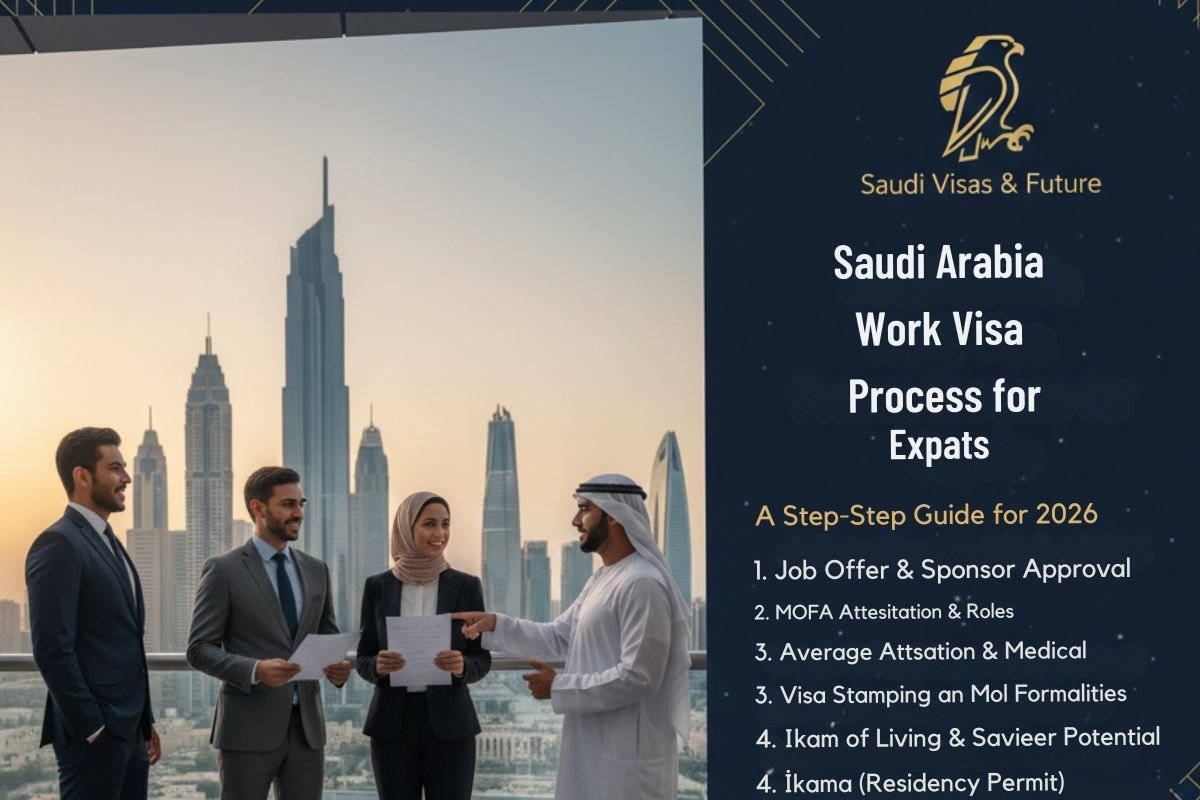
Saudi Arabia Work Visa Process for Expats: A Complete 2026 Guide

Saudi Arabia Work Visa Process for Expats

Securing a work visa for Saudi Arabia is the essential first step for expatriates aiming to build a career in the Kingdom. As Saudi Arabia accelerates its Vision 2030 transformation, opportunities for skilled professionals are expanding rapidly across sectors like construction, technology, healthcare, and tourism. However, navigating the visa process can seem complex.

This comprehensive guide breaks down the Saudi Arabia work visa process for expats in 2026, providing clear, step-by-step instructions, outlining the latest requirements, and offering expert tips to ensure a smooth application journey.

Understanding the Saudi Work Visa Landscape

The Saudi work visa, officially known as the Work Visit Visa (or Employment Visa), is your legal gateway to employment. It is tied to a specific employer and position. The process is highly systematic and relies heavily on the sponsoring employer, known as the “Kafeel.”

Key Players in the Process:

  1. The Expat Employee: You, the applicant.
  2. The Saudi Employer (Kafeel): Your sponsor, who must be a licensed entity in Saudi Arabia.
  3. The Ministry of Human Resources and Social Development (MHRSD): Issues work permits and labor approvals.
  4. The Ministry of Foreign Affairs (MoFA): Oversees visa issuance.
  5. The Saudi Embassy/Consulate: Where you submit your final application.

Step-by-Step: The Saudi Work Visa Process for Expats (2026)

The journey begins with your employer in Saudi Arabia and ends with a visa stamp in your passport. Here is the detailed flow:

Phase 1: Employer-Side Preparation (Initiated by Your Kafeel)

Step 1: Job Offer & Contract
You receive a formal, signed job offer from a Saudi company. Ensure the contract details are clear: position, salary, benefits, working hours, and contract duration.

Step 2: Labor Approval (Work Permit)

  • Your employer applies online through the MHRSD’s Qiwa platform.
  • They must demonstrate a genuine need for your role (proving no qualified Saudi candidate is available for the position, per Saudization rules).
  • Upon approval, the MHRSD issues a Work Permit (also called a Block Visa or Mission Number). This is pre-approval from the labor authorities.

Step 3: Visa Authorization

  • Your employer submits the Work Permit to the Ministry of Foreign Affairs (MoFA) for visa authorization.
  • Once approved, MoFA issues a Visa Authorization Number. This number is critical for the next phase.

Phase 2: Expat Application & Documentation

At this stage, your employer sends you the Visa Authorization Number and a copy of the company’s commercial registration (CR). You can now begin your part of the process.

Step 4: Gather Required Documents
You will need to prepare a precise set of documents, typically including:

  • Passport: Original passport, valid for at least six months beyond your application date, with at least two blank visa pages.
  • Visa Application Form: Completed online via the MoFA’s Enjaz platform or the KSA Visa Portal. Your employer usually provides the login details linked to the authorization number.
  • Photographs: Recent professional, passport-sized photos on a white background.
  • Employment Contract: Signed by you and your employer, attested by the Saudi Chamber of Commerce and the Ministry of Foreign Affairs.
  • Educational & Professional Certificates:
    • All academic degrees and professional qualifications (e.g., engineering licenses, nursing certificates).
    • These documents require legalization: attested by your country’s Foreign Ministry, the Saudi Embassy/Consulate in your home country, and finally by the Ministry of Foreign Affairs in Saudi Arabia upon arrival.
  • Police Clearance Certificate: A criminal record check from your home country (and sometimes from any country you’ve lived in for the past 5 years), attested similarly to your degrees.
  • Medical Reports: A comprehensive medical check-up from an approved medical center, confirming you are free from contagious diseases (like HIV/AIDS, Tuberculosis, Hepatitis B & C). This is often done after a visa is issued but before travel in some home countries.

Phase 3: Submission, Stamping, and Entry

Step 5: Submit to the Saudi Embassy/Consulate
Submit all your attested documents, passport, and application forms to the designated Saudi diplomatic mission (Embassy or Consulate) in your country of residence. You will pay the visa fee at this stage.

Step 6: Visa Stamping
The embassy processes your application, conducts any necessary verifications, and stamps the work visa in your passport. Processing times vary but average 1-4 weeks.

Step 7: Travel to Saudi Arabia
Once your visa is stamped, you are cleared to travel. Your visa is typically valid for entry for 90 days from the date of issue.

Phase 4: Post-Arrival Formalities in Saudi Arabia

Your visa process is not complete upon landing. You have crucial steps to finalize within your first weeks.

Step 8: Medical Check in Saudi Arabia
Within 10 days of arrival, you must undergo another medical test at an accredited health center in Saudi Arabia (this often includes fingerprinting and biometrics).

Step 9: Fingerprinting & Biometrics
You will visit the Passport Office (Jawazat) or a designated center to provide fingerprints and biometric data for your residence permit.

Step 10: Issuance of Iqama (Residence Permit)
After passing the local medical and biometrics, your employer applies for your Iqama. This is your national ID card in Saudi Arabia, proving your legal residency and right to work. It includes your Unified Number and must be carried at all times.

Step 11: Getting Your Work Permit Card
The final step is the physical Work Permit Card, issued by MHRSD, which you should keep with your Iqama.

Key Changes and Trends for 2026

  • Digitalization & Qiwa Platform: The entire process is increasingly paperless and managed through the Qiwa and Absher platforms. Expats must activate their Absher accounts (with employer sponsorship) to manage services.
  • Premium Residency (Privileged Iqama): For high-net-worth individuals and investors, Saudi Arabia now offers a Premium Residency scheme, which provides greater flexibility and independence from a specific employer/sponsor.
  • Family Visa Regulations: Rules for sponsoring dependents (spouse and children) are becoming more streamlined, often linked to your profession and salary threshold (usually a minimum monthly salary of SAR 3,500-5,000).

Common Challenges & How to Avoid Them

  1. Document Attestation Delays: Start the attestation process for your degrees and police clearance immediately upon receiving your job offer. It is the most time-consuming step.
  2. Medical Test Failures: Ensure you are in good health and aware of the medical requirements. A positive test for a prohibited disease will result in immediate deportation.
  3. Miscommunication with Employer: Maintain clear, regular communication with your HR or PRO (Public Relations Officer) in Saudi Arabia. They are your guide.
  4. Using the Wrong Visa Type: Ensure your employer applies for the correct Work Visit/Employment Visa, not a Tourist or Business Visa.

Conclusion

The Saudi work visa process for expats is a structured, employer-driven procedure that demands accuracy and patience. While it involves multiple steps across different ministries, understanding the flow—from the Qiwa platform labor approval to the final Iqama issuance—empowers you as an applicant.

Success lies in partnering with a reputable employer, meticulously preparing and attesting your documents, and staying informed about the latest digital procedures. As Saudi Arabia continues to open its doors to global talent under Vision 2030, a smooth visa process is your first step toward a rewarding career in one of the world’s most dynamic economies.

5 Frequently Asked Questions (FAQs)

1. Can I apply for a Saudi work visa without a job offer?

No. It is impossible. A Saudi work visa is 100% employer-sponsored. You must have a signed employment contract with a licensed Saudi company (your Kafeel or sponsor) to begin the process. They initiate and manage the majority of the application.

2. How long does the entire Saudi work visa process take?

From job offer to receiving your Iqama, the process typically takes 2 to 4 months. The timeline varies based on document attestation speed in your home country, embassy processing times, and your employer’s efficiency. The post-arrival steps to get the Iqama take about 3-4 weeks.

3. What is the difference between the Visa, Iqama, and Work Permit?

Work Visa: The sticker in your passport allowing you to enter Saudi Arabia for employment.
Iqama: Your residency identity card issued after you arrive, proving your legal status to live and work.
Work Permit: The official authorization from the MHRSD that allows you to perform a specific job for your sponsor.

4. Can I change jobs in Saudi Arabia on a work visa?

Yes, but the process (called transfer of sponsorship) has specific rules. You generally need your current employer’s consent (a No Objection Certificate or NOC), or you must complete a certain period of service (often one year) to transfer without consent under newer labor reforms. The new employer must initiate a new visa process.

5. Can my family join me in Saudi Arabia?

Yes, expats meeting a minimum salary requirement (usually SAR 3,500-5,000 per month, depending on the employer’s policy) can sponsor their spouse and children. You apply for family visit visas initially, which are then converted to dependent residency (Iqama) after they arrive and complete medicals.

How to Apply for Saudi Jobs Remotely in 2026: A Complete Guide to Online Success

How to Apply for Saudi Jobs Remotely in 2026

Master the process of applying for Saudi jobs online in 2026. Learn the best platforms, how to tailor your application, ace virtual interviews, and navigate visa sponsorship from abroad. Your ultimate guide to launching a remote job search for the booming Saudi market.


The Kingdom of Saudi Arabia is not just opening its doors to the world; it’s actively seeking global talent to power its unprecedented transformation. With mega-projects like NEOM, the Red Sea Project, and Qiddiya reshaping the nation’s skyline and economy under Vision 2030, opportunities are exploding across sectors. In 2026, the ability to apply for and secure these jobs remotely is not just an advantage—it’s the standard. This comprehensive guide provides you with a proven step-by-step strategy to navigate the Saudi job market from anywhere in the world.

Why Saudi Arabia is Actively Recruiting International Talent in 2026

Vision 2030 is more than a blueprint; it’s an economic engine. The Kingdom’s strategic shift away from oil dependence has ignited demand for skilled professionals in:

  • Giga-Projects & Construction: Engineering, project management, architecture.
  • Technology & Digital Transformation: AI, cybersecurity, data science, software development.
  • Tourism, Hospitality & Entertainment: From luxury resort management to event planning.
  • Financial Services & FinTech: Banking innovation and financial consulting.
  • Healthcare & Life Sciences: Building a world-class medical sector.
  • Renewable Energy & Sustainability: Leading the green transition in the region.

For international applicants, this means a market ripe with opportunity, competitive tax-free salaries, and the chance to be part of a historic national transformation.

Part 1: The Foundation – Preparing for Your Remote Application

1. Understand the Saudi Work Culture & Nuances

Before you apply, understand the context. Saudi workplaces are professional, hierarchical to a degree, and value respect, relationship-building (wasta, though evolving), and formal communication. Research the company culture meticulously. Is it a traditional Saudi conglomerate, a giga-project start-up, or a multinational branch? Tailor your approach accordingly.

2. Get Your Documents “Saudi-Ready”

Having these documents prepared in a digital, polished format is non-negotiable:

  • Internationally-Standardized CV: Unlike a creative resume, Saudi recruiters prefer detailed, chronological CVs. It should be 2-3 pages, include a professional photo, your date of birth, nationality, and marital status (common expectations). Clearly list all qualifications with dates.
  • Digitally Certified Credentials: Have scanned, clear copies of your:
    • Educational Certificates (degree, transcripts)
    • Professional Certifications
    • Passport (valid for at least 6 months)
    • Previous experience/attestation letters (highly valued)
  • Compelling Cover Letter: Must be customized for each application. Articulate not just what you offer, but also why you want to work in Saudi Arabia and contribute to Vision 2030. Show you’ve done your homework.

3. Craft a Saudi-Optimized LinkedIn Profile

Your LinkedIn is your digital handshake. For Saudi recruiters, it’s a primary tool.

  • Headline & About Section: Use keywords like “Seeking opportunities in KSA,” “Vision 2030,” “NEOM,” or your industry plus “Saudi Arabia.”
  • Profile Photo: Professional, conservative, and high-quality.
  • Experience: Elaborate on achievements with metrics. Connect your skills to sectors booming in KSA.
  • Endorsements & Recommendations: Actively seek them to build credibility.
  • Set Your Profile to “Open to Work” and select Saudi Arabia as your target location.

Part 2: The Action Plan – Where and How to Apply Online

Step 1: Target the Right Job Portals

Not all job boards are created equal for the Saudi market.

  • Primary Platforms:
    • LinkedIn Jobs: The #1 platform for professional and multinational roles. Use advanced filters for location “Saudi Arabia” and “Remote” (if applicable).
    • Bayt.com & GulfTalent: The regional giants. Most Saudi HR departments actively use these. Ensure your profile is 100% complete.
  • Niche & Direct Channels:
    • Company Career Pages: This is crucial. Identify the top 20 companies in your field (e.g., Aramco, SABIC, NEOM, Red Sea Global, STC, Almarai) and bookmark their career portals. Set up job alerts.
    • Giga-Project Career Portals: Websites for NEOMRed Sea GlobalQiddiyaROSOHN, etc., have dedicated career sections. Apply directly here for the most cutting-edge roles.
    • Government Platforms: The Ministry of Human Resources and Social Development (MHRSD) website provides resources and links to the “Qiwa” platform for labor-related services.

Step 2: Master the Application Process

  1. Tailor Every Single Application: Use keywords from the job description in your CV and cover letter. Saudi job descriptions often list very specific requirements.
  2. Follow Instructions Precisely: If they ask for information in a certain format or on their portal, comply exactly. This tests your attention to detail.
  3. Leverage Your Network: Use LinkedIn to identify recruiters or hiring managers in your target Saudi companies. A polite, informative connection request or InMail referencing a specific role can get you noticed.
  4. Consider Recruitment Agencies: Reputable international and local agencies (like Michael Page, Hays, or Pedersen & Partners) have major contracts to fill roles in KSA. Register with those specializing in your industry.

Step 3: Ace the Virtual Interview Process

The remote hiring process typically involves 3-5 rounds.

  • Initial Screening (Phone/Video): Often with HR or a recruiter. Be prepared to discuss your CV, motivation for moving to KSA, salary expectations, and availability.
  • Technical/Line Manager Interview: This is the core. You will be assessed deeply on your skills. Use the STAR (Situation, Task, Action, Result) method to structure your answers. Have concrete examples ready.
  • Final Interview with Senior Management: Focuses on cultural fit, long-term vision, and alignment with company goals. Demonstrate your understanding of the Saudi market and your role within it.
  • Practical Tests or Presentations: Be prepared for online assessments, case studies, or being asked to prepare a presentation.

Virtual Interview Tips for Saudi Roles:

  • Test Your Tech: Ensure a stable internet connection, professional background, and good lighting.
  • Dress Professionally: Business attire is expected, even remotely.
  • Be Punctual: Saudi time is GMT+3. Confirm the time zone.
  • Show Respect: Use titles (Mr., Ms., Dr.), listen carefully, and avoid interrupting.
  • Have Questions Ready: Ask about team structure, project impact, and support for expatriate relocation.

Part 3: The Final Hurdle – Understanding Visa & Relocation

Securing the job offer is a monumental step, but the process isn’t over.

  • The Visa Sponsorship Process: Your Saudi employer will act as your sponsor. They will initiate the IQAMA (resident permit) process. This involves:
    1. Work Visa Authorization: The company obtains approval from the MHRSD.
    2. Medical Check & Biometrics: You will complete these at a Saudi embassy/visa center in your home country.
    3. Final Entry Visa & IQAMA: Upon arrival in KSA, your employer facilitates the final medical check and issuance of your IQAMA.
  • Key Document: You will sign a standard Saudi employment contract in Arabic and English. Have it reviewed carefully, noting the contract duration, probation period, salary (in SAR), working hours, annual leave, and end-of-service benefits.
  • Relocation Support: Most reputable companies offer a comprehensive relocation package, including flights, temporary housing, and shipment allowance. Negotiate this if it’s not initially offered.

FAQs for Applying to Saudi Jobs Remotely in 2026

 Is it really possible to get a Saudi job offer without being in the country?

Absolutely, yes. The vast majority of professional international hires for Saudi Arabia are completed entirely remotely. The entire process—from application and multiple interview rounds to the initial contract signing—is designed to be conducted online. Physical presence is only required for the final visa stamping and upon your first arrival in the Kingdom.

What are the most in-demand sectors for remote applicants in 2026?

The highest demand is in sectors critical to Vision 2030: Construction & Engineering (for giga-projects), Technology (AI, cybersecurity, software development), Tourism & Hospitality DevelopmentRenewable Energy & Utilities, and Advanced Manufacturing. Healthcare and FinTech are also consistently strong.

How do I handle salary negotiations from abroad?

Research is key. Use platforms like GulfTalent’s Salary SurveyBayt.com‘s salary reports, and LinkedIn insights to understand the market rate for your role, experience, and the specific city (Riyadh, Jeddah, NEOM). Negotiate your total package, which includes base salary (tax-free), housing allowance, transportation allowance, flight tickets, and education allowances for children. Be clear and professional in your discussions.

What are common mistakes to avoid in a Saudi job application?

Using a generic, non-detailed CV.
Not customizing your cover letter for Saudi and the specific company.
Being unaware of Vision 2030 and how your role contributes.
Inappropriate communication (too informal or overly direct).
Not having your documents (degree, experience letters) attested and ready for the later visa stage.

How long does the entire remote hiring-to-relocation process take?

The timeline can vary significantly. From first application to first day in the office, expect a process of 4 to 8 months. The interview stage may take 1-2 months. Once an offer is accepted, the visa and relocation process can take an additional 2-4 months, depending on government processing times and your personal document readiness. Patience and clear communication with your employer’s HR team are essential.

Your Roadmap to Success Starts Now

Applying for Saudi jobs remotely in 2026 is a structured process that rewards preparation, cultural awareness, and professional persistence. By strategically positioning yourself on the right platforms, crafting a compelling, Saudi-focused application, and navigating the virtual interview and visa process with knowledge, you place yourself at a tremendous advantage.

The Kingdom’s transformation is creating a once-in-a-generation career opportunity. Take the first step today. Update your LinkedIn, refine your CV, and begin your search on the platforms that matter. Your future role in Saudi Arabia awaits.

🇸🇦 Saudi Arabia Jobs 2025: High-Demand Careers, Salaries & Work Visa Guide

Saudi Jobs 2025

Saudi Arabia is undergoing massive transformation under Vision 2030, creating thousands of new opportunities for foreign workers. From mega-projects like NEOM City to booming sectors in healthcare, IT, and construction, 2025 is one of the best times to explore jobs in the Kingdom.

Why Work in Saudi Arabia?

  • Tax-Free Salaries – Keep more of what you earn.
  • Mega Projects – NEOM, Red Sea Project, Qiddiya, and more.
  • Expat-Friendly – Millions of foreign workers already employed.
  • Career Growth – Demand in healthcare, IT, engineering, and education.

Top In-Demand Jobs in Saudi Arabia (2025)

SectorJob RolesAverage Monthly Salary (SAR)Visa Sponsorship Availability
HealthcareNurses, Doctors, Pharmacists8,000 – 30,000High
IT & TechSoftware Engineers, Cybersecurity12,000 – 35,000High
ConstructionCivil Engineers, Project Managers9,000 – 25,000High
Oil & EnergyPetroleum Engineers, Technicians10,000 – 40,000High
EducationTeachers, Lecturers6,000 – 18,000Medium
HospitalityHotel Managers, Chefs, Staff4,000 – 15,000Medium

Saudi Arabia Work Visa Process (2025)

  1. Job Offer – Secure an offer from a Saudi employer.
  2. Work Visa Application – Employer applies through the Ministry of Labor.
  3. Medical Examination – Mandatory health check.
  4. Visa Stamping – At the Saudi Embassy in your country.
  5. Iqama (Residence Permit) – Issued after arrival in Saudi Arabia.
RoleCompanyLocationSalary (SAR)Apply Link
Civil EngineerNEOM ProjectTabuk20,000+Apply on LinkedIn
Staff NurseMinistry of HealthRiyadh12,000–18,000Apply on MOH Careers
Software DeveloperAramco DigitalDhahran18,000–25,000Apply on Aramco Careers
Teacher (Math/Science)International SchoolsJeddah8,000–14,000Apply on Bayt
Hospitality RolesRed Sea GlobalRed Sea Project6,000–12,000Apply on GulfTalent

FAQs about Saudi Jobs 2025

Can foreigners still get jobs in Saudi Arabia in 2025?

Yes, especially in healthcare, IT, construction, and education.

Do employers provide visa sponsorship?

Yes, most legitimate employers handle the work visa process.

What is the average salary in Saudi Arabia?

Between SAR 8,000 – 30,000, depending on sector and experience.

Which job portals are best?

LinkedIn, Bayt, GulfTalent, Naukrigulf, and official company websites.

Conclusion

Saudi Arabia’s job market in 2025 is booming, with opportunities across multiple industries. With tax-free salaries, mega-projects, and visa sponsorship, it’s one of the most attractive destinations for expats this year.


✍️ About the Author

This article is published by Gulf Careers Hub, your trusted source for job updates, salary guides, visa sponsorship news, and expat career tips across the UAE, Saudi Arabia, Qatar, Oman, UK, and USA.

🔗 Visit us: GulfCareersHub.com


Post a Job Opening

Fill in the details below. Your job posting will be reviewed by our team.

Basic Information

Specify years of experience required

Location & Salary

Qualifications & Skills

Specify educational requirements
Separate skills with commas

Company Details

Job Details

Contact Information