
Gulf Careers Hub

AI Jobs Boom in the Gulf 2026: How UAE’s Stargate and Saudi Arabia’s Humain Are Creating 50,000+ Tech Roles

Real Estate Agent Job in Dubai - Secondary Market, 60-70% Commission

The Middle East has long been associated with oil wealth and ambitious skylines, but 2026 is marking a dramatic pivot. The Gulf region is experiencing an unprecedented AI jobs boom, with the United Arab Emirates and Saudi Arabia leading a transformative wave that’s creating over 50,000 new technology positions by year-end. At the heart of this revolution stand two landmark initiatives: the UAE’s Project Stargate and Saudi Arabia’s Humain—multibillion-dollar bets on artificial intelligence that are reshaping the region’s economic DNA.

The Gulf’s Strategic Pivot from Oil to Algorithms

For decades, Gulf economies have grappled with the “resource curse” dilemma—how to diversify beyond hydrocarbons before the wells run dry. While previous diversification attempts showed mixed results, the AI revolution has provided an unexpected accelerant. The timing couldn’t be better: global AI investment is projected to exceed $500 billion in 2026, and Gulf nations are positioning themselves as indispensable hubs in this new digital ecosystem.

What makes this transition different from past efforts? Scale and urgency. Unlike the gradual development of financial centers or tourism infrastructure, AI infrastructure requires immediate, massive capital deployment. The Gulf’s sovereign wealth funds—collectively managing over $3 trillion in assets—provide the financial firepower to compete with Silicon Valley and Beijing from day one.

UAE’s Project Stargate: Building the Brain of Tomorrow

Launched in late 2025, Project Stargate represents the UAE’s most audacious technological gamble to date. This $100 billion initiative—developed in partnership with global tech consortiums—aims to establish Abu Dhabi as the world’s premier AI infrastructure hub. But what exactly does this mean for job seekers?

The project encompasses three critical pillars:

1. Compute Infrastructure Stargate is constructing one of the world’s largest AI supercomputers, with processing capacity measured in exaflops. This isn’t just hardware installation—it requires thousands of data center engineers, thermal management specialists, quantum computing researchers, and network architects. The facility alone has already generated 8,000 direct construction and engineering roles, with operational positions expected to triple that number by Q3 2026.

2. AI Research & Development The UAE has aggressively recruited top-tier AI researchers through “golden visa” programs and tax-free compensation packages exceeding $500,000 annually for senior scientists. Stargate Labs, the project’s R&D division, currently employs 1,200 PhD-level researchers working on everything from large language models optimized for Arabic dialects to climate prediction algorithms tailored for desert ecosystems.

3. Applied AI Solutions Perhaps most significantly for regional employment, Stargate is deploying AI across UAE’s existing industries. Healthcare diagnostics, logistics optimization, renewable energy management, and financial services are all being transformed. This “practical AI” layer is creating thousands of implementation specialists, AI ethics officers, prompt engineers, and human-AI interaction designers—roles that didn’t exist in regional job markets three years ago.

Saudi Arabia’s Humain: The Kingdom’s Answer to AI Supremacy

Not to be outdone, Saudi Arabia unveiled Humain (a portmanteau of “Human” and “AI”) in early 2026—a $50 billion national AI company designed to leapfrog traditional development stages. While smaller in absolute terms than Stargate, Humain’s focused mandate and integration with Vision 2030 make it equally transformative for employment markets.

Humain’s strategy differs in its vertical integration approach:

Neom’s AI Backbone The futuristic city of Neom serves as Humain’s primary testing ground. Every system—from traffic management to water desalination—incorporates proprietary AI. This has created immediate demand for smart city engineers, autonomous systems operators, and predictive maintenance technicians. Current estimates suggest Neom’s AI operations alone account for 15,000 positions, with 40% reserved for Saudi nationals under aggressive localization policies.

Energy Sector Transformation Saudi Aramco’s collaboration with Humain to optimize oil extraction through machine learning has paradoxically created some of the region’s highest-paying AI roles. Geoscience AI specialists and predictive drilling algorithm developers command salaries exceeding $300,000, representing a fascinating merger of traditional industry expertise with cutting-edge technology.

Language Models for the Arab World Humain’s most culturally significant contribution is the development of ALLaM (Arabic Large Language Model)—a foundational model trained specifically on Arabic linguistic and cultural contexts. Building this required hiring computational linguists, Arabic dialect specialists, and cultural dataset curators—roles that prioritize regional expertise over generic tech skills.

The 50,000 Jobs Breakdown: Where the Opportunities Lie

Industry analysts tracking both initiatives provide this employment projection for 2026:Table

SectorEstimated New RolesKey Positions
Infrastructure & Hardware18,000Data center engineers, chip designers, cooling specialists
Software Development15,000ML engineers, AI architects, MLOps specialists
Applied AI Solutions12,000Industry AI consultants, implementation managers
Governance & Ethics3,500AI policy analysts, ethics officers, compliance managers
Support & Training2,500AI trainers, technical writers, curriculum developers

Critical insight: Approximately 60% of these positions prioritize functional expertise with AI fluency over pure computer science backgrounds. Healthcare professionals who understand clinical AI applications, lawyers specializing in algorithmic accountability, and educators developing AI curricula are all in exceptional demand.

Regional Implications: Beyond the Numbers

The AI jobs boom is catalyzing secondary effects throughout Gulf economies:

Educational Restructuring Universities from Kuwait to Oman are launching AI-specific degree programs and executive courses. The Mohamed bin Zayed University of Artificial Intelligence in Abu Dhabi has expanded enrollment by 400% since 2024, while Saudi Arabia’s KAUST has pivoted significantly toward AI research. Critically, vocational training programs are emerging for mid-career professionals seeking AI transition pathways—addressing fears of technological displacement.

Compensation Inflation The talent competition between Stargate, Humain, and international tech giants establishing Gulf headquarters has created a salary arms race. Entry-level AI engineering roles now start at $80,000—triple regional averages from 2022. This pressure is filtering into adjacent sectors, with traditional IT professionals commanding 40-60% premiums if they demonstrate AI literacy.

Demographic Opportunities Both initiatives explicitly prioritize national workforce development. Saudi Arabia’s “Saudization” requirements mandate 70% local employment in Humain’s operational roles, while the UAE’s visa reforms specifically target AI talent retention. For expatriate professionals, however, the boom offers unprecedented pathways to long-term residency through specialized “tech talent” visa categories.

Challenges on the Horizon

Despite optimistic projections, significant hurdles remain:

Talent Pipeline Constraints Regional education systems, despite rapid reform, cannot yet produce AI specialists at required volumes. This creates dependence on international recruitment, potentially limiting knowledge transfer objectives.

Infrastructure Bottlenecks Power consumption for AI data centers strains Gulf electrical grids already stressed by climate adaptation needs. Renewable energy expansion must accelerate to support sustainable AI growth.

Geopolitical Considerations AI development increasingly intersects with export controls and technology sovereignty concerns. Gulf initiatives must navigate complex relationships between Western AI ecosystems and emerging Chinese alternatives.

Looking Forward: 2027 and Beyond

The 2026 AI jobs boom represents merely the foundation phase. Industry projections suggest the Gulf AI workforce could exceed 200,000 professionals by 2028 as Stargate and Humain mature and spawn ecosystem companies. More importantly, these initiatives are establishing regional AI capabilities that reduce dependence on imported technology—a strategic autonomy goal shared across Gulf capitals.

For professionals considering career pivots, the message is clear: AI fluency is becoming as essential as digital literacy was a decade ago. Whether through formal education, bootcamp certifications, or self-directed learning, developing practical AI skills represents perhaps the most reliable employment insurance in rapidly evolving regional markets.

The Gulf’s transformation from energy exporter to AI hub won’t happen overnight, but 2026 will be remembered as the inflection point—when the region stopped talking about diversification and started coding it into existence.
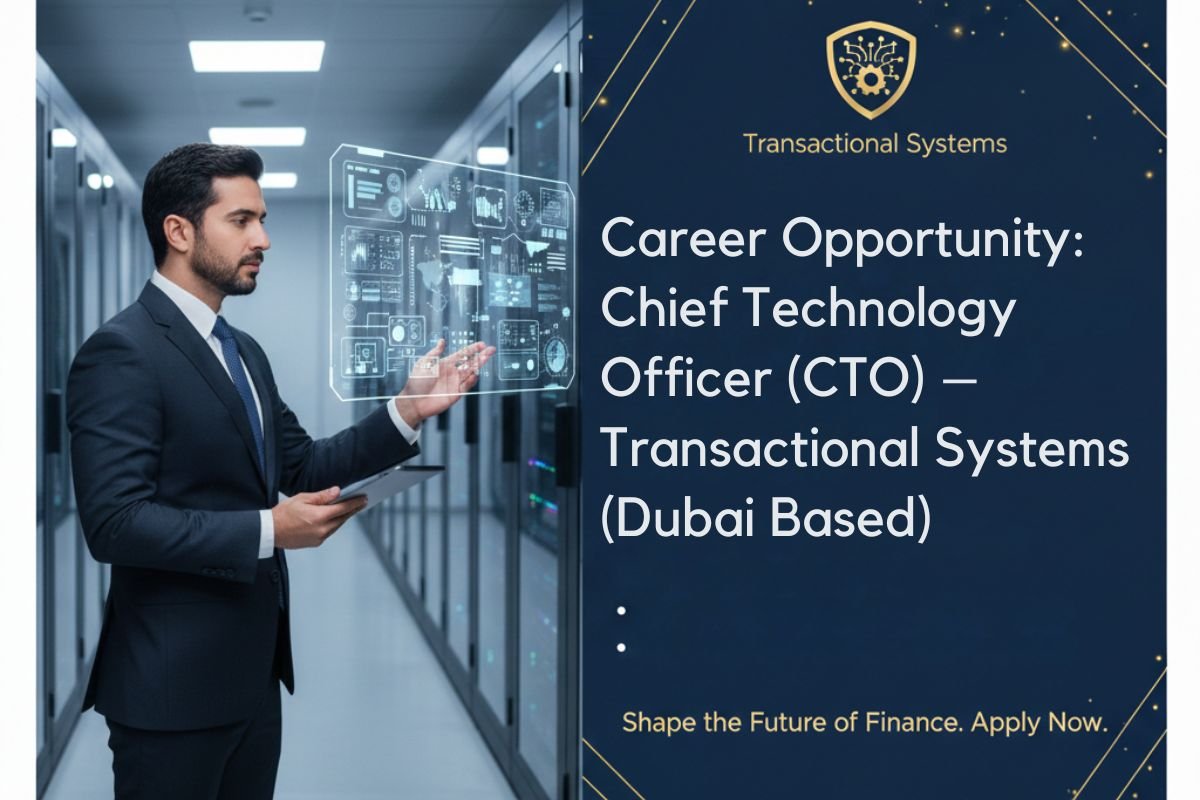
Career Opportunity: Chief Technology Officer (CTO) – Transactional Systems (Dubai Based)

Chief Technology Officer (CTO) Jobs in Dubai | Tech Leadership

Human-Craft FZCO is publishing this search on behalf of a confidential client seeking an elite Chief Technology Officer (CTO). This is not a traditional CTO role focused on general IT or writing code. This is a senior-level, hands-on architectural leadership position with one core mission: to build, operate, and own mission-critical, transactional systems where reliability, security, and correctness are non-negotiable. Think payments, bookings, and financial states—systems where failure has real financial and legal consequences.

Apply now

Position Overview: CTO – Transactional Systems

The client is searching for a CTO who is an architect of reliability. You will be the ultimate owner and accountable leader for designing and launching transactional infrastructure, including payments, bookings, and status management systems. Your expertise must lie in state machines, event-driven architecture, idempotency, and financial-grade security. You are responsible for ensuring systems operate flawlessly, securely, and with full auditability 24/7. This role offers high autonomy, direct impact on core product architecture, and a quality-driven engineering environment.

Key Responsibilities & Ownership Areas

As the accountable leader, you will own the following critical domains:

  • Transactional Infrastructure: Design and launch the core infrastructure for payments, bookings, and transactional statuses.
  • System Architecture: Build and govern state machine and event-driven architectures to ensure data consistency and recoverability from failures.
  • Financial Integrity: Implement idempotent operations to prevent double charges and integrate payment providers with robust webhook, retry, and reconciliation logic.
  • Security & Governance: Ensure full auditability, traceability, role-based access control (RBAC), and secrets management for legally sensitive data.
  • Production Accountability: Organize production support, define SLAs, lead incident response and post-mortems, and be ultimately responsible for system reliability.

Candidate Requirements (Mandatory Experience)

Requirement CategorySpecific Qualification
Core Domain ExpertiseProven, hands-on experience with payments, webhooks, idempotency, and transaction reconciliation. Must understand that an HTTP 200 response does not equal a successful transaction.
ArchitectureDemonstrated experience in designing and operating state machines and event-driven systems. Ability to explain system states and failure recovery in detail.
Security & ControlHands-on experience with RBAC, audit logs, and secrets management for systems handling financially or legally sensitive data.
Production MindsetExperience running live production systems with SLAs, managing incidents, and conducting post-mortems. A strong ownership mindset for system reliability is paramount.
LanguageFluent English is mandatory.

Strong Advantages (Preferred Profile)

  • Experience in FinTech, escrow, booking platforms, or wallet-based systems.
  • Background in regulated or quasi-banking environments.
  • A track record of scaling transactional platforms.
  • Direct involvement in incidents with real financial impact (and the learnings from them).

Profiles That Are Not a Fit

This role is highly specialized. It is not suitable for professionals whose experience is limited to:

  • Marketing websites, landing pages, or CRM/admin panels.
  • Primary focus on UI/UX with limited backend/system ownership.
  • No exposure to real-money transactions or production incidents with financial consequences.

Frequently Asked Questions (FAQs)

1. Is this a hands-on coding CTO role?

No. This is an architectural, governance, and ownership role. You are responsible for ensuring systems are built and operate correctly by the engineering team, not for writing the code yourself.

2. Why is the client confidential?

The client is likely a high-growth startup or established firm in a sensitive sector (FinTech, regulated platform) preparing for a major launch or scale-up, requiring discreet hiring for a pivotal leadership position.

3. What does “transactional systems” specifically refer to?

It refers to systems that process business-critical transactions where money or valuable assets change hands, such as payment processing, booking engines, escrow services, or wallet transfers. Data consistency and auditability are paramount.

4. What is the most critical skill for this role?

Ultimate accountability for system outcomes. The ideal candidate has a proven track record of owning the reliability and security of systems where mistakes cost real money, and possesses the architectural depth to prevent those mistakes.

AI & Automation: How They Are Redesigning the Future of Work

AI & Automation in 2025 – How They’re Reshaping the Future of Work

The workplace of 2025 looks radically different from just five years ago. Artificial Intelligence (AI) and automation have moved from buzzwords to core business functions. From predictive analytics and robotic process automation (RPA) to generative AI and autonomous systems, these technologies are redesigning the future of work across industries, geographies, and skill levels.

What Do We Mean by AI & Automation?

  • Artificial Intelligence (AI) refers to machines that simulate human intelligence — learning, reasoning, and problem-solving. This includes machine learning, natural language processing (NLP), computer vision, and generative models.
  • Automation involves using technology to perform tasks with minimal human intervention. It ranges from simple rule-based scripts to complex autonomous systems.

Together, they enable businesses to streamline operations, reduce costs, and enhance decision-making — while freeing up humans for higher-value work.

Key Trends in 2025

1. Generative AI in Knowledge Work

Tools like ChatGPT, Claude, and Gemini are now embedded in workflows — drafting emails, summarizing reports, generating code, and even designing marketing campaigns.

2. Robotic Process Automation (RPA) in Admin Tasks

RPA bots handle repetitive tasks like data entry, invoice processing, and compliance checks — reducing errors and saving time.

3. AI-Powered Decision Support

AI systems analyze vast datasets to help managers forecast demand, optimize pricing, and personalize customer experiences.

4. Autonomous Systems in Manufacturing & Logistics

Robots and drones are used for assembly, inspection, delivery, and inventory management — improving speed and safety.

5. AI in Recruitment & HR

AI tools screen résumés, assess candidate fit, and even conduct initial interviews — making hiring faster and more data-driven.

How Jobs Are Changing

Job Redesign

Roles are being restructured to combine human creativity with machine efficiency. For example:

  • A marketing analyst now uses AI to generate campaign ideas and A/B test them in real time.
  • A customer service agent works alongside chatbots, handling complex queries while bots manage FAQs.

New Job Titles

Emerging roles include:

  • AI Trainer
  • Prompt Engineer
  • Automation Strategist
  • Human-AI Collaboration Specialist
  • Ethics & Bias Auditor

Declining Roles

Some routine jobs are being phased out or redefined:

  • Data entry clerks
  • Telemarketers
  • Basic customer support agents
  • Manual schedulers

However, these shifts are creating new opportunities in training, oversight, and creative problem-solving.

Skills That Matter in 2025

Skill CategoryExamples
Digital FluencyAI tools, data dashboards, RPA bots
Critical ThinkingEvaluating AI outputs, ethical use
CollaborationWorking with AI systems and teams
AdaptabilityLearning new tools, shifting roles
CreativityDesigning prompts, innovating with AI

Soft skills are more valuable than ever — especially in roles where humans guide, interpret, or challenge AI systems.

How Organizations Are Adapting

Upskilling & Reskilling

Companies are investing in training programs to help employees learn AI tools, automation platforms, and digital workflows.

Hybrid Workflows

Many teams now operate in human-machine partnerships, where AI handles routine tasks and humans focus on strategy, empathy, and innovation.

Ethical Governance

Firms are building AI ethics boards to monitor bias, transparency, and accountability — especially in hiring, finance, and healthcare.

Performance Metrics

Success is now measured by outcomes, not just hours worked. AI enables real-time tracking of productivity, engagement, and impact.

Global Impact & Equity

While AI offers immense potential, it also raises concerns:

  • Job displacement in low-skill sectors
  • Digital divide between countries and communities
  • Bias in algorithms affecting hiring and lending
  • Surveillance risks in workplace monitoring

Governments and NGOs are working to ensure inclusive access, ethical deployment, and worker protections — especially in emerging markets.

FAQs

Will AI take my job?

AI will change your job — not necessarily take it. Roles will evolve to include more strategic, creative, and collaborative tasks.

What industries are most affected?

Tech, finance, healthcare, logistics, education, and media are seeing the fastest transformation.

Do I need to learn coding?

Not always. Many AI tools are no-code or low-code. Focus on digital fluency and problem-solving.

How can I prepare for AI-driven work?

Take online courses, build digital portfolios, and practice using AI tools like ChatGPT, Canva AI, or Notion AI.

Is automation only for big companies?

No. Small businesses use automation for marketing, scheduling, inventory, and customer service.

What are the risks of AI at work?

Bias, surveillance, job loss, and ethical misuse. That’s why governance and transparency are critical.

Final Thoughts

AI and automation aren’t just tools — they’re co-workers, collaborators, and catalysts. In 2025, success depends on your ability to work with machines, adapt to change, and lead with human insight.

Whether you’re a job seeker, manager, or entrepreneur, the future of work is already here. Embrace it, shape it, and stay ahead.

Post a Job Opening

Fill in the details below. Your job posting will be reviewed by our team.

Basic Information

Specify years of experience required

Location & Salary

Qualifications & Skills

Specify educational requirements
Separate skills with commas

Company Details

Job Details

Contact Information