
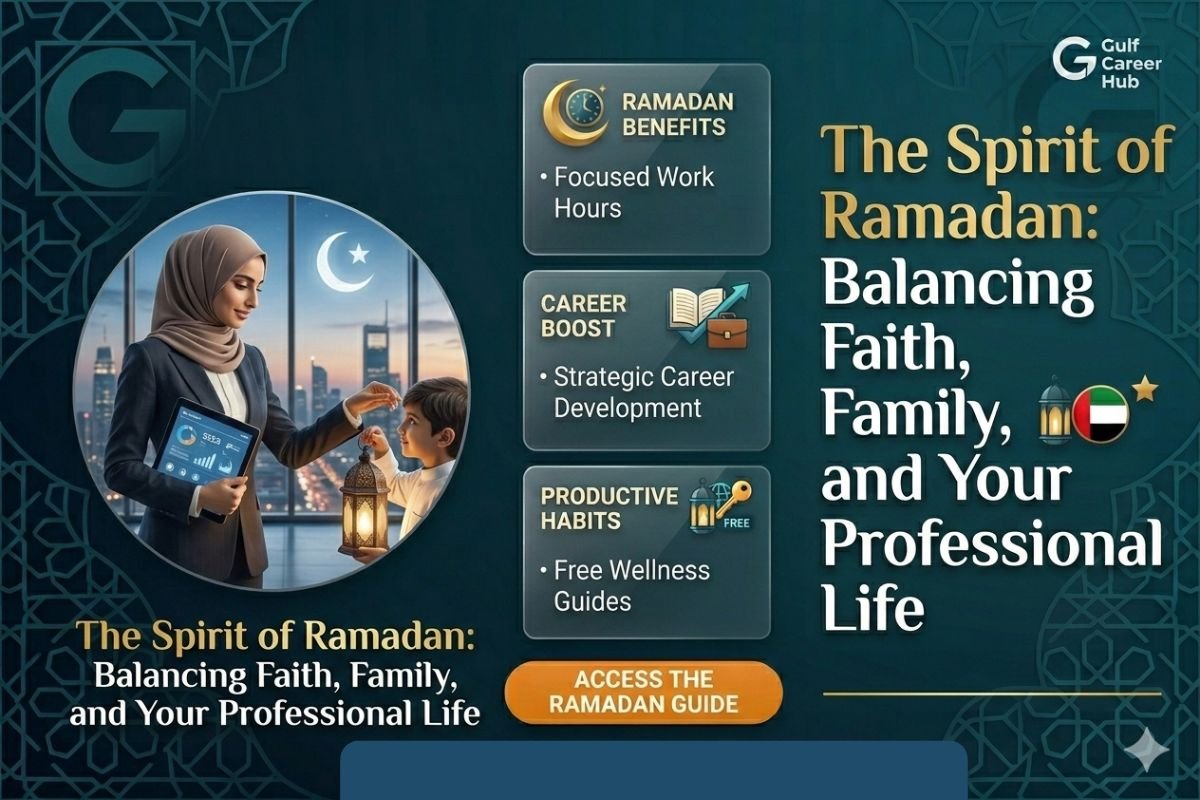
As the crescent moon appears and the holy month of Ramadan approaches, millions of Muslims around the world prepare for a period of deep spiritual reflection, increased worship, and community connection. For professionals in the Gulf and beyond, Ramadan presents a unique challenge: how do you maintain your career momentum while fully embracing the spiritual essence of the month?
Understanding the True Spirit of Ramadan
Before diving into strategies, let’s reconnect with what Ramadan truly means. It’s more than abstaining from food and drink from dawn to sunset. Ramadan is the month when the Quran was revealed—a time for:
- Spiritual Renewal: Deepening your relationship with Allah through prayer, Quran recitation, and reflection
- Self-Discipline: Training the soul to resist desires and focus on higher purposes
- Empathy and Charity: Feeling the pangs of hunger to understand the less fortunate and giving generously (Zakat and Sadaqah)
- Community and Family: Strengthening bonds through shared iftars, Taraweeh prayers, and family gatherings
When you internalize these deeper purposes, the temporary adjustments to your work routine become meaningful acts of worship rather than burdensome obligations.
The Professional Reality: Navigating Ramadan at Work
For many professionals, the workplace doesn’t pause for Ramadan. Deadlines continue, meetings are scheduled, and responsibilities remain. The key is approaching this reality with intention and planning.
1. Communicate Early and Professionally
Transparency builds understanding. Before Ramadan begins:
- Inform your manager and team about your adjusted schedule, especially if you’ll be arriving later or leaving earlier
- Discuss workload expectations—most employers in the Gulf are accustomed to Ramadan rhythms, but clear communication prevents misunderstandings
- Suggest alternatives like coming in earlier to compensate for shorter hours or focusing on deep-work tasks during peak energy periods
2. Master Your Energy, Not Just Your Time
Fasting changes your body’s rhythms. Work with your biology, not against it.
Peak Energy Hours (Post-Suhoor to Midday): This is your golden window. Schedule your most demanding cognitive tasks—strategy, writing, complex problem-solving—during these hours when your energy is highest.
Midday Dip (Early Afternoon): Use this time for routine tasks, emails, or meetings that don’t require deep concentration. If possible, take a short rest.
Post-Iftar Surge: After breaking your fast, many people experience renewed energy. This can be an excellent time for creative work, planning, or catching up on lighter tasks.
3. Rethink Meetings and Collaboration
Traditional meeting schedules may not serve anyone well during Ramadan.
- Schedule meetings mid-morning when energy levels are reasonable for everyone
- Keep meetings focused and concise—respect everyone’s limited energy
- Consider asynchronous communication where possible, allowing colleagues to respond when they’re most alert
- Avoid late-afternoon meetings when energy and focus are naturally lowest
4. Create a Focused Work Environment
Distractions feel magnified when you’re fasting. Set yourself up for success:
- Identify your most important tasks (MITs) each day and tackle them first
- Use noise-cancelling headphones if your office environment is active
- Batch similar tasks to maintain flow and reduce context-switching
- Take short breaks—even a few minutes of quiet reflection can recharge your focus
Nurturing Family Bonds During Ramadan
Ramadan is profoundly family-centered. Iftar gatherings, late-night prayers, and shared moments of worship create memories that last a lifetime. Yet professional demands can pull us away.
1. Protect Iftar Time (Within Reason)
For many, iftar is non-negotiable family time. When possible:
- Block your calendar for iftar, just as you would for an important client meeting
- Communicate your availability—colleagues will respect boundaries they understand
- Return to work if needed after iftar, refreshed and ready for evening tasks
2. Create Family Rituals
Small, consistent traditions matter more than grand gestures:
- Suhoor together when schedules align—even 15 minutes of quiet connection sets a beautiful tone
- Short Quran time with children, reading and reflecting on one verse together
- Charity as a family—involving children in giving creates lifelong values
- Taraweeh attendance when possible, or praying together at home
3. Quality Over Quantity
Working professionals may have less time during Ramadan, but the time you have can be deeply meaningful. Be fully present—put away phones, listen actively, and cherish these moments.
Deepening Your Spiritual Practice
Work and family are important, but Ramadan’s primary purpose is spiritual growth. Intentionality transforms scattered moments into meaningful worship.
1. Set Realistic Spiritual Goals
Instead of ambitious plans that collapse by week two, set achievable intentions:
- Read Quran with translation—even one page with understanding beats 10 pages without reflection
- Choose one extra prayer to pray on time consistently
- Give daily charity—even a small amount with sincere intention
- Learn one new dua each week and reflect on its meaning
2. Integrate Worship into Your Day
Your workday contains spiritual opportunities:
- Take wudu (ablution) as a physical and spiritual reset during breaks
- Listen to Quran during your commute or while completing routine tasks
- Make dhikr (remembrance of Allah) during quiet moments—while waiting for meetings or walking between offices
- Pray on time—most Gulf workplaces accommodate prayer, and this discipline anchors your day
3. The Night Power Hours
The last third of the night and the hours before suhoor are spiritually charged. Even if you can’t pray for hours:
- Wake up 15 minutes earlier for sincere supplication (dua)
- Pray even two rakats with presence of heart
- Make dua for your family, your career, and the Ummah—this time is precious
Common Challenges and Practical Solutions
Challenge: Extreme Fatigue
Solution: Prioritize sleep. Skip late-night TV or social media scrolling. A short qaylulah (afternoon nap) is a sunnah and practical energy booster.
Challenge: Irritability and Short Temper
Solution: Fasting exposes our weaknesses. When you feel irritation rising, pause, make wudu, and remember that “fasting is a shield.” Respond with silence or a kind word—this is part of the fast’s training.
Challenge: Social Obligations Overload
Solution: It’s okay to politely decline some invitations. Choose gatherings that genuinely nurture your relationships and spirit. Quality over quantity applies here too.
Challenge: Declining Work Performance
Solution: Communicate proactively. Most employers understand Ramadan adjustments. Focus on delivering excellence in fewer, high-impact tasks rather than spreading yourself thin.
The Gift of Ramadan: Lasting Transformation
The ultimate goal isn’t just to survive Ramadan—it’s to emerge transformed. The discipline, empathy, and spiritual connection cultivated this month can enrich your entire year.
After Ramadan, ask yourself:
- How can I maintain some of this Quran connection?
- Can I keep one daily act of charity going?
- What did I learn about my priorities that should carry forward?
A Message for Non-Muslim Colleagues and Managers
If you’re reading this as someone supporting Muslim colleagues during Ramadan, thank you. Your understanding makes an enormous difference. Simple gestures—asking how someone is doing, respecting their fast during lunch meetings, acknowledging the month—build inclusive, respectful workplaces.
Conclusion: Embracing Ramadan’s Fullness
The spirit of Ramadan is not found in perfection—it’s found in presence. Presence with Allah in prayer, presence with family at iftar, presence with colleagues in collaboration, and presence with yourself in reflection.
This Ramadan, release the pressure to do everything perfectly. Instead, focus on doing a few things with sincere intention and full presence. The professional who prays, the parent who listens, the colleague who serves—these are the people who embody Ramadan’s true spirit.
May this Ramadan bring you closer to your Creator, deepen your family bonds, and infuse your work with barakah (blessing). Ramadan Kareem.
Frequently Asked Questions (FAQs)
1. How can I stay productive at work while fasting?
Focus on your peak energy hours (morning to midday) for demanding tasks. Schedule routine work for the afternoon dip. Stay hydrated during non-fasting hours, prioritize sleep, and communicate your schedule with colleagues. Remember that productivity isn’t about doing more—it’s about doing what matters with excellence.
2. What if my employer doesn’t understand Ramadan adjustments?
Communicate professionally and early. Explain your needs clearly and propose solutions (adjusted hours, focused work periods). Most employers appreciate employees who take ownership of their performance. If challenges persist, consult your HR department—many Gulf companies have formal Ramadan policies.
3. How do I balance attending Taraweeh prayers with work responsibilities?
Taraweeh length varies by mosque. Consider praying part of Taraweeh at the mosque and completing at home. On work nights, choose shorter prayers or attend on weekends. The key is consistency and quality over quantity—even shortened night prayers with presence are valuable.
4. How can I involve young children in Ramadan without overwhelming them?
Start small. Let them “fast” for a few hours. Involve them in simple acts of charity. Read children’s books about Ramadan. Let them help prepare iftar. The goal is positive association, not perfection. Your joy and peace during Ramadan will influence them more than any lesson.
5. What’s the best way to handle iftar invitations while managing work and family?
Accept invitations that nurture important relationships without overcommitting. It’s perfectly acceptable to politely decline or suggest meeting on weekends. When attending, arrive on time, contribute meaningfully, and excuse yourself graciously when needed. Balance is key—community is important, but so is your family’s rhythm.