
Starting a new job in the UAE is more than just learning the ropes — it’s about proving your value, adapting to a multicultural workplace, and earning your manager’s trust early. Whether you’ve joined a hospital in Abu Dhabi, a tech firm in Dubai, or a construction site in Sharjah, your first 30 days set the tone for your long-term success.
This guide offers practical, culturally aware strategies to help you stand out, build credibility, and become indispensable — all within your first month.
Table of Contents
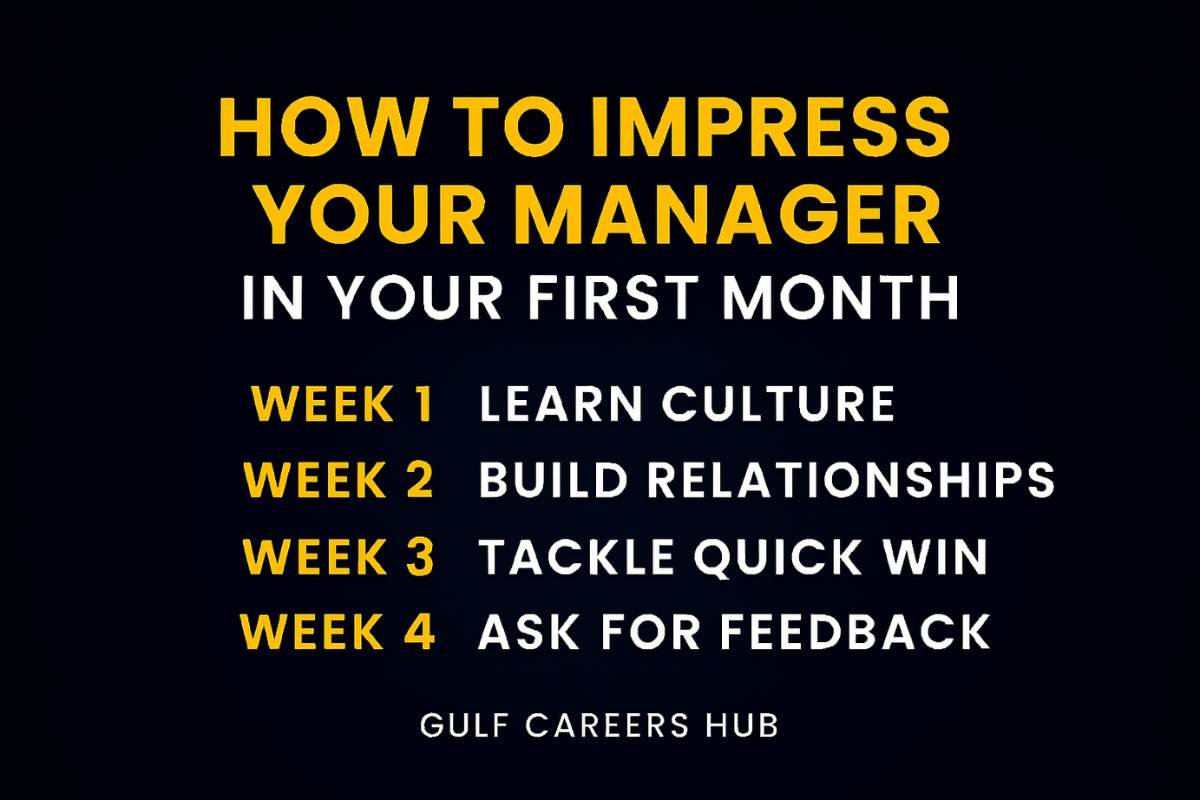
Week 1: Understand the Landscape Before You Act
1. Learn the Company Culture — Fast
The UAE workplace blends global standards with local customs. You’ll find Western-style reporting structures alongside Emirati values like respect, discretion, and hierarchy. Observe how people communicate, dress, and interact. Is the tone formal or relaxed? Are decisions centralized or collaborative?
Tip: Ask your manager or HR for a copy of the employee handbook or onboarding guide. It shows initiative and helps you avoid missteps.
2. Clarify Expectations Early
Don’t wait for your first performance review. Schedule a brief one-on-one with your manager to ask:
- What are your top priorities for me this month?
- How will success be measured?
- Are there any quick wins I can focus on?
Why it works: It shows you’re proactive, goal-oriented, and serious about delivering value.
Week 2: Build Relationships and Visibility
3. Introduce Yourself Strategically
In multicultural UAE offices, relationship-building is key. Don’t just say “Hi” — share a bit about your background, role, and how you can support others. Ask about their work and listen actively.
Tip: Learn a few Arabic greetings like “Marhaba” (Hello) or “Shukran” (Thank you). It’s a small gesture that earns big respect.
4. Communicate Clearly and Often
Managers in the UAE appreciate regular updates, especially in fast-paced sectors like healthcare, logistics, or finance. Send weekly summaries of what you’ve accomplished, what’s in progress, and any blockers.
Why it works: It builds trust and shows you’re organized, accountable, and transparent.
5. Join Cross-Functional Conversations
If invited to meetings outside your department, attend. Ask thoughtful questions and offer insights when appropriate. It shows you’re invested in the company’s broader goals.
Tip: Don’t dominate — contribute strategically. UAE workplaces value humility and respect for hierarchy.
Week 3: Deliver Value and Solve Problems
6. Identify a Quick Win
Look for a small but meaningful problem you can solve — a broken process, a confusing report, or a missed opportunity. Fix it, document it, and share the result.
Example: You notice the HR onboarding checklist is outdated. You update it, align it with current policies, and present it to your manager.
Why it works: It proves you’re observant, resourceful, and action-oriented.
7. Show You Understand the Business
Don’t just do tasks — connect them to business outcomes. If you’re in finance, talk about cost savings. If you’re in marketing, mention engagement metrics. If you’re in operations, highlight efficiency.
Tip: Use phrases like “This will help reduce turnaround time by 20%” or “This aligns with our Q1 revenue goals.”
Week 4: Reflect, Refine, and Reinforce
8. Ask for Feedback Before It’s Offered
Schedule a short feedback session with your manager. Ask:
- What am I doing well so far?
- What should I improve or adjust?
- How can I better support the team?
Why it works: It shows maturity, openness, and a commitment to growth.
9. Document Your Contributions
Keep a simple log of your achievements, challenges, and lessons learned. This will help you prepare for future reviews, promotions, or even internal transfers.
Tip: Use bullet points and metrics. Example: “Streamlined vendor onboarding process — reduced average approval time from 5 days to 2.”
10. Share Learnings with Others
If you’ve discovered a better way to do something, share it. Create a short guide, host a mini training, or offer to mentor a new hire.
Why it works: It positions you as a team player and a future leader.
🇦🇪 UAE-Specific Tips to Impress Your Manager
Respect Cultural Norms
- Be punctual — time is respected in UAE business culture
- Dress modestly and professionally
- Avoid sensitive topics (religion, politics) unless invited
- Observe Ramadan etiquette if working during the holy month
Embrace Diversity
UAE workplaces are incredibly multicultural. You may work with colleagues from India, Pakistan, Egypt, the Philippines, Europe, and more. Be inclusive, curious, and respectful of different work styles.
Use Tech Smartly
Many UAE companies use tools like Microsoft Teams, Zoho, SAP, or JISR. Learn the platforms quickly and use them to streamline communication and task tracking.
What Managers in the UAE Say They Value Most
Based on feedback from hiring managers across Dubai, Abu Dhabi, and Riyadh, here’s what they look for in new hires:
- Reliability: Show up, follow through, and meet deadlines
- Adaptability: Handle change and ambiguity with grace
- Initiative: Don’t wait to be told — take action
- Communication: Keep your manager informed, not surprised
- Respect: Honor hierarchy, culture, and team dynamics
Final Thoughts: Your First Month Is Your Launchpad
The first 30 days aren’t about proving you’re perfect — they’re about proving you’re committed, coachable, and capable. If you listen well, act thoughtfully, and communicate clearly, you’ll earn your manager’s trust and set yourself up for long-term success in the UAE.
Whether you’re in a corporate tower in Dubai or a field office in Al Ain, the principles are the same: show up with purpose, deliver with precision, and grow with humility.