Gulf Careers Hub

Qatar’s Most In-Demand Jobs in 2026: Where Future Careers Are Being Built Today

Qatar’s Most In-Demand Jobs This Year 2026

Introduction :

As we approach 2026, Qatar stands at an extraordinary inflection point in its economic evolution. The remarkable success of the 2022 FIFA World Cup has transformed into sustained momentum, propelling the nation toward its Vision 2030 goals with unprecedented acceleration. What we’re witnessing isn’t merely post-event economic activity but a fundamental restructuring of Qatar’s employment landscape—one that presents exceptional opportunities for forward-thinking professionals.

The Qatar job market of 2026 differs significantly from traditional Gulf employment patterns. Rather than relying on cyclical energy sector hiring, Qatar has strategically diversified into future-proof industries where it can exercise regional leadership. This transformation creates a unique window of opportunity for professionals who align their skills with the nation’s strategic priorities.

In this comprehensive 2026 forecast, we’ll analyze the sectors experiencing hyper-growth, identify the specific roles companies are struggling to fill, and provide actionable strategies for positioning yourself in Qatar’s most dynamic employment sectors. Whether you’re planning a career move in two years or beginning to develop tomorrow’s skills today, this guide provides the intelligence you need to succeed in one of the Gulf’s most sophisticated job markets.

The 2026 Economic Backdrop: Understanding Qatar’s Strategic Investments

Beyond Infrastructure: The Knowledge Economy Transition

Qatar’s $300+ billion World Cup investment has matured into a different kind of capital—intellectual, innovative, and institutional. Lusail City has evolved from a tournament venue to a smart city laboratory. Education City has expanded its research partnerships. The Hamad Port has become a logistics innovation hub. This evolution creates employment opportunities fundamentally different from those of the construction boom era.

Vision 2030 Mid-Decade Acceleration

As Qatar reaches the midpoint of its national vision, several initiatives are reaching critical mass:

  1. Economic Diversification Targets – Non-oil sector contribution targets for 2026 are aggressive and driving hiring
  2. Sustainability Commitments – Carbon-neutral initiatives are creating entirely new industries
  3. Healthcare Expansion – Post-pandemic health infrastructure investments are scaling up
  4. Digital Transformation – Nationwide 5G and fiber-optic networks are enabling new business models

Demographic and Policy Shifts

  • Qatarization 2.0: More sophisticated localization programs focusing on knowledge transfer
  • Expanding Talent Pool: Revised visa policies attracting specialized global talent
  • Regional Headquarters Incentives: New corporate regulations drawing multinationals to establish MENA bases in Doha

Sector 1: Green Energy & Sustainability (The 2026 Powerhouse)

Renewable Energy Project Managers

2026 Demand Drivers: Qatar’s commitment to generate 20% of energy from renewables by 2030 requires massive project implementation by 2026. The $2.5 billion Al Kharsaah solar plant expansion and planned additional solar facilities create immediate need for professionals who can manage complex renewable projects from conception through operation.

Critical 2026 Skills:

  • Hybrid system optimization (solar-wind-storage integration)
  • Carbon credit market expertise
  • International renewable certification management
  • Stakeholder coordination across government and private entities

Specialized Roles Emerging by 2026:

  1. Green Hydrogen Project Specialists – For Qatar’s planned hydrogen export industry
  2. Carbon Capture Utilization and Storage Engineers – For LNG facility decarbonization
  3. Solar Microgrid Designers – For industrial zone applications
  4. Sustainability Compliance Managers – For ESG reporting requirements

2026 Salary Projections: QAR 25,000 – QAR 65,000 per month
Top 2026 Employers: Qatar Energy Renewables, Siraj Energy (Qatar Electricity & Water Co.), international engineering consultancies, sustainability divisions of industrial conglomerates

Environmental, Social & Governance (ESG) Specialists

2026 Demand Drivers: Mandatory ESG reporting for listed companies begins in 2025, creating immediate demand for professionals who can develop, implement, and verify sustainability frameworks. Qatar Stock Exchange requirements align with global standards, necessitating internationally recognized expertise.

Required 2026 Qualifications:

  • GRI (Global Reporting Initiative) certification
  • SASB (Sustainability Accounting Standards Board) implementation experience
  • Carbon accounting software proficiency
  • Third-party audit coordination experience
  • Arabic-English reporting capabilities

Industry-Specific ESG Roles:

  • Energy Sector ESG Managers – Focusing on Scope 3 emissions reduction
  • Real Estate Sustainability Officers – For NEOM and Lusail developments
  • Financial Sector ESG Analysts – For green bond verification and sustainable investment funds

2026 Salary Projections: QAR 22,000 – QAR 55,000 per month
Growth Forecast: 300% increase in ESG roles from 2024-2026

Sector 2: Artificial Intelligence & Advanced Digitalization

AI Integration Specialists

2026 Demand Drivers: Qatar’s National AI Strategy targets specific 2026 implementation milestones across healthcare diagnostics, traffic management, energy optimization, and educational personalization. The gap isn’t in AI research but in practical integration of existing AI solutions into Qatari institutions.

Key 2026 Integration Challenges Creating Employment:

  • Legacy system compatibility in government ministries
  • Data localization compliance with Qatar’s data protection regulations
  • Cultural adaptation of AI interfaces for Arabic-speaking users
  • Ethical AI frameworks aligned with Islamic principles

Most Sought-After 2026 Profiles:

  1. Healthcare AI Implementers – For predictive diagnostics at Hamad Medical Corporation
  2. Smart City AI Architects – For Lusail and Msheireb Downtown operations
  3. Educational Technology AI Specialists – For Qatar Foundation institutions
  4. Energy AI Optimizers – For predictive maintenance in oil and gas facilities

2026 Salary Projections: QAR 28,000 – QAR 70,000 per month
Critical Certification: Qatar Specific AI Ethics Certification (anticipated mandatory requirement by 2026)

Quantum Computing Support Roles

2026 Context: While full-scale quantum computing implementation remains further out, Qatar’s significant investments in quantum research through the Qatar Foundation create immediate demand for supporting roles. By 2026, these positions will transition from research to early commercial application.

2026 Support Roles in Demand:

  • Quantum Algorithm Translators – Converting business problems into quantum-ready formulations
  • Quantum Cybersecurity Analysts – Preparing for post-quantum cryptography requirements
  • Quantum-Hybrid System Managers – Operating combined classical-quantum computing environments

2026 Salary Projections: QAR 30,000 – QAR 75,000+ per month
Unique Aspect: These roles represent the Gulf’s first quantum computing employment market

Sector 3: Healthcare Innovation & Medical Technology

Telemedicine Ecosystem Managers

2026 Demand Drivers: Qatar’s National Health Strategy 2023-2026 specifically prioritizes telemedicine expansion to reach 40% of outpatient consultations. This creates needs beyond basic telehealth providers to entire ecosystem management.

Ecosystem Roles Emerging by 2026:

  1. Telemedicine Quality Assurance Specialists – Ensuring Gulf Cooperation Council (GCC) standard compliance
  2. Cross-Border Telehealth Coordinators – Managing regional patient referrals
  3. Telemedicine Hardware Integration Experts – For home monitoring device networks
  4. Digital Therapeutic Program Managers – For chronic disease management platforms

Required 2026 Competencies:

  • GCC health regulation knowledge
  • Medical device software integration
  • Arabic telehealth interface design
  • Health data interoperability standards

2026 Salary Projections: QAR 20,000 – QAR 50,000 per month
Regulatory Note: Qatar’s telemedicine licensing framework will be fully implemented by 2025, creating 2026 stability for professionals

Genomic Medicine Specialists

2026 Demand Drivers: Qatar Biobank’s extensive genetic database reaches critical mass for practical applications by 2026. This transitions genomic research into clinical and preventive medicine applications.

Specialized 2026 Roles:

  • Population Health Geneticists – Analyzing Qatari-specific genetic predispositions
  • Pharmacogenomics Consultants – Personalizing medication regimens
  • Genetic Counseling Services Managers – Establishing Qatar’s first comprehensive counseling framework
  • Genomic Data Privacy Officers – Navigating unique Islamic bioethics considerations

2026 Salary Projections: QAR 32,000 – QAR 68,000 per month
Educational Requirements: Typically requires fellowship-level specialization beyond standard medical training

Sector 4: Advanced Engineering & Smart Infrastructure

Hyperloop & Advanced Transportation Engineers

2026 Context: While the full Doha-to-Dubai hyperloop remains aspirational, 2026 represents the peak of feasibility studies, prototype development, and regulatory framework establishment. Professionals hired in 2024-2025 will be leading implementation teams by 2026.

2026 Project Phase Roles:

  • Regulatory Compliance Engineers – Navigating unprecedented Gulf transportation regulations
  • Vacuum System Specialists – With experience from semiconductor or aerospace industries
  • Magnetic Levitation Engineers – Transferring maglev expertise to hyperloop applications
  • Cross-Border Infrastructure Coordinators – Managing Qatar-Saudi-UAE jurisdictional complexities

2026 Salary Projections: QAR 35,000 – QAR 85,000+ per month
Background Transfer Opportunities: Professionals from European high-speed rail, aerospace, or semiconductor industries can transition skills

Smart Building Integration Managers

2026 Demand Drivers: Qatar’s building codes will mandate smart building capabilities for all new commercial structures over 5,000 square meters by 2025, creating immediate implementation needs.

Integration Specializations for 2026:

  1. IoT Mesh Network Designers – For building-wide sensor integration
  2. Building Energy Management System Architects – Exceeding Qatar’s 2026 energy efficiency standards
  3. Occupant Experience Technology Managers – For premium residential and commercial developments
  4. Building Data Analytics Specialists – Optimizing operations through usage pattern analysis

2026 Salary Projections: QAR 24,000 – QAR 58,000 per month
Certification Advantage: Smart Building Professional (SBP) certification with Qatar-specific modules

Sector 5: Financial Technology & Digital Assets

Central Bank Digital Currency (CBDC) Specialists

2026 Context: Qatar Central Bank has announced advanced testing of a digital Qatari riyal. By 2026, this moves from testing to initial implementation phases, creating specialized roles that don’t currently exist in the Gulf.

Anticipated 2026 Roles:

  • CBDC Integration Managers – For banking system compatibility
  • Digital Currency Compliance Officers – Navigating anti-money laundering in digital contexts
  • Cross-Border CBDC Specialists – For Gulf Monetary Council interoperability
  • Retail CBDC Adoption Managers – Driving public and business usage

2026 Salary Projections: QAR 33,000 – QAR 72,000 per month
Background Pathways: Candidates from blockchain projects, traditional currency operations, or payment systems

Islamic FinTech Product Managers

2026 Demand Drivers: Qatar’s leadership in Islamic finance combines with digital transformation mandates to create unique hybrid opportunities. The market need isn’t for generic FinTech professionals but specifically for those who understand Sharia-compliant product structuring in digital environments.

2026 Product Areas:

  • Digital Sukuk Platforms – Retail access to Islamic bonds
  • Halal Robo-Advisors – Automated Sharia-compliant investment
  • Zakat Calculation & Distribution Technology – Digitalizing religious obligations
  • Islamic Buy-Now-Pay-Later Systems – Murabaha-based consumer finance

2026 Salary Projections: QAR 26,000 – QAR 62,000 per month
Unique Requirement: Dual expertise in Islamic finance principles and agile software development methodologies

The 2026 Skills Premium: What Commands Maximum Compensation

Hybrid Skill Combinations

The highest 2026 salaries won’t go to specialists in single fields but to professionals who combine:

  1. Technical + Regulatory Expertise: Engineers who understand Qatar-specific compliance requirements
  2. Digital + Cultural Competence: Technologists fluent in both coding and Gulf business norms
  3. Sustainability + Financial Acumen: Environmental specialists who can quantify ROI on green initiatives
  4. Medical + Data Science: Healthcare professionals with advanced analytics capabilities

Language & Cultural Preparedness for 2026

While English remains the business lingua franca, 2026 hiring preferences will include:

  • Professional Arabic Proficiency: Not just conversational but industry-specific terminology
  • Gulf Cultural Intelligence: Understanding nuanced differences between Qatari, Saudi, and UAE business practices
  • Vision 2030 Fluency: Ability to articulate how your role advances specific national strategy objectives

Preparing for 2026: Your 24-Month Action Plan

Phase 1: Skills Assessment & Gap Analysis (Now – 2024)

  • Audit current capabilities against 2026 requirements
  • Identify transferable skills from adjacent industries
  • Begin certification programs with 18-24 month completion timelines
  • Establish professional network within targeted Qatari organizations

Phase 2: Strategic Upskilling (2024 – 2025)

  • Pursue certifications with 2026 relevance (not just current demand)
  • Develop hybrid skill combinations through project experience
  • Gain exposure to Qatari regulatory environments through regional projects
  • Build portfolio demonstrating forward-looking capabilities

Phase 3: Positioning & Transition (2025 – 2026)

  • Engage with recruitment processes for 2026 role creation
  • Demonstrate preparedness for emerging (not just existing) challenges
  • Articulate unique value proposition for Qatar’s specific 2026 context
  • Negotiate compensation based on future contribution rather than past experience

Conclusion: Positioning at the Frontier of Gulf Opportunity

The Qatar job market of 2026 represents something unprecedented in Gulf career trends—a deliberate, strategically planned employment landscape designed for economic transformation rather than mere growth. This creates exceptional opportunities for professionals who understand that they’re not just applying for jobs but participating in national development.

The most successful candidates in 2026 won’t merely respond to job postings; they’ll demonstrate how their unique skills combination solves Qatar’s next challenges before those challenges become urgent. They’ll speak the language of Vision 2030 implementation rather than generic professional competencies. They’ll position themselves at intersection points between sectors where Qatar is creating entirely new industries.

As 2026 approaches, Qatar offers more than employment—it offers partnership in building economic models that may define the Gulf’s next development phase. For forward-thinking professionals worldwide, this represents the career opportunity of a decade, positioned at the convergence of ambition, investment, and transformation.

Frequently Asked Questions (FAQs)

1. How will Qatar’s 2026 job market differ from 2024’s opportunities?

The 2026 market represents the implementation phase of current planning. While 2024 sees feasibility studies and pilot projects, 2026 will feature scaled operations and established regulatory frameworks. Roles will be more specialized, require hybrid skills, and offer higher compensation for proven integration capabilities. The key difference is moving from experimental positions to operational roles with clear career progression paths.

2. What is the single most important skill to develop for 2026 Qatar opportunities?

Regulatory-technology integration capability. The professionals who will thrive in 2026 understand both emerging technologies AND Qatar-specific regulatory environments. This means complementing technical certifications with knowledge of Qatar’s Vision 2030 implementation frameworks, Qatar Central Bank digital currency guidelines, Ministry of Public Health telemedicine regulations, and Qatar Green Building Council standards.

3. How does Qatarization affect expatriate opportunities in these high-demand 2026 sectors?

Qatarization 2.0 focuses on knowledge transfer and specialized talent attraction rather than simple quota fulfillment. For these cutting-edge 2026 roles, Qatar actively seeks international expertise to establish new industries. Expatriates are welcome but expected to develop Qatari successors. Your long-term value increases if you can demonstrate both technical expertise AND knowledge transfer methodologies within Islamic business contexts.

4. Are remote work options available for these 2026 in-demand roles?

Hybrid models will dominate, but with a Qatar-centric twist. Most roles require physical presence for regulatory compliance, government liaison, and complex implementation. However, many positions will incorporate “regional remote” components—working across GCC locations or with international partners. Fully remote positions from outside Qatar will be rare in these strategic sectors due to data localization requirements and hands-on implementation needs.

5. What salary premium can professionals expect for 2026 versus 2024 roles?

Based on current trajectories, 2026 salaries for these in-demand roles are projected to be 25-40% higher than 2024 equivalents due to:
Specialization premium as roles become more defined
Urgency premium as implementation deadlines approach
Scarcity premium for proven hybrid skill combinations
Value creation premium for roles tied directly to Vision 2030 KPIs
The highest premiums will go to professionals who can demonstrate successful similar implementations in other Gulf markets.
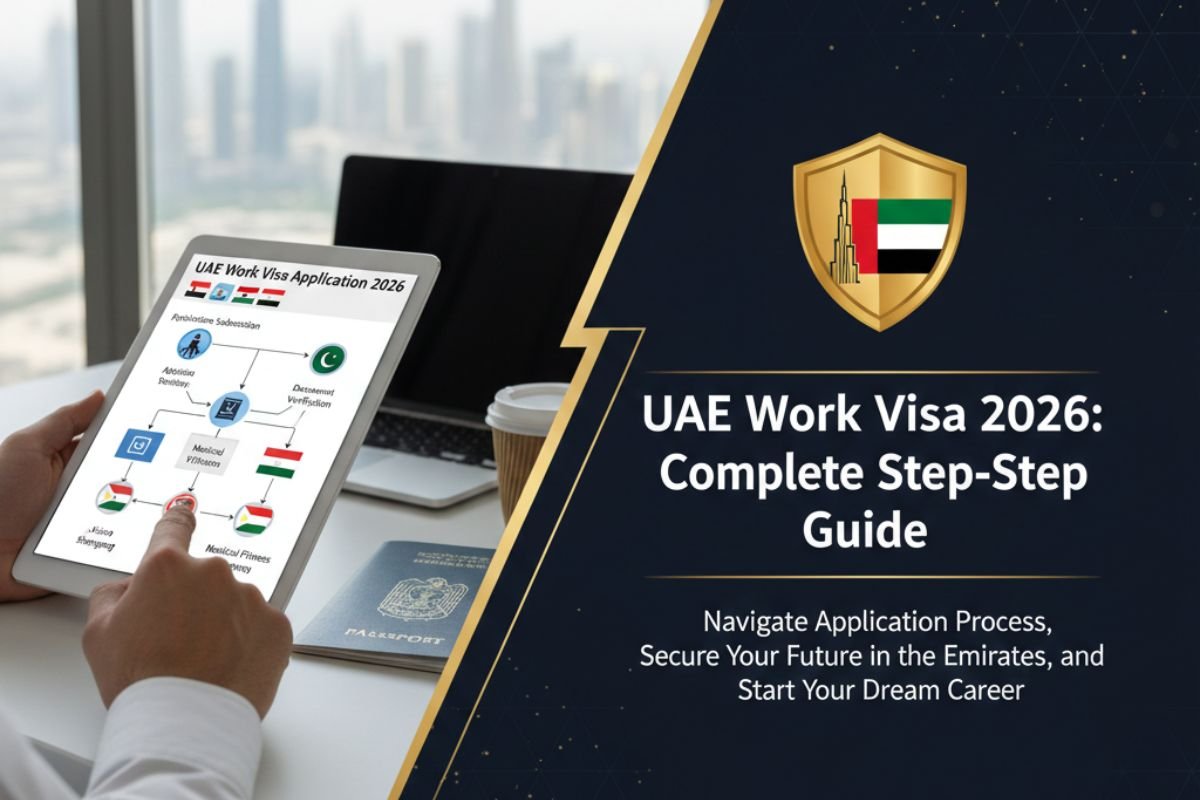
UAE Work Visa 2026: Complete Step-by-Step Guide

UAE Work Visa Guide 2026: Steps & Requirements

Introduction:

The United Arab Emirates has consistently ranked among the world’s most attractive destinations for expatriate professionals. With its tax-free salaries, world-class infrastructure, safety, and diverse cultural landscape, the UAE offers unparalleled opportunities for career growth and personal development. As we approach 2026, the country’s focus on economic diversification—particularly in technology, renewable energy, healthcare, and finance—means more opportunities than ever for skilled workers.

Understanding the Gulf visa process is your first step toward building a successful career in this dynamic region. This guide will walk you through each phase of obtaining a UAE work visa in 2026.
Navigating the UAE work visa process can be a complex journey, but with the right information, it becomes a clear and achievable path. As 2026 approaches, the United Arab Emirates continues to refine its immigration system, making it more streamlined for skilled professionals worldwide. This comprehensive guide provides everything you need to know about securing your UAE work visa, ensuring you’re prepared for the Gulf visa process in 2026.

Part 1: Understanding UAE Visa Types (2026 Updates)

Before diving into the application process, it’s crucial to understand which visa category applies to your situation:

1. Standard Employment Visa

The most common route for professionals with a confirmed job offer from a UAE-based employer. This visa is typically valid for two years and renewable.

2. Green Visa (Long-Term Residence)

Introduced as part of the UAE’s 2021 reforms and enhanced for 2026, this five-year visa offers greater flexibility for skilled professionals, freelancers, and investors—without requiring employer sponsorship.

3. Freelance/Remote Work Visa

Perfect for digital nomads and independent contractors, this one-year renewable visa allows you to live in the UAE while working for clients outside the country.

4. Golden Visa

A long-term (5-10 year) residency visa for exceptional talents, researchers, professionals with highly sought-after skills, and outstanding students.

5. Mission Visa

Short-term work permit for specific projects or assignments lasting less than six months.

Part 2: Step-by-Step UAE Work Visa Process for 2026

Step 1: Secure a Job Offer

Your visa journey begins with a confirmed employment contract from a UAE employer. Ensure your offer includes:

  • Detailed job description and responsibilities
  • Salary and benefits (including health insurance)
  • Contract duration
  • Terms of employment termination

2026 Update: The UAE has implemented stricter regulations to ensure employment contracts are transparent and fair. All contracts must now be registered through the Ministry of Human Resources and Emiratisation (MOHRE) digital system.

Step 2: Entry Permit Application

Your employer applies for your Entry Permit through:

  • The MOHRE for mainland companies
  • The relevant free zone authority for free zone companies
  • The Federal Authority for Identity, Citizenship, Customs & Port Security (ICP) for government sectors

Processing Time: 5-7 working days
Validity: 60 days from issuance

Step 3: Travel to the UAE

Once you receive your Entry Permit, you can travel to the UAE. You must enter the country within 60 days of permit issuance.

Step 4: Medical Fitness Test

Within 30 days of arrival, you must complete:

  • Blood test for HIV/AIDS, Hepatitis B, Hepatitis C, Tuberculosis, Syphilis, and Malaria
  • Chest X-ray for tuberculosis screening

2026 Update: Additional vaccination requirements may apply depending on your country of origin and current global health guidelines.

Step 5: Emirates ID Application

The Emirates ID serves as your official identification in the UAE. Application involves:

  • Visiting an authorized typing center with required documents
  • Biometric data collection (photograph, fingerprints, signature)
  • Paying applicable fees (approximately AED 170-370 depending on validity period)

Processing Time: 7-10 working days

Step 6: Residence Visa Stamping

Your employer submits your passport to the immigration department for residence visa stamping, which includes:

  • Entry Permit
  • Medical fitness test results
  • Passport copies
  • Photographs
  • Emirates ID application receipt
  • Proof of health insurance

Processing Time: 5-10 working days

Step 7: Labor Card Registration

Your employer registers you with MOHRE or the relevant free zone authority, formalizing your employment status.

Step 8: Open a Bank Account

With your residence visa and Emirates ID, you can open a local bank account—essential for receiving your salary and managing finances.

Part 3: Required Documents for UAE Work Visa 2026

For Employees:

  • Passport with minimum 6 months validity
  • Passport-size photographs with white background
  • Entry Permit copy
  • Attested educational certificates (degree/diploma)
  • Employment contract signed by both parties
  • Medical fitness test certificate
  • Previous visa copies (if applicable)

For Employers:

  • Company trade license copy
  • Establishment card
  • Ministry of Labor quota approval
  • Insurance policy for employee

2026 Document Update: The UAE is moving toward complete digitalization of document submission and verification. Expect increased use of blockchain technology for certificate attestation and verification.

Part 4: Cost Breakdown for UAE Work Visa 2026

While costs may vary slightly between emirates and free zones, approximate fees include:

  • Entry Permit: AED 300-500
  • Medical Test: AED 350-500
  • Emirates ID: AED 170-370
  • Residence Visa Stamping: AED 500-700
  • Labor Card: AED 150-300
  • Health Insurance: Varies by plan (employer typically covers)

Total Estimated Cost: AED 1,500-2,500 (usually borne by employer)

Part 5: Important Changes for 2026

  1. Enhanced Digital Processing: The UAE aims for 100% digital visa processing through the ICP and MOHRE smart applications.
  2. Sustainability Criteria: Certain sectors may require proof of sustainability training or certifications as part of the UAE’s Net Zero 2050 strategic initiative.
  3. AI-Powered Application Review: Artificial intelligence systems will assist in preliminary document verification and application assessment.
  4. Blockchain Verification: Educational and professional certificates will be verified through blockchain networks, reducing attestation times.
  5. Flexible Visa Transfers: Simplified procedures for changing employers without leaving the country.

Part 6: Common Challenges and Solutions

Challenge 1: Document Attestation Delays

Solution: Begin the attestation process early. Many countries now offer expedited services through their UAE embassies.

Challenge 2: Medical Test Failures

Solution: Undergo preliminary health screenings in your home country before applying. Conditions like tuberculosis will result in visa denial and potential deportation.

Challenge 3: Employer Delays

Solution: Maintain clear communication with your employer and request regular updates. Familiarize yourself with MOHRE regulations to understand processing timelines.

Challenge 4: Changing Jobs

Solution: Understand the conditions of your visa. Standard employment visas typically require six months with your initial employer before transferring. Green Visa holders have more flexibility.

Part 7: Tips for a Smooth Gulf Visa Process

  1. Start Early: Begin document preparation 3-4 months before your intended start date.
  2. Use Official Channels: Always verify information through official government websites (ICP, MOHRE) rather than third-party sources.
  3. Maintain Copies: Keep digital and physical copies of all documents throughout the process.
  4. Understand Your Rights: Familiarize yourself with UAE labor laws to ensure fair treatment.
  5. Plan Your Arrival: Consider arriving during weekdays to begin procedures immediately rather than waiting through weekend closures.

Conclusion: Your Pathway to UAE Success

The UAE work visa process for 2026 reflects the country’s commitment to attracting global talent while maintaining efficient, transparent systems. While the Gulf visa process involves multiple steps, careful preparation and understanding of requirements will ensure a smooth transition to your new career in the Emirates.

As regulations continue to evolve, staying informed through official channels is crucial. The UAE’s forward-thinking approach to residency and employment makes it an increasingly attractive destination for professionals seeking growth, stability, and opportunity in one of the world’s most dynamic regions.

Begin your journey today by researching employers in your field, preparing your documents, and familiarizing yourself with the rich cultural tapestry that awaits in the United Arab Emirates.

Frequently Asked Questions (FAQs)

1. How long does the entire UAE work visa process take in 2026?

The complete process typically takes 2-3 weeks for most applicants once all documents are submitted. However, when including document preparation (especially attestation) and potential variables, allow 6-8 weeks from job offer to visa issuance. The 2026 digital enhancements are expected to reduce processing times further.

2. Can I bring my family on a UAE work visa?

Yes, most employment visas allow you to sponsor family members (spouse and children under 18). Requirements include a minimum salary threshold (typically AED 3,000-4,000 depending on emirate), suitable accommodation, and additional documentation like marriage and birth certificates. The 2026 updates have streamlined family sponsorship for Green Visa holders, with more flexible requirements.

3. What happens if I lose my job while on a UAE work visa?

Standard employment visa holders have a 30-90 day grace period (depending on visa category) to either find new employment, change their visa status, or leave the country. Green Visa holders have a longer 180-day grace period. It’s crucial to adhere to these timelines to avoid penalties or bans.

4. Are there any professions restricted for expatriates in the UAE?

While most sectors are open to expatriates, certain government and security-related positions are reserved for UAE nationals. Some professions require specific licensing or qualifications recognized by UAE authorities. Always verify with your potential employer and check MOHRE guidelines for your specific field.

5. How does the UAE work visa process differ between Dubai/Abu Dhabi and other emirates?

The fundamental process is consistent across the UAE through the Federal Authority (ICP). However, free zones (like DIFC in Dubai or ADGM in Abu Dhabi) have their own streamlined procedures. Mainland companies follow MOHRE regulations uniformly, while free zone companies process through their respective authority. Requirements and processing times are largely standardized nationwide as of 2026.


Site Foreman – Delta Infra Logistics | Oman

Site Foreman Job – Delta Infra Logistics | Oman

Delta Infra Logistics Oman is hiring a Site Foreman to supervise and coordinate cargo operations across terminals and yards. This role is designed for Omani nationals with proven experience in port or terminal operations, offering the opportunity to lead teams and ensure safe, efficient handling of vessels, trucks, and containers.

Apply now

Job Overview: Site Foreman

As a Site Foreman, you’ll take full responsibility for cargo operations during your shift, acting as the primary point of contact for coordination and issue resolution. You’ll lead a team of clerks, tallymen, crane operators, and stevedores, ensuring compliance with operational plans and HSSE standards.

Key Responsibilities

  • Supervise vessel and truck loading, discharging, and shifting
  • Oversee container stuffing, stripping, and stacking operations
  • Act as the shift coordinator, resolving operational issues promptly
  • Serve as the Safety Champion, enforcing HSSE policies and PPE usage
  • Report operational or equipment issues to Terminal Management
  • Collaborate with consultants, contractors, and clients on cargo operations
  • Carry out additional duties as assigned by management

Skills & Requirements

CriteriaDetails
Experience5–8 years in port, terminal, or cargo operations
LeadershipSupervisory/foreman experience managing operational teams
KnowledgeContainer terminal operations (vessel, yard, trucking)
SafetyStrong HSSE awareness and enforcement
CommunicationProficiency in English (reading, writing, speaking)
Problem-SolvingAbility to manage risks and work under pressure
FlexibilityWillingness to work shifts and meet operational demands

Candidate Profile

  • Nationality: Omani
  • Residence: Oman
  • Gender: Male
  • Career Level: Entry Level
  • Education: Technical or vocational qualification in port operations/logistics preferred

Compensation & Career Path

  • Employment Type: Full-Time
  • Industry: Business Support Services
  • Career Level: Entry Level (with leadership responsibilities)
  • Growth Path: Opportunity to progress into supervisory and management roles

How to Apply

Ready to take charge of cargo operations and lead with safety and efficiency?

🔗 Apply Now


Frequently Asked Questions (FAQs)

Who is eligible to apply for this role?

This position is open to Omani nationals with relevant port or cargo operations experience.

What kind of operations will I be supervising?

You’ll oversee vessel loading/discharging, truck operations, container stacking, and yard activities.

How much experience is required?

Applicants should have 5–8 years of experience in terminal, port, or cargo operations, ideally in a supervisory role.

What safety responsibilities does the role include?

You’ll act as the Safety Champion, ensuring compliance with HSSE standards, PPE usage, and safe practices.

What career growth opportunities exist?

The role offers progression into supervisory and management positions within logistics and port operations.

Extra Low Voltage (ELV) Engineer – Crown Group | Doha, Qatar

ELV Engineer Job – Crown Group | Doha, Qatar | Full-Time

Crown Group is hiring Extra Low Voltage (ELV) Engineers to join its growing team in Doha. This role is critical in designing, installing, and maintaining advanced ELV systems that support modern infrastructure projects.

If you’re UPDA certified and have hands-on experience with security systems, networking, and IT infrastructure, this opportunity offers the chance to work on high-impact projects across Qatar.


Job Title: (ELV) Engineer

Location: Doha, Qatar
Company: Crown Group
Salary Range: $1,000 – $1,500

Apply now

Job Overview: ELV Engineer

As an ELV Engineer, you’ll be responsible for designing layouts, integrating systems, and ensuring compliance with industry standards. You’ll collaborate with IT, MEP, and project teams to deliver reliable solutions in CCTV, access control, fire alarms, and structured cabling.

Key Responsibilities

Design & Engineering

  • Develop layouts and technical designs for ELV systems
  • Ensure compliance with project specifications and client requirements

Installation & Integration

  • Install and configure CCTV, access control, fire alarms, PA systems, and cabling
  • Coordinate with IT and MEP teams for seamless integration

Testing & Commissioning

  • Conduct system testing, troubleshooting, and commissioning
  • Prepare documentation and reports for client approval

Maintenance & Support

  • Perform preventive and corrective maintenance
  • Ensure minimal downtime and optimal system performance

Project Collaboration

  • Work closely with consultants, contractors, and clients
  • Provide technical support throughout the project lifecycle

Requirements

CriteriaDetails
CertificationUPDA certified
Experience2–3+ years in ELV engineering
KnowledgeCCTV, access control, intrusion detection, IT networking
SkillsProject management, troubleshooting, documentation
EducationBachelor’s degree / higher diploma

Preferred Candidate Profile

  • Years of Experience: 2+ years
  • Career Level: Mid Career
  • Industry: Business Support Services
  • Positions Available: 2

How to Apply

Ready to advance your career in ELV engineering with Crown Group?

🔗 Apply Now


Frequently Asked Questions (FAQs)

What certification is required for this role?

Candidates must be UPDA certified to qualify for the ELV Engineer position.

What systems will I be working on?

You’ll design, install, and maintain CCTV, access control, fire alarms, public address systems, and structured cabling.

How much experience is needed?

A minimum of 2–3 years of ELV engineering experience is required.

What kind of projects will I be involved in?

You’ll collaborate on complex infrastructure projects, working with IT, MEP teams, consultants, and contractors.

What is the salary range for this role?

The position offers a monthly salary of $1,000–$1,500, depending on experience and qualifications.

Regional Steel Trading Manager – Saudi Arabia & Dubai | FlexiTalent

Regional Steel Trading Manager Job – FlexiTalent | Riyadh & Dubai

FlexiTalent is seeking a Regional Steel Trading Manager to drive its steel trading business across Saudi Arabia and Dubai. This role is pivotal in managing high-volume steel transactions, building client relationships, and ensuring profitability in one of the region’s most dynamic markets.

With a trading volume target of 80,000 tons annually, you’ll oversee products including flat steel (HRC, CRC), long steel (bars, deformed bars), and billets, while collaborating with international partners and regional stakeholders.

Job Title: Regional Steel Trading Manager

Location: Riyadh, Saudi Arabia (Business Focused on Saudi Arabia & Dubai)
Company: FlexiTalent
Salary Range: $7,000 – $8,000

Apply now

Job Overview: Regional Steel Trading Manager

This is a remote, full-time role designed for experienced professionals in steel trading. You’ll be responsible for executing sales strategies, managing risks, and expanding market presence across the Gulf.

FlexiTalent offers a collaborative environment where your expertise in steel trading and market insights will directly shape business outcomes.

Key Responsibilities

  • Manage sales of flat steel, long steel, and billets across Saudi Arabia and Dubai
  • Achieve annual trading volume targets of 80,000 tons
  • Implement headquarters’ business strategies and manage operational risks
  • Collect and analyze local market information for strategic decision-making
  • Coordinate with product departments and regional offices to track industry trends
  • Build and maintain strong relationships with clients and traders, including Chinese partners
  • Ensure profitability and compliance with trading processes

Requirements

CriteriaDetails
EducationBachelor’s degree or above
Experience5–20 years in steel trading, with proven track record
Market KnowledgeFamiliarity with Saudi & Dubai steel markets
LanguageFluent English (spoken, written, reading)
SkillsStrong communication, coordination, and resilience under pressure
TeamworkCollaborative spirit with ability to work across regions

Preferred Candidate Profile

  • Years of Experience: 5–20 years
  • Age Range: 30–45 years
  • Career Level: Mid Career
  • Industry: Steel Trading / International Trade
  • Work Mode: Remote, with regional focus on Saudi Arabia & Dubai

How to Apply

Ready to lead steel trading operations across the Gulf region?

🔗 Apply Now


Frequently Asked Questions (FAQs)

What markets does this role cover?

The position focuses on Saudi Arabia and Dubai, managing steel trading operations across both regions.

What products will I be trading?

You’ll handle flat steel (HRC, CRC), long steel (bars, deformed bars), and billets, with an annual trading target of 80,000 tons.

Is this a remote or on-site role?

This is a remote full-time role, allowing flexibility while managing regional operations.

What experience is required?

You need 5–20 years of steel trading experience, with a proven track record of high-volume sales. Experience collaborating with Chinese traders is preferred.

What language skills are necessary?

Fluent English is required as the working language for communication and reporting.

Nail Technician Job – Back Alive | Dubai, UAE

Nail Technician Job – Back Alive | Dubai, UAE | Full-Time

Back Alive is not your regular barbershop. Recognized by Fact Magazines and celebrated as one of Dubai’s most viral grooming brands, we set the standard for premium grooming services in a modern, professional environment.

We are expanding and looking for skilled Nail Technicians & Facialists to deliver high-quality treatments and ensure every client enjoys an exceptional experience.

Job Title: Nail Technician

📍 Location: Dubai, United Arab Emirates
🏢 Company: Back Alive

Apply now

Job Overview: Nail Technician

As a Nail Technician at Back Alive, you’ll perform manicures, pedicures, and facial treatments while maintaining the highest standards of hygiene and customer service. This is an entry-level opportunity with room to grow in one of Dubai’s most dynamic grooming environments.

Key Responsibilities

  • Perform manicure, pedicure, and facial treatments to professional standards
  • Assess client needs and recommend suitable treatments and aftercare
  • Maintain cleanliness, hygiene, and tool sterilization protocols
  • Deliver friendly, professional customer service
  • Follow salon procedures and service protocols consistently

Requirements

CriteriaDetails
ExperienceProven background in nail and facial services
KnowledgeStrong understanding of hygiene and sanitation standards
AppearanceProfessional grooming and positive attitude
Work StyleAbility to work independently and as part of a team

What We Offer

  • Competitive salary and/or commission
  • Supportive, professional work environment
  • Long-term career growth opportunities
  • Chance to be part of Dubai’s most recognized grooming brand

Candidate Profile

  • Career Level: Entry Level
  • Industry: Personal Services
  • Location: Dubai, UAE
  • Positions Available: 2

How to Apply

Ready to bring your skills to Dubai’s most talked-about grooming brand?

🔗 Apply Now


Frequently Asked Questions (FAQs)

How many positions are available?

There are 2 open positions for Nail Technicians & Facialists at Back Alive in Dubai.

What treatments will I be expected to perform?

You’ll provide manicures, pedicures, and facial treatments, ensuring high-quality service and client satisfaction.

What level of experience is required?

Proven experience in nail and facial services is required, along with strong knowledge of hygiene standards.

What kind of work environment does Back Alive offer?

Back Alive is an award-winning, modern barbershop recognized for premium grooming services and a supportive team culture.

Is there room for career growth?

Yes. The role offers long-term growth opportunities, with potential to expand responsibilities as the brand continues to grow.

How to Apply for Saudi Jobs Remotely in 2026: A Complete Guide to Online Success

How to Apply for Saudi Jobs Remotely in 2026

Master the process of applying for Saudi jobs online in 2026. Learn the best platforms, how to tailor your application, ace virtual interviews, and navigate visa sponsorship from abroad. Your ultimate guide to launching a remote job search for the booming Saudi market.


The Kingdom of Saudi Arabia is not just opening its doors to the world; it’s actively seeking global talent to power its unprecedented transformation. With mega-projects like NEOM, the Red Sea Project, and Qiddiya reshaping the nation’s skyline and economy under Vision 2030, opportunities are exploding across sectors. In 2026, the ability to apply for and secure these jobs remotely is not just an advantage—it’s the standard. This comprehensive guide provides you with a proven step-by-step strategy to navigate the Saudi job market from anywhere in the world.

Why Saudi Arabia is Actively Recruiting International Talent in 2026

Vision 2030 is more than a blueprint; it’s an economic engine. The Kingdom’s strategic shift away from oil dependence has ignited demand for skilled professionals in:

  • Giga-Projects & Construction: Engineering, project management, architecture.
  • Technology & Digital Transformation: AI, cybersecurity, data science, software development.
  • Tourism, Hospitality & Entertainment: From luxury resort management to event planning.
  • Financial Services & FinTech: Banking innovation and financial consulting.
  • Healthcare & Life Sciences: Building a world-class medical sector.
  • Renewable Energy & Sustainability: Leading the green transition in the region.

For international applicants, this means a market ripe with opportunity, competitive tax-free salaries, and the chance to be part of a historic national transformation.

Part 1: The Foundation – Preparing for Your Remote Application

1. Understand the Saudi Work Culture & Nuances

Before you apply, understand the context. Saudi workplaces are professional, hierarchical to a degree, and value respect, relationship-building (wasta, though evolving), and formal communication. Research the company culture meticulously. Is it a traditional Saudi conglomerate, a giga-project start-up, or a multinational branch? Tailor your approach accordingly.

2. Get Your Documents “Saudi-Ready”

Having these documents prepared in a digital, polished format is non-negotiable:

  • Internationally-Standardized CV: Unlike a creative resume, Saudi recruiters prefer detailed, chronological CVs. It should be 2-3 pages, include a professional photo, your date of birth, nationality, and marital status (common expectations). Clearly list all qualifications with dates.
  • Digitally Certified Credentials: Have scanned, clear copies of your:
    • Educational Certificates (degree, transcripts)
    • Professional Certifications
    • Passport (valid for at least 6 months)
    • Previous experience/attestation letters (highly valued)
  • Compelling Cover Letter: Must be customized for each application. Articulate not just what you offer, but also why you want to work in Saudi Arabia and contribute to Vision 2030. Show you’ve done your homework.

3. Craft a Saudi-Optimized LinkedIn Profile

Your LinkedIn is your digital handshake. For Saudi recruiters, it’s a primary tool.

  • Headline & About Section: Use keywords like “Seeking opportunities in KSA,” “Vision 2030,” “NEOM,” or your industry plus “Saudi Arabia.”
  • Profile Photo: Professional, conservative, and high-quality.
  • Experience: Elaborate on achievements with metrics. Connect your skills to sectors booming in KSA.
  • Endorsements & Recommendations: Actively seek them to build credibility.
  • Set Your Profile to “Open to Work” and select Saudi Arabia as your target location.

Part 2: The Action Plan – Where and How to Apply Online

Step 1: Target the Right Job Portals

Not all job boards are created equal for the Saudi market.

  • Primary Platforms:
    • LinkedIn Jobs: The #1 platform for professional and multinational roles. Use advanced filters for location “Saudi Arabia” and “Remote” (if applicable).
    • Bayt.com & GulfTalent: The regional giants. Most Saudi HR departments actively use these. Ensure your profile is 100% complete.
  • Niche & Direct Channels:
    • Company Career Pages: This is crucial. Identify the top 20 companies in your field (e.g., Aramco, SABIC, NEOM, Red Sea Global, STC, Almarai) and bookmark their career portals. Set up job alerts.
    • Giga-Project Career Portals: Websites for NEOMRed Sea GlobalQiddiyaROSOHN, etc., have dedicated career sections. Apply directly here for the most cutting-edge roles.
    • Government Platforms: The Ministry of Human Resources and Social Development (MHRSD) website provides resources and links to the “Qiwa” platform for labor-related services.

Step 2: Master the Application Process

  1. Tailor Every Single Application: Use keywords from the job description in your CV and cover letter. Saudi job descriptions often list very specific requirements.
  2. Follow Instructions Precisely: If they ask for information in a certain format or on their portal, comply exactly. This tests your attention to detail.
  3. Leverage Your Network: Use LinkedIn to identify recruiters or hiring managers in your target Saudi companies. A polite, informative connection request or InMail referencing a specific role can get you noticed.
  4. Consider Recruitment Agencies: Reputable international and local agencies (like Michael Page, Hays, or Pedersen & Partners) have major contracts to fill roles in KSA. Register with those specializing in your industry.

Step 3: Ace the Virtual Interview Process

The remote hiring process typically involves 3-5 rounds.

  • Initial Screening (Phone/Video): Often with HR or a recruiter. Be prepared to discuss your CV, motivation for moving to KSA, salary expectations, and availability.
  • Technical/Line Manager Interview: This is the core. You will be assessed deeply on your skills. Use the STAR (Situation, Task, Action, Result) method to structure your answers. Have concrete examples ready.
  • Final Interview with Senior Management: Focuses on cultural fit, long-term vision, and alignment with company goals. Demonstrate your understanding of the Saudi market and your role within it.
  • Practical Tests or Presentations: Be prepared for online assessments, case studies, or being asked to prepare a presentation.

Virtual Interview Tips for Saudi Roles:

  • Test Your Tech: Ensure a stable internet connection, professional background, and good lighting.
  • Dress Professionally: Business attire is expected, even remotely.
  • Be Punctual: Saudi time is GMT+3. Confirm the time zone.
  • Show Respect: Use titles (Mr., Ms., Dr.), listen carefully, and avoid interrupting.
  • Have Questions Ready: Ask about team structure, project impact, and support for expatriate relocation.

Part 3: The Final Hurdle – Understanding Visa & Relocation

Securing the job offer is a monumental step, but the process isn’t over.

  • The Visa Sponsorship Process: Your Saudi employer will act as your sponsor. They will initiate the IQAMA (resident permit) process. This involves:
    1. Work Visa Authorization: The company obtains approval from the MHRSD.
    2. Medical Check & Biometrics: You will complete these at a Saudi embassy/visa center in your home country.
    3. Final Entry Visa & IQAMA: Upon arrival in KSA, your employer facilitates the final medical check and issuance of your IQAMA.
  • Key Document: You will sign a standard Saudi employment contract in Arabic and English. Have it reviewed carefully, noting the contract duration, probation period, salary (in SAR), working hours, annual leave, and end-of-service benefits.
  • Relocation Support: Most reputable companies offer a comprehensive relocation package, including flights, temporary housing, and shipment allowance. Negotiate this if it’s not initially offered.

FAQs for Applying to Saudi Jobs Remotely in 2026

 Is it really possible to get a Saudi job offer without being in the country?

Absolutely, yes. The vast majority of professional international hires for Saudi Arabia are completed entirely remotely. The entire process—from application and multiple interview rounds to the initial contract signing—is designed to be conducted online. Physical presence is only required for the final visa stamping and upon your first arrival in the Kingdom.

What are the most in-demand sectors for remote applicants in 2026?

The highest demand is in sectors critical to Vision 2030: Construction & Engineering (for giga-projects), Technology (AI, cybersecurity, software development), Tourism & Hospitality DevelopmentRenewable Energy & Utilities, and Advanced Manufacturing. Healthcare and FinTech are also consistently strong.

How do I handle salary negotiations from abroad?

Research is key. Use platforms like GulfTalent’s Salary SurveyBayt.com‘s salary reports, and LinkedIn insights to understand the market rate for your role, experience, and the specific city (Riyadh, Jeddah, NEOM). Negotiate your total package, which includes base salary (tax-free), housing allowance, transportation allowance, flight tickets, and education allowances for children. Be clear and professional in your discussions.

What are common mistakes to avoid in a Saudi job application?

Using a generic, non-detailed CV.
Not customizing your cover letter for Saudi and the specific company.
Being unaware of Vision 2030 and how your role contributes.
Inappropriate communication (too informal or overly direct).
Not having your documents (degree, experience letters) attested and ready for the later visa stage.

How long does the entire remote hiring-to-relocation process take?

The timeline can vary significantly. From first application to first day in the office, expect a process of 4 to 8 months. The interview stage may take 1-2 months. Once an offer is accepted, the visa and relocation process can take an additional 2-4 months, depending on government processing times and your personal document readiness. Patience and clear communication with your employer’s HR team are essential.

Your Roadmap to Success Starts Now

Applying for Saudi jobs remotely in 2026 is a structured process that rewards preparation, cultural awareness, and professional persistence. By strategically positioning yourself on the right platforms, crafting a compelling, Saudi-focused application, and navigating the virtual interview and visa process with knowledge, you place yourself at a tremendous advantage.

The Kingdom’s transformation is creating a once-in-a-generation career opportunity. Take the first step today. Update your LinkedIn, refine your CV, and begin your search on the platforms that matter. Your future role in Saudi Arabia awaits.

How to Write a CV that Impresses Gulf Employers: Your 2026 Guide to Landing Interviews

How to Write a CV that Impresses Gulf Employers

Master the art of writing a CV for the Gulf job market. Our step-by-step guide includes a CV template, cultural insights, keywords, and tips to make your application stand out to UAE, Saudi, and Qatar employers in 2026.

In the competitive Gulf job market—spanning the UAE, Saudi Arabia, Qatar, Kuwait, and Oman—your CV is your first and most critical ambassador. It’s not just a list of your experiences; it’s a strategic marketing document designed to pass through Applicant Tracking Systems (ATS) and capture the attention of hiring managers who value both professional prowess and cultural fit.

A Gulf-specific CV requires a unique blend of international standards and local nuance. This comprehensive guide will walk you through every section, offering a proven template and expert insights to ensure your application lands at the top of the pile in 2026.

Understanding the Gulf Hiring Mindset

Before you write a single word, understand what employers in the region prioritize:

  1. Relevance & Precision: Hiring managers are busy. They want to see immediately that your skills match the job requirements.
  2. Professional Formality: A polished, conservative, and error-free presentation is non-negotiable. Creativity is welcomed in design fields, but clarity always wins.
  3. Stability & Commitment: Frequent job-hopping is often viewed negatively. Demonstrating progression and tenure in roles is a plus.
  4. Cultural Awareness: Showing an understanding of the Gulf’s professional environment (hierarchical, relationship-oriented, multinational) is a subtle advantage.

The Ultimate Gulf-Optimized CV Structure

Here is a breakdown of every section, from most to least important for Gulf recruiters.

1. Personal Details & Contact Information (The Header)

This section must be instantly clear and professional.

  • Full Name: Use your name as it appears on your passport.
  • Professional Title: Place a targeted title right below your name (e.g., “Chartered Accountant | FP&A Specialist” or “Project Manager | PMP Certified”).
  • Contact Details:
    • Phone Number (with international code).
    • Professional Email Address (use a variant of your name, e.g., john.smith@email.com, not supercoder99@email.com).
    • Location: Current city of residence is crucial. If you are outside the Gulf but seeking relocation, state “Eligible for UAE Employment Visa” or “Seeking Opportunities in Riyadh” to immediately address the recruiter’s primary question.
    • LinkedIn Profile URL: Ensure your profile is updated and mirrors your CV. A photo is recommended on LinkedIn.
  • Note on Photos: In the Gulf, including a professional headshot on your CV is still common and often expected, especially for client-facing roles. Use a high-quality, formal photo against a neutral background. If in doubt, research your specific industry norm.

2. Professional Summary (Your 30-Second Elevator Pitch)

This is the most important 3-4 lines of your CV. Replace the outdated “Objective” with a powerful summary.

  • Formula: [Your Title] with [Number] years of experience in [Key Industry/Skill]. Proven expertise in [Key Achievement 1] and [Key Achievement 2]. Seeking to leverage skills in [Target Role] at [Target Company Type].
  • Example: “Digital Marketing Manager with 5+ years of experience driving e-commerce growth in the GCC region. Proven expertise in increasing organic traffic by 150% and reducing CPA by 30% through integrated SEO and paid media strategies. Seeking to leverage performance marketing skills to contribute to a leading retail brand in Dubai.”

3. Core Competencies & Key Skills (The ATS Filter)

This bullet-point list is prime real estate for keywords.

  • Create Two Sub-sections:
    • Technical/Hard Skills: List software (SAP, Oracle, Figma), tools, methodologies (Agile, Lean Six Sigma), languages (Python, Arabic), and certifications.
    • Professional/Soft Skills: Leadership, Client Relationship Management, Cross-functional Team Collaboration, Negotiation, Strategic Planning.
  • Pro Tip: Tailor this list for every application using keywords mined directly from the job description.

4. Professional Experience (The Evidence)

This is where you prove your summary.

  • Format: Reverse chronological (most recent job first).
  • For Each Role, Include:
    • Job Title, Company Name, City/Country, Employment Dates (Month & Year).
    • A one-line description of the company or your department’s role.
    • Achievement-Oriented Bullet Points: Use the STAR Method (Situation, Task, Action, Result) but focus on the Action and Result. Start bullets with powerful action verbs (Led, Engineered, Optimized, Increased, Reduced, Managed).
      • Weak: “Responsible for social media accounts.”
      • Strong: “Developed and executed a social media content strategy that grew Instagram following by 40% (to 50K) and increased lead generation by 25% in 6 months.”
  • Quantify Everything: Use numbers, percentages, and monetary values. Gulf employers, especially in sectors like construction, sales, and finance, are driven by metrics.

5. Education

  • List your highest degree first.
  • Include: Degree Name, Major, University Name, Location, Graduation Year.
  • Include GPA only if it is impressive (3.5/4.0 or equivalent or higher).
  • For fresh graduates, this section can be placed above Professional Experience.

6. Certifications, Training & Awards (The Differentiator)

The Gulf market highly values professional certifications.

  • List any relevant certifications (PMP, CFA, CIPD, ACCA, SHRM, Digital Marketing Certificates from Google/Meta).
  • Include licenses and noteworthy awards.

7. Languages

  • State proficiency level: Native, Fluent, Professional Working Proficiency, Intermediate, Basic.
  • Arabic is a Significant Asset: Even “Basic” or “Conversational” Arabic can be a major advantage, as it shows cultural initiative. Be honest about your level.

The Gulf CV Template (Copy This Structure)

[Your Name]
[Professional Title, e.g., Chartered Accountant | Financial Controller]

[Phone Number with Country Code] | [Your Email] | [Your City, Country] | [LinkedIn Profile URL]


PROFESSIONAL SUMMARY
[Dynamic 3-4 line summary highlighting your years of experience, core expertise, key achievements, and career target.]

CORE COMPETENCIES

  • Technical Skills: [Skill 1], [Skill 2], [Skill 3], [Skill 4], [Skill 5]
  • Professional Skills: [Skill 1], [Skill 2], [Skill 3], [Skill 4]

PROFESSIONAL EXPERIENCE

Job Title | Company Name, City, Country | MM/YYYY – Present
One-line description of the company/division.

  • Achieved [specific, quantifiable result] by [action taken], resulting in [impact].
  • Led [project/initiative] that improved [metric] by [percentage/amount].
  • Managed [team size/budget] to deliver [outcome] ahead of schedule/by [date].

Previous Job Title | Previous Company, City, Country | MM/YYYY – MM/YYYY

  • Action + Result bullet point.
  • Action + Result bullet point.

EDUCATION

Degree Name, Major | University Name, City, Country | Graduation Year (GPA: X.X/4.0 if notable)

CERTIFICATIONS & AWARDS

  • [Certification Name], [Issuing Body] (Year)
  • [Award Name], [Awarding Organization] (Year)

LANGUAGES

  • English: Fluent
  • Arabic: Professional Working Proficiency

Critical FAQs About Writing a CV for the Gulf

Should I tailor my CV for every single job application in the Gulf?

Absolutely, yes. This is the single most effective thing you can do. Gulf employers receive thousands of applications. A generic CV is instantly apparent. Use the job description as a blueprint: mirror its keywords, highlight the experiences most relevant to that role, and adjust your professional summary to align with the company’s stated goals. This significantly increases your chances of passing the ATS and catching the recruiter’s eye.

Is a one-page or two-page CV better for the Gulf market?

The rule is clarity and relevance, not page count. For fresh graduates or those with under 10 years of experience, a concise, impactful one-page CV is ideal. For seasoned professionals with extensive, relevant experience, a two-page CV is perfectly acceptable and expected. Never stretch to two pages with filler content; every line must add value.

How important are cover letters when applying for jobs in the UAE or Saudi Arabia?

While your CV is the star, a well-crafted cover letter is a powerful supporting actor. It is especially important for mid-to-senior level roles, when applying through a referral, or when you need to explain context (e.g., a career gap, relocation reason). A good cover letter connects your CV’s dots to the company’s specific needs and demonstrates your written communication skills and genuine interest.

What are the most common CV mistakes that reject applications in the Gulf?

The top fatal errors include:
Spelling & Grammar Errors: Indicates a lack of attention to detail.
Generic, Non-Tailored Content: Shows a “spray and pray” application strategy.
Unexplained Employment Gaps: Be prepared to address these briefly in a cover letter or interview.
Inappropriate Email Address or Unprofessional Photo.
Lengthy, Dense Paragraphs: Recruiters scan; make it easy for them with bullet points and white space.
Including Irrelevant Personal Information: Age, marital status, religion, or nationality should not be included unless specifically requested in the application portal.

How should I handle job-hopping or short-term roles on my Gulf CV?

Be strategic. If you have multiple short contracts in a similar field (e.g., project-based consulting), you can group them under one heading like “Independent Consultant” or “Project Manager” and list key projects/clients. For unrelated short stints, it is sometimes acceptable to omit a very brief role (2-3 months) if it doesn’t add value, ensuring you can explain the timeline if asked. Focus on framing your experience as a diverse skill-building journey rather than instability.

Final Pro-Tips for 2026

  • PDF is King: Always save and send your CV as a PDF file named YourName_CV_TargetJobTitle.pdf (e.g., FatimaAlMansoori_CV_MarketingManager.pdf). This preserves formatting.
  • Leverage LinkedIn: Your LinkedIn profile must be a 100% match and expansion of your CV. Endorse others, get recommendations, and share industry insights to build your professional brand.
  • Follow Up Professionally: If you apply through a portal and don’t hear back in 10-14 days, a polite, single-line follow-up email to a relevant HR contact or hiring manager (if you can find them) can make a difference.

By following this guide, you’re not just writing a CV; you’re constructing a key to unlock doors in one of the world’s most dynamic job markets. Invest the time, tailor with care, and present yourself with the professionalism that Gulf employers respect and reward.

Ready to apply? Refine your CV, target your dream role, and take the next step in your Gulf career journey today.


Top 10 UAE Jobs Hiring Fresh Graduates in 2026

Top 10 UAE Jobs Hiring Fresh Graduates in 2026

Discover the top 10 in-demand jobs for fresh graduates in the UAE for 2026. Explore roles, skills, industries, and tips to launch your career in the thriving Gulf job market. Perfect for new grads seeking UAE opportunities.

The United Arab Emirates remains a beacon of opportunity, constantly evolving with ambitious visions like the UAE Centennial 2071 and the ongoing diversification under “Operation 300bn.” For fresh graduates in 2026, this translates into a dynamic job market ripe with potential beyond traditional sectors. This guide explores the top 10 roles that will be actively hiring new talent, offering you a roadmap to kickstart a successful career in the Gulf.

Why the UAE is a Prime Launchpad for Graduates in 2026

The UAE’s economy is strategically shifting towards knowledge-based and tech-driven industries. With massive investments in artificial intelligence, renewable energy, digital transformation, and advanced manufacturing, new graduates with contemporary skills are in high demand. Initiatives like the “NAFIS” program further emphasize Emiratization in the private sector, creating a supportive environment for national and international graduates to build a future-proof career.

The Top 10 UAE Jobs for Fresh Graduates in 2026

1. AI & Machine Learning Specialist

Industry Focus: Technology, Finance, Healthcare, Smart Cities
Why It’s In-Demand: The UAE’s National AI Strategy 2031 aims to make the country a global leader in AI. Companies are integrating AI for efficiency, data analysis, and customer experience.
Key Skills for Graduates: Python, R, understanding of ML algorithms, data modeling, TensorFlow/PyTorch.
Entry-Level Roles: Junior AI Developer, ML Analyst, AI Solutions Assistant.
Tips: Build a portfolio with projects (e.g., GitHub repositories). Certifications from Coursera or Udacity in AI/ML are highly valuable.

2. Sustainability & Environmental Analyst

Industry Focus: Energy, Construction, Consulting, Government
Why It’s In-Demand: With the UAE hosting COP28 and aiming for Net Zero by 2050, ESG (Environmental, Social, and Governance) is paramount. Every major company needs sustainability reporting and green initiative management.
Key Skills for Graduates: Knowledge of ESG frameworks, data analysis, carbon accounting, strong reporting skills.
Entry-Level Roles: ESG Analyst, Sustainability Coordinator, Environmental Impact Assistant.
Tips: Understand the UAE’s Net Zero strategic initiative. Courses in sustainable development or carbon management give you an edge.

3. Cybersecurity Analyst

Industry Focus: All Sectors (especially Finance, Government, Critical Infrastructure)
Why It’s In-Demand: Increased digitalization means increased cyber threats. The UAE has stringent cybersecurity laws, forcing organizations to fortify their digital defenses.
Key Skills for Graduates: Network security fundamentals, threat analysis, familiarity with SIEM tools, ethical hacking basics.
Entry-Level Roles: SOC (Security Operations Center) Analyst, Junior Penetration Tester, IT Security Assistant.
Tips: Pursue entry-level certifications like CompTIA Security+ or Certified Ethical Hacker (CEH).

4. Digital Marketing & E-commerce Specialist

Industry Focus: Retail, Tourism, Real Estate, Start-ups
Why It’s In-Demand: The UAE has one of the world’s highest smartphone penetrations and a booming e-commerce market. Brands are in a perpetual race for online visibility and customer engagement.
Key Skills for Graduates: SEO/SEM, social media strategy, content creation, data analytics (Google Analytics), familiarity with platforms like Shopify.
Entry-Level Roles: Digital Marketing Executive, Social Media Coordinator, E-commerce Assistant.
Tips: Run a small campaign (even for a personal project) to show practical results. Stay updated on TikTok/Instagram shopping trends.

5. Healthcare Technologist (Health Tech)

Industry Focus: Healthcare, Biotechnology, Telemedicine
Why It’s In-Demand: Post-pandemic health infrastructure expansion and tech integration (telehealth, AI diagnostics, health informatics) are booming.
Key Skills for Graduates: Biomedical knowledge, data analysis, understanding of health informatics systems, regulatory basics.
Entry-Level Roles: Health Informatics Assistant, Telemedicine Support Specialist, Medical Device Tech Support.
Tips: A blend of basic medical knowledge and tech savvy is key. Follow innovations from the Dubai Health Authority.

6. Logistics & Supply Chain Analyst

Industry Focus: Logistics, E-commerce, Manufacturing, Ports & Free Zones
Why It’s In-Demand: The UAE is a global logistics hub. With initiatives like “Dubai Silk Road” and advanced ports, optimizing supply chains is critical for efficiency and cost-saving.
Key Skills for Graduates: Data analysis, ERP software knowledge (like SAP), problem-solving, understanding of procurement.
Entry-Level Roles: Supply Chain Coordinator, Logistics Analyst, Procurement Assistant.
Tips: Knowledge of blockchain for supply chain transparency is a plus. Familiarize yourself with major players like DP World.

7. Renewable Energy Engineer

Industry Focus: Energy, Utilities, Engineering Consultancies
Why It’s In-Demand: Massive projects like Mohammed bin Rashid Al Maktoum Solar Park and the UAE’s hydrogen ambitions create a sustained demand for engineers in solar, wind, and green hydrogen.
Key Skills for Graduates: Engineering fundamentals, project management basics, CAD software, knowledge of renewable technologies.
Entry-Level Roles: Graduate Engineer, Project Coordinator, Design Assistant in renewable firms.
Tips: Specialize in solar PV or energy storage systems. Internships with Masdar or DEWA are golden.

8. Financial Technology (FinTech) Analyst

Industry Focus: Banking, Financial Services, Start-ups
Why It’s In-Demand: Dubai is a declared FinTech hub. From digital banking and blockchain to robo-advisors, traditional finance is being disrupted.
Key Skills for Graduates: Understanding of blockchain, APIs, data analytics, financial modeling, regulatory tech (RegTech).
Entry-Level Roles: Junior FinTech Analyst, Product Support Specialist, Compliance Tech Assistant.
Tips: Get comfortable with concepts like open banking and digital wallets. Engage with the Dubai FinTech Hub ecosystem.

9. UX/UI Designer

Industry Focus: Technology, Banking, Retail, Government Services
Why It’s In-Demand: As every service goes digital, user experience is a key differentiator. The UAE government’s digital-first approach (like the UAE PASS app) sets a high standard.
Key Skills for Graduates: Figma/Adobe XD, wireframing, prototyping, user research basics, visual design.
Entry-Level Roles: Junior UX Designer, UI Designer, Product Design Assistant.
Tips: Your portfolio is everything. Include case studies that show your design thinking process.

10. Robotics & Automation Technician

Industry Focus: Manufacturing, Logistics, Healthcare, Service Industries
Why It’s In-Demand: Automation is key to productivity. From warehouse robots to service automation in hospitality, technical support and management roles are growing.
Key Skills for Graduates: Robotics fundamentals, programming (Python, C++), systems troubleshooting, mechatronics basics.
Entry-Level Roles: Automation Technician, Robotics Systems Support, Maintenance Engineer.
Tips: Hands-on experience through labs or internships is crucial. Follow trends in collaborative robots (cobots).

How to Land Your First UAE Job as a Fresh Graduate in 2026

  1. Tailor Your Application: Don’t use a generic CV. Highlight projects, internships, and coursework relevant to the UAE’s key industries. Use keywords from the job description.
  2. Master the Digital Presence: Optimize your LinkedIn profile. A clean, professional profile with a strong summary and details on projects attracts recruiters.
  3. Network Strategically: Attend virtual and physical career fairs (like those at Gulf Careers Hub), industry webinars, and connect with alumni on LinkedIn. The UAE job market values connections.
  4. Understand Visa Sponsorship: Research if the role typically offers visa sponsorship. Many graduate programs in large companies do. Platforms like Gulf Careers Hub often filter these opportunities.
  5. Prepare for Cultural Fit: UAE workplaces are multicultural. Demonstrate adaptability, respect, and professional etiquette in interviews.
  6. Upskill Continuously: Use online platforms (Coursera, edX, Udemy) to bridge any skill gaps, especially in tech and data-related fields.

FAQs for Fresh Graduates Seeking UAE Jobs in 2026

Do I need to speak Arabic to get a job in the UAE as a fresh graduate?

 While Arabic is beneficial and respected, it is not a mandatory requirement for most private-sector roles, especially in multinational companies and tech-focused industries. Business communication is primarily conducted in English. However, learning basic Arabic can be a significant advantage for cultural integration and certain government-linked roles.

What is the average starting salary for fresh graduates in the UAE?

 Starting salaries vary widely by industry and role. For the in-demand fields listed above, fresh graduates can expect monthly salaries ranging from AED 8,000 to AED 15,000. Tech roles like AI Specialist or Cybersecurity Analyst often start at the higher end, while roles in marketing or logistics may start lower but offer rapid growth. Always research specific companies on platforms like Gulf Careers Hub for accurate expectations.

When is the best time to apply for graduate roles in the UAE?

Major companies and graduate programs often recruit year-round, but there are peak cycles. The primary intake often aligns with the academic year-end, so Q1 (Jan-Mar) and Q3 (Sept-Nov) are highly active. Set up job alerts on Gulf Careers Hub to never miss an opportunity.

How important is an internship experience for landing a full-time job in the UAE?

Extremely important. UAE employers highly value practical, regional experience. An internship, especially one completed within the GCC, demonstrates your adaptability to the work culture and provides tangible skills. It’s often the most critical differentiator between two fresh graduate candidates.

Can I apply from outside the UAE, or do I need to be in the country?

You can and should apply from outside the UAE. Many large firms conduct virtual hiring processes for graduate roles. Ensure your contact information (with international dialing code) is correct on your CV, and be prepared for video interviews across time zones. Once you secure a job offer, the company will typically sponsor your employment visa and assist with relocation.

Final Thoughts

The UAE job market in 2026 presents a landscape of exciting possibilities for fresh graduates who are prepared, skilled, and proactive. By aligning your skills with the nation’s strategic economic directions—technology, sustainability, and digital innovation—you position yourself at the forefront of opportunity. Start building your relevant skill set today, craft a targeted application, and leverage resources like Gulf Careers Hub to find curated opportunities that match your profile.

Your future in the Gulf starts now. Explore, apply, and launch your career in the UAE.

Architect Engineer Job – Dammam, Saudi Arabia | Confidential Company

Architect Engineer Job – Dammam | Full-Time | Confidential Company

A leading recruitment agency is hiring a full-time Architect Engineer to support high-impact projects across Saudi Arabia. This role blends creative design thinking with technical execution, offering the opportunity to lead architectural solutions from concept to completion.

If you’re passionate about transforming client visions into functional, sustainable spaces—and ready to grow within a collaborative, innovation-driven team—this is your chance to make a lasting impact.

Job Title: Architect Engineer

Full-Time · Human Resources Outsourcing · Architecture & Engineering

📍 Location: Dammam, Saudi Arabia
🏢 Company: Confidential

Apply now

Job Overview: Architect Engineer

You’ll be responsible for designing architectural plans, conducting feasibility studies, and managing multidisciplinary teams to deliver exceptional projects. This role offers career progression, mentorship opportunities, and exposure to cutting-edge tools and technologies.

Key Responsibilities

  • Design and develop architectural plans and 3D models using AutoCAD, Revit, SketchUp
  • Ensure compliance with local building codes and safety regulations
  • Collaborate with clients to translate vision into functional, innovative designs
  • Conduct site assessments and feasibility studies to evaluate project viability
  • Prepare detailed specifications, drawings, and reports for stakeholder alignment
  • Coordinate with engineers and contractors to ensure timely, budget-conscious execution
  • Integrate sustainable materials and modern technologies into architectural solutions
  • Participate in project meetings and presentations, communicating design concepts clearly
  • Review and approve shop drawings and contractor submissions
  • Mentor junior architects and engineers, fostering team growth and capability

Required Skills

Skill AreaDetails
Software ProficiencyAutoCAD, Revit, SketchUp
Regulatory KnowledgeBuilding codes, safety standards
CommunicationClient collaboration, team coordination
Project ManagementTimelines, budgets, resource allocation
Problem SolvingCreative, functional design solutions
Continuous LearningIndustry trends, materials, technologies

Candidate Profile

  • Degree: Master’s in Architecture or related field
  • Experience Level: Mid to senior career
  • Mindset: Innovative, collaborative, detail-oriented
  • Growth Path: Opportunity to lead projects and mentor junior staff
  • Industry: Human Resources Outsourcing (Architecture & Engineering focus)

Compensation & Career Path

  • Employment Type: Full-Time
  • Location: Dammam, Saudi Arabia
  • Industry: Human Resources Outsourcing
  • Career Level: Architect Engineer (Mid–Senior)

How to Apply

Ready to design the future of Saudi architecture?

🔗 Apply Now


Frequently Asked Questions (FAQs)

What software tools are required for this role?

You’ll need proficiency in AutoCAD, Revit, and SketchUp to develop detailed architectural plans and models.

Is this a design-only role or does it include project management?

It includes both. You’ll be involved in design, site assessments, documentation, and team coordination throughout the project lifecycle.

What kind of projects will I be working on?

You’ll work on diverse architectural projects tailored to client needs, with a focus on innovation, sustainability, and compliance.

Will I have opportunities to grow or lead?

Yes. The role offers career progression, including project leadership and mentoring junior architects.

What qualifications are preferred?

A Master’s degree in Architecture is preferred, along with 5+ years of experience in architectural design and engineering.

Post a Job Opening

Fill in the details below. Your job posting will be reviewed by our team.

Basic Information

Specify years of experience required

Location & Salary

Qualifications & Skills

Specify educational requirements
Separate skills with commas

Company Details

Job Details

Contact Information