
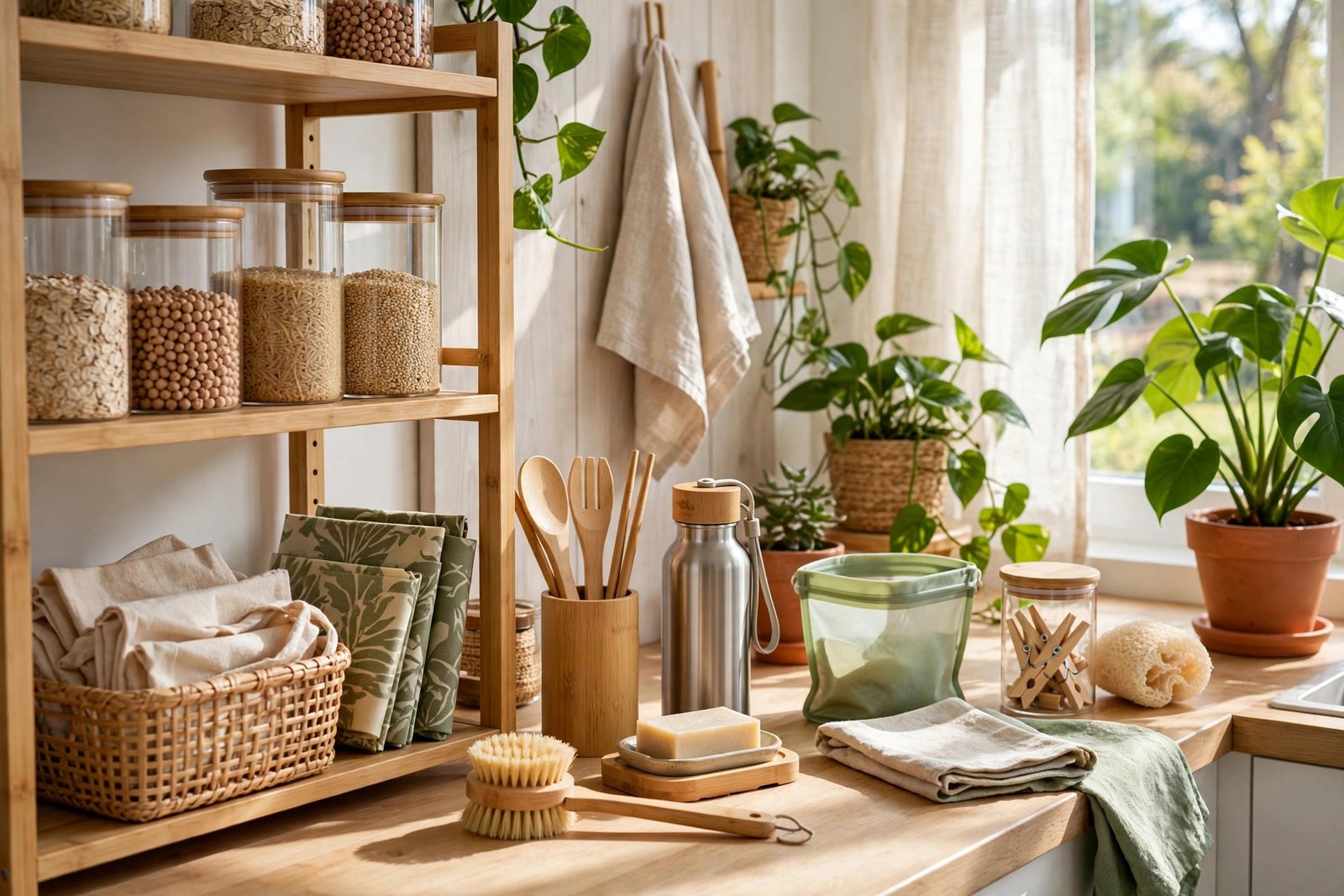
Going green often saves you serious money. The best eco-friendly home swaps cut waste and cut bills at the same time — good for the planet, great for your wallet.
Kitchen Swaps
Reusable Food Wraps Instead of Cling Film
Beeswax or silicone wraps replace hundreds of meters of cling film per year. A $15 set lasts 12+ months.
Water Filter Instead of Bottled Water
A family on bottled water can spend $500+ a year. A filter costs a fraction of that — and removes thousands of plastic bottles.
Concentrated Cleaning Products
Buy the bottle once, then cheap refills. Less plastic, lower cost per use.
Laundry Swaps
Eco Laundry Detergent Sheets
Detergent sheets dissolve in the wash, come plastic-free, and cost about the same per load. Bonus: wash cold — heating water is 90 percent of a washer’s energy use.
Wool Dryer Balls
A $10 set lasts 1,000+ loads and cuts drying time up to 25 percent.
Line Drying
A drying rack costs almost nothing and can save $100+ a year in dryer energy.
Bathroom Swaps
Bar Soap and Shampoo Bars
One shampoo bar replaces 2–3 plastic bottles and costs less per wash.
Low-Flow Showerhead
A $25 low-flow showerhead cuts hot water use by 40 percent — payback often under two months.
Energy Swaps
LED Bulbs Everywhere
LEDs use 75 percent less energy and last 25 times longer than old bulbs.
Smart Power Strips
Standby “vampire power” adds 5–10 percent to electricity bills. Smart strips cut it automatically.
Smart Thermostat
Typically saves 10–15 percent on heating and cooling — hundreds per year.
How Much Can You Save?
A typical household can save roughly $900+ per year with these swaps — and the savings repeat every year.
Getting Started
- Start with what runs out — replace items as they finish.
- Tackle big bills first — energy and water upgrades pay back fastest.
- Track one month of utility bills before and after.
Key Takeaways
- Best swaps: water filters, LEDs, smart thermostats, reusable kitchen goods.
- Replace as items run out — no dramatic overhaul needed.
- Cold washes and cutting standby power are free wins.
Frequently Asked Questions
Are eco-friendly products more expensive? Per-use cost is almost always lower because reusables outlast disposables.
Best eco swap for beginners? A water filter or LED bulbs — both pay back fast with zero lifestyle change.
Do small swaps really matter? Collectively huge — millions of households add up fast.