
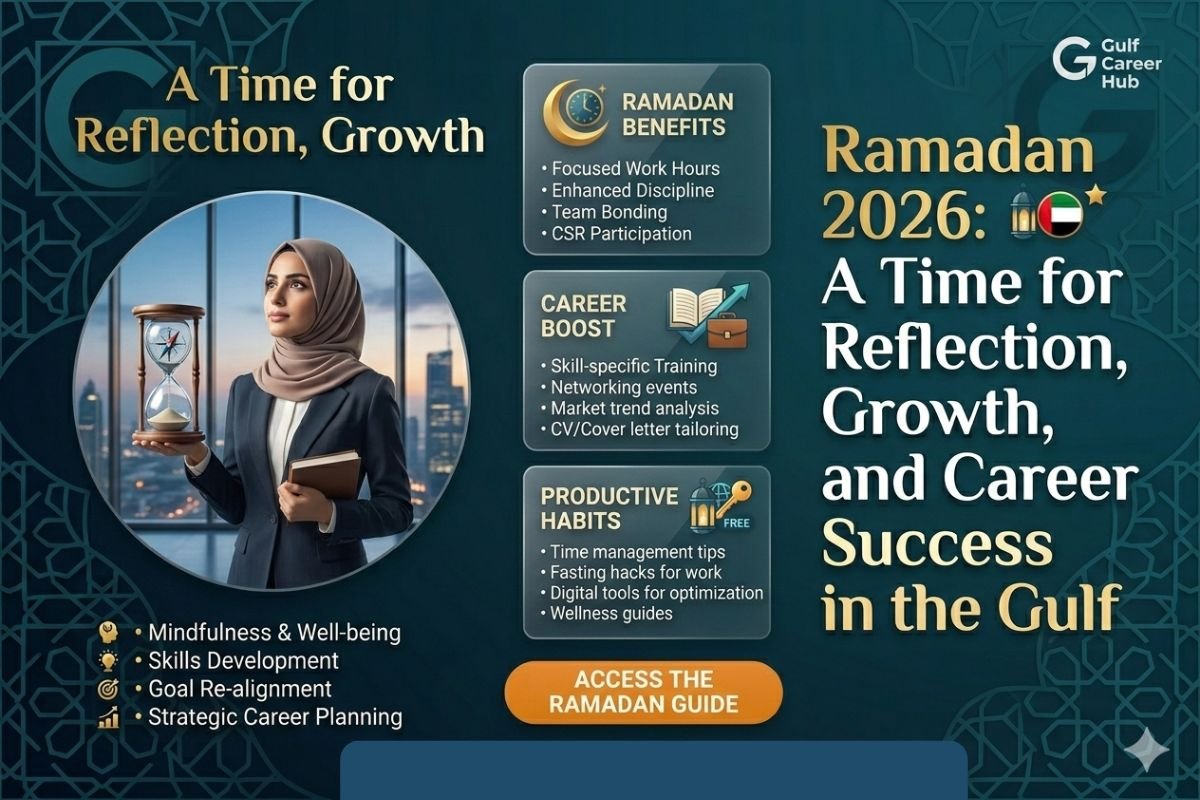
As the crescent moon appears over the skies of the Gulf, ushering in the holy month of Ramadan 2026, millions across the region pause, reflect, and reconnect with what truly matters. For those building careers in Dubai, Riyadh, Doha, and beyond, this sacred month offers something unexpected: a unique opportunity for professional growth.
Understanding the Rhythm of Ramadan in the Gulf Workplace
Before diving into strategies, it’s essential to understand how the Gulf workplace transforms during Ramadan. Working hours typically reduce by 2-3 hours daily. The pace slows, but purpose deepens. Meetings become more efficient, distractions diminish, and a collective sense of mindfulness settles over offices from Dubai to Dammam.
This shift creates a unique professional environment. The usual rush gives way to intentionality. Colleagues break bread together at iftar. Conversations over qahwa (Arabic coffee) build bridges that formal meetings never could.
For the savvy professional, Ramadan offers a canvas to paint with deliberate strokes of growth and connection.
Five Ways to Accelerate Your Career During Ramadan 2026
1. Leverage the Slower Pace for Deep Work
With fewer meetings and reduced interruptions, Ramadan provides uninterrupted blocks of time perfect for deep, focused work. Use these hours to:
- Tackle complex projects requiring concentration
- Update your professional portfolio or CV
- Complete online certifications relevant to your field
- Strategize your next career move
The quiet focus of Ramadan mornings can yield professional breakthroughs that rushed months never allow.
2. Build Authentic Relationships Through Iftar Connections
Throughout the Gulf, iftar is more than a meal—it’s a sacred invitation. Being invited to an iftar gathering is a sign of trust and respect. These evenings offer priceless opportunities to:
- Connect with colleagues on a human level beyond job titles
- Network with industry peers in relaxed settings
- Build rapport with senior leadership outside office formality
- Strengthen relationships with clients and partners
Attend iftars with genuine presence. Listen more than you speak. Ask about families, traditions, and what the month means to them. These authentic connections often lead to opportunities months later.
3. Demonstrate Cultural Intelligence and Respect
Showing understanding and respect for Ramadan customs sets exceptional professionals apart. Simple gestures carry profound meaning:
- Avoid eating, drinking, or smoking in front of fasting colleagues
- Schedule meetings mindful of prayer times and energy levels
- Learn and use basic Arabic phrases like “Ramadan Kareem” and “Mubarak Aleik al-Shahr”
- Show flexibility and patience with colleagues observing the fast
These actions signal cultural intelligence—a highly valued trait in the Gulf’s diverse workplace. They build trust and position you as someone who genuinely belongs.
4. Reflect and Realign Your Career Path
Ramadan’s emphasis on reflection extends naturally to professional life. The month’s spiritual pause invites honest assessment:
- Where is your current career path leading?
- Does your work align with your values and purpose?
- What skills should you develop in the coming year?
- Are there changes you’ve postponed making?
Use the quiet moments of Ramadan to journal, meditate, or simply think deeply about your professional direction. Clarity gained now becomes action taken later.
5. Position Yourself for Post-Ramadan Opportunities
Many Gulf organizations announce new initiatives, projects, and even job openings after Eid. Use Ramadan to position yourself advantageously:
- Complete pending tasks before Eid, starting the next quarter fresh
- Express interest in upcoming projects to relevant decision-makers
- Strengthen relationships with mentors who may advocate for you
- Research companies and roles you’d like to pursue after the month
The professional who prepares during Ramadan is ready to move when opportunities arise in Shawwal.
Balancing Work, Worship, and Wellbeing
Career growth during Ramadan shouldn’t come at the expense of spiritual or physical health. The most successful professionals find balance:
Manage Energy, Not Just Time: Your energy naturally dips in the afternoon. Schedule demanding tasks for morning hours when focus peaks. Use post-iftar energy for planning and reflection.
Prioritize Sleep: Late nights for prayers and early mornings for suhoor require intentional rest. Short power naps (15-20 minutes) can restore focus without disrupting sleep cycles.
Stay Hydrated and Nourished: When you can eat and drink, choose foods that sustain energy—complex carbohydrates, proteins, and plenty of water. What you consume during non-fasting hours directly impacts your daytime performance.
Honor Your Limits: Ramadan is a marathon, not a sprint. Listen to your body. Adjust expectations. Excellence doesn’t require exhaustion.
What Employers Look for During Ramadan
Forward-thinking Gulf employers observe how professionals navigate Ramadan. They notice:
- Consistency: Does your performance remain steady despite reduced hours?
- Attitude: Do you complain about fasting colleagues or accommodate gracefully?
- Initiative: Do you use the slower pace productively or simply coast?
- Team Spirit: Do you contribute to iftar gatherings and team bonding?
How you show up during Ramadan often speaks louder than how you perform during the rest of the year. It reveals character, not just competence.
Preparing for Post-Ramadan Momentum
As Ramadan draws to a close and Eid approaches, shift your focus toward the opportunities ahead:
- Set specific, measurable career goals for the next 12 months
- Schedule follow-up meetings with connections made during Ramadan
- Update your LinkedIn profile with any new skills or certifications
- Research salary trends and job markets across the Gulf for the coming year
The spiritual renewal of Ramadan can fuel professional renewal. Carry the clarity, connection, and purpose you’ve gained into the months ahead.
A Personal Note on Purpose
Beyond strategies and tactics, Ramadan invites a deeper question: Why do you work?
In the Gulf’s fast-paced, ambitious environment, it’s easy to chase titles, salaries, and status. Ramadan gently asks whether your work serves a purpose larger than yourself. Does it contribute to your community? Does it honor your values? Does it leave room for what truly matters—faith, family, and fulfillment?
Professionals who can answer these questions with clarity don’t just build careers. They build lives of meaning.
Conclusion: Make Ramadan 2026 Your Launchpad
Ramadan 2026 arrives as a gift—a month of intentional slowing in a world that never stops. For professionals across the Gulf, it offers a rare chance to reflect, connect, and grow in ways that the rushed pace of ordinary months prevents.
Embrace the rhythm of the month. Honor its spiritual depth. And let it shape not just your days, but your direction.
Whether you’re in Dubai’s financial district, Riyadh’s government corridors, or Doha’s education city, may this Ramadan bring you closer to your goals—and to what matters most.
Ramadan Kareem. May it be a month of blessing, growth, and success for you and your loved ones.
Frequently Asked Questions (FAQs)
1. Is it appropriate to network during Ramadan?
Absolutely. In fact, Ramadan offers unique networking opportunities through iftar gatherings and community events. The key is approaching connections with genuine warmth and respect rather than transactional intent. Build relationships first; opportunities follow naturally.
2. How do working hours change during Ramadan in the Gulf?
Most Gulf countries reduce working hours by 2-3 hours daily for both Muslim and non-Muslim employees during Ramadan. Private sector hours typically run 9am-3pm or similar, though this varies by company. Check your organization’s specific policy.
3. Should non-Muslims fast or pretend to fast out of respect?
No. Non-Muslims are not expected to fast, and pretending to do so is unnecessary. However, showing respect by not eating, drinking, or smoking in front of fasting colleagues during daylight hours is both courteous and appreciated.
4. How can I maximize productivity during reduced Ramadan hours?
Focus on deep, priority work during morning hours when energy peaks. Minimize distractions, batch similar tasks together, and use the quieter pace for strategic thinking and planning. Quality of output matters more than quantity during Ramadan.
5. When is the best time to look for new jobs during Ramadan?
While hiring slows during Ramadan, many companies plan post-Eid recruitment drives. Use Ramadan to research opportunities, update your CV, and strengthen networks. Begin active applications in the week after Eid, when business momentum returns.