
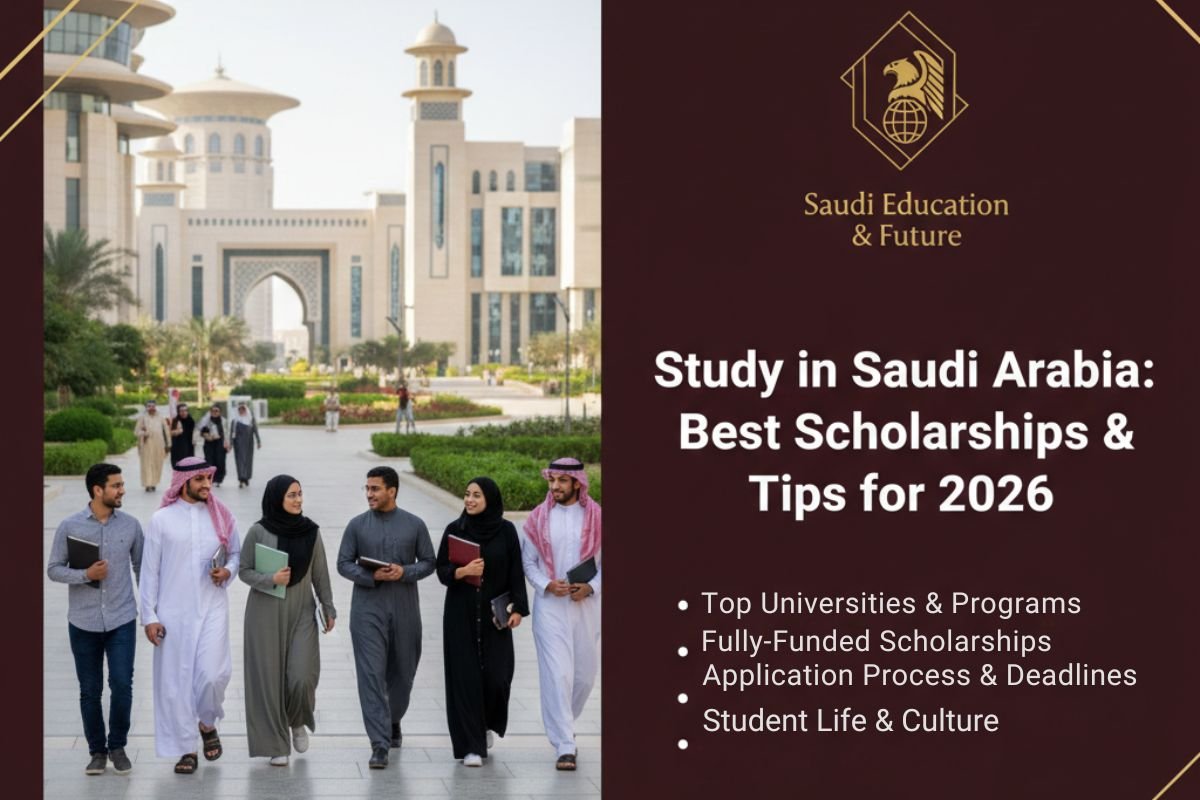
Dreaming of pursuing world-class education amidst rich cultural heritage and cutting-edge innovation? Saudi Arabia has rapidly emerged as a global education hub, offering international students a unique blend of academic excellence, generous Saudi scholarships, and immersive cultural experiences. For ambitious students aiming to study in Saudi Arabia, 2026 presents unprecedented opportunities. This comprehensive guide will navigate you through the top scholarships, application strategies, and insider tips to secure your educational future in the Kingdom.
Why Choose to Study in Saudi Arabia in 2026?
Saudi Arabia’s Vision 2030 has catalyzed a monumental transformation in its education sector. The government is investing billions to elevate its universities, research centers, and innovation ecosystems to international standards.
- World-Renowned Universities: Institutions like King Abdullah University of Science and Technology (KAUST), King Saud University, and Alfaisal University consistently rank among the top in global and regional listings.
- Generous Financial Support: Most Saudi scholarships are fully funded, covering tuition, accommodation, living stipends, health insurance, and even airfare.
- Research & Innovation Focus: With state-of-the-art labs and significant funding, Saudi Arabia is a haven for STEM, medical, business, and Islamic studies research.
- Cultural Immersion: Experience a unique blend of deep tradition and modern dynamism, enhancing your global perspective.
- Strategic Career Launchpad: A degree from a Saudi university is highly respected and can open doors to careers across the Middle East and beyond.
Top Scholarships to Study in Saudi Arabia in 2026
Here are the most prestigious and comprehensive Saudi scholarships to target for your 2026 intake.
1. KAUST Scholarships (King Abdullah University of Science and Technology)
KAUST is the crown jewel of Saudi research, offering what is arguably one of the world’s most generous graduate scholarship programs.
- Coverage: Full tuition, monthly living allowance (ranging from $20,000-$30,000 annually), on-campus housing, medical and dental insurance, and relocation support.
- Eligibility: Open to all nationalities for Masters and PhD programs in Science, Engineering, and Technology.
- Key Tip: KAUST heavily prioritizes research potential. Connect with potential supervisors and highlight your research experience in your application.
- Deadline: Typically in January for the following academic year.
2. Saudi Government Scholarship Program (Managed by the Ministry of Education)
This is the flagship program for international students, offering scholarships for undergraduate, postgraduate, and doctoral studies at various Saudi public universities.
- Coverage: Full tuition, monthly stipend, accommodation, health care, and annual round-trip air tickets.
- Eligibility: Varies by university and program. Generally requires strong academic records and meeting language requirements (Arabic or English).
- Key Tip: Research specific universities (like King Saud University, Islamic University of Medina) and apply through their international admission portals linked to this program.
- Deadline: Varies, but often falls between February and April.
3. Islamic Development Bank (IsDB) Scholarship Programme
While not exclusively for Saudi Arabia, the IsDB scholarship includes partnerships with top Saudi universities and is a fantastic fully-funded option for citizens of IsDB member countries.
- Coverage: Covers tuition, living allowance, medical costs, and travel expenses.
- Eligibility: For Muslim students from member countries pursuing studies in sustainable development fields.
- Key Tip: Demonstrate a clear commitment to community development and how your studies will contribute to your home country.
- Deadline: Usually in February.
4. University-Specific Scholarships
Many top private and public universities offer their own merit-based scholarships.
- Alfaisal University Scholarships (Riyadh): Offers partial to full scholarships for international students based on academic merit.
- Princess Nourah bint Abdulrahman University (PNU) Scholarships: For female students, offering support in various disciplines.
Your Step-by-Step Application Guide for 2026
Securing a scholarship requires a strategic and early start. Follow this timeline for your 2026 application.
Phase 1: Research & Preparation (Mid-2025)
- Identify Your Program: Align your academic goals with Saudi universities’ strengths (e.g., Engineering at KAUST, Islamic Studies at Medina, Business at Alfaisal).
- Choose Your Scholarship: Match your profile with 3-4 scholarship programs. Note all eligibility criteria, deadlines, and required documents.
- Prepare for Tests: Register and prepare for required standardized tests (IELTS/TOEFL, GRE, GMAT, etc.). Most programs require proof of English proficiency.
Phase 2: Crafting a Winning Application (Late 2025 – Early 2026)
- Academic Transcripts & Letters of Recommendation (LORs): Request official transcripts early. Choose recommenders who know you well and can speak to your academic/research capabilities.
- Statement of Purpose (SOP) / Personal Essay: This is crucial. For Saudi scholarships, tailor your SOP to:
- Show genuine interest in Saudi Arabia’s culture and Vision 2030.
- Clearly link your goals with the university’s research expertise.
- Demonstrate how you will be a cultural ambassador.
- Build Your CV/Resume: Highlight academic achievements, research projects, publications, and relevant skills.
Phase 3: Submission & Follow-up (Early 2026)
- Submit Before Deadline: Avoid last-minute technical issues. Submit applications at least a week before the official deadline.
- Prepare for Interviews: If shortlisted, be ready to discuss your goals, adaptability, and knowledge of Saudi Arabia. Practice common questions.
Essential Tips for International Students in Saudi Arabia
- Embrace the Culture: Learn basic Arabic phrases, understand local customs and laws (especially regarding dress code and social conduct), and show respect for traditions.
- Climate Preparedness: The desert climate is extreme. Be prepared for very hot summers.
- Network Actively: Engage with professors, join student clubs, and connect with the large expatriate community. This enriches your experience and builds your professional network.
- Travel Opportunities: Use semester breaks to explore Saudi Arabia’s stunning diversity—from historical AlUla and futuristic NEOM to the Red Sea coast.
Conclusion: Your 2026 Academic Journey Awaits
To study in Saudi Arabia in 2026 is to step into a future-oriented educational landscape backed by unparalleled support. The array of Saudi scholarships available makes this dream financially accessible. By starting your research early, crafting authentic and compelling applications, and approaching the experience with an open mind, you can secure a seat at one of the Kingdom’s prestigious institutions.
Begin your journey today. Identify your target scholarship, mark those 2026 deadlines, and take the first step toward an transformative academic adventure in Saudi Arabia.
5 FAQs About Studying in Saudi Arabia & Scholarships
1. Can non-Muslim students apply for scholarships to study in Saudi Arabia?
Yes, absolutely. Many scholarships, especially at institutions like KAUST and in STEM fields, are open to students of all faiths and nationalities. The Saudi Government Scholarship Program also has avenues for non-Muslim students.
2. Is it expensive to live in Saudi Arabia as a student?
If you secure a full Saudi scholarship, your major costs are covered. For self-funded students, living costs (outside accommodation) are moderate. Cities like Riyadh and Jeddah offer a range of options, but budgeting is advised.
3. What is the language of instruction in Saudi universities?
It varies. At KAUST and many graduate programs in science and business, the medium is English. For undergraduate programs, especially in humanities, Islamic studies, and some public universities, Arabic is primary. Always check your specific program requirements.